Nanomedicine and Cryonics Ralph C. Merkle Distinguished Professor of Computing Georgia Tech College of Computing
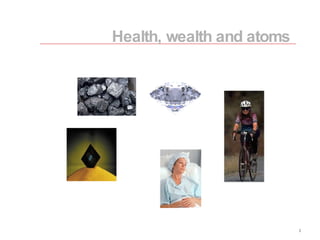
Health, wealth and atoms
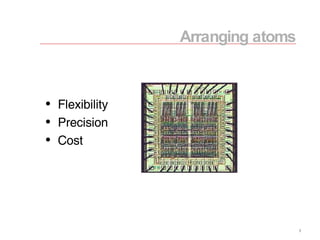
Arranging atoms Flexibility Precision Cost
Ultimate limits Arrange atoms in most of the ways permitted by physical law Get almost every atom in the right place Achieve manufacturing costs not much greater than the cost of the raw materials and energy Nanotechnology
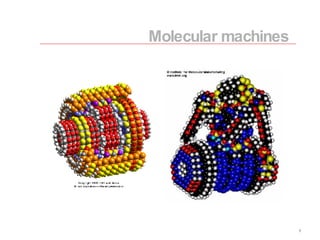
Molecular machines
Disease and ill health are caused largely by damage at the molecular and cellular level Today’s surgical tools are huge and imprecise in comparison Impact Nanomedicine
In the future, we will have fleets of surgical tools that are molecular both in size and precision. We will also have computers much smaller than a single cell to guide those tools. Impact Nanomedicine
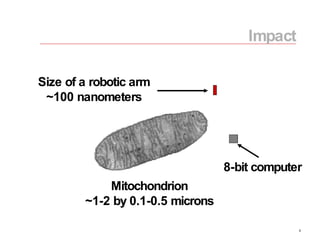
Impact Mitochondrion ~1-2 by 0.1-0.5 microns Size of a robotic arm ~100 nanometers 8-bit computer
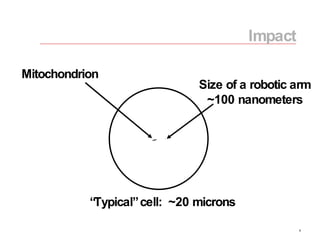
Impact “ Typical” cell:  ~20 microns Mitochondrion Size of a robotic arm ~100 nanometers
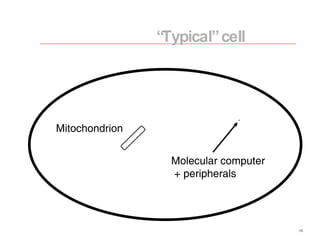
Mitochondrion Molecular computer + peripherals “ Typical” cell
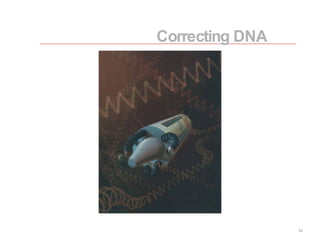
Correcting DNA
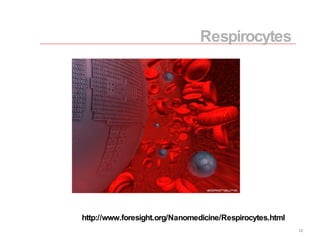
Respirocytes http://www.foresight.org/Nanomedicine/Respirocytes.html
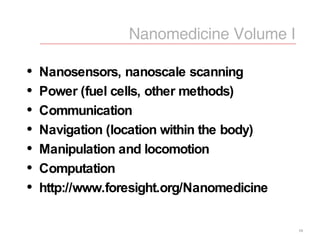
Nanosensors, nanoscale scanning Power (fuel cells, other methods) Communication Navigation (location within the body) Manipulation and locomotion Computation http://www.foresight.org/Nanomedicine Nanomedicine Volume I
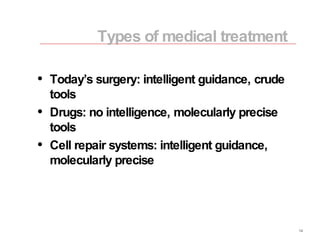
Today’s surgery: intelligent guidance, crude tools Drugs: no intelligence, molecularly precise tools Cell repair systems: intelligent guidance, molecularly precise Types of medical treatment
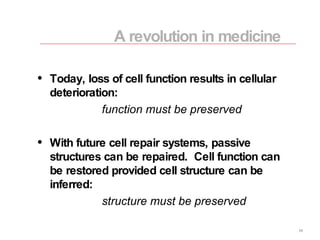
Today, loss of cell function results in cellular deterioration: function must be preserved With future cell repair systems, passive structures can be repaired.  Cell function can be restored provided cell structure can be inferred: structure must be preserved A revolution in medicine
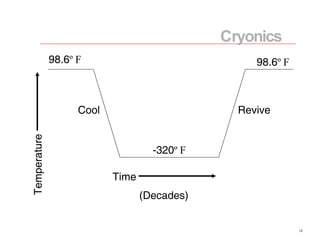
98.6 º F -320 º F Cool Revive Time Temperature (Decades) Cryonics 98.6 º F
Select N subjects Vitrify them Wait 100 years See if the medical technology of 2100 can indeed revive them But what do we tell those who don’t expect to live long enough to see the results? Clinical trials
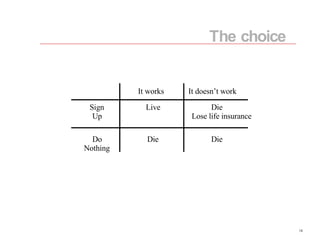
It works It doesn’t work Sign Up Do Nothing Live Die Die Lose life insurance  Die The choice
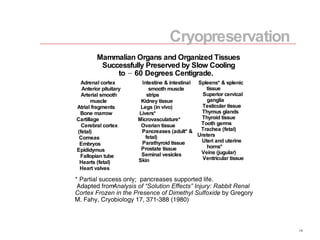
Mammalian Organs and Organized Tissues Successfully Preserved by Slow Cooling to   60 Degrees Centigrade. * Partial success only;  pancreases supported life. Adapted from  Analysis of “Solution Effects” Injury: Rabbit Renal  Cortex Frozen in the Presence of Dimethyl Sulfoxide ,  by Gregory  M. Fahy, Cryobiology 17, 371-388 (1980) Adrenal cortex Anterior pituitary Arterial smooth  muscle Atrial fragments Bone marrow Cartillage Cerebral cortex  (fetal) Corneas Embryos Epididymus Fallopian tube Hearts (fetal) Heart valves Intestine & intestinal  smooth muscle  strips Kidney tissue Legs (in vivo) Livers* Microvasculature* Ovarian tissue Pancreases (adult* &  fetal) Parathyroid tissue Prostate tissue Seminal vesicles Skin Spleens* & splenic  tissue Superior cervical  ganglia Testicular tissue Thymus glands Thyroid tissue Tooth germs Trachea (fetal) Ureters Uteri and uterine  horns* Veins (jugular) Ventricular tissue Cryopreservation
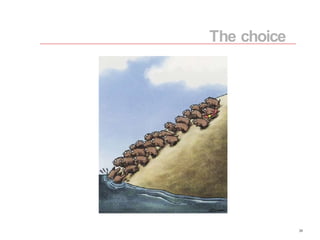
The choice
“Don’t leave him in the hands of 20th Century medicine!” Dr. Leonard McCoy of the Starship  Enterprise Circa 2185 The future perspective
END OF TALK End
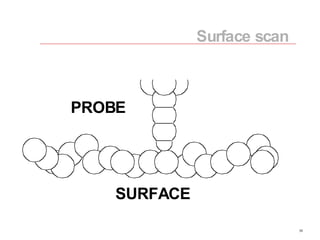
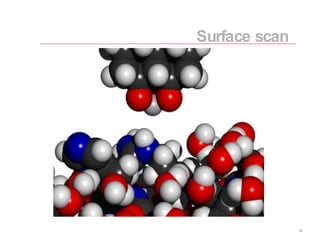
Future descendants of SPMs could rapidly scan the surface of cryofixed tissue with molecular precision Electrostatic Van der Waals Conductivity Many others Surface scan
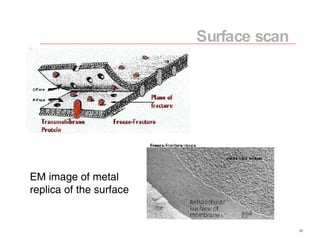
Surface scan EM image of metal replica of the surface
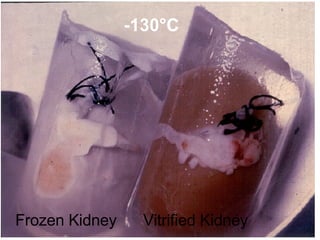
Frozen Kidney Vitrified Kidney -130°C
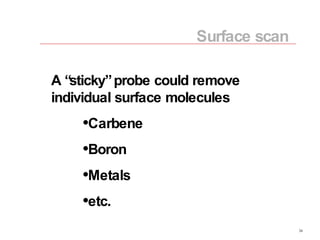
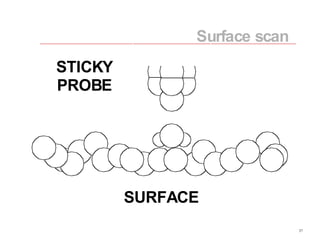
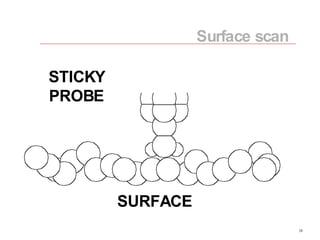
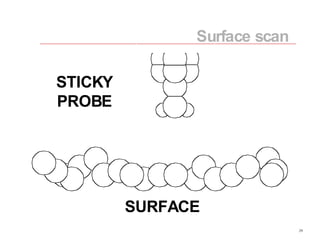
A “sticky” probe could remove individual surface molecules Carbene Boron Metals etc. Surface scan
SURFACE PROBE STICKY Surface scan
SURFACE PROBE Surface scan
Surface scan
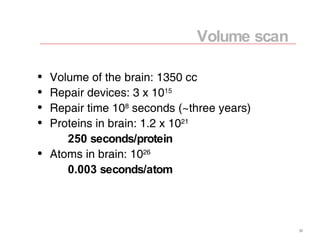
Volume of the brain: 1350 cc Repair devices: 3 x 10 15 Repair time 10 8  seconds (~three years) Proteins in brain: 1.2 x 10 21 250 seconds/protein Atoms in brain: 10 26 0.003 seconds/atom Volume scan
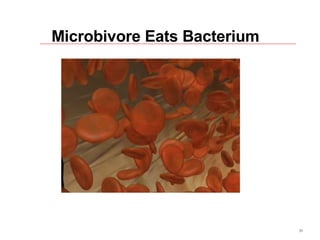
Microbivore Eats Bacterium
Medical Hypotheses Vol. 39, 1992; 6-16 One of six articles on “cryonics” in PubMed The only article assessing feasibility Simple “brute force” approach: scan everything, repair as needed http://www.merkle.com/cryo/techFeas.html Published articles The Technical Feasibility of Cryonics
“ ...having a very ardent desire to see and observe the state of America a hundred years hence, I should prefer to an ordinary death, being immersed with a few friends in a cask of Madeira, until that time, then to be recalled to life by the solar warmth of my dear country!” Benjamin Franklin 1773 A visionary
Cryobiologists are often asked how long cells can remain viable at -196 degrees C, the temperature of boiling liquid nitrogen (which is the usual cryogenic fluid).  The answer is clear — more than 1000 years. Peter Mazur Stopping Biological Time: the Freezing of Living Cells.  Ann.  N.Y. Acad. Sci. 541: 514-531, 1988. Cryopreservation
Although several aspects of synaptic structure appear to change with experience, the most consistent potential substrate for memory storage during behavioral modification is an alteration in the number and/or pattern of synaptic connections. The anatomy of a memory: convergence of results across a diversity of tests William T. Greenough and Craig H. Bailey,  Trends in Neuroscience , 1988, Vol. 11, No. 4, pages 142-147. Memory
As Hardy et al. stated, it is apparent that both human and rat brain tissue frozen to -70 degrees C with almost no cryoprotection has synapses "closely comparable to [those from]... fresh tissue." The cryobiological case for cryonics, citing Hardy, J.A., P.R. Dodd, A.E. Oakley, R.H. Ferry, J.A. Edwardson, and A.M. Kidd, Metabolically active synaptosomes can be prepared from frozen rat and human brain, J Neurochem, 40, 608-614 (1983). Preservation of synapses
The scientific literature allows no conclusion other than that brain structure and even many brain functions are likely to be reasonably well preserved by freezing in the presence of cryoprotective agents, especially glycerol in high concentrations. The cryobiological case for cryonics Preservation of brain structure
Web pages www.foresight.org/Nanomedicine/ www.zyvex.com/nano
“ Everyone who has died and told me about it has said it’s terrific!” Shirley MacLaine

Nanomedicine and Cryonics

  • 1.
    Nanomedicine and CryonicsRalph C. Merkle Distinguished Professor of Computing Georgia Tech College of Computing
  • 2.
  • 3.
  • 4.
    Ultimate limits Arrangeatoms in most of the ways permitted by physical law Get almost every atom in the right place Achieve manufacturing costs not much greater than the cost of the raw materials and energy Nanotechnology
  • 5.
  • 6.
    Disease and illhealth are caused largely by damage at the molecular and cellular level Today’s surgical tools are huge and imprecise in comparison Impact Nanomedicine
  • 7.
    In the future,we will have fleets of surgical tools that are molecular both in size and precision. We will also have computers much smaller than a single cell to guide those tools. Impact Nanomedicine
  • 8.
    Impact Mitochondrion ~1-2by 0.1-0.5 microns Size of a robotic arm ~100 nanometers 8-bit computer
  • 9.
    Impact “ Typical”cell: ~20 microns Mitochondrion Size of a robotic arm ~100 nanometers
  • 10.
    Mitochondrion Molecular computer+ peripherals “ Typical” cell
  • 11.
  • 12.
  • 13.
    Nanosensors, nanoscale scanningPower (fuel cells, other methods) Communication Navigation (location within the body) Manipulation and locomotion Computation http://www.foresight.org/Nanomedicine Nanomedicine Volume I
  • 14.
    Today’s surgery: intelligentguidance, crude tools Drugs: no intelligence, molecularly precise tools Cell repair systems: intelligent guidance, molecularly precise Types of medical treatment
  • 15.
    Today, loss ofcell function results in cellular deterioration: function must be preserved With future cell repair systems, passive structures can be repaired. Cell function can be restored provided cell structure can be inferred: structure must be preserved A revolution in medicine
  • 16.
    98.6 º F-320 º F Cool Revive Time Temperature (Decades) Cryonics 98.6 º F
  • 17.
    Select N subjectsVitrify them Wait 100 years See if the medical technology of 2100 can indeed revive them But what do we tell those who don’t expect to live long enough to see the results? Clinical trials
  • 18.
    It works Itdoesn’t work Sign Up Do Nothing Live Die Die Lose life insurance Die The choice
  • 19.
    Mammalian Organs andOrganized Tissues Successfully Preserved by Slow Cooling to  60 Degrees Centigrade. * Partial success only; pancreases supported life. Adapted from Analysis of “Solution Effects” Injury: Rabbit Renal Cortex Frozen in the Presence of Dimethyl Sulfoxide , by Gregory M. Fahy, Cryobiology 17, 371-388 (1980) Adrenal cortex Anterior pituitary Arterial smooth muscle Atrial fragments Bone marrow Cartillage Cerebral cortex (fetal) Corneas Embryos Epididymus Fallopian tube Hearts (fetal) Heart valves Intestine & intestinal smooth muscle strips Kidney tissue Legs (in vivo) Livers* Microvasculature* Ovarian tissue Pancreases (adult* & fetal) Parathyroid tissue Prostate tissue Seminal vesicles Skin Spleens* & splenic tissue Superior cervical ganglia Testicular tissue Thymus glands Thyroid tissue Tooth germs Trachea (fetal) Ureters Uteri and uterine horns* Veins (jugular) Ventricular tissue Cryopreservation
  • 20.
  • 21.
    “Don’t leave himin the hands of 20th Century medicine!” Dr. Leonard McCoy of the Starship Enterprise Circa 2185 The future perspective
  • 22.
  • 23.
    Future descendants ofSPMs could rapidly scan the surface of cryofixed tissue with molecular precision Electrostatic Van der Waals Conductivity Many others Surface scan
  • 24.
    Surface scan EMimage of metal replica of the surface
  • 25.
  • 26.
    A “sticky” probecould remove individual surface molecules Carbene Boron Metals etc. Surface scan
  • 27.
  • 28.
  • 29.
  • 30.
  • 31.
  • 32.
    Volume of thebrain: 1350 cc Repair devices: 3 x 10 15 Repair time 10 8 seconds (~three years) Proteins in brain: 1.2 x 10 21 250 seconds/protein Atoms in brain: 10 26 0.003 seconds/atom Volume scan
  • 33.
  • 34.
    Medical Hypotheses Vol.39, 1992; 6-16 One of six articles on “cryonics” in PubMed The only article assessing feasibility Simple “brute force” approach: scan everything, repair as needed http://www.merkle.com/cryo/techFeas.html Published articles The Technical Feasibility of Cryonics
  • 35.
    “ ...having avery ardent desire to see and observe the state of America a hundred years hence, I should prefer to an ordinary death, being immersed with a few friends in a cask of Madeira, until that time, then to be recalled to life by the solar warmth of my dear country!” Benjamin Franklin 1773 A visionary
  • 36.
    Cryobiologists are oftenasked how long cells can remain viable at -196 degrees C, the temperature of boiling liquid nitrogen (which is the usual cryogenic fluid). The answer is clear — more than 1000 years. Peter Mazur Stopping Biological Time: the Freezing of Living Cells. Ann. N.Y. Acad. Sci. 541: 514-531, 1988. Cryopreservation
  • 37.
    Although several aspectsof synaptic structure appear to change with experience, the most consistent potential substrate for memory storage during behavioral modification is an alteration in the number and/or pattern of synaptic connections. The anatomy of a memory: convergence of results across a diversity of tests William T. Greenough and Craig H. Bailey, Trends in Neuroscience , 1988, Vol. 11, No. 4, pages 142-147. Memory
  • 38.
    As Hardy etal. stated, it is apparent that both human and rat brain tissue frozen to -70 degrees C with almost no cryoprotection has synapses "closely comparable to [those from]... fresh tissue." The cryobiological case for cryonics, citing Hardy, J.A., P.R. Dodd, A.E. Oakley, R.H. Ferry, J.A. Edwardson, and A.M. Kidd, Metabolically active synaptosomes can be prepared from frozen rat and human brain, J Neurochem, 40, 608-614 (1983). Preservation of synapses
  • 39.
    The scientific literatureallows no conclusion other than that brain structure and even many brain functions are likely to be reasonably well preserved by freezing in the presence of cryoprotective agents, especially glycerol in high concentrations. The cryobiological case for cryonics Preservation of brain structure
  • 40.
  • 41.
    “ Everyone whohas died and told me about it has said it’s terrific!” Shirley MacLaine