Efficacy of Urinary N-Acetyl β- D-
Glucosaminidase in Detecting Renal
Tubular Damage: A Early Consequence
in Type 2 Diabetes Mellitus leading to
Diabetic Nephropathy
Kiran Kalia & Dhara Patel
B R D School of Biosciences, Saradar Patel University,
Vallabh Vidyanagar – 388 120
Gujarat, India
kirankalia@gmail.com
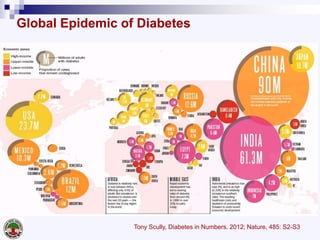
Tony Scully, Diabetes in Numbers. 2012; Nature, 485: S2-S3
Global Epidemic of Diabetes
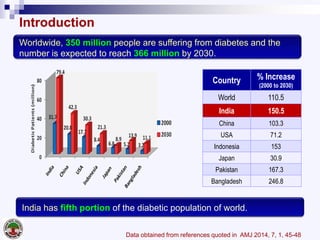
Introduction
Country % Increase
(2000 to 2030)
World 110.5
India 150.5
China 103.3
USA 71.2
Indonesia 153
Japan 30.9
Pakistan 167.3
Bangladesh 246.8
Data obtained from references quoted in AMJ 2014, 7, 1, 45-48
Worldwide, 350 million people are suffering from diabetes and the
number is expected to reach 366 million by 2030.
India has fifth portion of the diabetic population of world.
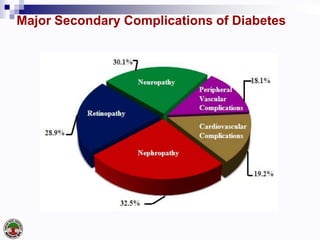
Major Secondary Complications of Diabetes
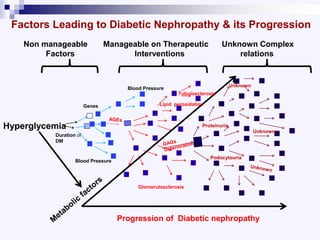
Factors Leading to Diabetic Nephropathy & its Progression
Duration of
DM
Progression of Diabetic nephropathy
Hyperglycemia
Non manageable Manageable on Therapeutic Unknown Complex
Factors Interventions relations
Blood Pressure
Genes Lipid peroxidation
Glomerulosclerosis
Tubulosclerosis
Proteinuria
Podocytouria
Unknown
Unknown
Blood Pressure
Diabetic Nephropathy
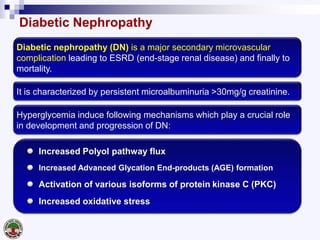
Diabetic nephropathy (DN) is a major secondary microvascular
complication leading to ESRD (end-stage renal disease) and finally to
mortality.
It is characterized by persistent microalbuminuria >30mg/g creatinine.
Hyperglycemia induce following mechanisms which play a crucial role
in development and progression of DN:
Increased Polyol pathway flux
Increased Advanced Glycation End-products (AGE) formation
Activation of various isoforms of protein kinase C (PKC)
Increased oxidative stress
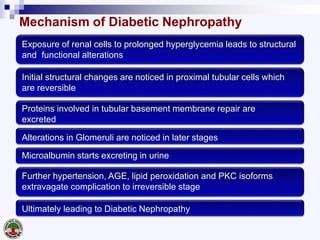
Mechanism of Diabetic Nephropathy
Exposure of renal cells to prolonged hyperglycemia leads to structural
and functional alterations
Initial structural changes are noticed in proximal tubular cells which
are reversible
Proteins involved in tubular basement membrane repair are
excreted
Alterations in Glomeruli are noticed in later stages
Further hypertension, AGE, lipid peroxidation and PKC isoforms
extravagate complication to irreversible stage
Ultimately leading to Diabetic Nephropathy
Microalbumin starts excreting in urine
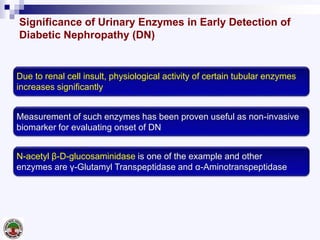
Significance of Urinary Enzymes in Early Detection of
Diabetic Nephropathy (DN)
Due to renal cell insult, physiological activity of certain tubular enzymes
increases significantly
Measurement of such enzymes has been proven useful as non-invasive
biomarker for evaluating onset of DN
N-acetyl β-D-glucosaminidase is one of the example and other
enzymes are γ-Glutamyl Transpeptidase and α-Aminotranspeptidase
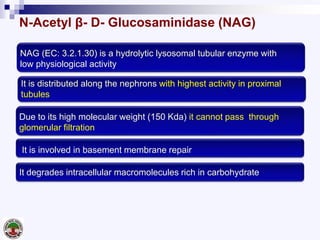
N-Acetyl β- D- Glucosaminidase (NAG)
NAG (EC: 3.2.1.30) is a hydrolytic lysosomal tubular enzyme with
low physiological activity
It is distributed along the nephrons with highest activity in proximal
tubules
It degrades intracellular macromolecules rich in carbohydrate
It is involved in basement membrane repair
Due to its high molecular weight (150 Kda) it cannot pass through
glomerular filtration
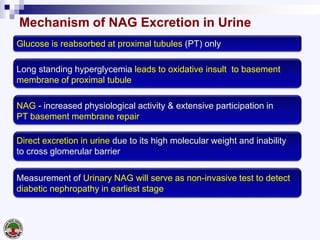
Mechanism of NAG Excretion in Urine
Glucose is reabsorbed at proximal tubules (PT) only
Long standing hyperglycemia leads to oxidative insult to basement
membrane of proximal tubule
NAG - increased physiological activity & extensive participation in
PT basement membrane repair
Direct excretion in urine due to its high molecular weight and inability
to cross glomerular barrier
Measurement of Urinary NAG will serve as non-invasive test to detect
diabetic nephropathy in earliest stage
Objectives
To validate urinary N-acetyl β D- glucosaminidase (NAG)
excretion as site specific early diagnostic biomarker
To measure the diagnostic accuracy of cutoff value of urinary NAG
inT2DM patients with susceptibility to develop diabetic nephropathy
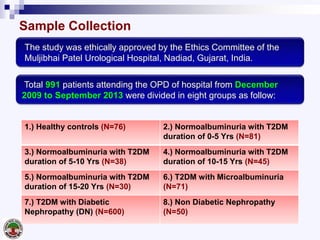
Sample Collection
1.) Healthy controls (N=76) 2.) Normoalbuminuria with T2DM
duration of 0-5 Yrs (N=81)
3.) Normoalbuminuria with T2DM
duration of 5-10 Yrs (N=38)
4.) Normoalbuminuria with T2DM
duration of 10-15 Yrs (N=45)
5.) Normoalbuminuria with T2DM
duration of 15-20 Yrs (N=30)
6.) T2DM with Microalbuminuria
(N=71)
7.) T2DM with Diabetic
Nephropathy (DN) (N=600)
8.) Non Diabetic Nephropathy
(N=50)
The study was ethically approved by the Ethics Committee of the
Muljibhai Patel Urological Hospital, Nadiad, Gujarat, India.
Total 991 patients attending the OPD of hospital from December
2009 to September 2013 were divided in eight groups as follow:
Sample Collection
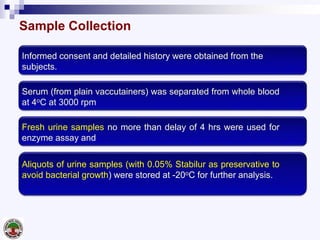
Informed consent and detailed history were obtained from the
subjects.
Serum (from plain vaccutainers) was separated from whole blood
at 4oC at 3000 rpm
Fresh urine samples no more than delay of 4 hrs were used for
enzyme assay and
Aliquots of urine samples (with 0.05% Stabilur as preservative to
avoid bacterial growth) were stored at -20oC for further analysis.
Anthropometric Data
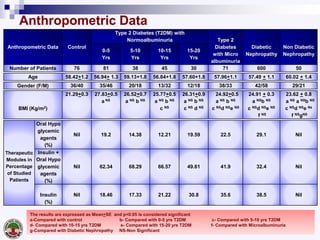
The results are expressed as Mean+SE and p<0.05 is considered significant
a-Compared with control b- Compared with 0-5 yrs T2DM c- Compared with 5-10 yrs T2DM
d- Compared with 10-15 yrs T2DM e- Compared with 15-20 yrs T2DM f- Compared with Microalbuminuria
g-Compared with Diabetic Nephropathy NS-Non Significant
Anthropometric Data Control
Type 2 Diabetes (T2DM) with
Normoalbuminuria Type 2
Diabetes
with Micro
albuminuria
Diabetic
Nephropathy
Non Diabetic
Nephropathy
0-5
Yrs
5-10
Yrs
10-15
Yrs
15-20
Yrs
Number of Patients 76 81 38 45 30 71 600 50
Age 58.42+1.2 56.94+ 1.3 59.13+1.8 56.84+1.8 57.60+1.8 57.96+1.1 57.49 + 1.1 60.02 + 1.4
Gender (F/M) 36/40 35/46 20/18 13/32 12/18 38/33 42/58 29/21
BMI (Kg/m2)
21.29+0.3 27.83+0.5
a NS
26.52+0.7
a NS b NS
25.77+0.5
a NS b NS
c NS
26.31+0.9
a NS b NS
c NS d NS
24.92+0.5
a NS b NS
c NSd NSe NS
24.91 + 0.3
a NSb NS
c NSd NSe NS
f NS
23.62 + 0.8
a NS a NSb NS
c NSd NSe Ns
f NSgNS
Therapeutic
Modules in
Percentage
of Studied
Patients
Oral Hypo
glycemic
agents
(%)
Nil 19.2 14.38 12.21 19.59 22.5 29.1 Nil
Insulin +
Oral Hypo
glycemic
agents
(%)
Nil 62.34 68.29 66.57 49.61 41.9 32.4 Nil
Insulin
(%)
Nil 18.46 17.33 21.22 30.8 35.6 38.5 Nil
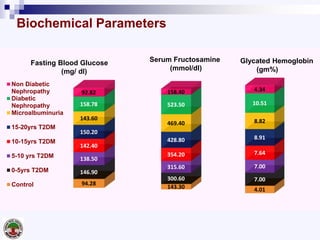
4.01
7.00
7.00
7.64
8.91
8.82
10.51
4.34
Glycated Hemoglobin
(gm%)
143.30
300.60
315.60
354.20
428.80
469.40
523.50
158.40
Serum Fructosamine
(mmol/dl)
94.28
146.90
138.50
142.40
150.20
143.60
158.78
92.82
Non Diabetic
Nephropathy
Diabetic
Nephropathy
Microalbuminuria
15-20yrs T2DM
10-15yrs T2DM
5-10 yrs T2DM
0-5yrs T2DM
Control
Fasting Blood Glucose
(mg/ dl)
Biochemical Parameters
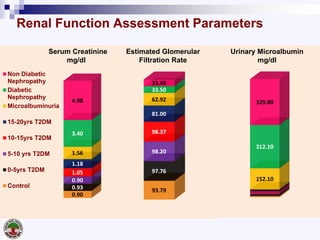
0.90
0.93
0.90
1.05
1.18
1.56
3.40
4.98
Non Diabetic
Nephropathy
Diabetic
Nephropathy
Microalbuminuria
15-20yrs T2DM
10-15yrs T2DM
5-10 yrs T2DM
0-5yrs T2DM
Control
Serum Creatinine
mg/dl
93.79
97.76
98.20
98.37
81.00
62.92
33.50
33.49
Estimated Glomerular
Filtration Rate
152.10
312.10
329.80
Urinary Microalbumin
mg/dl
Renal Function Assessment Parameters
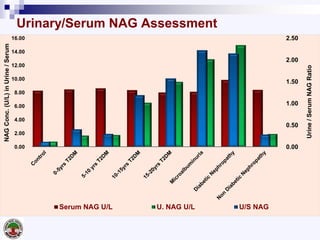
Urinary/Serum NAG Assessment
0.00
0.50
1.00
1.50
2.00
2.50
0.00
2.00
4.00
6.00
8.00
10.00
12.00
14.00
16.00
Urine/SerumNAGRatio
NAGConc.(U/L)inUrine/Serum
Serum NAG U/L U. NAG U/L U/S NAG
0
4
8
12
16
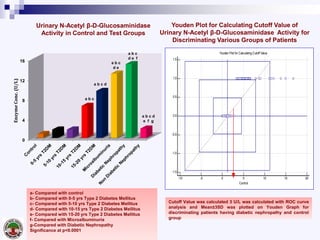
EnzymeConc.(U/L)
a b c
a b c d
a b c
d e
a b c
d e f
a b c d
e f g
Urinary N-Acetyl β-D-Glucosaminidase
Activity in Control and Test Groups
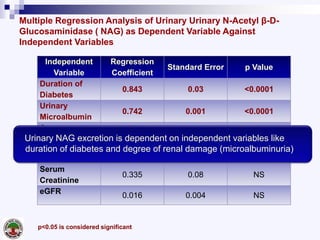
Youden Plot for Calculating Cutoff Value of
Urinary N-Acetyl β-D-Glucosaminidase Activity for
Discriminating Various Groups of Patients
Youden Plot for Calculating Cutoff Value
-10 -5 0 5 10 15 20
-1.5
-1.0
-0.5
0.0
0.5
1.0
1.5
Control
DiabeticNephropathy
a- Compared with control
b- Compared with 0-5 yrs Type 2 Diabetes Mellitus
c- Compared with 5-10 yrs Type 2 Diabetes Mellitus
d- Compared with 10-15 yrs Type 2 Diabetes Mellitus
e- Compared with 15-20 yrs Type 2 Diabetes Mellitus
f- Compared with Microalbuminuria
g-Compared with Diabetic Nephropathy
Significance at p<0.0001
Cutoff Value was calculated 3 U/L was calculated with ROC curve
analysis and Mean±3SD was plotted on Youden Graph for
discriminating patients having diabetic nephropathy and control
group
ROC curves of urinary NAG for assessment of diabetic nephropathy. With 3 U/L cutoff value
control group discriminated T2DM patients with 10-15 yrs, 15-20 yrs, microalbuminuria and
diabetic nephropathy with a likelihood ratio of 25.6, 96.1 %specificity and 100% sensitivity. The
AUC were 1.000,0.999, 0.999 and 1.000 respectively.
ROC Curve Analysis to Determine Cutoff Value, Specificity and Sensitivity of
Urinary N-Acetyl β-D-Glucosaminidase Activity in Different Study Groups
[A] Control Vs
Other Study Groups
[B] 0-5 yrs T2DM Vs
Other Study Groups
[C] 5-10 yrs T2DM Vs
Other Study Groups
ROC curves of urinary NAG for assessment of diabetic nephropathy. With 3 U/L cutoff value
control group discriminated T2DM patients with 10-15 yrs, 15-20 yrs, microalbuminuria and
diabetic nephropathy with a likelihood ratio of 25.6, 96.1 %specificity and 100% sensitivity. The
AUC were 1.000,0.999, 0.999 and 1.000 respectively.
ROC Curve Analysis to Determine Cutoff Value, Specificity and Sensitivity
of Urinary N-Acetyl β-D-Glucosaminidase Activity in Different Study Groups
[D] 10-15 yrs T2DM Vs
Other Study Groups
[E] 15-20 yrs T2DM Vs
Other Study Groups
[F] Microalbuminuria Vs
Diabetic Nephropathy &
Non Diabetic Nephropathy
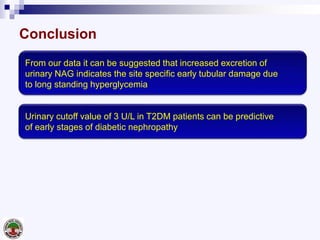
Multiple Regression Analysis of Urinary Urinary N-Acetyl β-D-
Glucosaminidase ( NAG) as Dependent Variable Against
Independent Variables
Independent
Variable
Regression
Coefficient
Standard Error p Value
Duration of
Diabetes
0.843 0.03 <0.0001
Urinary
Microalbumin
0.742 0.001 <0.0001
Age
0.006 0.012 NS
Fasting Blood
Glucose
0.291 0.003 NS
Serum
Creatinine
0.335 0.08 NS
eGFR
0.016 0.004 NS
p<0.05 is considered significant
Urinary NAG excretion is dependent on independent variables like
duration of diabetes and degree of renal damage (microalbuminuria)
Conclusion
From our data it can be suggested that increased excretion of
urinary NAG indicates the site specific early tubular damage due
to long standing hyperglycemia
Urinary cutoff value of 3 U/L in T2DM patients can be predictive
of early stages of diabetic nephropathy
Acknowledgements
Dr. Shishir Gang, HOD, Nephrology Department, Muljibhai Patel
Urological Hospital, Nadiad.
Dr. Kalpesh Gohel, Nephrologist, Muljibhai Patel Urological
Hospital, Nadiad.
All the patients and healthy individuals participated in the study.
University Grant Commission, New Delhi for meritorious
fellowship provided to student.
References
 Abhijeet S, Kaveeshwar, The current state of diabetes mellitus in India Cornwall J . AMJ, 2014: 7, 1, 45-48
 Scully T, Diabetes in Numbers. Nature, 2012: 485, S2-S3
 Dronavalli S, Duka I, Bakris G L. The pathogenesis of diabetic nephropathy. Nat. Clin Pract Endorinol Metab., 2008; 4: 444-452.
 Hong C Y, Chia K S. Markers of diabetic nephropathy. J Diab Comp., 1998; 12: 43-60.
 Magri C J, Fava S. The role of tubular injury in diabetic nephropathy. Eur J Int Med., 2009; 20: 551-555.
 Moriya T, Tanaka K, Moriya R. Glomerular structural changes and structural functional relationships at early stage of diabetic nephropathy
in Japanese type 2 diabetic patients. Med Electron Microsc., 2000; 33(3): 115-122.
 Myjak B L. Serum and urinary biomarkers of acute kidney injury. Blood Purif., 2010; 29: 357-365.
 Jerums G, Premarante E, Panagiotopoulos S,Clarke S, Power D A, MacIssac R J. New and old markers of progression of diabetic
nephropathy. Diabetes Res Clin Pract., 2008; 82 (Suppl 1): S30-S37.
 Yaqoob M, Mc Clelland P, Patrick A W, Stevenson A, Mason H, Bell G M. Tubular damage in microalbuminuric patients with primary
glomerulonephritis and diabetic nephropathy. Ren Fail., 1995; 17: 43–49.
 Mogensen C E, Christensen CK. Predicting diabetic nephropathy in insulin dependent patients. N Engl J Med., 1984; 311: 89–93.
 Nauta F L, Boertien W E., Bakker S J L, Goor H V, Oeveren W V, Jong P E, Bilo H, Gansevoort R T. Glomerular and tubular damage
markers are elevated in patients with diabetes. Diabetes Care, 2011; 34: 975-981.
 Turecky L, Uhlikova E. Diagnostic significance of urinary enzymes in nephrology. Bratisl Lek Listy., 2003; 104 (1): 27-31.
 Lary S A. Urinary NAG, AAP and Microalbuminuria as indicators of hypertensive disease. JKAU:Sci., 2008; 20 (1), 123-144.
 Mocan Z, Erem C, Yildirim M, Telatar M, Deger O. Urinary beta 2-microglobulin levels and urinary N-acetyl B-D-glucosaminidaseenzyme
activities in early diagnosis of non insulin dependent diabetes mellitus nephropathy. Diabetes Res., 1994; 26:101-107.
 Moresco R N, Sangoi M B, De Carvalho J A M, Tatsch E, Bochi G V. Diabetic nephropathy: traditional to proteomic markers. Clin Chim
Acta., 2013; 421: 17-30.
 Kroll M H, Chesler R, Hagengruber C, Blank D W, Kestner J, Rawe M. Automated determination of urinary creatinine without sample
dilution: Theory and Practice. Clin Chem., 1986; 32 (3): 446-452.
 Cockroft D W, Gault M H. Prediction of creatinine clearance from serum creatinine. Nephron., 1976; 16: 31-41.
 Parker K M, England J D, Da Costa J, Hess R L, Gloldstein D E. Improved colorimetric assay for glycated hemoglobin. Clin Chem., 1981;
27 (5): 669-672.
 Horak E, Hopfer S M, Sunderman, Jr. W F. Spectrophotometric assay for urinary n-acetyl-b-d-glucosaminidase. Clin. Chem., 1981; 27(7):
1180-1185.
 Lehmann R and Schleicher E D. Molecular mechanism of diabetic nephropathy Clin Chim Acta, 2000; 297: 135–144.
Prevention is Always
Better Than Cure

Nag diabet nephropatia

  • 1.
    Efficacy of UrinaryN-Acetyl β- D- Glucosaminidase in Detecting Renal Tubular Damage: A Early Consequence in Type 2 Diabetes Mellitus leading to Diabetic Nephropathy Kiran Kalia & Dhara Patel B R D School of Biosciences, Saradar Patel University, Vallabh Vidyanagar – 388 120 Gujarat, India kirankalia@gmail.com
  • 2.
    Tony Scully, Diabetesin Numbers. 2012; Nature, 485: S2-S3 Global Epidemic of Diabetes
  • 3.
    Introduction Country % Increase (2000to 2030) World 110.5 India 150.5 China 103.3 USA 71.2 Indonesia 153 Japan 30.9 Pakistan 167.3 Bangladesh 246.8 Data obtained from references quoted in AMJ 2014, 7, 1, 45-48 Worldwide, 350 million people are suffering from diabetes and the number is expected to reach 366 million by 2030. India has fifth portion of the diabetic population of world.
  • 4.
  • 5.
    Factors Leading toDiabetic Nephropathy & its Progression Duration of DM Progression of Diabetic nephropathy Hyperglycemia Non manageable Manageable on Therapeutic Unknown Complex Factors Interventions relations Blood Pressure Genes Lipid peroxidation Glomerulosclerosis Tubulosclerosis Proteinuria Podocytouria Unknown Unknown Blood Pressure
  • 6.
    Diabetic Nephropathy Diabetic nephropathy(DN) is a major secondary microvascular complication leading to ESRD (end-stage renal disease) and finally to mortality. It is characterized by persistent microalbuminuria >30mg/g creatinine. Hyperglycemia induce following mechanisms which play a crucial role in development and progression of DN: Increased Polyol pathway flux Increased Advanced Glycation End-products (AGE) formation Activation of various isoforms of protein kinase C (PKC) Increased oxidative stress
  • 7.
    Mechanism of DiabeticNephropathy Exposure of renal cells to prolonged hyperglycemia leads to structural and functional alterations Initial structural changes are noticed in proximal tubular cells which are reversible Proteins involved in tubular basement membrane repair are excreted Alterations in Glomeruli are noticed in later stages Further hypertension, AGE, lipid peroxidation and PKC isoforms extravagate complication to irreversible stage Ultimately leading to Diabetic Nephropathy Microalbumin starts excreting in urine
  • 8.
    Significance of UrinaryEnzymes in Early Detection of Diabetic Nephropathy (DN) Due to renal cell insult, physiological activity of certain tubular enzymes increases significantly Measurement of such enzymes has been proven useful as non-invasive biomarker for evaluating onset of DN N-acetyl β-D-glucosaminidase is one of the example and other enzymes are γ-Glutamyl Transpeptidase and α-Aminotranspeptidase
  • 9.
    N-Acetyl β- D-Glucosaminidase (NAG) NAG (EC: 3.2.1.30) is a hydrolytic lysosomal tubular enzyme with low physiological activity It is distributed along the nephrons with highest activity in proximal tubules It degrades intracellular macromolecules rich in carbohydrate It is involved in basement membrane repair Due to its high molecular weight (150 Kda) it cannot pass through glomerular filtration
  • 10.
    Mechanism of NAGExcretion in Urine Glucose is reabsorbed at proximal tubules (PT) only Long standing hyperglycemia leads to oxidative insult to basement membrane of proximal tubule NAG - increased physiological activity & extensive participation in PT basement membrane repair Direct excretion in urine due to its high molecular weight and inability to cross glomerular barrier Measurement of Urinary NAG will serve as non-invasive test to detect diabetic nephropathy in earliest stage
  • 11.
    Objectives To validate urinaryN-acetyl β D- glucosaminidase (NAG) excretion as site specific early diagnostic biomarker To measure the diagnostic accuracy of cutoff value of urinary NAG inT2DM patients with susceptibility to develop diabetic nephropathy
  • 12.
    Sample Collection 1.) Healthycontrols (N=76) 2.) Normoalbuminuria with T2DM duration of 0-5 Yrs (N=81) 3.) Normoalbuminuria with T2DM duration of 5-10 Yrs (N=38) 4.) Normoalbuminuria with T2DM duration of 10-15 Yrs (N=45) 5.) Normoalbuminuria with T2DM duration of 15-20 Yrs (N=30) 6.) T2DM with Microalbuminuria (N=71) 7.) T2DM with Diabetic Nephropathy (DN) (N=600) 8.) Non Diabetic Nephropathy (N=50) The study was ethically approved by the Ethics Committee of the Muljibhai Patel Urological Hospital, Nadiad, Gujarat, India. Total 991 patients attending the OPD of hospital from December 2009 to September 2013 were divided in eight groups as follow:
  • 13.
    Sample Collection Informed consentand detailed history were obtained from the subjects. Serum (from plain vaccutainers) was separated from whole blood at 4oC at 3000 rpm Fresh urine samples no more than delay of 4 hrs were used for enzyme assay and Aliquots of urine samples (with 0.05% Stabilur as preservative to avoid bacterial growth) were stored at -20oC for further analysis.
  • 14.
    Anthropometric Data The resultsare expressed as Mean+SE and p<0.05 is considered significant a-Compared with control b- Compared with 0-5 yrs T2DM c- Compared with 5-10 yrs T2DM d- Compared with 10-15 yrs T2DM e- Compared with 15-20 yrs T2DM f- Compared with Microalbuminuria g-Compared with Diabetic Nephropathy NS-Non Significant Anthropometric Data Control Type 2 Diabetes (T2DM) with Normoalbuminuria Type 2 Diabetes with Micro albuminuria Diabetic Nephropathy Non Diabetic Nephropathy 0-5 Yrs 5-10 Yrs 10-15 Yrs 15-20 Yrs Number of Patients 76 81 38 45 30 71 600 50 Age 58.42+1.2 56.94+ 1.3 59.13+1.8 56.84+1.8 57.60+1.8 57.96+1.1 57.49 + 1.1 60.02 + 1.4 Gender (F/M) 36/40 35/46 20/18 13/32 12/18 38/33 42/58 29/21 BMI (Kg/m2) 21.29+0.3 27.83+0.5 a NS 26.52+0.7 a NS b NS 25.77+0.5 a NS b NS c NS 26.31+0.9 a NS b NS c NS d NS 24.92+0.5 a NS b NS c NSd NSe NS 24.91 + 0.3 a NSb NS c NSd NSe NS f NS 23.62 + 0.8 a NS a NSb NS c NSd NSe Ns f NSgNS Therapeutic Modules in Percentage of Studied Patients Oral Hypo glycemic agents (%) Nil 19.2 14.38 12.21 19.59 22.5 29.1 Nil Insulin + Oral Hypo glycemic agents (%) Nil 62.34 68.29 66.57 49.61 41.9 32.4 Nil Insulin (%) Nil 18.46 17.33 21.22 30.8 35.6 38.5 Nil
  • 15.
    4.01 7.00 7.00 7.64 8.91 8.82 10.51 4.34 Glycated Hemoglobin (gm%) 143.30 300.60 315.60 354.20 428.80 469.40 523.50 158.40 Serum Fructosamine (mmol/dl) 94.28 146.90 138.50 142.40 150.20 143.60 158.78 92.82 NonDiabetic Nephropathy Diabetic Nephropathy Microalbuminuria 15-20yrs T2DM 10-15yrs T2DM 5-10 yrs T2DM 0-5yrs T2DM Control Fasting Blood Glucose (mg/ dl) Biochemical Parameters
  • 16.
    0.90 0.93 0.90 1.05 1.18 1.56 3.40 4.98 Non Diabetic Nephropathy Diabetic Nephropathy Microalbuminuria 15-20yrs T2DM 10-15yrsT2DM 5-10 yrs T2DM 0-5yrs T2DM Control Serum Creatinine mg/dl 93.79 97.76 98.20 98.37 81.00 62.92 33.50 33.49 Estimated Glomerular Filtration Rate 152.10 312.10 329.80 Urinary Microalbumin mg/dl Renal Function Assessment Parameters
  • 17.
  • 18.
    0 4 8 12 16 EnzymeConc.(U/L) a b c ab c d a b c d e a b c d e f a b c d e f g Urinary N-Acetyl β-D-Glucosaminidase Activity in Control and Test Groups Youden Plot for Calculating Cutoff Value of Urinary N-Acetyl β-D-Glucosaminidase Activity for Discriminating Various Groups of Patients Youden Plot for Calculating Cutoff Value -10 -5 0 5 10 15 20 -1.5 -1.0 -0.5 0.0 0.5 1.0 1.5 Control DiabeticNephropathy a- Compared with control b- Compared with 0-5 yrs Type 2 Diabetes Mellitus c- Compared with 5-10 yrs Type 2 Diabetes Mellitus d- Compared with 10-15 yrs Type 2 Diabetes Mellitus e- Compared with 15-20 yrs Type 2 Diabetes Mellitus f- Compared with Microalbuminuria g-Compared with Diabetic Nephropathy Significance at p<0.0001 Cutoff Value was calculated 3 U/L was calculated with ROC curve analysis and Mean±3SD was plotted on Youden Graph for discriminating patients having diabetic nephropathy and control group
  • 19.
    ROC curves ofurinary NAG for assessment of diabetic nephropathy. With 3 U/L cutoff value control group discriminated T2DM patients with 10-15 yrs, 15-20 yrs, microalbuminuria and diabetic nephropathy with a likelihood ratio of 25.6, 96.1 %specificity and 100% sensitivity. The AUC were 1.000,0.999, 0.999 and 1.000 respectively. ROC Curve Analysis to Determine Cutoff Value, Specificity and Sensitivity of Urinary N-Acetyl β-D-Glucosaminidase Activity in Different Study Groups [A] Control Vs Other Study Groups [B] 0-5 yrs T2DM Vs Other Study Groups [C] 5-10 yrs T2DM Vs Other Study Groups
  • 20.
    ROC curves ofurinary NAG for assessment of diabetic nephropathy. With 3 U/L cutoff value control group discriminated T2DM patients with 10-15 yrs, 15-20 yrs, microalbuminuria and diabetic nephropathy with a likelihood ratio of 25.6, 96.1 %specificity and 100% sensitivity. The AUC were 1.000,0.999, 0.999 and 1.000 respectively. ROC Curve Analysis to Determine Cutoff Value, Specificity and Sensitivity of Urinary N-Acetyl β-D-Glucosaminidase Activity in Different Study Groups [D] 10-15 yrs T2DM Vs Other Study Groups [E] 15-20 yrs T2DM Vs Other Study Groups [F] Microalbuminuria Vs Diabetic Nephropathy & Non Diabetic Nephropathy
  • 21.
    Multiple Regression Analysisof Urinary Urinary N-Acetyl β-D- Glucosaminidase ( NAG) as Dependent Variable Against Independent Variables Independent Variable Regression Coefficient Standard Error p Value Duration of Diabetes 0.843 0.03 <0.0001 Urinary Microalbumin 0.742 0.001 <0.0001 Age 0.006 0.012 NS Fasting Blood Glucose 0.291 0.003 NS Serum Creatinine 0.335 0.08 NS eGFR 0.016 0.004 NS p<0.05 is considered significant Urinary NAG excretion is dependent on independent variables like duration of diabetes and degree of renal damage (microalbuminuria)
  • 22.
    Conclusion From our datait can be suggested that increased excretion of urinary NAG indicates the site specific early tubular damage due to long standing hyperglycemia Urinary cutoff value of 3 U/L in T2DM patients can be predictive of early stages of diabetic nephropathy
  • 23.
    Acknowledgements Dr. Shishir Gang,HOD, Nephrology Department, Muljibhai Patel Urological Hospital, Nadiad. Dr. Kalpesh Gohel, Nephrologist, Muljibhai Patel Urological Hospital, Nadiad. All the patients and healthy individuals participated in the study. University Grant Commission, New Delhi for meritorious fellowship provided to student.
  • 24.
    References  Abhijeet S,Kaveeshwar, The current state of diabetes mellitus in India Cornwall J . AMJ, 2014: 7, 1, 45-48  Scully T, Diabetes in Numbers. Nature, 2012: 485, S2-S3  Dronavalli S, Duka I, Bakris G L. The pathogenesis of diabetic nephropathy. Nat. Clin Pract Endorinol Metab., 2008; 4: 444-452.  Hong C Y, Chia K S. Markers of diabetic nephropathy. J Diab Comp., 1998; 12: 43-60.  Magri C J, Fava S. The role of tubular injury in diabetic nephropathy. Eur J Int Med., 2009; 20: 551-555.  Moriya T, Tanaka K, Moriya R. Glomerular structural changes and structural functional relationships at early stage of diabetic nephropathy in Japanese type 2 diabetic patients. Med Electron Microsc., 2000; 33(3): 115-122.  Myjak B L. Serum and urinary biomarkers of acute kidney injury. Blood Purif., 2010; 29: 357-365.  Jerums G, Premarante E, Panagiotopoulos S,Clarke S, Power D A, MacIssac R J. New and old markers of progression of diabetic nephropathy. Diabetes Res Clin Pract., 2008; 82 (Suppl 1): S30-S37.  Yaqoob M, Mc Clelland P, Patrick A W, Stevenson A, Mason H, Bell G M. Tubular damage in microalbuminuric patients with primary glomerulonephritis and diabetic nephropathy. Ren Fail., 1995; 17: 43–49.  Mogensen C E, Christensen CK. Predicting diabetic nephropathy in insulin dependent patients. N Engl J Med., 1984; 311: 89–93.  Nauta F L, Boertien W E., Bakker S J L, Goor H V, Oeveren W V, Jong P E, Bilo H, Gansevoort R T. Glomerular and tubular damage markers are elevated in patients with diabetes. Diabetes Care, 2011; 34: 975-981.  Turecky L, Uhlikova E. Diagnostic significance of urinary enzymes in nephrology. Bratisl Lek Listy., 2003; 104 (1): 27-31.  Lary S A. Urinary NAG, AAP and Microalbuminuria as indicators of hypertensive disease. JKAU:Sci., 2008; 20 (1), 123-144.  Mocan Z, Erem C, Yildirim M, Telatar M, Deger O. Urinary beta 2-microglobulin levels and urinary N-acetyl B-D-glucosaminidaseenzyme activities in early diagnosis of non insulin dependent diabetes mellitus nephropathy. Diabetes Res., 1994; 26:101-107.  Moresco R N, Sangoi M B, De Carvalho J A M, Tatsch E, Bochi G V. Diabetic nephropathy: traditional to proteomic markers. Clin Chim Acta., 2013; 421: 17-30.  Kroll M H, Chesler R, Hagengruber C, Blank D W, Kestner J, Rawe M. Automated determination of urinary creatinine without sample dilution: Theory and Practice. Clin Chem., 1986; 32 (3): 446-452.  Cockroft D W, Gault M H. Prediction of creatinine clearance from serum creatinine. Nephron., 1976; 16: 31-41.  Parker K M, England J D, Da Costa J, Hess R L, Gloldstein D E. Improved colorimetric assay for glycated hemoglobin. Clin Chem., 1981; 27 (5): 669-672.  Horak E, Hopfer S M, Sunderman, Jr. W F. Spectrophotometric assay for urinary n-acetyl-b-d-glucosaminidase. Clin. Chem., 1981; 27(7): 1180-1185.  Lehmann R and Schleicher E D. Molecular mechanism of diabetic nephropathy Clin Chim Acta, 2000; 297: 135–144.
  • 25.