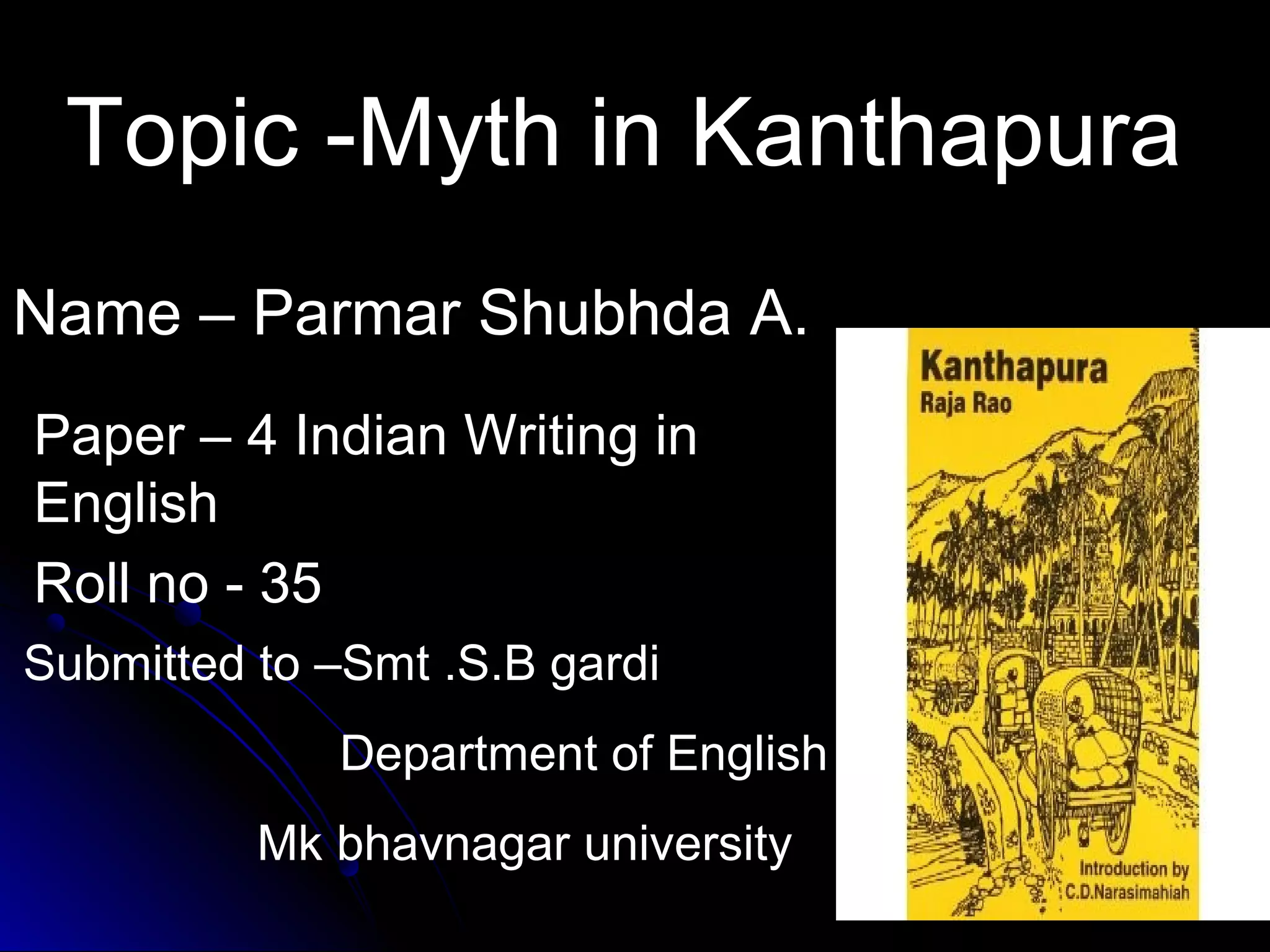
Topic -Myth in Kanthapura
Name – Parmar Shubhda A.
Paper – 4 Indian Writing in
English
Roll no - 35
Submitted to –Smt .S.B gardi
Department of English
Mk bhavnagar university
What is Myth ?
“Myth is neither a
lie ,
Nor a confession it is an
inflection”
- Joseph Campbell
Alan W. Watts View ,

“Myth is to be defined as a complex of stories
- some no doubt fact and some fantasy
which for various reasons, human beings
regard as demonstrations of the inner
meaning of the universe and of human life . ”
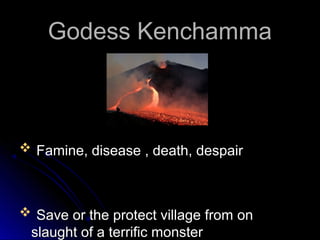
Godess Kenchamma

 Famine, disease , death, despair

 Save or the protect village from on

slaught of a terrific monster
 Mythical elements


Combination

Puranic and folktale elements
 Examples:

Gandhi – Shri Ram
Mother India -Sita
Britishers - Ravan
Nehruji - Bharat
 Significance of Myth
 Part

of Indian life

 Stories

in the Ramayana and
Mahabharatha

 Satyagrahi

in prison

The Harikathas
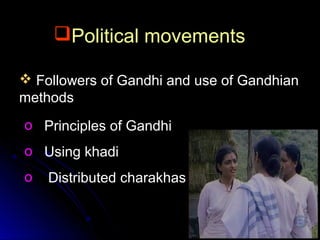
Political movements
 Followers of Gandhi and use of Gandhian
methods
o Principles of Gandhi
o Using khadi
o

Distributed charakhas
Thank You
Thank You

myth in kanthapura

  • 1.
    Topic -Myth inKanthapura Name – Parmar Shubhda A. Paper – 4 Indian Writing in English Roll no - 35 Submitted to –Smt .S.B gardi Department of English Mk bhavnagar university
  • 2.
    What is Myth? “Myth is neither a lie , Nor a confession it is an inflection” - Joseph Campbell
  • 3.
    Alan W. WattsView , “Myth is to be defined as a complex of stories - some no doubt fact and some fantasy which for various reasons, human beings regard as demonstrations of the inner meaning of the universe and of human life . ”
  • 4.
    Godess Kenchamma  Famine,disease , death, despair  Save or the protect village from on slaught of a terrific monster
  • 5.
  • 6.
     Examples: Gandhi –Shri Ram Mother India -Sita Britishers - Ravan Nehruji - Bharat
  • 7.
     Significance ofMyth  Part of Indian life  Stories in the Ramayana and Mahabharatha  Satyagrahi in prison The Harikathas
  • 8.
    Political movements  Followersof Gandhi and use of Gandhian methods o Principles of Gandhi o Using khadi o Distributed charakhas
  • 9.
  • 10.