Inflammatory Myositis
MSA and associated
manifestation
Dr. Abeer Alhalwani
Rheumatology F1
The inflammatory myopathy is a systemic autoimmune rheumatic
disorder that characterized by chronic muscle inflammation, muscle
weakness, fatigue and internal organ involvement.
The four main types of chronic inflammatory myopathies are:
-polymyositis
-dermatomyositis
-inclusion body myositis
-necrotizing autoimmune myopathy
is approximately 2 to 8 cases per million
people each year.
-For unknown reasons, polymyositis and
dermatomyositis are about twice as common
in women as in men,
while sporadic inclusion body myositis is more
common in men.
DM :
-It is a cell-mediated immunity in which CD4 T
lymphocytes bind to endothelial cells followed
by activation of the complement system
-Damage to the capillary and tissue hypoxia
-Perifasicular atrophy
PM and IBM:
-Indomysial infiltration with CD8 T lymphocytes
invade non-necrotic muscle fibers
-MHC class 1 overexpression
-Endoplasmic reticulum stress
-Myofiber damage
Pathognomonic:
heliotrope rash, Edema of eyelid, Gottron's sign, Gottron's
papules,
Characteristic:
Shawl sign, nail-fold bleeding, scalp scaly disease, photosensitive
poikiloderma
Occasional:
Erythema (holster sign), calsinosis, skin ulcer, cutaneous
vasculitis.
skin ulcer,
cutaneous vasculitis and
bullous rash
Variable prevalence 18-53%
Overlap syndrome
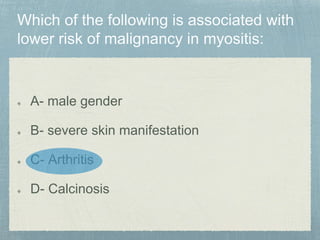
Low prevalence in cancer associated and
IBM
Some patients had joint symptoms prior to
weakness
most common : symmetrical polyarthritis
non-erosive (erosion: overlap)
Floppy thumb: calcinosis at the tendons
resulting in joint subluxation, associated with
anti-Jo1.
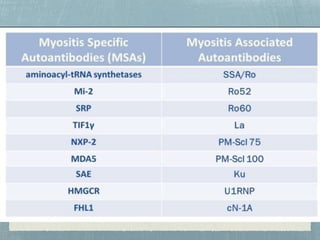
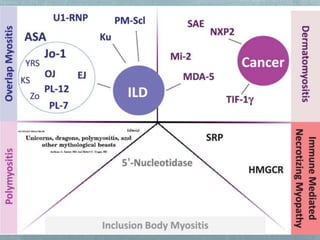
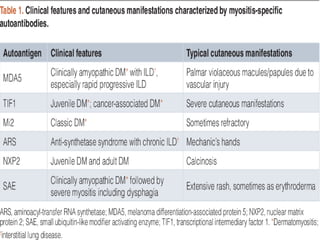
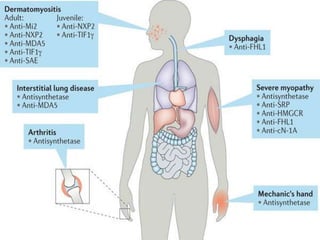
most commonly associated with anti-
synthetase antibody (Jo1)
seen in anti-MDA5
PM-Scl
Associated with worse outcome
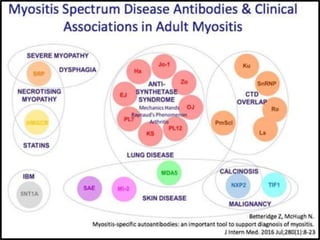
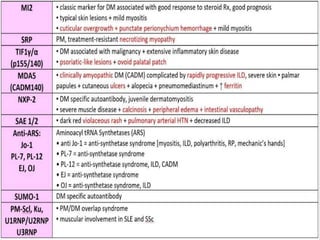
Anti-Synthetase syndrome:
most common is Anti-Jo1
Anti-PL12 more severe ILD
Anti-PL7 higher rate of RPILD
Anti-MDA5:
acute onset and RPILD
Poor outcome
Anti-Ro/Jo1 overlap: higher rates for ILD
Anti Ro: more severe ILD
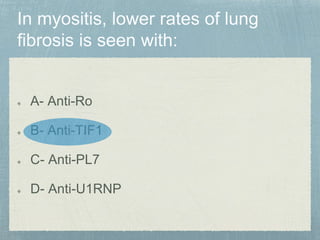
Low rates of ILD:
Anti SRP
Anti Mi2
Anti TIF1
Anti NXP-2
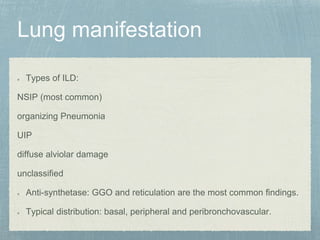
Types of ILD:
NSIP (most common)
organizing Pneumonia
UIP
diffuse alviolar damage
unclassified
Anti-synthetase: GGO and reticulation are the most common findings.
Typical distribution: basal, peripheral and peribronchovascular.
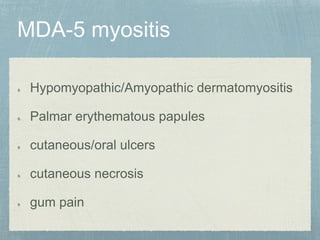
Hypomyopathic/Amyopathic dermatomyositis
Palmar erythematous papules
cutaneous/oral ulcers
cutaneous necrosis
gum pain
Myocarditis reported
Can have elevated muscle enzymes with no
weakness
ILD can be severe and fulminant (RPILD)
Presence of pneumomediastinum > worse
prognosis
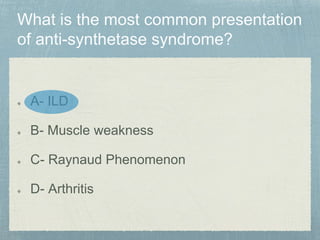
Can present as:
ILD without myositis (32%)
Isolated myositis (26%)
ILD with myositis (22%)
Isolated arthritis (17%)
Rapid and severe weakness
Dysphagia , Very high muscle enzymes ,Cardiomyopathy
Associated with:
Anti-SRP
Anti HMGCR
Malignancy
Histology:
Myofiber necrosis, Phagocytosis by Macrophage, Complement binding in sarcolemma
Resistant to treatment
Classic presentation with rash (can precede
the weakness)
Low incidence of ILD and cardiac
involvement
Low risk of malignancy
Well response to treatment
prevalent in males (2-3:1)
Insidious Asymmetric weakness in proximal legs and distal arms
(hip flexor and finger flexor)
Sparing thinner, hypothenar and finger extensors
Facial weakness (55%)
Dysphagia
No pulmonary or cardiac involvement
No risk of malignancy
Neuropathic findings can be present (misdiagnosed as
ALS)
Histopathology:
Endomysial infiltrates
Cytoplasmic inclusions
Rimmed vacuoles
Can be associated with Anti-cN1A
Higher risk:
-DM compared to PM
-male compared to females
-elder compared to younger Pt
Anti-TIF1:
-Associated with malignancy in 75% of cases in adults
-Severe skin disease
-Less likely to have ILD, arthritis and raynaud
Anti-NXP2:
-Calsinosis
Anti PM/Scl in Myositis-Systemic sclerosis
overlap
Anti U-1 RNP in MCTD which can have
myositis
Anti-Ku in association of SLE, SSc or UCTD
overlapping with myositis
ILD is common
A- Anti-Ro
B- Anti-TIF1
C- Anti-PL7
D- Anti-U1RNP
A- ILD
B- Muscle weakness
C- Raynaud Phenomenon
D- Arthritis
A- male gender
B- severe skin manifestation
C- Arthritis
D- Calcinosis
Rheumatology secret
Uptodate
www.rheumatology.medicinematters.com
www.myositis.org
myositis.pptx

myositis.pptx

  • 1.
    Inflammatory Myositis MSA andassociated manifestation Dr. Abeer Alhalwani Rheumatology F1
  • 4.
    The inflammatory myopathyis a systemic autoimmune rheumatic disorder that characterized by chronic muscle inflammation, muscle weakness, fatigue and internal organ involvement. The four main types of chronic inflammatory myopathies are: -polymyositis -dermatomyositis -inclusion body myositis -necrotizing autoimmune myopathy
  • 5.
    is approximately 2to 8 cases per million people each year. -For unknown reasons, polymyositis and dermatomyositis are about twice as common in women as in men, while sporadic inclusion body myositis is more common in men.
  • 6.
    DM : -It isa cell-mediated immunity in which CD4 T lymphocytes bind to endothelial cells followed by activation of the complement system -Damage to the capillary and tissue hypoxia -Perifasicular atrophy
  • 7.
    PM and IBM: -Indomysialinfiltration with CD8 T lymphocytes invade non-necrotic muscle fibers -MHC class 1 overexpression -Endoplasmic reticulum stress -Myofiber damage
  • 8.
    Pathognomonic: heliotrope rash, Edemaof eyelid, Gottron's sign, Gottron's papules, Characteristic: Shawl sign, nail-fold bleeding, scalp scaly disease, photosensitive poikiloderma Occasional: Erythema (holster sign), calsinosis, skin ulcer, cutaneous vasculitis.
  • 9.
  • 11.
    Variable prevalence 18-53% Overlapsyndrome Low prevalence in cancer associated and IBM Some patients had joint symptoms prior to weakness
  • 12.
    most common :symmetrical polyarthritis non-erosive (erosion: overlap) Floppy thumb: calcinosis at the tendons resulting in joint subluxation, associated with anti-Jo1.
  • 13.
    most commonly associatedwith anti- synthetase antibody (Jo1) seen in anti-MDA5 PM-Scl
  • 15.
    Associated with worseoutcome Anti-Synthetase syndrome: most common is Anti-Jo1 Anti-PL12 more severe ILD Anti-PL7 higher rate of RPILD Anti-MDA5: acute onset and RPILD Poor outcome
  • 16.
    Anti-Ro/Jo1 overlap: higherrates for ILD Anti Ro: more severe ILD Low rates of ILD: Anti SRP Anti Mi2 Anti TIF1 Anti NXP-2
  • 17.
    Types of ILD: NSIP(most common) organizing Pneumonia UIP diffuse alviolar damage unclassified Anti-synthetase: GGO and reticulation are the most common findings. Typical distribution: basal, peripheral and peribronchovascular.
  • 19.
    Hypomyopathic/Amyopathic dermatomyositis Palmar erythematouspapules cutaneous/oral ulcers cutaneous necrosis gum pain
  • 20.
    Myocarditis reported Can haveelevated muscle enzymes with no weakness ILD can be severe and fulminant (RPILD) Presence of pneumomediastinum > worse prognosis
  • 21.
    Can present as: ILDwithout myositis (32%) Isolated myositis (26%) ILD with myositis (22%) Isolated arthritis (17%)
  • 22.
    Rapid and severeweakness Dysphagia , Very high muscle enzymes ,Cardiomyopathy Associated with: Anti-SRP Anti HMGCR Malignancy Histology: Myofiber necrosis, Phagocytosis by Macrophage, Complement binding in sarcolemma Resistant to treatment
  • 23.
    Classic presentation withrash (can precede the weakness) Low incidence of ILD and cardiac involvement Low risk of malignancy Well response to treatment
  • 24.
    prevalent in males(2-3:1) Insidious Asymmetric weakness in proximal legs and distal arms (hip flexor and finger flexor) Sparing thinner, hypothenar and finger extensors Facial weakness (55%) Dysphagia No pulmonary or cardiac involvement No risk of malignancy
  • 25.
    Neuropathic findings canbe present (misdiagnosed as ALS) Histopathology: Endomysial infiltrates Cytoplasmic inclusions Rimmed vacuoles Can be associated with Anti-cN1A
  • 26.
    Higher risk: -DM comparedto PM -male compared to females -elder compared to younger Pt Anti-TIF1: -Associated with malignancy in 75% of cases in adults -Severe skin disease -Less likely to have ILD, arthritis and raynaud Anti-NXP2: -Calsinosis
  • 27.
    Anti PM/Scl inMyositis-Systemic sclerosis overlap Anti U-1 RNP in MCTD which can have myositis Anti-Ku in association of SLE, SSc or UCTD overlapping with myositis ILD is common
  • 30.
    A- Anti-Ro B- Anti-TIF1 C-Anti-PL7 D- Anti-U1RNP
  • 31.
    A- ILD B- Muscleweakness C- Raynaud Phenomenon D- Arthritis
  • 32.
    A- male gender B-severe skin manifestation C- Arthritis D- Calcinosis
  • 33.