The effectiveness of computer simulations on the achievement of
pupils with learning difficulties in science: A case from Egypt
Mohamed H. EL-Adawy

University of Birmingham, UK

Introduction
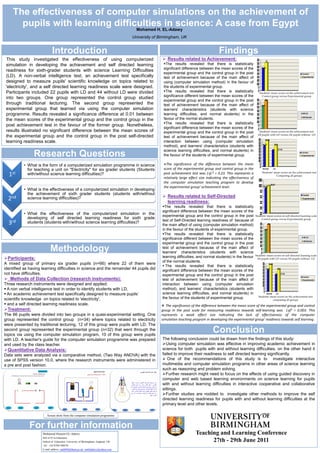
This study investigated the effectiveness of using computerized
simulation in developing the achievement and self directed learning
readiness for sixth-grader students with science Learning Difficulties
(LD). A non-verbal intelligence test, an achievement test specifically
designed to measure pupils' scientific knowledge on topics related to
'electricity', and a self directed learning readiness scale were designed.
Participants included 22 pupils with LD and 44 without LD were divided
into two groups. One group represented the control group studied
through traditional lecturing. The second group represented the
experimental group that learned via using the computer simulation
programme. Results revealed a significance difference at 0.01 between
the mean scores of the experimental group and the control group in the
post achievement test in the favour of the former group. Nonetheless,
results illustrated no significant difference between the mean scores of
the experimental group and the control group in the post self-directed
learning readiness scale.

Research Questions

Findings
 Results related to Achievement:
The results revealed that there is statistically
significant difference between the mean scores of the
experimental group and the control group in the post
test of achievement because of the main affect of
using (computer simulation method) in the favour of
the students of experimental group.
The results revealed that there is statistically
significance different between the mean scores of the
experimental group and the control group in the post
test of achievement because of the main affect of
learners' characteristics (students with science
learning difficulties, and normal students) in the
favour of the normal students.
The results revealed that there is statistically
significant difference between the mean scores of the
experimental group and the control group in the post
test of achievement because of the main affect of
interaction between using (computer simulation
method), and learners' characteristics (students with
science learning difficulties, and normal students) in
the favour of the students of experimental group.

45

41

40
35

32.32

30
25

Control
Experimental

20
15
10
5
0

Students’ mean scores on the achievement test
Control group versus Experimental group
39

40
35
31.5

30
25

All LD

20

All Normal

15
10
5
0

Students’ mean scores on the achievement test
All pupils with LD versus All pupils without LD
45

43.36

40
34.73

35

35.8

30

27.92

25

Control
Experiemental

20
15
10

1st

2nd

3rd

• What is the form of a computerized simulation programme in science
for teaching a unit on "Electricity" for six grader students (Students
with/without science learning difficulties)?

• What is the effectiveness of a computerized simulation in developing
the achievement of sixth grader students (students with/without
science learning difficulties)?

• What the effectiveness of the computerized simulation in the
developing of self directed learning readiness for sixth grade
students (students with/without science learning difficulties)?

Methodology
Participants:
A mixed group of primary six grader pupils (n=66) where 22 of them were
identified as having learning difficulties in science and the remainder 44 pupils did
not have difficulties.

 Methods of Data Collection (research instruments):
Three research instruments were designed and applied;
 A non verbal intelligence test in order to identify students with LD,
 An academic achievement test specifically designed to measure pupils’
scientific knowledge on topics related to 'electricity',
 and a self directed learning readiness scale.

Treatment:
The 66 pupils were divided into two groups in a quasi-experimental setting. One
group represented the control group (n=34) where topics related to electricity
were presented by traditional lecturing, 12 of this group were pupils with LD. The
second group represented the experimental group (n=32) that went through the
topics via using the computer simulation program, 10 of this group were pupils
with LD. A teacher's guide for the computer simulation programme was prepared
and used by the class teacher.

Quantitative Data Analysis:
Data sets were analyzed via a comparative method, (Two Way ANOVA) with the
use of SPSS version 10.0, where the research instruments were administered in
a pre and post fashion.

The

significance of the difference between the mean
score of the experimental group and control group in the
post achievement test was () 2 = 0.23. This represents a
relatively large effect size indicating the effectiveness of
the computer simulation teaching program to develop
the experimental group' achievement level.

5
0
Normal

LD

Students’ mean scores on the achievement test
Comparing all groups
102
99.87

100 98.98
98

 Results related to Self-Directed
learning readiness:
The results revealed that there is statistically
significant difference between the mean scores of the
experimental group and the control group in the post
test of Self-Directed learning readiness of because of
the main affect of using (computer simulation method)
in the favour of the students of experimental group.
The results revealed that there is statistically
significance different between the mean scores of the
experimental group and the control group in the post
test of achievement because of the main affect of
learners' characteristics (students with science
learning difficulties, and normal students) in the favour
of the normal students.
 The results revealed that there is statistically
significant difference between the mean scores of the
experimental group and the control group in the post
test of achievement because of the main affect of
interaction between using (computer simulation
method), and learners' characteristics (students with
science learning difficulties, and normal students) in
the favour of the students of experimental group.

Control
Experiemental

96
94
92
90

Students’ mean scores on self directed learning scale
Control group versus Experimental group
39

40
35
30

31.5

25
All LD

20

All Normal

15
10
5
0

Students’ mean scores on self directed learning scale
All pupils with LD versus All pupils without LD
45

43.36

40
35

34.73

35.8

30

27.92

25

Control
Experiemental

20
15
10
5
0
Normal

LD

Students’ mean scores on the achievement test
comparing all groups

 The significance of the difference between the mean score of the experimental group and control

group in the post scale for measuring readiness towards self-learning was ()2 = 0.003. This
represents a weak effect size indicating the lack of effectiveness of the computer
simulation teaching program in developing the experimental group' readiness towards self learning.

Conclusion
The following conclusion could be drawn from the findings of this study:
Using computer simulation was effective in improving academic achievement in
science for both pupils with and without learning difficulties, on the other hand it
failed to improve their readiness to self directed learning significantly.
 One of the recommendations of this study is to investigate interactive
multimedia and computer simulation programs in other areas of science learning
such as reasoning and problem solving.
Further research might need to focus on the effects of using guided discovery in
computer and web based learning environments on science learning for pupils
with and without learning difficulties in interactive cooperative and collaborative
sittings.
Further studies are nodded to investigate other methods to improve the self
directed learning readiness for pupils with and without learning difficulties at the
primary level and other levels.

Screen shots from the computer simulation programme

For further information
Mohamed Hussein EL-Adawy
MA of IT in Education
School of Education, University of Birmingham, England, UK
Tel.: +44 07901300259.
E-mail address: msh960@bham.ac.uk, msfeladawy@yahoo.com

Teaching and Learning Conference
27th - 29th June 2011

A poster presented in teaching and learning conference, University of Birmingham

  • 1.
    The effectiveness ofcomputer simulations on the achievement of pupils with learning difficulties in science: A case from Egypt Mohamed H. EL-Adawy University of Birmingham, UK Introduction This study investigated the effectiveness of using computerized simulation in developing the achievement and self directed learning readiness for sixth-grader students with science Learning Difficulties (LD). A non-verbal intelligence test, an achievement test specifically designed to measure pupils' scientific knowledge on topics related to 'electricity', and a self directed learning readiness scale were designed. Participants included 22 pupils with LD and 44 without LD were divided into two groups. One group represented the control group studied through traditional lecturing. The second group represented the experimental group that learned via using the computer simulation programme. Results revealed a significance difference at 0.01 between the mean scores of the experimental group and the control group in the post achievement test in the favour of the former group. Nonetheless, results illustrated no significant difference between the mean scores of the experimental group and the control group in the post self-directed learning readiness scale. Research Questions Findings  Results related to Achievement: The results revealed that there is statistically significant difference between the mean scores of the experimental group and the control group in the post test of achievement because of the main affect of using (computer simulation method) in the favour of the students of experimental group. The results revealed that there is statistically significance different between the mean scores of the experimental group and the control group in the post test of achievement because of the main affect of learners' characteristics (students with science learning difficulties, and normal students) in the favour of the normal students. The results revealed that there is statistically significant difference between the mean scores of the experimental group and the control group in the post test of achievement because of the main affect of interaction between using (computer simulation method), and learners' characteristics (students with science learning difficulties, and normal students) in the favour of the students of experimental group. 45 41 40 35 32.32 30 25 Control Experimental 20 15 10 5 0 Students’ mean scores on the achievement test Control group versus Experimental group 39 40 35 31.5 30 25 All LD 20 All Normal 15 10 5 0 Students’ mean scores on the achievement test All pupils with LD versus All pupils without LD 45 43.36 40 34.73 35 35.8 30 27.92 25 Control Experiemental 20 15 10 1st 2nd 3rd • What is the form of a computerized simulation programme in science for teaching a unit on "Electricity" for six grader students (Students with/without science learning difficulties)? • What is the effectiveness of a computerized simulation in developing the achievement of sixth grader students (students with/without science learning difficulties)? • What the effectiveness of the computerized simulation in the developing of self directed learning readiness for sixth grade students (students with/without science learning difficulties)? Methodology Participants: A mixed group of primary six grader pupils (n=66) where 22 of them were identified as having learning difficulties in science and the remainder 44 pupils did not have difficulties.  Methods of Data Collection (research instruments): Three research instruments were designed and applied;  A non verbal intelligence test in order to identify students with LD,  An academic achievement test specifically designed to measure pupils’ scientific knowledge on topics related to 'electricity',  and a self directed learning readiness scale. Treatment: The 66 pupils were divided into two groups in a quasi-experimental setting. One group represented the control group (n=34) where topics related to electricity were presented by traditional lecturing, 12 of this group were pupils with LD. The second group represented the experimental group (n=32) that went through the topics via using the computer simulation program, 10 of this group were pupils with LD. A teacher's guide for the computer simulation programme was prepared and used by the class teacher. Quantitative Data Analysis: Data sets were analyzed via a comparative method, (Two Way ANOVA) with the use of SPSS version 10.0, where the research instruments were administered in a pre and post fashion. The significance of the difference between the mean score of the experimental group and control group in the post achievement test was () 2 = 0.23. This represents a relatively large effect size indicating the effectiveness of the computer simulation teaching program to develop the experimental group' achievement level. 5 0 Normal LD Students’ mean scores on the achievement test Comparing all groups 102 99.87 100 98.98 98  Results related to Self-Directed learning readiness: The results revealed that there is statistically significant difference between the mean scores of the experimental group and the control group in the post test of Self-Directed learning readiness of because of the main affect of using (computer simulation method) in the favour of the students of experimental group. The results revealed that there is statistically significance different between the mean scores of the experimental group and the control group in the post test of achievement because of the main affect of learners' characteristics (students with science learning difficulties, and normal students) in the favour of the normal students.  The results revealed that there is statistically significant difference between the mean scores of the experimental group and the control group in the post test of achievement because of the main affect of interaction between using (computer simulation method), and learners' characteristics (students with science learning difficulties, and normal students) in the favour of the students of experimental group. Control Experiemental 96 94 92 90 Students’ mean scores on self directed learning scale Control group versus Experimental group 39 40 35 30 31.5 25 All LD 20 All Normal 15 10 5 0 Students’ mean scores on self directed learning scale All pupils with LD versus All pupils without LD 45 43.36 40 35 34.73 35.8 30 27.92 25 Control Experiemental 20 15 10 5 0 Normal LD Students’ mean scores on the achievement test comparing all groups  The significance of the difference between the mean score of the experimental group and control group in the post scale for measuring readiness towards self-learning was ()2 = 0.003. This represents a weak effect size indicating the lack of effectiveness of the computer simulation teaching program in developing the experimental group' readiness towards self learning. Conclusion The following conclusion could be drawn from the findings of this study: Using computer simulation was effective in improving academic achievement in science for both pupils with and without learning difficulties, on the other hand it failed to improve their readiness to self directed learning significantly.  One of the recommendations of this study is to investigate interactive multimedia and computer simulation programs in other areas of science learning such as reasoning and problem solving. Further research might need to focus on the effects of using guided discovery in computer and web based learning environments on science learning for pupils with and without learning difficulties in interactive cooperative and collaborative sittings. Further studies are nodded to investigate other methods to improve the self directed learning readiness for pupils with and without learning difficulties at the primary level and other levels. Screen shots from the computer simulation programme For further information Mohamed Hussein EL-Adawy MA of IT in Education School of Education, University of Birmingham, England, UK Tel.: +44 07901300259. E-mail address: msh960@bham.ac.uk, msfeladawy@yahoo.com Teaching and Learning Conference 27th - 29th June 2011