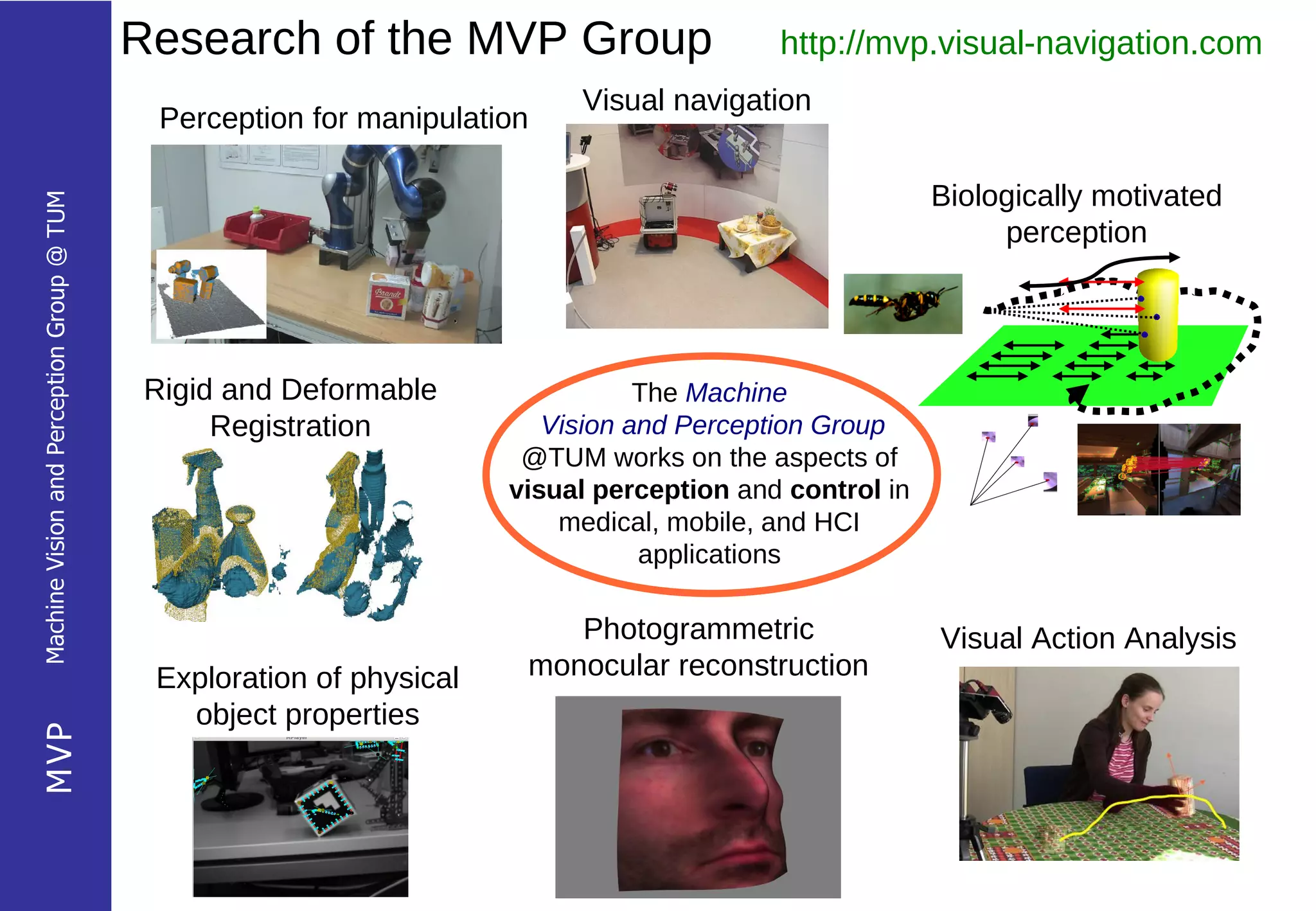
Research of the MVP Group                       http://mvp.visual-navigation.com
                                                                            Visual navigation
                                              Perception for manipulation

                                                                                                          Biologically motivated
Machine Vision and Perception Group @ TUM


                                                                                                               perception


                                             Rigid and Deformable                 The Machine
                                                  Registration            Vision and Perception Group
                                                                        @TUM works on the aspects of
                                                                       visual perception and control in
                                                                           medical, mobile, and HCI
                                                                                  applications

                                                                           Photogrammetric                Visual Action Analysis
                                             Exploration of physical    monocular reconstruction
                                               object properties
MVP
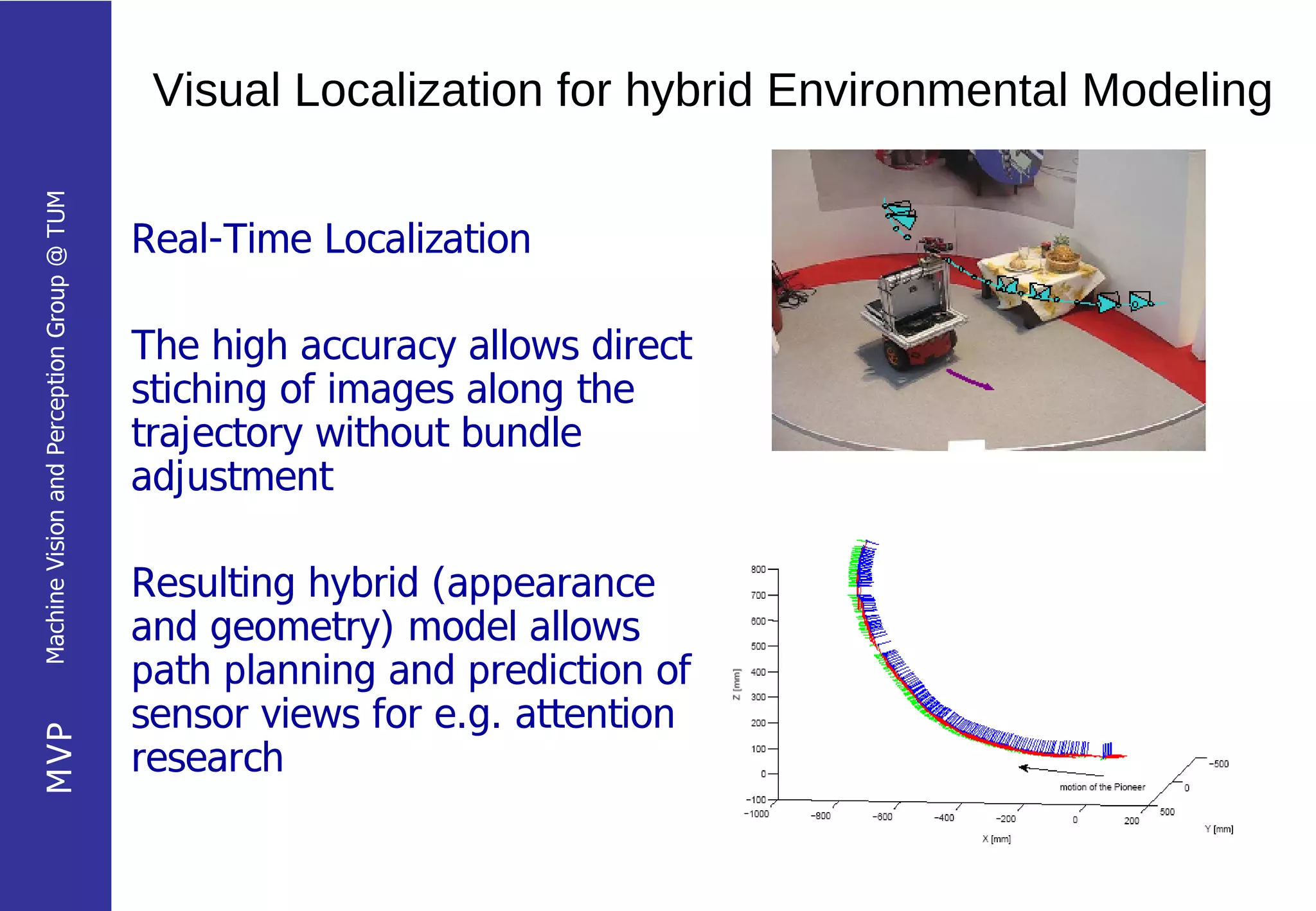
Visual Localization for hybrid Environmental Modeling
Machine Vision and Perception Group @ TUM


                                            Real-Time Localization

                                            The high accuracy allows direct
                                            stiching of images along the
                                            trajectory without bundle
                                            adjustment

                                            Resulting hybrid (appearance
                                            and geometry) model allows
                                            path planning and prediction of
                                            sensor views for e.g. attention
MVP


                                            research
MVP   Machine Vision and Perception Group @ TUM
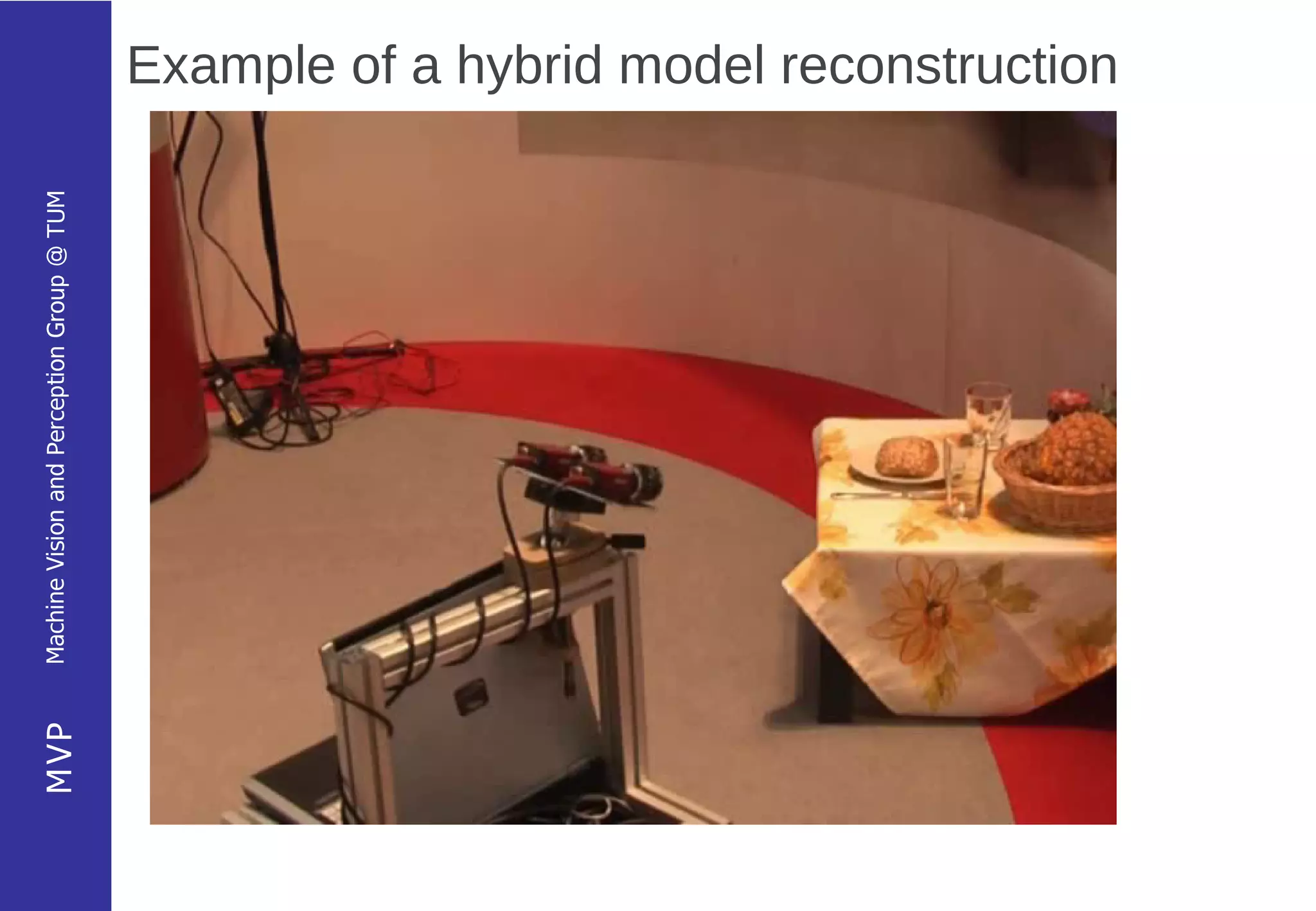
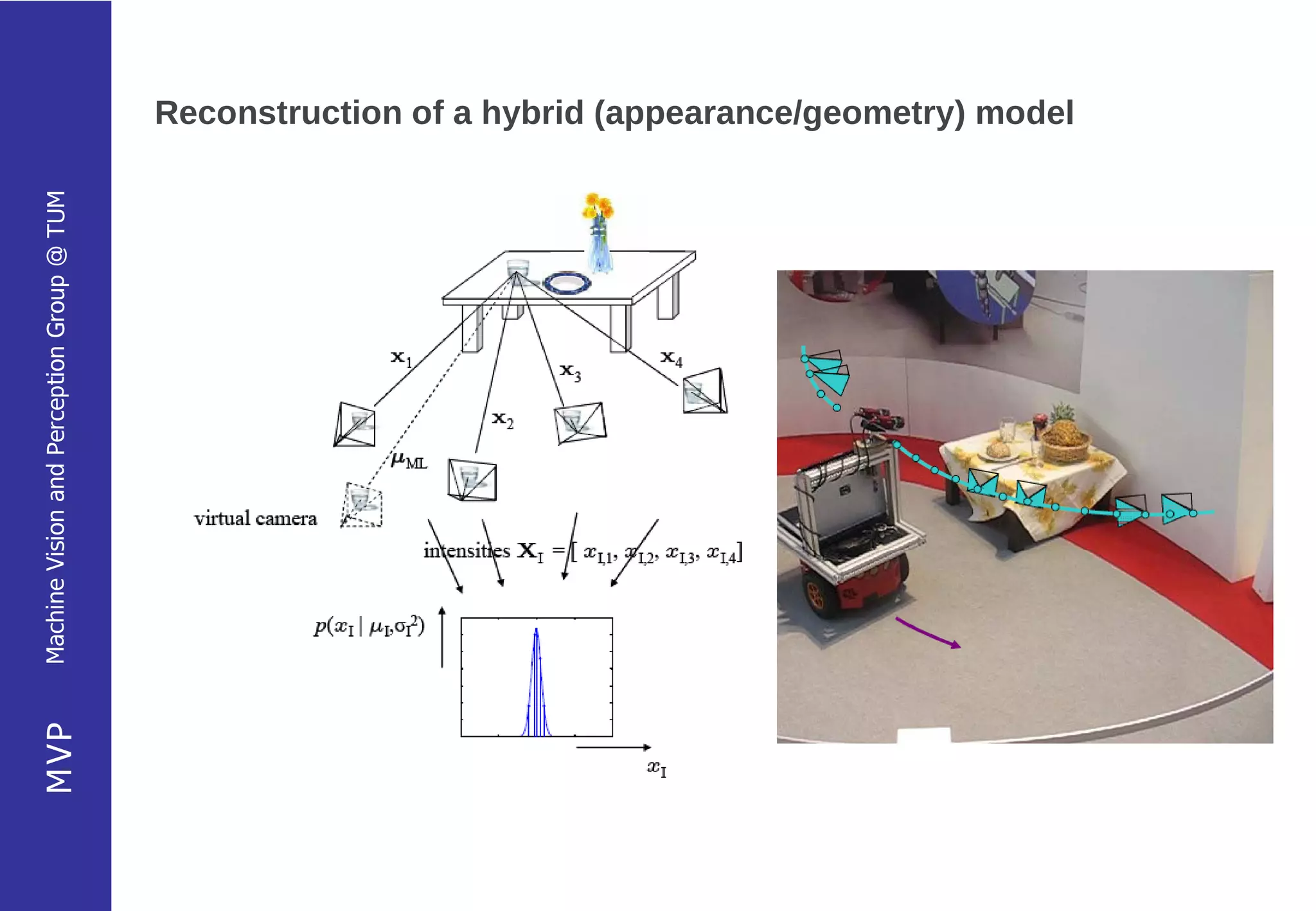
                                                  Example of a hybrid model reconstruction
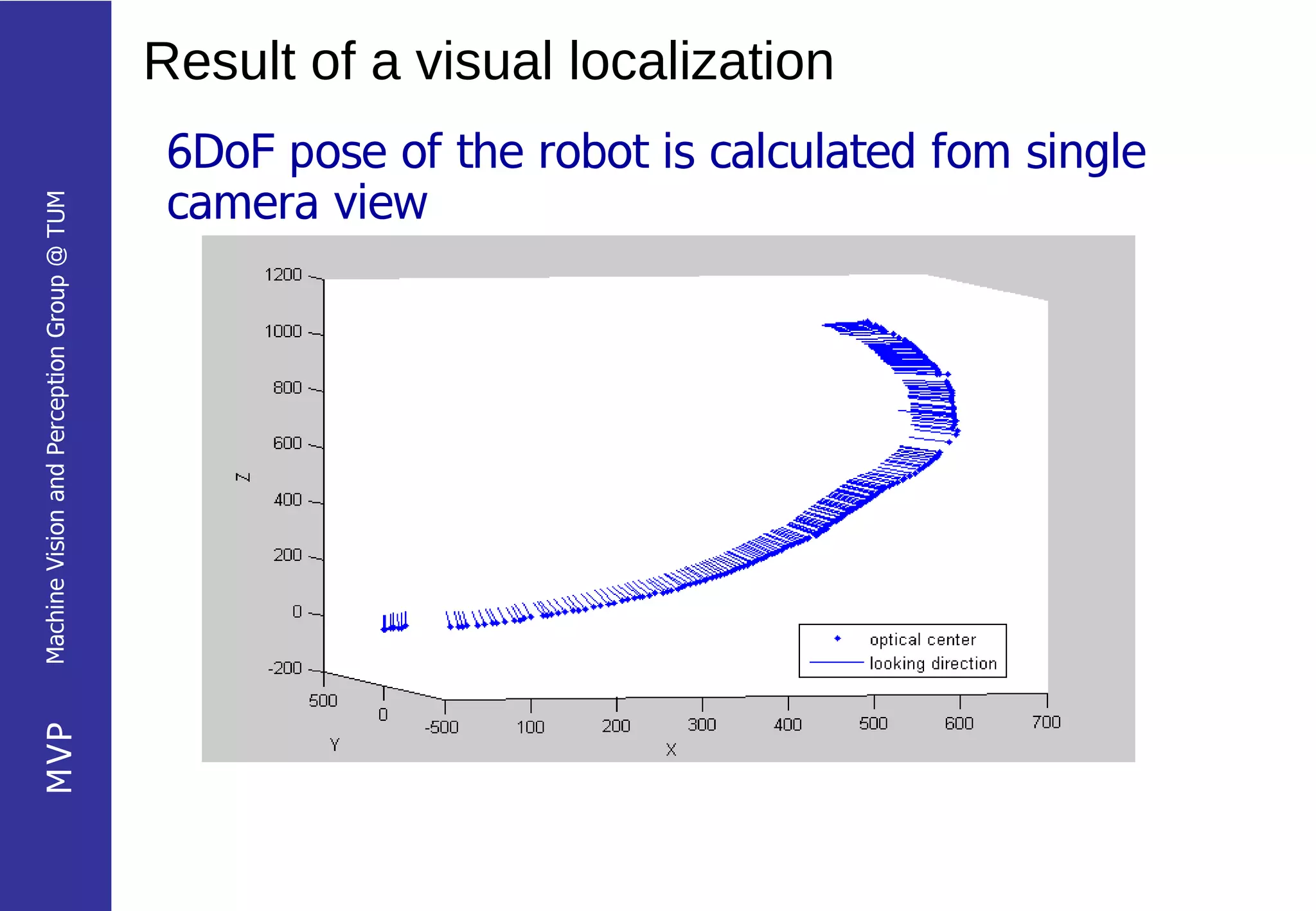
Result of a visual localization
                                             6DoF pose of the robot is calculated fom single
                                             camera view
Machine Vision and Perception Group @ TUM
MVP
Reconstruction of a hybrid (appearance/geometry) model
Machine Vision and Perception Group @ TUM
MVP
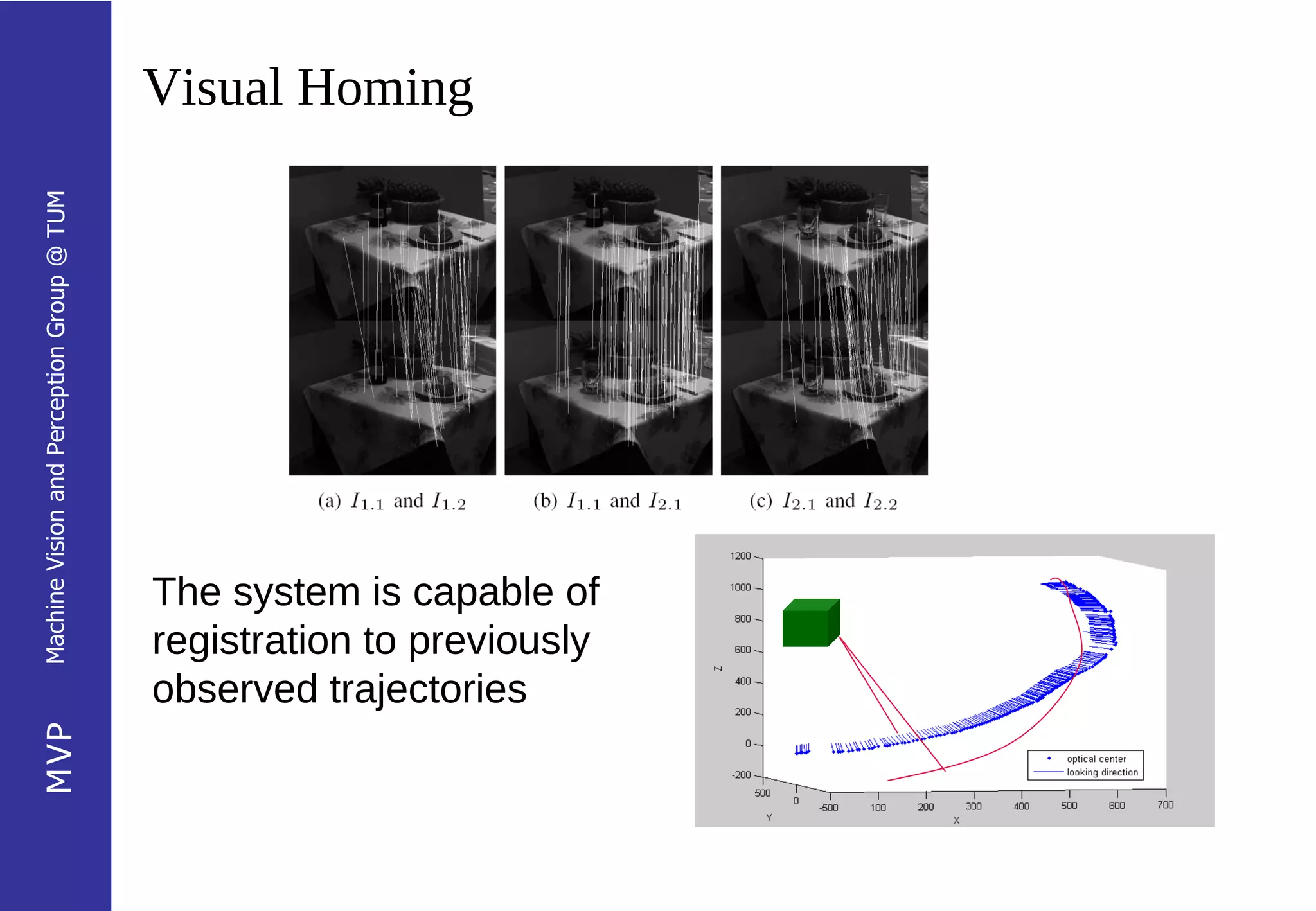
Visual Homing
Machine Vision and Perception Group @ TUM


                                            The system is capable of
                                            registration to previously
                                            observed trajectories
MVP
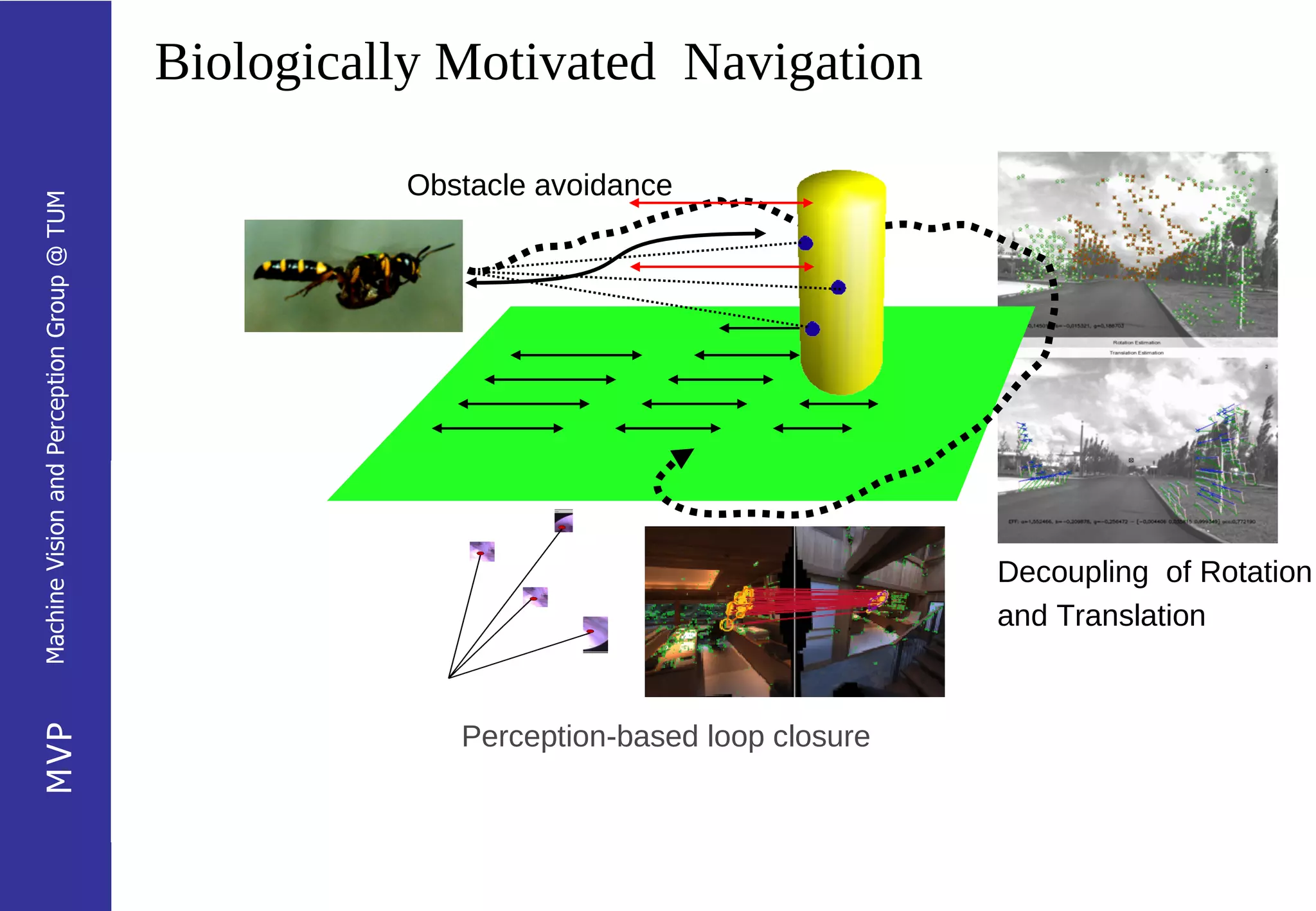
Biologically Motivated Navigation

                                                      Obstacle avoidance
Machine Vision and Perception Group @ TUM


                                                                                         Decoupling of Rotation
                                                                                         and Translation


                                                         Perception-based loop closure
MVP
MVP   Machine Vision and Perception Group @ TUM
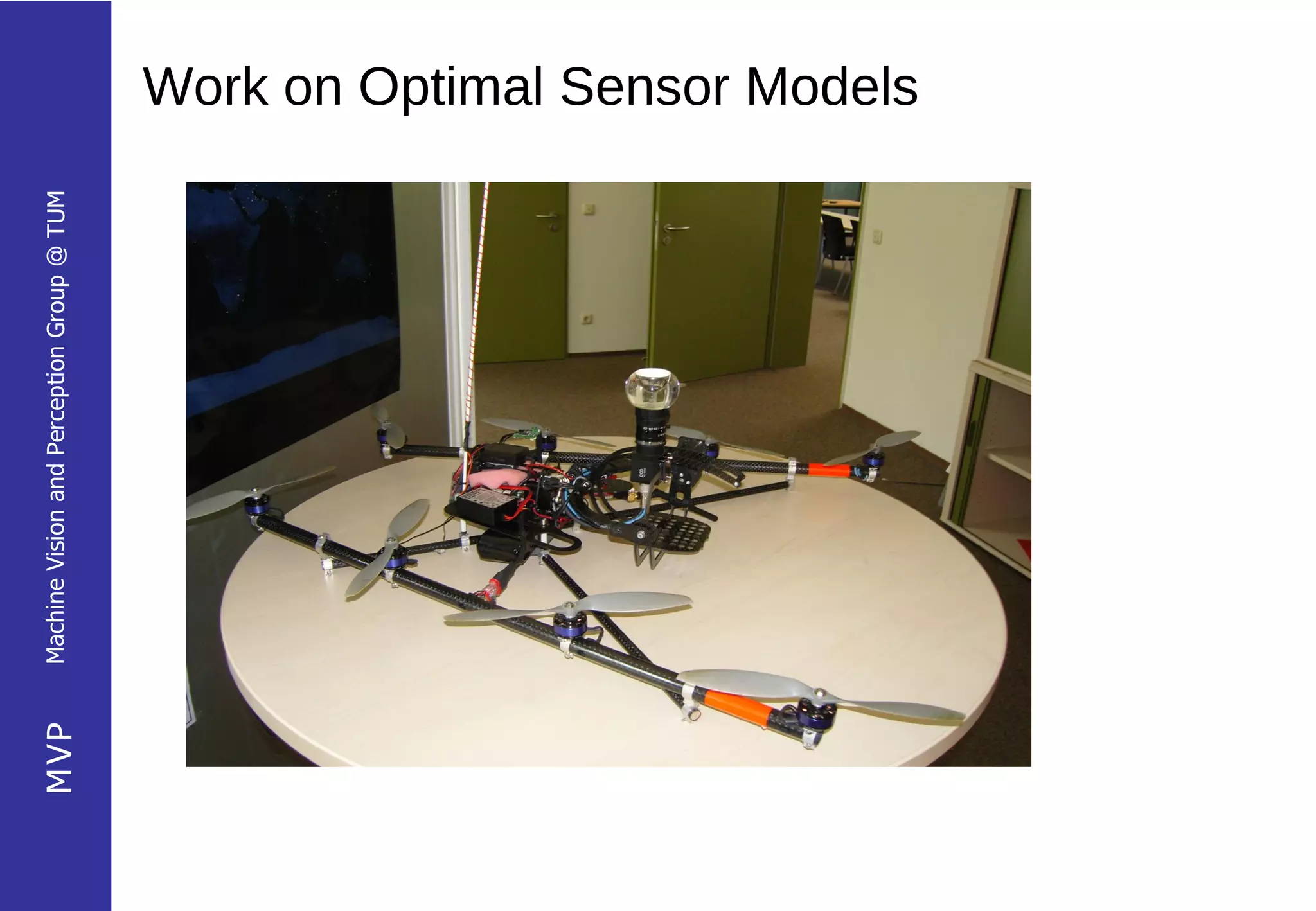
                                                  Work on Optimal Sensor Models
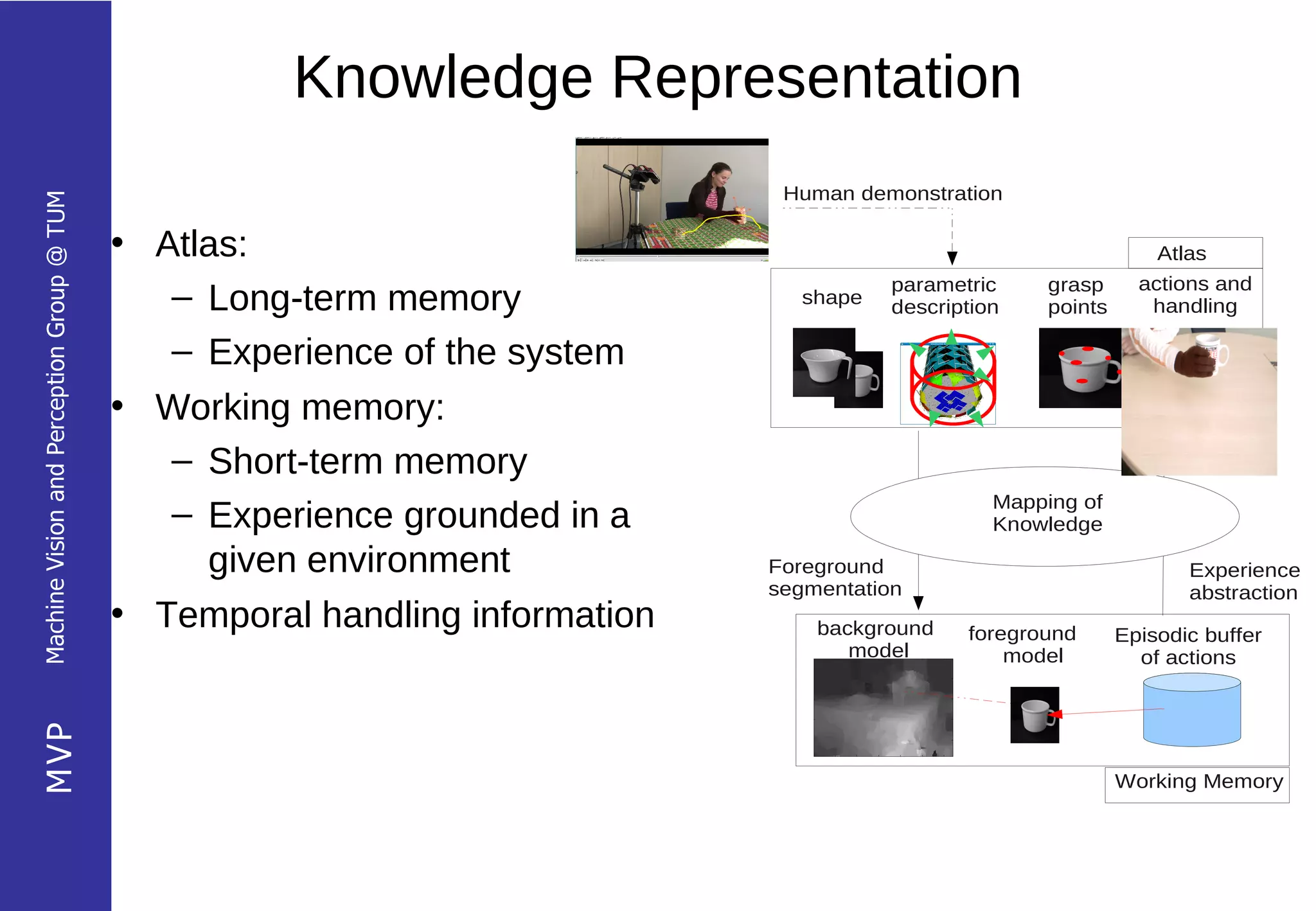
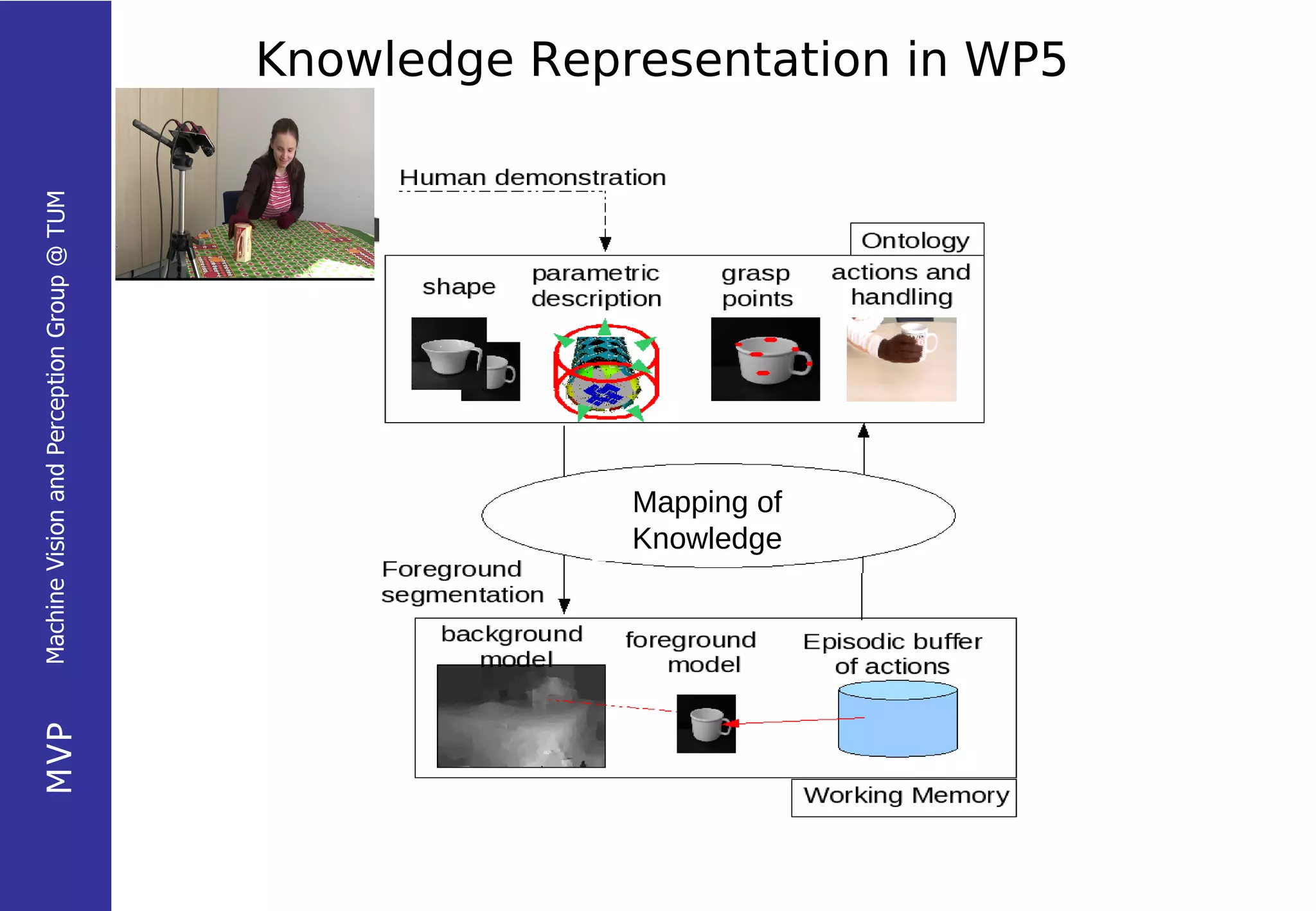
Knowledge Representation
                                                                               Human demonstration
Machine Vision and Perception Group @ TUM


                                            • Atlas:                                                                 Atlas
                                                                                         parametric     grasp      actions and
                                               – Long-term memory                shape   description    points      handling

                                               – Experience of the system
                                            • Working memory:
                                               – Short-term memory
                                                                                                   Mapping of
                                               – Experience grounded in a                          Knowledge

                                                 given environment            Foreground                                Experience
                                                                              segmentation                              abstraction
                                            • Temporal handling information       background    foreground       Episodic buffer
                                                                                     model          model          of actions
MVP


                                                                                                                 Working Memory
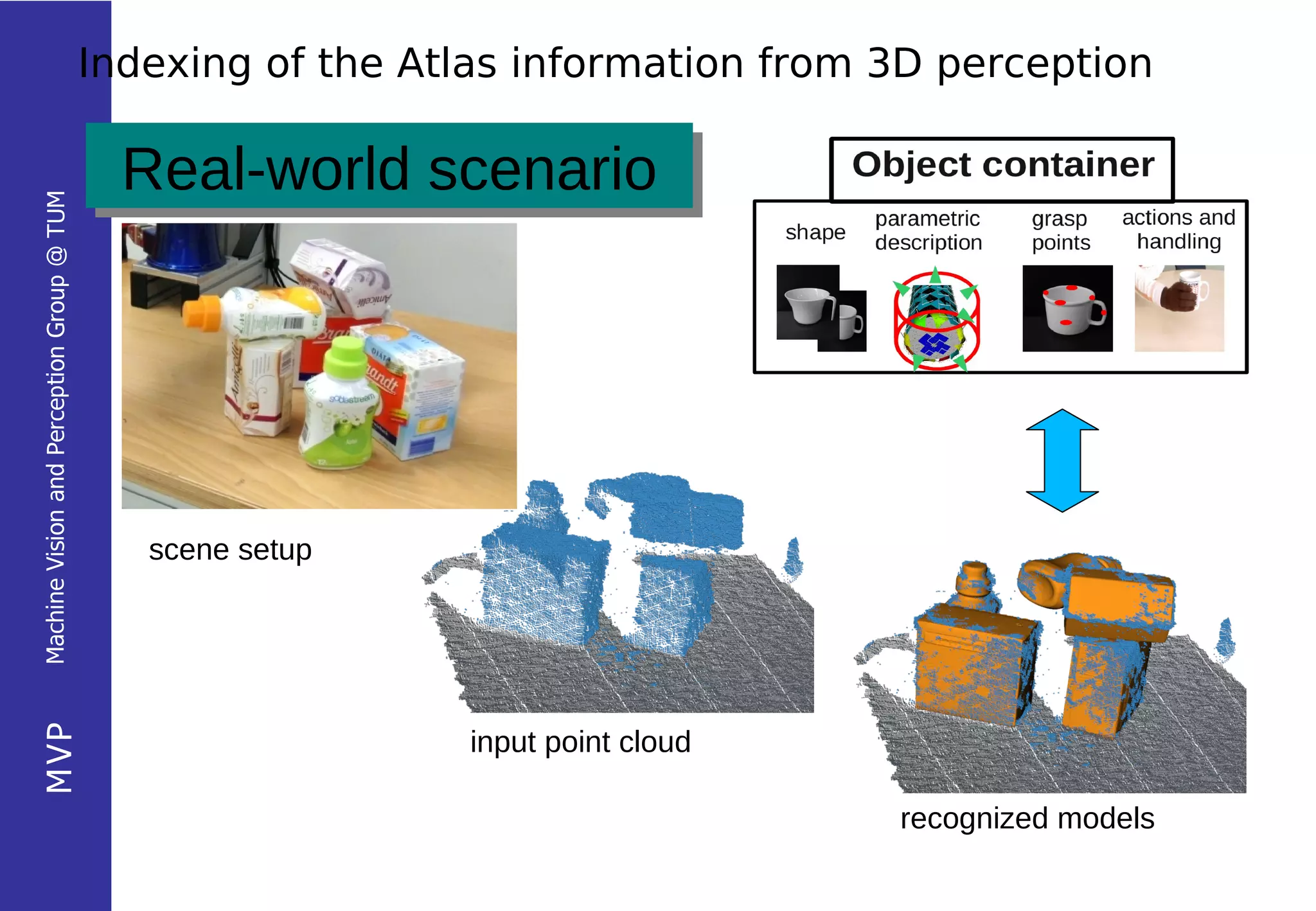
Indexing of the Atlas information from 3D perception

                                              Real-world scenario
                                              Real-world scenario
Machine Vision and Perception Group @ TUM


                                               scene setup
MVP


                                                              input point cloud

                                                                                   recognized models
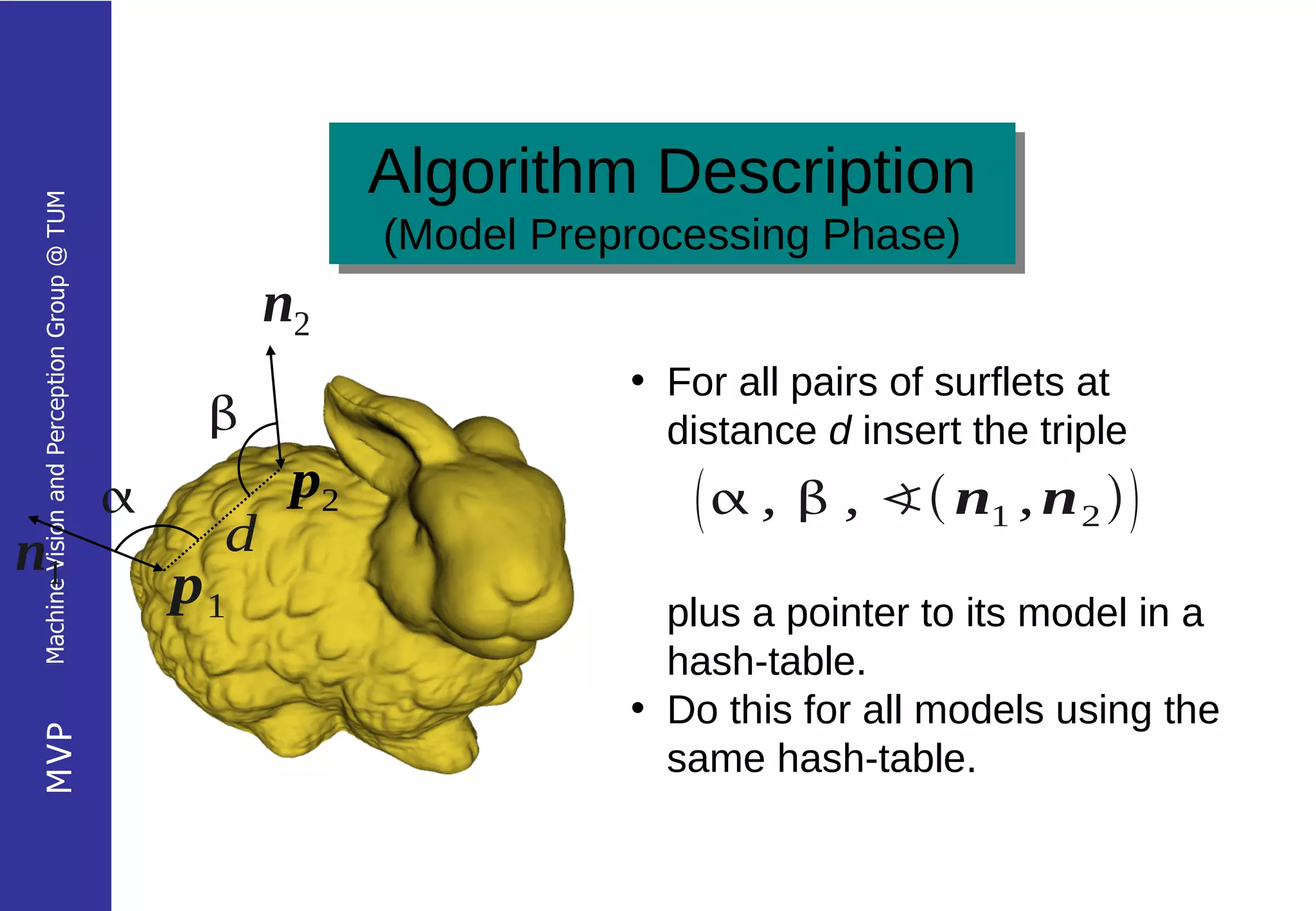
Algorithm Description
                                                            Algorithm Description
 Machine Vision and Perception Group @ TUM


                                                            (Model Preprocessing Phase)
                                                             (Model Preprocessing Phase)
                                                      n2
                                                                       • For all pairs of surflets at
                                                                        distance d insert the triple
                                                      p2                   ,  , ∢ n1 , n 2  
n1                                                d
                                                 p1                      plus a pointer to its model in a
                                                                         hash-table.
                                                                       • Do this for all models using the
MVP


                                                                         same hash-table.
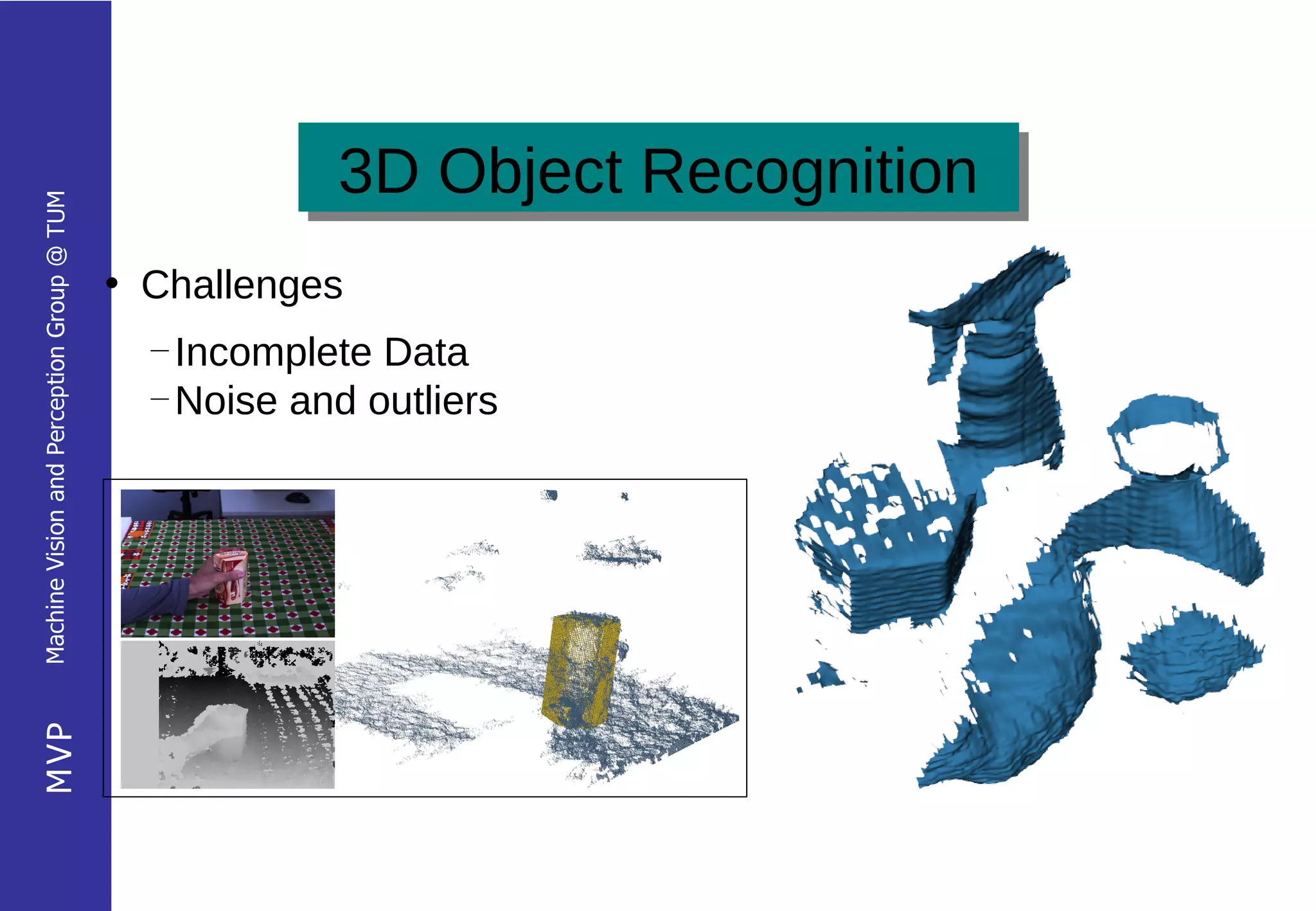
3D Object Recognition
                                                        3D Object Recognition
Machine Vision and Perception Group @ TUM


                                            • Challenges
                                              ―
                                                Incomplete Data
                                              ―
                                                Noise and outliers
MVP
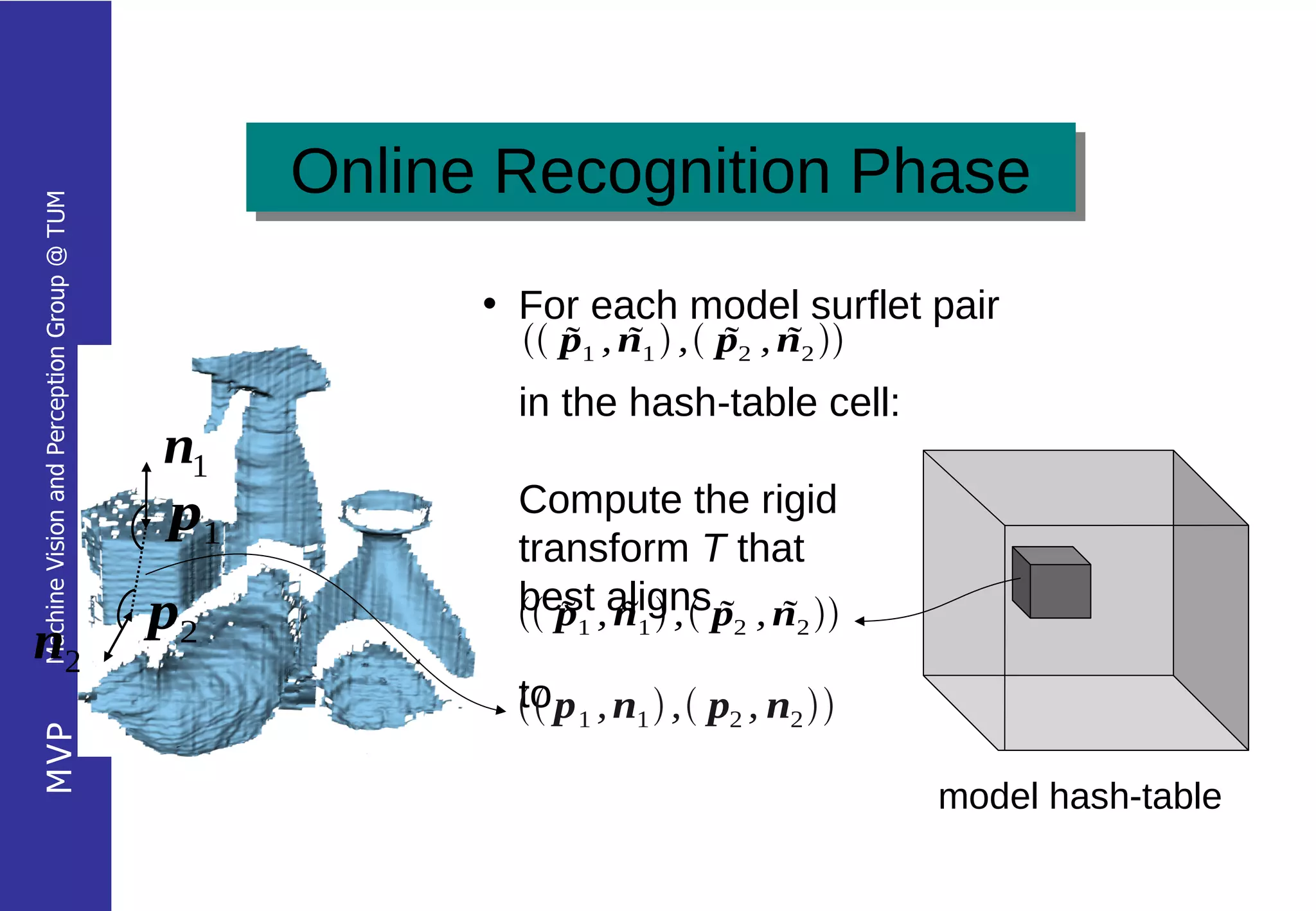
Online Recognition Phase
                                                 Online Recognition Phase
Machine Vision and Perception Group @ TUM


                                                       • For each model surflet pair
                                                          p1 , n1  , p2 , n2 
                                                                        
                                                         in the hash-table cell:
                                            n1
                                            p1          Compute the rigid
                                                        transform T that
                                            p2           p ,alignsp , n 
                                                        best n  ,  
                                                            
n2                                                           1    1       2    2


                                                        to
                                                         p 1 , n1  , p2 , n2 
MVP


                                                                                      model hash-table
Online Recognition Phase
                                                 Online Recognition Phase
Machine Vision and Perception Group @ TUM


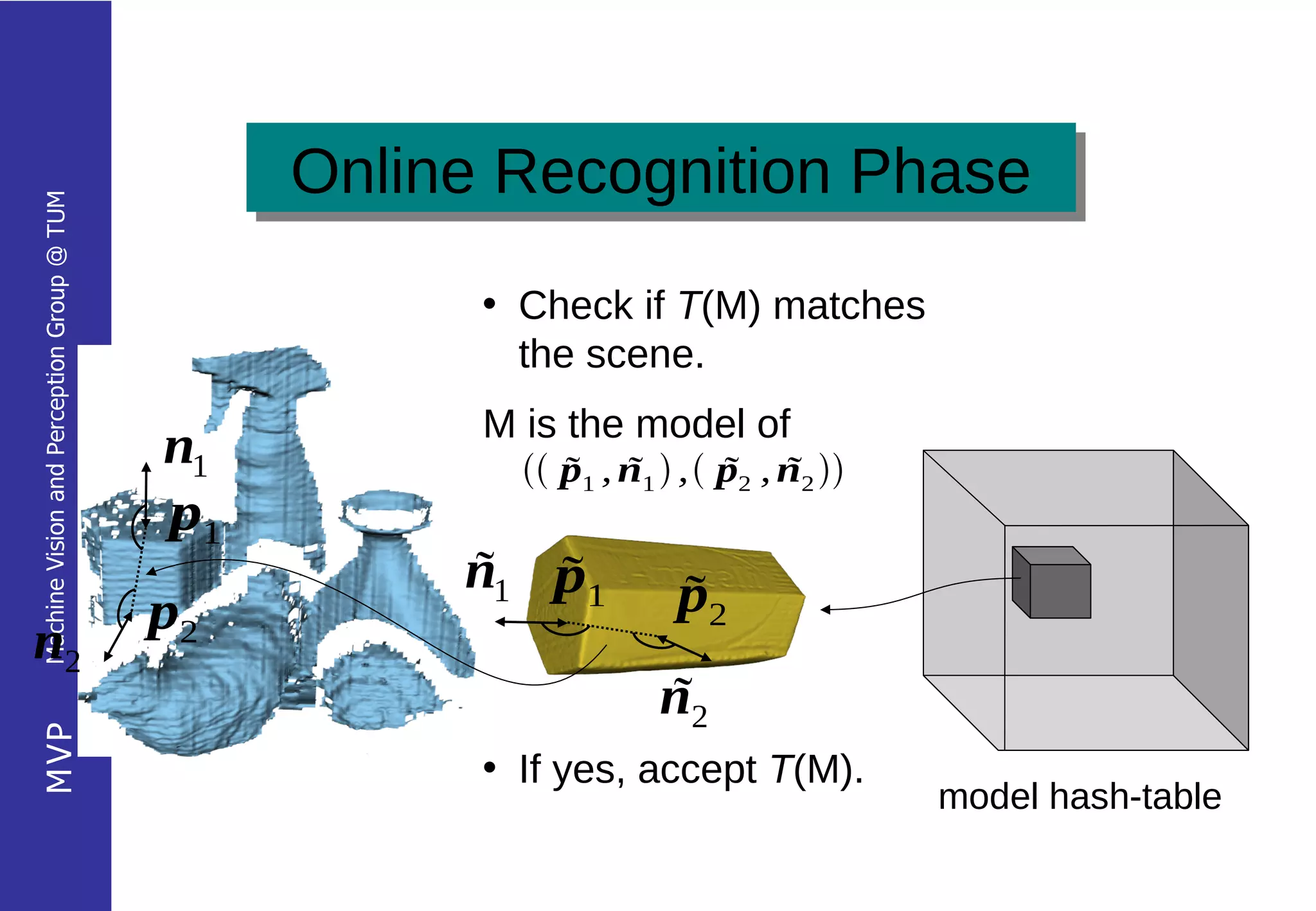
                                                       • Check if T(M) matches
                                                         the scene.
                                                       M is the model of
                                            n1            p1 , n1  , p2 , n2 
                                                                        
                                            p1
                                                      n1 p1
                                                                   p2
                                            p2                       
n2
                                                                    n2
                                                                    
MVP


                                                       • If yes, accept T(M).
                                                                                      model hash-table
MVP   Machine Vision and Perception Group @ TUM
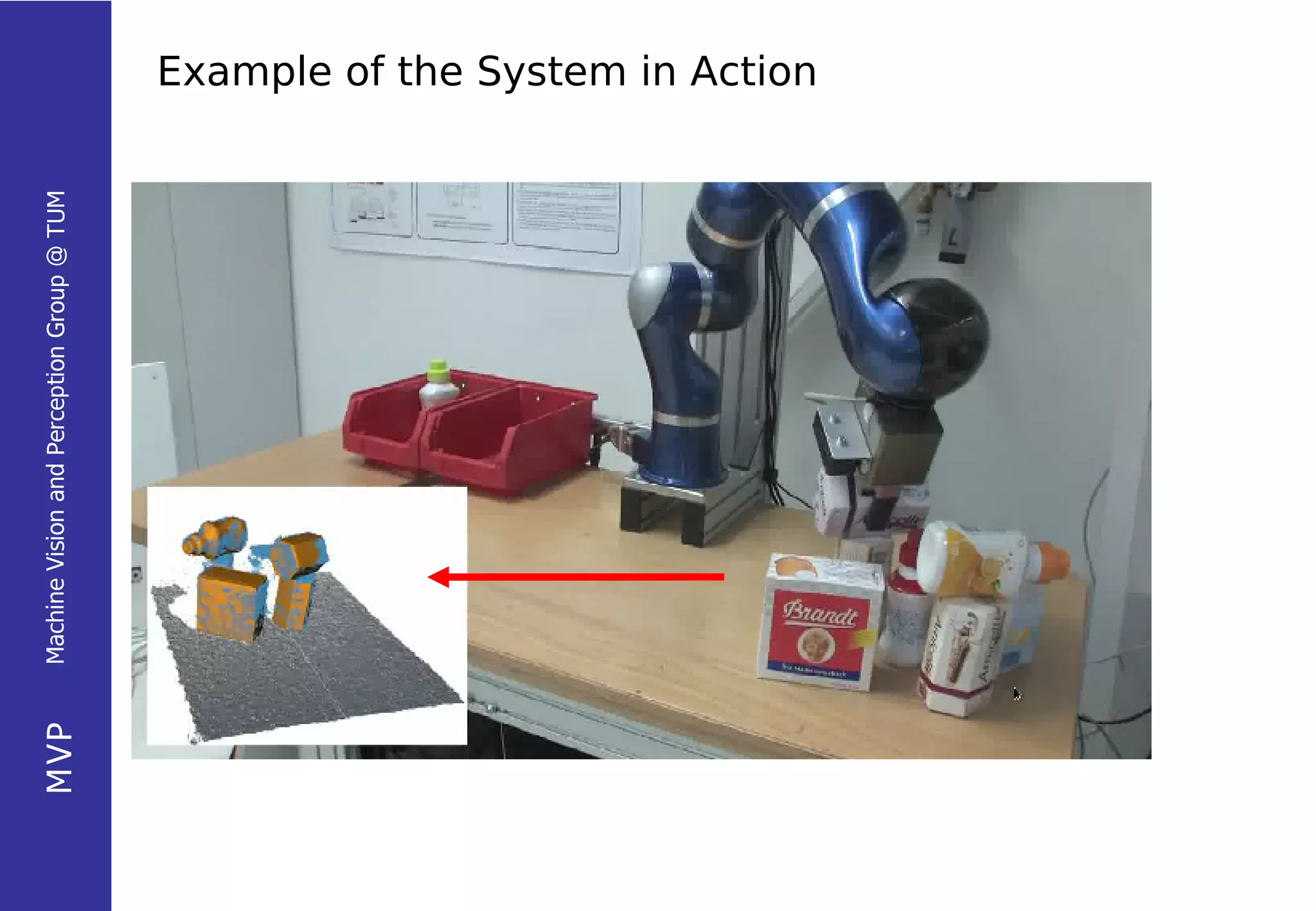
                                                  Example of the System in Action
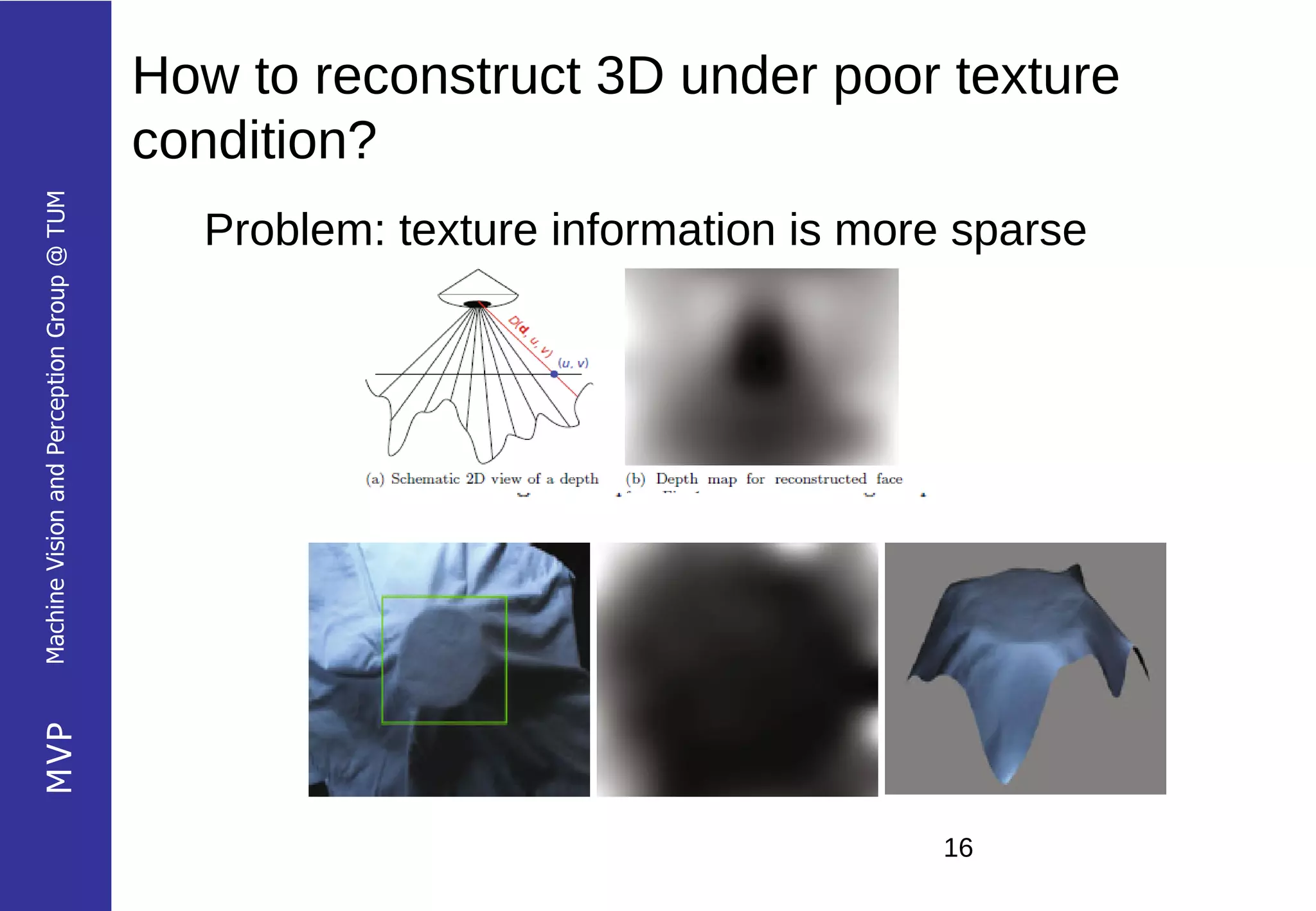
How to reconstruct 3D under poor texture
                                            condition?
Machine Vision and Perception Group @ TUM


                                              Problem: texture information is more sparse
MVP


                                                                                 16
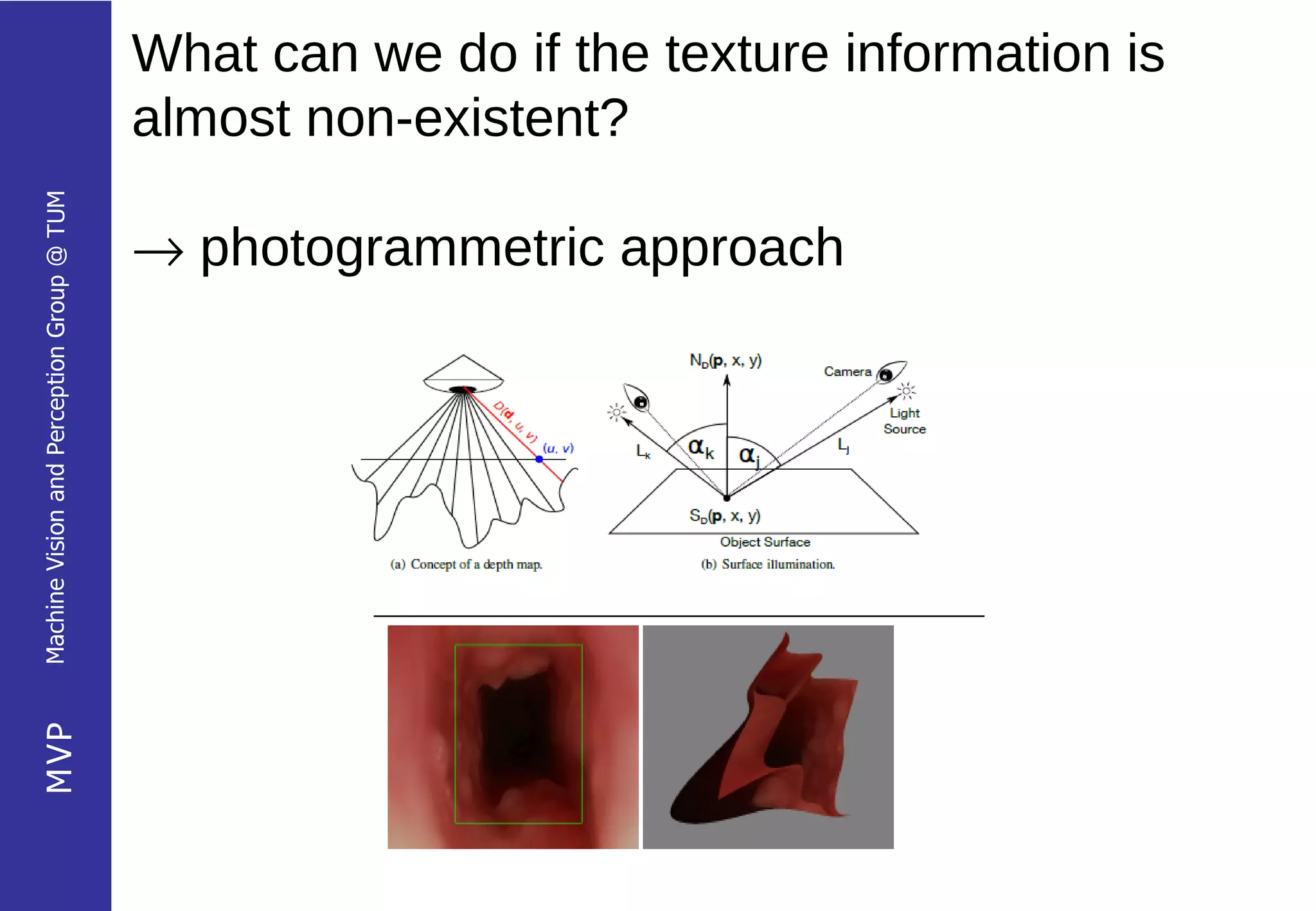
What can we do if the texture information is
                                            almost non-existent?
Machine Vision and Perception Group @ TUM


                                            → photogrammetric approach
MVP


                                                                              17
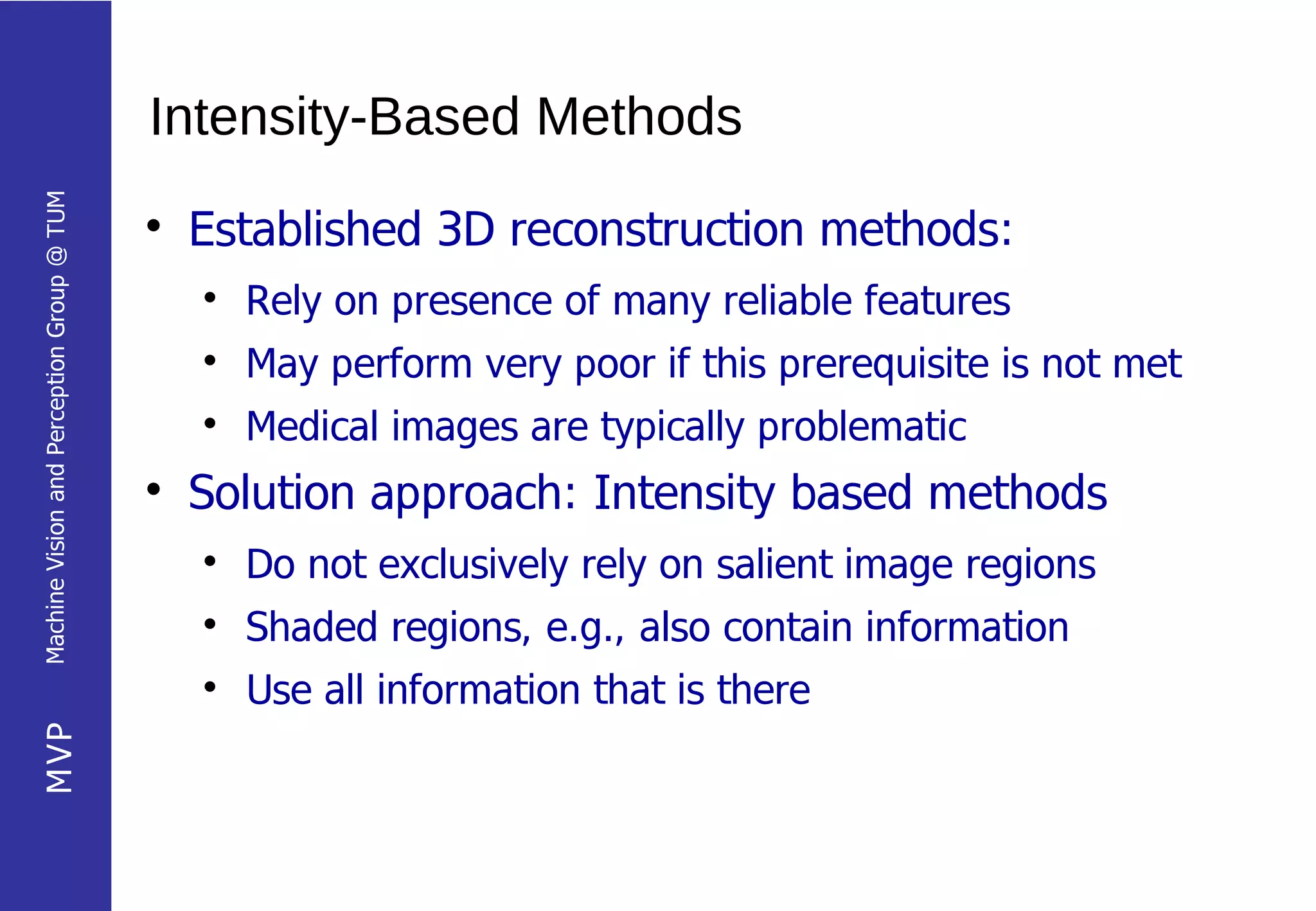
Intensity-Based Methods
Machine Vision and Perception Group @ TUM


                                            
                                                Established 3D reconstruction methods:
                                                
                                                    Rely on presence of many reliable features
                                                
                                                    May perform very poor if this prerequisite is not met
                                                
                                                    Medical images are typically problematic
                                            
                                                Solution approach: Intensity based methods
                                                
                                                    Do not exclusively rely on salient image regions
                                                
                                                    Shaded regions, e.g., also contain information
                                                
                                                    Use all information that is there
MVP
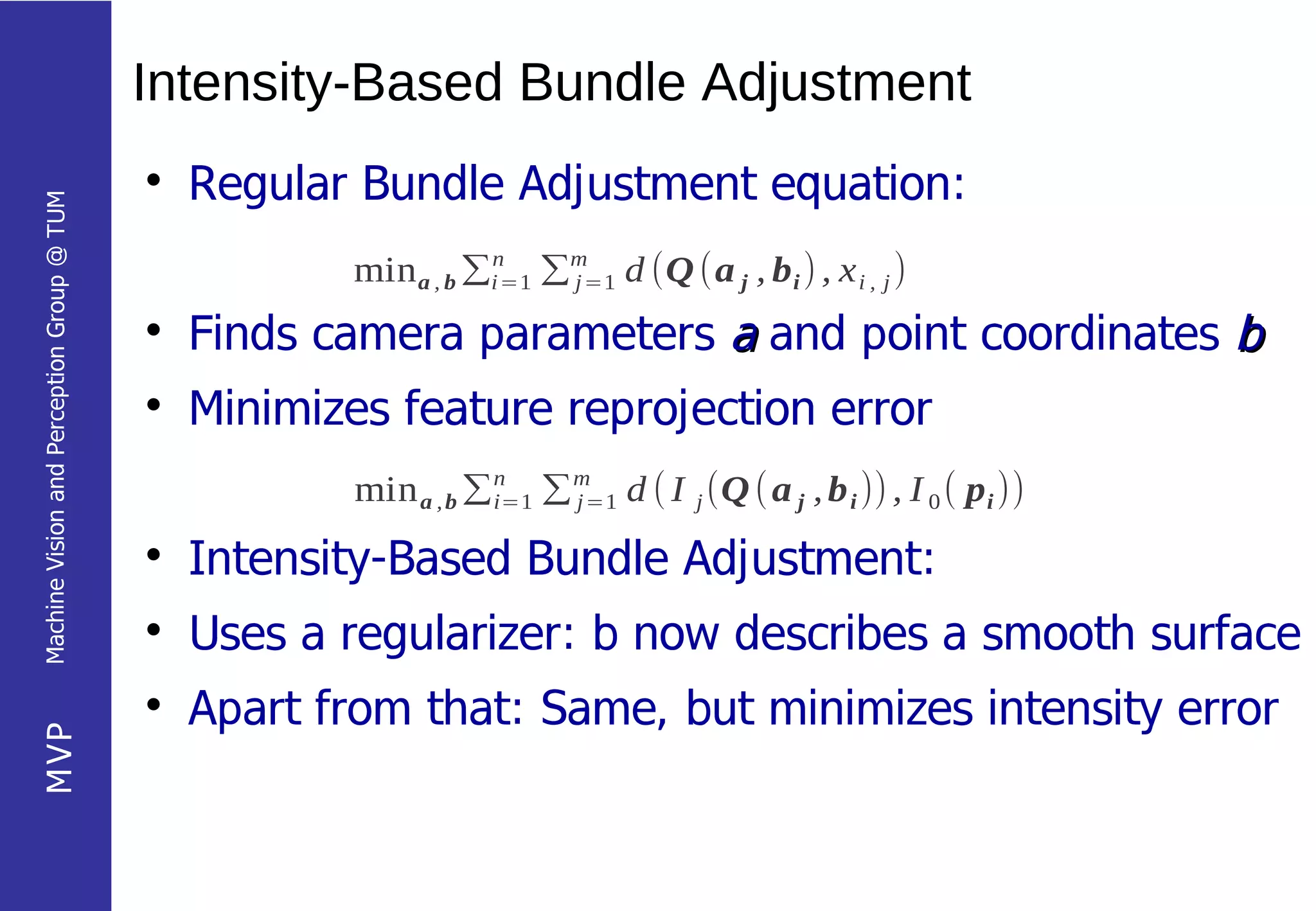
Intensity-Based Bundle Adjustment
                                            
                                                Regular Bundle Adjustment equation:
Machine Vision and Perception Group @ TUM


                                                        min a , b ∑i=1 ∑m=1 d (Q (a j , b i ) , x i , j )
                                                                   n
                                                                        j

                                            
                                                Finds camera parameters a and point coordinates b
                                            
                                                Minimizes feature reprojection error
                                                        min a , b ∑n ∑m d ( I j (Q ( a j , b i )) , I 0 ( p i ))
                                                                   i=1 j=1

                                            
                                                Intensity-Based Bundle Adjustment:
                                            
                                                Uses a regularizer: b now describes a smooth surface
                                            
                                                Apart from that: Same, but minimizes intensity error
MVP
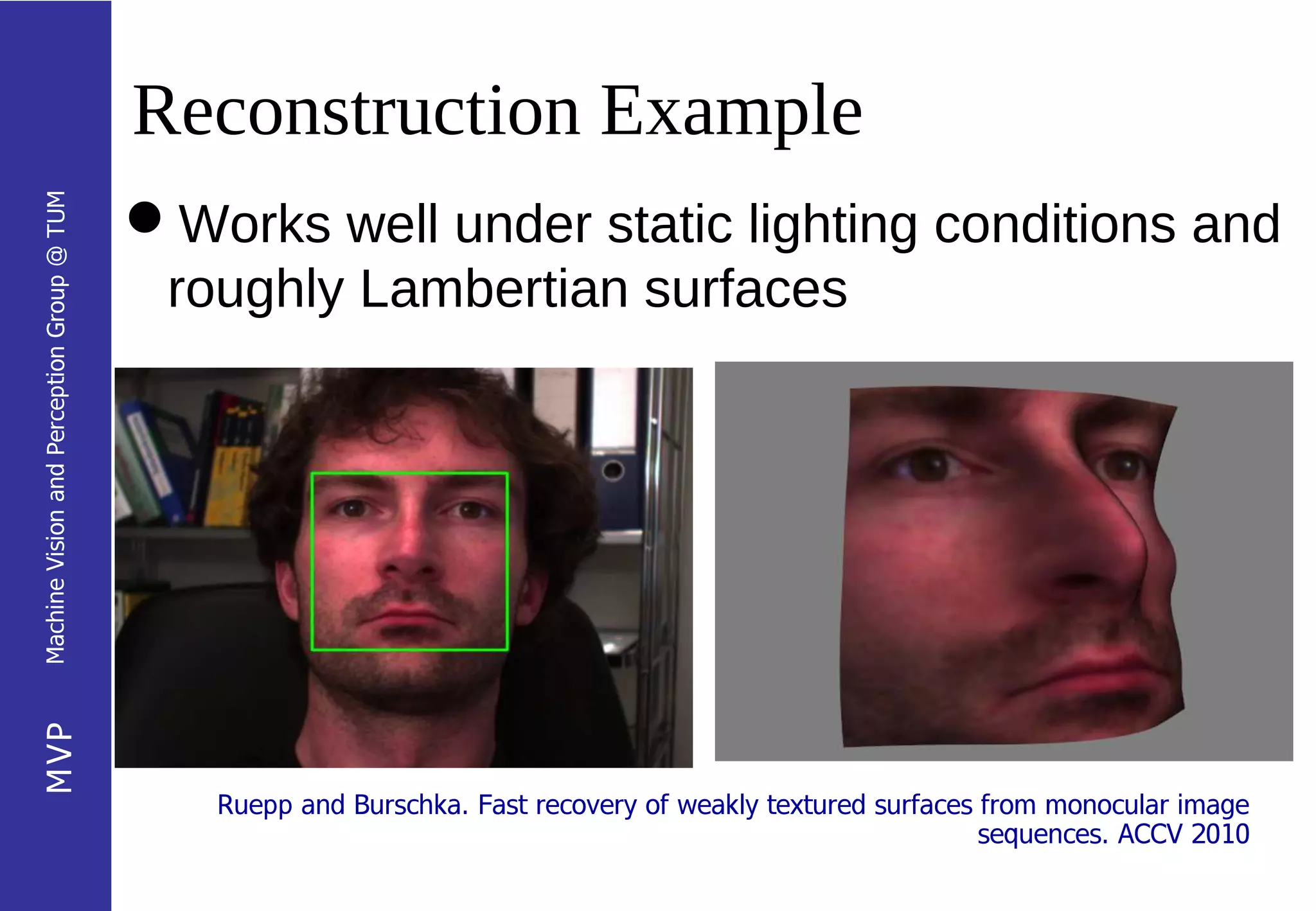
Reconstruction Example
Machine Vision and Perception Group @ TUM


                                            Works well under static lighting conditions and
                                             roughly Lambertian surfaces
MVP


                                               Ruepp and Burschka. Fast recovery of weakly textured surfaces from monocular image
                                                                                                             sequences. ACCV 2010
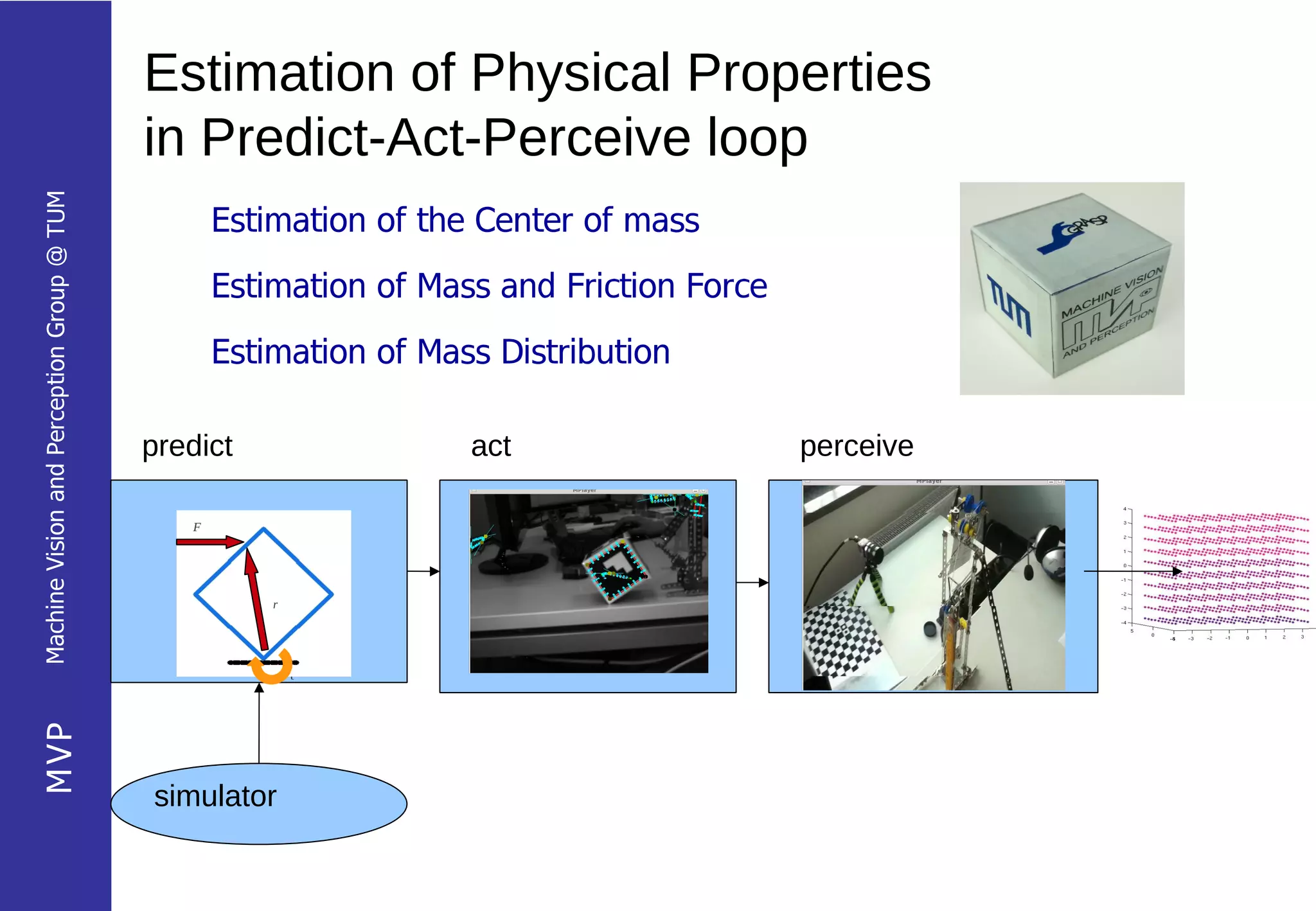
Estimation of Physical Properties
                                            in Predict-Act-Perceive loop
Machine Vision and Perception Group @ TUM


                                                   Estimation of the Center of mass
                                                   Estimation of Mass and Friction Force
                                                   Estimation of Mass Distribution

                                            predict                 act                    perceive

                                               F


                                                       r


                                                           τ
MVP


                                            simulator
Machine Vision and Perception Group @ TUM
                                            Knowledge Representation in WP5


                                                          Mapping of
                                                          Knowledge
MVP
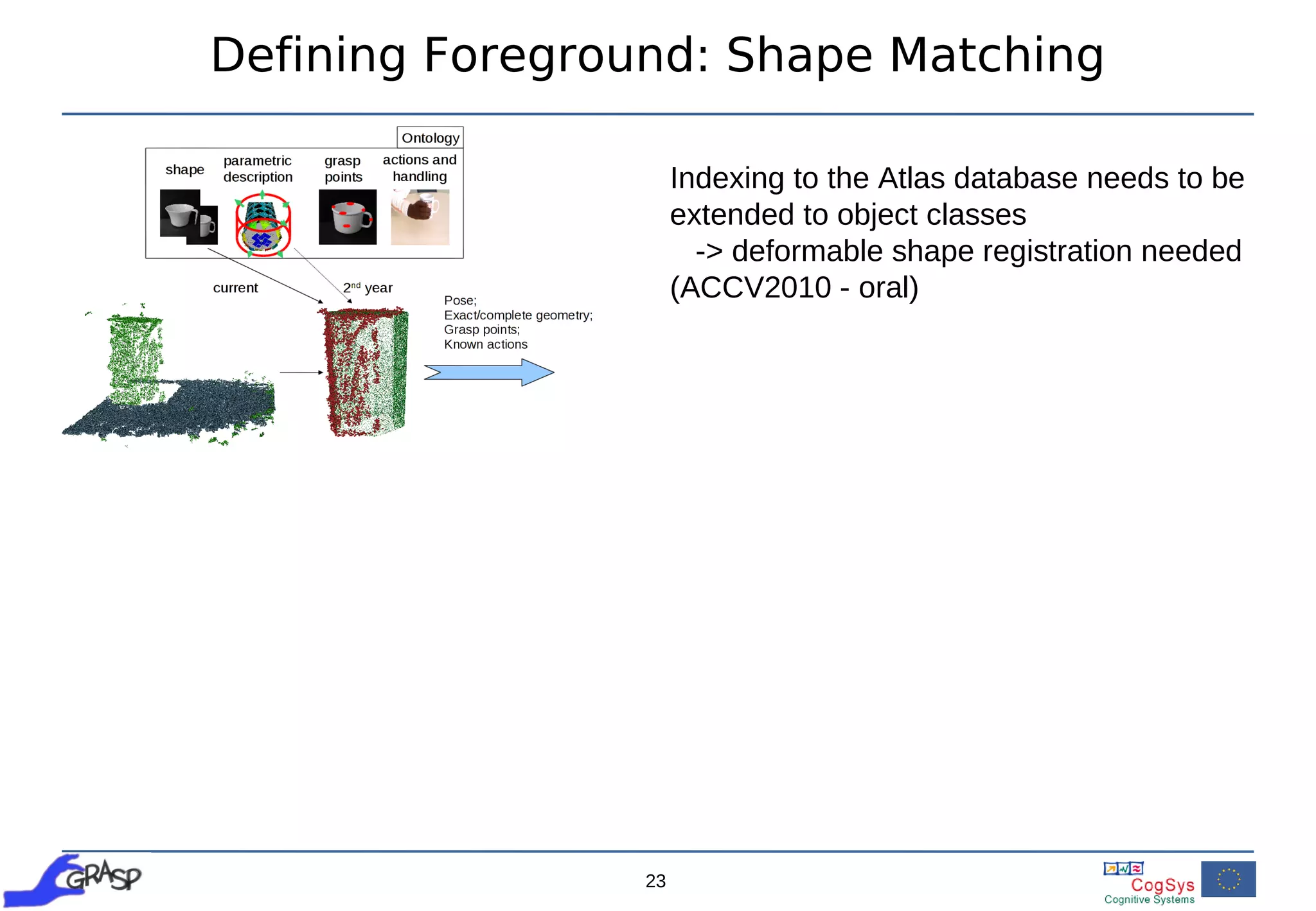
Defining Foreground: Shape Matching

                      Indexing to the Atlas database needs to be
                      extended to object classes
                        -> deformable shape registration needed
                      (ACCV2010 - oral)


                 23
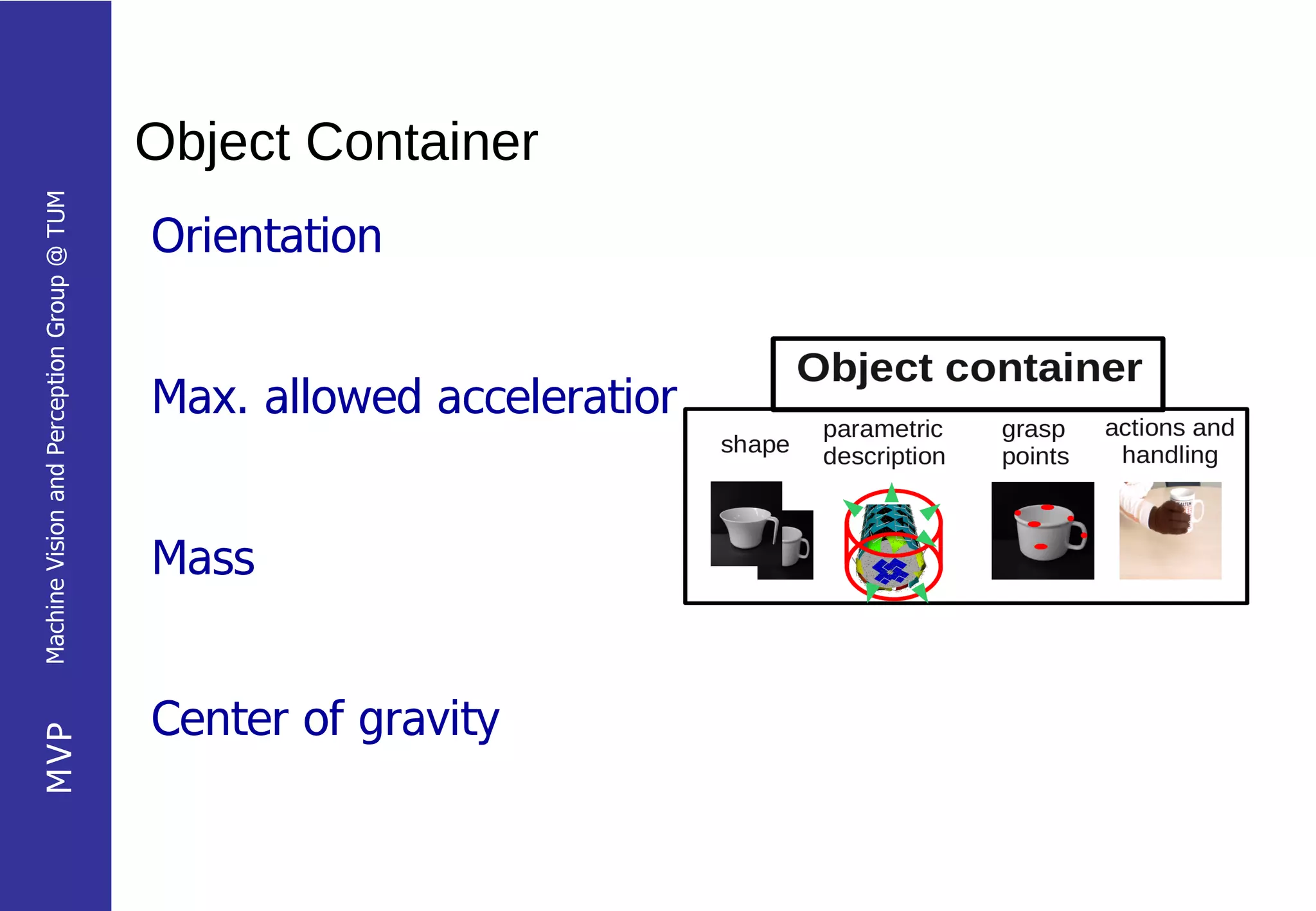
Object Container
Machine Vision and Perception Group @ TUM


                                            Orientation


                                            Max. allowed acceleration


                                            Mass


                                            Center of gravity
MVP
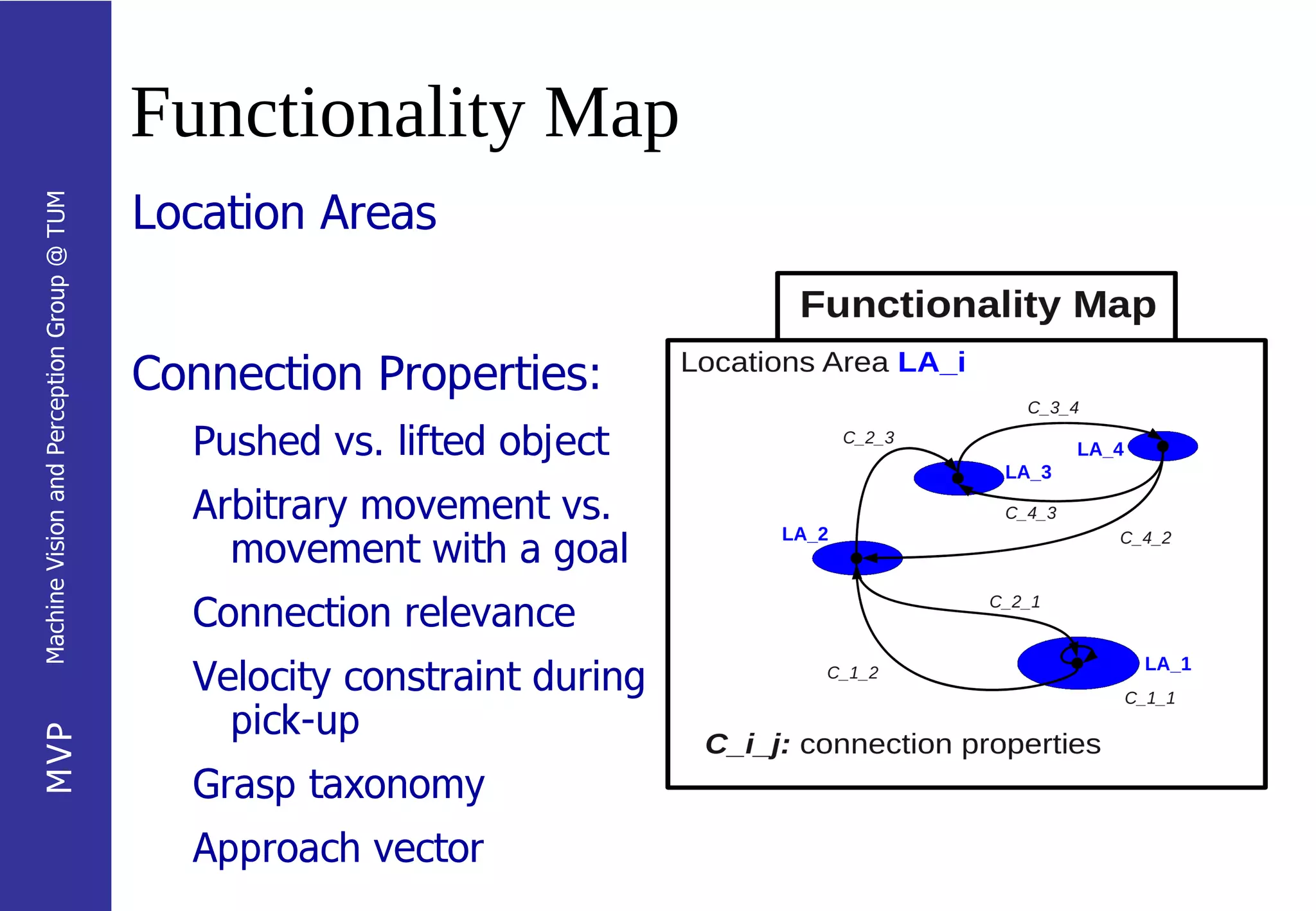
Functionality Map
                                            Location Areas
Machine Vision and Perception Group @ TUM


                                            Connection Properties:
                                              Pushed vs. lifted object
                                              Arbitrary movement vs.
                                                movement with a goal
                                              Connection relevance
                                              Velocity constraint during
                                                pick-up
MVP


                                              Grasp taxonomy
                                              Approach vector
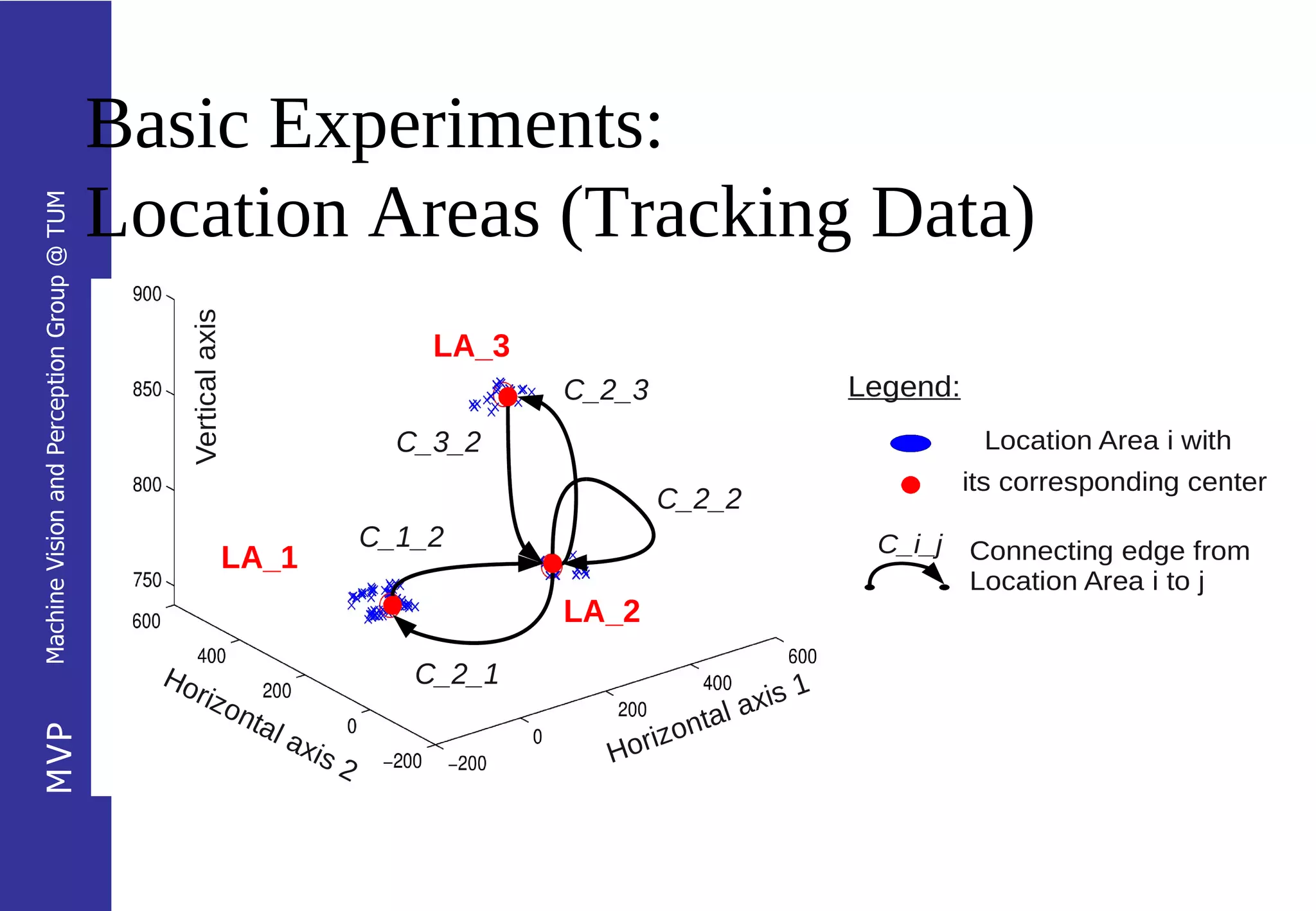
Basic Experiments:
                                            Location Areas (Tracking Data)
Machine Vision and Perception Group @ TUM
MVP
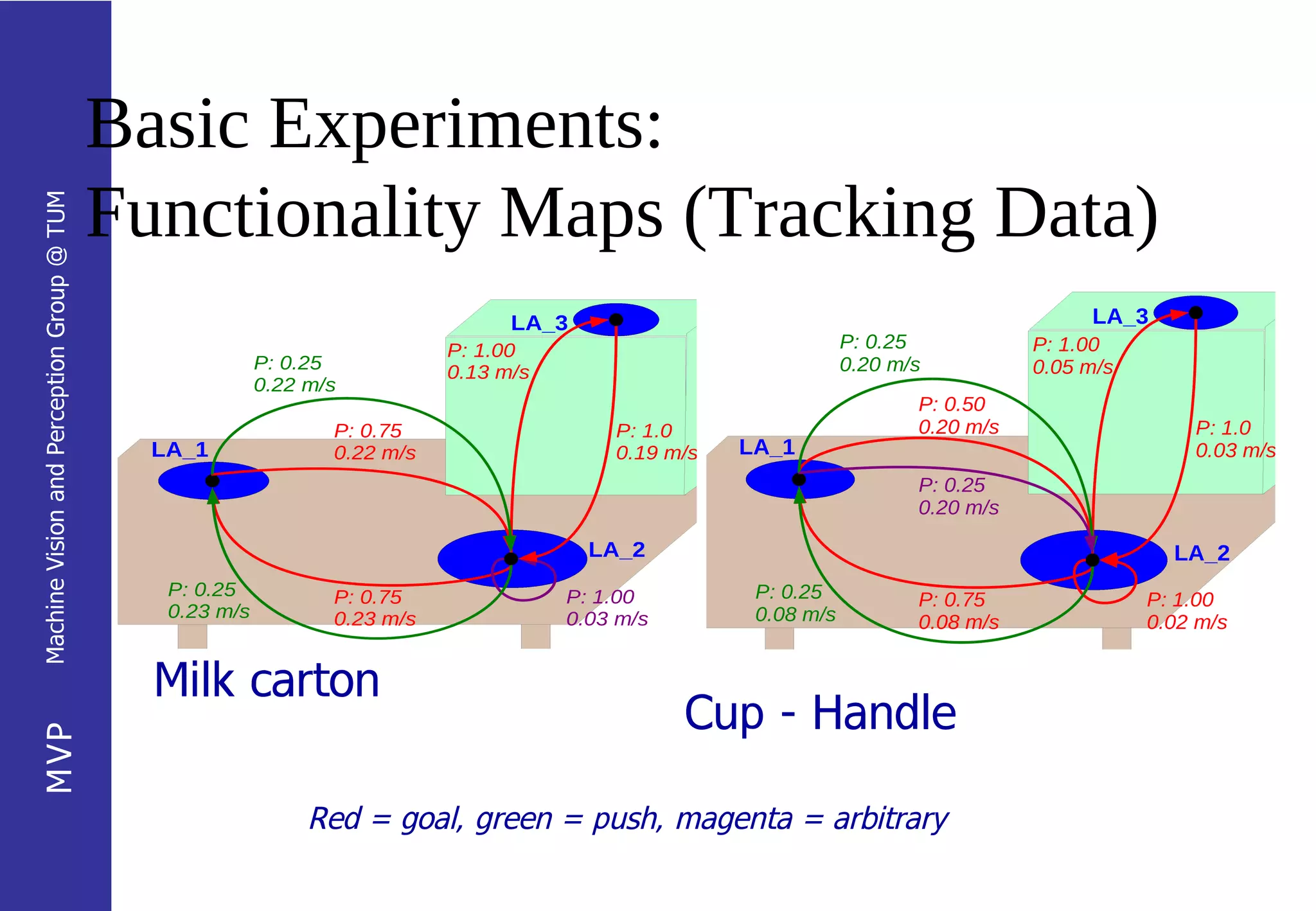
Basic Experiments:
                                            Functionality Maps (Tracking Data)
Machine Vision and Perception Group @ TUM


                                              Milk carton
                                                                               Cup - Handle
MVP


                                                     Red = goal, green = push, magenta = arbitrary
MVP   Machine Vision and Perception Group @ TUM


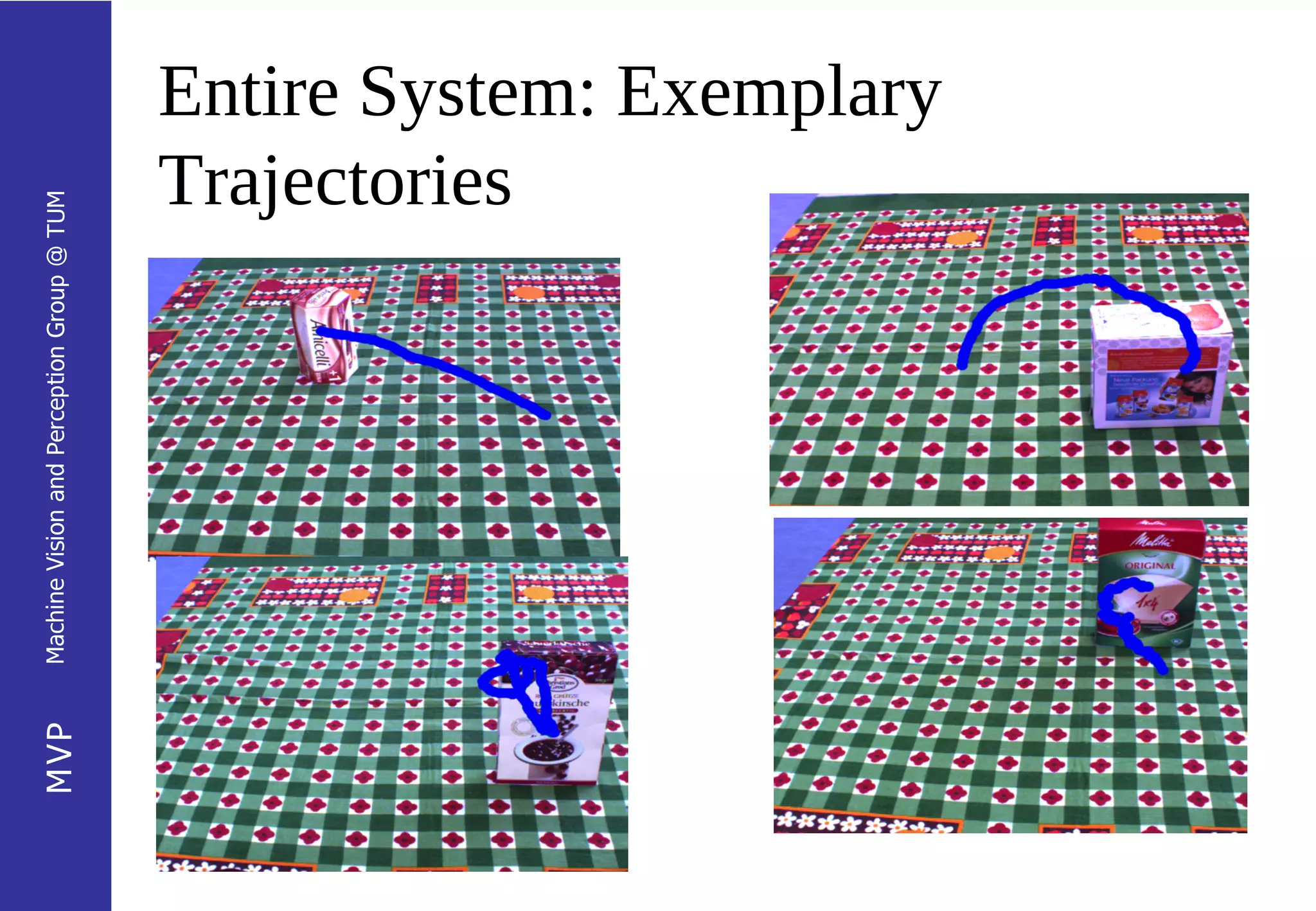
                                            Trajectories
                                            Entire System: Exemplary

Mvp

  • 1.
    Research of theMVP Group http://mvp.visual-navigation.com Visual navigation Perception for manipulation Biologically motivated Machine Vision and Perception Group @ TUM perception Rigid and Deformable The Machine Registration Vision and Perception Group @TUM works on the aspects of visual perception and control in medical, mobile, and HCI applications Photogrammetric Visual Action Analysis Exploration of physical monocular reconstruction object properties MVP
  • 2.
    Visual Localization forhybrid Environmental Modeling Machine Vision and Perception Group @ TUM Real-Time Localization The high accuracy allows direct stiching of images along the trajectory without bundle adjustment Resulting hybrid (appearance and geometry) model allows path planning and prediction of sensor views for e.g. attention MVP research
  • 3.
    MVP Machine Vision and Perception Group @ TUM Example of a hybrid model reconstruction
  • 4.
    Result of avisual localization 6DoF pose of the robot is calculated fom single camera view Machine Vision and Perception Group @ TUM MVP
  • 5.
    Reconstruction of ahybrid (appearance/geometry) model Machine Vision and Perception Group @ TUM MVP
  • 6.
    Visual Homing Machine Visionand Perception Group @ TUM The system is capable of registration to previously observed trajectories MVP
  • 7.
    Biologically Motivated Navigation Obstacle avoidance Machine Vision and Perception Group @ TUM Decoupling of Rotation and Translation Perception-based loop closure MVP
  • 8.
    MVP Machine Vision and Perception Group @ TUM Work on Optimal Sensor Models
  • 9.
    Knowledge Representation Human demonstration Machine Vision and Perception Group @ TUM • Atlas: Atlas parametric grasp actions and – Long-term memory shape description points handling – Experience of the system • Working memory: – Short-term memory Mapping of – Experience grounded in a Knowledge given environment Foreground Experience segmentation abstraction • Temporal handling information background foreground Episodic buffer model model of actions MVP Working Memory
  • 10.
    Indexing of theAtlas information from 3D perception Real-world scenario Real-world scenario Machine Vision and Perception Group @ TUM scene setup MVP input point cloud recognized models
  • 11.
    Algorithm Description Algorithm Description Machine Vision and Perception Group @ TUM (Model Preprocessing Phase) (Model Preprocessing Phase) n2 • For all pairs of surflets at  distance d insert the triple  p2   ,  , ∢ n1 , n 2   n1 d p1 plus a pointer to its model in a hash-table. • Do this for all models using the MVP same hash-table.
  • 12.
    3D Object Recognition 3D Object Recognition Machine Vision and Perception Group @ TUM • Challenges ― Incomplete Data ― Noise and outliers MVP
  • 13.
    Online Recognition Phase Online Recognition Phase Machine Vision and Perception Group @ TUM • For each model surflet pair  p1 , n1  , p2 , n2      in the hash-table cell: n1 p1 Compute the rigid transform T that p2  p ,alignsp , n  best n  ,     n2 1 1 2 2 to  p 1 , n1  , p2 , n2  MVP model hash-table
  • 14.
    Online Recognition Phase Online Recognition Phase Machine Vision and Perception Group @ TUM • Check if T(M) matches the scene. M is the model of n1  p1 , n1  , p2 , n2      p1 n1 p1   p2 p2  n2 n2  MVP • If yes, accept T(M). model hash-table
  • 15.
    MVP Machine Vision and Perception Group @ TUM Example of the System in Action
  • 16.
    How to reconstruct3D under poor texture condition? Machine Vision and Perception Group @ TUM Problem: texture information is more sparse MVP 16
  • 17.
    What can wedo if the texture information is almost non-existent? Machine Vision and Perception Group @ TUM → photogrammetric approach MVP 17
  • 18.
    Intensity-Based Methods Machine Visionand Perception Group @ TUM  Established 3D reconstruction methods:  Rely on presence of many reliable features  May perform very poor if this prerequisite is not met  Medical images are typically problematic  Solution approach: Intensity based methods  Do not exclusively rely on salient image regions  Shaded regions, e.g., also contain information  Use all information that is there MVP
  • 19.
    Intensity-Based Bundle Adjustment  Regular Bundle Adjustment equation: Machine Vision and Perception Group @ TUM min a , b ∑i=1 ∑m=1 d (Q (a j , b i ) , x i , j ) n j  Finds camera parameters a and point coordinates b  Minimizes feature reprojection error min a , b ∑n ∑m d ( I j (Q ( a j , b i )) , I 0 ( p i )) i=1 j=1  Intensity-Based Bundle Adjustment:  Uses a regularizer: b now describes a smooth surface  Apart from that: Same, but minimizes intensity error MVP
  • 20.
    Reconstruction Example Machine Visionand Perception Group @ TUM Works well under static lighting conditions and roughly Lambertian surfaces MVP Ruepp and Burschka. Fast recovery of weakly textured surfaces from monocular image sequences. ACCV 2010
  • 21.
    Estimation of PhysicalProperties in Predict-Act-Perceive loop Machine Vision and Perception Group @ TUM Estimation of the Center of mass Estimation of Mass and Friction Force Estimation of Mass Distribution predict act perceive F r τ MVP simulator
  • 22.
    Machine Vision andPerception Group @ TUM Knowledge Representation in WP5 Mapping of Knowledge MVP
  • 23.
    Defining Foreground: ShapeMatching Indexing to the Atlas database needs to be extended to object classes -> deformable shape registration needed (ACCV2010 - oral) 23
  • 24.
    Object Container Machine Visionand Perception Group @ TUM Orientation Max. allowed acceleration Mass Center of gravity MVP
  • 25.
    Functionality Map Location Areas Machine Vision and Perception Group @ TUM Connection Properties: Pushed vs. lifted object Arbitrary movement vs. movement with a goal Connection relevance Velocity constraint during pick-up MVP Grasp taxonomy Approach vector
  • 26.
    Basic Experiments: Location Areas (Tracking Data) Machine Vision and Perception Group @ TUM MVP
  • 27.
    Basic Experiments: Functionality Maps (Tracking Data) Machine Vision and Perception Group @ TUM Milk carton Cup - Handle MVP Red = goal, green = push, magenta = arbitrary
  • 28.
    MVP Machine Vision and Perception Group @ TUM Trajectories Entire System: Exemplary