DO YOU STILL
REMEMBER YOUR
QUARTER 2 LESSON?
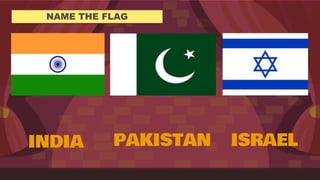
INDIA PAKISTAN ISRAEL
NAME THE FLAG
VOCAL & INSTRUMENTAL
MUSIC OF SOUTH ASIA &
MIDDLE EAST
INDIA-PAKISTAN-ISRAEL
INDIA
01
Introduction
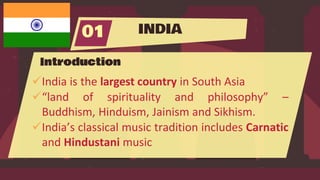
India is the largest country in South Asia
“land of spirituality and philosophy” –
Buddhism, Hinduism, Jainism and Sikhism.
India’s classical music tradition includes Carnatic
and Hindustani music
CLASSICAL MUSIC OF INDIA
Carnatic Music
 refers to music from South India
 directed to a Hindu god, which is why it is called
“temple music”
 Music pieces are mainly set for the voice and
with lyrics.
 Compositions called krti are devotional songs.
Hindustani Music
 nasal singing is observed in their vocal music
 In North India, the most common style of
singing is called khyal, a word which
means “imagination”
CLASSICAL MUSIC OF INDIA
INDIA
01
VOCAL MUSIC
 Melismatic the style of one aspect of singing (voices is
very nasal) pasyon
 Performers are required to improvised music based on the to
major elements: raga and tala
INDIA
01
VOCAL MUSIC
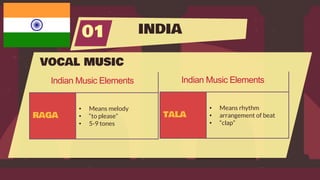
Indian Music Elements
RAGA
• Means melody
• “to please”
• 5-9 tones
Indian Music Elements
TALA
• Means rhythm
• arrangement of beat
• “clap”
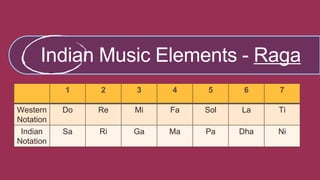
Indian Music Elements - Raga
1 2 3 4 5 6 7
Western
Notation
Do Re Mi Fa Sol La Ti
Indian
Notation
Sa Ri Ga Ma Pa Dha Ni
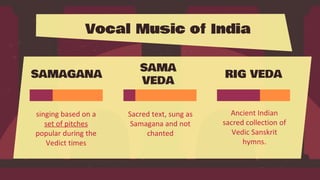
Vocal Music of India
singing based on a
set of pitches
popular during the
Vedict times
SAMAGANA RIG VEDA
SAMA
VEDA
Sacred text, sung as
Samagana and not
chanted
Ancient Indian
sacred collection of
Vedic Sanskrit
hymns.
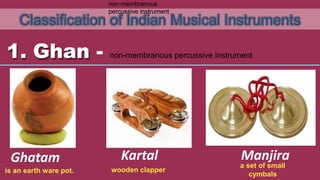
Classification of Indian Musical Instruments
1. Ghan - non-membranous percussive instrument
Ghatam Kartal Manjira
non-membranous
percussive instrument
is an earth ware pot. wooden clapper
a set of small
cymbals
Classification of Indian Musical Instruments
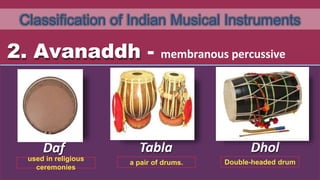
2. Avanaddh - membranous percussive
Daf Tabla Dhol
used in religious
ceremonies
a pair of drums. Double-headed drum
Classification of Indian Musical Instruments
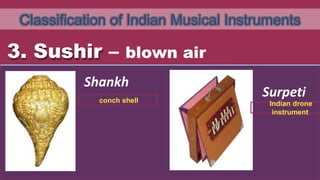
3. Sushir – blown air
Shankh
Surpeti
conch shell Indian drone
instrument
Classification of Indian Musical Instruments
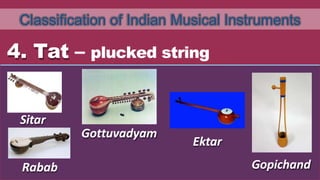
4. Tat – plucked string
Sitar
Gottuvadyam
Ektar
Gopichand
Rabab
Classification of Indian Musical Instruments
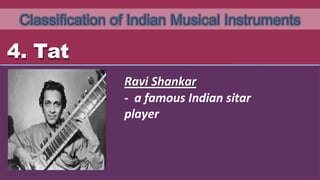
4. Tat
Ravi Shankar
- a famous Indian sitar
player
Classification of Indian Musical Instruments
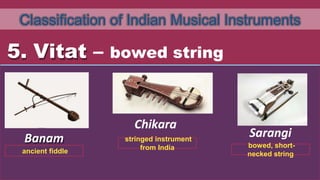
5. Vitat – bowed string
Banam
Chikara
Sarangi
ancient fiddle
bowed, short-
necked string
stringed instrument
from India
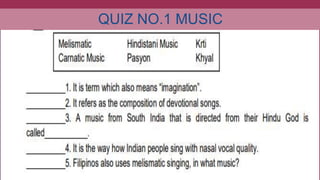
QUIZ NO.1 MUSIC
PAKISTAN
02
Introduction
Extension of Central Asia
Encompassed numerous different musical
style
 known for its unique vocals
PAKISTAN
02
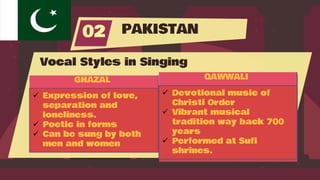
Vocal Styles in Singing
GHAZAL
 Expression of love,
separation and
loneliness.
 Poetic in forms
 Can be sung by both
men and women
SECULAR
 Devotional music og
Christi Order
 Vibrant musical
tradition way back 700
years
 Performed at Sufi
shrines.
QAWWALI
 Devotional music of
Christi Order
 Vibrant musical
tradition way back 700
years
 Performed at Sufi
shrines.
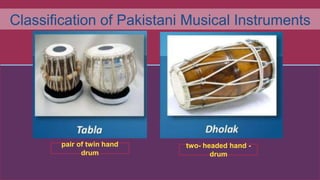
Classification of Pakistani Musical Instruments
pair of twin hand
drum
two- headed hand -
drum
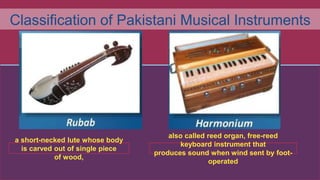
Classification of Pakistani Musical Instruments
a short-necked lute whose body
is carved out of single piece
of wood,
also called reed organ, free-reed
keyboard instrument that
produces sound when wind sent by foot-
operated
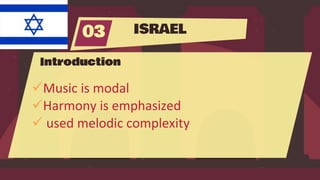
ISRAEL
03
Introduction
Music is modal
Harmony is emphasized
 used melodic complexity
ISRAEL
03
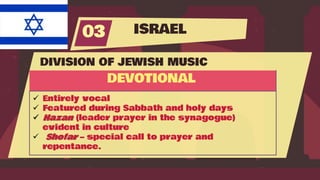
DIVISION OF JEWISH MUSIC
DEVOTIONAL
 Entirely vocal
 Featured during Sabbath and holy days
 Hazan (leader prayer in the synagogue)
evident in culture
 Shofar – special call to prayer and
repentance.
ISRAEL
03
DIVISION OF JEWISH MUSIC
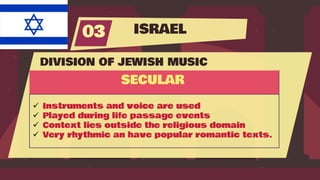
SECULAR
 Instruments and voice are used
 Played during life passage events
 Context lies outside the religious domain
 Very rhythmic an have popular romantic texts.
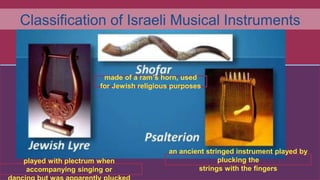
Classification of Israeli Musical Instruments
an ancient stringed instrument played by
plucking the
strings with the fingers
played with plectrum when
accompanying singing or
made of a ram’s horn, used
for Jewish religious purposes
ANY QUESTIONS?
SEE YOU AGAIN NEXT
WEEK!

MUSIC

  • 1.
    DO YOU STILL REMEMBERYOUR QUARTER 2 LESSON?
  • 2.
  • 3.
    VOCAL & INSTRUMENTAL MUSICOF SOUTH ASIA & MIDDLE EAST INDIA-PAKISTAN-ISRAEL
  • 4.
    INDIA 01 Introduction India is thelargest country in South Asia “land of spirituality and philosophy” – Buddhism, Hinduism, Jainism and Sikhism. India’s classical music tradition includes Carnatic and Hindustani music
  • 5.
    CLASSICAL MUSIC OFINDIA Carnatic Music  refers to music from South India  directed to a Hindu god, which is why it is called “temple music”  Music pieces are mainly set for the voice and with lyrics.  Compositions called krti are devotional songs.
  • 6.
    Hindustani Music  nasalsinging is observed in their vocal music  In North India, the most common style of singing is called khyal, a word which means “imagination” CLASSICAL MUSIC OF INDIA
  • 8.
    INDIA 01 VOCAL MUSIC  Melismaticthe style of one aspect of singing (voices is very nasal) pasyon  Performers are required to improvised music based on the to major elements: raga and tala
  • 9.
    INDIA 01 VOCAL MUSIC Indian MusicElements RAGA • Means melody • “to please” • 5-9 tones Indian Music Elements TALA • Means rhythm • arrangement of beat • “clap”
  • 10.
    Indian Music Elements- Raga 1 2 3 4 5 6 7 Western Notation Do Re Mi Fa Sol La Ti Indian Notation Sa Ri Ga Ma Pa Dha Ni
  • 11.
    Vocal Music ofIndia singing based on a set of pitches popular during the Vedict times SAMAGANA RIG VEDA SAMA VEDA Sacred text, sung as Samagana and not chanted Ancient Indian sacred collection of Vedic Sanskrit hymns.
  • 12.
    Classification of IndianMusical Instruments 1. Ghan - non-membranous percussive instrument Ghatam Kartal Manjira non-membranous percussive instrument is an earth ware pot. wooden clapper a set of small cymbals
  • 13.
    Classification of IndianMusical Instruments 2. Avanaddh - membranous percussive Daf Tabla Dhol used in religious ceremonies a pair of drums. Double-headed drum
  • 14.
    Classification of IndianMusical Instruments 3. Sushir – blown air Shankh Surpeti conch shell Indian drone instrument
  • 15.
    Classification of IndianMusical Instruments 4. Tat – plucked string Sitar Gottuvadyam Ektar Gopichand Rabab
  • 16.
    Classification of IndianMusical Instruments 4. Tat Ravi Shankar - a famous Indian sitar player
  • 17.
    Classification of IndianMusical Instruments 5. Vitat – bowed string Banam Chikara Sarangi ancient fiddle bowed, short- necked string stringed instrument from India
  • 19.
  • 20.
    PAKISTAN 02 Introduction Extension of CentralAsia Encompassed numerous different musical style  known for its unique vocals
  • 21.
    PAKISTAN 02 Vocal Styles inSinging GHAZAL  Expression of love, separation and loneliness.  Poetic in forms  Can be sung by both men and women SECULAR  Devotional music og Christi Order  Vibrant musical tradition way back 700 years  Performed at Sufi shrines. QAWWALI  Devotional music of Christi Order  Vibrant musical tradition way back 700 years  Performed at Sufi shrines.
  • 22.
    Classification of PakistaniMusical Instruments pair of twin hand drum two- headed hand - drum
  • 23.
    Classification of PakistaniMusical Instruments a short-necked lute whose body is carved out of single piece of wood, also called reed organ, free-reed keyboard instrument that produces sound when wind sent by foot- operated
  • 24.
    ISRAEL 03 Introduction Music is modal Harmonyis emphasized  used melodic complexity
  • 25.
    ISRAEL 03 DIVISION OF JEWISHMUSIC DEVOTIONAL  Entirely vocal  Featured during Sabbath and holy days  Hazan (leader prayer in the synagogue) evident in culture  Shofar – special call to prayer and repentance.
  • 26.
    ISRAEL 03 DIVISION OF JEWISHMUSIC SECULAR  Instruments and voice are used  Played during life passage events  Context lies outside the religious domain  Very rhythmic an have popular romantic texts.
  • 27.
    Classification of IsraeliMusical Instruments an ancient stringed instrument played by plucking the strings with the fingers played with plectrum when accompanying singing or made of a ram’s horn, used for Jewish religious purposes
  • 28.
  • 29.
    SEE YOU AGAINNEXT WEEK!