Advanced Next Generation-DNA Sequencing
of Bacteria, Fungal ,Viral
Pathogenius DNA Molecular Diagnostics.
13,000 DNA codes on file. Indifferent to time, media and transport issues.
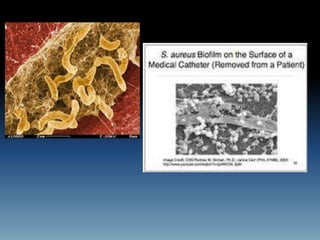
Otitis Media Biofilm
Sinus Cavity Biofilm
BacterialVaginosis
Material from an
infected elbow
prosthesis stained
with the Molecular
Probes
• Seven Surgical
Procedures
• Over 5 years
• Cultures consistently Neg
• Case represented a
landmark in the diagnosis
of chronic bacterial
infection in Orthopedic
Surgery
• PCR identified the
infection
Dr. Caroline Fife Dr. John Steinberg Dr. Chris Attinger
Dr. James McGuire
Dr. Berrylin Ferguson Dr. Donald Lanza
Planktonic Bacteria
Single Cell
Bio Film
“Community of Bacteria”
 Cause of 80% of Infections
 Cause of ChronicWounds
 Will not grow in traditional culture
 Biofilm cells express a radically different
phenotype than planktonic bacteria
Only Diagnostic tool is Molecular
 Cause of Acute Infection
 Will grow in traditional Culture
Biocides vs. Biofilm
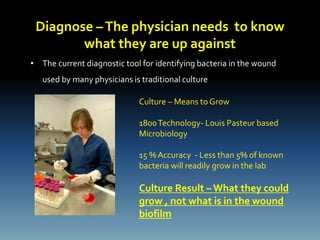
Diagnose –The physician needs to know
what they are up against
• The current diagnostic tool for identifying bacteria in the wound
used by many physicians is traditional culture
Culture – Means to Grow
1800Technology- Louis Pasteur based
Microbiology
15 % Accuracy - Less than 5% of known
bacteria will readily grow in the lab
Culture Result – What they could
grow , not what is in the wound
biofilm
DNA Analysis vs.Traditional Cultures
51 Chronic wounds- Parallel Samples
16 S DNA Sequencing Traditional Culture
• 46 /51 Staph Identified
• 32 / 51 Pseud Identified
• 28/51 Staph Identified
• 8 / 51 Pseud Identified
DNA Sequencing OutperformedTraditional Cultures
DNA Sequencing identified 145 Genera – Cultures 14 !
“The impact of proper
specimen management on
patient care is enormous”
“Specimen selection and
collection are the
responsibility of the
medical staff and not the
laboratory”
American Society for Microbiology Standard:
Swab transport, RoomTemperature, 2 hours
Current Lab: Swab transport, unknown
temp, end of the day.
High probability of error from the start.
PATHOGENIUS REPORT
Provide Anti Biogram
Molecular Diagnostics of Nail Samples
With Clinical Signs of Infection
 59 % of Nail Samples had fungal Species Identified
 41% of Nail samples had no fungal species
but did have Bacteria species identified
Nails with Fungal species identified also had Bacteria
3800 Nail Samples
Urine Data from PathoGenius
• Based on 1221 Urine samples
• Escherichia coli 25% When seen – avg 73% of the sample
• Proteus mirabilis 9%
• Enterococcus faecalis 9%
• Lactobacillus gasseri 8%
• Lactobacillus crispatus 7%
• Lactobacillus iners 5%
We Identified a total of 507 species of Bacteria and Fungal in
our urine samples
COST AND COVERAGE OF
MOLECULAR DIAGNOSTICSTRADITIONAL CULTURE
• MEDICARE PAYS
$250
DNA SEQUENCING
• MEDICARE PAYS
$ 285
CUSTOMIZED FOR EACH
PATEINT TOPICAL RX
LIPOGEL BASED
DOSED 3X WEEK
CONTAINS ANTIBIOFLIM AGENTS
ANTIBIOTICS
ANTIFUNGALS
DNA Diagnostic “Must be expensive “
How much will it cost?
Private Office
If your patients are a Medicare patient, 100% of the
cost of your testing will be paid by Medicare.
Medicare reimburses $190 for our Level 1 and Level 2
If your patients have private insurance, 50% of
Commercial Plans pay for the test.
No sample will ever be denied by Patho Genius
No Patient will ever go to collection
Benefits Pathogenius DNA MolecularTesting
• Fast Identification of Biofilms and their composition in
patients referred to you—Accuracy and Speed.
• GOLD STANDARD of Microbial Diagnostics
• Medicare Covers theTest and pay $190
• Less Expensive than a Culture
Stages of Biofilm Development
Multiple Strategies are required to succeed
against bio-films in chronic wounds
Debridement –Is the “Corner Stone”
Biocides
Systemic Antibiotics
Topical CustomizedAntibiotics
Diagnostic Services – What we deliver
Two molecular microbial diagnostic tests are currently used at PathoGenius®. We take
your patient's swab, washing, or tissue sample; extract the microbial DNA; and report
the microbial analysis to you.
Level 1: PCR 24-Hour Rapid Screening
Screen 8 Common ENT Bacteria and 1 Fungal
Provide Quantitative Bacterial Load
Rapid turn around time of approximately 24 hours from the time of sample
receipt.
Pathogens Identified in Level 1
Staphylococcus (including MRSA)
Streptococcus pyogenes (GAS)
Haemophilus influenza
Moraxella Catarrhalis
Pseudomonas
Streptococcus pneumonia
Streptococcus agalactiae
Candida albicans
Level 2: Next Generation Sequencing
Only lab in the country that can provide your patients access
to DNA Pyro Sequencing
Pyro sequencing matches the DNA from your sample to the
entire universe of know bacteria and fungal pathogens
Level 2 Report is fax/emailed to you in 5-7 days
Level 2 Report includes a table of the pathogens identified and
the antibiotics that will cover them. ( Antibiogram)
Questions?
The Neuropathic Diabetic Foot Ulcer Microbiome Is
AssociatedWith Clinical Factors
Sue E. Gardner,1 Stephen L. Hillis,2 Kris Heilmann,2 Julia A. Segre,3 and
ElizabethA. Grice4
From the 1University of Iowa, College of Nursing, Iowa City, Iowa; the 2University
of Iowa, Carver College of Medicine, Iowa City, Iowa; the 3National
Institutes of Health, National Human Genome Research Institute
Similar to other studies
(7,12,36), we found that cultures do not fully represent
bacterial diversity as compared with 16S rRNA gene sequencing.
Microbial load is widely viewed as the reference
standard for determining problematic bioburden in chronic
wounds that may not express robust clinical signs (37).We
demonstrated for the first time that cultures underrepresent
the microbial load of the ulcer as compared with
16S rRNA gene approaches. These findings may have important
clinical implications justifying the clinical use of
molecular approaches rather than traditional cultures.
Lab Requisition

Multi Specialty Presentation

  • 1.
    Advanced Next Generation-DNASequencing of Bacteria, Fungal ,Viral
  • 3.
    Pathogenius DNA MolecularDiagnostics. 13,000 DNA codes on file. Indifferent to time, media and transport issues.
  • 5.
  • 6.
  • 7.
    Material from an infectedelbow prosthesis stained with the Molecular Probes • Seven Surgical Procedures • Over 5 years • Cultures consistently Neg • Case represented a landmark in the diagnosis of chronic bacterial infection in Orthopedic Surgery • PCR identified the infection
  • 11.
    Dr. Caroline FifeDr. John Steinberg Dr. Chris Attinger Dr. James McGuire Dr. Berrylin Ferguson Dr. Donald Lanza
  • 12.
    Planktonic Bacteria Single Cell BioFilm “Community of Bacteria”  Cause of 80% of Infections  Cause of ChronicWounds  Will not grow in traditional culture  Biofilm cells express a radically different phenotype than planktonic bacteria Only Diagnostic tool is Molecular  Cause of Acute Infection  Will grow in traditional Culture
  • 14.
  • 18.
    Diagnose –The physicianneeds to know what they are up against • The current diagnostic tool for identifying bacteria in the wound used by many physicians is traditional culture Culture – Means to Grow 1800Technology- Louis Pasteur based Microbiology 15 % Accuracy - Less than 5% of known bacteria will readily grow in the lab Culture Result – What they could grow , not what is in the wound biofilm
  • 19.
    DNA Analysis vs.TraditionalCultures 51 Chronic wounds- Parallel Samples 16 S DNA Sequencing Traditional Culture • 46 /51 Staph Identified • 32 / 51 Pseud Identified • 28/51 Staph Identified • 8 / 51 Pseud Identified DNA Sequencing OutperformedTraditional Cultures DNA Sequencing identified 145 Genera – Cultures 14 !
  • 21.
    “The impact ofproper specimen management on patient care is enormous” “Specimen selection and collection are the responsibility of the medical staff and not the laboratory”
  • 22.
    American Society forMicrobiology Standard: Swab transport, RoomTemperature, 2 hours Current Lab: Swab transport, unknown temp, end of the day. High probability of error from the start.
  • 23.
  • 24.
  • 26.
    Molecular Diagnostics ofNail Samples With Clinical Signs of Infection  59 % of Nail Samples had fungal Species Identified  41% of Nail samples had no fungal species but did have Bacteria species identified Nails with Fungal species identified also had Bacteria 3800 Nail Samples
  • 29.
    Urine Data fromPathoGenius • Based on 1221 Urine samples • Escherichia coli 25% When seen – avg 73% of the sample • Proteus mirabilis 9% • Enterococcus faecalis 9% • Lactobacillus gasseri 8% • Lactobacillus crispatus 7% • Lactobacillus iners 5% We Identified a total of 507 species of Bacteria and Fungal in our urine samples
  • 32.
    COST AND COVERAGEOF MOLECULAR DIAGNOSTICSTRADITIONAL CULTURE • MEDICARE PAYS $250 DNA SEQUENCING • MEDICARE PAYS $ 285
  • 33.
    CUSTOMIZED FOR EACH PATEINTTOPICAL RX LIPOGEL BASED DOSED 3X WEEK CONTAINS ANTIBIOFLIM AGENTS ANTIBIOTICS ANTIFUNGALS
  • 34.
    DNA Diagnostic “Mustbe expensive “ How much will it cost? Private Office If your patients are a Medicare patient, 100% of the cost of your testing will be paid by Medicare. Medicare reimburses $190 for our Level 1 and Level 2 If your patients have private insurance, 50% of Commercial Plans pay for the test. No sample will ever be denied by Patho Genius No Patient will ever go to collection
  • 35.
    Benefits Pathogenius DNAMolecularTesting • Fast Identification of Biofilms and their composition in patients referred to you—Accuracy and Speed. • GOLD STANDARD of Microbial Diagnostics • Medicare Covers theTest and pay $190 • Less Expensive than a Culture
  • 36.
    Stages of BiofilmDevelopment
  • 37.
    Multiple Strategies arerequired to succeed against bio-films in chronic wounds Debridement –Is the “Corner Stone” Biocides Systemic Antibiotics Topical CustomizedAntibiotics
  • 39.
    Diagnostic Services –What we deliver Two molecular microbial diagnostic tests are currently used at PathoGenius®. We take your patient's swab, washing, or tissue sample; extract the microbial DNA; and report the microbial analysis to you. Level 1: PCR 24-Hour Rapid Screening Screen 8 Common ENT Bacteria and 1 Fungal Provide Quantitative Bacterial Load Rapid turn around time of approximately 24 hours from the time of sample receipt. Pathogens Identified in Level 1 Staphylococcus (including MRSA) Streptococcus pyogenes (GAS) Haemophilus influenza Moraxella Catarrhalis Pseudomonas Streptococcus pneumonia Streptococcus agalactiae Candida albicans
  • 40.
    Level 2: NextGeneration Sequencing Only lab in the country that can provide your patients access to DNA Pyro Sequencing Pyro sequencing matches the DNA from your sample to the entire universe of know bacteria and fungal pathogens Level 2 Report is fax/emailed to you in 5-7 days Level 2 Report includes a table of the pathogens identified and the antibiotics that will cover them. ( Antibiogram)
  • 42.
  • 43.
    The Neuropathic DiabeticFoot Ulcer Microbiome Is AssociatedWith Clinical Factors Sue E. Gardner,1 Stephen L. Hillis,2 Kris Heilmann,2 Julia A. Segre,3 and ElizabethA. Grice4 From the 1University of Iowa, College of Nursing, Iowa City, Iowa; the 2University of Iowa, Carver College of Medicine, Iowa City, Iowa; the 3National Institutes of Health, National Human Genome Research Institute Similar to other studies (7,12,36), we found that cultures do not fully represent bacterial diversity as compared with 16S rRNA gene sequencing. Microbial load is widely viewed as the reference standard for determining problematic bioburden in chronic wounds that may not express robust clinical signs (37).We demonstrated for the first time that cultures underrepresent the microbial load of the ulcer as compared with 16S rRNA gene approaches. These findings may have important clinical implications justifying the clinical use of molecular approaches rather than traditional cultures.
  • 44.