Downloaded 18 times
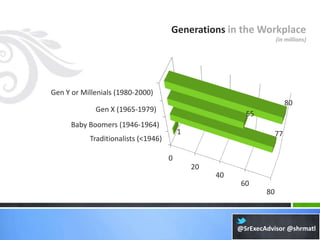
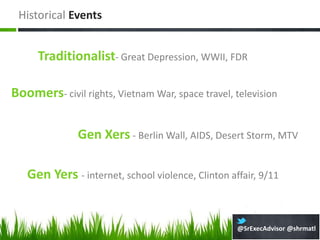
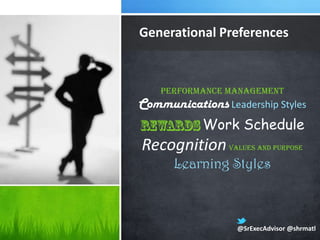

The document discusses managing a multi-generational workforce, including the key generations (Traditionalists, Baby Boomers, Gen X, Gen Y) and how historical events shaped each generation. It notes generations differ in their preferences around communications, leadership styles, work schedules, and values. The document provides tips for tailoring management approaches across generations to avoid conflicts and increase team performance, such as pairing generations to find similarities, creating mentor pairs, and identifying best practices. The overall message is that managers should recognize generations as groups rather than individuals and find ways for generations to learn from each other.


