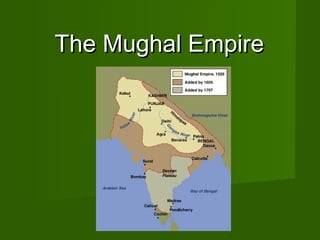
The Mughal Empire
Founding of the Mughal Empire
 Babur founder
  –   Turkish decent
  –   Married to a descendent of Genghis Khan
 Conquers Delhi in 1526 to officially start
  the empire
Humayun
 Succeeds his father to the throne
 Not as effective or likeable
 Rumors of opium addiction throughout his
  reign
 Two decades of his reign are survived but
  not plentiful
Akbar
   Takes the throne at age 13 and rules for 50
    years
   Much more successful ruler
    – Expanded empire
    – Use of fire arms
    – Mansabas to pay for his armies
   Illiterate
   Tolerant of religions
    – One of his wives was a Hindu
   Famous for his patronage of the arts
Akbar
 Most illustrious ruler of the Mughal empire
 How did he differ from his Ottoman and
  Safavid counterparts?
 Married a Rajput Princess who was a
  Hindu and welcomed her family
 Very prosperous
Rajputs
 Warrior Class from northern India
 Hindu
 Approximately 15% of Mansabas
 Confirmed the policy of religious
 accommodation
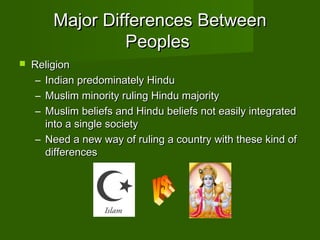
Major Differences Between
                 Peoples
   Religion
     – Indian predominately Hindu
     – Muslim minority ruling Hindu majority
     – Muslim beliefs and Hindu beliefs not easily integrated
       into a single society
     – Need a new way of ruling a country with these kind of
       differences
Religion
 Muslims
  –   Destroy Hindu monuments
  –   Expand into Hindu territory
  –   Enslaving prisoners of war and forcing
      conversion to Islam
 Potentially dangerous division within the
  country
 Akbar eases tensions by stopping worst of
  the abuse
Akbar and Religion
 Declares himself the infallible messenger
 of God in 1579
  – Would this be allowed under Islam? Why or
    why not?
  – What do you believe is his main purpose for
    doing this?
 Allows for cases to be heard by himself
New Religion?
 Akbar creates a new religion
  – Mix of Muslim, Hindu, Zoroastrian, Sikh and
    Christian beliefs
New Religion?
   What is Zoroastrianism?
    – One of the worlds oldest monotheistic religion
        Ahura Mazda
    – Elements are pure and fire represents gods light and
      wisdom
    – Focus on good works, thoughts and deeds
    – Cord with three knots
    – Pray facing a source of light (such as the sun)
    – Keep minds, bodies, and spirits pure to defeat evil
New Religion?
   What is Sikhism?
    – Founded in 15th century
    – Practice religion by coping with everyday problems in
      the world
    – There is only one God
    – God is without form, or gender
    – Everyone has direct access to God
    – Everyone is equal before God
    – A good life is lived as part of a community, by living
      honestly and caring for others
    – Empty religious rituals and superstitions have no
      value
New Religion?
 Akbar creates a new religion
  – Mix of Muslim, Hindu, Zoroastrian, Sikh and
    Christian beliefs
 Brings together scholars of all religions to
  listen to them debate
 Made part of the court a religious ritual
 This did not continue after his death
Conversions Under Akbar
 Why would non-Muslim individuals convert
 even if they were not forced to do so?
Economics under Akbar
   Relatively peaceful time period
    – Conflict with other Indian Princes
   Booming trade in cotton cloth with the
    Europeans
    – Foreign trade from the port of Surat
    – Most Europeans had lost control of ports and so were
      seen as an ally to the Indians
        Military protection for trade rights
    – No Navy of their own
   Did not understand the inflation of the silver in
    Europe and the incredibly cheap price they were
    giving the Europeans
Aurangzeb
 Overzealous grandson of Akbar
 Reversed stance on religious tolerance
  – Caused conflict within his own empire
 Beheaded the 9th   Guru of Sikhism
  – Lead to the formation of the “Army of the
    Pure”
 Religion begins to be at the center of
 armed conflict within the country
Downfall of the Mughal Empire
   Land-Grant System
   Inability of Aurangzeb to effectively administer
    the areas under his control
   Challenges to military from regional players
    –   Marathas
    –   Kikhs
    –   Hindu Rajputs
    –   Afghans
   Invaded by Nadir Shah
    – General who took control after the fall of the Safavids
    – Sacks Delhi and takes the throne with him
Limping Empire
 Officials begin breaking apart and
  declaring themselves independent
 Religious groups break away and gain
  their freedom and flourish
 Leaves the region susceptible to
  European intrusion and conquest

Mughal empire

  • 1.
  • 2.
    Founding of theMughal Empire  Babur founder – Turkish decent – Married to a descendent of Genghis Khan  Conquers Delhi in 1526 to officially start the empire
  • 3.
    Humayun  Succeeds hisfather to the throne  Not as effective or likeable  Rumors of opium addiction throughout his reign  Two decades of his reign are survived but not plentiful
  • 4.
    Akbar  Takes the throne at age 13 and rules for 50 years  Much more successful ruler – Expanded empire – Use of fire arms – Mansabas to pay for his armies  Illiterate  Tolerant of religions – One of his wives was a Hindu  Famous for his patronage of the arts
  • 5.
    Akbar  Most illustriousruler of the Mughal empire  How did he differ from his Ottoman and Safavid counterparts?  Married a Rajput Princess who was a Hindu and welcomed her family  Very prosperous
  • 6.
    Rajputs  Warrior Classfrom northern India  Hindu  Approximately 15% of Mansabas  Confirmed the policy of religious accommodation
  • 7.
    Major Differences Between Peoples  Religion – Indian predominately Hindu – Muslim minority ruling Hindu majority – Muslim beliefs and Hindu beliefs not easily integrated into a single society – Need a new way of ruling a country with these kind of differences
  • 8.
    Religion  Muslims – Destroy Hindu monuments – Expand into Hindu territory – Enslaving prisoners of war and forcing conversion to Islam  Potentially dangerous division within the country  Akbar eases tensions by stopping worst of the abuse
  • 9.
    Akbar and Religion Declares himself the infallible messenger of God in 1579 – Would this be allowed under Islam? Why or why not? – What do you believe is his main purpose for doing this?  Allows for cases to be heard by himself
  • 10.
    New Religion?  Akbarcreates a new religion – Mix of Muslim, Hindu, Zoroastrian, Sikh and Christian beliefs
  • 11.
    New Religion?  What is Zoroastrianism? – One of the worlds oldest monotheistic religion  Ahura Mazda – Elements are pure and fire represents gods light and wisdom – Focus on good works, thoughts and deeds – Cord with three knots – Pray facing a source of light (such as the sun) – Keep minds, bodies, and spirits pure to defeat evil
  • 12.
    New Religion?  What is Sikhism? – Founded in 15th century – Practice religion by coping with everyday problems in the world – There is only one God – God is without form, or gender – Everyone has direct access to God – Everyone is equal before God – A good life is lived as part of a community, by living honestly and caring for others – Empty religious rituals and superstitions have no value
  • 13.
    New Religion?  Akbarcreates a new religion – Mix of Muslim, Hindu, Zoroastrian, Sikh and Christian beliefs  Brings together scholars of all religions to listen to them debate  Made part of the court a religious ritual  This did not continue after his death
  • 14.
    Conversions Under Akbar Why would non-Muslim individuals convert even if they were not forced to do so?
  • 15.
    Economics under Akbar  Relatively peaceful time period – Conflict with other Indian Princes  Booming trade in cotton cloth with the Europeans – Foreign trade from the port of Surat – Most Europeans had lost control of ports and so were seen as an ally to the Indians  Military protection for trade rights – No Navy of their own  Did not understand the inflation of the silver in Europe and the incredibly cheap price they were giving the Europeans
  • 16.
    Aurangzeb  Overzealous grandsonof Akbar  Reversed stance on religious tolerance – Caused conflict within his own empire  Beheaded the 9th Guru of Sikhism – Lead to the formation of the “Army of the Pure”  Religion begins to be at the center of armed conflict within the country
  • 17.
    Downfall of theMughal Empire  Land-Grant System  Inability of Aurangzeb to effectively administer the areas under his control  Challenges to military from regional players – Marathas – Kikhs – Hindu Rajputs – Afghans  Invaded by Nadir Shah – General who took control after the fall of the Safavids – Sacks Delhi and takes the throne with him
  • 18.
    Limping Empire  Officialsbegin breaking apart and declaring themselves independent  Religious groups break away and gain their freedom and flourish  Leaves the region susceptible to European intrusion and conquest