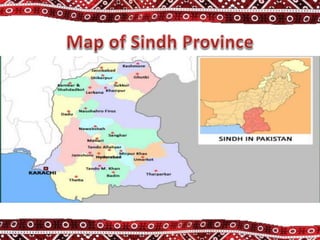
• Sindh is one of the four provinces of Pakistan and historical home to Sindhi
people.
• Also known as “Mehran” and has been given the title of “Bab-ul-Islam” (The
Gateway of Islam),and also called as “Indus Valley”.
• Sindh is bounded to the west by Indus River and Balochistan, to the north by
Punjab, the east by the Indian states of Gujrat and Rajasthan and to south by
the Arabian Sea.
• The capital of Province is Karachi, the largest city of the Pakistan and financial
hub.
• Most of the population in province is Muslim, with sizeable Hindu minorities.
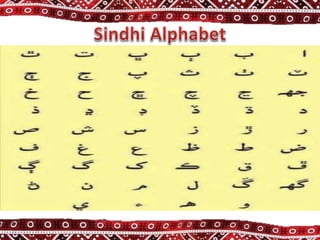
• The main language spoken is Sindhi by about 35 million people, while there
exists a significant Urdu-speaking minority of about 8 million.
• Sindhi language is logistically considered to be the sister language of Sanskrit,
Balochi, Gujarati Rajhastani for having influences of Sindh, However
accommodating substantial Persian, Turkish and Arabic words.
• Area; 140,914 km (54,407 sq mi)
• Population; 42,400,000(780/sq mi)
• It is also recorded that treatises were written in Sindhi on astronomy, medicine and history
during the eighth and ninth centuries.
• The age of Shah Abdul Latif Bhittai (Kalhora period) is most significant in the history of
Sindhi literature.
• In rural areas of Sindh the system of family is Joint Family. family is
Joint Family
• But in urban areas there is very less But in urban areas there is very less
of Joint families. of Joint families.
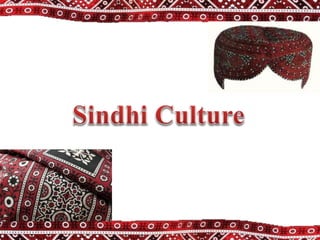
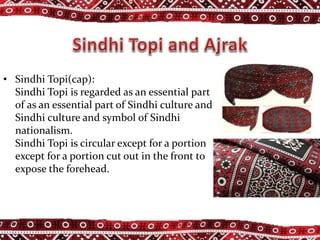
• Sindhi Topi(cap):
Sindhi Topi is regarded as an essential part
of as an essential part of Sindhi culture and
Sindhi culture and symbol of Sindhi
nationalism.
Sindhi Topi is circular except for a portion
except for a portion cut out in the front to
expose the forehead.
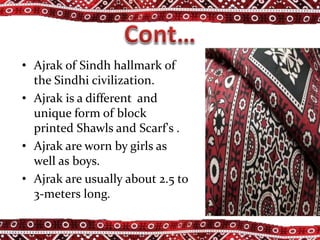
• Ajrak of Sindh hallmark of
the Sindhi civilization.
• Ajrak is a different and
unique form of block
printed Shawls and Scarf's .
• Ajrak are worn by girls as
well as boys.
• Ajrak are usually about 2.5 to
3-meters long.
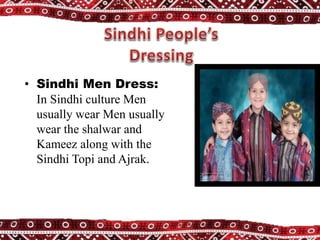
• Sindhi Men Dress:
In Sindhi culture Men
usually wear Men usually
wear the shalwar and
Kameez along with the
Sindhi Topi and Ajrak.
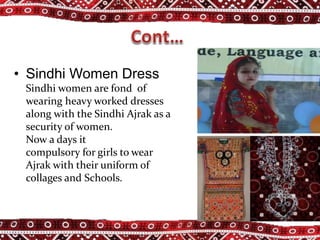
• Sindhi Women Dress
Sindhi women are fond of
wearing heavy worked dresses
along with the Sindhi Ajrak as a
security of women.
Now a days it
compulsory for girls to wear
Ajrak with their uniform of
collages and Schools.
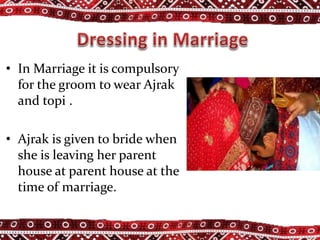
• In Marriage it is compulsory
for the groom to wear Ajrak
and topi .
• Ajrak is given to bride when
she is leaving her parent
house at parent house at the
time of marriage.
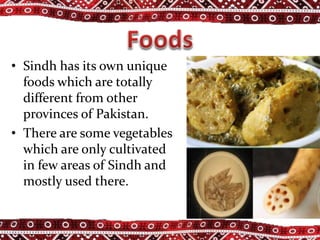
• Sindh has its own unique
foods which are totally
different from other
provinces of Pakistan.
• There are some vegetables
which are only cultivated
in few areas of Sindh and
mostly used there.
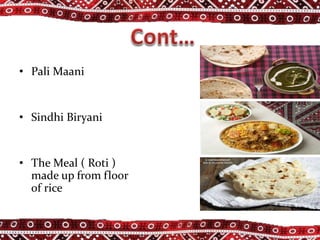
• Pali Maani
• Sindhi Biryani
• The Meal ( Roti )
made up from floor
of rice
• Sindhi music has its own unique quality, it is performed
in may different ways.
• Sufi music is performed at shrines and other simple
music is performed at studios and gatherings .
• Most famous Sindhi music is Shah Jo Raagh over all in
Sindh in which 30 basic Surr are included and all these
Surr are derived from Shah Jo Rissalo .
• All Surr are sung when Shah Abdul Latif Bhittai verses
are being sung by singers.
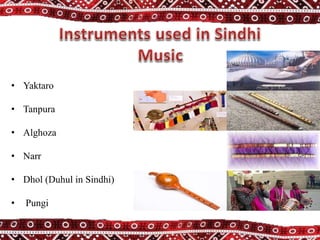
• Yaktaro
• Tanpura
• Alghoza
• Narr
• Dhol (Duhul in Sindhi)
• Pungi
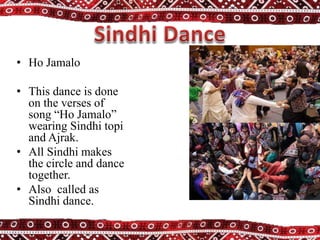
• Ho Jamalo
• This dance is done
on the verses of
song “Ho Jamalo”
wearing Sindhi topi
and Ajrak.
• All Sindhi makes
the circle and dance
together.
• Also called as
Sindhi dance.
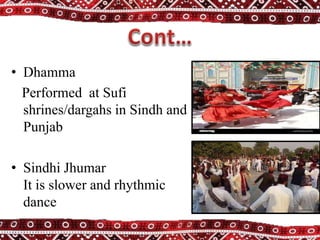
• Dhamma
Performed at Sufi
shrines/dargahs in Sindh and
Punjab
• Sindhi Jhumar
It is slower and rhythmic
dance
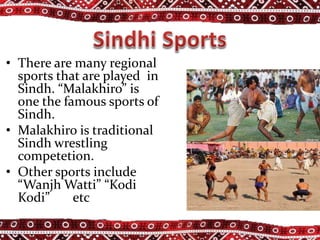
• There are many regional
sports that are played in
Sindh. “Malakhiro” is
one the famous sports of
Sindh.
• Malakhiro is traditional
Sindh wrestling
competetion.
• Other sports include
“Wanjh Watti” “Kodi
Kodi” etc
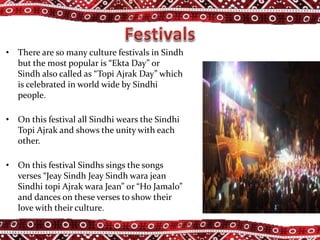
• There are so many culture festivals in Sindh
but the most popular is “Ekta Day” or
Sindh also called as “Topi Ajrak Day” which
is celebrated in world wide by Sindhi
people.
• On this festival all Sindhi wears the Sindhi
Topi Ajrak and shows the unity with each
other.
• On this festival Sindhs sings the songs
verses “Jeay Sindh Jeay Sindh wara jean
Sindhi topi Ajrak wara Jean” or “Ho Jamalo”
and dances on these verses to show their
love with their culture.
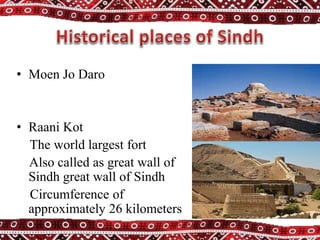
• Moen Jo Daro
• Raani Kot
The world largest fort
Also called as great wall of
Sindh great wall of Sindh
Circumference of
approximately 26 kilometers
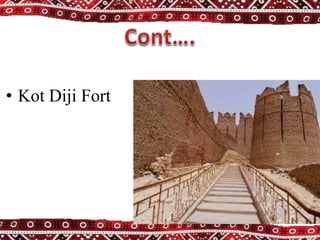
• Kot Diji Fort
Sindhi Culture - .pptx

Sindhi Culture - .pptx

  • 2.
    • Sindh isone of the four provinces of Pakistan and historical home to Sindhi people. • Also known as “Mehran” and has been given the title of “Bab-ul-Islam” (The Gateway of Islam),and also called as “Indus Valley”. • Sindh is bounded to the west by Indus River and Balochistan, to the north by Punjab, the east by the Indian states of Gujrat and Rajasthan and to south by the Arabian Sea. • The capital of Province is Karachi, the largest city of the Pakistan and financial hub. • Most of the population in province is Muslim, with sizeable Hindu minorities. • The main language spoken is Sindhi by about 35 million people, while there exists a significant Urdu-speaking minority of about 8 million. • Sindhi language is logistically considered to be the sister language of Sanskrit, Balochi, Gujarati Rajhastani for having influences of Sindh, However accommodating substantial Persian, Turkish and Arabic words.
  • 3.
    • Area; 140,914km (54,407 sq mi) • Population; 42,400,000(780/sq mi) • It is also recorded that treatises were written in Sindhi on astronomy, medicine and history during the eighth and ninth centuries. • The age of Shah Abdul Latif Bhittai (Kalhora period) is most significant in the history of Sindhi literature.
  • 7.
    • In ruralareas of Sindh the system of family is Joint Family. family is Joint Family • But in urban areas there is very less But in urban areas there is very less of Joint families. of Joint families.
  • 8.
    • Sindhi Topi(cap): SindhiTopi is regarded as an essential part of as an essential part of Sindhi culture and Sindhi culture and symbol of Sindhi nationalism. Sindhi Topi is circular except for a portion except for a portion cut out in the front to expose the forehead.
  • 9.
    • Ajrak ofSindh hallmark of the Sindhi civilization. • Ajrak is a different and unique form of block printed Shawls and Scarf's . • Ajrak are worn by girls as well as boys. • Ajrak are usually about 2.5 to 3-meters long.
  • 10.
    • Sindhi MenDress: In Sindhi culture Men usually wear Men usually wear the shalwar and Kameez along with the Sindhi Topi and Ajrak.
  • 11.
    • Sindhi WomenDress Sindhi women are fond of wearing heavy worked dresses along with the Sindhi Ajrak as a security of women. Now a days it compulsory for girls to wear Ajrak with their uniform of collages and Schools.
  • 12.
    • In Marriageit is compulsory for the groom to wear Ajrak and topi . • Ajrak is given to bride when she is leaving her parent house at parent house at the time of marriage.
  • 13.
    • Sindh hasits own unique foods which are totally different from other provinces of Pakistan. • There are some vegetables which are only cultivated in few areas of Sindh and mostly used there.
  • 14.
    • Pali Maani •Sindhi Biryani • The Meal ( Roti ) made up from floor of rice
  • 15.
    • Sindhi musichas its own unique quality, it is performed in may different ways. • Sufi music is performed at shrines and other simple music is performed at studios and gatherings . • Most famous Sindhi music is Shah Jo Raagh over all in Sindh in which 30 basic Surr are included and all these Surr are derived from Shah Jo Rissalo . • All Surr are sung when Shah Abdul Latif Bhittai verses are being sung by singers.
  • 16.
    • Yaktaro • Tanpura •Alghoza • Narr • Dhol (Duhul in Sindhi) • Pungi
  • 17.
    • Ho Jamalo •This dance is done on the verses of song “Ho Jamalo” wearing Sindhi topi and Ajrak. • All Sindhi makes the circle and dance together. • Also called as Sindhi dance.
  • 18.
    • Dhamma Performed atSufi shrines/dargahs in Sindh and Punjab • Sindhi Jhumar It is slower and rhythmic dance
  • 19.
    • There aremany regional sports that are played in Sindh. “Malakhiro” is one the famous sports of Sindh. • Malakhiro is traditional Sindh wrestling competetion. • Other sports include “Wanjh Watti” “Kodi Kodi” etc
  • 20.
    • There areso many culture festivals in Sindh but the most popular is “Ekta Day” or Sindh also called as “Topi Ajrak Day” which is celebrated in world wide by Sindhi people. • On this festival all Sindhi wears the Sindhi Topi Ajrak and shows the unity with each other. • On this festival Sindhs sings the songs verses “Jeay Sindh Jeay Sindh wara jean Sindhi topi Ajrak wara Jean” or “Ho Jamalo” and dances on these verses to show their love with their culture.
  • 21.
    • Moen JoDaro • Raani Kot The world largest fort Also called as great wall of Sindh great wall of Sindh Circumference of approximately 26 kilometers
  • 22.