MU-EHS
Laboratory
  Safety
 Training
Session Objectives
You will be able to:
• Understand the MU Chemical Hygiene Plan
• Identify laboratory hazards
• Take proper precautions to protect yourself
• Act effectively in an emergency
What You Need to Know
• MU Chemical Hygiene Plan
• Required PPE
• Safe work practices
• Emergency response
Chemical Hygiene Plan
• Chemical hazards
• Safe work practices, procedures, and controls
• Proper PPE to use with specific chemicals
• Emergency procedures
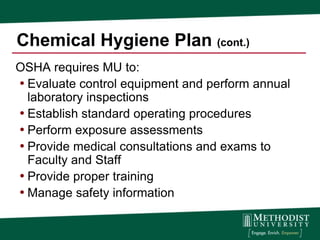
Chemical Hygiene Plan (cont.)
OSHA requires MU to:
• Evaluate control equipment and perform annual
  laboratory inspections
• Establish standard operating procedures
• Perform exposure assessments
• Provide medical consultations and exams to
  Faculty and Staff
• Provide proper training
• Manage safety information
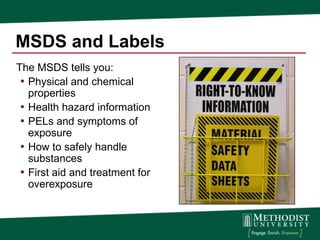
MSDS and Labels
The MSDS tells you:
 • Physical and chemical
   properties
 • Health hazard information
 • PELs and symptoms of
   exposure
 • How to safely handle
   substances
 • First aid and treatment for
   overexposure
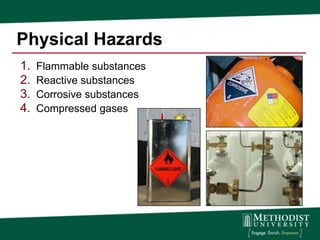
Physical Hazards
1.   Flammable substances
2.   Reactive substances
3.   Corrosive substances
4.   Compressed gases
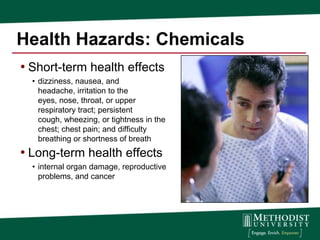
Health Hazards: Chemicals
• Short-term health effects
  • dizziness, nausea, and
    headache, irritation to the
    eyes, nose, throat, or upper
    respiratory tract; persistent
    cough, wheezing, or tightness in the
    chest; chest pain; and difficulty
    breathing or shortness of breath
• Long-term health effects
  • internal organ damage, reproductive
    problems, and cancer
Hazards
• Do you understand the
 information that has been
 presented so far?
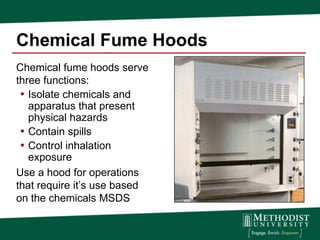
Chemical Fume Hoods
Chemical fume hoods serve
three functions:
 • Isolate chemicals and
   apparatus that present
   physical hazards
 • Contain spills
 • Control inhalation
   exposure
Use a hood for operations
that require it’s use based
on the chemicals MSDS
Chemical Fume Hoods (cont.)
When using a hood:
• Confirm that it is working properly
• Keep chemicals and lab equipment 6 inches
  inside
• Keep glass door between your face and
  materials
• Avoid swift hand or body movements
• Make sure items don’t block air flow
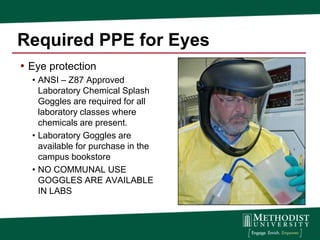
Required PPE for Eyes
• Eye protection
  • ANSI – Z87 Approved
    Laboratory Chemical Splash
    Goggles are required for all
    laboratory classes where
    chemicals are present.
  • Laboratory Goggles are
    available for purchase in the
    campus bookstore
  • NO COMMUNAL USE
    GOGGLES ARE AVAILABLE
    IN LABS
Required PPE (cont.)
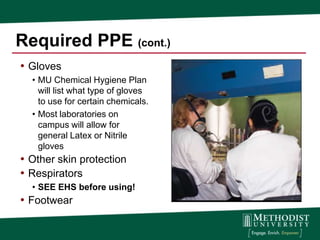
• Gloves
  • MU Chemical Hygiene Plan
    will list what type of gloves
    to use for certain chemicals.
  • Most laboratories on
    campus will allow for
    general Latex or Nitrile
    gloves
• Other skin protection
• Respirators
  • SEE EHS before using!
• Footwear
Safe Hygiene
ALWAYS:
• Wash your hands after direct exposure and
  before leaving the lab
NEVER:
• Smell or taste chemicals
• Eat, drink, chew gum, smoke, or apply
  cosmetics near chemicals
• Store food in chemical storage refrigerators
• Use lab equipment to handle food
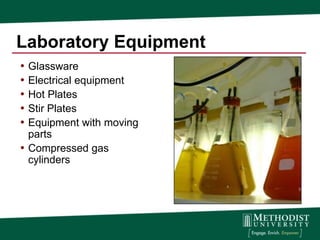
Laboratory Equipment
• Glassware
• Electrical equipment
• Hot Plates
• Stir Plates
• Equipment with moving
  parts
• Compressed gas
  cylinders
Chemical Storage: Basic Segregation
• First, segregate by state:
  solids, liquids, and gases
• Then segregate by hazard
  class
• Never store chemicals
  alphabetically
• Date incoming containers
  of chemicals with a specific
  shelf life
Chemical Storage: Where to Store
• Volatile toxic or odiferous chemicals in a vented
  cabinet
• Flammable solvents in a flammable storage
  cabinet, under a fume hood, or in a safety can
• Highly reactives in locked cabinets Corrosives in
  cabinets or under fume hoods on trays
• Solids on shelves or in a cabinet
• Gas cylinders secured close to area of use
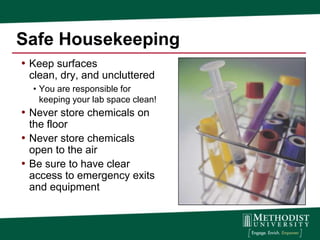
Safe Housekeeping
• Keep surfaces
 clean, dry, and uncluttered
  • You are responsible for
    keeping your lab space clean!
• Never store chemicals on
  the floor
• Never store chemicals
  open to the air
• Be sure to have clear
  access to emergency exits
  and equipment
Inspections
• MU EHS conducts regular lab inspections
• Correct and document safety problems
• Include:
  • Emergency equipment
  • Chemical storage areas
        – Satellite Accumulation Areas
  • Chemical fume hoods
  • Electrical equipment
  • Compressed gas cylinders
  • Emergency exits
Controls, PPE, and Safe Work Practices
• Do you understand the
 information presented
 about engineering
 controls, PPE, and safe
 work practices?
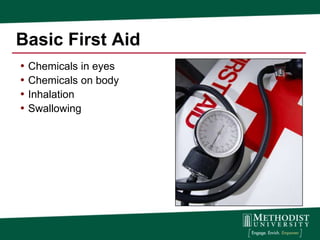
Basic First Aid
• Chemicals in eyes
• Chemicals on body
• Inhalation
• Swallowing
Basic First Aid (cont.)
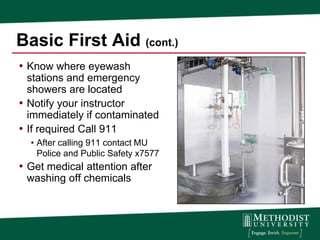
• Know where eyewash
  stations and emergency
  showers are located
• Notify your instructor
  immediately if contaminated
• If required Call 911
  • After calling 911 contact MU
    Police and Public Safety x7577
• Get medical attention after
 washing off chemicals
Spill Control: Minor Spills
• Alert people in the immediate area
• Increase ventilation

Using the MU Chemical Spill Kit
• Don PPE
• Absorb spill with kit absorbents
• Collect residual chemical and cleanup materials
  in sealed black bags for disposal
• Clean spill area with water only
Spill Control: Major Spills
• Alert everyone in the area to evacuate
• Attend to injured or contaminated co-workers or
  students and remove them from the area
• If chemical is flammable, turn off ignition
  sources, if you can do so safely
• Evacuate, closing doors as you exit
• Contact emergency response team
  • Methodist University Police and Public Safety x7577
Fire Emergencies
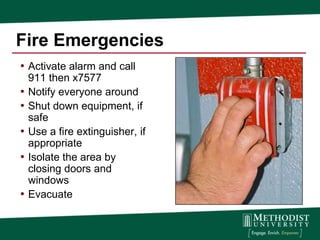
• Activate alarm and call
    911 then x7577
•   Notify everyone around
•   Shut down equipment, if
    safe
•   Use a fire extinguisher, if
    appropriate
•   Isolate the area by
    closing doors and
    windows
•   Evacuate
Key Points to Remember
Remember these four basic principles of laboratory
safety:
 • Familiarize yourself with the MU Chemical
   Hygiene Plan
 • Select appropriate PPE
 • Maintain a safe laboratory environment
 • Prepare for emergencies

MU Laboratory Safety

  • 1.
  • 2.
    Session Objectives You willbe able to: • Understand the MU Chemical Hygiene Plan • Identify laboratory hazards • Take proper precautions to protect yourself • Act effectively in an emergency
  • 3.
    What You Needto Know • MU Chemical Hygiene Plan • Required PPE • Safe work practices • Emergency response
  • 4.
    Chemical Hygiene Plan •Chemical hazards • Safe work practices, procedures, and controls • Proper PPE to use with specific chemicals • Emergency procedures
  • 5.
    Chemical Hygiene Plan(cont.) OSHA requires MU to: • Evaluate control equipment and perform annual laboratory inspections • Establish standard operating procedures • Perform exposure assessments • Provide medical consultations and exams to Faculty and Staff • Provide proper training • Manage safety information
  • 6.
    MSDS and Labels TheMSDS tells you: • Physical and chemical properties • Health hazard information • PELs and symptoms of exposure • How to safely handle substances • First aid and treatment for overexposure
  • 7.
    Physical Hazards 1. Flammable substances 2. Reactive substances 3. Corrosive substances 4. Compressed gases
  • 8.
    Health Hazards: Chemicals •Short-term health effects • dizziness, nausea, and headache, irritation to the eyes, nose, throat, or upper respiratory tract; persistent cough, wheezing, or tightness in the chest; chest pain; and difficulty breathing or shortness of breath • Long-term health effects • internal organ damage, reproductive problems, and cancer
  • 9.
    Hazards • Do youunderstand the information that has been presented so far?
  • 10.
    Chemical Fume Hoods Chemicalfume hoods serve three functions: • Isolate chemicals and apparatus that present physical hazards • Contain spills • Control inhalation exposure Use a hood for operations that require it’s use based on the chemicals MSDS
  • 11.
    Chemical Fume Hoods(cont.) When using a hood: • Confirm that it is working properly • Keep chemicals and lab equipment 6 inches inside • Keep glass door between your face and materials • Avoid swift hand or body movements • Make sure items don’t block air flow
  • 12.
    Required PPE forEyes • Eye protection • ANSI – Z87 Approved Laboratory Chemical Splash Goggles are required for all laboratory classes where chemicals are present. • Laboratory Goggles are available for purchase in the campus bookstore • NO COMMUNAL USE GOGGLES ARE AVAILABLE IN LABS
  • 13.
    Required PPE (cont.) •Gloves • MU Chemical Hygiene Plan will list what type of gloves to use for certain chemicals. • Most laboratories on campus will allow for general Latex or Nitrile gloves • Other skin protection • Respirators • SEE EHS before using! • Footwear
  • 14.
    Safe Hygiene ALWAYS: • Washyour hands after direct exposure and before leaving the lab NEVER: • Smell or taste chemicals • Eat, drink, chew gum, smoke, or apply cosmetics near chemicals • Store food in chemical storage refrigerators • Use lab equipment to handle food
  • 15.
    Laboratory Equipment • Glassware •Electrical equipment • Hot Plates • Stir Plates • Equipment with moving parts • Compressed gas cylinders
  • 16.
    Chemical Storage: BasicSegregation • First, segregate by state: solids, liquids, and gases • Then segregate by hazard class • Never store chemicals alphabetically • Date incoming containers of chemicals with a specific shelf life
  • 17.
    Chemical Storage: Whereto Store • Volatile toxic or odiferous chemicals in a vented cabinet • Flammable solvents in a flammable storage cabinet, under a fume hood, or in a safety can • Highly reactives in locked cabinets Corrosives in cabinets or under fume hoods on trays • Solids on shelves or in a cabinet • Gas cylinders secured close to area of use
  • 18.
    Safe Housekeeping • Keepsurfaces clean, dry, and uncluttered • You are responsible for keeping your lab space clean! • Never store chemicals on the floor • Never store chemicals open to the air • Be sure to have clear access to emergency exits and equipment
  • 19.
    Inspections • MU EHSconducts regular lab inspections • Correct and document safety problems • Include: • Emergency equipment • Chemical storage areas – Satellite Accumulation Areas • Chemical fume hoods • Electrical equipment • Compressed gas cylinders • Emergency exits
  • 20.
    Controls, PPE, andSafe Work Practices • Do you understand the information presented about engineering controls, PPE, and safe work practices?
  • 21.
    Basic First Aid •Chemicals in eyes • Chemicals on body • Inhalation • Swallowing
  • 22.
    Basic First Aid(cont.) • Know where eyewash stations and emergency showers are located • Notify your instructor immediately if contaminated • If required Call 911 • After calling 911 contact MU Police and Public Safety x7577 • Get medical attention after washing off chemicals
  • 23.
    Spill Control: MinorSpills • Alert people in the immediate area • Increase ventilation Using the MU Chemical Spill Kit • Don PPE • Absorb spill with kit absorbents • Collect residual chemical and cleanup materials in sealed black bags for disposal • Clean spill area with water only
  • 24.
    Spill Control: MajorSpills • Alert everyone in the area to evacuate • Attend to injured or contaminated co-workers or students and remove them from the area • If chemical is flammable, turn off ignition sources, if you can do so safely • Evacuate, closing doors as you exit • Contact emergency response team • Methodist University Police and Public Safety x7577
  • 25.
    Fire Emergencies • Activatealarm and call 911 then x7577 • Notify everyone around • Shut down equipment, if safe • Use a fire extinguisher, if appropriate • Isolate the area by closing doors and windows • Evacuate
  • 26.
    Key Points toRemember Remember these four basic principles of laboratory safety: • Familiarize yourself with the MU Chemical Hygiene Plan • Select appropriate PPE • Maintain a safe laboratory environment • Prepare for emergencies