BY: SUPRIYA
MS Access
Microsoft Access
 Microsoft Access is a powerful program to create
and manage your databases. It has many built in
features to assist you in constructing and viewing
your information.
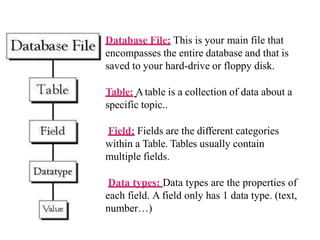
Database File: This is your main file that
encompasses the entire database and that is
saved to your hard-drive or floppy disk.
Table: Atable is a collection of data about a
specific topic..
Field: Fields are the different categories
within a Table. Tables usually contain
multiple fields.
Data types: Data types are the properties of
each field. A field only has 1 data type. (text,
number…)
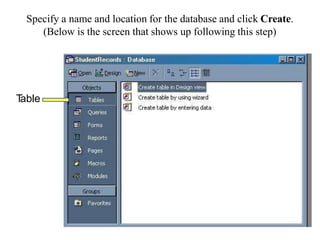
Specify a name and location for the database and click Create.
(Below is the screen that shows up following this step)
T
able
Atable is a collection of data about a
specific topic, such as students or
contacts. Using a separate table for
each topic means that you store that
data only once, which makes your
database more efficient, and reduces
data-entry errors.
Tables
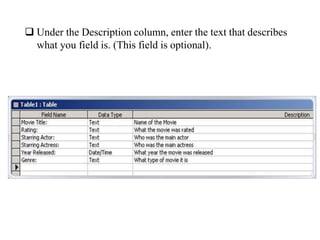
 Under the Description column, enter the text that describes
what you field is. (This field is optional).
Primary Key
 One or more fields (columns) whose value or values uniquely
identify each record in a table.
 A primary key does not allow Null values and must always have
a unique value. A primary key is used to relate a table to foreign
keys in other tables.
 NOTE: You do not have to define a primary key, but it's usually
a good idea. If you don't define a primary key, MicrosoftAccess
asks you if you would like to create one when you save the
table.
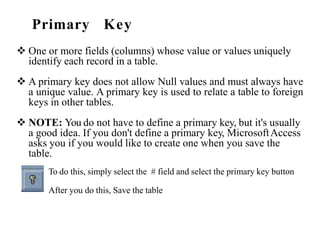
To do this, simply select the # field and select the primary key button
After you do this, Save the table
Switching Views
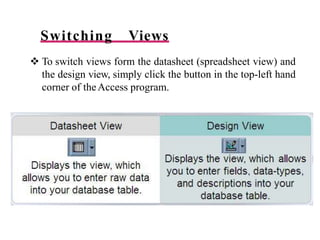
 To switch views form the datasheet (spreadsheet view) and
the design view, simply click the button in the top-left hand
corner of theAccess program.
Entering Data
Click on the Datasheet View and
simply start "chugging" away by
entering the data into each field.
Manipulating Data
• Adding a new row
Simply drop down to a new line and enter the
information
• Updating a record
Simply select the record and field you want to
update, and change its data with what you want
• Deleting a record
Simply select the entire row and hit the Delete Key
on the keyboard
Create a Form using the Wizard
 It is a very good idea to create a form using the wizard, unless you
are an advanced user and know what you are doing. Microsoft
Access does a very good job of creating a form using the wizard.
The following steps are needed to create a basic form:
 Switch to the Database Window. You can do this by pressing F11
on the keyboard.
 Click on the Forms button under Objects on the left side of
screen
 Double click on Create Form Using Wizard
 On the next screen select the fields you want to view on your
form. Most of the time you would select all of them.
 Click Next
 Select the layout you wish
 Click Next
 Select the style you desire...HINT: if you plan on printing your
form, I suggest you use a light background to save on printer
toner and ink
 Click Next
 Give you form a name, and select Open the Form and enter
information
 Select Finish
 You should see your form. To adjust the design of your form,
simply hit the design button (same as with the tables), and adjust
your form accordingly
Creatinga Report
 As with the Form, it is a very good idea to create a report using
the wizard, unless you are an advanced user. Microsoft Access
does a very good job using the wizard to create reports.
 3Switch to the Database Window. You can do this by pressing F11
on the keyboard.
 Click on the Reports button under Objects on the left side of
screen
 Double click on Create Report Using Wizard
 On the next screen select the fields you want to view on your
form. Most of the time you would select all of them.
 Click Next
 Select if you would like to group your files. Keep repeating this
step for as many groupings as you would like.
 Click Next
 Select the layout and the paper orientation you desire
 Click Next
 Select the style you desire...HINT: if you plan on printing your
report, I suggest you use a light background to save on printer
toner and ink
 Click Next
 Give you report a name, and select Preview the Report
 Select Finish
 You should see your report. To adjust the design of your
report, simply hit the design button (same as with the tables),
and adjust your report accordingly

MS Access - Supriya.pptx

  • 1.
  • 2.
    Microsoft Access  MicrosoftAccess is a powerful program to create and manage your databases. It has many built in features to assist you in constructing and viewing your information.
  • 4.
    Database File: Thisis your main file that encompasses the entire database and that is saved to your hard-drive or floppy disk. Table: Atable is a collection of data about a specific topic.. Field: Fields are the different categories within a Table. Tables usually contain multiple fields. Data types: Data types are the properties of each field. A field only has 1 data type. (text, number…)
  • 5.
    Specify a nameand location for the database and click Create. (Below is the screen that shows up following this step) T able
  • 6.
    Atable is acollection of data about a specific topic, such as students or contacts. Using a separate table for each topic means that you store that data only once, which makes your database more efficient, and reduces data-entry errors. Tables
  • 7.
     Under theDescription column, enter the text that describes what you field is. (This field is optional).
  • 8.
    Primary Key  Oneor more fields (columns) whose value or values uniquely identify each record in a table.  A primary key does not allow Null values and must always have a unique value. A primary key is used to relate a table to foreign keys in other tables.  NOTE: You do not have to define a primary key, but it's usually a good idea. If you don't define a primary key, MicrosoftAccess asks you if you would like to create one when you save the table. To do this, simply select the # field and select the primary key button After you do this, Save the table
  • 9.
    Switching Views  Toswitch views form the datasheet (spreadsheet view) and the design view, simply click the button in the top-left hand corner of theAccess program.
  • 10.
    Entering Data Click onthe Datasheet View and simply start "chugging" away by entering the data into each field.
  • 11.
    Manipulating Data • Addinga new row Simply drop down to a new line and enter the information • Updating a record Simply select the record and field you want to update, and change its data with what you want • Deleting a record Simply select the entire row and hit the Delete Key on the keyboard
  • 12.
    Create a Formusing the Wizard  It is a very good idea to create a form using the wizard, unless you are an advanced user and know what you are doing. Microsoft Access does a very good job of creating a form using the wizard. The following steps are needed to create a basic form:  Switch to the Database Window. You can do this by pressing F11 on the keyboard.  Click on the Forms button under Objects on the left side of screen  Double click on Create Form Using Wizard  On the next screen select the fields you want to view on your form. Most of the time you would select all of them.
  • 13.
     Click Next Select the layout you wish  Click Next  Select the style you desire...HINT: if you plan on printing your form, I suggest you use a light background to save on printer toner and ink  Click Next  Give you form a name, and select Open the Form and enter information  Select Finish  You should see your form. To adjust the design of your form, simply hit the design button (same as with the tables), and adjust your form accordingly
  • 14.
    Creatinga Report  Aswith the Form, it is a very good idea to create a report using the wizard, unless you are an advanced user. Microsoft Access does a very good job using the wizard to create reports.  3Switch to the Database Window. You can do this by pressing F11 on the keyboard.  Click on the Reports button under Objects on the left side of screen  Double click on Create Report Using Wizard  On the next screen select the fields you want to view on your form. Most of the time you would select all of them.  Click Next
  • 15.
     Select ifyou would like to group your files. Keep repeating this step for as many groupings as you would like.  Click Next  Select the layout and the paper orientation you desire  Click Next  Select the style you desire...HINT: if you plan on printing your report, I suggest you use a light background to save on printer toner and ink  Click Next  Give you report a name, and select Preview the Report  Select Finish
  • 16.
     You shouldsee your report. To adjust the design of your report, simply hit the design button (same as with the tables), and adjust your report accordingly