MR FOLEY
Short Film Analysis
https://www.youtube.com/w
atch?v=wumyfNZwK7Y
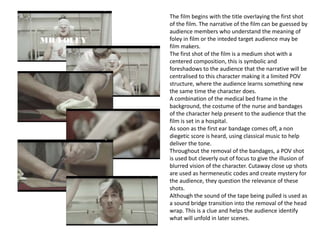
The film begins with the title overlaying the first shot
of the film. The narrative of the film can be guessed by
audience members who understand the meaning of
foley in film or the inteded target audience may be
film makers.
The first shot of the film is a medium shot with a
centered composition, this is symbolic and
foreshadows to the audience that the narrative will be
centralised to this character making it a limited POV
structure, where the audience learns something new
the same time the character does.
A combination of the medical bed frame in the
background, the costume of the nurse and bandages
of the character help present to the audience that the
film is set in a hospital.
As soon as the first ear bandage comes off, a non
diegetic score is heard, using classical music to help
deliver the tone.
Throughout the removal of the bandages, a POV shot
is used but cleverly out of focus to give the illusion of
blurred vision of the character. Cutaway close up shots
are used as hermeneutic codes and create mystery for
the audience, they question the relevance of these
shots.
Although the sound of the tape being pulled is used as
a sound bridge transition into the removal of the head
wrap. This is a clue and helps the audience identify
what will unfold in later scenes.
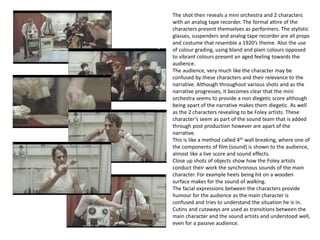
The shot then reveals a mini orchestra and 2 characters
with an analog tape recorder. The formal attire of the
characters present themselves as performers. The stylistic
glasses, suspenders and analog tape recorder are all props
and costume that resemble a 1920’s theme. Also the use
of colour grading, using bland and plain colours opposed
to vibrant colours present an aged feeling towards the
audience.
The audience, very much like the character may be
confused by these characters and their relevance to the
narrative. Although throughout various shots and as the
narrative progresses, it becomes clear that the mini
orchestra seems to provide a non diegetic score although
being apart of the narrative makes them diegetic. As well
as the 2 characters revealing to be Foley artists. These
character’s seem as part of the sound team that is added
through post production however are apart of the
narrative.
This is like a method called 4th wall breaking, where one of
the components of film (sound) is shown to the audience,
almost like a live score and sound effects.
Close up shots of objects show how the Foley artists
conduct their work the synchronous sounds of the main
character. For example heels being hit on a wooden
surface makes for the sound of walking.
The facial expressions between the characters provide
humour for the audience as the main character is
confused and tries to understand the situation he is in.
Cutins and cutaways are used as transitions between the
main character and the sound artists and understood well,
even for a passive audience.
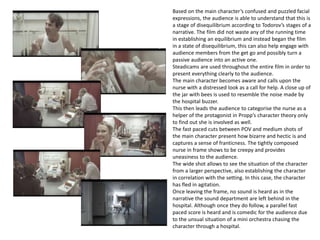
Based on the main character’s confused and puzzled facial
expressions, the audience is able to understand that this is
a stage of disequilibrium according to Todorov’s stages of a
narrative. The film did not waste any of the running time
in establishing an equilibrium and instead began the film
in a state of disequilibrium, this can also help engage with
audience members from the get go and possibly turn a
passive audience into an active one.
Steadicams are used throughout the entire film in order to
present everything clearly to the audience.
The main character becomes aware and calls upon the
nurse with a distressed look as a call for help. A close up of
the jar with bees is used to resemble the noise made by
the hospital buzzer.
This then leads the audience to categorise the nurse as a
helper of the protagonist in Propp’s character theory only
to find out she is involved as well.
The fast paced cuts between POV and medium shots of
the main character present how bizarre and hectic is and
captures a sense of franticness. The tightly composed
nurse in frame shows to be creepy and provides
uneasiness to the audience.
The wide shot allows to see the situation of the character
from a larger perspective, also establishing the character
in correlation with the setting. In this case, the character
has fled in agitation.
Once leaving the frame, no sound is heard as in the
narrative the sound department are left behind in the
hospital. Although once they do follow, a parallel fast
paced score is heard and is comedic for the audience due
to the unsual situation of a mini orchestra chasing the
character through a hospital.
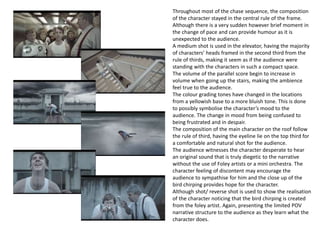
Throughout most of the chase sequence, the composition
of the character stayed in the central rule of the frame.
Although there is a very sudden however brief moment in
the change of pace and can provide humour as it is
unexpected to the audience.
A medium shot is used in the elevator, having the majority
of characters’ heads framed in the second third from the
rule of thirds, making it seem as if the audience were
standing with the characters in such a compact space.
The volume of the parallel score begin to increase in
volume when going up the stairs, making the ambience
feel true to the audience.
The colour grading tones have changed in the locations
from a yellowish base to a more bluish tone. This is done
to possibly symbolise the character’s mood to the
audience. The change in mood from being confused to
being frustrated and in despair.
The composition of the main character on the roof follow
the rule of third, having the eyeline lie on the top third for
a comfortable and natural shot for the audience.
The audience witnesses the character desperate to hear
an original sound that is truly diegetic to the narrative
without the use of Foley artists or a mini orchestra. The
character feeling of discontent may encourage the
audience to sympathise for him and the close up of the
bird chirping provides hope for the character.
Although shot/ reverse shot is used to show the realisation
of the character noticing that the bird chirping is created
from the foley artist. Again, presenting the limited POV
narrative structure to the audience as they learn what the
character does.
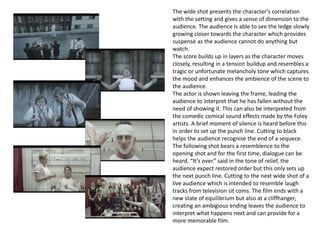
The wide shot presents the character’s correlation
with the setting and gives a sense of dimension to the
audience. The audience is able to see the ledge slowly
growing closer towards the character which provides
suspense as the audience cannot do anything but
watch.
The score builds up in layers as the character moves
closely, resulting in a tension buildup and resembles a
tragic or unfortunate melancholy tone which captures
the mood and enhances the ambience of the scene to
the audience.
The actor is shown leaving the frame, leading the
audience to interpret that he has fallen without the
need of showing it. This can also be interpreted from
the comedic comical sound effects made by the Foley
artists. A brief moment of silence is heard before this
in order to set up the punch line. Cutting to black
helps the audience recognise the end of a sequece.
The following shot bears a resemblence to the
opening shot and for the first time, dialogue can be
heard. “It’s over.” said in the tone of relief, the
audience expect restored order but this only sets up
the next punch line. Cutting to the next wide shot of a
live audience which is intended to resemble laugh
tracks from television sit coms. The film ends with a
new state of equilibrium but also at a cliffhanger,
creating an ambigious ending leaves the audience to
interpret what happens next and can provide for a
more memorable film.

Mr Foley

  • 1.
    MR FOLEY Short FilmAnalysis https://www.youtube.com/w atch?v=wumyfNZwK7Y
  • 2.
    The film beginswith the title overlaying the first shot of the film. The narrative of the film can be guessed by audience members who understand the meaning of foley in film or the inteded target audience may be film makers. The first shot of the film is a medium shot with a centered composition, this is symbolic and foreshadows to the audience that the narrative will be centralised to this character making it a limited POV structure, where the audience learns something new the same time the character does. A combination of the medical bed frame in the background, the costume of the nurse and bandages of the character help present to the audience that the film is set in a hospital. As soon as the first ear bandage comes off, a non diegetic score is heard, using classical music to help deliver the tone. Throughout the removal of the bandages, a POV shot is used but cleverly out of focus to give the illusion of blurred vision of the character. Cutaway close up shots are used as hermeneutic codes and create mystery for the audience, they question the relevance of these shots. Although the sound of the tape being pulled is used as a sound bridge transition into the removal of the head wrap. This is a clue and helps the audience identify what will unfold in later scenes.
  • 3.
    The shot thenreveals a mini orchestra and 2 characters with an analog tape recorder. The formal attire of the characters present themselves as performers. The stylistic glasses, suspenders and analog tape recorder are all props and costume that resemble a 1920’s theme. Also the use of colour grading, using bland and plain colours opposed to vibrant colours present an aged feeling towards the audience. The audience, very much like the character may be confused by these characters and their relevance to the narrative. Although throughout various shots and as the narrative progresses, it becomes clear that the mini orchestra seems to provide a non diegetic score although being apart of the narrative makes them diegetic. As well as the 2 characters revealing to be Foley artists. These character’s seem as part of the sound team that is added through post production however are apart of the narrative. This is like a method called 4th wall breaking, where one of the components of film (sound) is shown to the audience, almost like a live score and sound effects. Close up shots of objects show how the Foley artists conduct their work the synchronous sounds of the main character. For example heels being hit on a wooden surface makes for the sound of walking. The facial expressions between the characters provide humour for the audience as the main character is confused and tries to understand the situation he is in. Cutins and cutaways are used as transitions between the main character and the sound artists and understood well, even for a passive audience.
  • 4.
    Based on themain character’s confused and puzzled facial expressions, the audience is able to understand that this is a stage of disequilibrium according to Todorov’s stages of a narrative. The film did not waste any of the running time in establishing an equilibrium and instead began the film in a state of disequilibrium, this can also help engage with audience members from the get go and possibly turn a passive audience into an active one. Steadicams are used throughout the entire film in order to present everything clearly to the audience. The main character becomes aware and calls upon the nurse with a distressed look as a call for help. A close up of the jar with bees is used to resemble the noise made by the hospital buzzer. This then leads the audience to categorise the nurse as a helper of the protagonist in Propp’s character theory only to find out she is involved as well. The fast paced cuts between POV and medium shots of the main character present how bizarre and hectic is and captures a sense of franticness. The tightly composed nurse in frame shows to be creepy and provides uneasiness to the audience. The wide shot allows to see the situation of the character from a larger perspective, also establishing the character in correlation with the setting. In this case, the character has fled in agitation. Once leaving the frame, no sound is heard as in the narrative the sound department are left behind in the hospital. Although once they do follow, a parallel fast paced score is heard and is comedic for the audience due to the unsual situation of a mini orchestra chasing the character through a hospital.
  • 5.
    Throughout most ofthe chase sequence, the composition of the character stayed in the central rule of the frame. Although there is a very sudden however brief moment in the change of pace and can provide humour as it is unexpected to the audience. A medium shot is used in the elevator, having the majority of characters’ heads framed in the second third from the rule of thirds, making it seem as if the audience were standing with the characters in such a compact space. The volume of the parallel score begin to increase in volume when going up the stairs, making the ambience feel true to the audience. The colour grading tones have changed in the locations from a yellowish base to a more bluish tone. This is done to possibly symbolise the character’s mood to the audience. The change in mood from being confused to being frustrated and in despair. The composition of the main character on the roof follow the rule of third, having the eyeline lie on the top third for a comfortable and natural shot for the audience. The audience witnesses the character desperate to hear an original sound that is truly diegetic to the narrative without the use of Foley artists or a mini orchestra. The character feeling of discontent may encourage the audience to sympathise for him and the close up of the bird chirping provides hope for the character. Although shot/ reverse shot is used to show the realisation of the character noticing that the bird chirping is created from the foley artist. Again, presenting the limited POV narrative structure to the audience as they learn what the character does.
  • 6.
    The wide shotpresents the character’s correlation with the setting and gives a sense of dimension to the audience. The audience is able to see the ledge slowly growing closer towards the character which provides suspense as the audience cannot do anything but watch. The score builds up in layers as the character moves closely, resulting in a tension buildup and resembles a tragic or unfortunate melancholy tone which captures the mood and enhances the ambience of the scene to the audience. The actor is shown leaving the frame, leading the audience to interpret that he has fallen without the need of showing it. This can also be interpreted from the comedic comical sound effects made by the Foley artists. A brief moment of silence is heard before this in order to set up the punch line. Cutting to black helps the audience recognise the end of a sequece. The following shot bears a resemblence to the opening shot and for the first time, dialogue can be heard. “It’s over.” said in the tone of relief, the audience expect restored order but this only sets up the next punch line. Cutting to the next wide shot of a live audience which is intended to resemble laugh tracks from television sit coms. The film ends with a new state of equilibrium but also at a cliffhanger, creating an ambigious ending leaves the audience to interpret what happens next and can provide for a more memorable film.