MISERY
-Opening Sequence Analysis-
At first the viewer
sees nothing on
screen apart from
blackness. However
a non diegetic
soundtrack of a type
writer being used
can be heard, before
the scene is in view.
This creates curiosity
for the viewer as
they wonder about ,
and anticipate the
coming scene. It may
not be obvious for
the viewer at first,
that the soundtrack
is that of a type
writer, so this would
also cause curiosity
within the viewer to
find out the source
of the sound.
This scene is unusually first introduced
by a series of short take, close ups,
rather than a wide or long establishing
shot. Firstly a cigarette and one match is
displayed. This makes the viewer feel as
if someone, likely the person using the
type writer is waiting to light it. This
builds a curiosity for why lighting the
cigarette is being prolonged. The fact the
cigarette and match are out of there
boxes, gives the impression that they
are part of a routine, as if this were a one
off occasion, they would more likely be
boxed. The overall close up shot of the
cigarette and match adds to the
impression that these objects are part of
a followed routine as the close up
highlights there importance for the
owner, as they might rely on them, as
said previously, likely the person using
the type writer. The only soundtrack that
is heard is the non diegetic sound of the
type writer.
A short take, close up of a champagne glass, and
then bottle in ice, is pictured. This is a
celebratory drink, and much like the cigarette, it
appears to be prolonged being drunk. This
creates the interpretation for the viewer that
both the champagne and cigarette are being
saved for a special occasion. This creates
curiosity for the viewer as they wonder what the
special event might be. As said previously, the
only soundtrack that can be heard is that of a
type writer in use, however it is no longer non
diegetic sound, as a male figure can be seen
typing in the background of the champagne
glass shot, making the soundtrack diegetic.
These short takes of the cigarette and
champagne also reflect on the type writers
thoughts. This once again makes the viewer
wonder why the male is prolonging having
them. The actual identity of the male is not
revealed just yet also adding to the viewers
thirst for knowledge.
An extreme close up is
displayed of the type writer.
This, with the sole diegetic
soundtrack of the type writer,
greatly amplifies the
importance of the work to the
male writer, and shows his
focus and dedication to his
writing. A sentence being typed
out is seen, which appears to
be part of a fiction story. This
gives the viewer the impression
that the male character may
write fiction stories for a living,
which explains why he is so
incredibly dedicated to his
work.
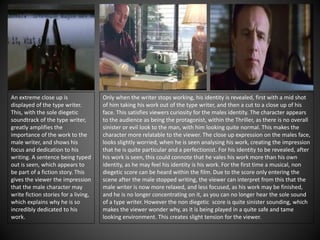
Only when the writer stops working, his identity is revealed, first with a mid shot
of him taking his work out of the type writer, and then a cut to a close up of his
face. This satisfies viewers curiosity for the males identity. The character appears
to the audience as being the protagonist, within the Thriller, as there is no overall
sinister or evil look to the man, with him looking quite normal. This makes the
character more relatable to the viewer. The close up expression on the males face,
looks slightly worried, when he is seen analysing his work, creating the impression
that he is quite particular and a perfectionist. For his identity to be revealed, after
his work is seen, this could connote that he vales his work more than his own
identity, as he may feel his identity is his work. For the first time a musical, non
diegetic score can be heard within the film. Due to the score only entering the
scene after the male stopped writing, the viewer can interpret from this that the
male writer is now more relaxed, and less focused, as his work may be finished,
and he is no longer concentrating on it, as you can no longer hear the sole sound
of a type writer. However the non diegetic score is quite sinister sounding, which
makes the viewer wonder why, as it is being played in a quite safe and tame
looking environment. This creates slight tension for the viewer.
The male writer then decides his work is
finished, as the viewer can see a close up
of the males writing ‘THE END’ in block
capitals at the bottom of his writing. This
symbolises to the viewer that the male
is extremely glad to finish working, as his
writing is quite big, reflecting his
emotions on finishing, and the close up
shot of these words puts emphasis on
the importance of the writers
achievement. Looking deeper, the words
‘ THE END’ may give the viewer the
interpretation that the writers work, may
result in the end for him. The title of the
film ‘Misery’ and the creepy, non diegetic
score both add to the prediction, that
the characters work will lead him to his
‘Misery’ and end.
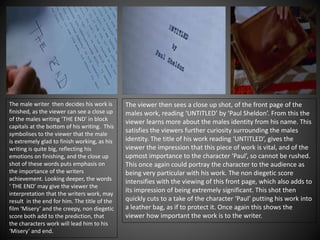
The viewer then sees a close up shot, of the front page of the
males work, reading ‘UNTITLED’ by ‘Paul Sheldon’. From this the
viewer learns more about the males identity from his name. This
satisfies the viewers further curiosity surrounding the males
identity. The title of his work reading ‘UNTITLED’, gives the
viewer the impression that this piece of work is vital, and of the
upmost importance to the character ‘Paul’, so cannot be rushed.
This once again could portray the character to the audience as
being very particular with his work. The non diegetic score
intensifies with the viewing of this front page, which also adds to
its impression of being extremely significant. This shot then
quickly cuts to a take of the character ‘Paul’ putting his work into
a leather bag, as if to protect it. Once again this shows the
viewer how important the work is to the writer.
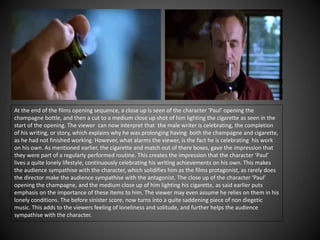
At the end of the films opening sequence, a close up is seen of the character ‘Paul’ opening the
champagne bottle, and then a cut to a medium close up shot of him lighting the cigarette as seen in the
start of the opening. The viewer can now interpret that the male writer is celebrating, the completion
of his writing, or story, which explains why he was prolonging having both the champagne and cigarette,
as he had not finished working. However, what alarms the viewer, is the fact he is celebrating his work
on his own. As mentioned earlier, the cigarette and match out of there boxes, gave the impression that
they were part of a regularly performed routine. This creates the impression that the character ‘Paul’
lives a quite lonely lifestyle, continuously celebrating his writing achievements on his own. This makes
the audience sympathise with the character, which solidifies him as the films protagonist, as rarely does
the director make the audience sympathise with the antagonist. The close up of the character ‘Paul’
opening the champagne, and the medium close up of him lighting his cigarette, as said earlier puts
emphasis on the importance of these items to him. The viewer may even assume he relies on them in his
lonely conditions. The before sinister score, now turns into a quite saddening piece of non diegetic
music. This adds to the viewers feeling of loneliness and solitude, and further helps the audience
sympathise with the character.

Daniel - Misery Analysis

  • 1.
  • 2.
    At first theviewer sees nothing on screen apart from blackness. However a non diegetic soundtrack of a type writer being used can be heard, before the scene is in view. This creates curiosity for the viewer as they wonder about , and anticipate the coming scene. It may not be obvious for the viewer at first, that the soundtrack is that of a type writer, so this would also cause curiosity within the viewer to find out the source of the sound. This scene is unusually first introduced by a series of short take, close ups, rather than a wide or long establishing shot. Firstly a cigarette and one match is displayed. This makes the viewer feel as if someone, likely the person using the type writer is waiting to light it. This builds a curiosity for why lighting the cigarette is being prolonged. The fact the cigarette and match are out of there boxes, gives the impression that they are part of a routine, as if this were a one off occasion, they would more likely be boxed. The overall close up shot of the cigarette and match adds to the impression that these objects are part of a followed routine as the close up highlights there importance for the owner, as they might rely on them, as said previously, likely the person using the type writer. The only soundtrack that is heard is the non diegetic sound of the type writer. A short take, close up of a champagne glass, and then bottle in ice, is pictured. This is a celebratory drink, and much like the cigarette, it appears to be prolonged being drunk. This creates the interpretation for the viewer that both the champagne and cigarette are being saved for a special occasion. This creates curiosity for the viewer as they wonder what the special event might be. As said previously, the only soundtrack that can be heard is that of a type writer in use, however it is no longer non diegetic sound, as a male figure can be seen typing in the background of the champagne glass shot, making the soundtrack diegetic. These short takes of the cigarette and champagne also reflect on the type writers thoughts. This once again makes the viewer wonder why the male is prolonging having them. The actual identity of the male is not revealed just yet also adding to the viewers thirst for knowledge.
  • 3.
    An extreme closeup is displayed of the type writer. This, with the sole diegetic soundtrack of the type writer, greatly amplifies the importance of the work to the male writer, and shows his focus and dedication to his writing. A sentence being typed out is seen, which appears to be part of a fiction story. This gives the viewer the impression that the male character may write fiction stories for a living, which explains why he is so incredibly dedicated to his work. Only when the writer stops working, his identity is revealed, first with a mid shot of him taking his work out of the type writer, and then a cut to a close up of his face. This satisfies viewers curiosity for the males identity. The character appears to the audience as being the protagonist, within the Thriller, as there is no overall sinister or evil look to the man, with him looking quite normal. This makes the character more relatable to the viewer. The close up expression on the males face, looks slightly worried, when he is seen analysing his work, creating the impression that he is quite particular and a perfectionist. For his identity to be revealed, after his work is seen, this could connote that he vales his work more than his own identity, as he may feel his identity is his work. For the first time a musical, non diegetic score can be heard within the film. Due to the score only entering the scene after the male stopped writing, the viewer can interpret from this that the male writer is now more relaxed, and less focused, as his work may be finished, and he is no longer concentrating on it, as you can no longer hear the sole sound of a type writer. However the non diegetic score is quite sinister sounding, which makes the viewer wonder why, as it is being played in a quite safe and tame looking environment. This creates slight tension for the viewer.
  • 4.
    The male writerthen decides his work is finished, as the viewer can see a close up of the males writing ‘THE END’ in block capitals at the bottom of his writing. This symbolises to the viewer that the male is extremely glad to finish working, as his writing is quite big, reflecting his emotions on finishing, and the close up shot of these words puts emphasis on the importance of the writers achievement. Looking deeper, the words ‘ THE END’ may give the viewer the interpretation that the writers work, may result in the end for him. The title of the film ‘Misery’ and the creepy, non diegetic score both add to the prediction, that the characters work will lead him to his ‘Misery’ and end. The viewer then sees a close up shot, of the front page of the males work, reading ‘UNTITLED’ by ‘Paul Sheldon’. From this the viewer learns more about the males identity from his name. This satisfies the viewers further curiosity surrounding the males identity. The title of his work reading ‘UNTITLED’, gives the viewer the impression that this piece of work is vital, and of the upmost importance to the character ‘Paul’, so cannot be rushed. This once again could portray the character to the audience as being very particular with his work. The non diegetic score intensifies with the viewing of this front page, which also adds to its impression of being extremely significant. This shot then quickly cuts to a take of the character ‘Paul’ putting his work into a leather bag, as if to protect it. Once again this shows the viewer how important the work is to the writer.
  • 5.
    At the endof the films opening sequence, a close up is seen of the character ‘Paul’ opening the champagne bottle, and then a cut to a medium close up shot of him lighting the cigarette as seen in the start of the opening. The viewer can now interpret that the male writer is celebrating, the completion of his writing, or story, which explains why he was prolonging having both the champagne and cigarette, as he had not finished working. However, what alarms the viewer, is the fact he is celebrating his work on his own. As mentioned earlier, the cigarette and match out of there boxes, gave the impression that they were part of a regularly performed routine. This creates the impression that the character ‘Paul’ lives a quite lonely lifestyle, continuously celebrating his writing achievements on his own. This makes the audience sympathise with the character, which solidifies him as the films protagonist, as rarely does the director make the audience sympathise with the antagonist. The close up of the character ‘Paul’ opening the champagne, and the medium close up of him lighting his cigarette, as said earlier puts emphasis on the importance of these items to him. The viewer may even assume he relies on them in his lonely conditions. The before sinister score, now turns into a quite saddening piece of non diegetic music. This adds to the viewers feeling of loneliness and solitude, and further helps the audience sympathise with the character.