Myeloproliferative Neoplasms
(MPNs)
Objectives
• Definition of MPN
• Types of MPN
• Mutations of MPN
• Aetiology of MPN
• Clinical features of MPN
• CML and Philadelphia Chromosome
• Definition of each type
List of Contents:
• Definition
• Types
• PV
• ET
• MF
• CML and Philadelphia Chromosome
• Summary or conclusion
• Question
Myeloproliferative Neoplasms
MPNs (PV, ET, MF)
• Clonal hematopoeitic disorders
• Proliferation of one or more of myeloid lineages:
– Granulocytic
– Erythroid
– Megakaryocytic
Aetiology
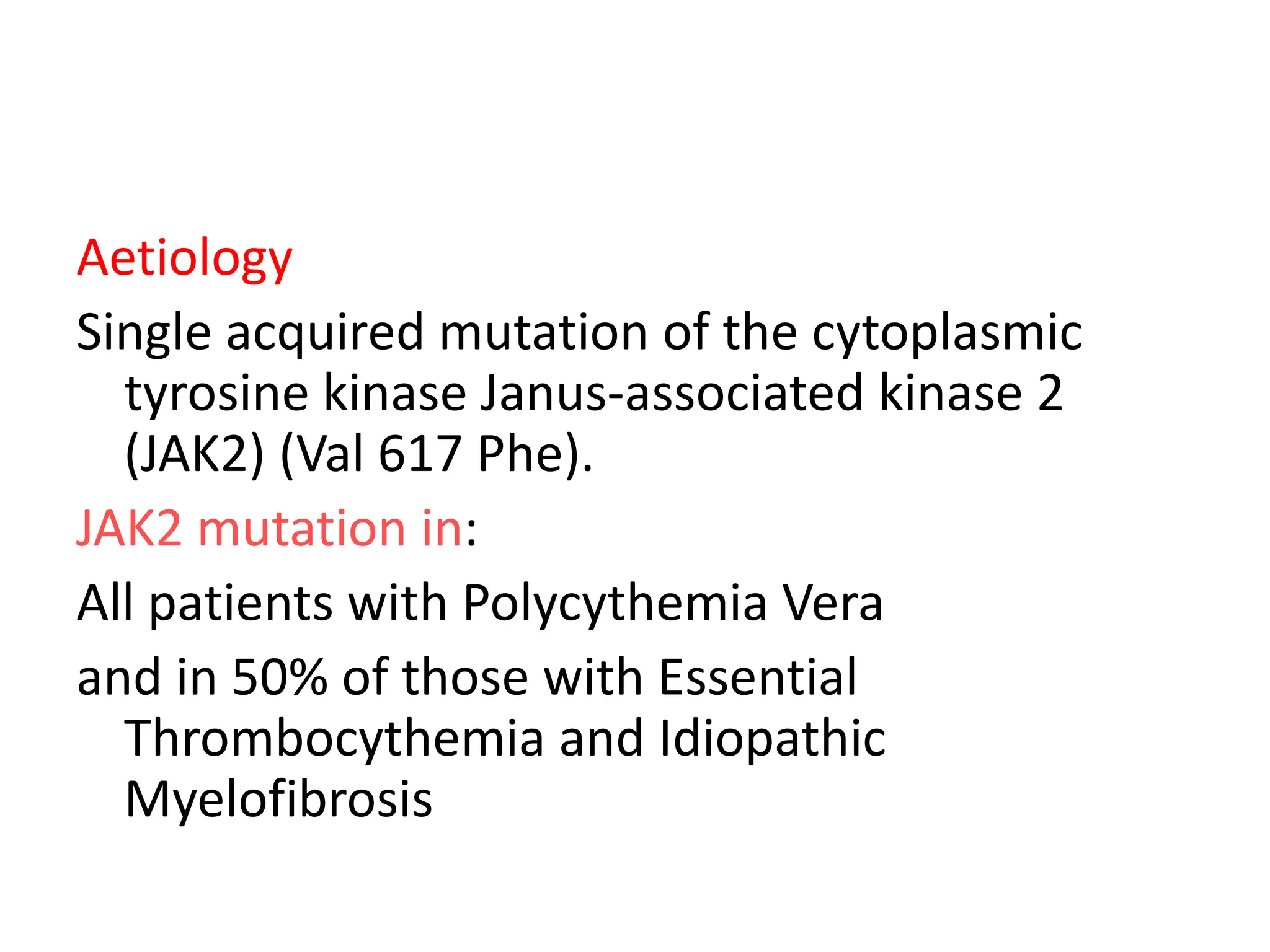
Single acquired mutation of the cytoplasmic
tyrosine kinase Janus-associated kinase 2
(JAK2) (Val 617 Phe).
JAK2 mutation in:
All patients with Polycythemia Vera
and in 50% of those with Essential
Thrombocythemia and Idiopathic
Myelofibrosis
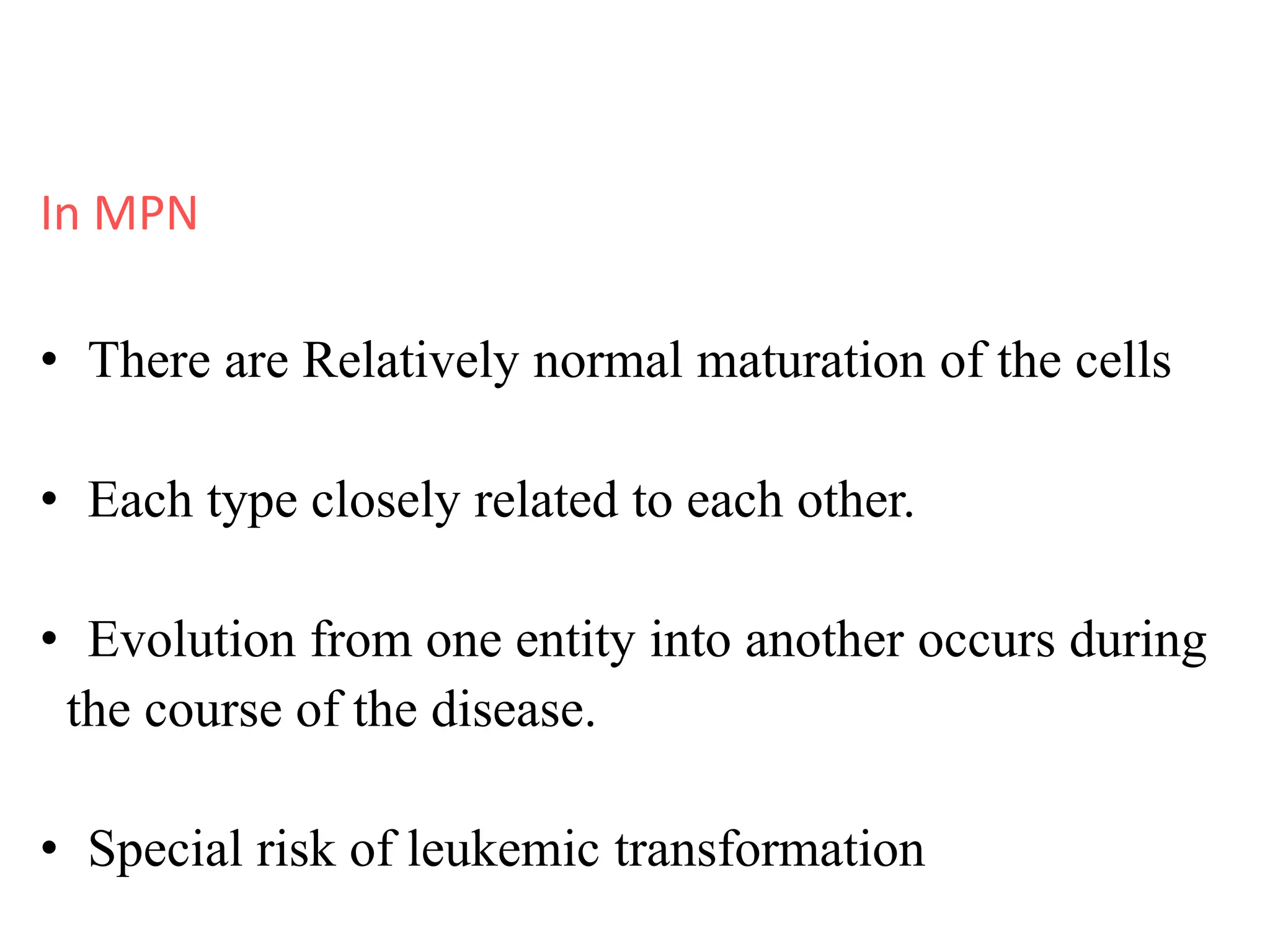
In MPN
• There are Relatively normal maturation of the cells
• Each type closely related to each other.
• Evolution from one entity into another occurs during
the course of the disease.
• Special risk of leukemic transformation
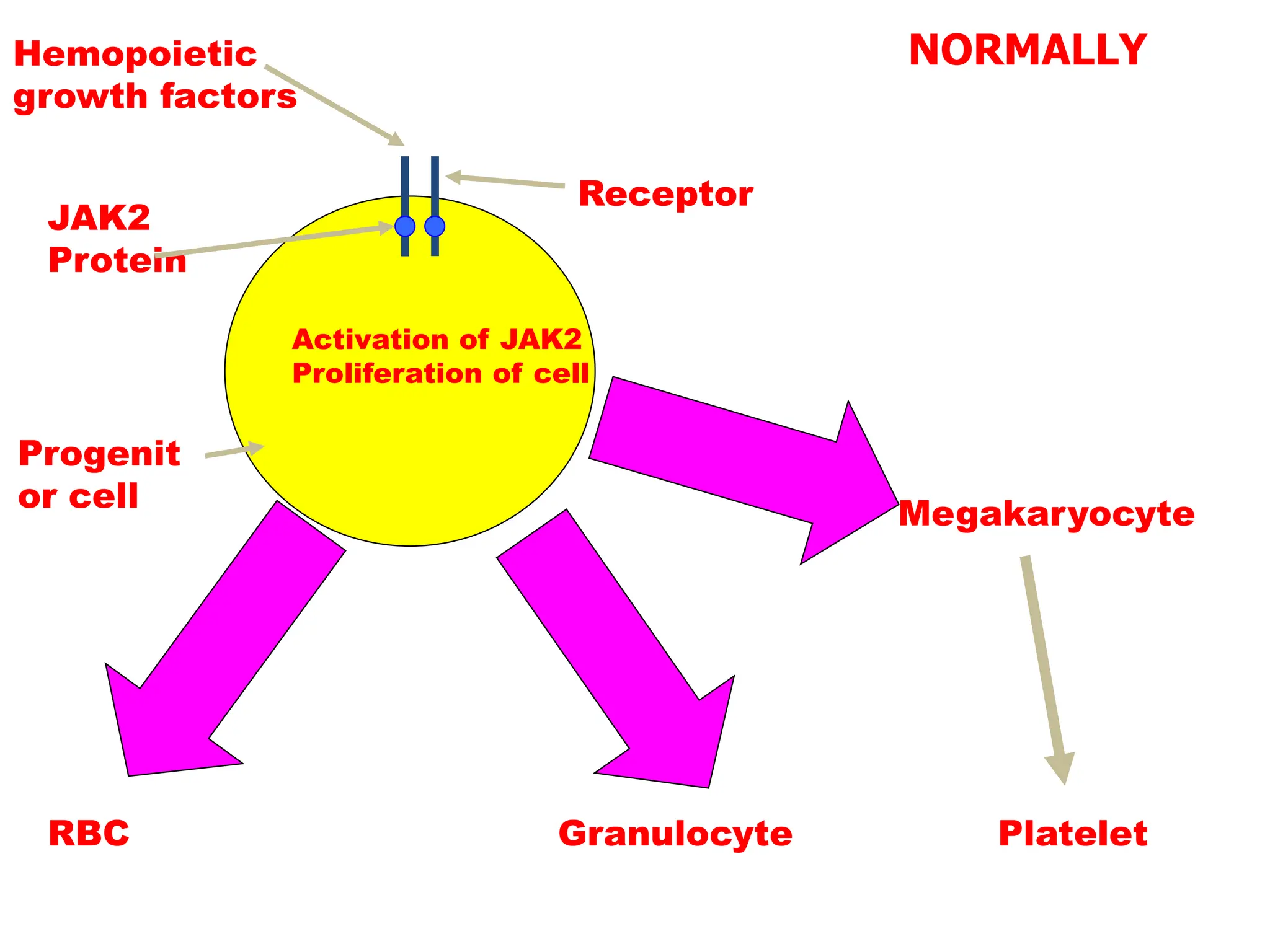
Activation of JAK2
Proliferation of cell
Receptor
Hemopoietic
growth factors
JAK2
Protein
Progenit
or cell
RBC Granulocyte
Megakaryocyte
Platelet
NORMALLY
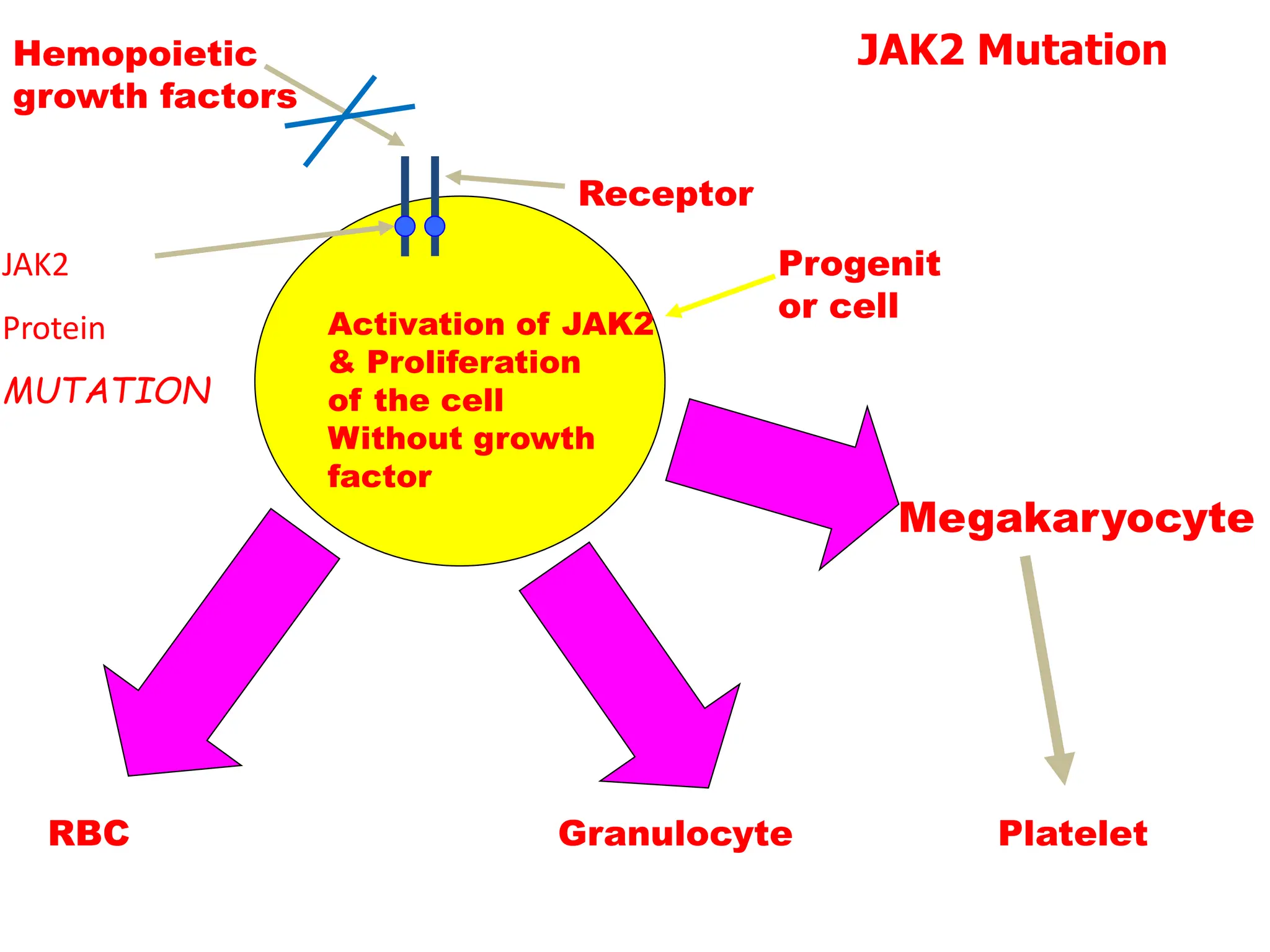
Activation of JAK2
& Proliferation
of the cell
Without growth
factor
Receptor
Hemopoietic
growth factors
JAK2
Protein
MUTATION
Progenit
or cell
RBC Granulocyte
Megakaryocyte
Platelet
JAK2 Mutation
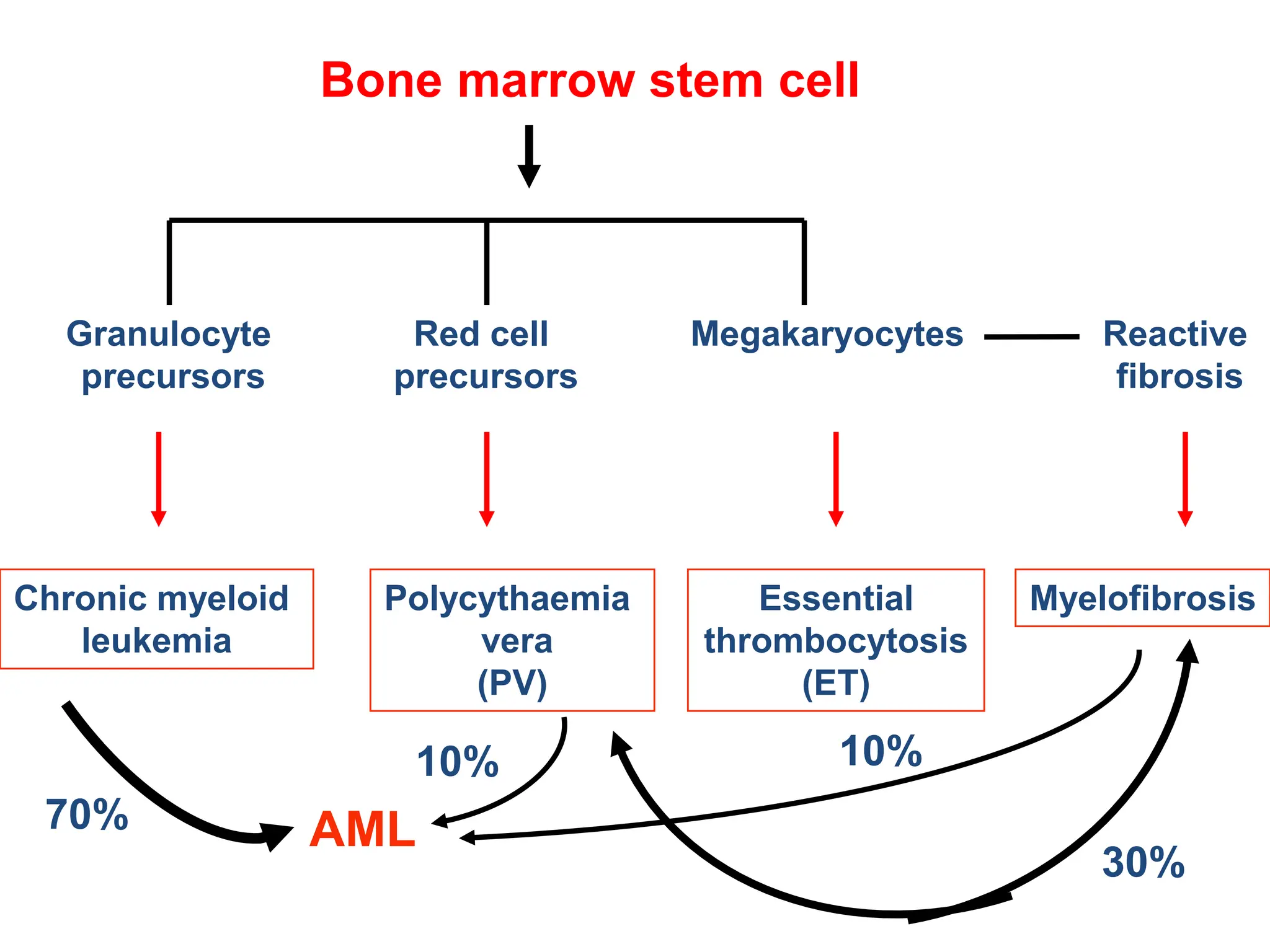
Bone marrow stem cell
Clonal abnormality
Granulocyte
precursors
Red cell
precursors
Megakaryocytes Reactive
fibrosis
Essential
thrombocytosis
(ET)
Polycythaemia
vera
(PV)
Myelofibrosis
AML
Chronic myeloid
leukemia
70%
10% 10%
30%
Polycythemia Vera
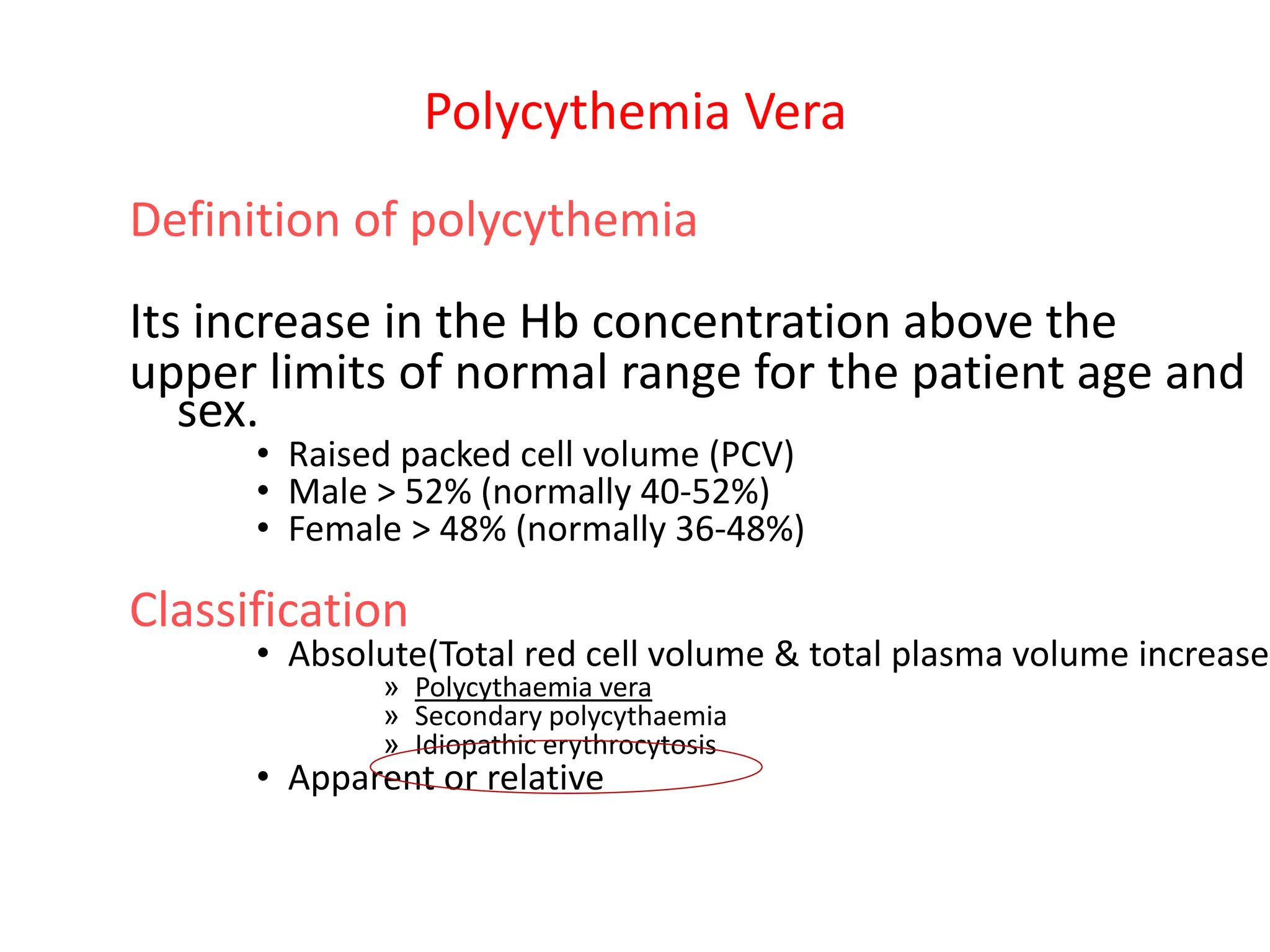
Definition of polycythemia
Its increase in the Hb concentration above the
upper limits of normal range for the patient age and
sex.
• Raised packed cell volume (PCV)
• Male > 52% (normally 40-52%)
• Female > 48% (normally 36-48%)
Classification
• Absolute(Total red cell volume & total plasma volume increased
» Polycythaemia vera
» Secondary polycythaemia
» Idiopathic erythrocytosis
• Apparent or relative
Polycythemia Vera
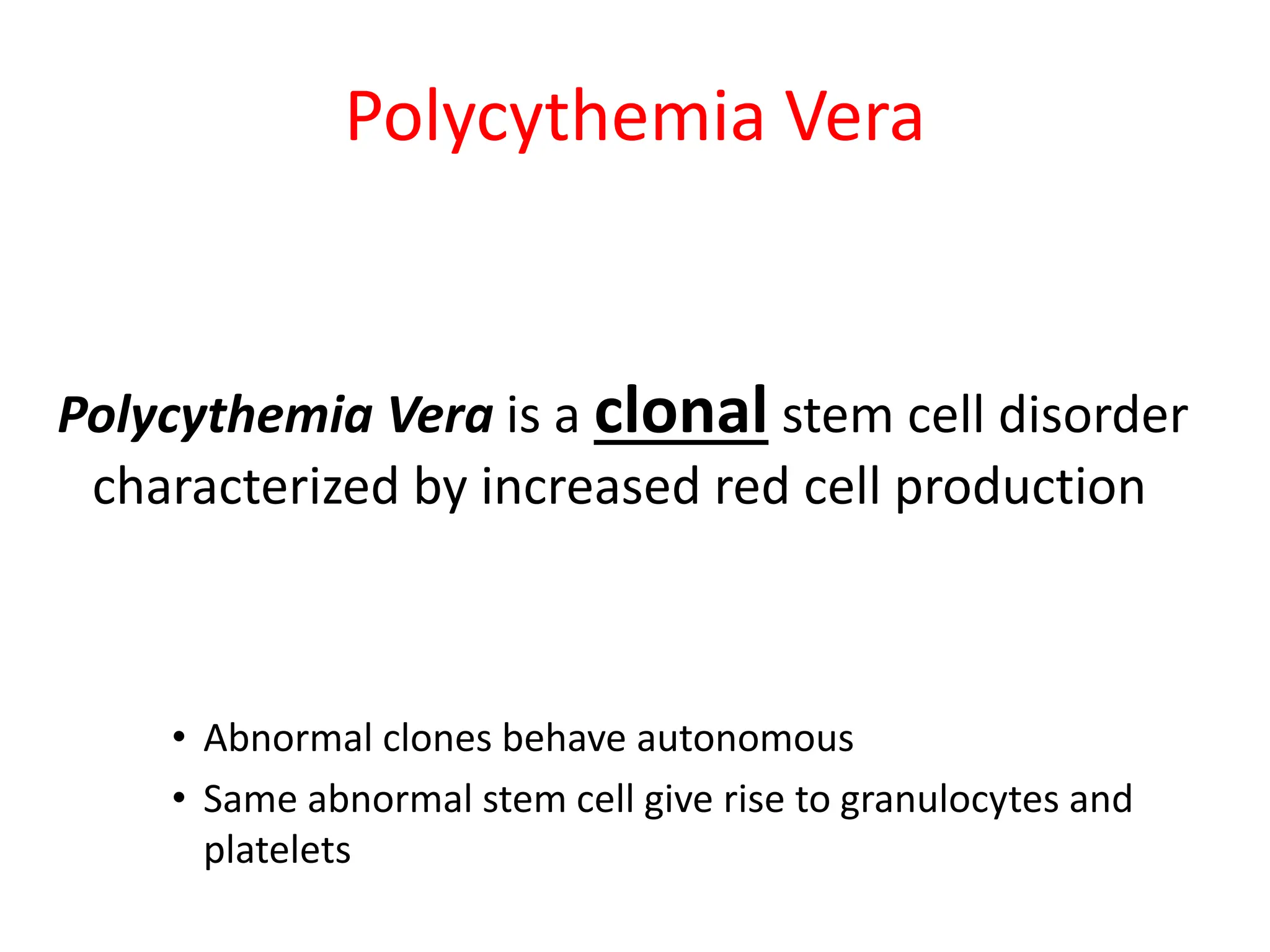
Polycythemia Vera is a clonal stem cell disorder
characterized by increased red cell production
• Abnormal clones behave autonomous
• Same abnormal stem cell give rise to granulocytes and
platelets
Clinical features
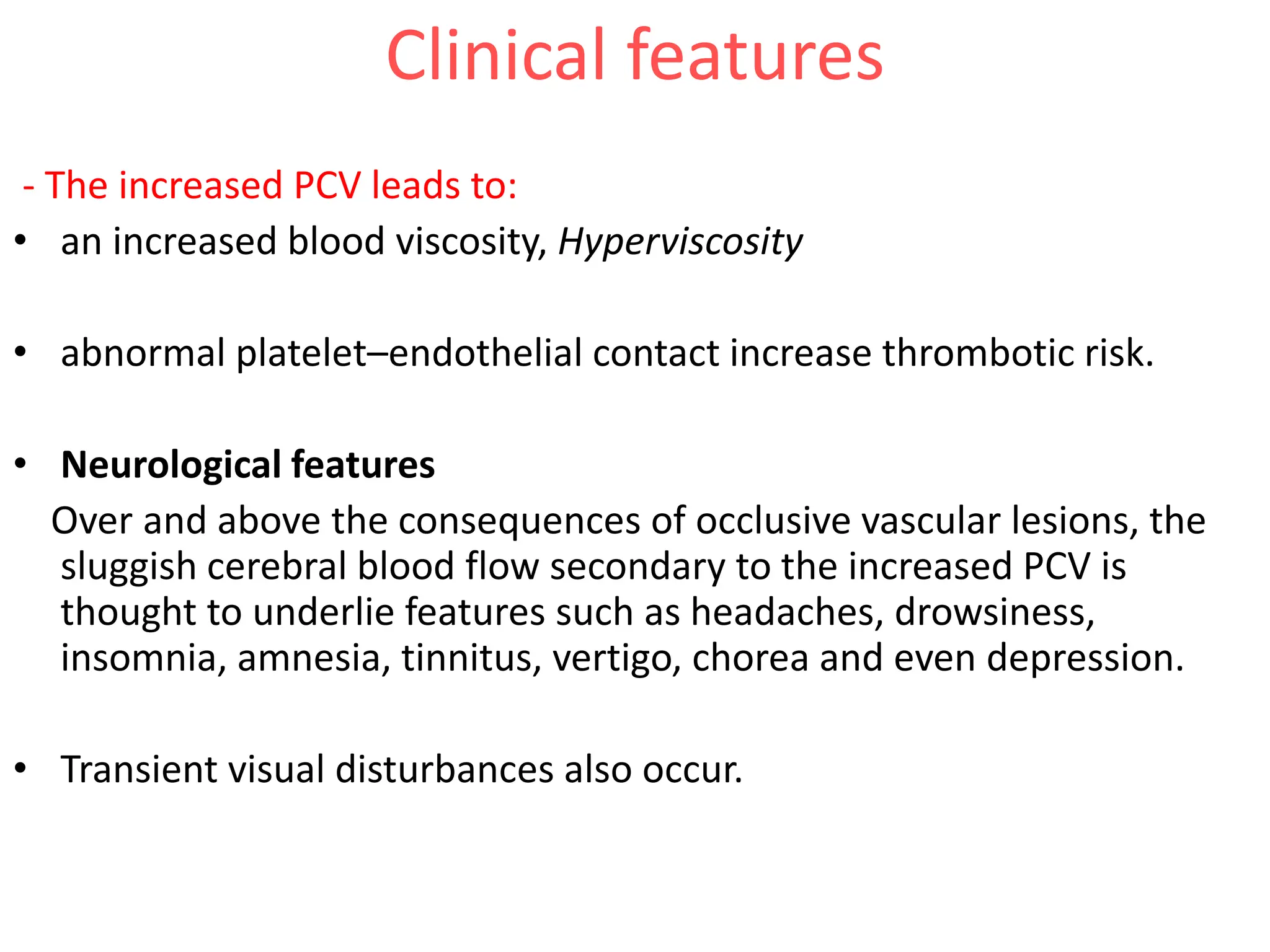
- The increased PCV leads to:
• an increased blood viscosity, Hyperviscosity
• abnormal platelet–endothelial contact increase thrombotic risk.
• Neurological features
Over and above the consequences of occlusive vascular lesions, the
sluggish cerebral blood flow secondary to the increased PCV is
thought to underlie features such as headaches, drowsiness,
insomnia, amnesia, tinnitus, vertigo, chorea and even depression.
• Transient visual disturbances also occur.
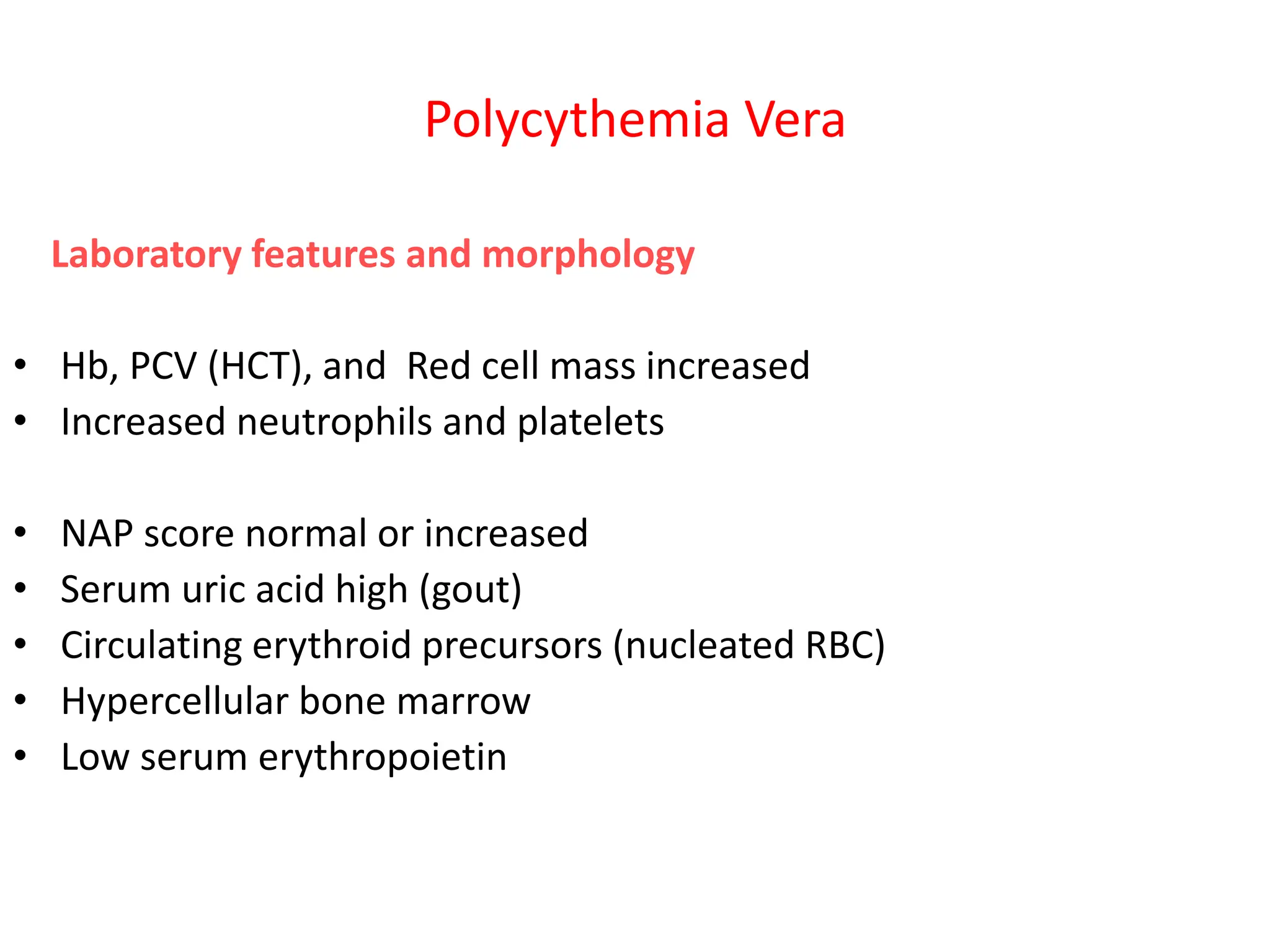
Polycythemia Vera
Laboratory features and morphology
• Hb, PCV (HCT), and Red cell mass increased
• Increased neutrophils and platelets
• NAP score normal or increased
• Serum uric acid high (gout)
• Circulating erythroid precursors (nucleated RBC)
• Hypercellular bone marrow
• Low serum erythropoietin
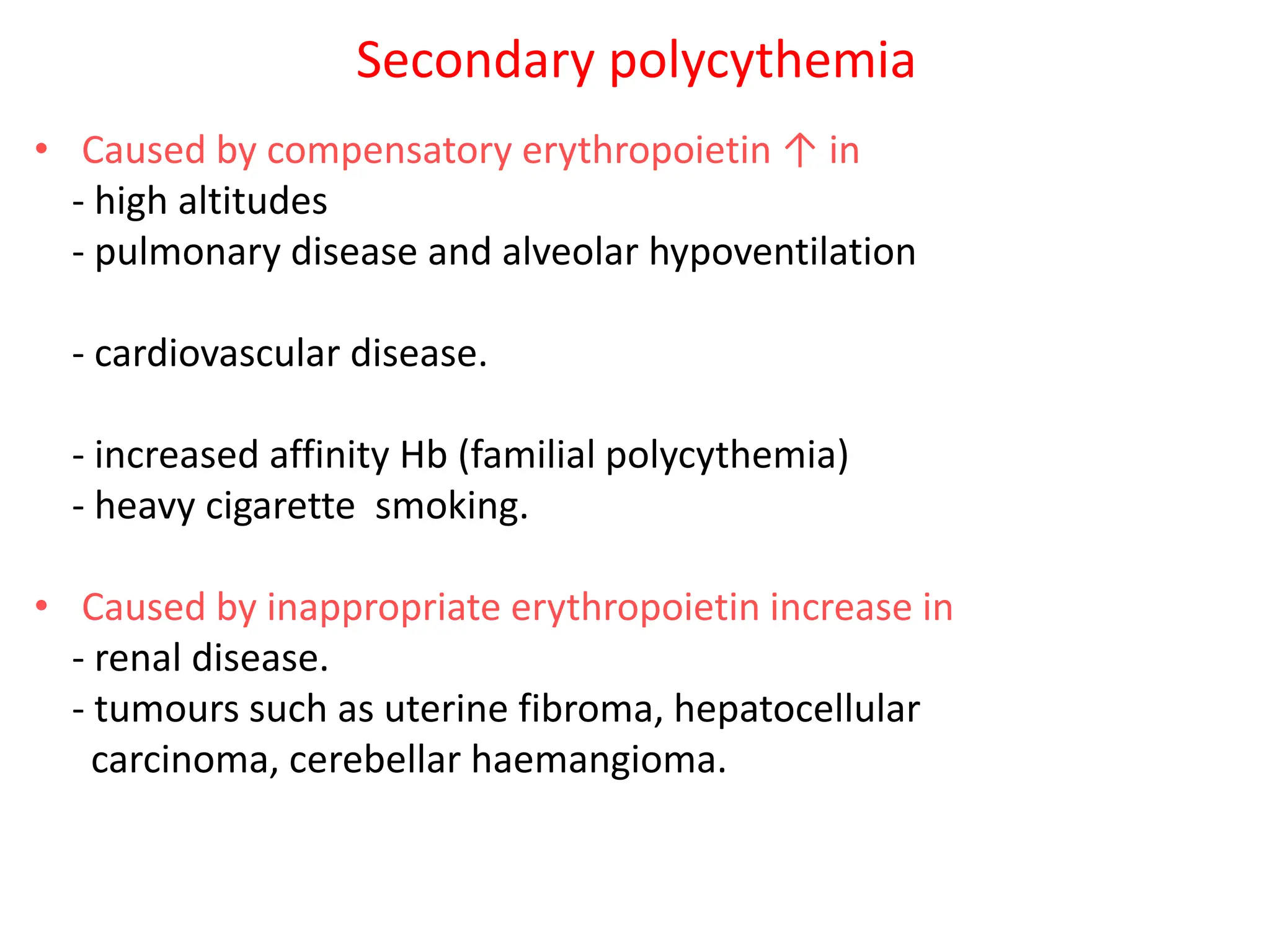
Secondary polycythemia
• Caused by compensatory erythropoietin ↑ in
- high altitudes
- pulmonary disease and alveolar hypoventilation
- cardiovascular disease.
- increased affinity Hb (familial polycythemia)
- heavy cigarette smoking.
• Caused by inappropriate erythropoietin increase in
- renal disease.
- tumours such as uterine fibroma, hepatocellular
carcinoma, cerebellar haemangioma.
Relative polycythemia
causes
• Stress or psudopolycythemia
• Cigarette smoking
• Dehydration : water deprivation, vomiting
• Plasma loss : burns.
Polycythemia Vera
Treatment
• To decrease PVC (HCT)
– Venesection
– Chemotherapy
• Treatment of complications
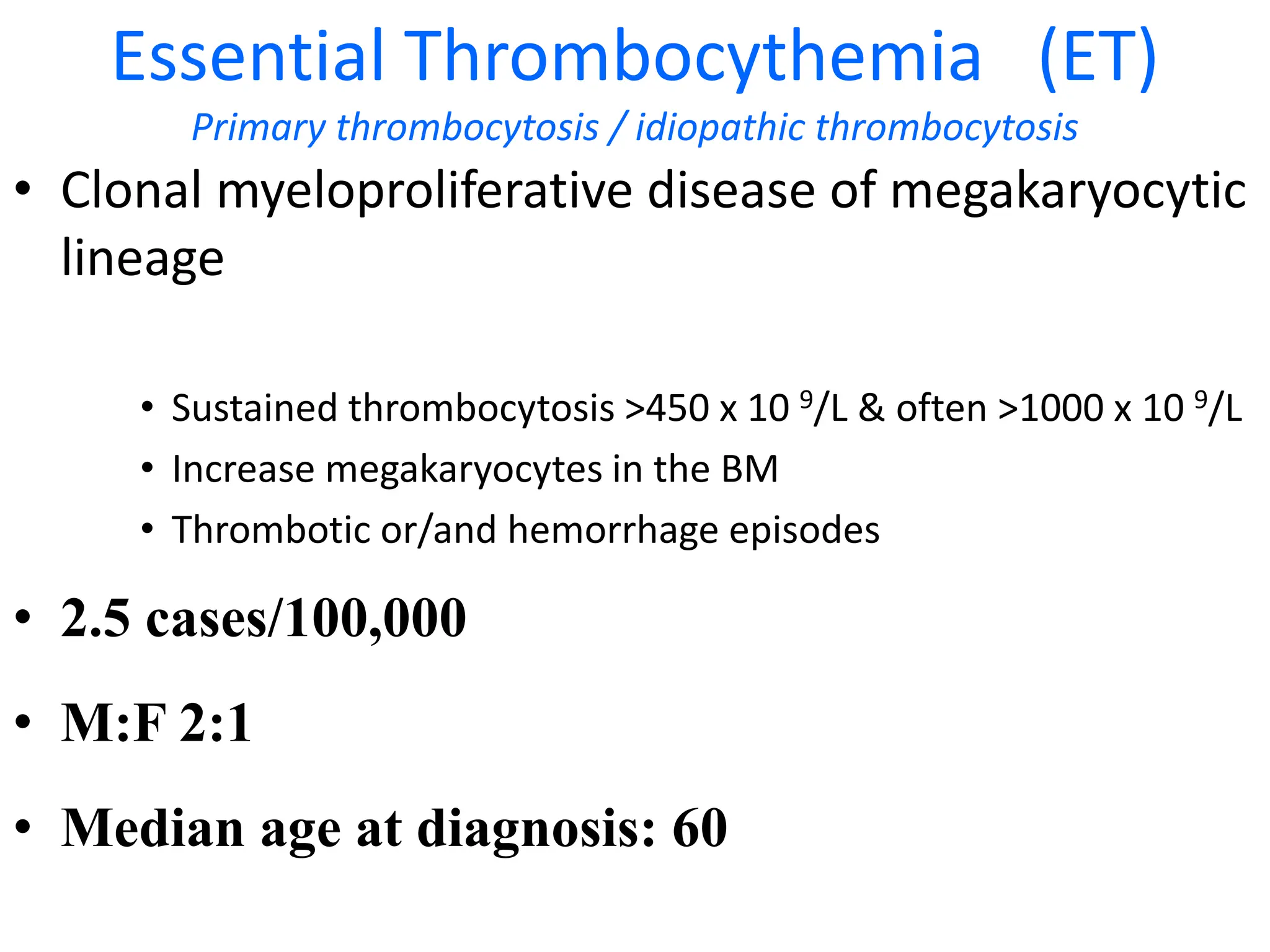
Essential Thrombocythemia (ET)
Primary thrombocytosis / idiopathic thrombocytosis
• Clonal myeloproliferative disease of megakaryocytic
lineage
• Sustained thrombocytosis >450 x 10 9/L & often >1000 x 10 9/L
• Increase megakaryocytes in the BM
• Thrombotic or/and hemorrhage episodes
• 2.5 cases/100,000
• M:F 2:1
• Median age at diagnosis: 60
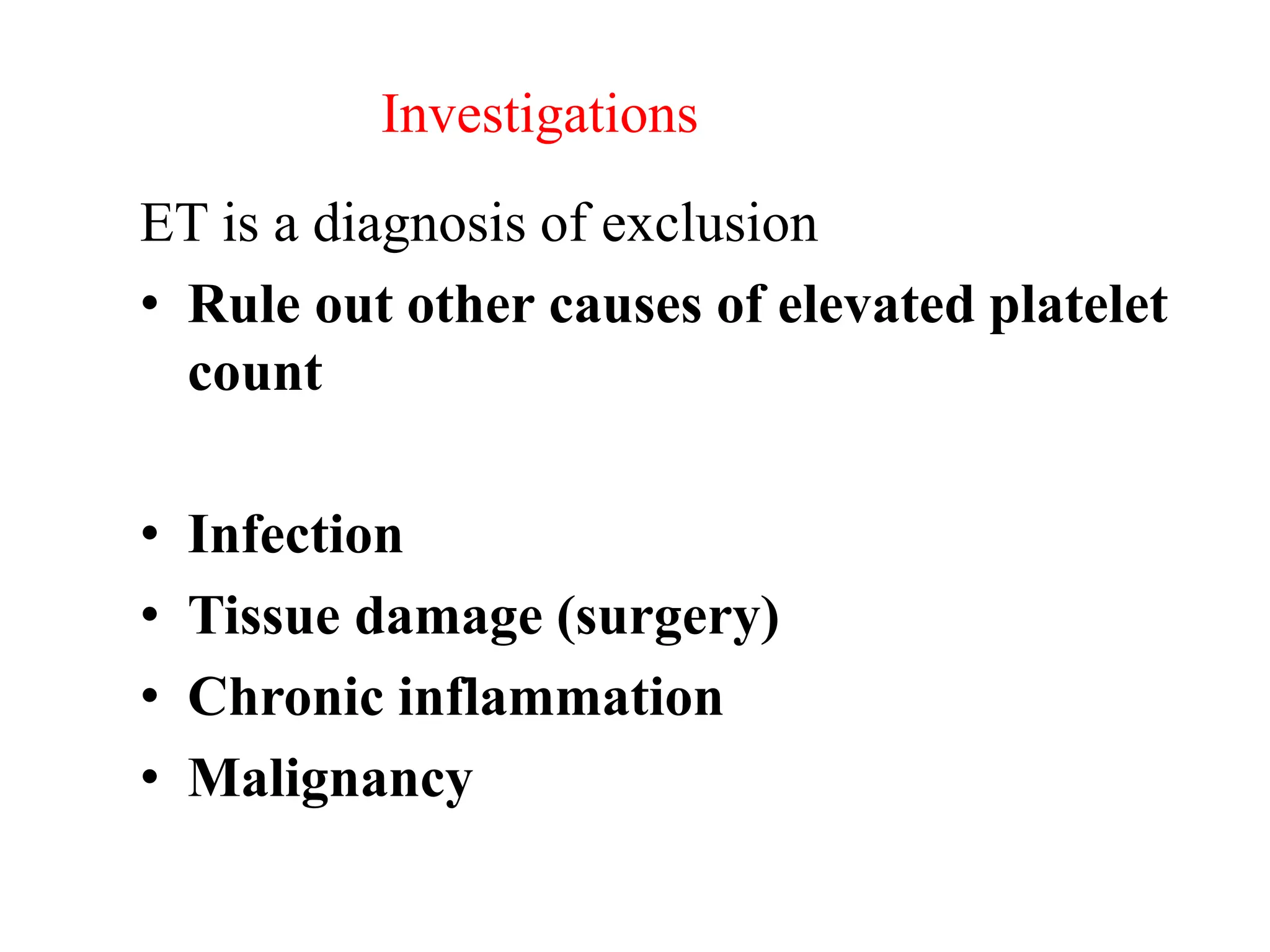
Investigations
ET is a diagnosis of exclusion
• Rule out other causes of elevated platelet
count
• Infection
• Tissue damage (surgery)
• Chronic inflammation
• Malignancy
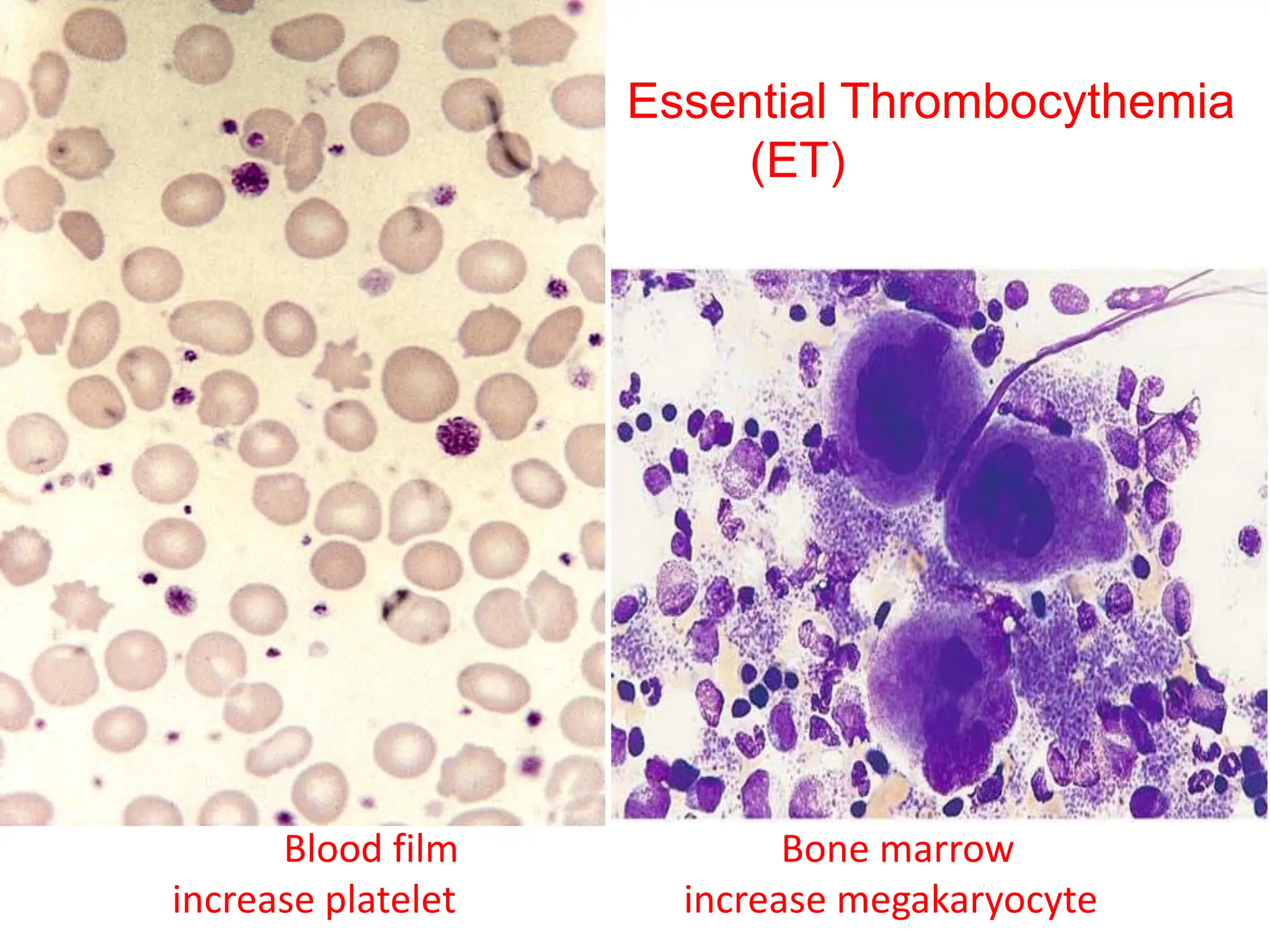
Blood film Bone marrow
increase platelet increase megakaryocyte
Essential Thrombocythemia
(ET)
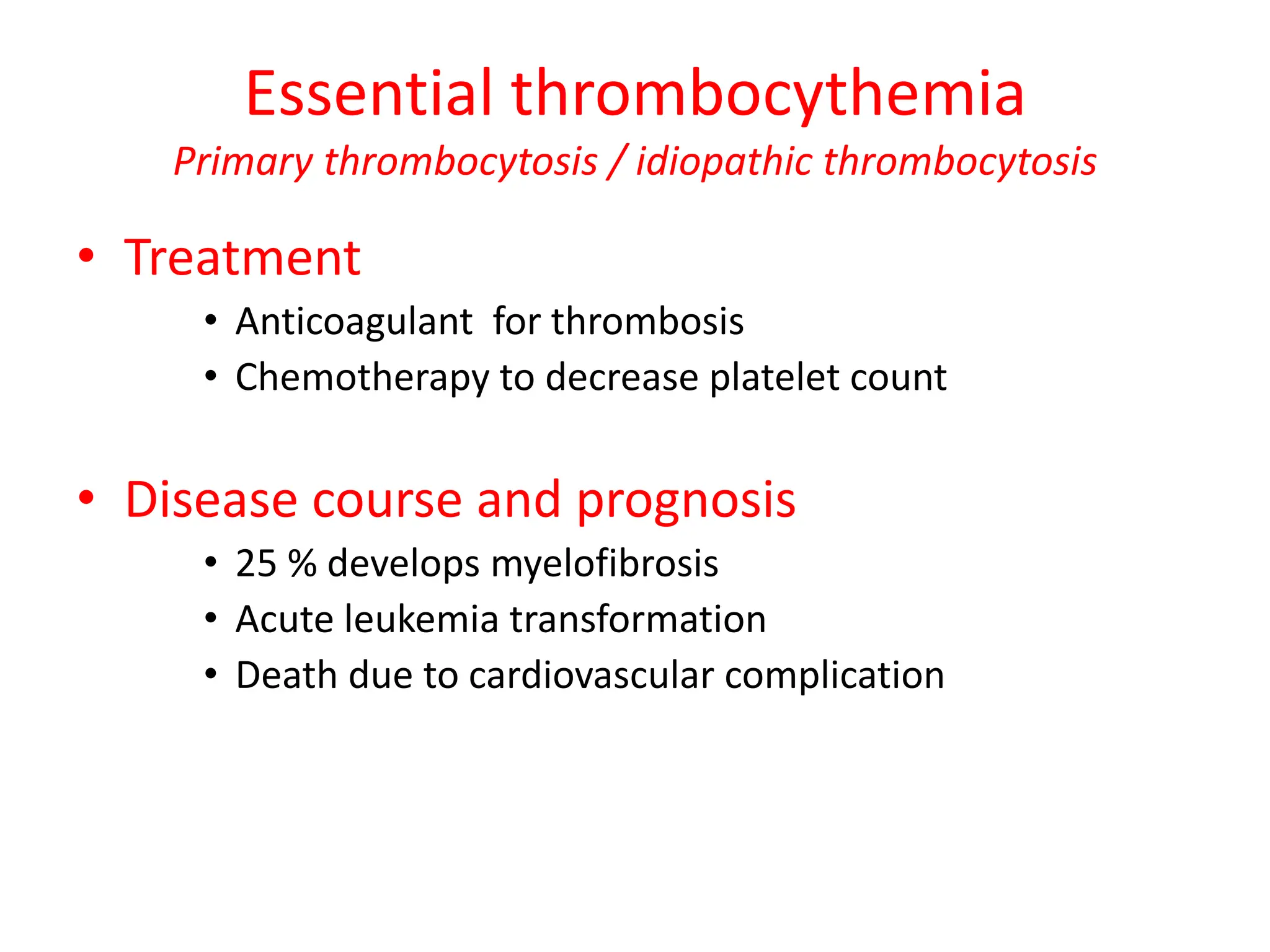
Essential thrombocythemia
Primary thrombocytosis / idiopathic thrombocytosis
• Treatment
• Anticoagulant for thrombosis
• Chemotherapy to decrease platelet count
• Disease course and prognosis
• 25 % develops myelofibrosis
• Acute leukemia transformation
• Death due to cardiovascular complication
Myelofibrosis
Chronic idiopathic myelofibrosis
• Progressive fibrosis of the marrow & increase connective tissue
element
• Extramedullary erythropoiesis
– Spleen
– Liver
• Abnormal megakaryocytes which will stimulate fibroblasts &lead to
marrow fibrosis due to stimulation of platelet derived growth factor
& other protiens secreted by megakayocytes & platelets.
• 1/3 of patients have previous history of PV & some present with
clinical &lab features of both disorders.
Myelofibrosis
Investigations
• Anemia
• High WBC at presentation
• Later leucopenia and thrombocytopenia
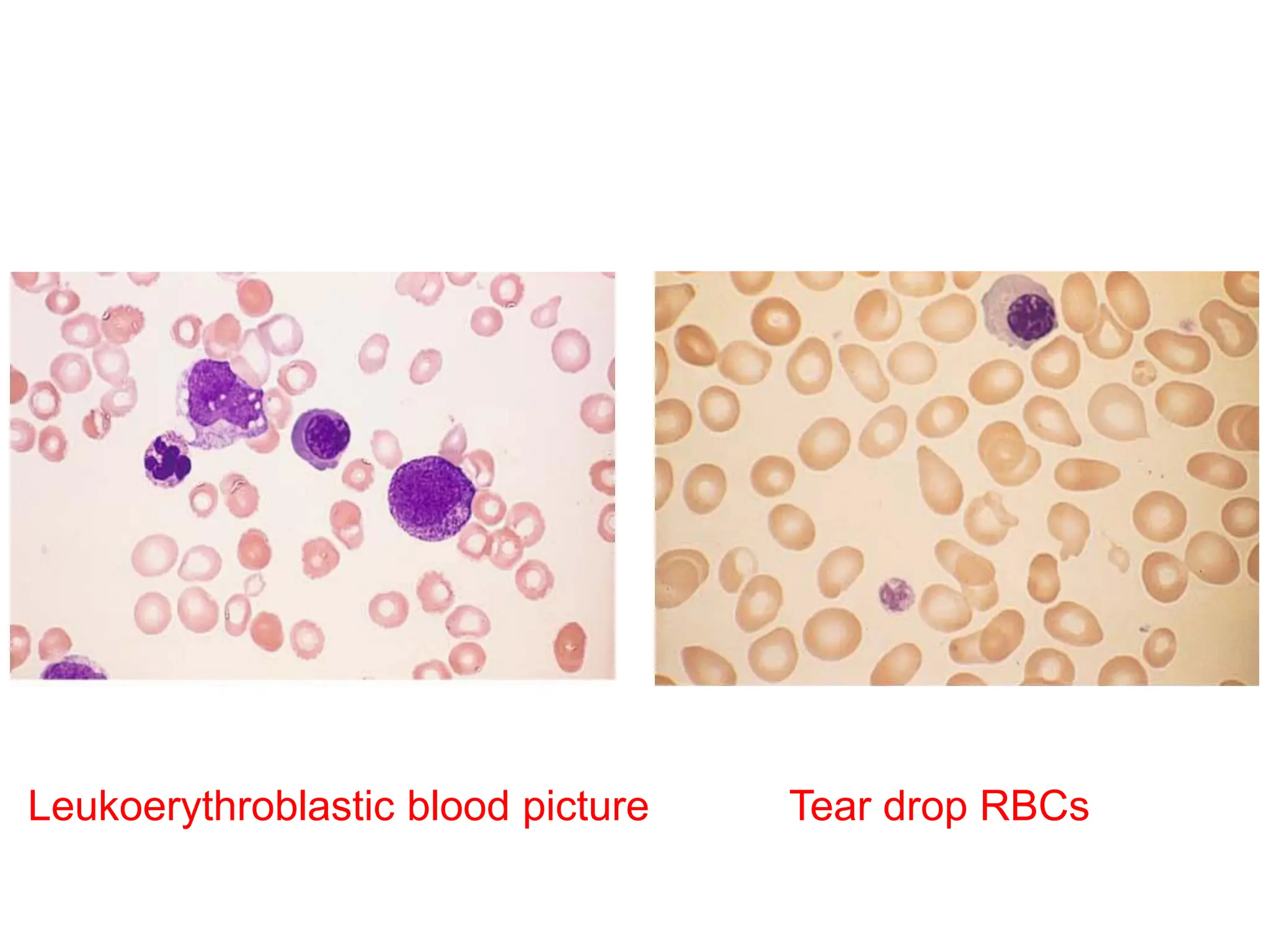
• Leucoerythroblastic blood film
• Tear drops red cells
• Bone marrow aspiration- Failed due to fibrosis
• Trephine biopsy- fibrotic hypercellular marrow
• Increase in NAP score
• Transformation to acute myeloid leukaemia occurs
in 10-20% of patients
• High serum uric acid and LDH levels
Leukoerythroblastic blood picture Tear drop RBCs
Treatment
• Blood transfusions and regular folic acid
• Hydroxyurea
• Danazol
• Splenectomy
• The median survival is 3.5 years
• causes of death include heart failure, infection and leukemic
transformation.
Chronic Myeloid Leukemia
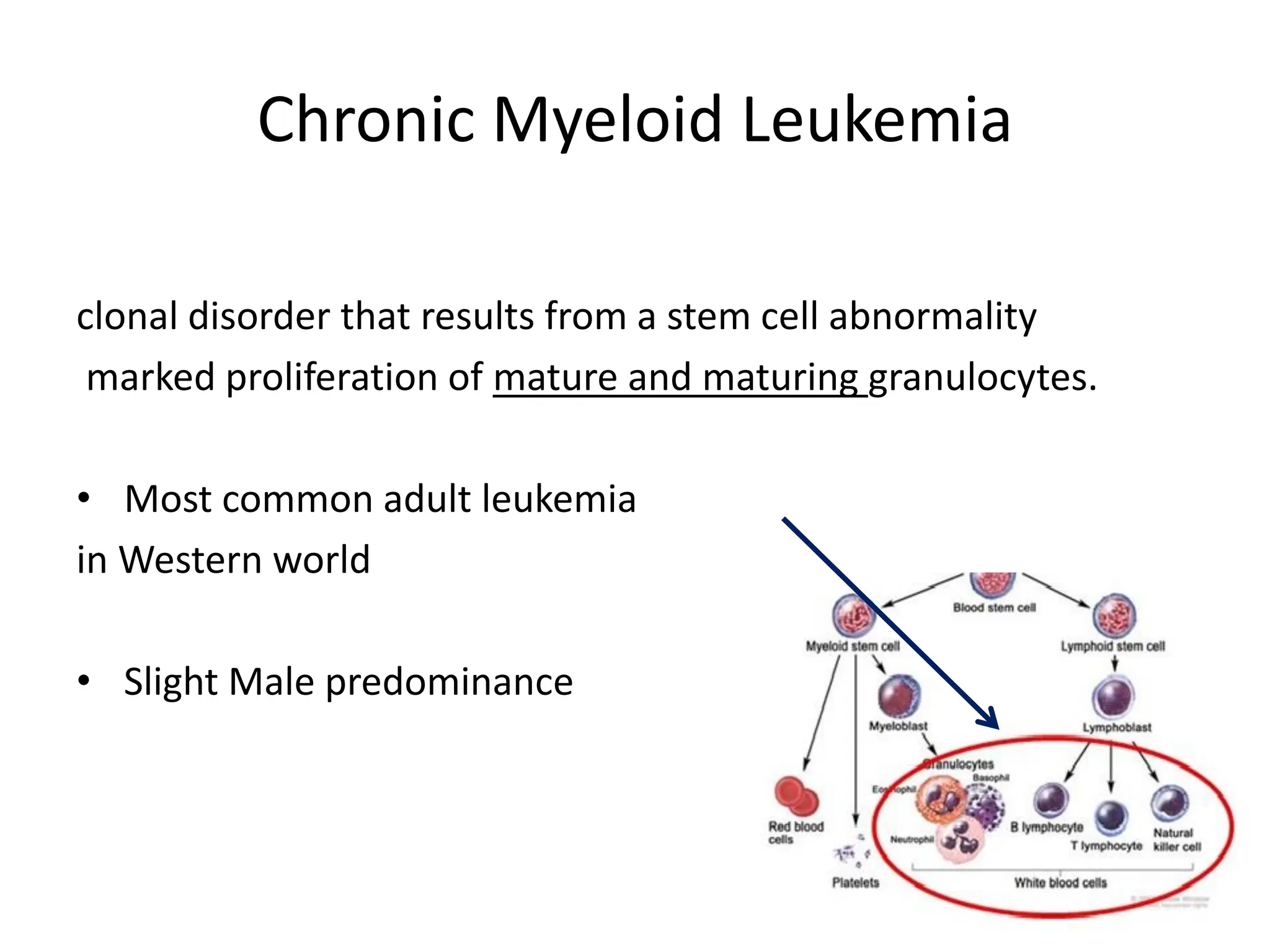
clonal disorder that results from a stem cell abnormality
marked proliferation of mature and maturing granulocytes.
• Most common adult leukemia
in Western world
• Slight Male predominance
• The disease accounts for around 15% of leukemia.
• Median age at presentation 50
• May occur at any age.
• Philadelphia Chromosome
t(9;22) is Positive in
more than 90%
• This translocation is
diagnostic of CML
What is Philadelphia Chromosome?
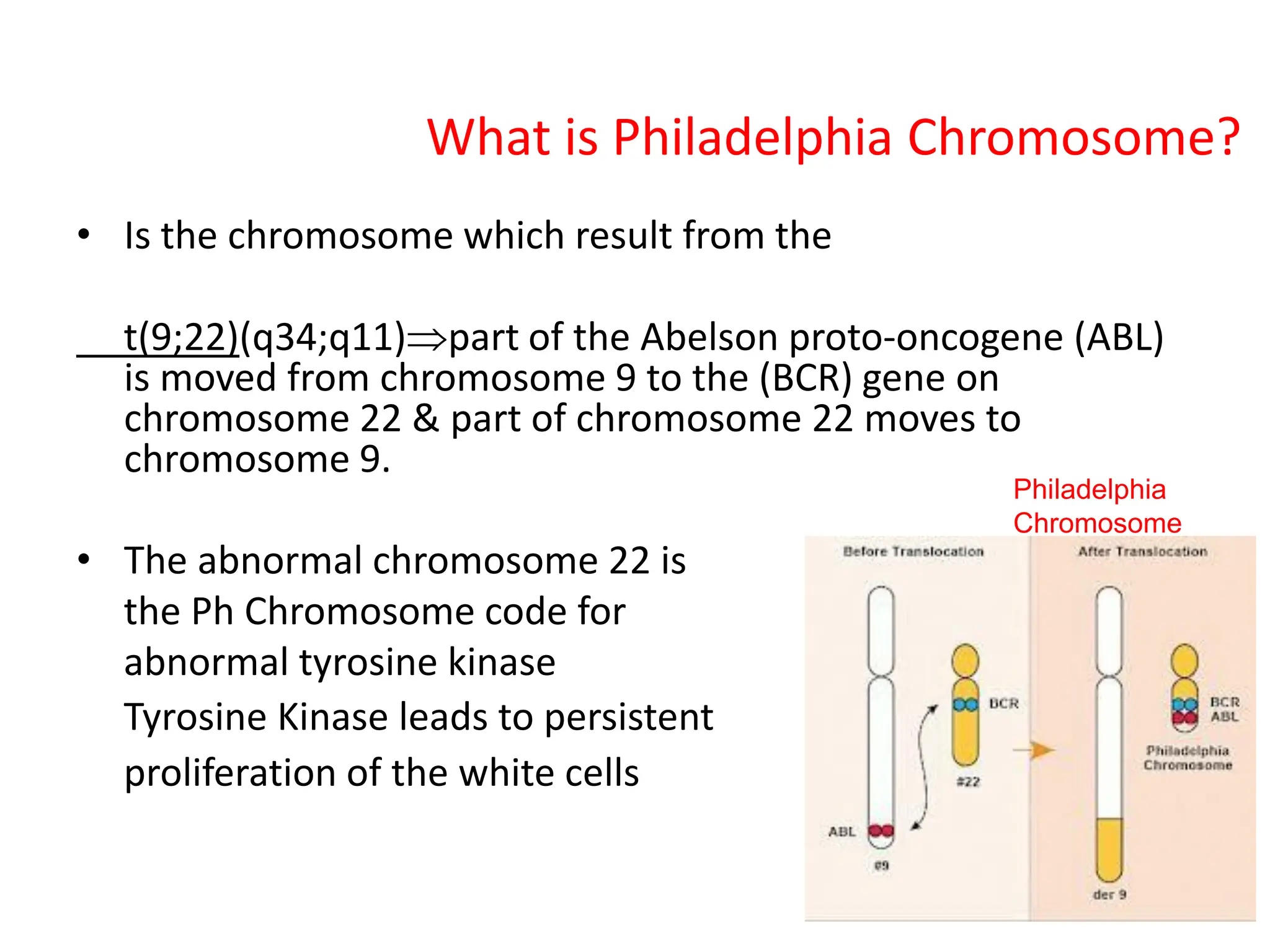
• Is the chromosome which result from the
t(9;22)(q34;q11)part of the Abelson proto-oncogene (ABL)
is moved from chromosome 9 to the (BCR) gene on
chromosome 22 & part of chromosome 22 moves to
chromosome 9.
• The abnormal chromosome 22 is
the Ph Chromosome code for
abnormal tyrosine kinase
Tyrosine Kinase leads to persistent
proliferation of the white cells
Philadelphia
Chromosome
Summary or Conclusion:
• MPNs:Clonal hematopoeitic disorders
• Proliferation of one or more of myeloid lineages:
– Granulocytic
– Erythroid
– Megakaryocytic
• Define chronic Myeloid leukemia
• Define Philadelphia chromosome
Questions?
• Define MPN
• Mention types of MPNs
• What are the diagnostic criteria for PV, ET and
MF?
• What are the investigations of each type
• THANK YOU

MPNs; Definition, Types of MPN Mutations, Aetiology, Clinical features, CML

  • 1.
  • 2.
    Objectives • Definition ofMPN • Types of MPN • Mutations of MPN • Aetiology of MPN • Clinical features of MPN • CML and Philadelphia Chromosome • Definition of each type
  • 3.
    List of Contents: •Definition • Types • PV • ET • MF • CML and Philadelphia Chromosome • Summary or conclusion • Question
  • 4.
    Myeloproliferative Neoplasms MPNs (PV,ET, MF) • Clonal hematopoeitic disorders • Proliferation of one or more of myeloid lineages: – Granulocytic – Erythroid – Megakaryocytic
  • 5.
    Aetiology Single acquired mutationof the cytoplasmic tyrosine kinase Janus-associated kinase 2 (JAK2) (Val 617 Phe). JAK2 mutation in: All patients with Polycythemia Vera and in 50% of those with Essential Thrombocythemia and Idiopathic Myelofibrosis
  • 6.
    In MPN • Thereare Relatively normal maturation of the cells • Each type closely related to each other. • Evolution from one entity into another occurs during the course of the disease. • Special risk of leukemic transformation
  • 7.
    Activation of JAK2 Proliferationof cell Receptor Hemopoietic growth factors JAK2 Protein Progenit or cell RBC Granulocyte Megakaryocyte Platelet NORMALLY
  • 8.
    Activation of JAK2 &Proliferation of the cell Without growth factor Receptor Hemopoietic growth factors JAK2 Protein MUTATION Progenit or cell RBC Granulocyte Megakaryocyte Platelet JAK2 Mutation
  • 9.
    Bone marrow stemcell Clonal abnormality Granulocyte precursors Red cell precursors Megakaryocytes Reactive fibrosis Essential thrombocytosis (ET) Polycythaemia vera (PV) Myelofibrosis AML Chronic myeloid leukemia 70% 10% 10% 30%
  • 10.
    Polycythemia Vera Definition ofpolycythemia Its increase in the Hb concentration above the upper limits of normal range for the patient age and sex. • Raised packed cell volume (PCV) • Male > 52% (normally 40-52%) • Female > 48% (normally 36-48%) Classification • Absolute(Total red cell volume & total plasma volume increased » Polycythaemia vera » Secondary polycythaemia » Idiopathic erythrocytosis • Apparent or relative
  • 11.
    Polycythemia Vera Polycythemia Verais a clonal stem cell disorder characterized by increased red cell production • Abnormal clones behave autonomous • Same abnormal stem cell give rise to granulocytes and platelets
  • 12.
    Clinical features - Theincreased PCV leads to: • an increased blood viscosity, Hyperviscosity • abnormal platelet–endothelial contact increase thrombotic risk. • Neurological features Over and above the consequences of occlusive vascular lesions, the sluggish cerebral blood flow secondary to the increased PCV is thought to underlie features such as headaches, drowsiness, insomnia, amnesia, tinnitus, vertigo, chorea and even depression. • Transient visual disturbances also occur.
  • 13.
    Polycythemia Vera Laboratory featuresand morphology • Hb, PCV (HCT), and Red cell mass increased • Increased neutrophils and platelets • NAP score normal or increased • Serum uric acid high (gout) • Circulating erythroid precursors (nucleated RBC) • Hypercellular bone marrow • Low serum erythropoietin
  • 14.
    Secondary polycythemia • Causedby compensatory erythropoietin ↑ in - high altitudes - pulmonary disease and alveolar hypoventilation - cardiovascular disease. - increased affinity Hb (familial polycythemia) - heavy cigarette smoking. • Caused by inappropriate erythropoietin increase in - renal disease. - tumours such as uterine fibroma, hepatocellular carcinoma, cerebellar haemangioma.
  • 15.
    Relative polycythemia causes • Stressor psudopolycythemia • Cigarette smoking • Dehydration : water deprivation, vomiting • Plasma loss : burns.
  • 16.
    Polycythemia Vera Treatment • Todecrease PVC (HCT) – Venesection – Chemotherapy • Treatment of complications
  • 17.
    Essential Thrombocythemia (ET) Primarythrombocytosis / idiopathic thrombocytosis • Clonal myeloproliferative disease of megakaryocytic lineage • Sustained thrombocytosis >450 x 10 9/L & often >1000 x 10 9/L • Increase megakaryocytes in the BM • Thrombotic or/and hemorrhage episodes • 2.5 cases/100,000 • M:F 2:1 • Median age at diagnosis: 60
  • 18.
    Investigations ET is adiagnosis of exclusion • Rule out other causes of elevated platelet count • Infection • Tissue damage (surgery) • Chronic inflammation • Malignancy
  • 19.
    Blood film Bonemarrow increase platelet increase megakaryocyte Essential Thrombocythemia (ET)
  • 20.
    Essential thrombocythemia Primary thrombocytosis/ idiopathic thrombocytosis • Treatment • Anticoagulant for thrombosis • Chemotherapy to decrease platelet count • Disease course and prognosis • 25 % develops myelofibrosis • Acute leukemia transformation • Death due to cardiovascular complication
  • 21.
    Myelofibrosis Chronic idiopathic myelofibrosis •Progressive fibrosis of the marrow & increase connective tissue element • Extramedullary erythropoiesis – Spleen – Liver • Abnormal megakaryocytes which will stimulate fibroblasts &lead to marrow fibrosis due to stimulation of platelet derived growth factor & other protiens secreted by megakayocytes & platelets. • 1/3 of patients have previous history of PV & some present with clinical &lab features of both disorders.
  • 22.
    Myelofibrosis Investigations • Anemia • HighWBC at presentation • Later leucopenia and thrombocytopenia • Leucoerythroblastic blood film • Tear drops red cells • Bone marrow aspiration- Failed due to fibrosis • Trephine biopsy- fibrotic hypercellular marrow • Increase in NAP score • Transformation to acute myeloid leukaemia occurs in 10-20% of patients • High serum uric acid and LDH levels
  • 23.
  • 24.
    Treatment • Blood transfusionsand regular folic acid • Hydroxyurea • Danazol • Splenectomy • The median survival is 3.5 years • causes of death include heart failure, infection and leukemic transformation.
  • 25.
    Chronic Myeloid Leukemia clonaldisorder that results from a stem cell abnormality marked proliferation of mature and maturing granulocytes. • Most common adult leukemia in Western world • Slight Male predominance
  • 26.
    • The diseaseaccounts for around 15% of leukemia. • Median age at presentation 50 • May occur at any age. • Philadelphia Chromosome t(9;22) is Positive in more than 90% • This translocation is diagnostic of CML
  • 27.
    What is PhiladelphiaChromosome? • Is the chromosome which result from the t(9;22)(q34;q11)part of the Abelson proto-oncogene (ABL) is moved from chromosome 9 to the (BCR) gene on chromosome 22 & part of chromosome 22 moves to chromosome 9. • The abnormal chromosome 22 is the Ph Chromosome code for abnormal tyrosine kinase Tyrosine Kinase leads to persistent proliferation of the white cells Philadelphia Chromosome
  • 28.
    Summary or Conclusion: •MPNs:Clonal hematopoeitic disorders • Proliferation of one or more of myeloid lineages: – Granulocytic – Erythroid – Megakaryocytic • Define chronic Myeloid leukemia • Define Philadelphia chromosome
  • 29.
    Questions? • Define MPN •Mention types of MPNs • What are the diagnostic criteria for PV, ET and MF? • What are the investigations of each type • THANK YOU