From 8085 to 8086: The Evolution of
Microprocessor Architectures
By Prem Pradhan &
Sanchit Kumar Dhiman
Introduction
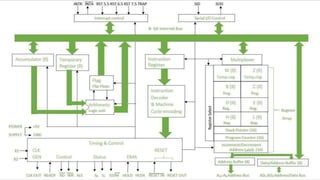
8085 Microprocessor Architecture
Limitations of 8085 Architecture
Introduction to 8086 Architecture
Limitations of 8086 Architecture
Comparison of 8085 and 8086 Architectures
Impact of Microprocessor Architectures on Computing
Future of Microprocessor Architectures
Conclusion
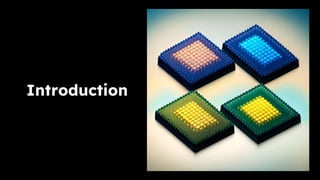
Introduction
8085 Microprocessor
Architecture
● Released by Intel in 1977
● 8-bit data bus
● 16-bit address bus
● Upto 64 KB Memory
● 246 instructions
■ Arithmetic Operations
■ Logic Operations
■ Data Transfer Operations
● Various Register
■ Accumulator
■ Program Counter
■ Stack Pointer
■ Flags Register
Limitations of 8085
Architecture
● Limited memory addressing
capability, leading to:
■ Restricted access to memory
■ Difficulty to:
✓ Run complex programs
✓ Handle large amount of data
● Slow processing speed, leading to:
■ Limited performance
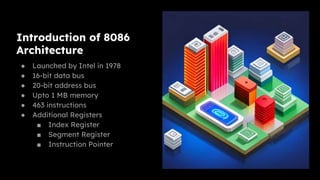
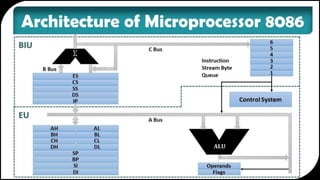
Introduction of 8086
Architecture
● Launched by Intel in 1978
● 16-bit data bus
● 20-bit address bus
● Upto 1 MB memory
● 463 instructions
● Additional Registers
■ Index Register
■ Segment Register
■ Instruction Pointer
Limitations of 8086
Architecture
● Segmented memory addressing
mode, leading to:
■ Slower program execution time
■ Increased complexity in
programming
● Lack of support for virtual memory
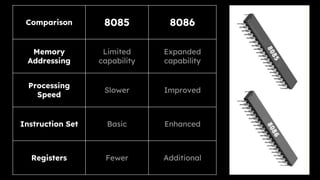
Comparison 8085 8086
Memory
Addressing
Limited
capability
Expanded
capability
Processing
Speed
Slower Improved
Instruction Set Basic Enhanced
Registers Fewer Additional
Impact of Microprocessor
Architectures on Computing
● Advancements in technology have
led to:
■ Increased Efficiency
■ Expanded Capabilities
■ New opportunities for
innovation
● Emerging technologies such as:
■ Artificial intelligence
■ Quantum computing
Future of Microprocessor
Architectures
● Development of more energy-
efficient microprocessors, leading
to:
■ More computing power
■ Minimized environmental
impact
● Integration of microprocessors into
everyday objects
● Quantum Mechanics based
microprocessors
Conclusion

MP Presentation about 8085 and 8086.pptx

  • 1.
    From 8085 to8086: The Evolution of Microprocessor Architectures By Prem Pradhan & Sanchit Kumar Dhiman
  • 2.
    Introduction 8085 Microprocessor Architecture Limitationsof 8085 Architecture Introduction to 8086 Architecture Limitations of 8086 Architecture Comparison of 8085 and 8086 Architectures Impact of Microprocessor Architectures on Computing Future of Microprocessor Architectures Conclusion
  • 3.
  • 4.
    8085 Microprocessor Architecture ● Releasedby Intel in 1977 ● 8-bit data bus ● 16-bit address bus ● Upto 64 KB Memory ● 246 instructions ■ Arithmetic Operations ■ Logic Operations ■ Data Transfer Operations ● Various Register ■ Accumulator ■ Program Counter ■ Stack Pointer ■ Flags Register
  • 6.
    Limitations of 8085 Architecture ●Limited memory addressing capability, leading to: ■ Restricted access to memory ■ Difficulty to: ✓ Run complex programs ✓ Handle large amount of data ● Slow processing speed, leading to: ■ Limited performance
  • 7.
    Introduction of 8086 Architecture ●Launched by Intel in 1978 ● 16-bit data bus ● 20-bit address bus ● Upto 1 MB memory ● 463 instructions ● Additional Registers ■ Index Register ■ Segment Register ■ Instruction Pointer
  • 9.
    Limitations of 8086 Architecture ●Segmented memory addressing mode, leading to: ■ Slower program execution time ■ Increased complexity in programming ● Lack of support for virtual memory
  • 10.
  • 11.
    Impact of Microprocessor Architectureson Computing ● Advancements in technology have led to: ■ Increased Efficiency ■ Expanded Capabilities ■ New opportunities for innovation ● Emerging technologies such as: ■ Artificial intelligence ■ Quantum computing
  • 12.
    Future of Microprocessor Architectures ●Development of more energy- efficient microprocessors, leading to: ■ More computing power ■ Minimized environmental impact ● Integration of microprocessors into everyday objects ● Quantum Mechanics based microprocessors
  • 13.