
Motivation:
What It Is and How to Keep It
Presented by: Dr. Dawn-Elise Snipes
Executive Director, AllCEUs
Host: Counselor Toolbox & Happiness Isn’t Brain Surgery
AllCEUs.com Unlimited CEUs and Specialty Certifications $59
Objectives
 Define motivation
 Identify the 5 principles of motivational
enhancement
 Review the concepts of motivation
 Identify the types of motivation and ways to
enhance them
Think About It…
 Why do people change?
 What is motivation?
 Can individuals' motivation to change their
behavior be modified?
 Do clinicians have a role in enhancing clients'
motivation for recovery?
What is Motivation
 Motivation is a combination of desire, willingness
and ability to do something.
 Effectively enhancing motivation requires
 Empathy and understanding
 Identifying discrepancies between your desired
situation and your current situation
 Overcoming resistance to change (more rewarding
behaviors or fears about change)
 Supporting self-efficacy
What is Motivation cont…
 Change involves:
 Recognizing that something needs to be done
 Increasing Motivation
 Defining the problem (create crisis) and the end goal (identify
the solution)
 Identifying the benefits to doing what you need to reach your
goal
 Addressing the drawbacks to doing what you need to reach
your goal
 Creating a plan
 Implementing that plan
 Adjusting the plan as needed to ensure that working toward
this goal is more rewarding than staying the same
What is motivation
 Motivation is doing something to get a reward
 Assumptions about the nature of motivation:
 Motivation is a key to change
 Motivation is multidimensional
 Motivation is dynamic and fluctuating
When the going gets tough, motivation gets going
 Motivation can be modified
Additional rewards can be added to make the new
behavior more rewarding, even in the face of adversity
Motivation is a key to change
 Think about the last time you were not motivated
to do something?
 Resistance is often…
 A lack of motivation for the new behavior
 More motivation for the old behavior
 One of the first steps in developing motivation for
change is to create a crisis
 What are the problems with the current situation?
 In what ways will the change be worth the effort?
Motivation is multidimensional
 Emotional: Makes the person happy
 Mental: Is the logical choice
 Physical: Improves physical health, energy or
reduces pain
 Social: Improves relationship with self or others,
elicits positive feedback from self and others
 Environmental: Makes the environment more
comfortable
Interventions
 Create the Crisis
 Examine the ways that the mood issues or addictive
behaviors impact each area of wellness
 Recognize that each negative impact is likely the result of
energy shortages.
 Identify individualized interventions
 Identify ways to reduce stress and improve each area of
wellness
 Highlight motivations for change in as many areas as
possible
 Define and identify motivations to change in each
dimension.
Motivation is Dynamic and Fluctuating
 When the going gets tough, motivation gets going
 Motivation is a combination of
 Commitment (Willingness)
 Control (Self-Efficacy)
 Challenge
Too easy and too hard  procrastination
Reasons Motivation Wanes
 No (effective) Plan
 Distractions
 Drawbacks
 Negative Motivation--Avoiding pain instead of
achieving a reward
 Extrinsic Motivation—Depending on the outside
world
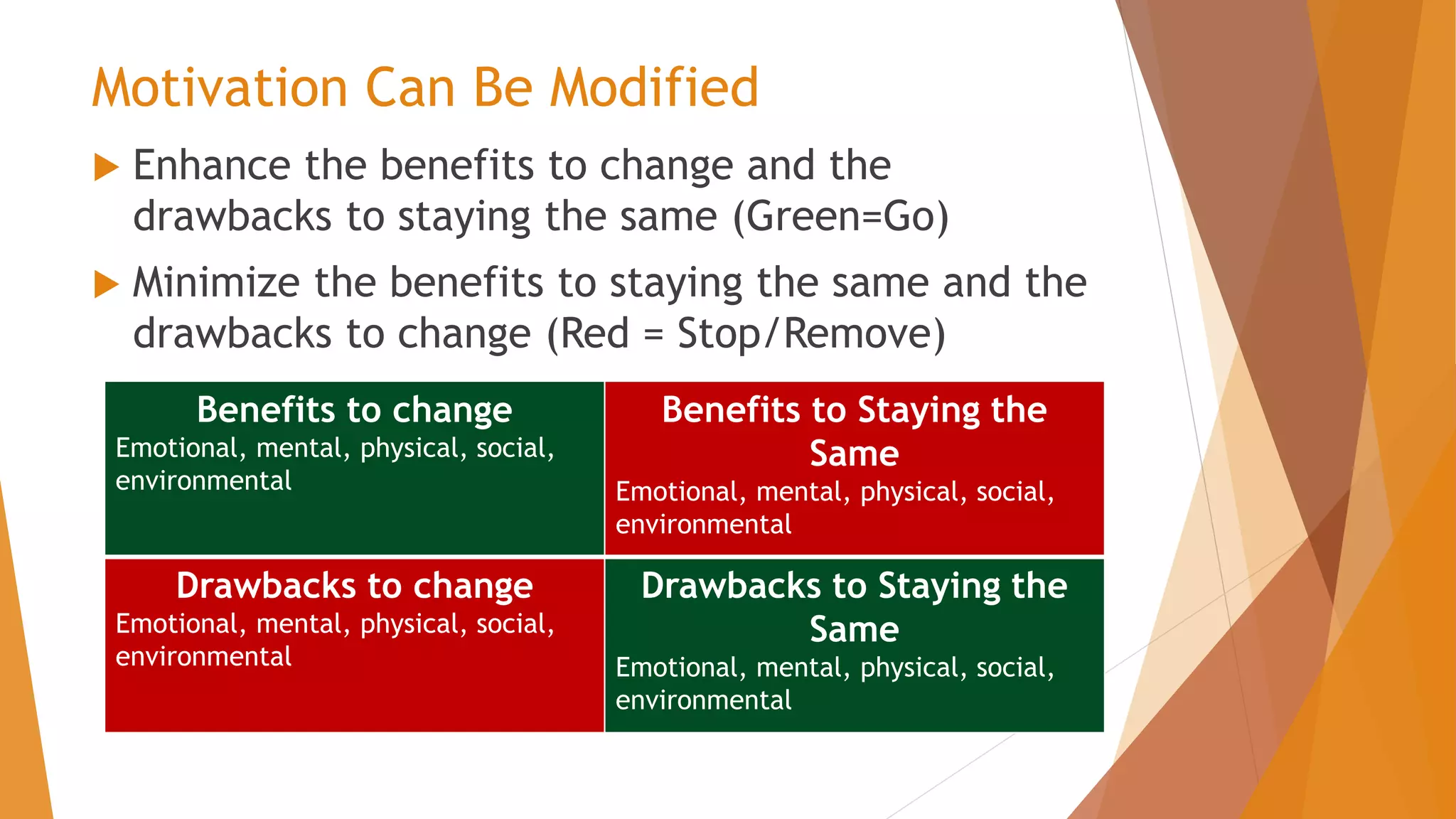
Motivation Can Be Modified
 Enhance the benefits to change and the
drawbacks to staying the same (Green=Go)
 Minimize the benefits to staying the same and the
drawbacks to change (Red = Stop/Remove)
Benefits to change
Emotional, mental, physical, social,
environmental
Benefits to Staying the
Same
Emotional, mental, physical, social,
environmental
Drawbacks to change
Emotional, mental, physical, social,
environmental
Drawbacks to Staying the
Same
Emotional, mental, physical, social,
environmental
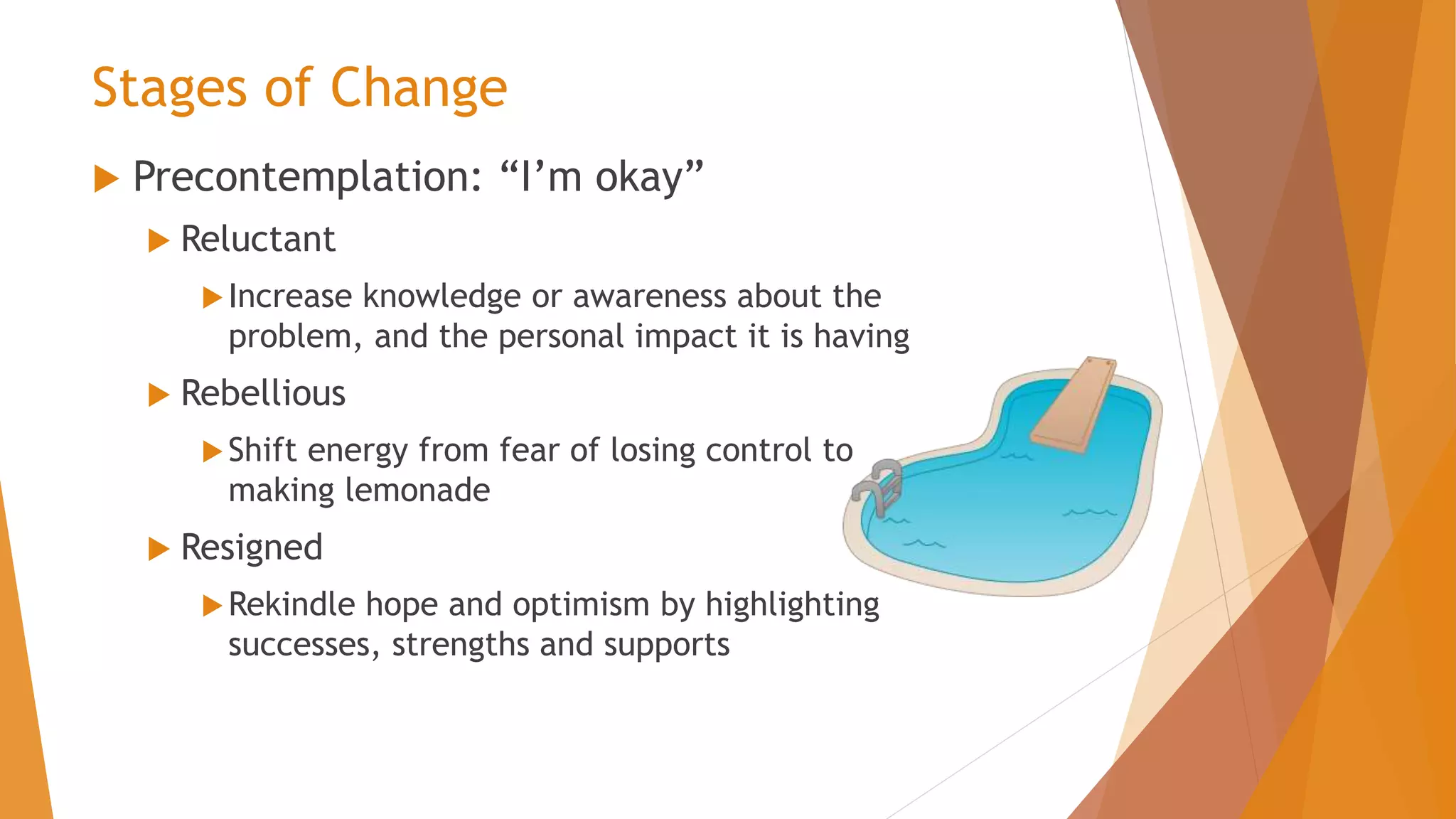
Stages of Change
 Precontemplation: “I’m okay”
 Reluctant
Increase knowledge or awareness about the
problem, and the personal impact it is having
 Rebellious
Shift energy from fear of losing control to
making lemonade
 Resigned
Rekindle hope and optimism by highlighting
successes, strengths and supports
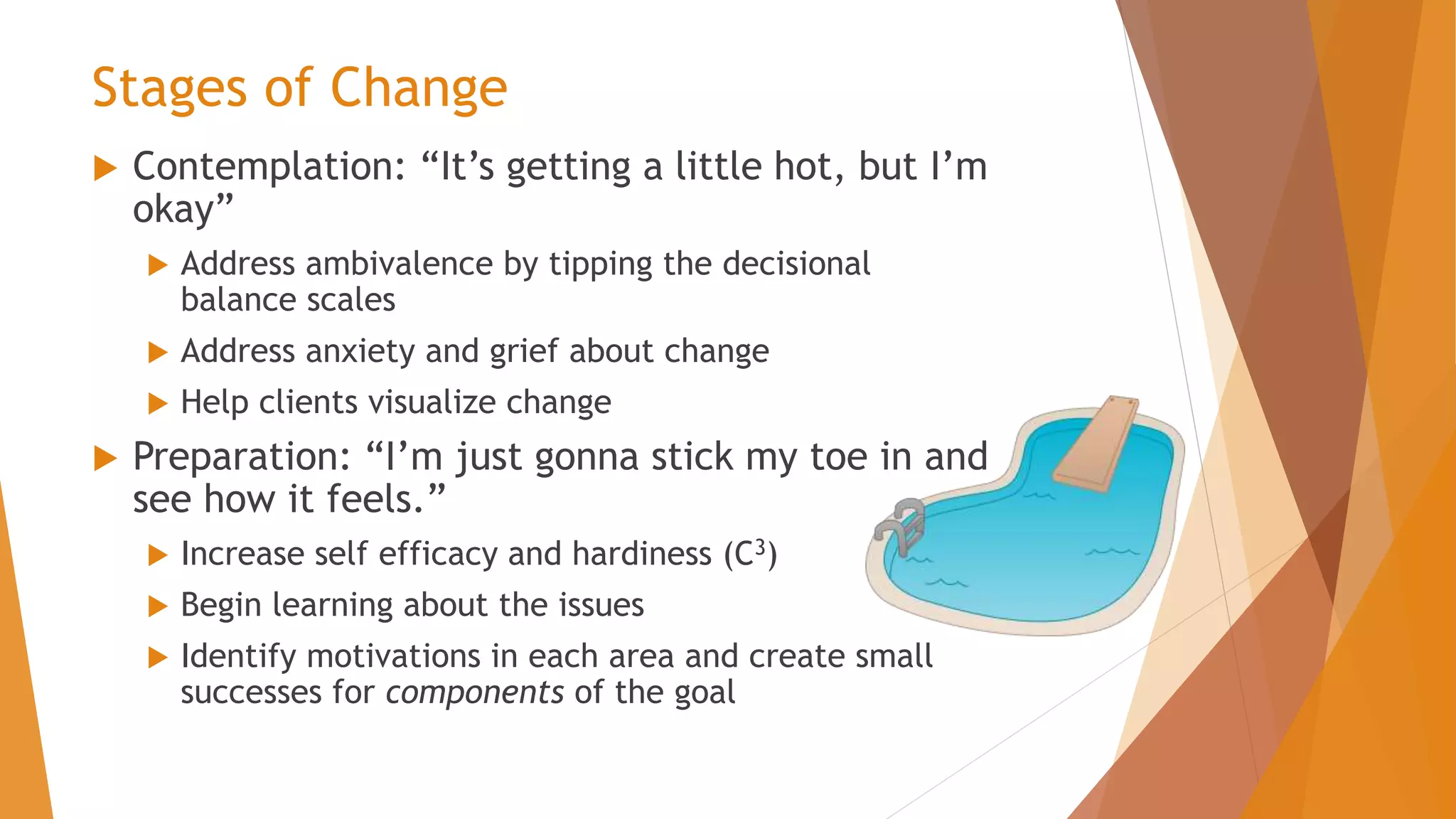
Stages of Change
 Contemplation: “It’s getting a little hot, but I’m
okay”
 Address ambivalence by tipping the decisional
balance scales
 Address anxiety and grief about change
 Help clients visualize change
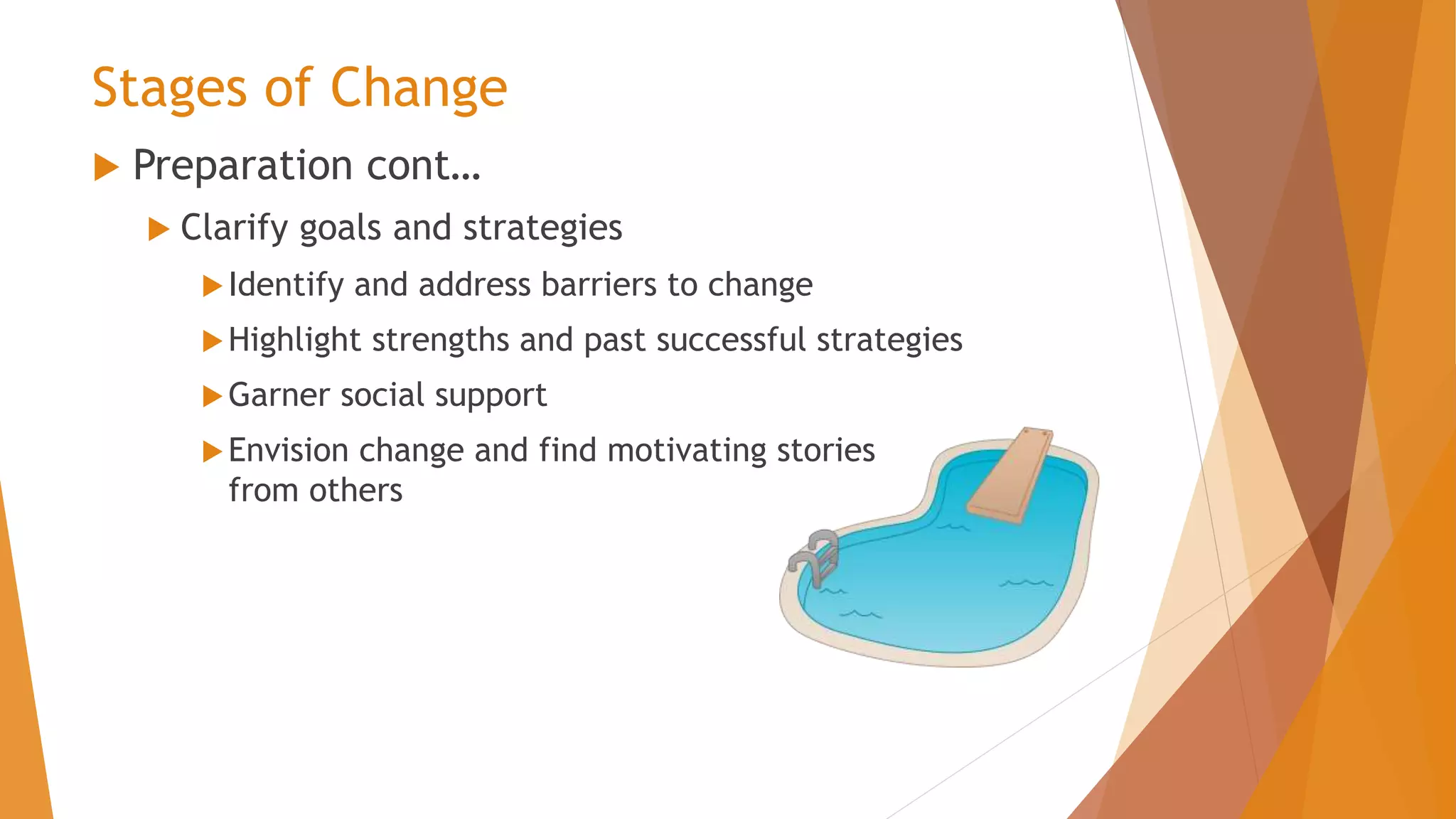
 Preparation: “I’m just gonna stick my toe in and
see how it feels.”
 Increase self efficacy and hardiness (C3)
 Begin learning about the issues
 Identify motivations in each area and create small
successes for components of the goal
Stages of Change
 Preparation cont…
 Clarify goals and strategies
Identify and address barriers to change
Highlight strengths and past successful strategies
Garner social support
Envision change and find motivating stories
from others
Stages of Change
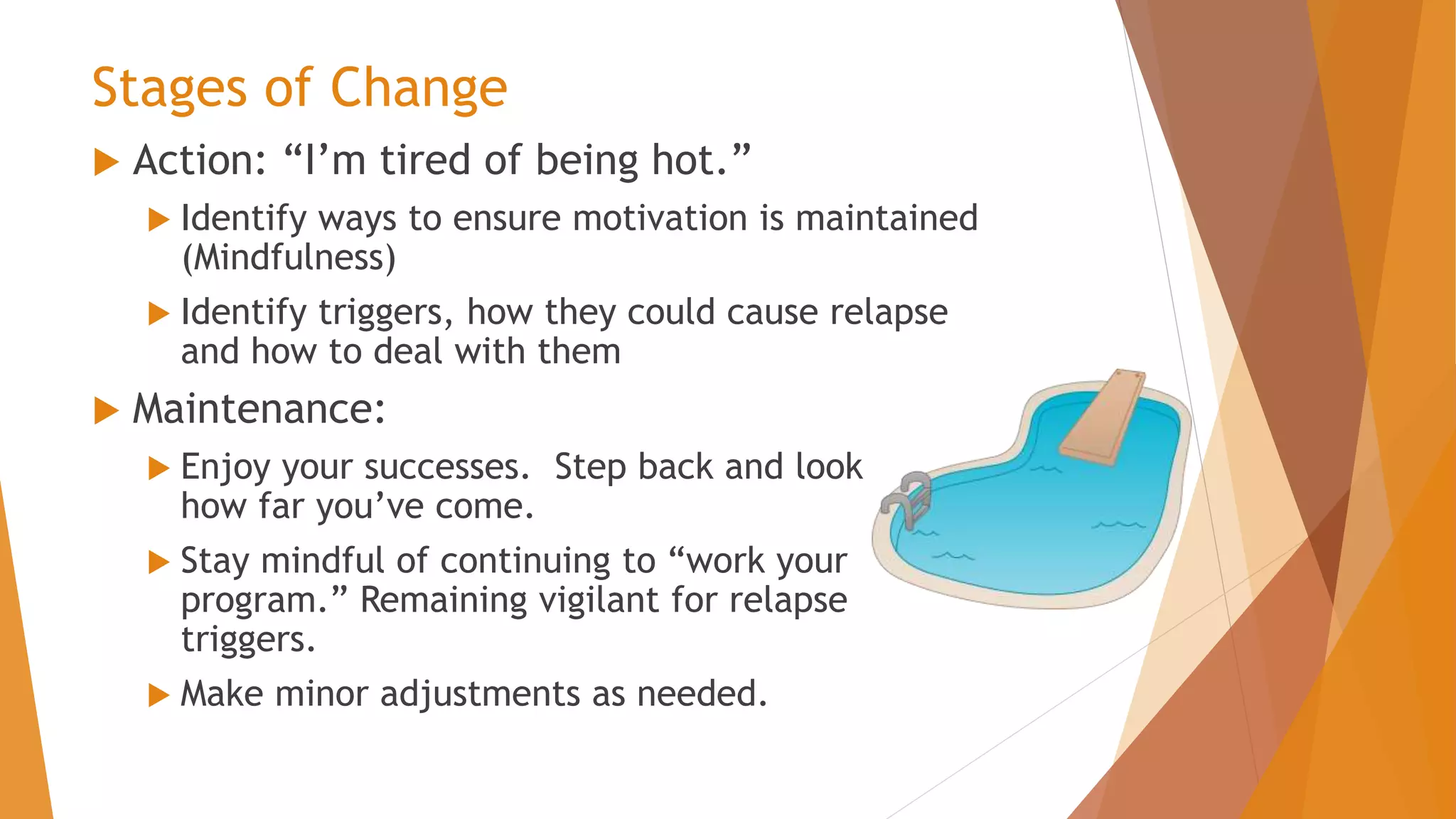
 Action: “I’m tired of being hot.”
 Identify ways to ensure motivation is maintained
(Mindfulness)
 Identify triggers, how they could cause relapse
and how to deal with them
 Maintenance:
 Enjoy your successes. Step back and look
how far you’ve come.
 Stay mindful of continuing to “work your
program.” Remaining vigilant for relapse
triggers.
 Make minor adjustments as needed.
Stages of Change
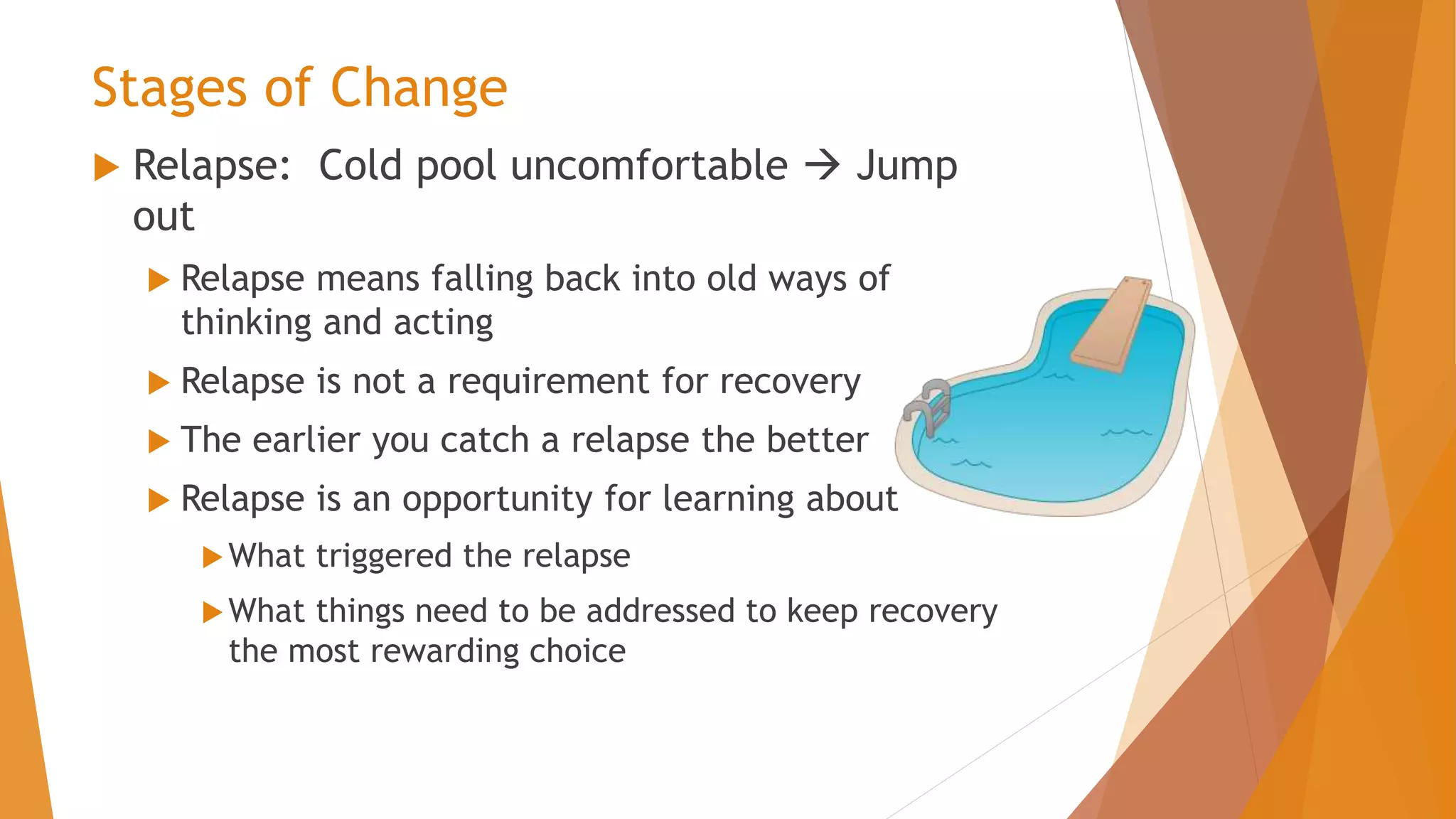
 Relapse: Cold pool uncomfortable  Jump
out
 Relapse means falling back into old ways of
thinking and acting
 Relapse is not a requirement for recovery
 The earlier you catch a relapse the better
 Relapse is an opportunity for learning about
What triggered the relapse
What things need to be addressed to keep recovery
the most rewarding choice
Enhancing Motivation
 The PIES Approach
 Proximity: Provide intervention in the natural
environment
 Immediacy: Intervene as soon as the problem or loss of
motivation is noticed
 Expectancy: Expect the intervention to be successful
and emphasize self-efficacy
 Simplicity: Listen, show empathy, and demonstrate
understanding.
Tips
 The more types of motivation involved, the stronger
the motivational force
 Signs of decreasing motivation
 Failure to attempt change
 “Resistance”
 Excuses and “yes, buts”
 Lack of enthusiasm
 Have client’s rate their motivation on each target
behavior (not goal) each day.
 Goal: Lose 15 pounds
 Target behavior: Go to the gym
 Target behavior: Drink 8 glasses of water
Motivation is Behavior Specific
 Goals & Target Behavior
 Goal: Improve happiness (address depression)
Target Behavior: Take medication
Target Behavior: Walk 30 minutes
Target Behavior: When I feel sad, write in my journal
 Goal: Improve Stress Management (reduce anxiety)
Target Behavior 1: Get adequate sleep
Target Behavior 2: Delegate unnecessary stressors
Target Behavior 3: Reduce caffeine
Emotional Motivation
 Things that make the person happy
 Decisional Balance: Identify all the reasons
 Increase these
The new behavior makes the person happy
The old behavior adds distress
 Decrease these
The old behavior makes the person happy
The new behavior adds distress
 Especially useful with people who have a “Feeling”
temperament.
Mental Motivation
 Things that the person sees as logical
 Available information to support desired behavior
 Decisional Balance: Identify all the reasons
 Increase these
 The new behavior is logical and helpful to achieving goals
 The old behavior is unhelpful to achieving goals
 Decrease these
 The old behavior is logical and helpful to achieving goals
 The new behavior is unhelpful to achieving goals
 Especially useful with people who have a “Thinking”
temperament.
Social Motivation
 Things that increase the person’s self-esteem/self-
acceptance
 Things that increase social approval/acceptance
 Decisional Balance: Identify all the reasons
 Increase these
 The new behavior increases self-acceptance/approval & other
acceptance/approval
 The old behavior is in opposition to their self-concept
 The old behavior leads to rejection/isolation
 Decrease these
 The old behavior is socially rewarding
 The new behavior does not provide self or other rewards (i.e.
changing people, places, things)
Environmental Motivation
 Identifying ways the new behavior will allow the
person to improve their environment
 People: Kindred spirits
 Places: Vacation, better neighborhood, nice restaurant
 Things: upgraded car, redecorating
 Decisional balance:
 In what ways will the new behavior improve the
environment
 In what was did the old behavior
 Create a comfortable environment (What will you miss?)
 Create an uncomfortable environment
Summary
 Motivation is essential to behavior change
 Motivation involves “choosing” the behavior that
provides the greatest rewards for the effort
 Increasing motivation means enhancing rewards and
reducing punishments/drawbacks
 Motivation is behavior, not goal, specific.
 There are 5 phases of readiness or steps to change
which clients will bounce between.
 Waning motivation is one of the most overlooked
components to relapse.
 Relapse is not a necessary component of recovery

Motivation: What it Is and How to Keep It

  • 1.
    Motivation: What It Isand How to Keep It Presented by: Dr. Dawn-Elise Snipes Executive Director, AllCEUs Host: Counselor Toolbox & Happiness Isn’t Brain Surgery AllCEUs.com Unlimited CEUs and Specialty Certifications $59
  • 2.
    Objectives  Define motivation Identify the 5 principles of motivational enhancement  Review the concepts of motivation  Identify the types of motivation and ways to enhance them
  • 3.
    Think About It… Why do people change?  What is motivation?  Can individuals' motivation to change their behavior be modified?  Do clinicians have a role in enhancing clients' motivation for recovery?
  • 4.
    What is Motivation Motivation is a combination of desire, willingness and ability to do something.  Effectively enhancing motivation requires  Empathy and understanding  Identifying discrepancies between your desired situation and your current situation  Overcoming resistance to change (more rewarding behaviors or fears about change)  Supporting self-efficacy
  • 5.
    What is Motivationcont…  Change involves:  Recognizing that something needs to be done  Increasing Motivation  Defining the problem (create crisis) and the end goal (identify the solution)  Identifying the benefits to doing what you need to reach your goal  Addressing the drawbacks to doing what you need to reach your goal  Creating a plan  Implementing that plan  Adjusting the plan as needed to ensure that working toward this goal is more rewarding than staying the same
  • 6.
    What is motivation Motivation is doing something to get a reward  Assumptions about the nature of motivation:  Motivation is a key to change  Motivation is multidimensional  Motivation is dynamic and fluctuating When the going gets tough, motivation gets going  Motivation can be modified Additional rewards can be added to make the new behavior more rewarding, even in the face of adversity
  • 7.
    Motivation is akey to change  Think about the last time you were not motivated to do something?  Resistance is often…  A lack of motivation for the new behavior  More motivation for the old behavior  One of the first steps in developing motivation for change is to create a crisis  What are the problems with the current situation?  In what ways will the change be worth the effort?
  • 8.
    Motivation is multidimensional Emotional: Makes the person happy  Mental: Is the logical choice  Physical: Improves physical health, energy or reduces pain  Social: Improves relationship with self or others, elicits positive feedback from self and others  Environmental: Makes the environment more comfortable
  • 9.
    Interventions  Create theCrisis  Examine the ways that the mood issues or addictive behaviors impact each area of wellness  Recognize that each negative impact is likely the result of energy shortages.  Identify individualized interventions  Identify ways to reduce stress and improve each area of wellness  Highlight motivations for change in as many areas as possible  Define and identify motivations to change in each dimension.
  • 10.
    Motivation is Dynamicand Fluctuating  When the going gets tough, motivation gets going  Motivation is a combination of  Commitment (Willingness)  Control (Self-Efficacy)  Challenge Too easy and too hard  procrastination
  • 11.
    Reasons Motivation Wanes No (effective) Plan  Distractions  Drawbacks  Negative Motivation--Avoiding pain instead of achieving a reward  Extrinsic Motivation—Depending on the outside world
  • 12.
    Motivation Can BeModified  Enhance the benefits to change and the drawbacks to staying the same (Green=Go)  Minimize the benefits to staying the same and the drawbacks to change (Red = Stop/Remove) Benefits to change Emotional, mental, physical, social, environmental Benefits to Staying the Same Emotional, mental, physical, social, environmental Drawbacks to change Emotional, mental, physical, social, environmental Drawbacks to Staying the Same Emotional, mental, physical, social, environmental
  • 13.
    Stages of Change Precontemplation: “I’m okay”  Reluctant Increase knowledge or awareness about the problem, and the personal impact it is having  Rebellious Shift energy from fear of losing control to making lemonade  Resigned Rekindle hope and optimism by highlighting successes, strengths and supports
  • 14.
    Stages of Change Contemplation: “It’s getting a little hot, but I’m okay”  Address ambivalence by tipping the decisional balance scales  Address anxiety and grief about change  Help clients visualize change  Preparation: “I’m just gonna stick my toe in and see how it feels.”  Increase self efficacy and hardiness (C3)  Begin learning about the issues  Identify motivations in each area and create small successes for components of the goal
  • 15.
    Stages of Change Preparation cont…  Clarify goals and strategies Identify and address barriers to change Highlight strengths and past successful strategies Garner social support Envision change and find motivating stories from others
  • 16.
    Stages of Change Action: “I’m tired of being hot.”  Identify ways to ensure motivation is maintained (Mindfulness)  Identify triggers, how they could cause relapse and how to deal with them  Maintenance:  Enjoy your successes. Step back and look how far you’ve come.  Stay mindful of continuing to “work your program.” Remaining vigilant for relapse triggers.  Make minor adjustments as needed.
  • 17.
    Stages of Change Relapse: Cold pool uncomfortable  Jump out  Relapse means falling back into old ways of thinking and acting  Relapse is not a requirement for recovery  The earlier you catch a relapse the better  Relapse is an opportunity for learning about What triggered the relapse What things need to be addressed to keep recovery the most rewarding choice
  • 18.
    Enhancing Motivation  ThePIES Approach  Proximity: Provide intervention in the natural environment  Immediacy: Intervene as soon as the problem or loss of motivation is noticed  Expectancy: Expect the intervention to be successful and emphasize self-efficacy  Simplicity: Listen, show empathy, and demonstrate understanding.
  • 19.
    Tips  The moretypes of motivation involved, the stronger the motivational force  Signs of decreasing motivation  Failure to attempt change  “Resistance”  Excuses and “yes, buts”  Lack of enthusiasm  Have client’s rate their motivation on each target behavior (not goal) each day.  Goal: Lose 15 pounds  Target behavior: Go to the gym  Target behavior: Drink 8 glasses of water
  • 20.
    Motivation is BehaviorSpecific  Goals & Target Behavior  Goal: Improve happiness (address depression) Target Behavior: Take medication Target Behavior: Walk 30 minutes Target Behavior: When I feel sad, write in my journal  Goal: Improve Stress Management (reduce anxiety) Target Behavior 1: Get adequate sleep Target Behavior 2: Delegate unnecessary stressors Target Behavior 3: Reduce caffeine
  • 21.
    Emotional Motivation  Thingsthat make the person happy  Decisional Balance: Identify all the reasons  Increase these The new behavior makes the person happy The old behavior adds distress  Decrease these The old behavior makes the person happy The new behavior adds distress  Especially useful with people who have a “Feeling” temperament.
  • 22.
    Mental Motivation  Thingsthat the person sees as logical  Available information to support desired behavior  Decisional Balance: Identify all the reasons  Increase these  The new behavior is logical and helpful to achieving goals  The old behavior is unhelpful to achieving goals  Decrease these  The old behavior is logical and helpful to achieving goals  The new behavior is unhelpful to achieving goals  Especially useful with people who have a “Thinking” temperament.
  • 23.
    Social Motivation  Thingsthat increase the person’s self-esteem/self- acceptance  Things that increase social approval/acceptance  Decisional Balance: Identify all the reasons  Increase these  The new behavior increases self-acceptance/approval & other acceptance/approval  The old behavior is in opposition to their self-concept  The old behavior leads to rejection/isolation  Decrease these  The old behavior is socially rewarding  The new behavior does not provide self or other rewards (i.e. changing people, places, things)
  • 24.
    Environmental Motivation  Identifyingways the new behavior will allow the person to improve their environment  People: Kindred spirits  Places: Vacation, better neighborhood, nice restaurant  Things: upgraded car, redecorating  Decisional balance:  In what ways will the new behavior improve the environment  In what was did the old behavior  Create a comfortable environment (What will you miss?)  Create an uncomfortable environment
  • 25.
    Summary  Motivation isessential to behavior change  Motivation involves “choosing” the behavior that provides the greatest rewards for the effort  Increasing motivation means enhancing rewards and reducing punishments/drawbacks  Motivation is behavior, not goal, specific.  There are 5 phases of readiness or steps to change which clients will bounce between.  Waning motivation is one of the most overlooked components to relapse.  Relapse is not a necessary component of recovery