Jo Sherring
• Occupational Therapist 
• Mental Health Clinician 
• Managing Director of 
The Maya Academy
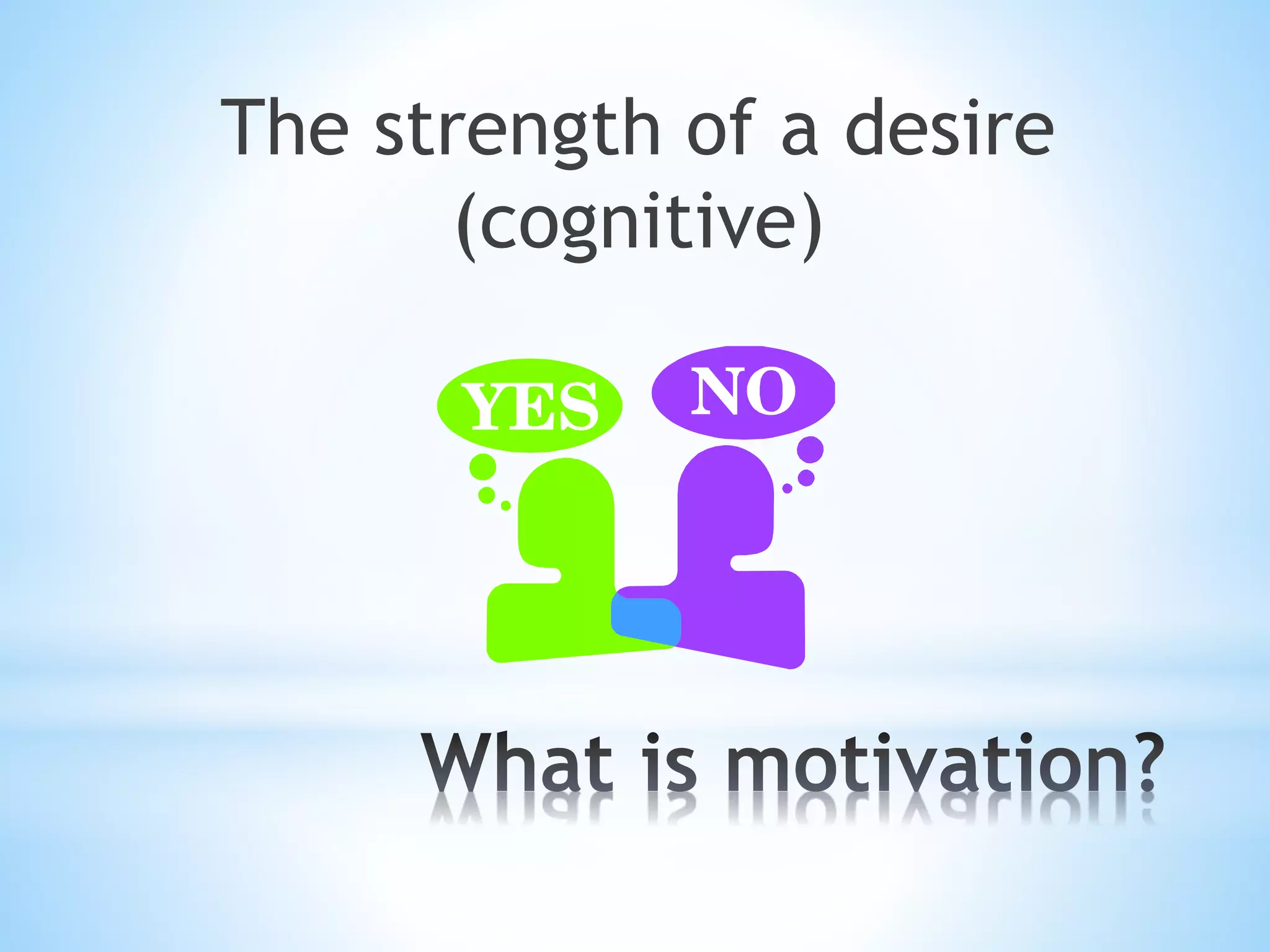
The strength of a desire 
(cognitive)
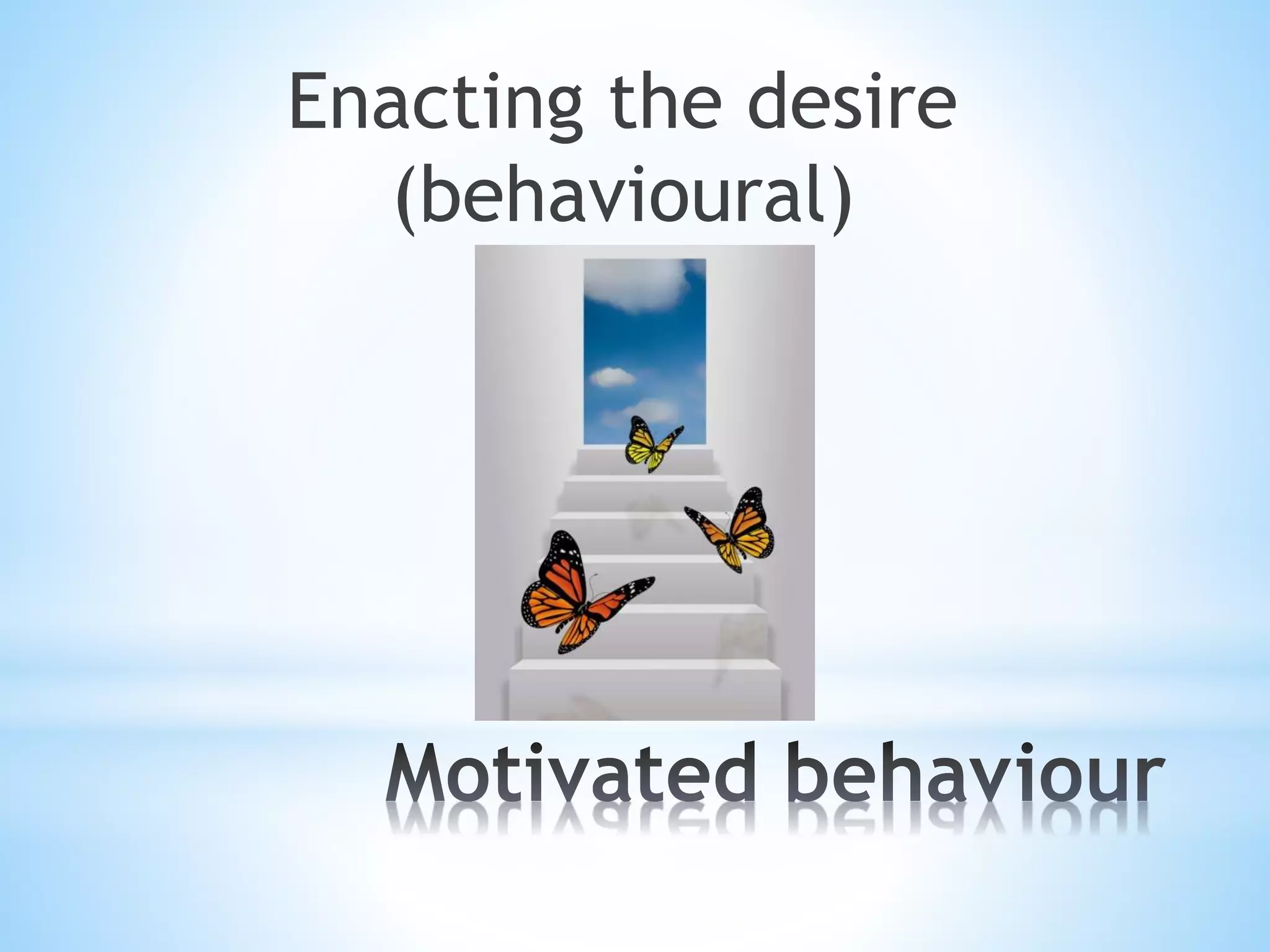
Enacting the desire 
(behavioural)
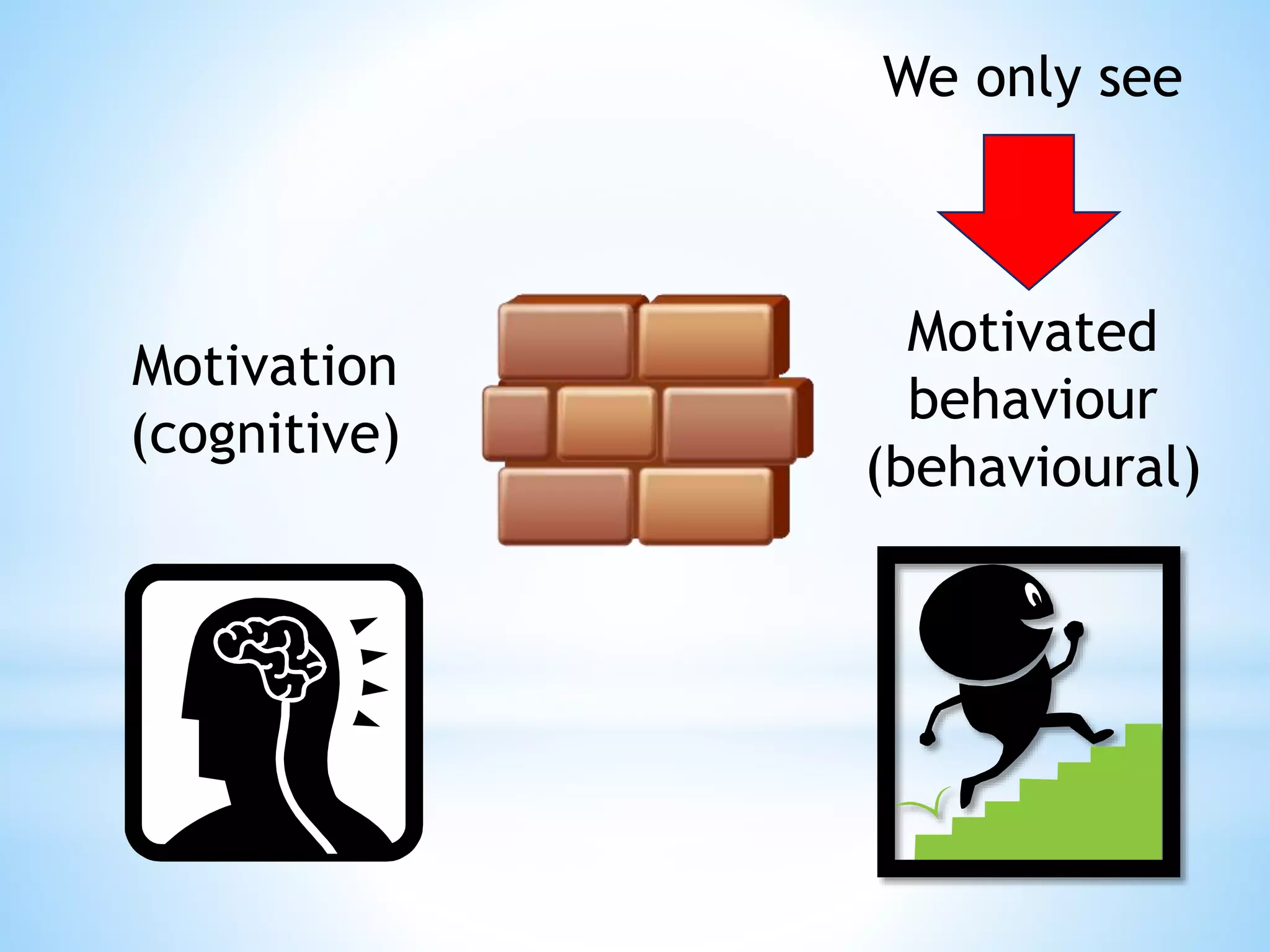
Motivation 
(cognitive) 
We only see 
Motivated 
behaviour 
(behavioural)
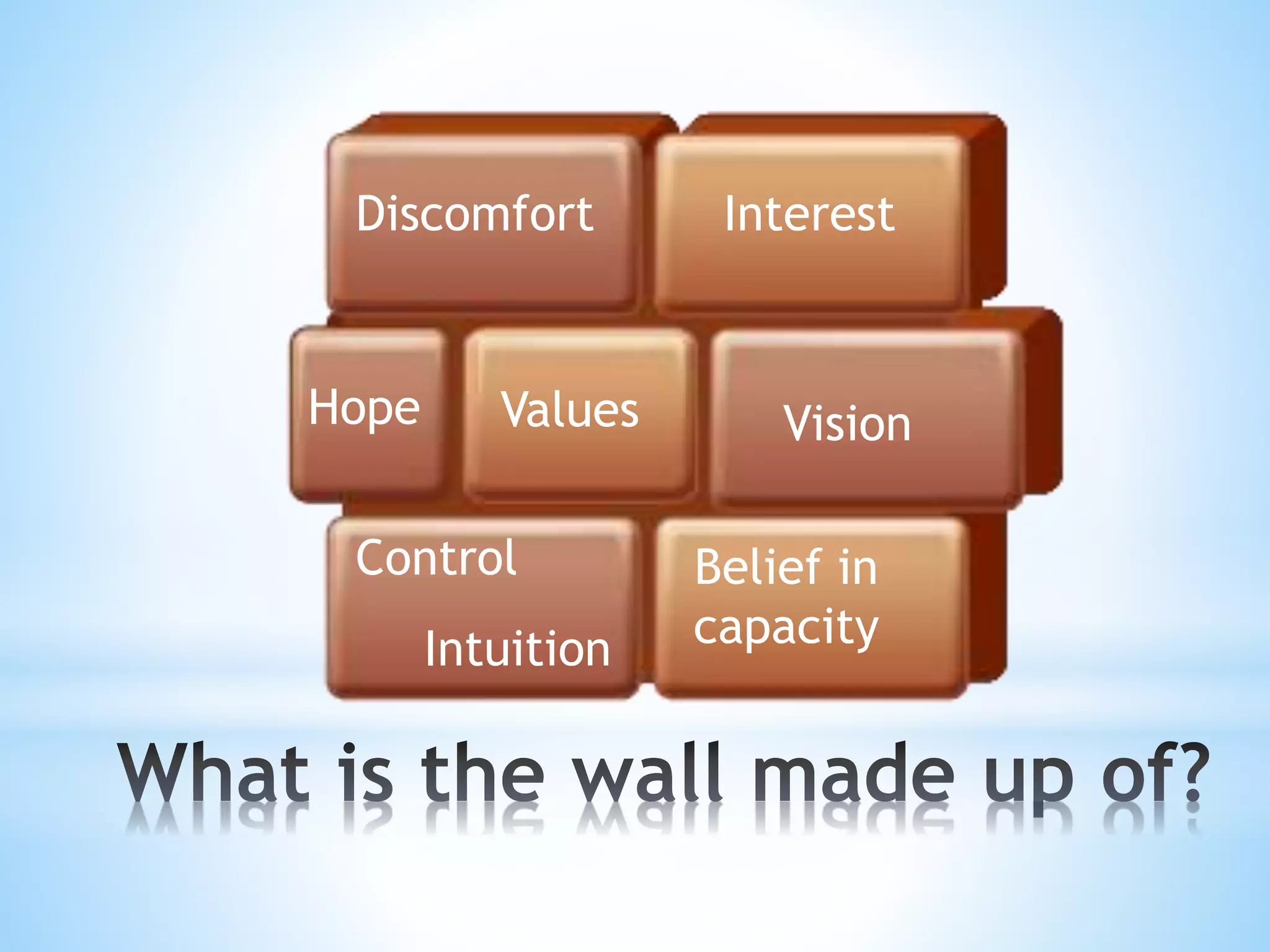
Interest 
Discomfort 
Hope Vision 
Belief in 
Values 
Control 
Intuition capacity
Seems obvious! 
interested
High or low interest? 
Introjected interest? 
(expectations, pressure, societal 
norms) 
Compliance? 
Complacency (people going along 
with things because they can’t be 
bothered)
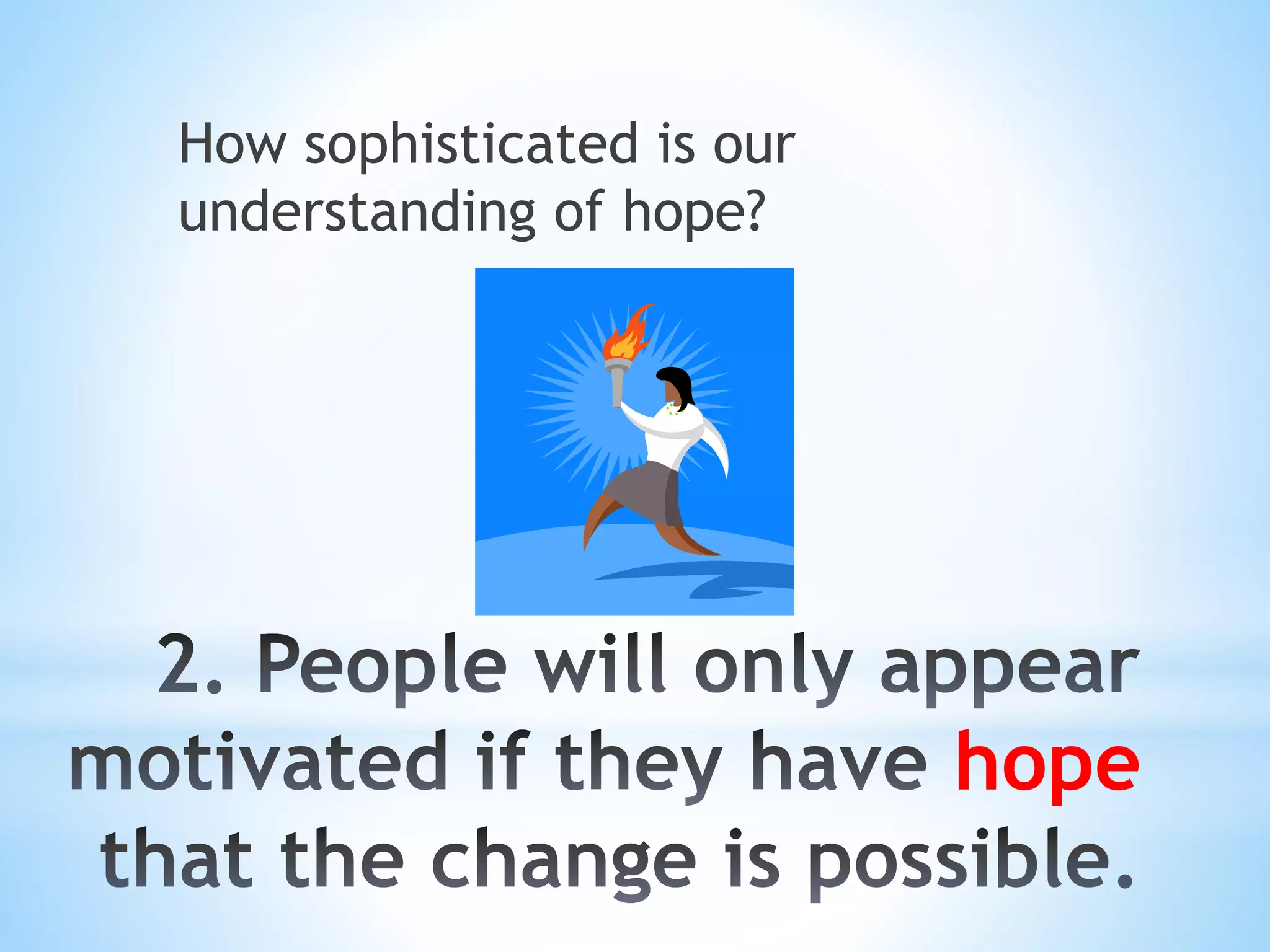
hope 
How sophisticated is our 
understanding of hope?
Narrative 
Resigned to circumstances 
Contextual barriers eg. discrimination, 
stigma, race, poverty, war, disability, 
culture etc. 
Hopelessness if often totally rational
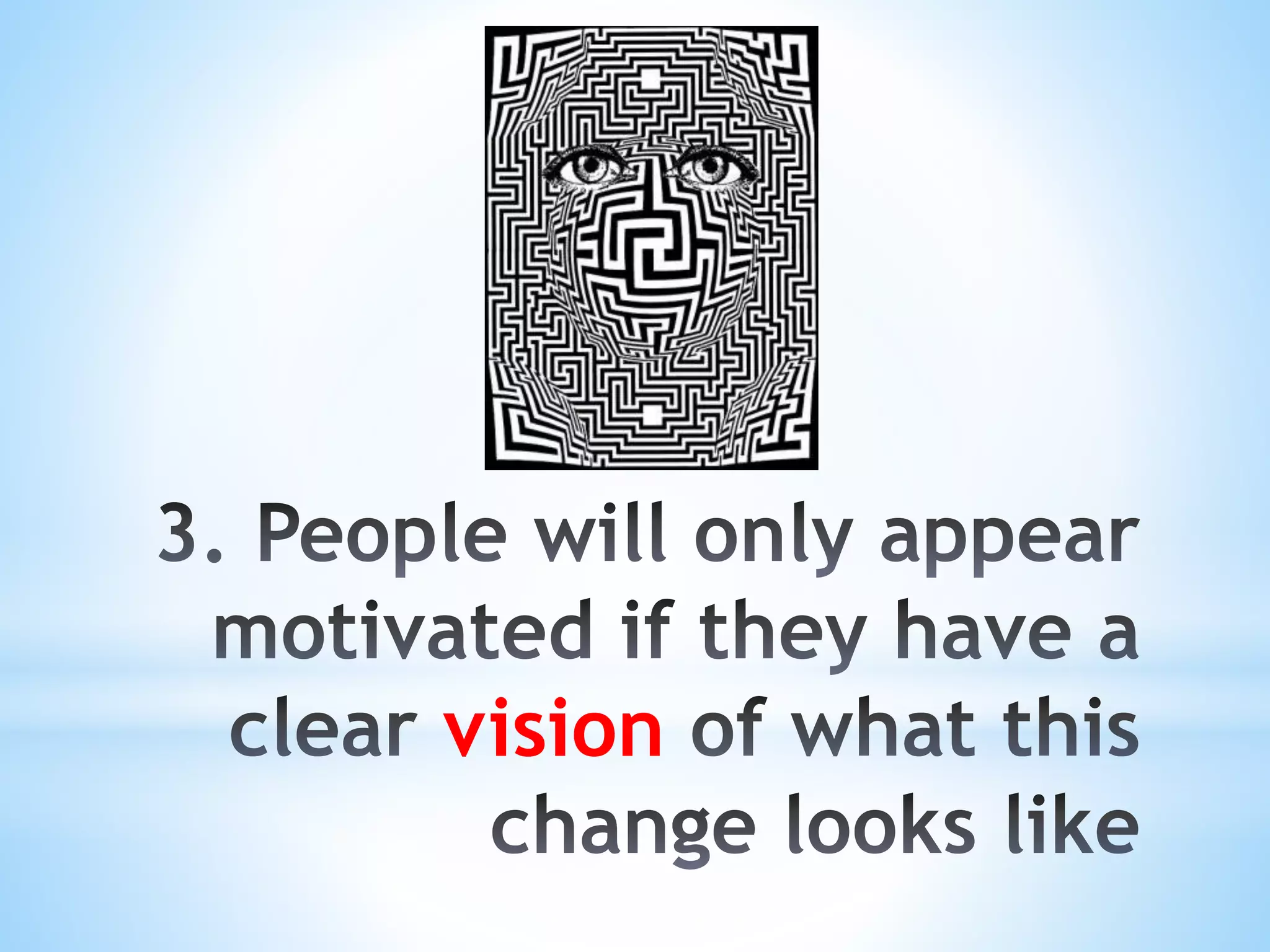
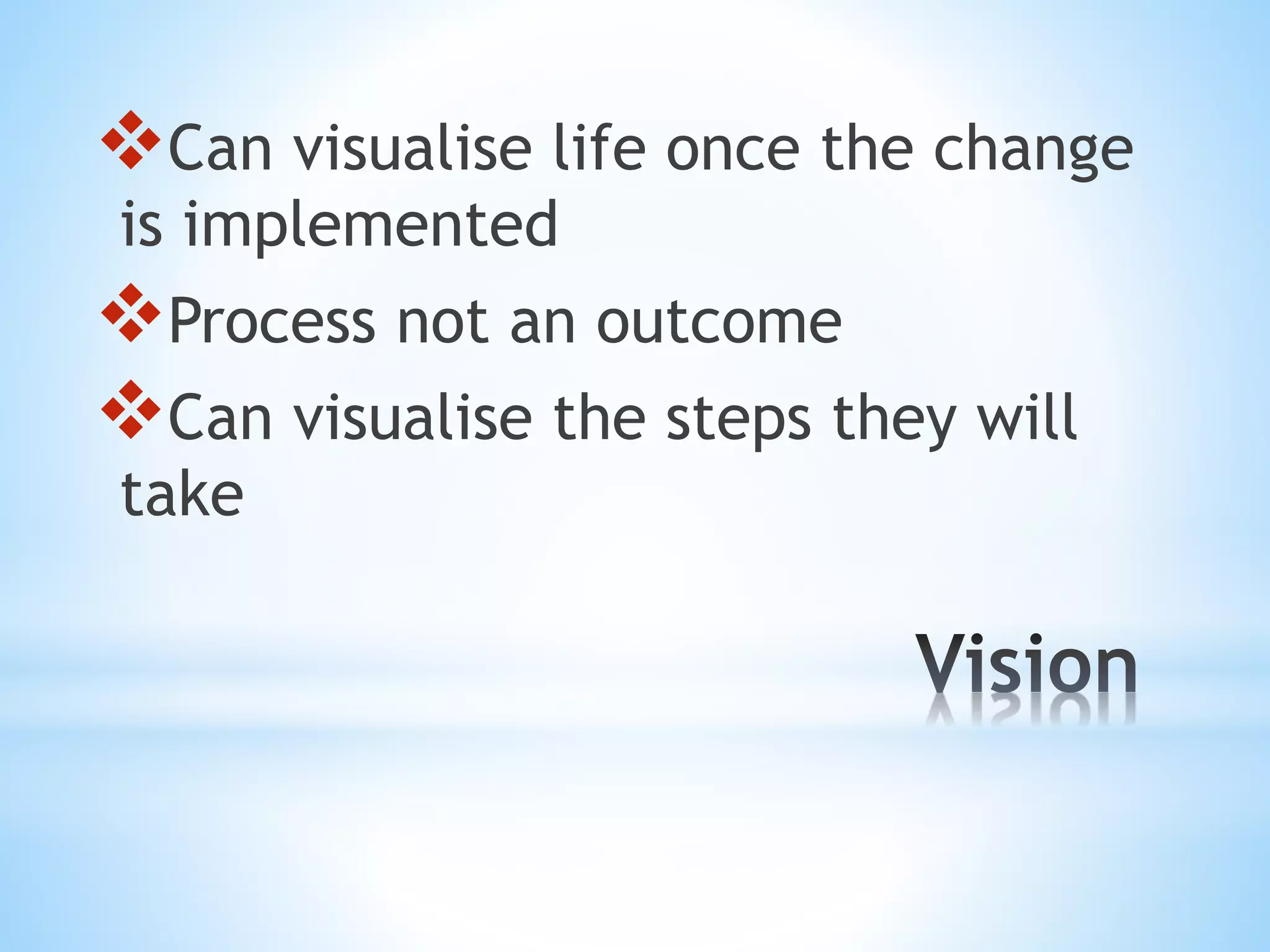
vision
Can visualise life once the change 
is implemented 
Process not an outcome 
Can visualise the steps they will 
take
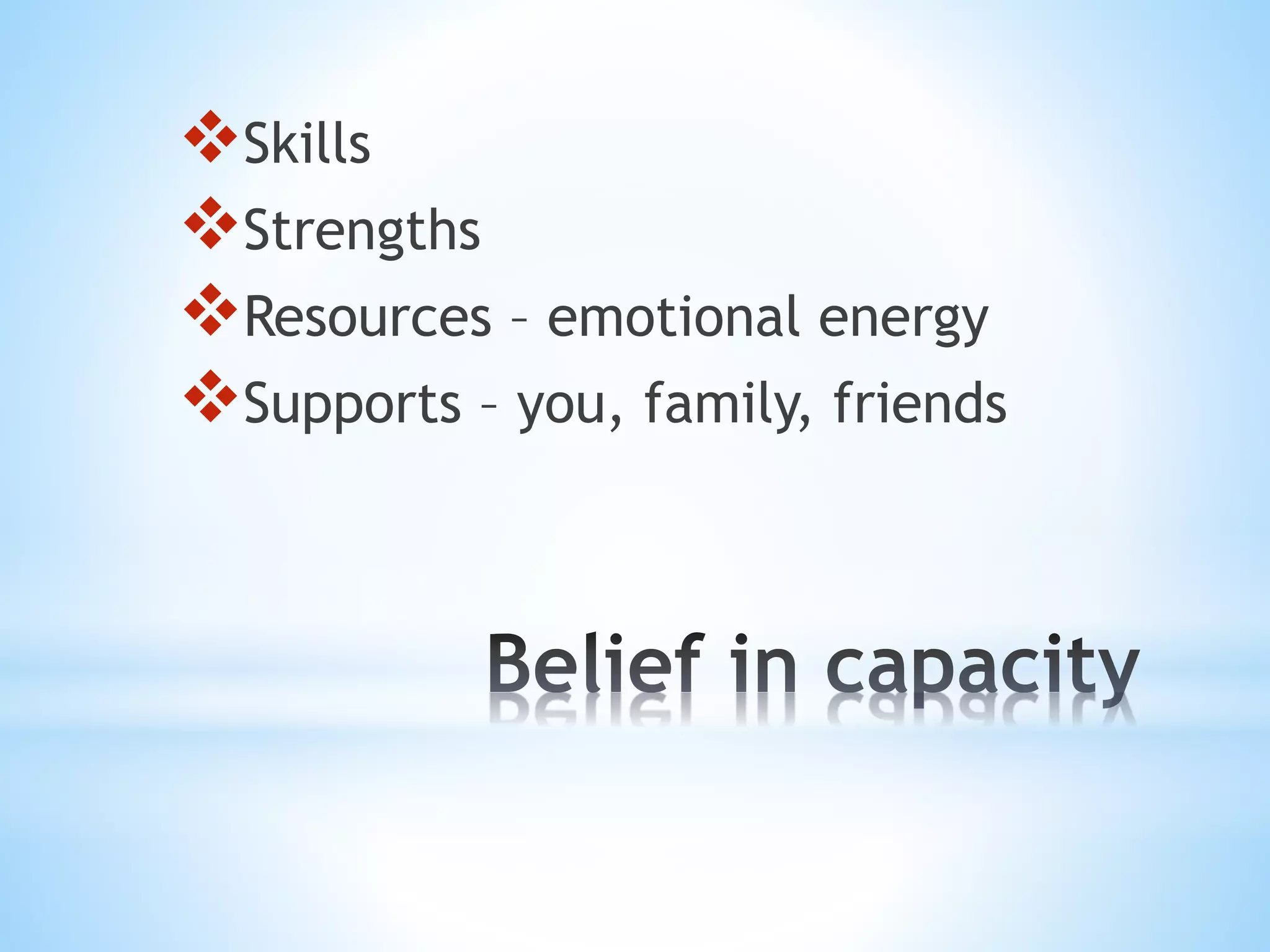
capacity
Skills 
Strengths 
Resources – emotional energy 
Supports – you, family, friends
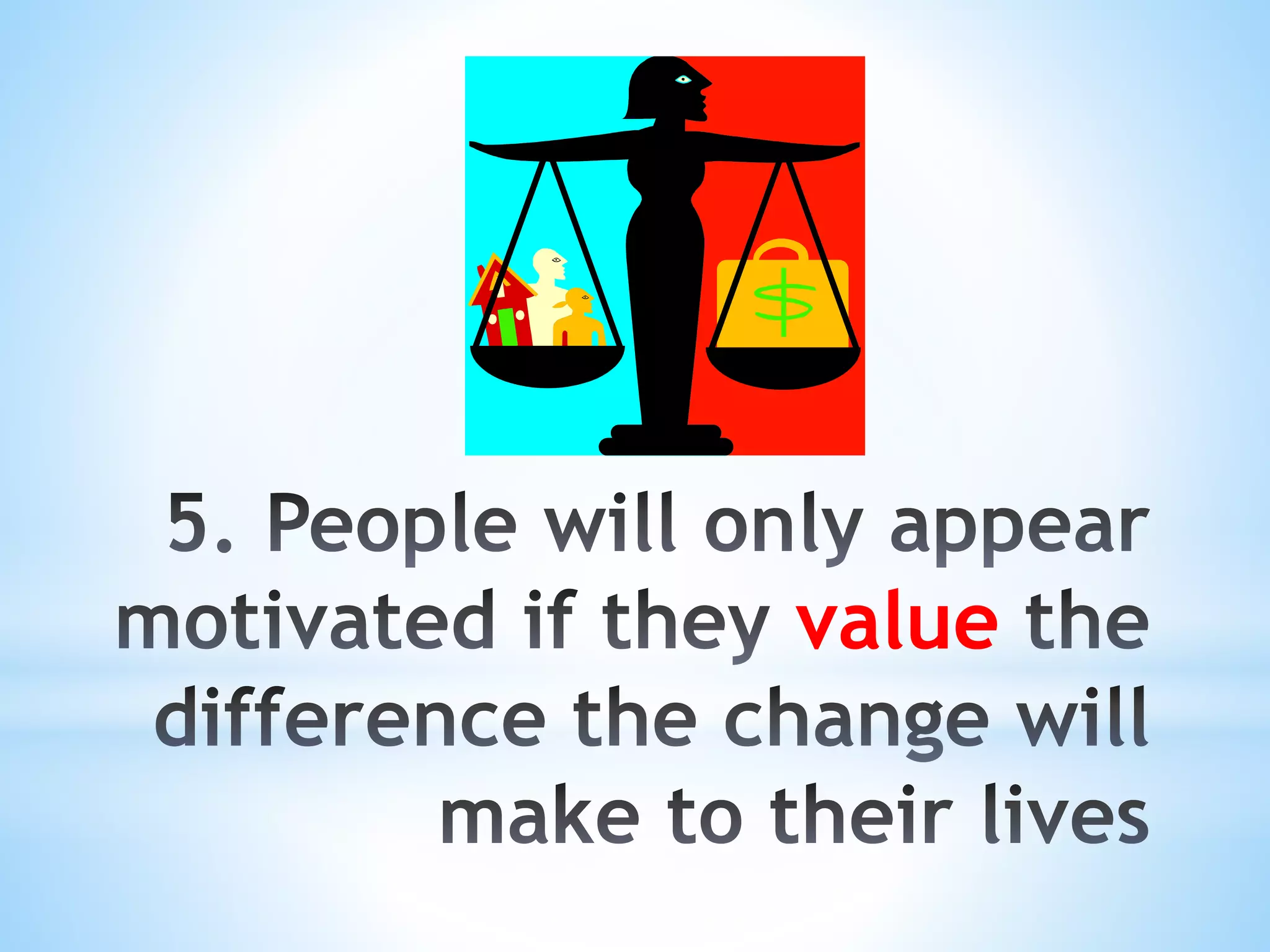
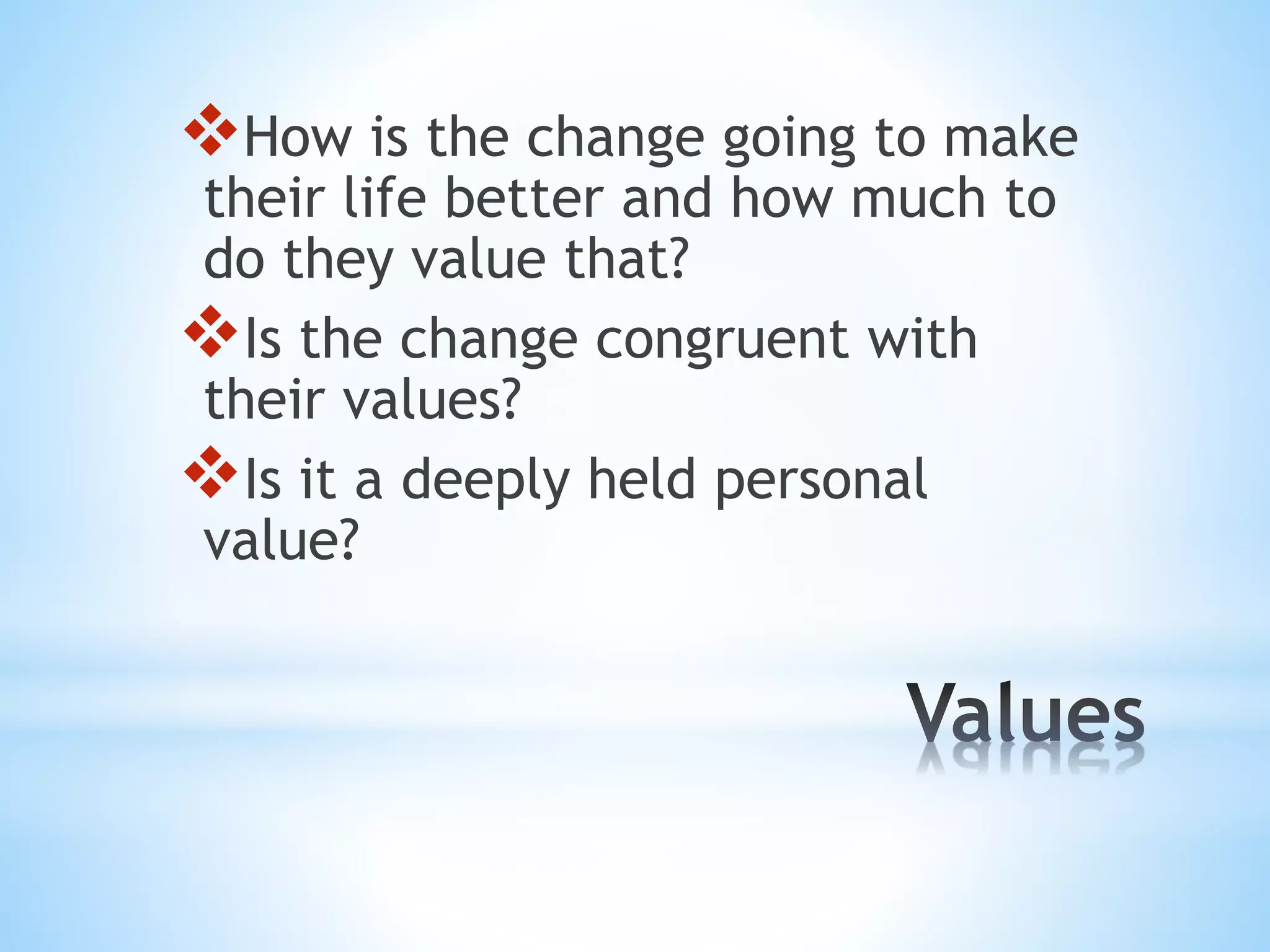
value
How is the change going to make 
their life better and how much to 
do they value that? 
Is the change congruent with 
their values? 
Is it a deeply held personal 
value?
intuition
Gut feelings are important 
The person may not be very in 
tune with it 
May indicate a process needs 
to happen before they are ready
control
*Autonomy is one of the MOST 
important concepts in motivation 
*Read up on Self Determination 
Theory (Ryan & Deci) 
*Extrinsic motivators DECREASE 
intrinsic motivation
tolerate the discomfort
*Relates back to values 
*Anxiety, grief, loss
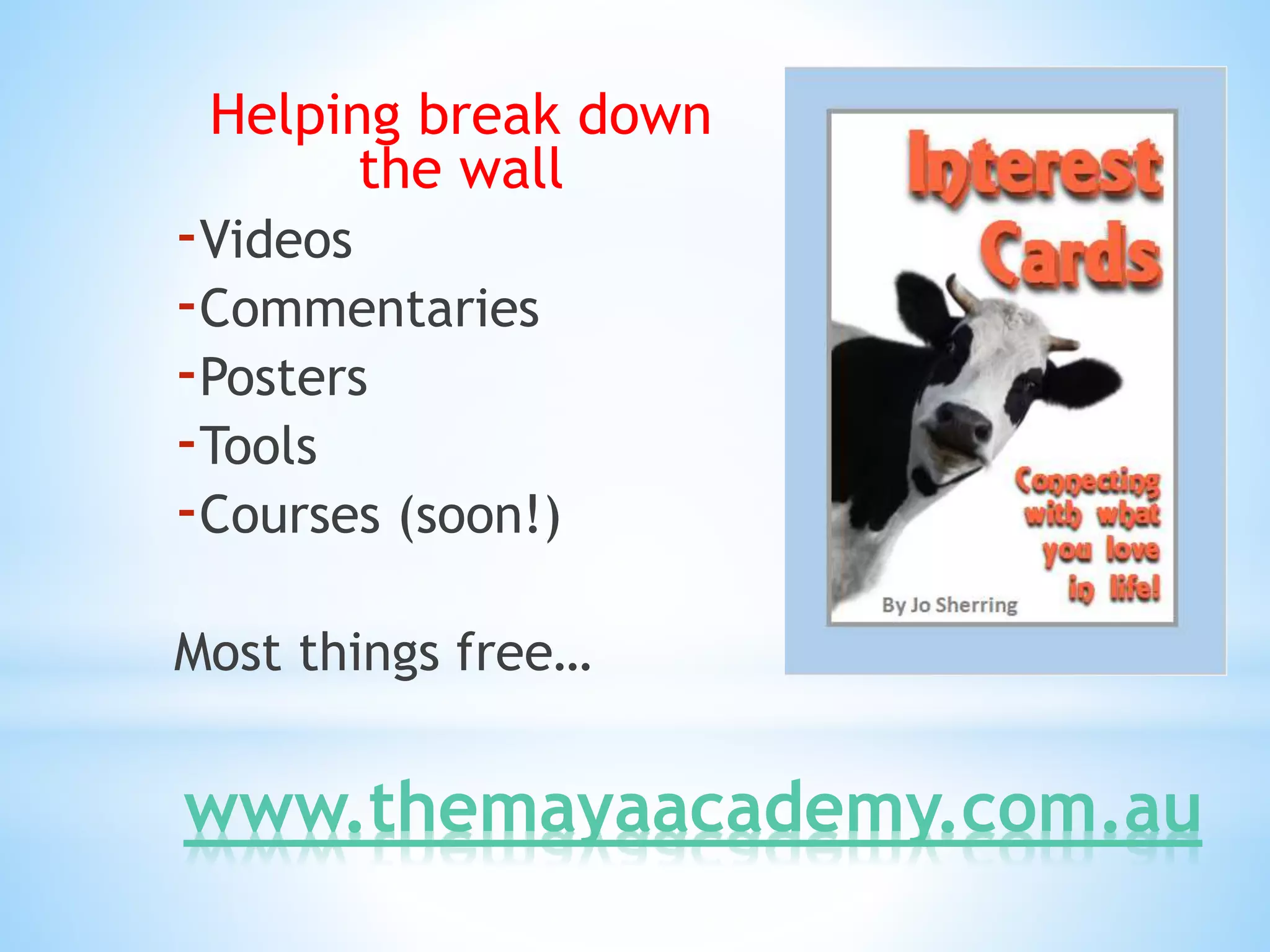
Helping break down 
the wall 
-Videos 
-Commentaries 
-Posters 
-Tools 
-Courses (soon!) 
Most things free… 
www.themayaacademy.com.au
jo@themayaacademy.com.au 
https://www.facebook.com/pages/The-Maya- 
Academy/296250380407735?ref=tn_tnmn

Motivation to create change theory