Dr Ashutosh Singh (PT)
Assistant Professor
Suresh Gyan Vihar University
Motion & Forces,Levers
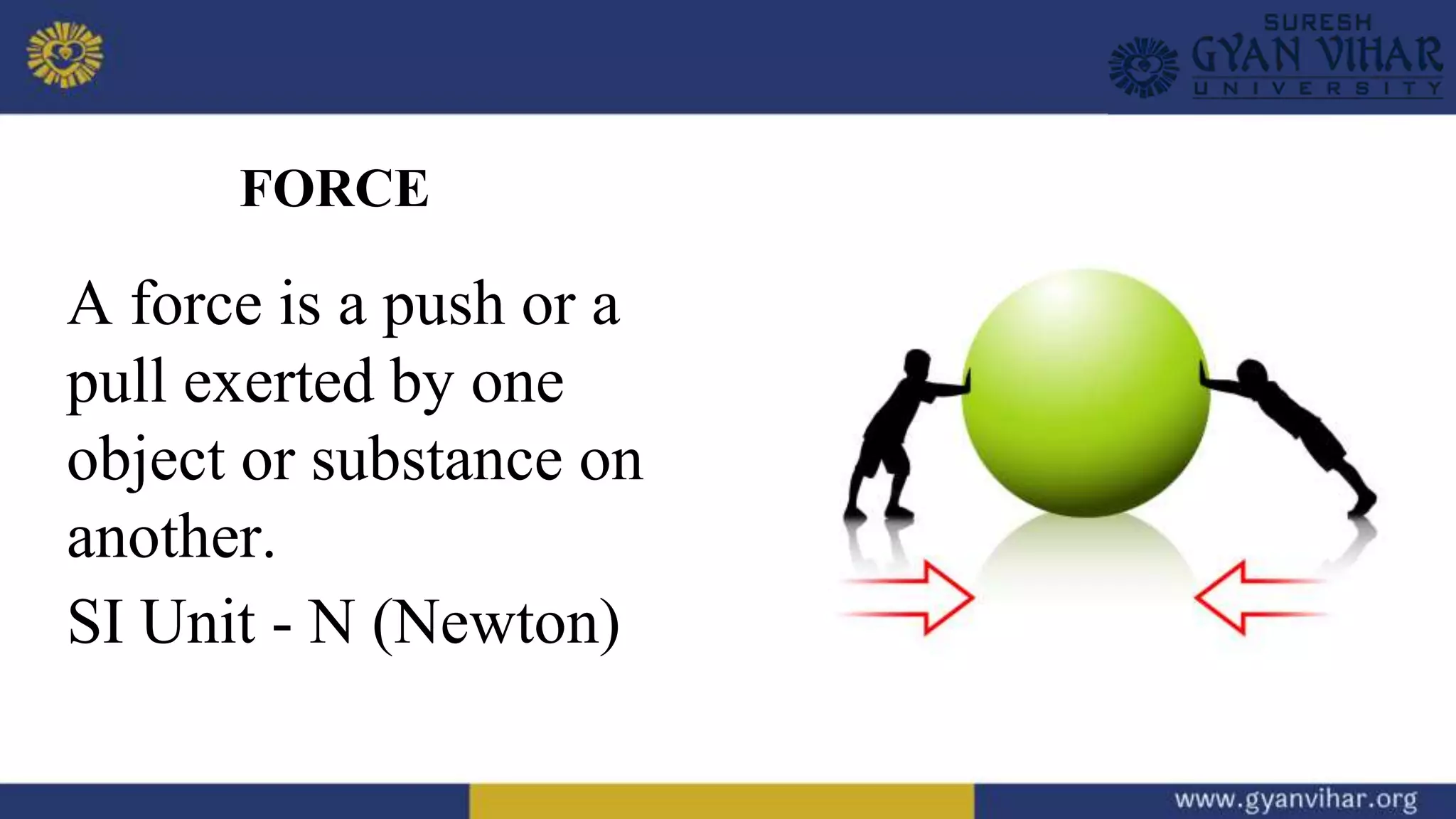
A force is a push or a
pull exerted by one
object or substance on
another.
SI Unit - N (Newton)
FORCE
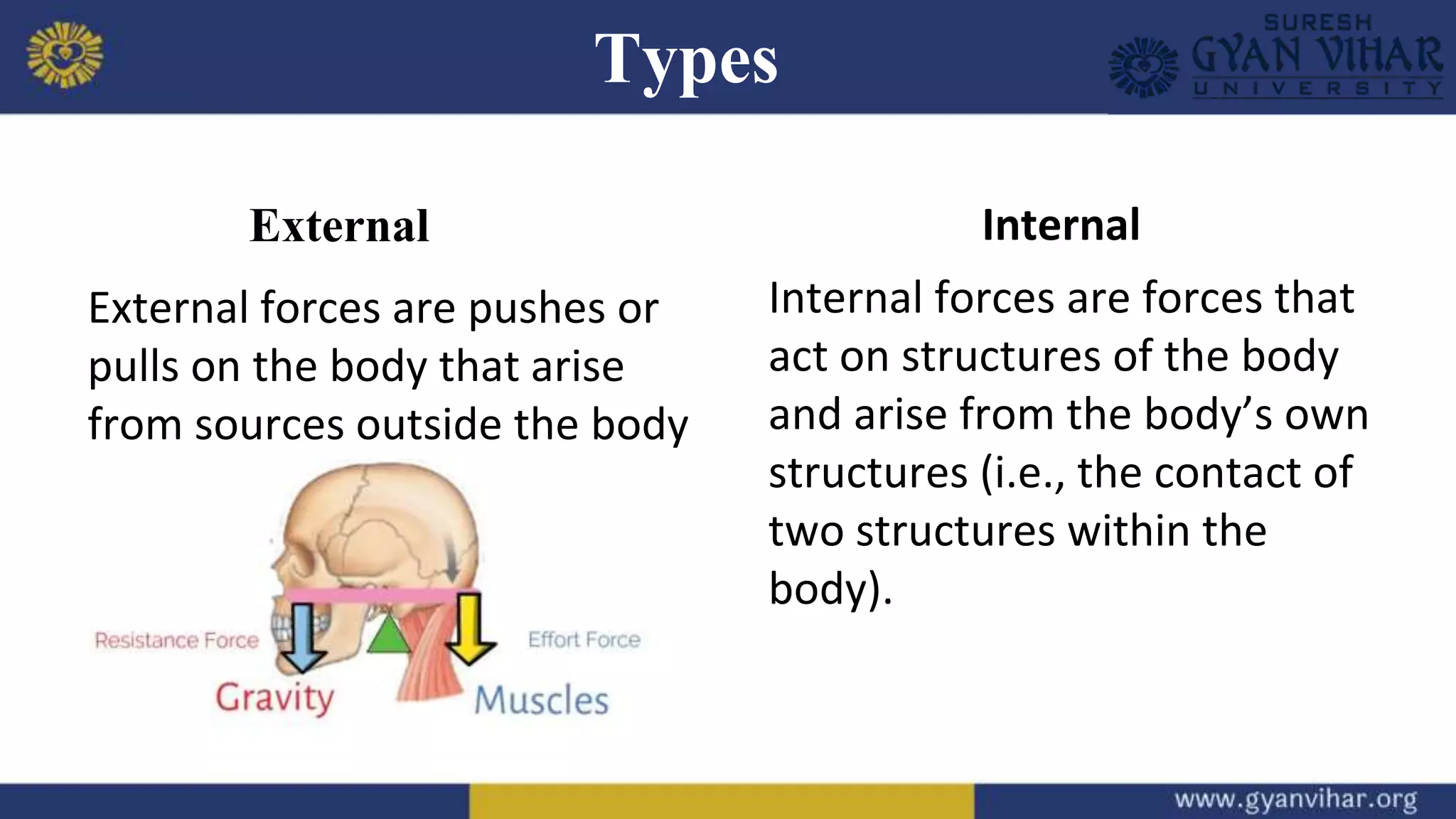
External
Types
External forces are pushes or
pulls on the body that arise
from sources outside the body
Internal
Internal forces are forces that
act on structures of the body
and arise from the body’s own
structures (i.e., the contact of
two structures within the
body).
LEVER
● A lever is a simple
machine consisting of a
rod suspended across a
pivot point
● Important function of a
lever is to convert the
force into torque.
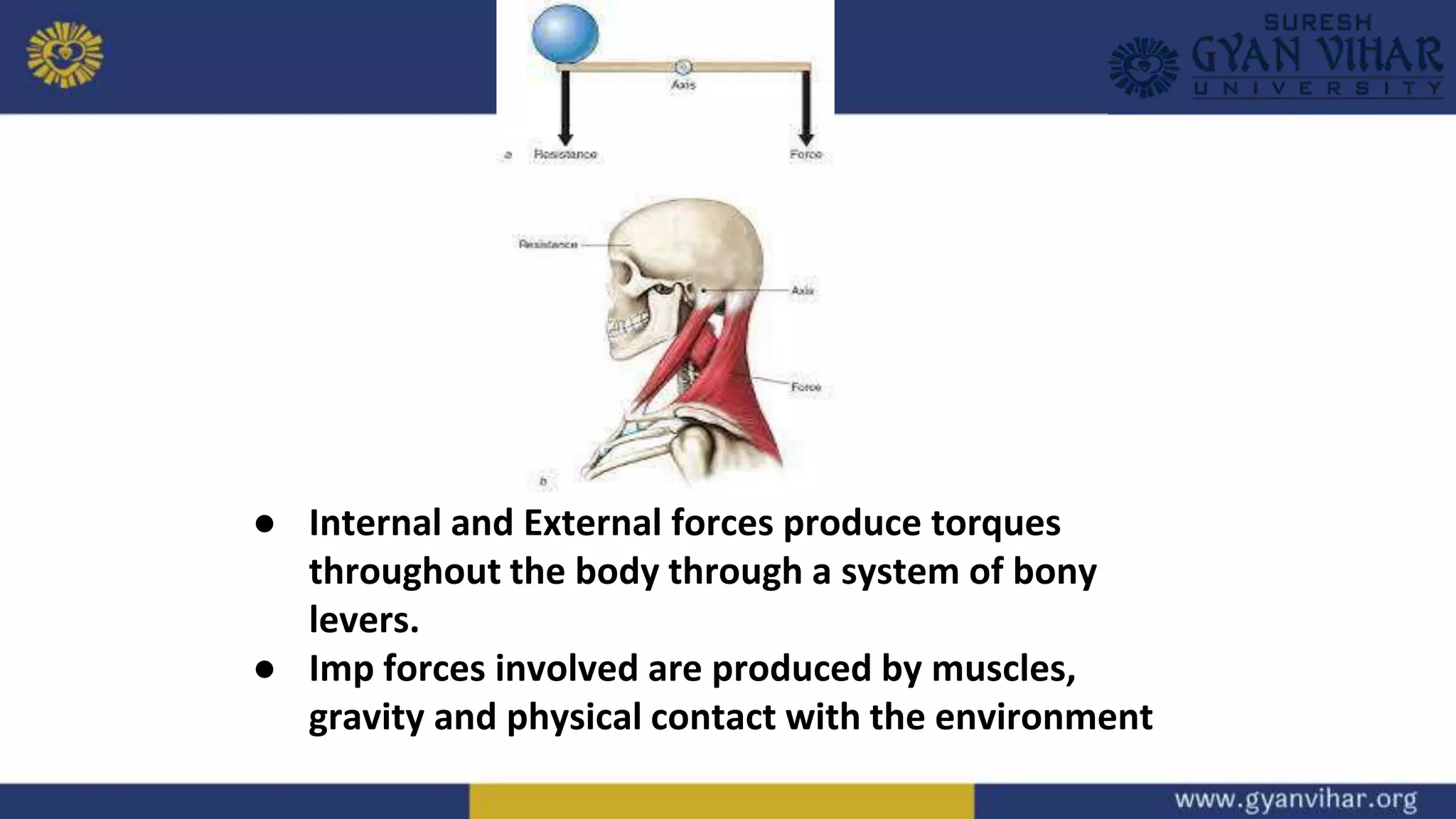
● Internal and External forces produce torques
throughout the body through a system of bony
levers.
● Imp forces involved are produced by muscles,
gravity and physical contact with the environment
1st Order Lever
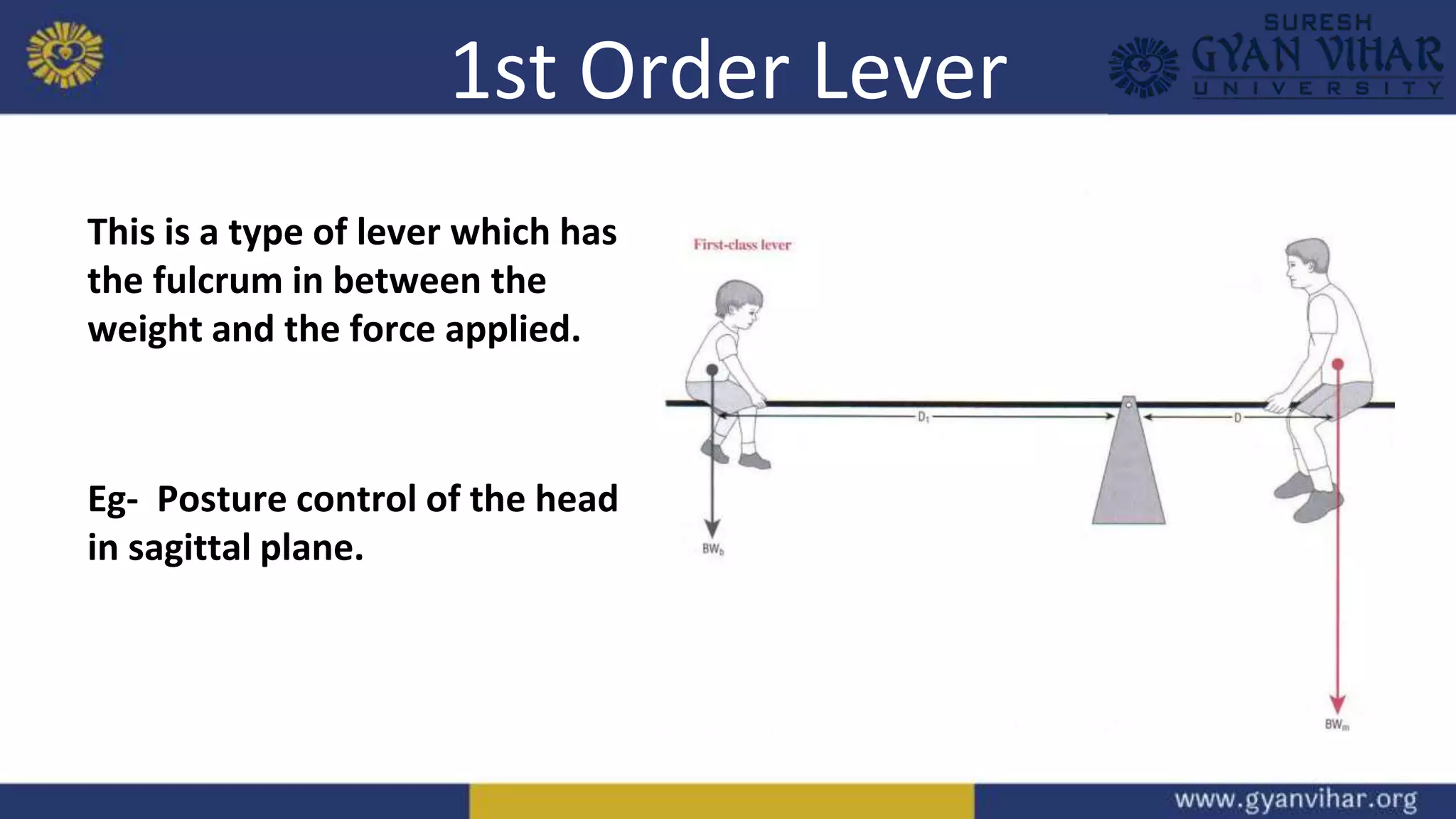
This is a type of lever which has
the fulcrum in between the
weight and the force applied.
Eg- Posture control of the head
in sagittal plane.
1st Order Lever
1st Order Lever
1st Order Lever
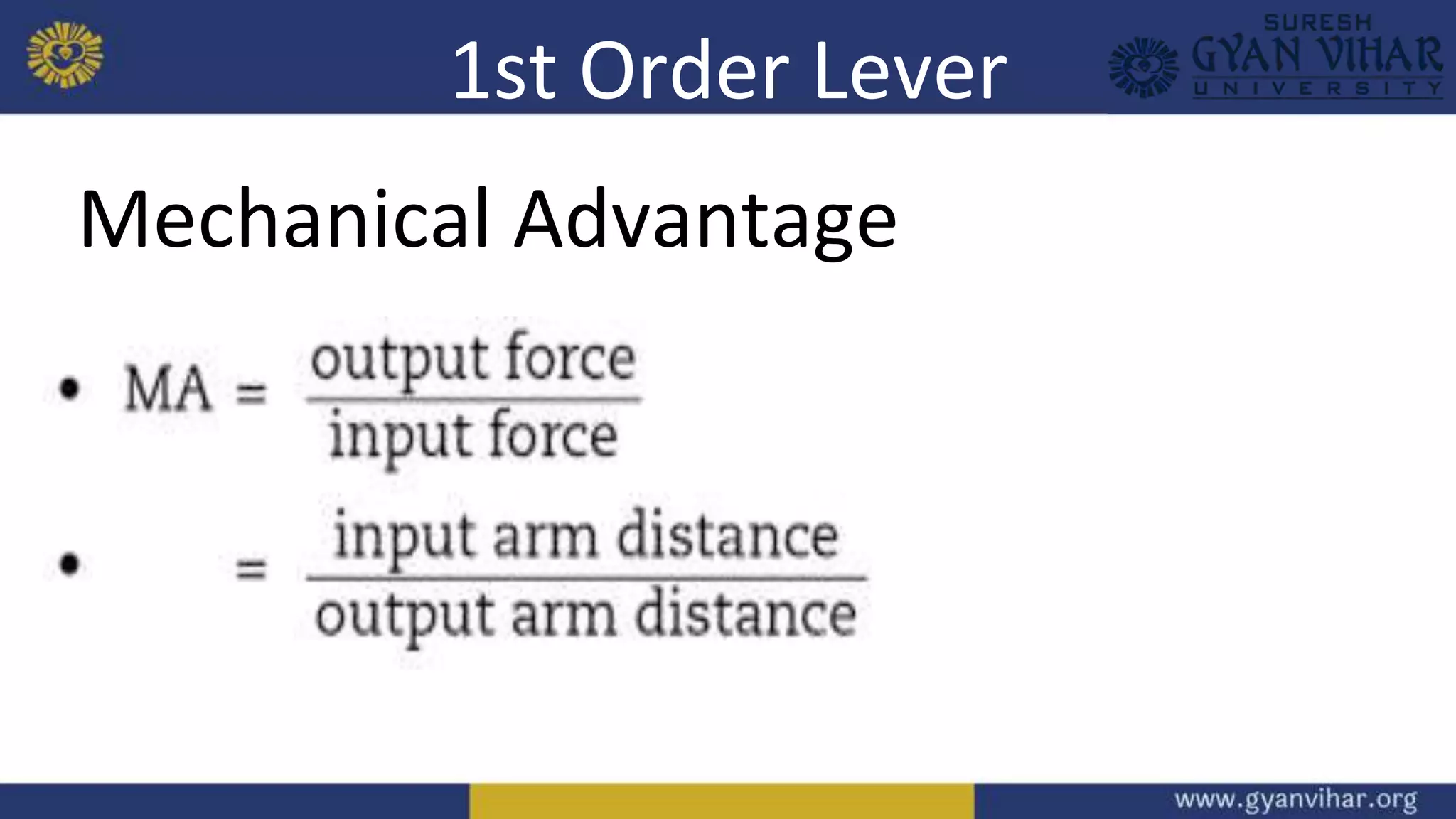
Mechanical Advantage
First class levers may have an MA less
than 1, equal to 1, or more than 1
2nd Order Lever
This is a type of lever
which has the weight in
between the fulcrum and
the force applied.
Eg - Standing on toes
2nd Order Lever
2nd Order Lever
2nd Order Lever always has the
moment arm more than 1. This is
why they are called lever of
Mechanical Advantage.
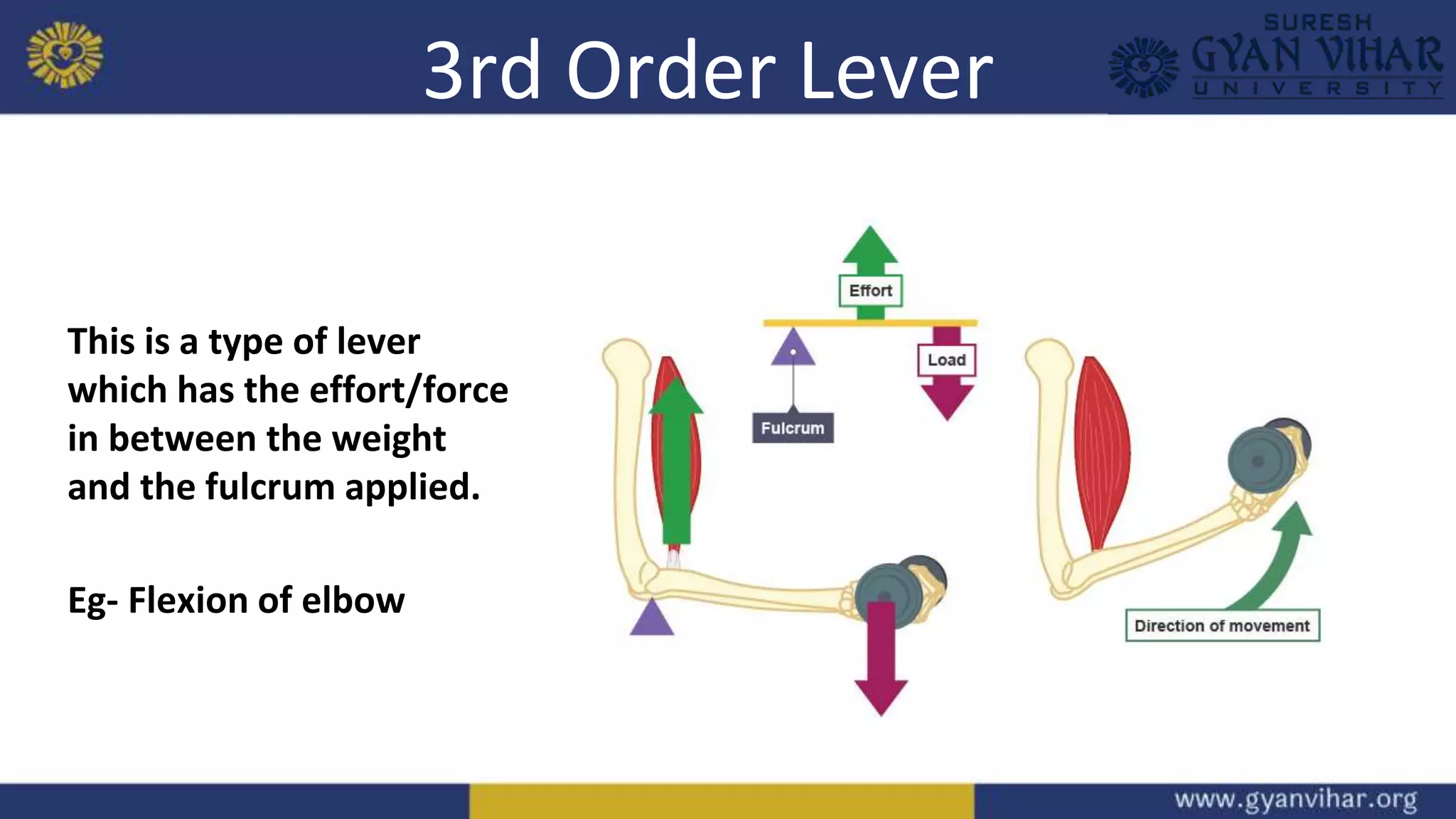
3rd Order Lever
This is a type of lever
which has the effort/force
in between the weight
and the fulcrum applied.
Eg- Flexion of elbow
3rd Order Lever
3rd Order Lever
3rd Order Lever always has the
moment arm less than 1. This is why
they are called lever of Mechanical
Disadvantage/ speed.
Why lever of Speed ?
● All points throughout the lever share the
same angular displacement and velocity,
the more distal points on the arm move
at even greater displacement and
velocity.
● More the force more the velocity.
Q-1 Which type of lever has the fulcrum in between the weight
and effort?
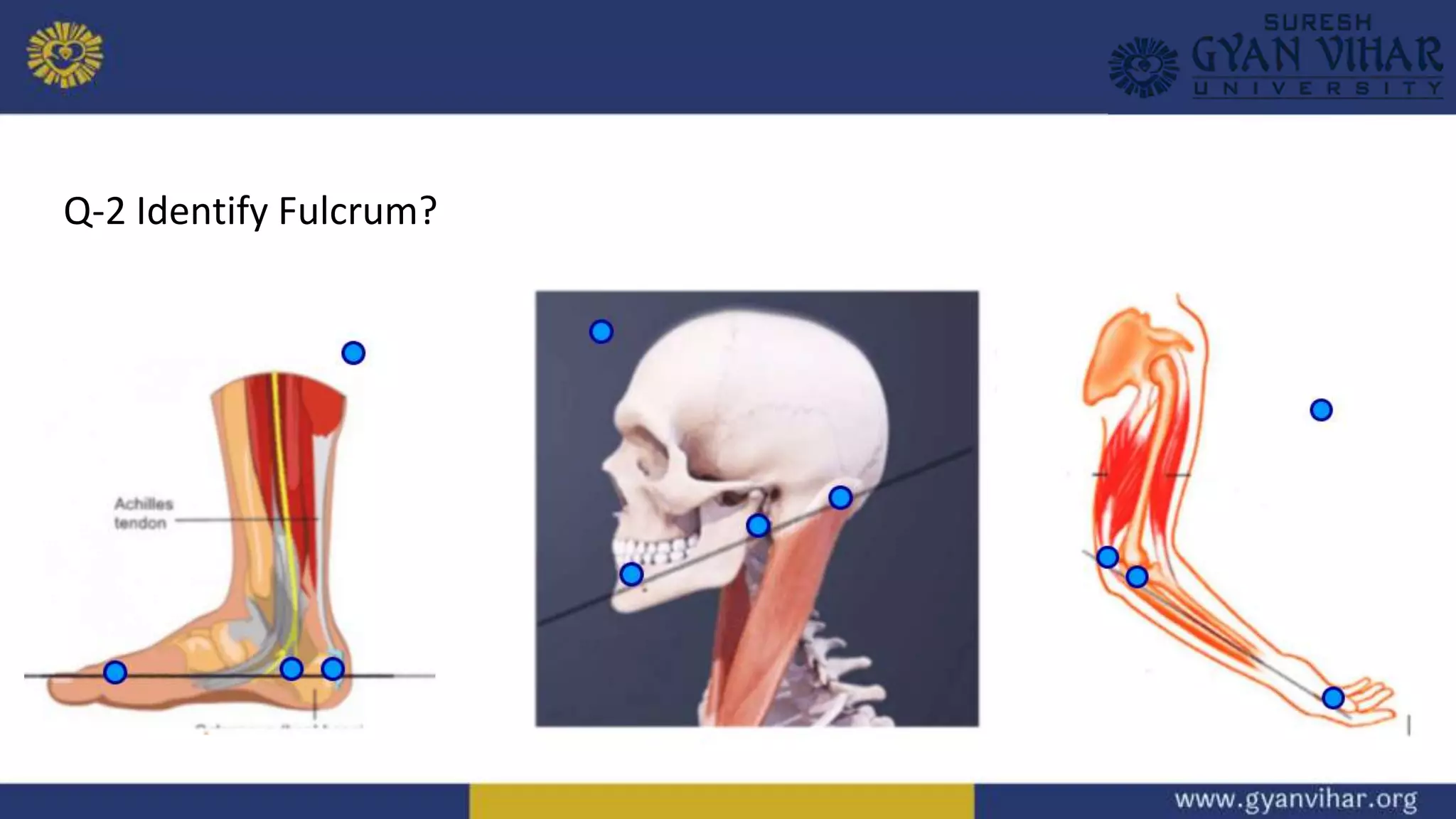
Q-2 Identify Fulcrum?
THANK YOU

Motion,Force and Levers .pptx

  • 1.
    Dr Ashutosh Singh(PT) Assistant Professor Suresh Gyan Vihar University Motion & Forces,Levers
  • 2.
    A force isa push or a pull exerted by one object or substance on another. SI Unit - N (Newton) FORCE
  • 3.
    External Types External forces arepushes or pulls on the body that arise from sources outside the body Internal Internal forces are forces that act on structures of the body and arise from the body’s own structures (i.e., the contact of two structures within the body).
  • 4.
    LEVER ● A leveris a simple machine consisting of a rod suspended across a pivot point ● Important function of a lever is to convert the force into torque.
  • 5.
    ● Internal andExternal forces produce torques throughout the body through a system of bony levers. ● Imp forces involved are produced by muscles, gravity and physical contact with the environment
  • 6.
    1st Order Lever Thisis a type of lever which has the fulcrum in between the weight and the force applied. Eg- Posture control of the head in sagittal plane.
  • 7.
  • 8.
  • 9.
  • 11.
    First class leversmay have an MA less than 1, equal to 1, or more than 1
  • 12.
    2nd Order Lever Thisis a type of lever which has the weight in between the fulcrum and the force applied. Eg - Standing on toes
  • 13.
  • 14.
    2nd Order Lever 2ndOrder Lever always has the moment arm more than 1. This is why they are called lever of Mechanical Advantage.
  • 15.
    3rd Order Lever Thisis a type of lever which has the effort/force in between the weight and the fulcrum applied. Eg- Flexion of elbow
  • 16.
  • 17.
    3rd Order Lever 3rdOrder Lever always has the moment arm less than 1. This is why they are called lever of Mechanical Disadvantage/ speed.
  • 18.
    Why lever ofSpeed ? ● All points throughout the lever share the same angular displacement and velocity, the more distal points on the arm move at even greater displacement and velocity. ● More the force more the velocity.
  • 19.
    Q-1 Which typeof lever has the fulcrum in between the weight and effort?
  • 20.
  • 21.