Download to read offline

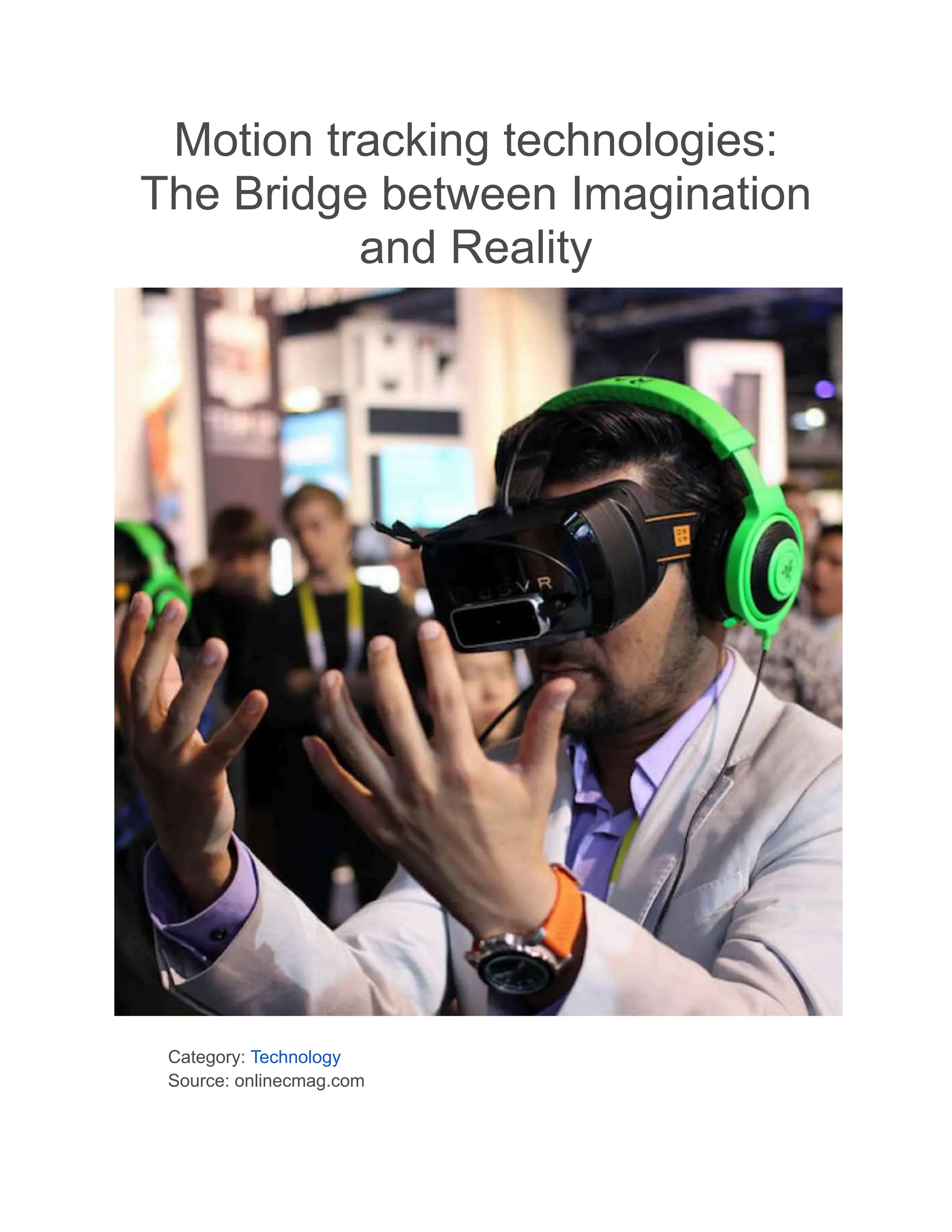
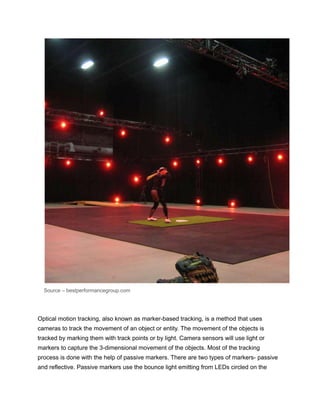

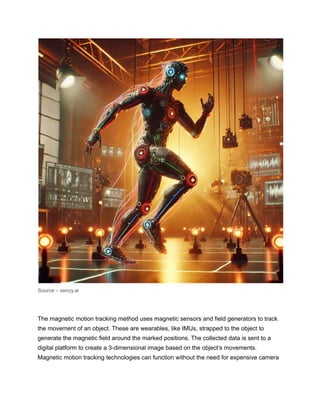
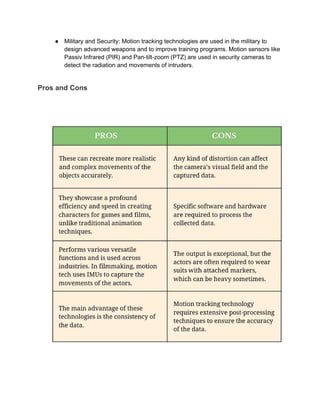
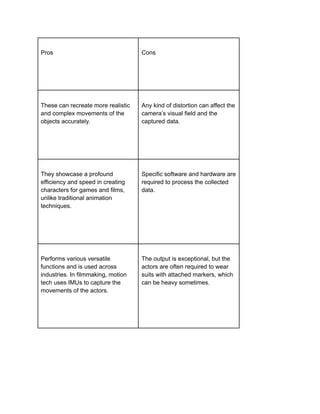

Motion tracking technologies, essential in creating realistic digital characters and environments, have significantly transformed industries like entertainment and healthcare. These technologies capture movements using various methods such as optical, inertial, magnetic, and AI-based tracking, allowing for accurate animations and applications in areas like surgery and sports analysis. While offering numerous advantages in efficiency and realism, challenges include the need for specific equipment and potential distortions affecting data capture.


