Morse code
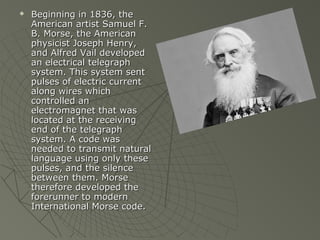
   Beginning in 1836, the
    American artist Samuel F.
    B. Morse, the American
    physicist Joseph Henry,
    and Alfred Vail developed
    an electrical telegraph
    system. This system sent
    pulses of electric current
    along wires which
    controlled an
    electromagnet that was
    located at the receiving
    end of the telegraph
    system. A code was
    needed to transmit natural
    language using only these
    pulses, and the silence
    between them. Morse
    therefore developed the
    forerunner to modern
    International Morse code.
   Morse code is a method of transmitting text
    information as a series of on-off tones, lights, or
    clicks that can be directly understood by a skilled
    listener or observer without special equipment.
    The International Morse Code encodes the ISO
    basic Latin alphabet, some extra Latin letters, the
    Arabic numerals and a small set of punctuation
    and procedural signals as standardized sequences
    of short and long signals called "dots" and
    "dashes",or "dits" and "dahs". Because many
    non-English natural languages use more than the
    26 Roman letters, extensions to the Morse
    alphabet exist for those languages.
   Morse code is most popular among amateur radio
    operators, although it is no longer required for
    licensing in most countries, including the US.
    Pilots and air traffic controllers usually need only
    a cursory understanding. Aeronautical
    navigational aids, such as VORs and NDBs,
    constantly identify in Morse code. Compared to
    voice, Morse code is less sensitive to poor signal
    conditions, yet still comprehensible to humans
    without a decoding device. Morse is therefore a
    useful alternative to synthesized speech for
    sending automated data to skilled listeners on
    voice channels. Many amateur radio repeaters,
    for example, identify with Morse, even though
    they are used for voice communications.
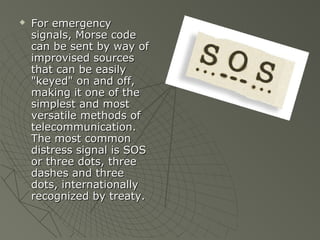
   For emergency
    signals, Morse code
    can be sent by way of
    improvised sources
    that can be easily
    "keyed" on and off,
    making it one of the
    simplest and most
    versatile methods of
    telecommunication.
    The most common
    distress signal is SOS
    or three dots, three
    dashes and three
    dots, internationally
    recognized by treaty.
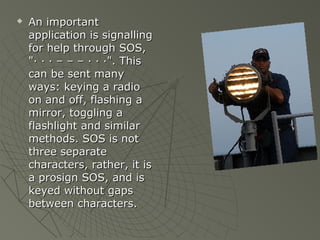
   An important
    application is signalling
    for help through SOS,
    "· · · – – – · · ·". This
    can be sent many
    ways: keying a radio
    on and off, flashing a
    mirror, toggling a
    flashlight and similar
    methods. SOS is not
    three separate
    characters, rather, it is
    a prosign SOS, and is
    keyed without gaps
    between characters.
   Morse code speed is measured in words
    per minute (wpm) or characters per
    minute (cpm). Characters have differing
    lengths because they contain differing
    numbers of dots and dashes.
    Consequently words also have different
    lengths in terms of dot duration, even
    when they contain the same number of
    characters. For this reason, a standard
    word is helpful to measure operator
    transmission speed. "PARIS" and "CODEX"
    are two such standard words.Operators
    skilled in Morse code can often understand
    ("copy") code in their heads at rates in
    excess of 40 wpm.
   Morse code has been in use for more than
    160 years—longer than any other
    electrical coding system. What is called
    Morse code today is actually somewhat
    different from what was originally
    developed by Vail and Morse. The Modern
    International Morse code, or continental
    code, was created by Friedrich Clemens
    Gerke in 1848 and initially used for
    telegraphy between Hamburg and
    Cuxhaven in Germany. Gerke changed
    nearly half of the alphabet and all of the
    numerals resulting substantially in the
    modern form of the code.
   After some minor changes, International
    Morse Code was standardized at the
    International Telegraphy Congress in 1865
    in Paris, and was later made the standard
    by the International Telecommunication
    Union (ITU). Morse's original code
    specification, largely limited to use in the
    United States and Canada, became known
    as American Morse code or railroad code.
    American Morse code is now seldom used
    except in historical re-enactments.
Morse code

Morse code

  • 1.
  • 2.
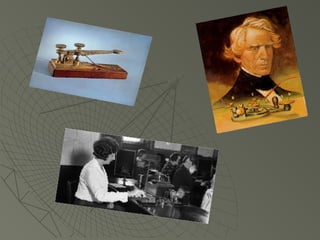
    Beginning in 1836, the American artist Samuel F. B. Morse, the American physicist Joseph Henry, and Alfred Vail developed an electrical telegraph system. This system sent pulses of electric current along wires which controlled an electromagnet that was located at the receiving end of the telegraph system. A code was needed to transmit natural language using only these pulses, and the silence between them. Morse therefore developed the forerunner to modern International Morse code.
  • 3.
    Morse code is a method of transmitting text information as a series of on-off tones, lights, or clicks that can be directly understood by a skilled listener or observer without special equipment. The International Morse Code encodes the ISO basic Latin alphabet, some extra Latin letters, the Arabic numerals and a small set of punctuation and procedural signals as standardized sequences of short and long signals called "dots" and "dashes",or "dits" and "dahs". Because many non-English natural languages use more than the 26 Roman letters, extensions to the Morse alphabet exist for those languages.
  • 4.
    Morse code is most popular among amateur radio operators, although it is no longer required for licensing in most countries, including the US. Pilots and air traffic controllers usually need only a cursory understanding. Aeronautical navigational aids, such as VORs and NDBs, constantly identify in Morse code. Compared to voice, Morse code is less sensitive to poor signal conditions, yet still comprehensible to humans without a decoding device. Morse is therefore a useful alternative to synthesized speech for sending automated data to skilled listeners on voice channels. Many amateur radio repeaters, for example, identify with Morse, even though they are used for voice communications.
  • 5.
    For emergency signals, Morse code can be sent by way of improvised sources that can be easily "keyed" on and off, making it one of the simplest and most versatile methods of telecommunication. The most common distress signal is SOS or three dots, three dashes and three dots, internationally recognized by treaty.
  • 6.
    An important application is signalling for help through SOS, "· · · – – – · · ·". This can be sent many ways: keying a radio on and off, flashing a mirror, toggling a flashlight and similar methods. SOS is not three separate characters, rather, it is a prosign SOS, and is keyed without gaps between characters.
  • 7.
    Morse code speed is measured in words per minute (wpm) or characters per minute (cpm). Characters have differing lengths because they contain differing numbers of dots and dashes. Consequently words also have different lengths in terms of dot duration, even when they contain the same number of characters. For this reason, a standard word is helpful to measure operator transmission speed. "PARIS" and "CODEX" are two such standard words.Operators skilled in Morse code can often understand ("copy") code in their heads at rates in excess of 40 wpm.
  • 8.
    Morse code has been in use for more than 160 years—longer than any other electrical coding system. What is called Morse code today is actually somewhat different from what was originally developed by Vail and Morse. The Modern International Morse code, or continental code, was created by Friedrich Clemens Gerke in 1848 and initially used for telegraphy between Hamburg and Cuxhaven in Germany. Gerke changed nearly half of the alphabet and all of the numerals resulting substantially in the modern form of the code.
  • 9.
    After some minor changes, International Morse Code was standardized at the International Telegraphy Congress in 1865 in Paris, and was later made the standard by the International Telecommunication Union (ITU). Morse's original code specification, largely limited to use in the United States and Canada, became known as American Morse code or railroad code. American Morse code is now seldom used except in historical re-enactments.