Signal systems Powerpoint by Monique Arritt, modified by Paul Thomas
Getting at Meaning Communication is  More Than Words
12 Signal Systems Verbal Written Numeric Pictorial Audio Artifactual Kinesic Optical Tactile Spatial Temporal Olfactory
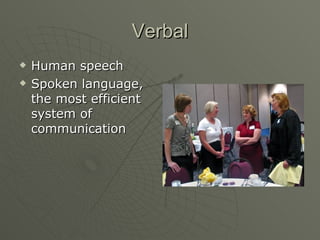
Verbal Human speech Spoken language, the most efficient system of communication
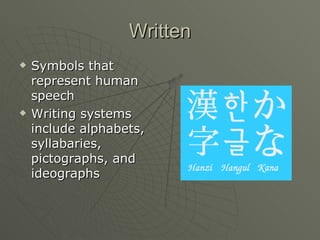
Written Symbols that represent human speech Writing systems include alphabets, syllabaries, pictographs, and ideographs
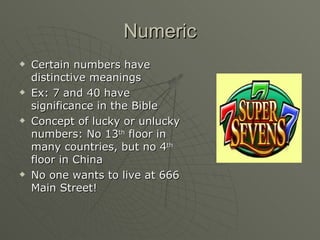
Numeric Certain numbers have distinctive meanings Ex: 7 and 40 have significance in the Bible Concept of lucky or unlucky numbers: No 13 th  floor in many countries, but no 4 th  floor in China No one wants to live at 666 Main Street!
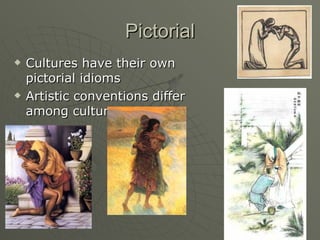
Pictorial Cultures have their own pictorial idioms Artistic conventions differ among cultures
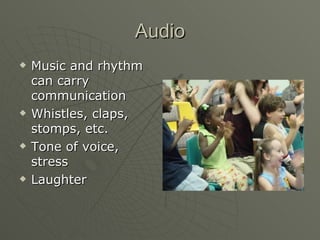
Audio Music and rhythm can carry communication Whistles, claps, stomps, etc. Tone of voice, stress Laughter
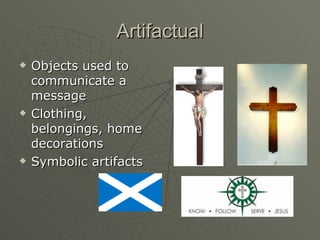
Artifactual Objects used to communicate a message Clothing, belongings, home decorations Symbolic artifacts
What if someone gave you this?
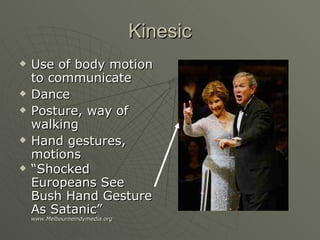
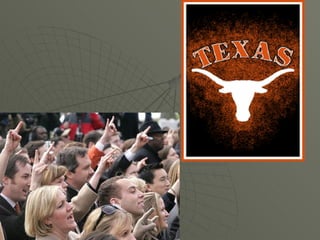
Kinesic Use of body motion to communicate Dance Posture, way of walking Hand gestures, motions “ Shocked Europeans See Bush Hand Gesture As Satanic”  www.Melbourneindymedia.org
 
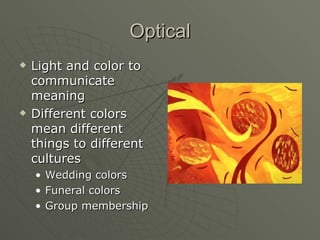
Optical Light and color to communicate meaning Different colors mean different things to different cultures Wedding colors Funeral colors Group membership
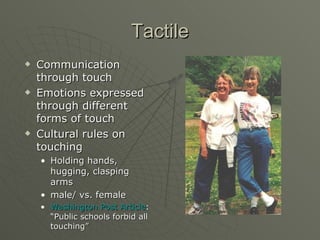
Tactile Communication through touch Emotions expressed through different forms of touch Cultural rules on touching Holding hands, hugging, clasping arms male/ vs. female Washington Post Article : “Public schools forbid all touching”
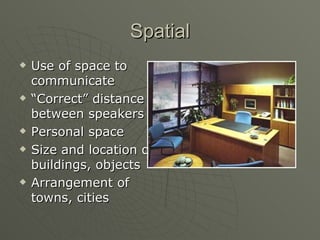
Spatial Use of space to communicate “ Correct” distance between speakers Personal space Size and location of buildings, objects Arrangement of towns, cities
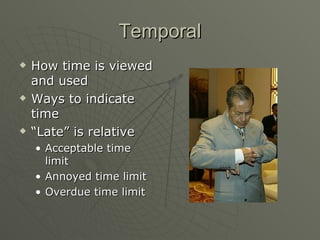
Temporal How time is viewed and used Ways to indicate time “ Late” is relative Acceptable time limit Annoyed time limit Overdue time limit
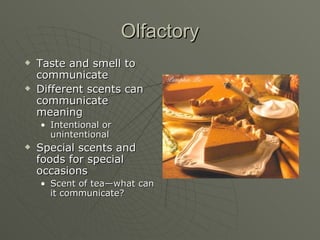
Olfactory Taste and smell to communicate Different scents can communicate meaning Intentional or unintentional Special scents and foods for special occasions Scent of tea—what can it communicate?
3 Principles of the Signal Systems We rarely use a single signal system by itself. When two or more signal systems are used at the same time, they can contradict each other. When signal systems contradict each other, we believe the less-consciously used signal system.
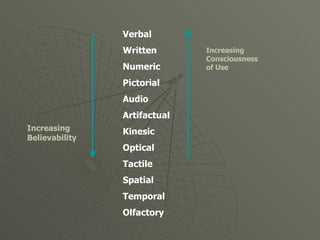
Verbal Written Numeric Pictorial Audio Artifactual Kinesic Optical Tactile Spatial Temporal Olfactory Increasing Believability Increasing Consciousness of Use

Signal Systems

  • 1.
    Signal systems Powerpointby Monique Arritt, modified by Paul Thomas
  • 2.
    Getting at MeaningCommunication is More Than Words
  • 3.
    12 Signal SystemsVerbal Written Numeric Pictorial Audio Artifactual Kinesic Optical Tactile Spatial Temporal Olfactory
  • 4.
    Verbal Human speechSpoken language, the most efficient system of communication
  • 5.
    Written Symbols thatrepresent human speech Writing systems include alphabets, syllabaries, pictographs, and ideographs
  • 6.
    Numeric Certain numbershave distinctive meanings Ex: 7 and 40 have significance in the Bible Concept of lucky or unlucky numbers: No 13 th floor in many countries, but no 4 th floor in China No one wants to live at 666 Main Street!
  • 7.
    Pictorial Cultures havetheir own pictorial idioms Artistic conventions differ among cultures
  • 8.
    Audio Music andrhythm can carry communication Whistles, claps, stomps, etc. Tone of voice, stress Laughter
  • 9.
    Artifactual Objects usedto communicate a message Clothing, belongings, home decorations Symbolic artifacts
  • 10.
    What if someonegave you this?
  • 11.
    Kinesic Use ofbody motion to communicate Dance Posture, way of walking Hand gestures, motions “ Shocked Europeans See Bush Hand Gesture As Satanic” www.Melbourneindymedia.org
  • 12.
  • 13.
    Optical Light andcolor to communicate meaning Different colors mean different things to different cultures Wedding colors Funeral colors Group membership
  • 14.
    Tactile Communication throughtouch Emotions expressed through different forms of touch Cultural rules on touching Holding hands, hugging, clasping arms male/ vs. female Washington Post Article : “Public schools forbid all touching”
  • 15.
    Spatial Use ofspace to communicate “ Correct” distance between speakers Personal space Size and location of buildings, objects Arrangement of towns, cities
  • 16.
    Temporal How timeis viewed and used Ways to indicate time “ Late” is relative Acceptable time limit Annoyed time limit Overdue time limit
  • 17.
    Olfactory Taste andsmell to communicate Different scents can communicate meaning Intentional or unintentional Special scents and foods for special occasions Scent of tea—what can it communicate?
  • 18.
    3 Principles ofthe Signal Systems We rarely use a single signal system by itself. When two or more signal systems are used at the same time, they can contradict each other. When signal systems contradict each other, we believe the less-consciously used signal system.
  • 19.
    Verbal Written NumericPictorial Audio Artifactual Kinesic Optical Tactile Spatial Temporal Olfactory Increasing Believability Increasing Consciousness of Use