……………………………………………………………………………………………………..

Crisis averted,
or delayed reaction?

Analysis of Money Advice Service data
on the over-indebted population
November 2013
…………………………………………………………………………………………………………………………………………

…………………………………………………………………………………………………………………………………………
We haven’t experienced the debt crisis many envisaged
in 2008; is it still to come?

……………………………………………………………………………………………………..

• At the aggregate level, loose monetary policy has
helped avoid the wave of defaults many predicted
• But data suggests there is a significant vulnerable
rump, especially among lower income households
• Many have been unable to take advantage of the
window of opportunity for paying debts down – and
may still be exposed when rates start to rise
• Would benefit from pre-emptive support, but difficult
for banks and policy makers to identify those who are
current but close to the edge

…………………………………………………………………………………………………………………………………………
…………………………………………………………………………………………………………………………………………
2
The net worth distribution has become more
skewed over the course of the downturn

……………………………………………………………………………………………………..

Net worth
(assets less
liabilities) fell
between 2005
and 2012
among the
bottom threequarters of
mortgagors
and increased
for the
wealthiest
quarter

Source: Bank of England, NMG Consulting

…………………………………………………………………………………………………………………………………………
…………………………………………………………………………………………………………………………………………
3
The net worth distribution has become more
skewed over the course of the downturn

……………………………………………………………………………………………………..

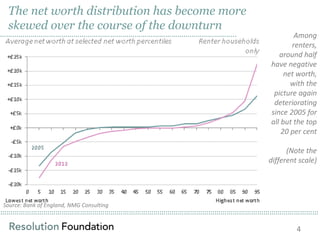
Among
renters,
around half
have negative
net worth,
with the
picture again
deteriorating
since 2005 for
all but the top
20 per cent

(Note the
different scale)

Source: Bank of England, NMG Consulting

…………………………………………………………………………………………………………………………………………
…………………………………………………………………………………………………………………………………………
4
And debt repayment exposures are highest in the
bottom half of the income distribution

……………………………………………………………………………………………………..
50%

5.0
Average repayments as share of income (lhs)

45%

4.5
Proportion spending more than 25% gross income on repayments (lhs)

40%

4.0
Average debt-income ratio (rhs)

35%

3.5

30%

3.0

25%

2.5

20%

2.0

15%

1.5

10%

1.0

5%

0.5

0%

0.0
1
(lowest)

2

3

4

Source: Bank of England, NMG Consulting

5

6

7

8

9

Although
higher income
households
hold more
debt on
average,
debtors in
lower deciles
are much
more likely to
be allocating
more than
one-quarter of
their (gross)
income on
repayments

10
(highest)

…………………………………………………………………………………………………………………………………………
…………………………………………………………………………………………………………………………………………
The numbers of households in ‘debt peril’ has fallen
since 2007, thanks to ultra-loose monetary policy

……………………………………………………………………………………………………..

Source: Modelling based on ONS, Living Costs and Food Survey

The proportion
of households
in ‘debt peril’
peaked at over
3% in 2007,
just prior to
the financial
crisis
With the base
rate at a
historic low,
the proportion
fell to around
2% in 2011
(and may be a
little lower still
today)

…………………………………………………………………………………………………………………………………………
…………………………………………………………………………………………………………………………………………
6
Clearly an increase in interest rates today would push
large numbers of households into peril

……………………………………………………………………………………………………..

A 2ppt
overnight
increase in the
base rate would
push 4% of
households into
debt peril

Clearly this
cannot happen,
but illustrates
the level of
sensitivity to
interest rates
and the
importance of
the current
monetary
Source: Modelling based on ONS, Living Costs and Food Survey
stance
…………………………………………………………………………………………………………………………………………

…………………………………………………………………………………………………………………………………………
7
Under ongoing low rates and good household income
growth, exposure to debt is broadly constant

……………………………………………………………………………………………………..

Taking an
optimistic view
about income
growth – that
it keeps pace
with GDP and
is evenly
shared – the
proportion of
households in
peril would
increase
slightly to just
under 3%

Source: Modelling based on ONS, Living Costs and Food Survey

…………………………………………………………………………………………………………………………………………
…………………………………………………………………………………………………………………………………………
8
But ‘bad’ income growth and a modest interest rate
shock produces a doubling of ‘debt peril’ levels

……………………………………………………………………………………………………..

Under the
worst (yet still
plausible) of
our scenarios,
the proportion
of households
in ‘debt peril’
would jump to
around 5%,
more than
double the
baseline level
and
significantly
higher than
the levels
recorded even
at the start of
Source: Modelling based on ONS, Living Costs and Food Survey
the crisis
…………………………………………………………………………………………………………………………………………
…………………………………………………………………………………………………………………………………………

9
Can divide over-indebted population into those already
displaying distress and those who may be ‘hidden’

……………………………………………………………………………………………………..

Don’t consider self
to be in debt (4%)
Over-indebted
population
(18% of all adults)
Consider self to be
in debt (14%)

Missed or fallen
behind on credit
payment or bill in
three of last six
months (10%)
Up to date with
payments but find
debts a heavy
burden (4%)

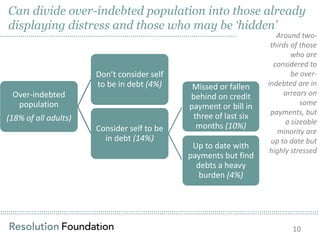
Around twothirds of those
who are
considered to
be overindebted are in
arrears on
some
payments, but
a sizeable
minority are
up to date but
highly stressed

…………………………………………………………………………………………………………………………………………
…………………………………………………………………………………………………………………………………………
10
Those who are current but stressed appear to carry
their burden for longer than those in arrears

……………………………………………………………………………………………………..
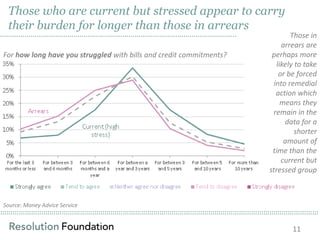
For how long have you struggled with bills and credit commitments?

Those in
arrears are
perhaps more
likely to take
or be forced
into remedial
action which
means they
remain in the
data for a
shorter
amount of
time than the
current but
stressed group

Source: Money Advice Service

…………………………………………………………………………………………………………………………………………
…………………………………………………………………………………………………………………………………………
11
In many ways, those who are current but stressed look
much like those in arrears

……………………………………………………………………………………………………..
In current climate, living in debt is inevitable for people like me

All of those
considered
over-indebted
report similar
responses,
with close to
three-quarters
believing that
living in debt is
an inevitability
in the current
context

Source: Money Advice Service

…………………………………………………………………………………………………………………………………………
…………………………………………………………………………………………………………………………………………
12
In many ways, those who are current but stressed look
much like those in arrears

……………………………………………………………………………………………………..

I can't see that I’m ever going to be in a situation where I am free of debt

In both
instances, just
over half can’t
imagine being
free of debt at
any point, and
only onequarter
actively
disagree with
this statement

Source: Money Advice Service

…………………………………………………………………………………………………………………………………………
…………………………………………………………………………………………………………………………………………
13
In many ways, those who are current but stressed look
much like those in arrears

……………………………………………………………………………………………………..
My debt means I can’t always afford to buy basic household items

Those already
in arrears are
a little more
likely to say
that their debt
means they
sometimes
can’t afford
the basics, but
close to half of
those who are
still current are
also in this
position

Source: Money Advice Service

…………………………………………………………………………………………………………………………………………
…………………………………………………………………………………………………………………………………………
14
The key difference is in relation to access to, and use of,
further credit

……………………………………………………………………………………………………..
In the last 12 months, have you found it difficult to get credit?

One-quarter of
those who are
current but
highly stressed
say they’ve
found it
difficult to
access credit in
the past 12
months,
compared with
more than half
of those in
arrears

Source: Money Advice Service

…………………………………………………………………………………………………………………………………………
…………………………………………………………………………………………………………………………………………
15
The key difference is in relation to access to, and use of,
further credit

……………………………………………………………………………………………………..
I have been declined credit in the last six months

One-fifth of
the current but
stressed group
say they’ve
been declined
credit, but
more than
two-fifths
actively
disagree –
suggesting
they’ve
accessed new
credit

Source: Money Advice Service

…………………………………………………………………………………………………………………………………………
…………………………………………………………………………………………………………………………………………
16
The key difference is in relation to access to, and use of,
further credit

……………………………………………………………………………………………………..

I can only manage my monthly finances by paying for things on credit card

Around onequarter of
both overindebted
groups are
reliant on
credit cards,
but a higher
proportion of
the current but
stressed group
disagree with
the statement

Source: Money Advice Service

…………………………………………………………………………………………………………………………………………
…………………………………………………………………………………………………………………………………………
17
The key difference is in relation to access to, and use of,
further credit

……………………………………………………………………………………………………..
I am getting a good deal on my credit cards/loans

Fewer than
one-fifth of the
over-indebted
think they’re
getting a good
deal on their
credit cards
and loans,
with the
current but
stressed group
doing very
slightly better

Source: Money Advice Service

…………………………………………………………………………………………………………………………………………
…………………………………………………………………………………………………………………………………………
18
In terms of dealing with difficulties, the two groups
display some similarities and some differences

……………………………………………………………………………………………………..
I would be too embarrassed to discuss my financial situation

Levels of stigma
appear broadly
similar across
the overindebted, with
around twofifths saying
they’d be too
embarrassed to
discuss their
financial
situation

Source: Money Advice Service

…………………………………………………………………………………………………………………………………………
…………………………………………………………………………………………………………………………………………
19
In terms of dealing with difficulties, the two groups
display some similarities and some differences

……………………………………………………………………………………………………..

I’m worried that other people think my money difficulties are all my own fault

And around
one-half saying
that they are
worried that
other people
think their
difficulties are
all of their own
making

Source: Money Advice Service

…………………………………………………………………………………………………………………………………………
…………………………………………………………………………………………………………………………………………
20
In terms of dealing with difficulties, the two groups
display some similarities and some differences

……………………………………………………………………………………………………..

I’m don’t have the confidence to negotiate with the people I owe money to

Those already
in arrears are
more likely to
show a lack of
confidence
about
negotiating
with creditors,
but fewer of
those who are
still current
consider the
question to be
relevant to
them

Source: Money Advice Service

…………………………………………………………………………………………………………………………………………
…………………………………………………………………………………………………………………………………………
21
In terms of dealing with difficulties, the two groups
display some similarities and some differences

……………………………………………………………………………………………………..

Being aware of my legal rights and obligations would help me fix my situation

Those already
in arrears are
much more
likely to say
they need help
to establish
their legal
rights and
obligations,
though half of
the current but
stressed group
are also in this
position

Source: Money Advice Service

…………………………………………………………………………………………………………………………………………
…………………………………………………………………………………………………………………………………………
22
In terms of dealing with difficulties, the two groups
display some similarities and some differences

……………………………………………………………………………………………………..

Putting together a weekly or monthly budget would help me fix my situation

More than 90%
of the overindebted think
drawing up a
budget would
help, but
significantly
fewer of the
current group
think they need
help to establish
this

Source: Money Advice Service

…………………………………………………………………………………………………………………………………………
…………………………………………………………………………………………………………………………………………
23
We haven’t experienced the debt crisis many envisaged
in 2008; is it still to come?

……………………………………………………………………………………………………..

• Ultra low interest rates offer a window of opportunity,
but the sequencing of income growth and monetary
tightening in the coming years is uncertain
• Members of the ‘current but stressed’ group are likely
to be particularly exposed to a changing interest rate
environment
• They are just as troubled as those in arrears, but are
less likely to have presented to date and more likely to
still have access to credit
…………………………………………………………………………………………………………………………………………
…………………………………………………………………………………………………………………………………………
24
We haven’t experienced the debt crisis many envisaged
in 2008; is it still to come?

……………………………………………………………………………………………………..

• Credit access can help with restructuring, but could
also lead to further difficulties down the line
• In everybody’s interests to identify this group before
borrowing costs rise, but difficult
– Individual lenders have incomplete information and a lack of
immediate incentive
– Borrowers may not seek help due to stigma and
embarrassment

• Cost of living squeeze limits potential responses even
where families can be identified
…………………………………………………………………………………………………………………………………………
…………………………………………………………………………………………………………………………………………
25

Crisis averted, or delayed reaction?

  • 1.
    …………………………………………………………………………………………………….. Crisis averted, or delayedreaction? Analysis of Money Advice Service data on the over-indebted population November 2013 ………………………………………………………………………………………………………………………………………… …………………………………………………………………………………………………………………………………………
  • 2.
    We haven’t experiencedthe debt crisis many envisaged in 2008; is it still to come? …………………………………………………………………………………………………….. • At the aggregate level, loose monetary policy has helped avoid the wave of defaults many predicted • But data suggests there is a significant vulnerable rump, especially among lower income households • Many have been unable to take advantage of the window of opportunity for paying debts down – and may still be exposed when rates start to rise • Would benefit from pre-emptive support, but difficult for banks and policy makers to identify those who are current but close to the edge ………………………………………………………………………………………………………………………………………… ………………………………………………………………………………………………………………………………………… 2
  • 3.
    The net worthdistribution has become more skewed over the course of the downturn …………………………………………………………………………………………………….. Net worth (assets less liabilities) fell between 2005 and 2012 among the bottom threequarters of mortgagors and increased for the wealthiest quarter Source: Bank of England, NMG Consulting ………………………………………………………………………………………………………………………………………… ………………………………………………………………………………………………………………………………………… 3
  • 4.
    The net worthdistribution has become more skewed over the course of the downturn …………………………………………………………………………………………………….. Among renters, around half have negative net worth, with the picture again deteriorating since 2005 for all but the top 20 per cent (Note the different scale) Source: Bank of England, NMG Consulting ………………………………………………………………………………………………………………………………………… ………………………………………………………………………………………………………………………………………… 4
  • 5.
    And debt repaymentexposures are highest in the bottom half of the income distribution …………………………………………………………………………………………………….. 50% 5.0 Average repayments as share of income (lhs) 45% 4.5 Proportion spending more than 25% gross income on repayments (lhs) 40% 4.0 Average debt-income ratio (rhs) 35% 3.5 30% 3.0 25% 2.5 20% 2.0 15% 1.5 10% 1.0 5% 0.5 0% 0.0 1 (lowest) 2 3 4 Source: Bank of England, NMG Consulting 5 6 7 8 9 Although higher income households hold more debt on average, debtors in lower deciles are much more likely to be allocating more than one-quarter of their (gross) income on repayments 10 (highest) ………………………………………………………………………………………………………………………………………… …………………………………………………………………………………………………………………………………………
  • 6.
    The numbers ofhouseholds in ‘debt peril’ has fallen since 2007, thanks to ultra-loose monetary policy …………………………………………………………………………………………………….. Source: Modelling based on ONS, Living Costs and Food Survey The proportion of households in ‘debt peril’ peaked at over 3% in 2007, just prior to the financial crisis With the base rate at a historic low, the proportion fell to around 2% in 2011 (and may be a little lower still today) ………………………………………………………………………………………………………………………………………… ………………………………………………………………………………………………………………………………………… 6
  • 7.
    Clearly an increasein interest rates today would push large numbers of households into peril …………………………………………………………………………………………………….. A 2ppt overnight increase in the base rate would push 4% of households into debt peril Clearly this cannot happen, but illustrates the level of sensitivity to interest rates and the importance of the current monetary Source: Modelling based on ONS, Living Costs and Food Survey stance ………………………………………………………………………………………………………………………………………… ………………………………………………………………………………………………………………………………………… 7
  • 8.
    Under ongoing lowrates and good household income growth, exposure to debt is broadly constant …………………………………………………………………………………………………….. Taking an optimistic view about income growth – that it keeps pace with GDP and is evenly shared – the proportion of households in peril would increase slightly to just under 3% Source: Modelling based on ONS, Living Costs and Food Survey ………………………………………………………………………………………………………………………………………… ………………………………………………………………………………………………………………………………………… 8
  • 9.
    But ‘bad’ incomegrowth and a modest interest rate shock produces a doubling of ‘debt peril’ levels …………………………………………………………………………………………………….. Under the worst (yet still plausible) of our scenarios, the proportion of households in ‘debt peril’ would jump to around 5%, more than double the baseline level and significantly higher than the levels recorded even at the start of Source: Modelling based on ONS, Living Costs and Food Survey the crisis ………………………………………………………………………………………………………………………………………… ………………………………………………………………………………………………………………………………………… 9
  • 10.
    Can divide over-indebtedpopulation into those already displaying distress and those who may be ‘hidden’ …………………………………………………………………………………………………….. Don’t consider self to be in debt (4%) Over-indebted population (18% of all adults) Consider self to be in debt (14%) Missed or fallen behind on credit payment or bill in three of last six months (10%) Up to date with payments but find debts a heavy burden (4%) Around twothirds of those who are considered to be overindebted are in arrears on some payments, but a sizeable minority are up to date but highly stressed ………………………………………………………………………………………………………………………………………… ………………………………………………………………………………………………………………………………………… 10
  • 11.
    Those who arecurrent but stressed appear to carry their burden for longer than those in arrears …………………………………………………………………………………………………….. For how long have you struggled with bills and credit commitments? Those in arrears are perhaps more likely to take or be forced into remedial action which means they remain in the data for a shorter amount of time than the current but stressed group Source: Money Advice Service ………………………………………………………………………………………………………………………………………… ………………………………………………………………………………………………………………………………………… 11
  • 12.
    In many ways,those who are current but stressed look much like those in arrears …………………………………………………………………………………………………….. In current climate, living in debt is inevitable for people like me All of those considered over-indebted report similar responses, with close to three-quarters believing that living in debt is an inevitability in the current context Source: Money Advice Service ………………………………………………………………………………………………………………………………………… ………………………………………………………………………………………………………………………………………… 12
  • 13.
    In many ways,those who are current but stressed look much like those in arrears …………………………………………………………………………………………………….. I can't see that I’m ever going to be in a situation where I am free of debt In both instances, just over half can’t imagine being free of debt at any point, and only onequarter actively disagree with this statement Source: Money Advice Service ………………………………………………………………………………………………………………………………………… ………………………………………………………………………………………………………………………………………… 13
  • 14.
    In many ways,those who are current but stressed look much like those in arrears …………………………………………………………………………………………………….. My debt means I can’t always afford to buy basic household items Those already in arrears are a little more likely to say that their debt means they sometimes can’t afford the basics, but close to half of those who are still current are also in this position Source: Money Advice Service ………………………………………………………………………………………………………………………………………… ………………………………………………………………………………………………………………………………………… 14
  • 15.
    The key differenceis in relation to access to, and use of, further credit …………………………………………………………………………………………………….. In the last 12 months, have you found it difficult to get credit? One-quarter of those who are current but highly stressed say they’ve found it difficult to access credit in the past 12 months, compared with more than half of those in arrears Source: Money Advice Service ………………………………………………………………………………………………………………………………………… ………………………………………………………………………………………………………………………………………… 15
  • 16.
    The key differenceis in relation to access to, and use of, further credit …………………………………………………………………………………………………….. I have been declined credit in the last six months One-fifth of the current but stressed group say they’ve been declined credit, but more than two-fifths actively disagree – suggesting they’ve accessed new credit Source: Money Advice Service ………………………………………………………………………………………………………………………………………… ………………………………………………………………………………………………………………………………………… 16
  • 17.
    The key differenceis in relation to access to, and use of, further credit …………………………………………………………………………………………………….. I can only manage my monthly finances by paying for things on credit card Around onequarter of both overindebted groups are reliant on credit cards, but a higher proportion of the current but stressed group disagree with the statement Source: Money Advice Service ………………………………………………………………………………………………………………………………………… ………………………………………………………………………………………………………………………………………… 17
  • 18.
    The key differenceis in relation to access to, and use of, further credit …………………………………………………………………………………………………….. I am getting a good deal on my credit cards/loans Fewer than one-fifth of the over-indebted think they’re getting a good deal on their credit cards and loans, with the current but stressed group doing very slightly better Source: Money Advice Service ………………………………………………………………………………………………………………………………………… ………………………………………………………………………………………………………………………………………… 18
  • 19.
    In terms ofdealing with difficulties, the two groups display some similarities and some differences …………………………………………………………………………………………………….. I would be too embarrassed to discuss my financial situation Levels of stigma appear broadly similar across the overindebted, with around twofifths saying they’d be too embarrassed to discuss their financial situation Source: Money Advice Service ………………………………………………………………………………………………………………………………………… ………………………………………………………………………………………………………………………………………… 19
  • 20.
    In terms ofdealing with difficulties, the two groups display some similarities and some differences …………………………………………………………………………………………………….. I’m worried that other people think my money difficulties are all my own fault And around one-half saying that they are worried that other people think their difficulties are all of their own making Source: Money Advice Service ………………………………………………………………………………………………………………………………………… ………………………………………………………………………………………………………………………………………… 20
  • 21.
    In terms ofdealing with difficulties, the two groups display some similarities and some differences …………………………………………………………………………………………………….. I’m don’t have the confidence to negotiate with the people I owe money to Those already in arrears are more likely to show a lack of confidence about negotiating with creditors, but fewer of those who are still current consider the question to be relevant to them Source: Money Advice Service ………………………………………………………………………………………………………………………………………… ………………………………………………………………………………………………………………………………………… 21
  • 22.
    In terms ofdealing with difficulties, the two groups display some similarities and some differences …………………………………………………………………………………………………….. Being aware of my legal rights and obligations would help me fix my situation Those already in arrears are much more likely to say they need help to establish their legal rights and obligations, though half of the current but stressed group are also in this position Source: Money Advice Service ………………………………………………………………………………………………………………………………………… ………………………………………………………………………………………………………………………………………… 22
  • 23.
    In terms ofdealing with difficulties, the two groups display some similarities and some differences …………………………………………………………………………………………………….. Putting together a weekly or monthly budget would help me fix my situation More than 90% of the overindebted think drawing up a budget would help, but significantly fewer of the current group think they need help to establish this Source: Money Advice Service ………………………………………………………………………………………………………………………………………… ………………………………………………………………………………………………………………………………………… 23
  • 24.
    We haven’t experiencedthe debt crisis many envisaged in 2008; is it still to come? …………………………………………………………………………………………………….. • Ultra low interest rates offer a window of opportunity, but the sequencing of income growth and monetary tightening in the coming years is uncertain • Members of the ‘current but stressed’ group are likely to be particularly exposed to a changing interest rate environment • They are just as troubled as those in arrears, but are less likely to have presented to date and more likely to still have access to credit ………………………………………………………………………………………………………………………………………… ………………………………………………………………………………………………………………………………………… 24
  • 25.
    We haven’t experiencedthe debt crisis many envisaged in 2008; is it still to come? …………………………………………………………………………………………………….. • Credit access can help with restructuring, but could also lead to further difficulties down the line • In everybody’s interests to identify this group before borrowing costs rise, but difficult – Individual lenders have incomplete information and a lack of immediate incentive – Borrowers may not seek help due to stigma and embarrassment • Cost of living squeeze limits potential responses even where families can be identified ………………………………………………………………………………………………………………………………………… ………………………………………………………………………………………………………………………………………… 25