Media and the Government
The media have grown increasingly
   more involved in reporting election
   to the masses. In days past
   radio, television and print news were
   key. Now, with the internet, live-
   blogging and multimedia such as a
   results map is common. Users can
   access from TV computer of even
   their phone or tablet.


                                                 Read some posts in this blog
                                                                                  “The [iPad] app will let
                                                 here. The New York Times
                                                                                  viewers explore “what if”
                                                 was one of many news
                                                                                  scenarios for House and
                                                 organizations to live blog the
                                                                                  Senate races using an
                                                 2010 elections.
                                                                                  interactive, touch-screen
                                                                                  map.” -2011 Christian
                                                                                  Science Monitor article.
A map showing 2010 election results for the senate (Reuters)
“For many media organizations, election night is a time to show off technology. In
part, the new electronic toys can bring some level of excitement to an election where
    there may be surprises in individual contests, but the overall outcome is more
                         certain.” – Christian Science Monitor

 Polls are questions and surveys asked to
 random people by an organization. Polls are
 used as a test of public opinion. Polls show
 opinion of the economy, presidential
 approval, and candidate favorability.

 The CBS/New York Times poll started regular
 news surveys in 1975. NBC's first partner was
 the Associated Press, and it began polling in
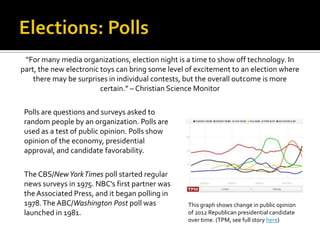
 1978. The ABC/Washington Post poll was            This graph shows change in public opinion
 launched in 1981.                                 of 2012 Republican presidential candidate
                                                   over time. (TPM, see full story here)
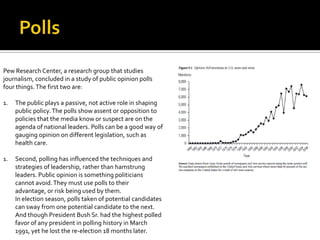
Pew Research Center, a research group that studies
journalism, concluded in a study of public opinion polls
four things. The first two are:

1.   The public plays a passive, not active role in shaping
     public policy. The polls show assent or opposition to
     policies that the media know or suspect are on the
     agenda of national leaders. Polls can be a good way of
     gauging opinion on different legislation, such as
     health care.

1.   Second, polling has influenced the techniques and
     strategies of leadership, rather than hamstrung
     leaders. Public opinion is something politicians
     cannot avoid. They must use polls to their
     advantage, or risk being used by them.
     In election season, polls taken of potential candidates
     can sway from one potential candidate to the next.
     And though President Bush Sr. had the highest polled
     favor of any president in polling history in March
     1991, yet he lost the re-election 18 months later.
Pew Research conclusions

3.    Although the prominence of polls gives greater
      voice to the people, other competing voices can
      still trump public opinion or, at a minimum, tone
      down the impact of what the polls are showing.
      For example, public opposition to legislation is
      often blunted by effective lobbying by business
      interests or other more powerful entities.

4.    The great empowerment of public opinion raises
      questions about the potential for manipulation.
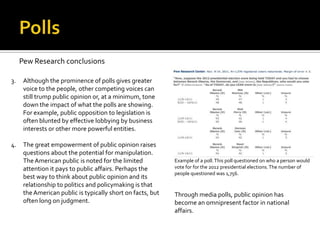
      The American public is noted for the limited           Example of a poll. This poll questioned on who a person would
      attention it pays to public affairs. Perhaps the       vote for for the 2012 presidential elections. The number of
                                                             people questioned was 1,756.
      best way to think about public opinion and its
      relationship to politics and policymaking is that
      the American public is typically short on facts, but   Through media polls, public opinion has
      often long on judgment.                                become an omnipresent factor in national
                                                             affairs.
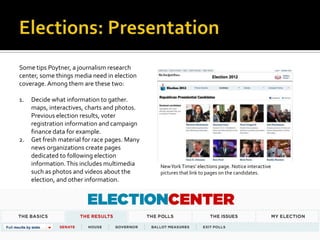
Some tips Poytner, a journalism research
center, some things media need in election
coverage. Among them are these two:

1.   Decide what information to gather.
     maps, interactives, charts and photos.
     Previous election results, voter
     registration information and campaign
     finance data for example.
2.   Get fresh material for race pages. Many
     news organizations create pages
     dedicated to following election
     information. This includes multimedia     New York Times’ elections page. Notice interactive
     such as photos and videos about the       pictures that link to pages on the candidates.
     election, and other information.
News organizations will write everything and
                                                     anything concerning the political movements
                                                     of candidates in elections.
                                                      But non-political events can also be relevant.
                                                     Consider, for example, mistakes made in
                                                     interviews and debates. Rick Perry had a
                                                     famous “oops” moment in a debate that was
                                                     talked about for days following, and even
                                                     considered the end of Perry’s campaign.
                                                     Likewise, Herman Cain’s nearly minute long
                                                     confusion in an interview with the Milwaukee
                                                     Journal Sentinal.
                                                     Likewise, commentary about a candidates
                                                     personal life is often in many news pages.
                                                     Read this article about Newt Gingrich’s past
                                                     wives and public speculation.

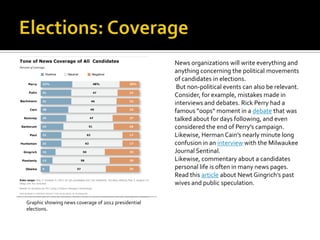
Graphic showing news coverage of 2012 presidential
elections.
Presidential debates are held on
    television, and sometimes even
    sponsored by news organizations.


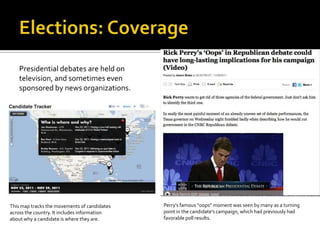
This map tracks the movements of candidates   Perry’s famous “oops” moment was seen by many as a turning
across the country. It includes information   point in the candidate’s campaign, which had previously had
about why a candidate is where they are.      favorable poll results.

Module Two: Elections

  • 1.
    Media and theGovernment
  • 2.
    The media havegrown increasingly more involved in reporting election to the masses. In days past radio, television and print news were key. Now, with the internet, live- blogging and multimedia such as a results map is common. Users can access from TV computer of even their phone or tablet. Read some posts in this blog “The [iPad] app will let here. The New York Times viewers explore “what if” was one of many news scenarios for House and organizations to live blog the Senate races using an 2010 elections. interactive, touch-screen map.” -2011 Christian Science Monitor article. A map showing 2010 election results for the senate (Reuters)
  • 3.
    “For many mediaorganizations, election night is a time to show off technology. In part, the new electronic toys can bring some level of excitement to an election where there may be surprises in individual contests, but the overall outcome is more certain.” – Christian Science Monitor Polls are questions and surveys asked to random people by an organization. Polls are used as a test of public opinion. Polls show opinion of the economy, presidential approval, and candidate favorability. The CBS/New York Times poll started regular news surveys in 1975. NBC's first partner was the Associated Press, and it began polling in 1978. The ABC/Washington Post poll was This graph shows change in public opinion launched in 1981. of 2012 Republican presidential candidate over time. (TPM, see full story here)
  • 4.
    Pew Research Center,a research group that studies journalism, concluded in a study of public opinion polls four things. The first two are: 1. The public plays a passive, not active role in shaping public policy. The polls show assent or opposition to policies that the media know or suspect are on the agenda of national leaders. Polls can be a good way of gauging opinion on different legislation, such as health care. 1. Second, polling has influenced the techniques and strategies of leadership, rather than hamstrung leaders. Public opinion is something politicians cannot avoid. They must use polls to their advantage, or risk being used by them. In election season, polls taken of potential candidates can sway from one potential candidate to the next. And though President Bush Sr. had the highest polled favor of any president in polling history in March 1991, yet he lost the re-election 18 months later.
  • 5.
    Pew Research conclusions 3. Although the prominence of polls gives greater voice to the people, other competing voices can still trump public opinion or, at a minimum, tone down the impact of what the polls are showing. For example, public opposition to legislation is often blunted by effective lobbying by business interests or other more powerful entities. 4. The great empowerment of public opinion raises questions about the potential for manipulation. The American public is noted for the limited Example of a poll. This poll questioned on who a person would attention it pays to public affairs. Perhaps the vote for for the 2012 presidential elections. The number of people questioned was 1,756. best way to think about public opinion and its relationship to politics and policymaking is that the American public is typically short on facts, but Through media polls, public opinion has often long on judgment. become an omnipresent factor in national affairs.
  • 6.
    Some tips Poytner,a journalism research center, some things media need in election coverage. Among them are these two: 1. Decide what information to gather. maps, interactives, charts and photos. Previous election results, voter registration information and campaign finance data for example. 2. Get fresh material for race pages. Many news organizations create pages dedicated to following election information. This includes multimedia New York Times’ elections page. Notice interactive such as photos and videos about the pictures that link to pages on the candidates. election, and other information.
  • 7.
    News organizations willwrite everything and anything concerning the political movements of candidates in elections. But non-political events can also be relevant. Consider, for example, mistakes made in interviews and debates. Rick Perry had a famous “oops” moment in a debate that was talked about for days following, and even considered the end of Perry’s campaign. Likewise, Herman Cain’s nearly minute long confusion in an interview with the Milwaukee Journal Sentinal. Likewise, commentary about a candidates personal life is often in many news pages. Read this article about Newt Gingrich’s past wives and public speculation. Graphic showing news coverage of 2012 presidential elections.
  • 8.
    Presidential debates areheld on television, and sometimes even sponsored by news organizations. This map tracks the movements of candidates Perry’s famous “oops” moment was seen by many as a turning across the country. It includes information point in the candidate’s campaign, which had previously had about why a candidate is where they are. favorable poll results.