Dr. C. Novins
RDG 101 OLA
Fall 2013
 Research

has found that college students
do not “read for enjoyment” and while this
makes sense – since they have limited
time – it is not beneficial for the
development of their critical reading and
critical thinking skills.
 Research

notes that often, when students
read books and short stories, they do not
have good “reading” form:
• They skim texts without retaining information or

rush through the reading.
• They do not take adequate time to connect what
they are reading to their own lives and to the world
around them.
 Since

we live in a blink-and-you-miss-itworld, it does makes sense that we just
don’t take the time to enjoy reading.
 The technology around us does make our
lives easier, but it also sometimes has our
brains working 24/7.
 Going to school and working along with
any other responsibilities, makes it tough
to find downtime to sit and enjoy a book.
 Take

a look at the heading on this slide!
 Practice Doesn’t Make Perfect!
 PERFECT Practice Makes Perfect!
• If a student continues to rush and skim and not

connect to what he/she reads then he/she will not
become a better reader.
• It’s important to have good reading habits – to
know what to do when you read – to know how to
think and not just see the words, but delve a bit
deeper into the author’s intended meaning.
 Metacomprehension

is a very important skill

for readers.
 The definition of metacomprehnsion is
“thinking about thinking as you are reading
and/or writing.”
• It’s that voice inside of your head that says:
 “Does this make sense?”
 “Why did the author use these specific words?”
 “I’m not sure how this relates to the last chapter.”
 “Why would he make this character do that?”
 “I just lost meaning – I think I need to go back and reread
that last page.”
 There

are many views on what exactly is
THE HUMAN CONDITION.

 The

following few slides are based on the
findings of Colin Welch (2011).


The "human condition" is an important part of our
understanding of literature. Literary critics often label a
piece of writing as literature - and not pulp fiction - if it
tries to describe this "human condition.”



Essentially, the discussion of the human condition is
any thematic concern about human nature, human
society or how we live our lives. In other words, it's
about the fundamental issues of human existence.



One of literature's central concerns is to comment on
these issues; it might be better at it than psychology or
philosophy!
 If

you are asked to make a theme statement
about a piece of writing, the easiest way to
identify a theme is to look for some challenge
to the human condition. Look for common
problems that any person - you included might face sometime in his or her life.

 So

let's be more specific. What kind of issues
connected to "human nature, human society
or how we live our lives" are we talking
about?
 How We Live Our Lives
• What is the good life?
• How do parents act towards their children?
• How do we deal with death?
• How do we deal with alienation from those around us?
• Should we conform or be original?
• How do we become adults? What is the process of

maturation?
• What is the relationship between different generations
or genders?
• How do we deal with excessive poverty or wealth?
 Human Nature
• Are we naturally evil or good?
• Are we born with inherited traits or are we a "blank

•
•
•

•
•

slate”?
What's more important for human beings? Law and
order or freedom?
Are we determined by our genetic structure,
environment, etc., or do we have free will ?
Are we naturally social beings or are we individuals
first?
Can we know universal truths?
Are we selfish or altruistic?
 Human

Society

• What's the best way to live together?
• Should we care for the weak and poor, or let them

fend for themselves?
• What is a natural society: equality or hierarchy?
• Is civilization positive or negative?
• How should society treat the environment?
 It

is imperative while you read that you
keep these questions in mind.
 As a reader, it is your task to connect to
the characters and their actions.
 It is necessary to “make sense” out of why
certain characters act the way they do.
 Think about what you read in a “worldly”
manner. How does what occurs in the text
fit into the world around us?


Throughout your schooling, you have encountered
the “elements of texts” in almost every grade level.



If you need to be reminded of these concepts,
please take a few minutes and look them up.



In this week’s assignment I will not specifically ask
you questions about them, but I expect you to refer
to them in your answers.



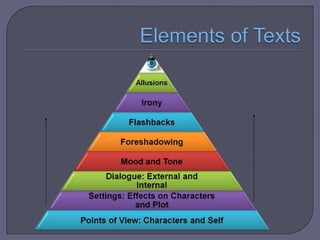
The next slide has a visual of these concepts.
 For

this module you will be reading Chapter
1 of George Dawson’s “Life Is So Good” (It
has been scanned in for you to read)

 It’s

the true story of George Dawson’s life
told from his own memories.

 George

Dawson did not learn to read or
write until he was almost 100 years old.

 It

is an insightful and powerful book.
 As

you read:

• Think about the questions posed in the Human

Condition section of this PowerPoint.
• Think about the different Elements of Texts in the

visual in this PowerPoint.
• You may need to read the chapter twice – once to

enjoy the story and a second time to pay a bit more
attention to the text (human conditions/elements of
texts).

Module 6 NOVINS

  • 1.
    Dr. C. Novins RDG101 OLA Fall 2013
  • 2.
     Research has foundthat college students do not “read for enjoyment” and while this makes sense – since they have limited time – it is not beneficial for the development of their critical reading and critical thinking skills.
  • 3.
     Research notes thatoften, when students read books and short stories, they do not have good “reading” form: • They skim texts without retaining information or rush through the reading. • They do not take adequate time to connect what they are reading to their own lives and to the world around them.
  • 4.
     Since we livein a blink-and-you-miss-itworld, it does makes sense that we just don’t take the time to enjoy reading.  The technology around us does make our lives easier, but it also sometimes has our brains working 24/7.  Going to school and working along with any other responsibilities, makes it tough to find downtime to sit and enjoy a book.
  • 5.
     Take a lookat the heading on this slide!  Practice Doesn’t Make Perfect!  PERFECT Practice Makes Perfect! • If a student continues to rush and skim and not connect to what he/she reads then he/she will not become a better reader. • It’s important to have good reading habits – to know what to do when you read – to know how to think and not just see the words, but delve a bit deeper into the author’s intended meaning.
  • 6.
     Metacomprehension is avery important skill for readers.  The definition of metacomprehnsion is “thinking about thinking as you are reading and/or writing.” • It’s that voice inside of your head that says:  “Does this make sense?”  “Why did the author use these specific words?”  “I’m not sure how this relates to the last chapter.”  “Why would he make this character do that?”  “I just lost meaning – I think I need to go back and reread that last page.”
  • 7.
     There are manyviews on what exactly is THE HUMAN CONDITION.  The following few slides are based on the findings of Colin Welch (2011).
  • 8.
     The "human condition"is an important part of our understanding of literature. Literary critics often label a piece of writing as literature - and not pulp fiction - if it tries to describe this "human condition.”  Essentially, the discussion of the human condition is any thematic concern about human nature, human society or how we live our lives. In other words, it's about the fundamental issues of human existence.  One of literature's central concerns is to comment on these issues; it might be better at it than psychology or philosophy!
  • 9.
     If you areasked to make a theme statement about a piece of writing, the easiest way to identify a theme is to look for some challenge to the human condition. Look for common problems that any person - you included might face sometime in his or her life.  So let's be more specific. What kind of issues connected to "human nature, human society or how we live our lives" are we talking about?
  • 10.
     How WeLive Our Lives • What is the good life? • How do parents act towards their children? • How do we deal with death? • How do we deal with alienation from those around us? • Should we conform or be original? • How do we become adults? What is the process of maturation? • What is the relationship between different generations or genders? • How do we deal with excessive poverty or wealth?
  • 11.
     Human Nature •Are we naturally evil or good? • Are we born with inherited traits or are we a "blank • • • • • slate”? What's more important for human beings? Law and order or freedom? Are we determined by our genetic structure, environment, etc., or do we have free will ? Are we naturally social beings or are we individuals first? Can we know universal truths? Are we selfish or altruistic?
  • 12.
     Human Society • What'sthe best way to live together? • Should we care for the weak and poor, or let them fend for themselves? • What is a natural society: equality or hierarchy? • Is civilization positive or negative? • How should society treat the environment?
  • 13.
     It is imperativewhile you read that you keep these questions in mind.  As a reader, it is your task to connect to the characters and their actions.  It is necessary to “make sense” out of why certain characters act the way they do.  Think about what you read in a “worldly” manner. How does what occurs in the text fit into the world around us?
  • 14.
     Throughout your schooling,you have encountered the “elements of texts” in almost every grade level.  If you need to be reminded of these concepts, please take a few minutes and look them up.  In this week’s assignment I will not specifically ask you questions about them, but I expect you to refer to them in your answers.  The next slide has a visual of these concepts.
  • 16.
     For this moduleyou will be reading Chapter 1 of George Dawson’s “Life Is So Good” (It has been scanned in for you to read)  It’s the true story of George Dawson’s life told from his own memories.  George Dawson did not learn to read or write until he was almost 100 years old.  It is an insightful and powerful book.
  • 17.
     As you read: •Think about the questions posed in the Human Condition section of this PowerPoint. • Think about the different Elements of Texts in the visual in this PowerPoint. • You may need to read the chapter twice – once to enjoy the story and a second time to pay a bit more attention to the text (human conditions/elements of texts).