BREAD AND
PASTRY
PRODUCTION
Maricel R. Mendoza
BAKING HISTORY
Baking is a method of preparing food that uses dry heat,
typically in an oven, but can also be done in hot ashes, or
on hot stones.
Baking has traditionally been performed at home for day-
to-day meals and in bakeries and restaurants for local
consumption. When production was industrialized, baking
was automated by machines in large factories. The art of
baking remains a fundamental skill and is important for
nutrition, as baked goods, especially bread, are a common
and important food, both from an economic and cultural
point of view. A person who prepares baked goods as a
profession is called a baker. On a related note, a pastry
chef is someone who is trained in the art of making
pastries, cakes, desserts, bread, and other baked goods.
2
The earliest known form of baking occurred when humans
took wild grass grains, soaked them in water, and mashed
the mixture into a kind of broth-like paste.[3] The paste was
cooked by pouring it onto a flat, hot rock, resulting in a
bread-like substance. Later, when humans mastered fire,
the paste was roasted on hot embers, which made bread-
making easier, as it could now be made any time fire was
created. The world's oldest oven was discovered in
Croatia in 2014 dating back 6500 years ago. The Ancient
Egyptians baked bread using yeast, which they had
previously been using to brew beer.[4] Bread baking began
in Ancient Greece around 600 BC, leading to the invention
of enclosed ovens.[4] "Ovens and worktables have been
discovered in archaeological digs from Turkey (Hacilar) to
Palestine (Jericho (Tell es-Sultan)) and date back to 5600
BC."[5]
3
Baking flourished during the Roman Empire. Beginning around 300
BC, the pastry cook became an occupation for Romans (known as the
pastillarium) and became a respected profession because pastries
were considered decadent, and Romans loved festivity and
celebration. Thus, pastries were often cooked especially for large
banquets, and any pastry cook who could invent new types of tasty
treats was highly prized. Around 1 AD, there were more than three
hundred pastry chefs in Rome, and Cato wrote about how they
created all sorts of diverse foods and flourished professionally and
socially because of their creations. Cato speaks of an enormous
number of breads including; libum (cakes made with flour and honey,
often sacrificed to gods[6]), placenta (groats and cress),[7] spira
(modern day flour pretzels), scibilata (tortes), savillum (sweet cake),
and globus apherica (fritters). A great selection of these, with many
different variations, different ingredients, and varied patterns, were
often found at banquets and dining halls. The Romans baked bread in
an oven with its own chimney, and had mills to grind grain into flour.
A bakers' guild was established in 168 BC in Rome.[4]
BAKING
INGREDIENTS
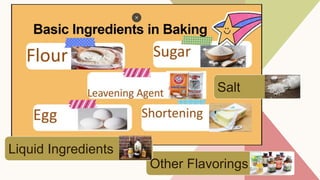
Salt
Other Flavorings
Liquid Ingredients
8
LIQUID
INGREDIENTS
- provide moisture to rehydrate
9
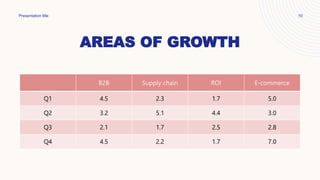
AREAS OF GROWTH
Q1 4.5 2.3 1.7 5.0
Q2 3.2 5.1 4.4 3.0
Q3 2.1 1.7 2.5 2.8
Q4 4.5 2.2 1.7 7.0
Presentation title 10
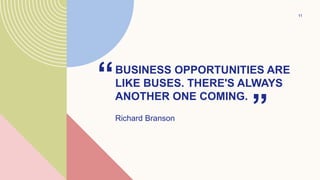
BUSINESS OPPORTUNITIES ARE
LIKE BUSES. THERE'S ALWAYS
ANOTHER ONE COMING.
“
Richard Branson ”
11
MEET OUR TEAM
Presentation title 12
TAKUMA HAYASHI
President
MIRJAM NILSSON
Chief Executive Officer
FLORA BERGGREN​
Chief Operations Officer
RAJESH SANTOSHI​
VP Marketing
MEET OUR EXTENDED TEAM
TAKUMA HAYASHI
President
GRAHAM BARNES
VP Product
MIRJAM NILSSON
Chief Executive Officer
ROWAN MURPHY
SEO Strategist
FLORA BERGGREN​
Chief Operations Officer
ELIZABETH MOORE
Product Designer
RAJESH SANTOSHI​
VP Marketing
ROBIN KLINE
Content Developer
13
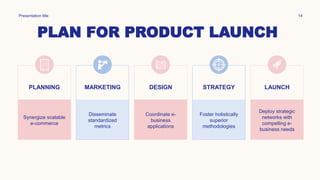
PLAN FOR PRODUCT LAUNCH
Presentation title 14
PLANNING
Synergize scalable
e-commerce
MARKETING
Disseminate
standardized
metrics
DESIGN
Coordinate e-
business
applications
STRATEGY
Foster holistically
superior
methodologies
LAUNCH
Deploy strategic
networks with
compelling e-
business needs
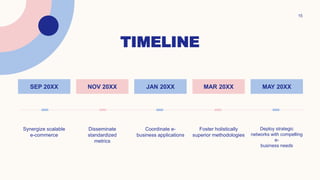
TIMELINE
15
SEP 20XX NOV 20XX JAN 20XX MAR 20XX MAY 20XX
Synergize scalable
e-commerce
Disseminate
standardized
metrics
Coordinate e-
business applications
Foster holistically
superior methodologies
Deploy strategic
networks with compelling
e-
business needs
AREAS OF FOCUS
16
B2B MARKET SCENARIOS
• Develop winning strategies to keep
ahead of the competition
• Capitalize on low-hanging fruit to
identify a ballpark value
• Visualize customer directed
convergence
CLOUD-BASED OPPORTUNITIES
• Iterative approaches to corporate
strategy
• Establish a management framework
from the inside
HOW WE GET THERE
Presentation title 17
ROI
• Envision multimedia-
based expertise and
cross-media growth
strategies
• Visualize quality
intellectual capital
• Engage worldwide
methodologies with web-
enabled technologies
NICHE MARKETS
• Pursue scalable customer
service through
sustainable strategies
• Engage top-line web
services with cutting-edge
deliverables
SUPPLY CHAINS
• Cultivate one-to-one
customer service with
robust ideas
• Maximize timely
deliverables for real-time
schemas
SUMMARY
Presentation title 18
At Contoso, we believe in giving 110%. By using our next-
generation data architecture, we help organizations virtually
manage agile workflows. We thrive because of our market
knowledge and great team behind our product. As our CEO says,
"Efficiencies will come from proactively transforming how we do
business."
THANK YOU
Mirjam Nilsson​
mirjam@contoso.com
www.contoso.com

Module 1 Learning Objectives 1 BREAD AND PASTRY PRODUCTION.pptx

  • 1.
  • 2.
    BAKING HISTORY Baking isa method of preparing food that uses dry heat, typically in an oven, but can also be done in hot ashes, or on hot stones. Baking has traditionally been performed at home for day- to-day meals and in bakeries and restaurants for local consumption. When production was industrialized, baking was automated by machines in large factories. The art of baking remains a fundamental skill and is important for nutrition, as baked goods, especially bread, are a common and important food, both from an economic and cultural point of view. A person who prepares baked goods as a profession is called a baker. On a related note, a pastry chef is someone who is trained in the art of making pastries, cakes, desserts, bread, and other baked goods. 2
  • 3.
    The earliest knownform of baking occurred when humans took wild grass grains, soaked them in water, and mashed the mixture into a kind of broth-like paste.[3] The paste was cooked by pouring it onto a flat, hot rock, resulting in a bread-like substance. Later, when humans mastered fire, the paste was roasted on hot embers, which made bread- making easier, as it could now be made any time fire was created. The world's oldest oven was discovered in Croatia in 2014 dating back 6500 years ago. The Ancient Egyptians baked bread using yeast, which they had previously been using to brew beer.[4] Bread baking began in Ancient Greece around 600 BC, leading to the invention of enclosed ovens.[4] "Ovens and worktables have been discovered in archaeological digs from Turkey (Hacilar) to Palestine (Jericho (Tell es-Sultan)) and date back to 5600 BC."[5] 3
  • 4.
    Baking flourished duringthe Roman Empire. Beginning around 300 BC, the pastry cook became an occupation for Romans (known as the pastillarium) and became a respected profession because pastries were considered decadent, and Romans loved festivity and celebration. Thus, pastries were often cooked especially for large banquets, and any pastry cook who could invent new types of tasty treats was highly prized. Around 1 AD, there were more than three hundred pastry chefs in Rome, and Cato wrote about how they created all sorts of diverse foods and flourished professionally and socially because of their creations. Cato speaks of an enormous number of breads including; libum (cakes made with flour and honey, often sacrificed to gods[6]), placenta (groats and cress),[7] spira (modern day flour pretzels), scibilata (tortes), savillum (sweet cake), and globus apherica (fritters). A great selection of these, with many different variations, different ingredients, and varied patterns, were often found at banquets and dining halls. The Romans baked bread in an oven with its own chimney, and had mills to grind grain into flour. A bakers' guild was established in 168 BC in Rome.[4]
  • 5.
  • 6.
  • 8.
  • 9.
  • 10.
    AREAS OF GROWTH Q14.5 2.3 1.7 5.0 Q2 3.2 5.1 4.4 3.0 Q3 2.1 1.7 2.5 2.8 Q4 4.5 2.2 1.7 7.0 Presentation title 10
  • 11.
    BUSINESS OPPORTUNITIES ARE LIKEBUSES. THERE'S ALWAYS ANOTHER ONE COMING. “ Richard Branson ” 11
  • 12.
    MEET OUR TEAM Presentationtitle 12 TAKUMA HAYASHI President MIRJAM NILSSON Chief Executive Officer FLORA BERGGREN​ Chief Operations Officer RAJESH SANTOSHI​ VP Marketing
  • 13.
    MEET OUR EXTENDEDTEAM TAKUMA HAYASHI President GRAHAM BARNES VP Product MIRJAM NILSSON Chief Executive Officer ROWAN MURPHY SEO Strategist FLORA BERGGREN​ Chief Operations Officer ELIZABETH MOORE Product Designer RAJESH SANTOSHI​ VP Marketing ROBIN KLINE Content Developer 13
  • 14.
    PLAN FOR PRODUCTLAUNCH Presentation title 14 PLANNING Synergize scalable e-commerce MARKETING Disseminate standardized metrics DESIGN Coordinate e- business applications STRATEGY Foster holistically superior methodologies LAUNCH Deploy strategic networks with compelling e- business needs
  • 15.
    TIMELINE 15 SEP 20XX NOV20XX JAN 20XX MAR 20XX MAY 20XX Synergize scalable e-commerce Disseminate standardized metrics Coordinate e- business applications Foster holistically superior methodologies Deploy strategic networks with compelling e- business needs
  • 16.
    AREAS OF FOCUS 16 B2BMARKET SCENARIOS • Develop winning strategies to keep ahead of the competition • Capitalize on low-hanging fruit to identify a ballpark value • Visualize customer directed convergence CLOUD-BASED OPPORTUNITIES • Iterative approaches to corporate strategy • Establish a management framework from the inside
  • 17.
    HOW WE GETTHERE Presentation title 17 ROI • Envision multimedia- based expertise and cross-media growth strategies • Visualize quality intellectual capital • Engage worldwide methodologies with web- enabled technologies NICHE MARKETS • Pursue scalable customer service through sustainable strategies • Engage top-line web services with cutting-edge deliverables SUPPLY CHAINS • Cultivate one-to-one customer service with robust ideas • Maximize timely deliverables for real-time schemas
  • 18.
    SUMMARY Presentation title 18 AtContoso, we believe in giving 110%. By using our next- generation data architecture, we help organizations virtually manage agile workflows. We thrive because of our market knowledge and great team behind our product. As our CEO says, "Efficiencies will come from proactively transforming how we do business."
  • 19.