The Modern Era
 the disillusionment period
        (1900-1940s)
1901: Queen Victoria dies
1902: London Treaty—Japan okay in
 Korea, Britain okay in China
1903: Suffragette movement founded
1903: First controlled, sustained flight at
 Kitty Hawk, N.C.

1908: First Model T and the assembly line
1908: Britain and Germany engage in
 “naval race”
1908: F.B.I. established in United States
1912: Titanic sinks in Atlantic
World War I
o Franz Ferdinand: heir to Austro-Hungarian
  throne killed by Black Hand, a Serbian
  nationalist group
o Austria-Hungry crushed Nationalist movement
  in Serbia and gained authority
o Austria-Hungry wanted the assassins brought
  forth and if they weren’t then war with Serbia
  would take place
World War I (cont.)
o Serbia had ties with Russia
o Austro-Hungarian government was allied to
  Germany
o Austria-Hungry declared war on Serbia
  July 28, 1914
o Russia announced mobilization of troops
o Germany declared war on Russia Aug. 1st
World War I (cont.)
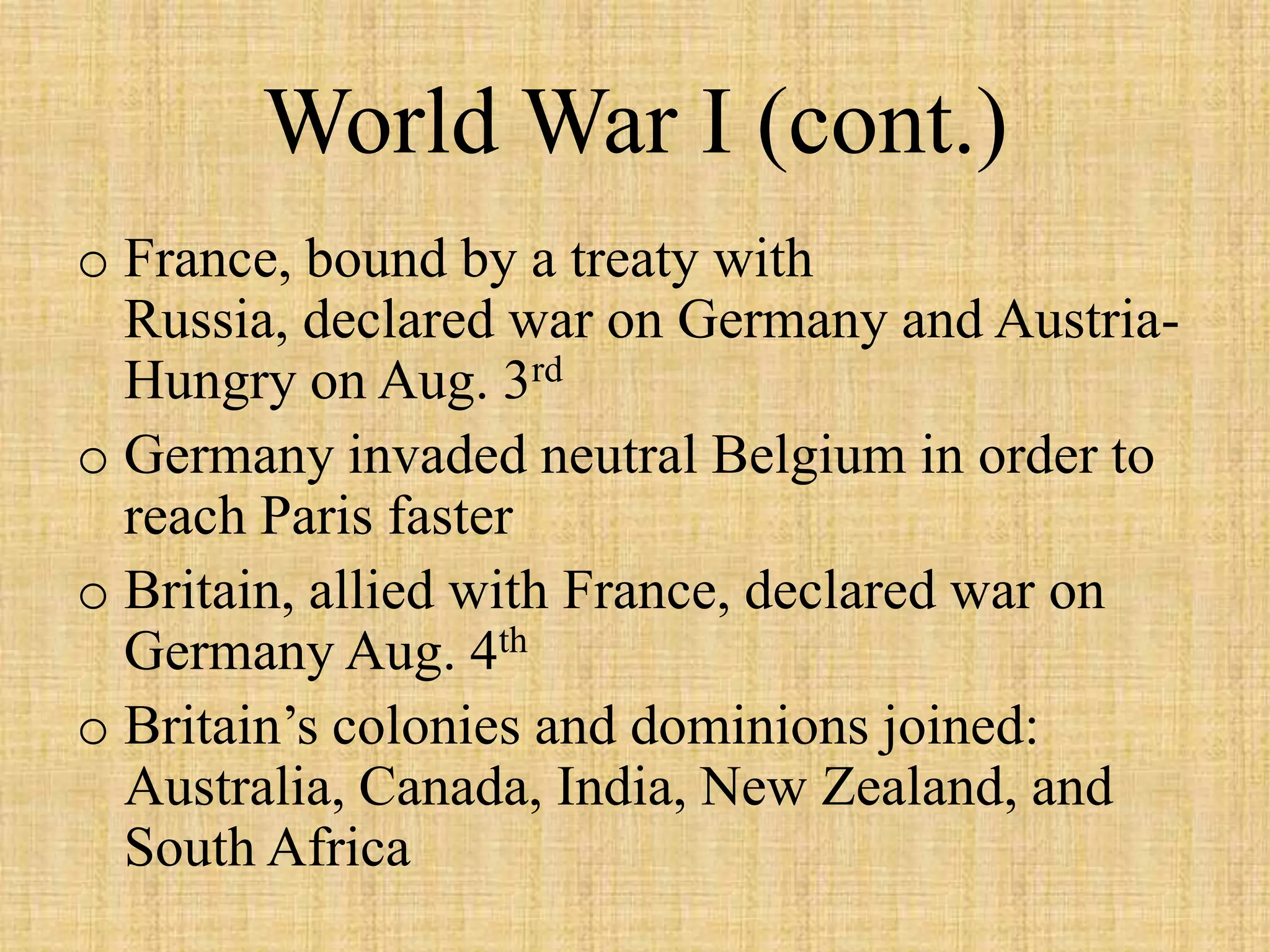
o France, bound by a treaty with
  Russia, declared war on Germany and Austria-
  Hungry on Aug. 3rd
o Germany invaded neutral Belgium in order to
  reach Paris faster
o Britain, allied with France, declared war on
  Germany Aug. 4th
o Britain’s colonies and dominions joined:
  Australia, Canada, India, New Zealand, and
  South Africa
World War I (cont.)
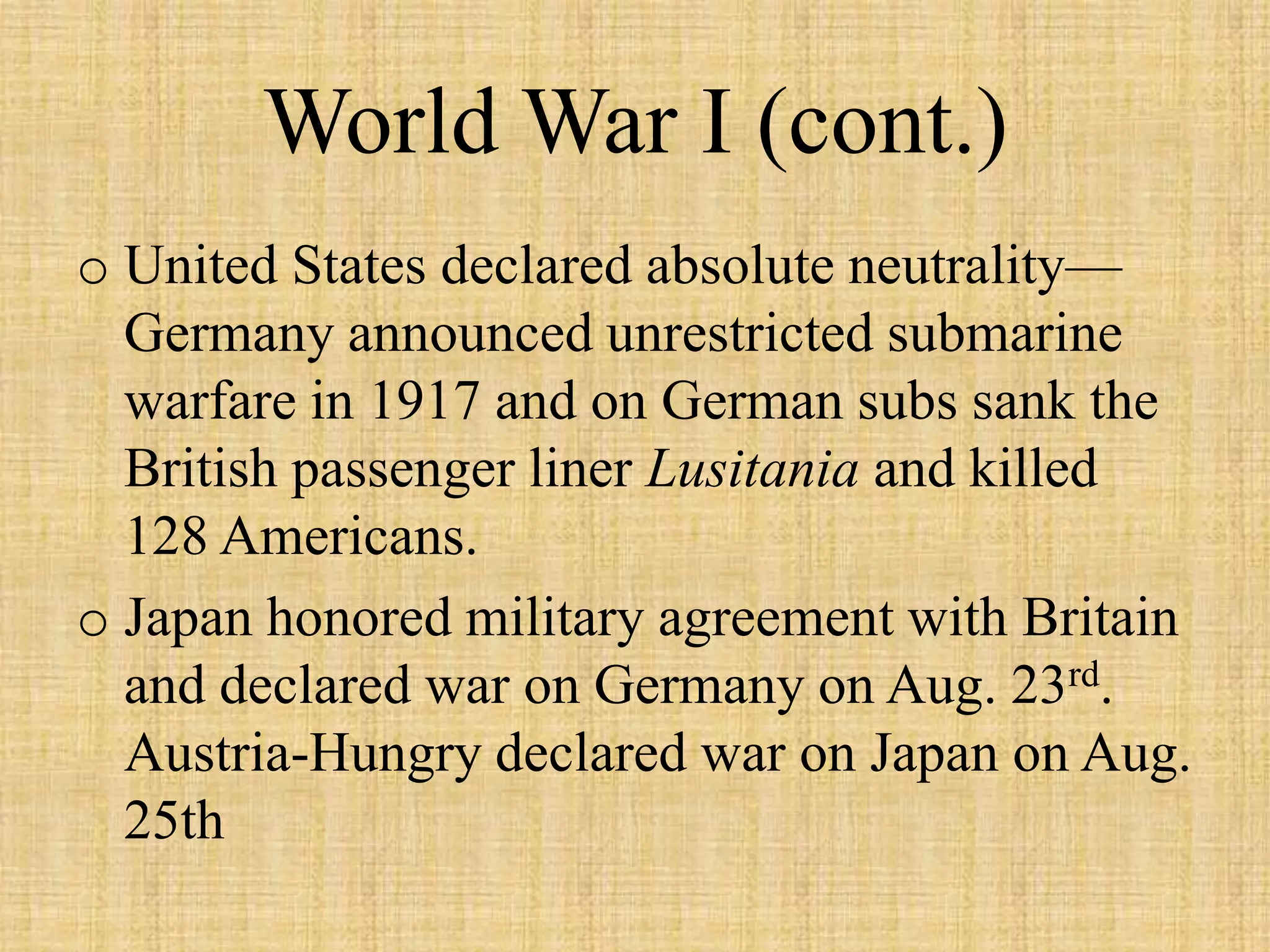
o United States declared absolute neutrality—
  Germany announced unrestricted submarine
  warfare in 1917 and on German subs sank the
  British passenger liner Lusitania and killed
  128 Americans.
o Japan honored military agreement with Britain
  and declared war on Germany on Aug. 23rd.
  Austria-Hungry declared war on Japan on Aug.
  25th
World War I (cont.)
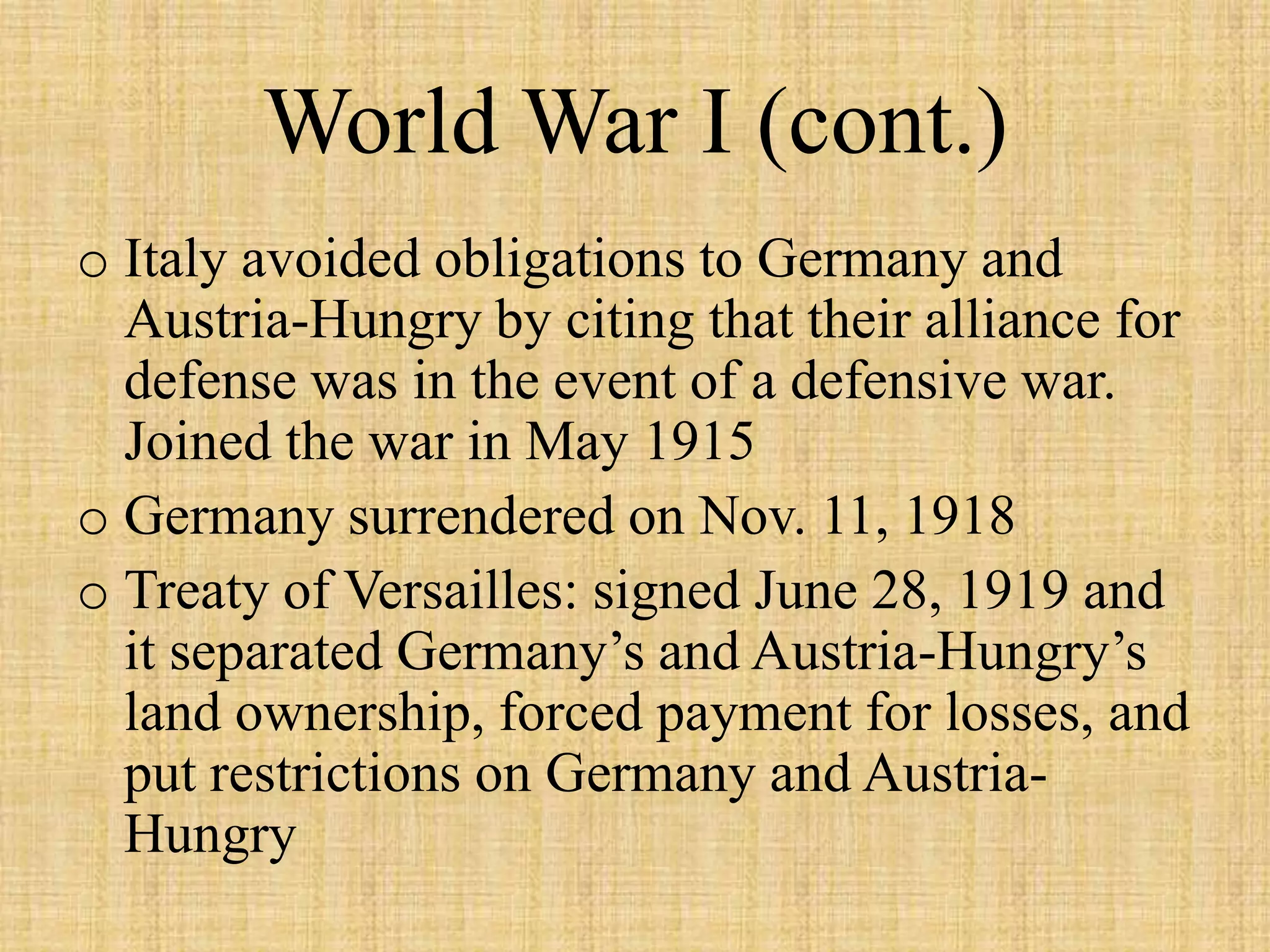
o Italy avoided obligations to Germany and
  Austria-Hungry by citing that their alliance for
  defense was in the event of a defensive war.
  Joined the war in May 1915
o Germany surrendered on Nov. 11, 1918
o Treaty of Versailles: signed June 28, 1919 and
  it separated Germany’s and Austria-Hungry’s
  land ownership, forced payment for losses, and
  put restrictions on Germany and Austria-
  Hungry
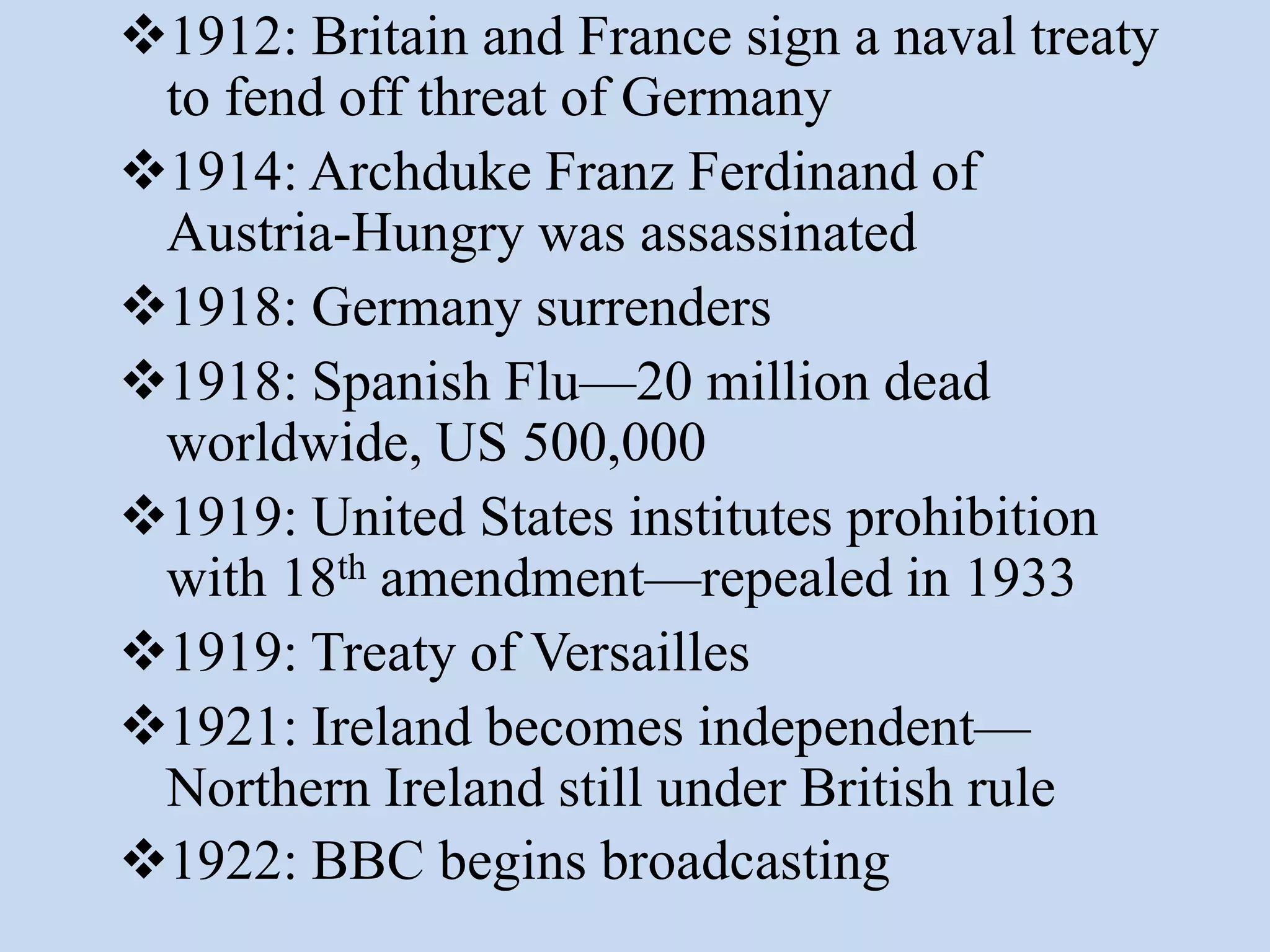
1912: Britain and France sign a naval treaty
 to fend off threat of Germany
1914: Archduke Franz Ferdinand of
 Austria-Hungry was assassinated
1918: Germany surrenders
1918: Spanish Flu—20 million dead
 worldwide, US 500,000
1919: United States institutes prohibition
 with 18th amendment—repealed in 1933
1919: Treaty of Versailles
1921: Ireland becomes independent—
 Northern Ireland still under British rule
1922: BBC begins broadcasting
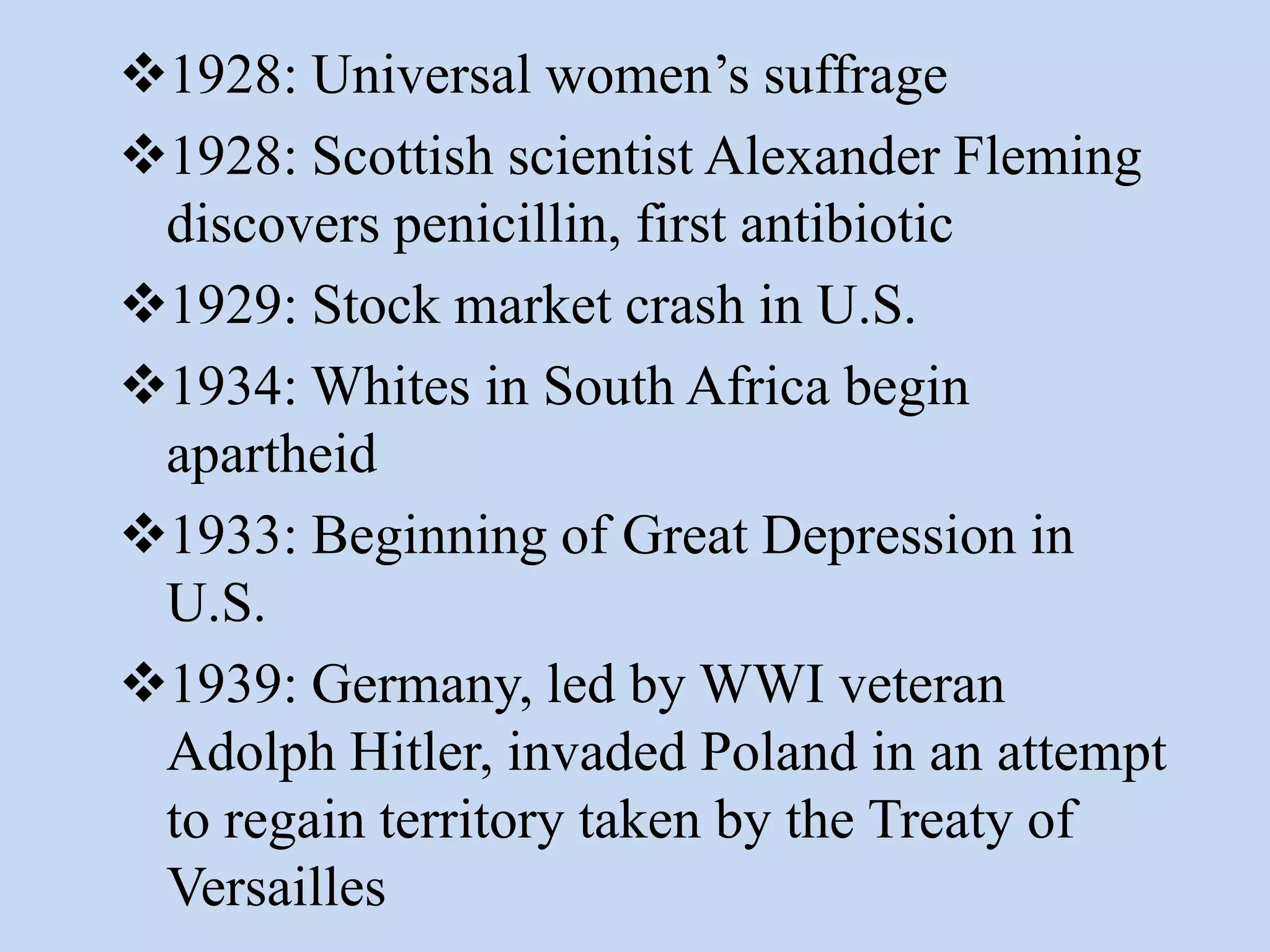
1928: Universal women’s suffrage
1928: Scottish scientist Alexander Fleming
 discovers penicillin, first antibiotic
1929: Stock market crash in U.S.
1934: Whites in South Africa begin
 apartheid
1933: Beginning of Great Depression in
 U.S.
1939: Germany, led by WWI veteran
 Adolph Hitler, invaded Poland in an attempt
 to regain territory taken by the Treaty of
 Versailles
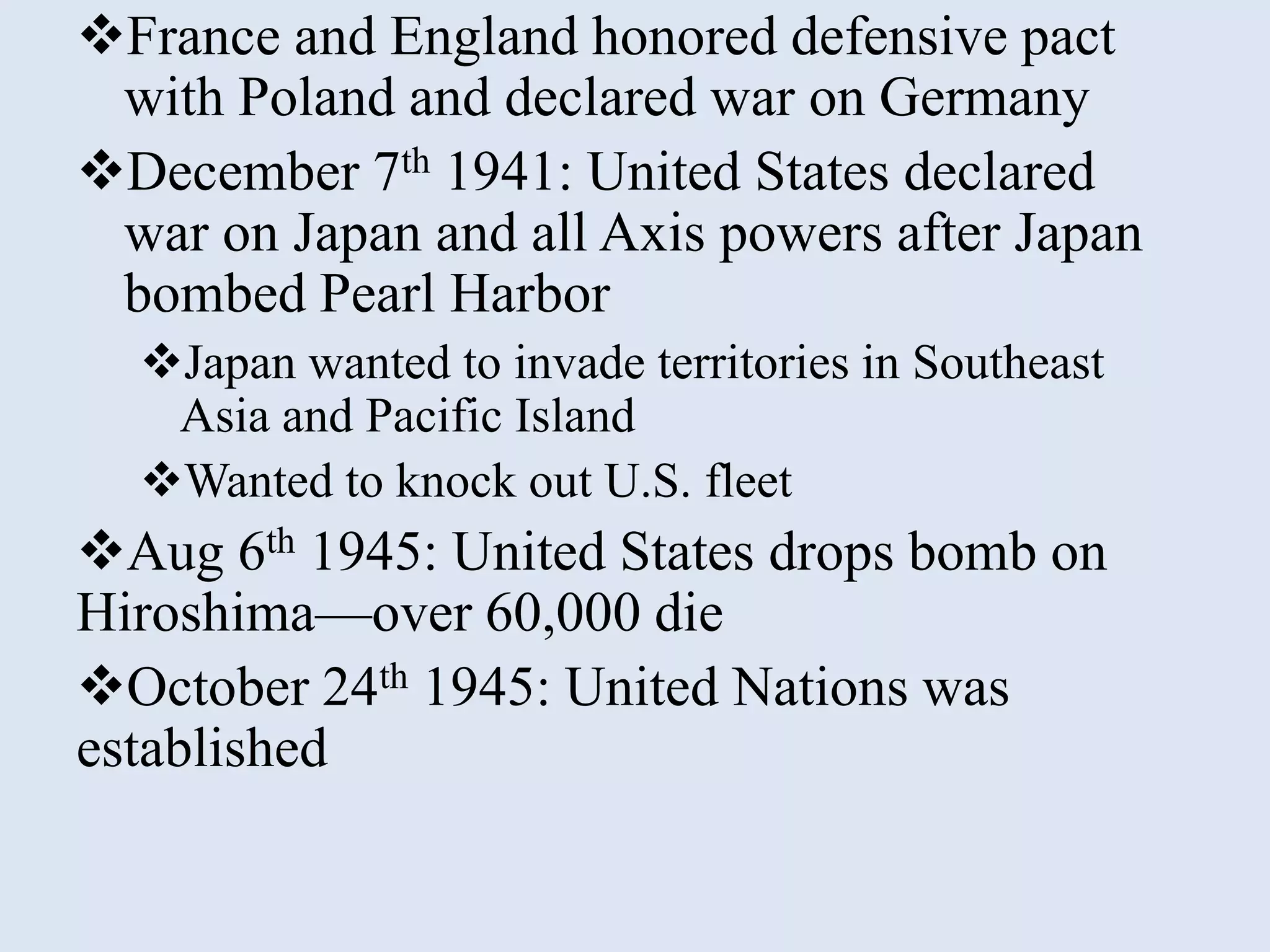
France and England honored defensive pact
 with Poland and declared war on Germany
December 7th 1941: United States declared
 war on Japan and all Axis powers after Japan
 bombed Pearl Harbor
  Japan wanted to invade territories in Southeast
   Asia and Pacific Island
  Wanted to knock out U.S. fleet
Aug 6th 1945: United States drops bomb on
Hiroshima—over 60,000 die
October 24th 1945: United Nations was
established
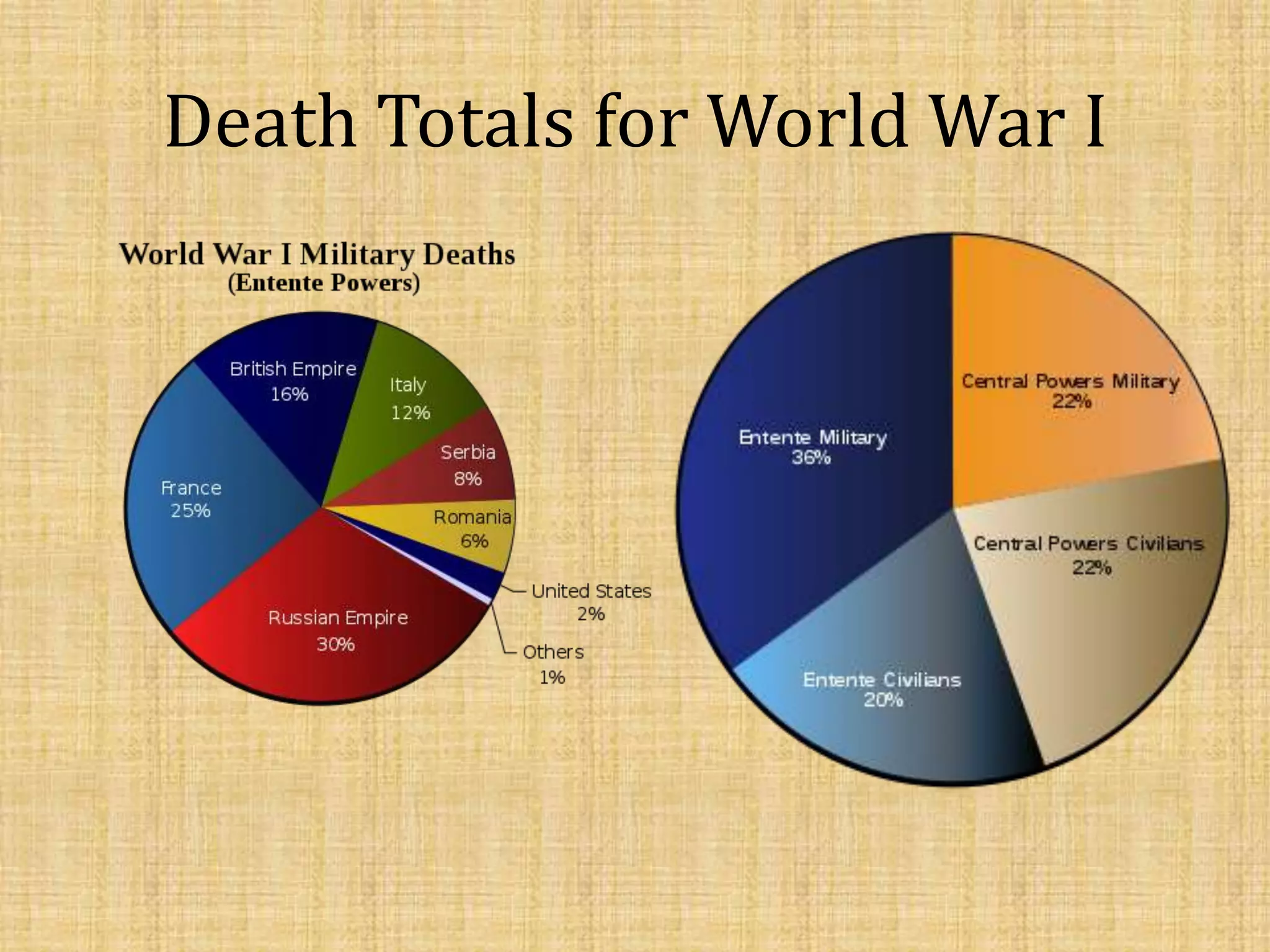
Death Totals for World War I
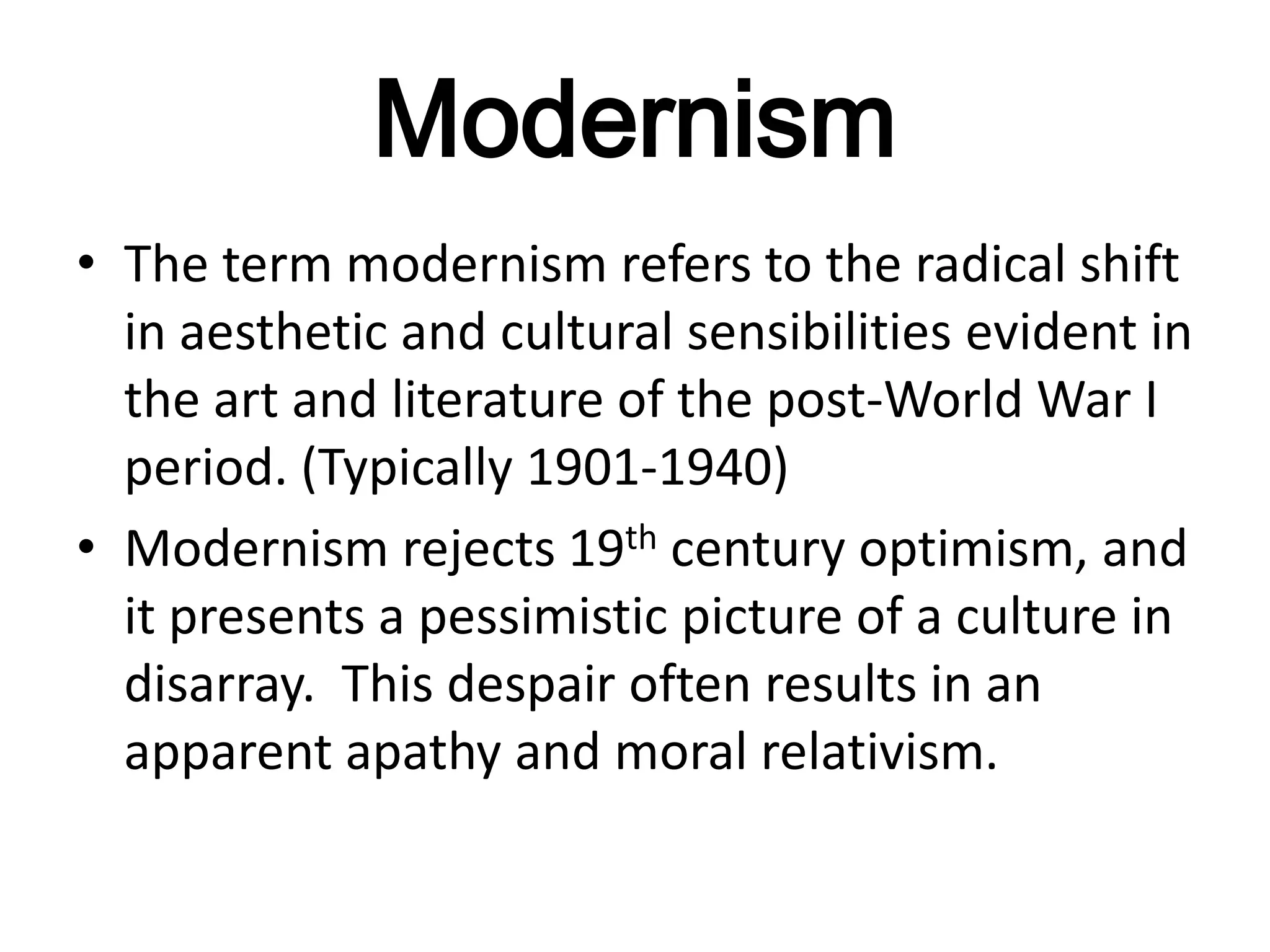
Modernism
• The term modernism refers to the radical shift
  in aesthetic and cultural sensibilities evident in
  the art and literature of the post-World War I
  period. (Typically 1901-1940)
• Modernism rejects 19th century optimism, and
  it presents a pessimistic picture of a culture in
  disarray. This despair often results in an
  apparent apathy and moral relativism.
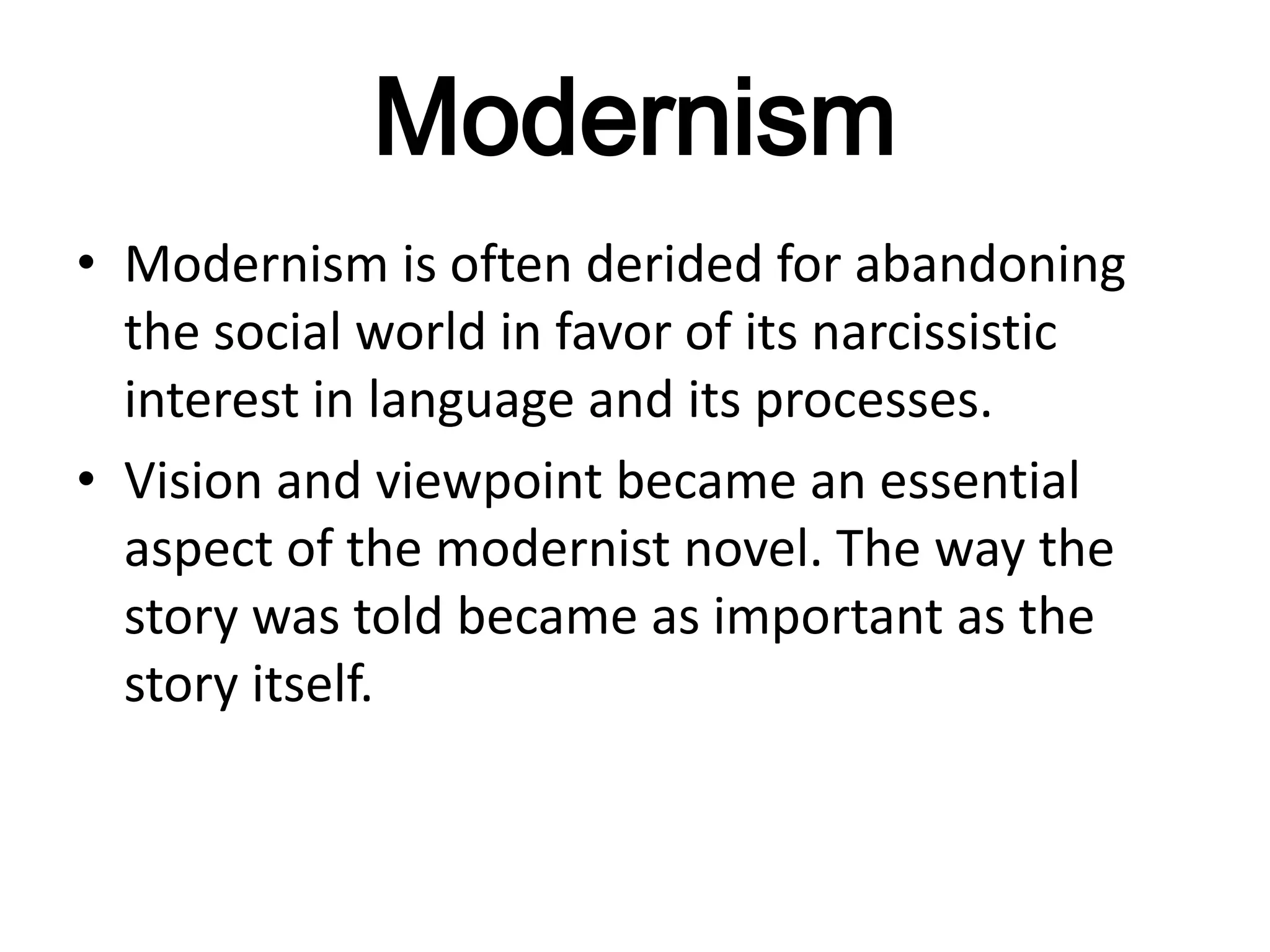
Modernism
• Modernism is often derided for abandoning
  the social world in favor of its narcissistic
  interest in language and its processes.
• Vision and viewpoint became an essential
  aspect of the modernist novel. The way the
  story was told became as important as the
  story itself.
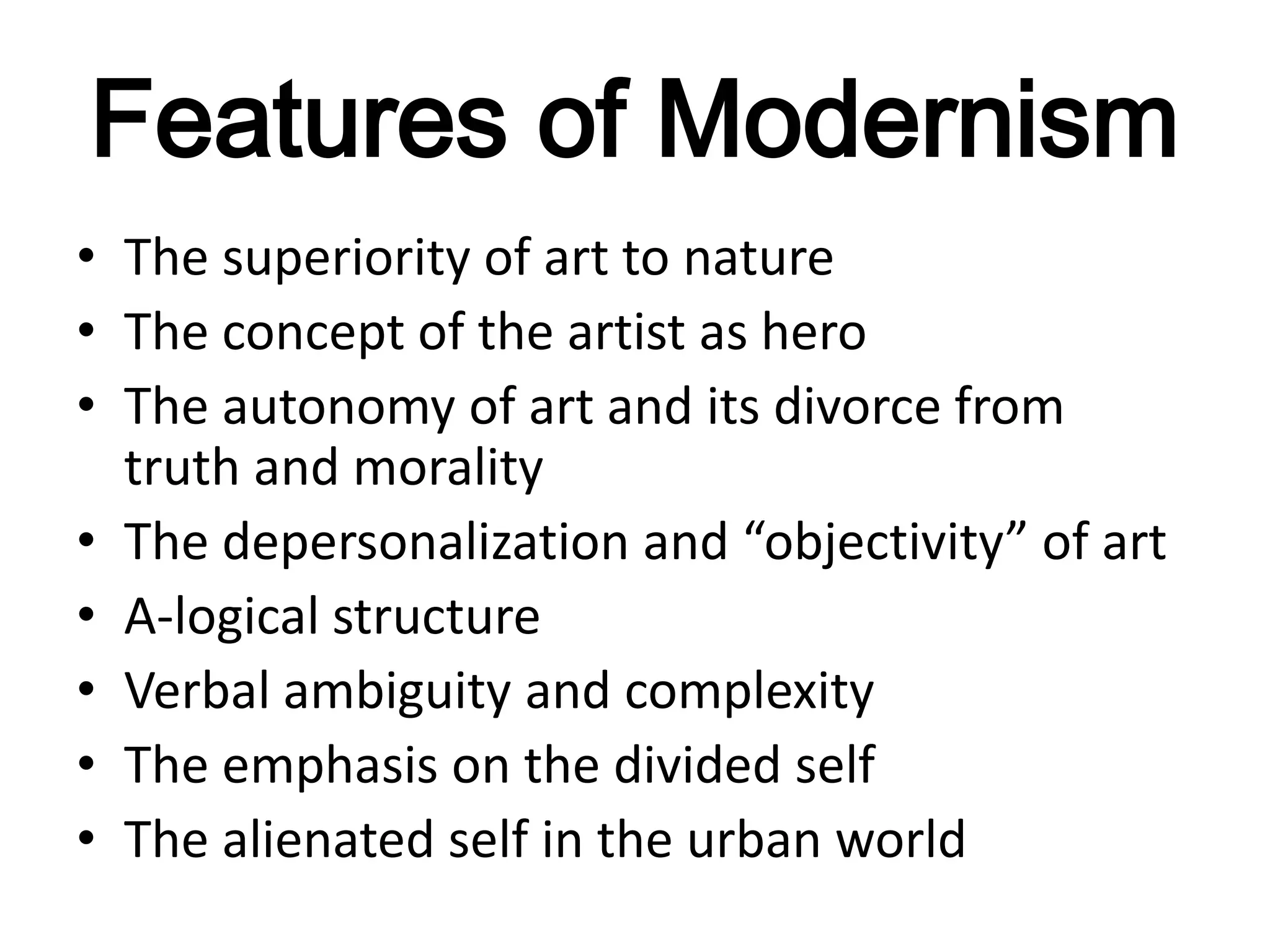
Features of Modernism
• The superiority of art to nature
• The concept of the artist as hero
• The autonomy of art and its divorce from
  truth and morality
• The depersonalization and “objectivity” of art
• A-logical structure
• Verbal ambiguity and complexity
• The emphasis on the divided self
• The alienated self in the urban world
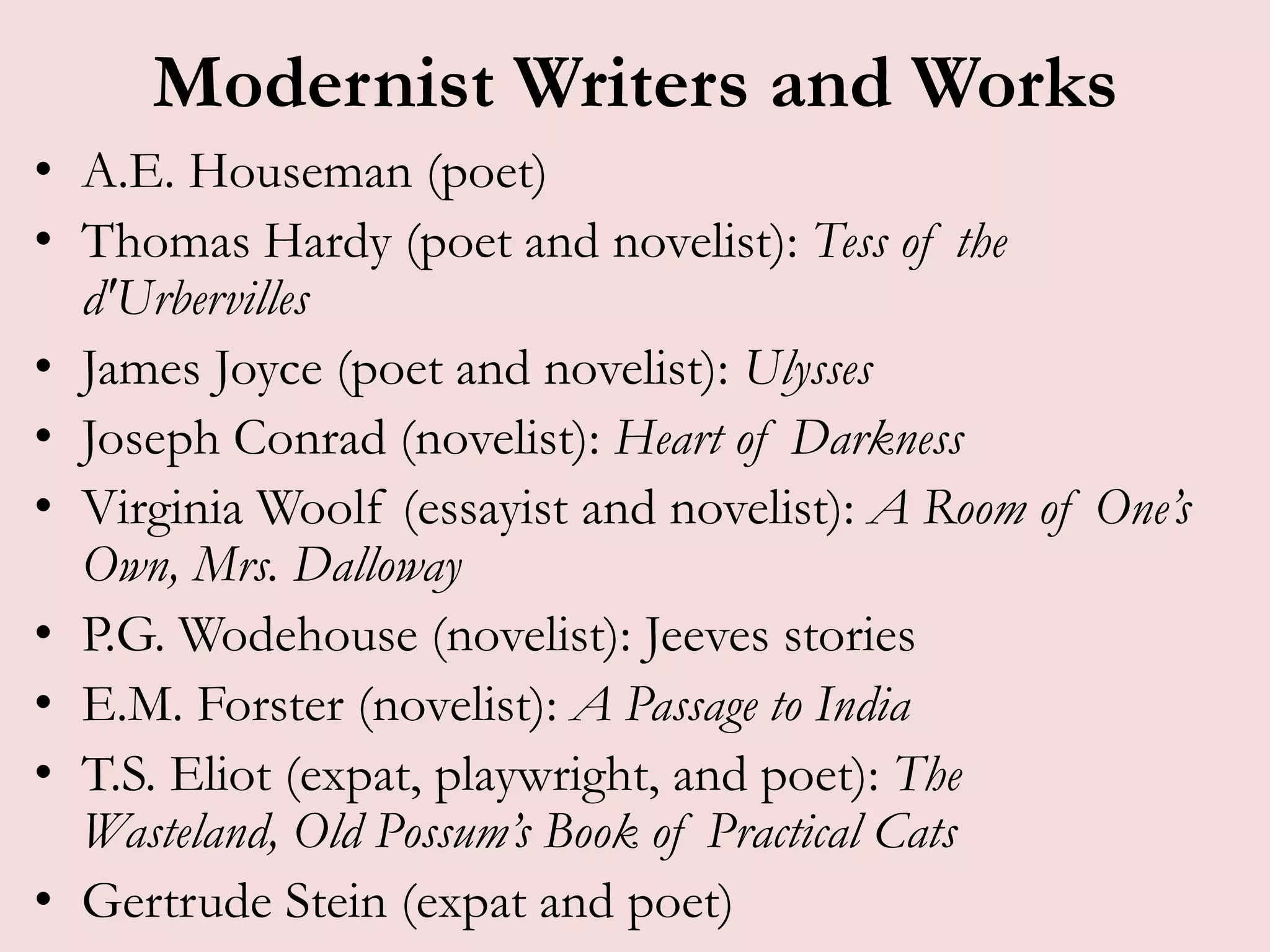
Modernist Writers and Works
• A.E. Houseman (poet)
• Thomas Hardy (poet and novelist): Tess of the
  d'Urbervilles
• James Joyce (poet and novelist): Ulysses
• Joseph Conrad (novelist): Heart of Darkness
• Virginia Woolf (essayist and novelist): A Room of One’s
  Own, Mrs. Dalloway
• P.G. Wodehouse (novelist): Jeeves stories
• E.M. Forster (novelist): A Passage to India
• T.S. Eliot (expat, playwright, and poet): The
  Wasteland, Old Possum’s Book of Practical Cats
• Gertrude Stein (expat and poet)

Modernism powerpoint

  • 1.
    The Modern Era the disillusionment period (1900-1940s)
  • 2.
    1901: Queen Victoriadies 1902: London Treaty—Japan okay in Korea, Britain okay in China 1903: Suffragette movement founded 1903: First controlled, sustained flight at Kitty Hawk, N.C. 1908: First Model T and the assembly line 1908: Britain and Germany engage in “naval race” 1908: F.B.I. established in United States 1912: Titanic sinks in Atlantic
  • 3.
    World War I oFranz Ferdinand: heir to Austro-Hungarian throne killed by Black Hand, a Serbian nationalist group o Austria-Hungry crushed Nationalist movement in Serbia and gained authority o Austria-Hungry wanted the assassins brought forth and if they weren’t then war with Serbia would take place
  • 4.
    World War I(cont.) o Serbia had ties with Russia o Austro-Hungarian government was allied to Germany o Austria-Hungry declared war on Serbia July 28, 1914 o Russia announced mobilization of troops o Germany declared war on Russia Aug. 1st
  • 5.
    World War I(cont.) o France, bound by a treaty with Russia, declared war on Germany and Austria- Hungry on Aug. 3rd o Germany invaded neutral Belgium in order to reach Paris faster o Britain, allied with France, declared war on Germany Aug. 4th o Britain’s colonies and dominions joined: Australia, Canada, India, New Zealand, and South Africa
  • 6.
    World War I(cont.) o United States declared absolute neutrality— Germany announced unrestricted submarine warfare in 1917 and on German subs sank the British passenger liner Lusitania and killed 128 Americans. o Japan honored military agreement with Britain and declared war on Germany on Aug. 23rd. Austria-Hungry declared war on Japan on Aug. 25th
  • 7.
    World War I(cont.) o Italy avoided obligations to Germany and Austria-Hungry by citing that their alliance for defense was in the event of a defensive war. Joined the war in May 1915 o Germany surrendered on Nov. 11, 1918 o Treaty of Versailles: signed June 28, 1919 and it separated Germany’s and Austria-Hungry’s land ownership, forced payment for losses, and put restrictions on Germany and Austria- Hungry
  • 8.
    1912: Britain andFrance sign a naval treaty to fend off threat of Germany 1914: Archduke Franz Ferdinand of Austria-Hungry was assassinated 1918: Germany surrenders 1918: Spanish Flu—20 million dead worldwide, US 500,000 1919: United States institutes prohibition with 18th amendment—repealed in 1933 1919: Treaty of Versailles 1921: Ireland becomes independent— Northern Ireland still under British rule 1922: BBC begins broadcasting
  • 9.
    1928: Universal women’ssuffrage 1928: Scottish scientist Alexander Fleming discovers penicillin, first antibiotic 1929: Stock market crash in U.S. 1934: Whites in South Africa begin apartheid 1933: Beginning of Great Depression in U.S. 1939: Germany, led by WWI veteran Adolph Hitler, invaded Poland in an attempt to regain territory taken by the Treaty of Versailles
  • 10.
    France and Englandhonored defensive pact with Poland and declared war on Germany December 7th 1941: United States declared war on Japan and all Axis powers after Japan bombed Pearl Harbor Japan wanted to invade territories in Southeast Asia and Pacific Island Wanted to knock out U.S. fleet Aug 6th 1945: United States drops bomb on Hiroshima—over 60,000 die October 24th 1945: United Nations was established
  • 11.
    Death Totals forWorld War I
  • 12.
    Modernism • The termmodernism refers to the radical shift in aesthetic and cultural sensibilities evident in the art and literature of the post-World War I period. (Typically 1901-1940) • Modernism rejects 19th century optimism, and it presents a pessimistic picture of a culture in disarray. This despair often results in an apparent apathy and moral relativism.
  • 13.
    Modernism • Modernism isoften derided for abandoning the social world in favor of its narcissistic interest in language and its processes. • Vision and viewpoint became an essential aspect of the modernist novel. The way the story was told became as important as the story itself.
  • 14.
    Features of Modernism •The superiority of art to nature • The concept of the artist as hero • The autonomy of art and its divorce from truth and morality • The depersonalization and “objectivity” of art • A-logical structure • Verbal ambiguity and complexity • The emphasis on the divided self • The alienated self in the urban world
  • 15.
    Modernist Writers andWorks • A.E. Houseman (poet) • Thomas Hardy (poet and novelist): Tess of the d'Urbervilles • James Joyce (poet and novelist): Ulysses • Joseph Conrad (novelist): Heart of Darkness • Virginia Woolf (essayist and novelist): A Room of One’s Own, Mrs. Dalloway • P.G. Wodehouse (novelist): Jeeves stories • E.M. Forster (novelist): A Passage to India • T.S. Eliot (expat, playwright, and poet): The Wasteland, Old Possum’s Book of Practical Cats • Gertrude Stein (expat and poet)