Models of
Communication
By: Chester Dave D. Cañedo
BSE - English
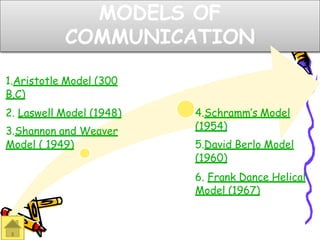
MODELS OF
COMMUNICATION
1.Aristotle Model (300
B.C)
2. Laswell Model (1948)
3.Shannon and Weaver
Model ( 1949)
4.Schramm’s Model
(1954)
5.David Berlo Model
(1960)
6. Frank Dance Helical
Model (1967)
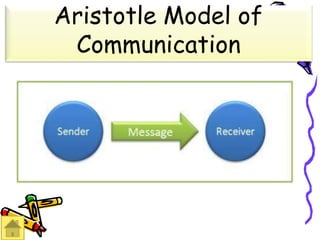
Aristotle Model of
Communication
• These models represents
communication as an orator to
a large audience.
• Speaker plays an important
role in communication.
Aristotle Model of
Communication
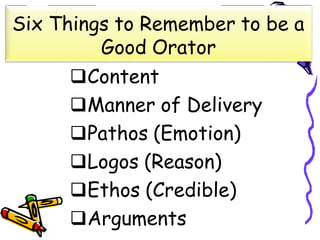
Six Things to Remember to be a
Good Orator
Content
Manner of Delivery
Pathos (Emotion)
Logos (Reason)
Ethos (Credible)
Arguments
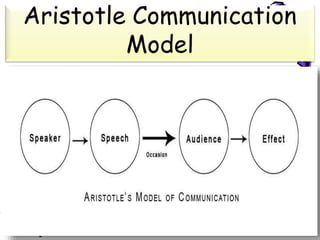
Aristotle Communication
Model
Exercise:
• Alexandra gave brave
speech to his soldiers in
the war field to defeat
Persian Empire.
Aristotle Communication
Model
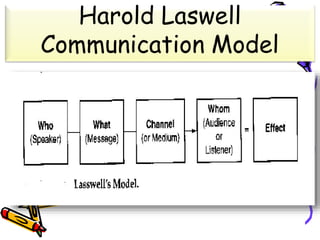
Harold Laswell
Communication Model
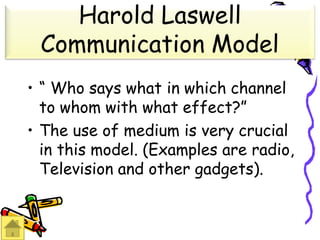
• “ Who says what in which channel
to whom with what effect?”
• The use of medium is very crucial
in this model. (Examples are radio,
Television and other gadgets).
Harold Laswell
Communication Model
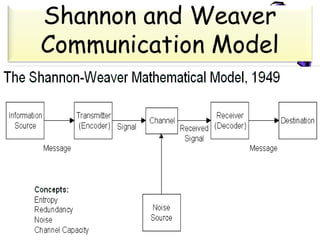
Shannon and Weaver
Communication Model
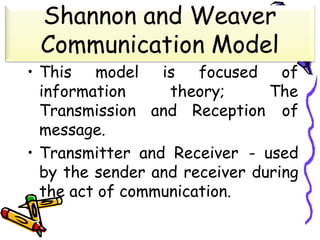
focused of
• This model is
information theory; The
Transmission and Reception of
message.
• Transmitter and Receiver - used
by the sender and receiver during
the act of communication.
Shannon and Weaver
Communication Model
• Noise maybe in:
1. Static Sources (Example: Solar
Flares.)
2. Unusual weather conditions.
3. Electronic Equipment that
interferes with the signal.
4. Environmental Phenomena.
Shannon and Weaver
Communication Model
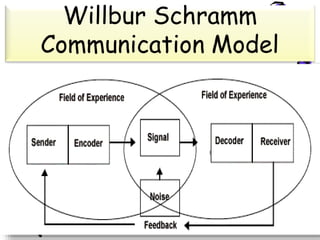
Willbur Schramm
Communication Model
• “If there is no commonality
in the sender and receiver
field of experience. Then,
communication does not
takes place.”
Willbur Schramm
Communication Model
Willbur Schramm
Communication Model
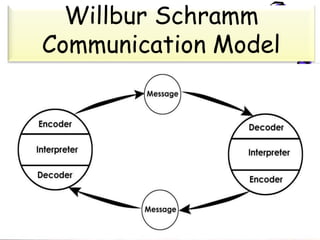
• In this model, Communication
becomes a continuous process
of message and feedback.
• It allows interaction.
Willbur Schramm
Communication Model
David Berlo Communication Model
( A Model of The Ingredients of Communication)
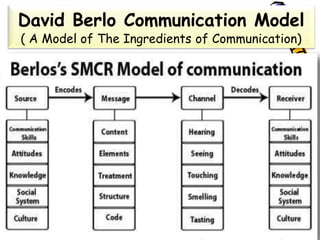
• The model identifies the
controlling factors for the
major elements of
communication ( Source,
Message, Channel and
Receiver)
David Berlo Communication Model
( A Model of The Ingredients of Communication)
Frank Dance
Communication Model
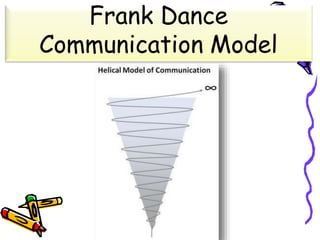
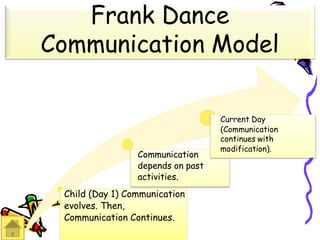
• Communication evolves from the very
first day (origin) until the existing
moment.
• Communication is largely dependent on
its past.
• Concept of time.
• Communication process is the product
of what we learnt.
Frank Dance
Communication Model
Communication
depends on past
activities.
Child (Day 1) Communication
evolves. Then,
Communication Continues.
Current Day
(Communication
continues with
modification).
Frank Dance
Communication Model

Models of Communication.pptx