Health Systems Transformation: Change Model
Goals to
which HED
contributes
`
Sustainable higher
education
Faculty
development
Administrative
systems
development
Active emergent leaders
Mature and
functional
partnerships
Partnership
management
Intermediate
outcomes
Areas of impact to
which HED efforts
contribute
Leadership
development
New bodies of
knowledge
Build /
develop
business
model and
partner
relationships
Development of
educational
program offering
Funding
acquisition
Program Theory v.2
Sustainable livelihood and quality of life
Country development goals
Solutions taken to
market
Economic
development
(new industry/
companies
formed)
Trained and qualified
workforce
Results based
Monitoring
and evaluation
of programs
Applied
research
Culture of continuous
learning and innovation
Goal #2 of USAID Ed. Strategy
Partnership
building
activities
Partnership
outputs
Partnership/institu
tional assessment
(Strategy,
Financial,
Administrative
etc)
Institutional
support
development
Extension and outreach
programs
Policy change and
implementation
USAID/State Department country
strategy
Health Systems Transformation
Faculty development
Educational Programs
Applied Research: policy,
operations and
evaluation
Administrative Systems
Faculty and student
extension/outreach
Higher Ed. Partnerships Health systems change
Improved program
policies, program design
and implementation
Sustainable production
of health workforce
needs in country
Systems
Change
Develop and
implement targeted
continuing studies
courses/modules
Embed new
literacies for health
sciences in all health
sciences preservice-
curriculum
Develop a cadre of
faculty with
expertise and strong
academic program
identities
Health
workforce
competent in
the use of
new tools and
strategies for
health and
health
education
More effective
and efficient
health
interventions
Partnership Strategy
Systems
Change
New Literacies for Health Sciences
Pedagogy and eLearning: Improving how we teach and learn
Curriculum: Updating what we teach and learn
Research and Professional Development: Improving how we work,
communicate and stay up to date
Policy and Strategy: Establishing how best to prepare students and faculty
Concrete Capacity Building Activities:
Four Projects
Questions/Comments

Model of Change - Health Systems Capacity-building

  • 1.
  • 2.
  • 3.
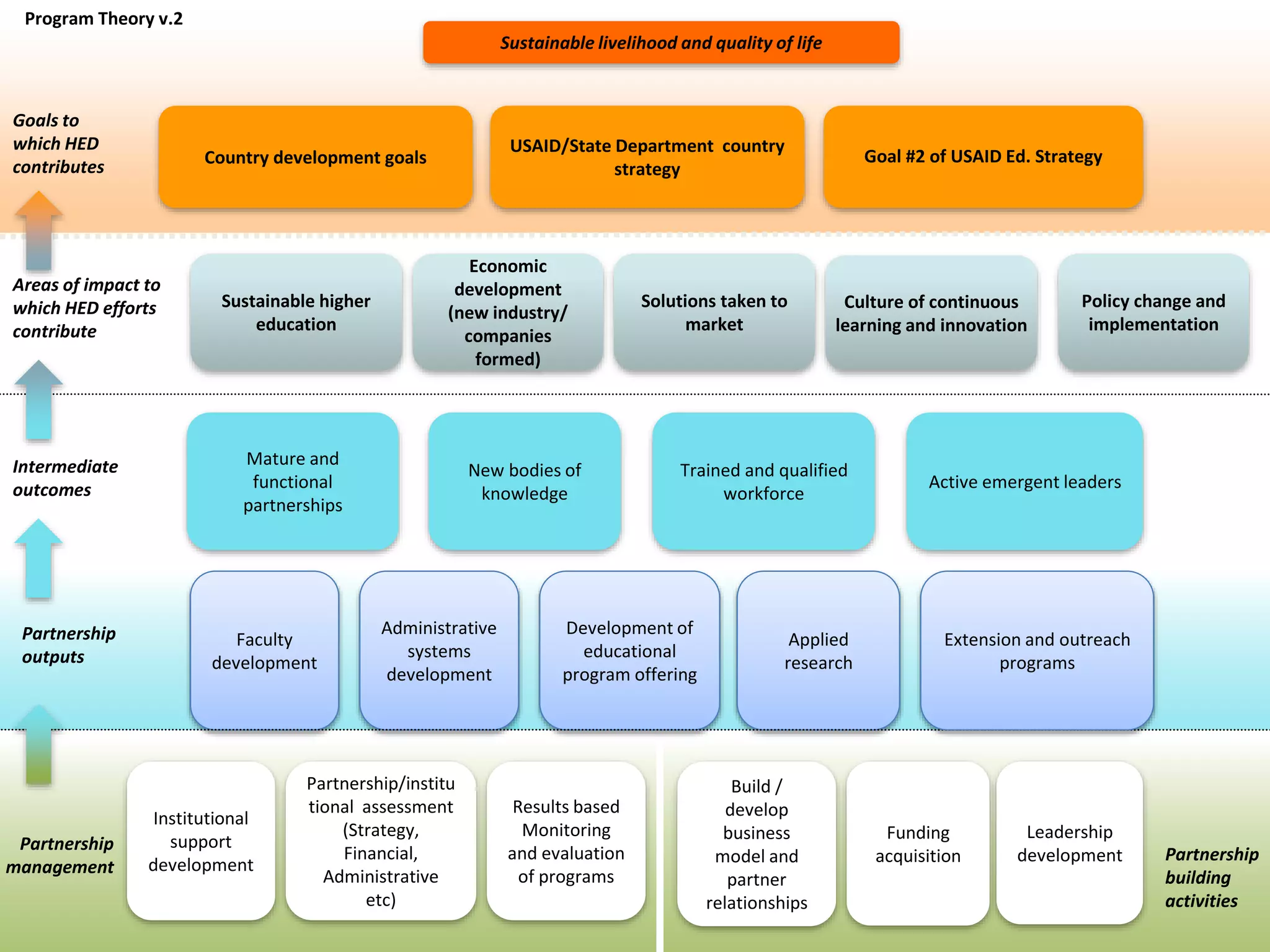
    Goals to which HED contributes ` Sustainablehigher education Faculty development Administrative systems development Active emergent leaders Mature and functional partnerships Partnership management Intermediate outcomes Areas of impact to which HED efforts contribute Leadership development New bodies of knowledge Build / develop business model and partner relationships Development of educational program offering Funding acquisition Program Theory v.2 Sustainable livelihood and quality of life Country development goals Solutions taken to market Economic development (new industry/ companies formed) Trained and qualified workforce Results based Monitoring and evaluation of programs Applied research Culture of continuous learning and innovation Goal #2 of USAID Ed. Strategy Partnership building activities Partnership outputs Partnership/institu tional assessment (Strategy, Financial, Administrative etc) Institutional support development Extension and outreach programs Policy change and implementation USAID/State Department country strategy
  • 4.
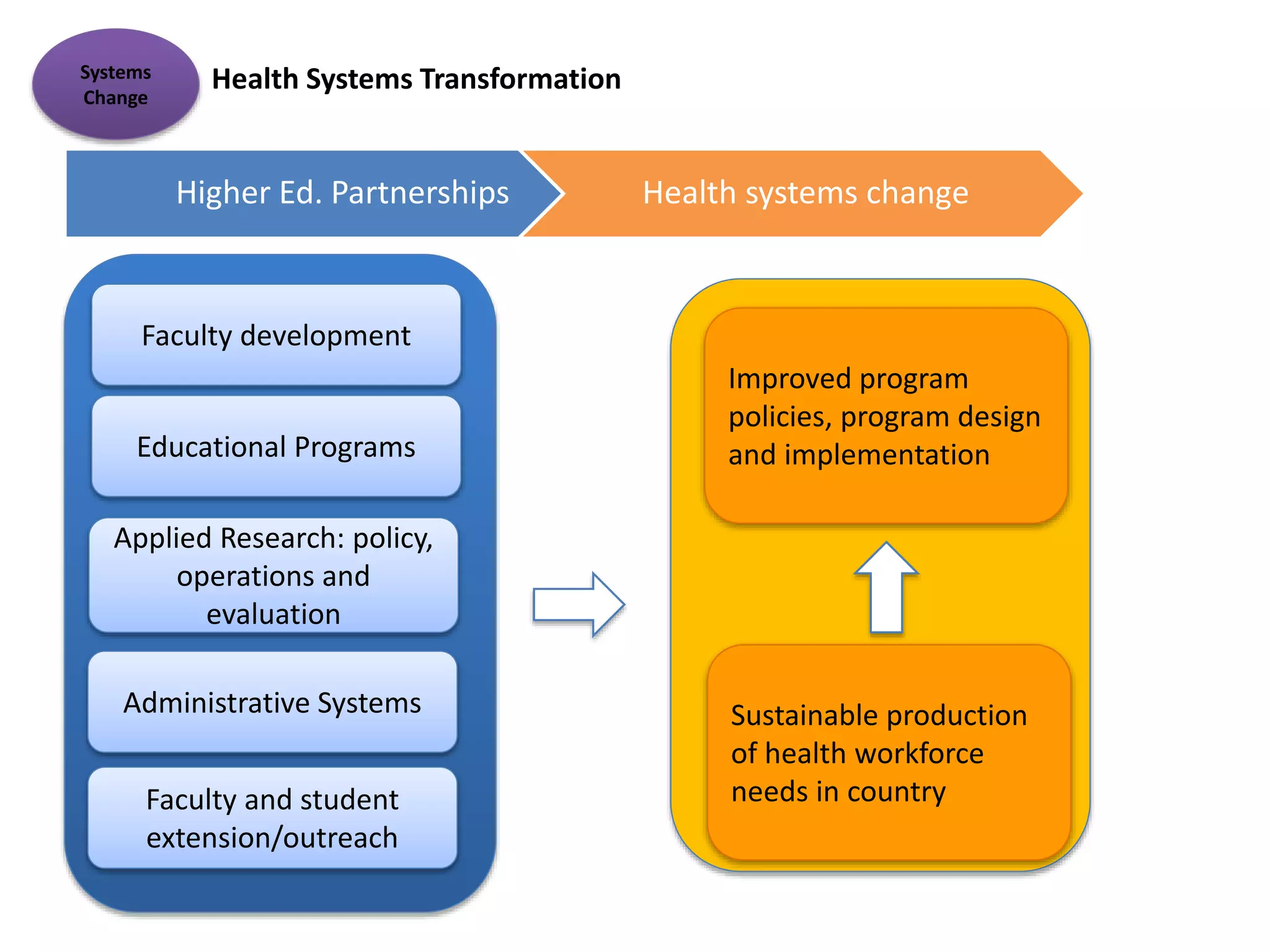
    Health Systems Transformation Facultydevelopment Educational Programs Applied Research: policy, operations and evaluation Administrative Systems Faculty and student extension/outreach Higher Ed. Partnerships Health systems change Improved program policies, program design and implementation Sustainable production of health workforce needs in country Systems Change
  • 5.
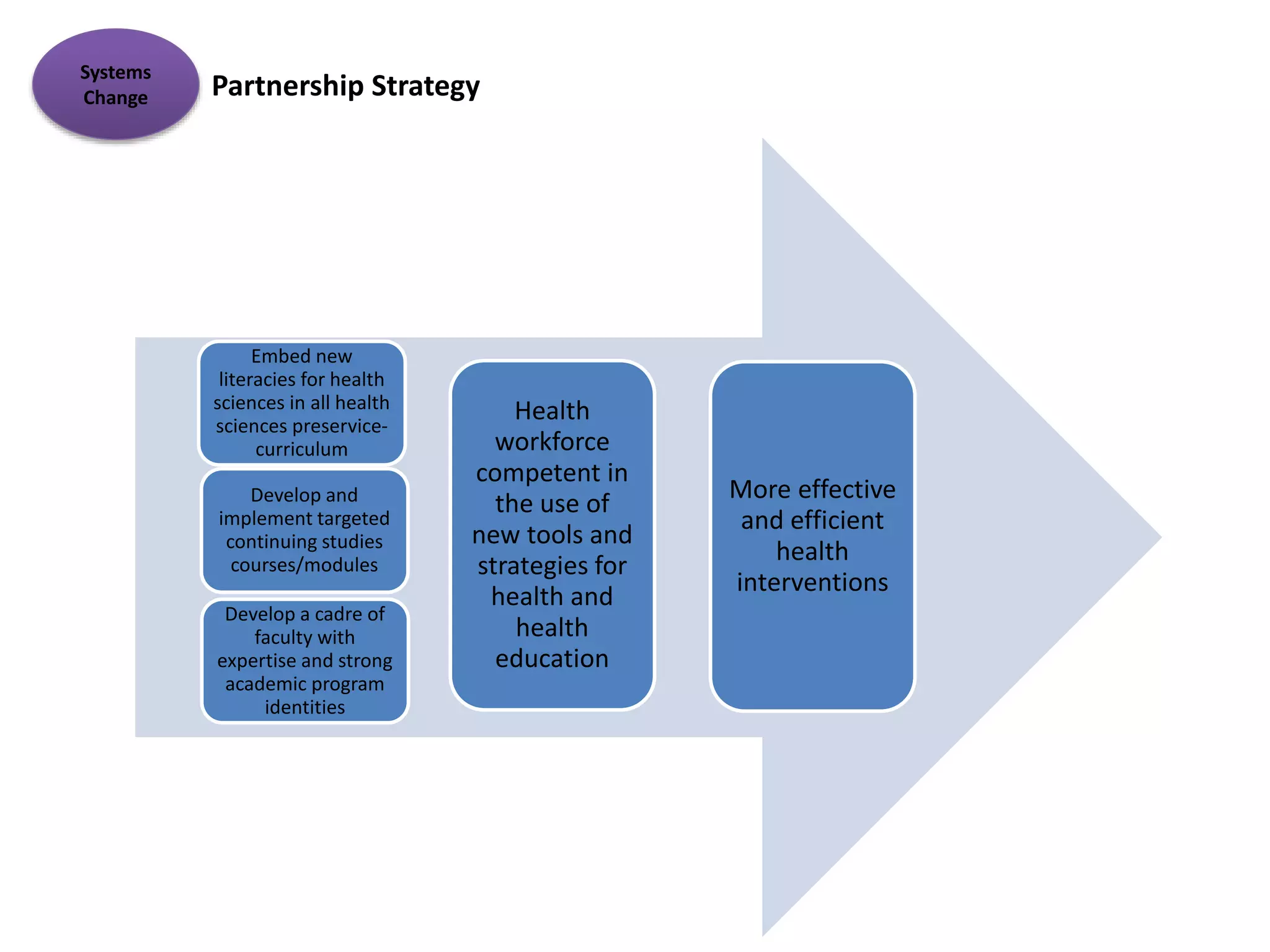
    Develop and implement targeted continuingstudies courses/modules Embed new literacies for health sciences in all health sciences preservice- curriculum Develop a cadre of faculty with expertise and strong academic program identities Health workforce competent in the use of new tools and strategies for health and health education More effective and efficient health interventions Partnership Strategy Systems Change
  • 6.
    New Literacies forHealth Sciences Pedagogy and eLearning: Improving how we teach and learn Curriculum: Updating what we teach and learn Research and Professional Development: Improving how we work, communicate and stay up to date Policy and Strategy: Establishing how best to prepare students and faculty Concrete Capacity Building Activities: Four Projects
  • 7.