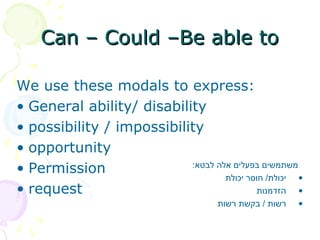
Modal verbs and semi-modal verbs are used to express abilities, obligations, permissions and other meanings. Some key points:
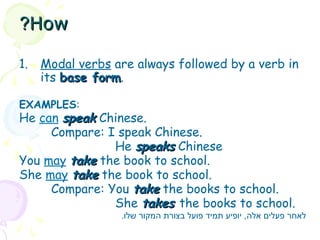
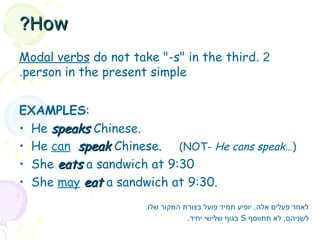
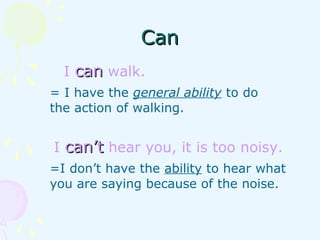
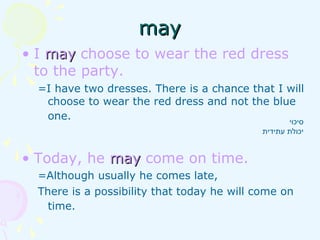
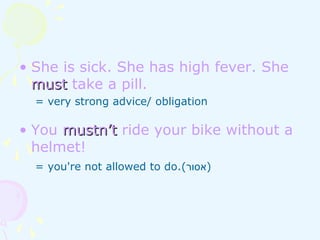
1. Modal verbs like can, may and must are followed by the base form of other verbs. They do not take -s in the third person present simple.
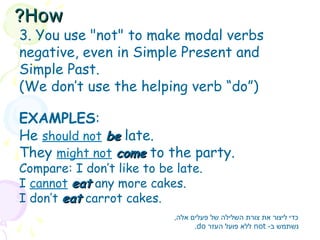
2. Modal verbs use "not" for negation rather than "do not".
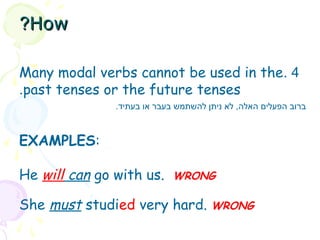
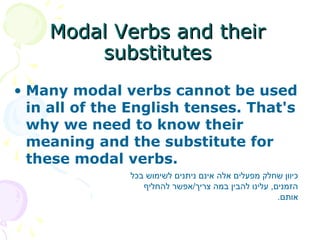
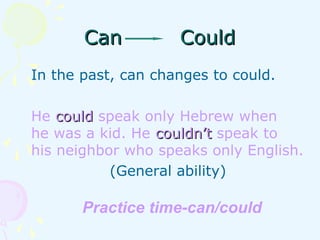
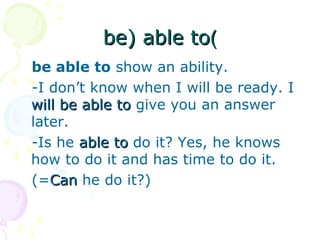
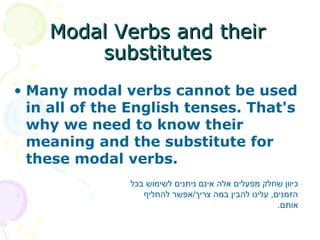
3. Many modal verbs cannot be used in all tenses. Their meanings and substitutes must be understood.
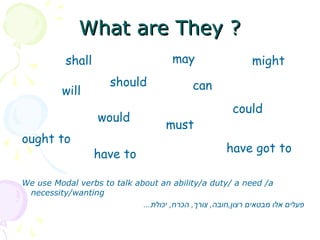
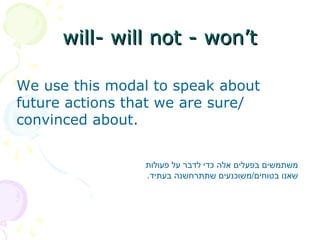
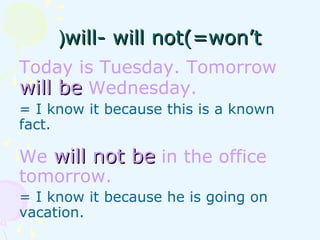
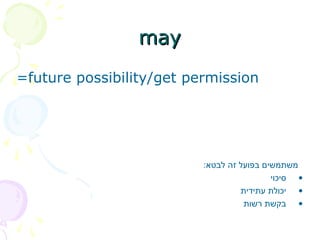
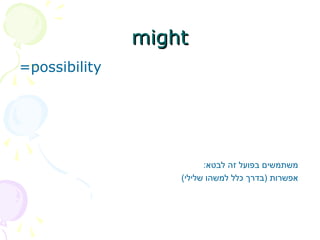
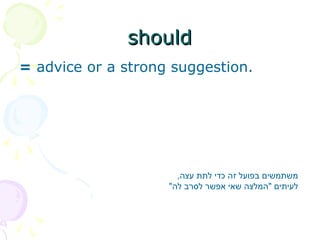
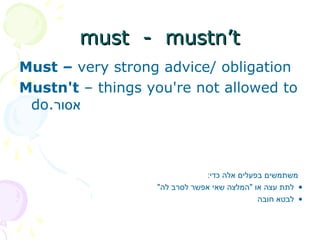
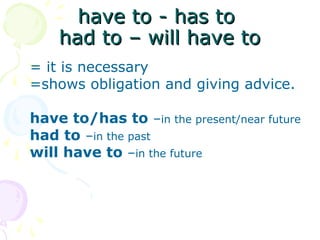
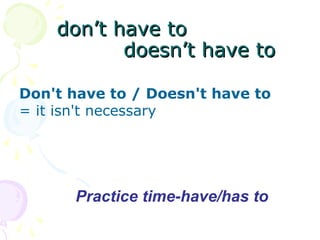
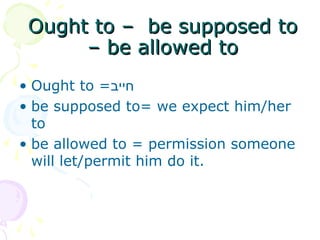
4. Common modal verbs include can/could, may, might, will/would, shall/should, must and ought to. Semi-modals include have to, need to and dare to.








![Getting Started with Apache Spark: Big Data Made Simple [Free Meetup]](https://cdn.slidesharecdn.com/ss_thumbnails/apachesparkgettingstarted-260203175547-8361bcc3-thumbnail.jpg?width=640&height=640&fit=bounds)


