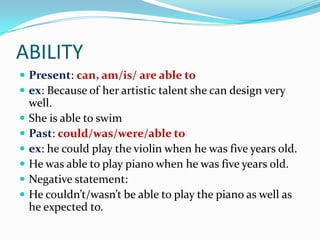
ABILITY
 Present: can, am/is/ are able to
 ex: Because of her artistic talent she can design very
    well.
   She is able to swim
   Past: could/was/were/able to
   ex: he could play the violin when he was five years old.
   He was able to play piano when he was five years old.
   Negative statement:
   He couldn’t/wasn’t be able to play the piano as well as
    he expected to.
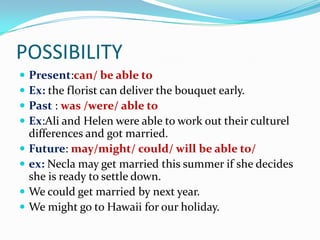
POSSIBILITY
   Present:can/ be able to
   Ex: the florist can deliver the bouquet early.
   Past : was /were/ able to
   Ex:Ali and Helen were able to work out their culturel
    differences and got married.
   Future: may/might/ could/ will be able to/
   ex: Necla may get married this summer if she decides
    she is ready to settle down.
   We could get married by next year.
   We might go to Hawaii for our holiday.
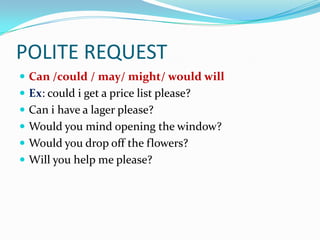
POLITE REQUEST
 Can /could / may/ might/ would will
 Ex: could i get a price list please?
 Can i have a lager please?
 Would you mind opening the window?
 Would you drop off the flowers?
 Will you help me please?
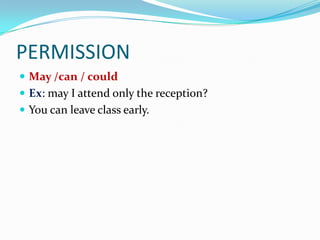
PERMISSION
 May /can / could
 Ex: may I attend only the reception?
 You can leave class early.
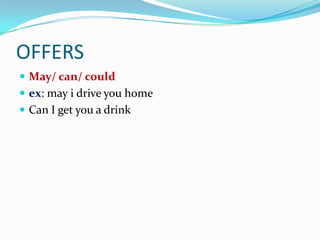
OFFERS
 May/ can/ could
 ex: may i drive you home
 Can I get you a drink
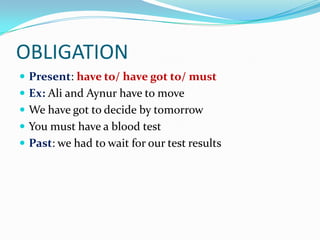
OBLIGATION
 Present: have to/ have got to/ must
 Ex: Ali and Aynur have to move
 We have got to decide by tomorrow
 You must have a blood test
 Past: we had to wait for our test results
SUGGESTION
 Might/can/ could/ should/ought to/ had better/
    have to /must/
   ex: you might try another store.
   We could have dinner.
   You should give him a chance
   You ought to marry him
   You had better think very carefully
   You must meet him
EXPECTATION
 Should/ ought/ to must
 ex: you should get a call from him soon
 The divorce rate ought to go down
 He’s been working for eight hours without a rest. He
 must be very tired now.
HABITUAL ACTIVITY
 Be used to/ used to
 ex: I’m used to working for eight hours everyday. So it’s
  not a burden for me
 I used to travel a lot, but I don’t go away much these
  days
ADVICE
 Should/ had better
 ex: I have a terrible headache
 You should / had better take an aspirin
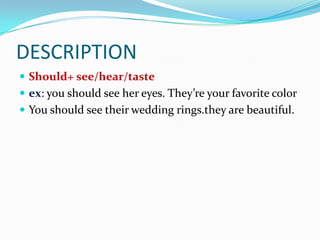
DESCRIPTION
 Should+ see/hear/taste
 ex: you should see her eyes. They’re your favorite color
 You should see their wedding rings.they are beautiful.
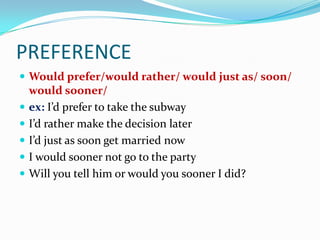
PREFERENCE
 Would prefer/would rather/ would just as/ soon/
    would sooner/
   ex: I’d prefer to take the subway
   I’d rather make the decision later
   I’d just as soon get married now
   I would sooner not go to the party
   Will you tell him or would you sooner I did?
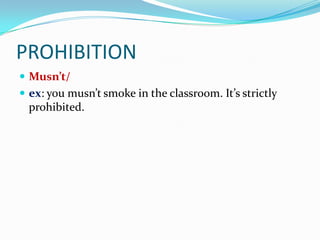
PROHIBITION
 Musn’t/
 ex: you musn’t smoke in the classroom. It’s strictly
  prohibited.
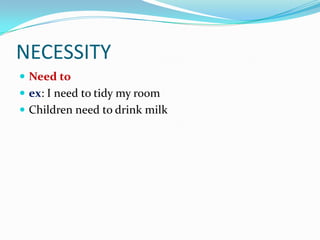
NECESSITY
 Need to
 ex: I need to tidy my room
 Children need to drink milk
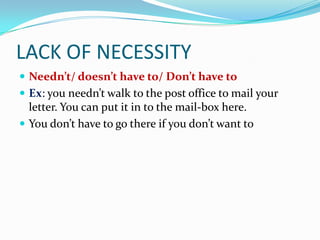
LACK OF NECESSITY
 Needn’t/ doesn’t have to/ Don’t have to
 Ex: you needn’t walk to the post office to mail your
  letter. You can put it in to the mail-box here.
 You don’t have to go there if you don’t want to
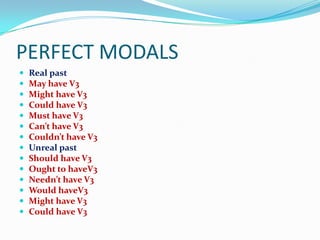
PERFECT MODALS
   Real past
   May have V3
   Might have V3
   Could have V3
   Must have V3
   Can’t have V3
   Couldn’t have V3
   Unreal past
   Should have V3
   Ought to haveV3
   Needn’t have V3
   Would haveV3
   Might have V3
   Could have V3
Modals

Modals

  • 2.
    ABILITY  Present: can,am/is/ are able to  ex: Because of her artistic talent she can design very well.  She is able to swim  Past: could/was/were/able to  ex: he could play the violin when he was five years old.  He was able to play piano when he was five years old.  Negative statement:  He couldn’t/wasn’t be able to play the piano as well as he expected to.
  • 3.
    POSSIBILITY  Present:can/ be able to  Ex: the florist can deliver the bouquet early.  Past : was /were/ able to  Ex:Ali and Helen were able to work out their culturel differences and got married.  Future: may/might/ could/ will be able to/  ex: Necla may get married this summer if she decides she is ready to settle down.  We could get married by next year.  We might go to Hawaii for our holiday.
  • 4.
    POLITE REQUEST  Can/could / may/ might/ would will  Ex: could i get a price list please?  Can i have a lager please?  Would you mind opening the window?  Would you drop off the flowers?  Will you help me please?
  • 5.
    PERMISSION  May /can/ could  Ex: may I attend only the reception?  You can leave class early.
  • 6.
    OFFERS  May/ can/could  ex: may i drive you home  Can I get you a drink
  • 7.
    OBLIGATION  Present: haveto/ have got to/ must  Ex: Ali and Aynur have to move  We have got to decide by tomorrow  You must have a blood test  Past: we had to wait for our test results
  • 8.
    SUGGESTION  Might/can/ could/should/ought to/ had better/ have to /must/  ex: you might try another store.  We could have dinner.  You should give him a chance  You ought to marry him  You had better think very carefully  You must meet him
  • 9.
    EXPECTATION  Should/ ought/to must  ex: you should get a call from him soon  The divorce rate ought to go down  He’s been working for eight hours without a rest. He must be very tired now.
  • 10.
    HABITUAL ACTIVITY  Beused to/ used to  ex: I’m used to working for eight hours everyday. So it’s not a burden for me  I used to travel a lot, but I don’t go away much these days
  • 11.
    ADVICE  Should/ hadbetter  ex: I have a terrible headache  You should / had better take an aspirin
  • 12.
    DESCRIPTION  Should+ see/hear/taste ex: you should see her eyes. They’re your favorite color  You should see their wedding rings.they are beautiful.
  • 13.
    PREFERENCE  Would prefer/wouldrather/ would just as/ soon/ would sooner/  ex: I’d prefer to take the subway  I’d rather make the decision later  I’d just as soon get married now  I would sooner not go to the party  Will you tell him or would you sooner I did?
  • 14.
    PROHIBITION  Musn’t/  ex:you musn’t smoke in the classroom. It’s strictly prohibited.
  • 15.
    NECESSITY  Need to ex: I need to tidy my room  Children need to drink milk
  • 16.
    LACK OF NECESSITY Needn’t/ doesn’t have to/ Don’t have to  Ex: you needn’t walk to the post office to mail your letter. You can put it in to the mail-box here.  You don’t have to go there if you don’t want to
  • 17.
    PERFECT MODALS  Real past  May have V3  Might have V3  Could have V3  Must have V3  Can’t have V3  Couldn’t have V3  Unreal past  Should have V3  Ought to haveV3  Needn’t have V3  Would haveV3  Might have V3  Could have V3