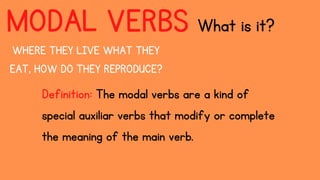
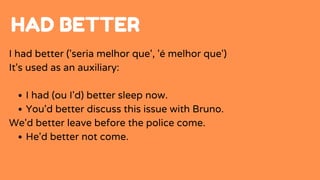
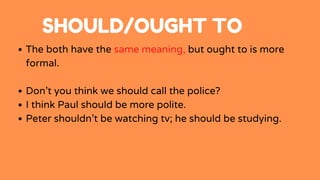
This document discusses modal verbs and provides examples of their usage. It defines modal verbs as special auxiliary verbs that modify or complete the meaning of the main verb. It then focuses on the modal verbs "should/ought to/had better" giving examples of how they are used to give advice or express regret over past actions. Specifically, it notes that "should/ought to" are used to express obligation or advice and have similar meanings, with "ought to" being more formal. It also explains that "had better" is used to strongly advise something and that "should have" followed by a past participle is used to express regret over past actions.