MOAI
MOAI
Easter Island
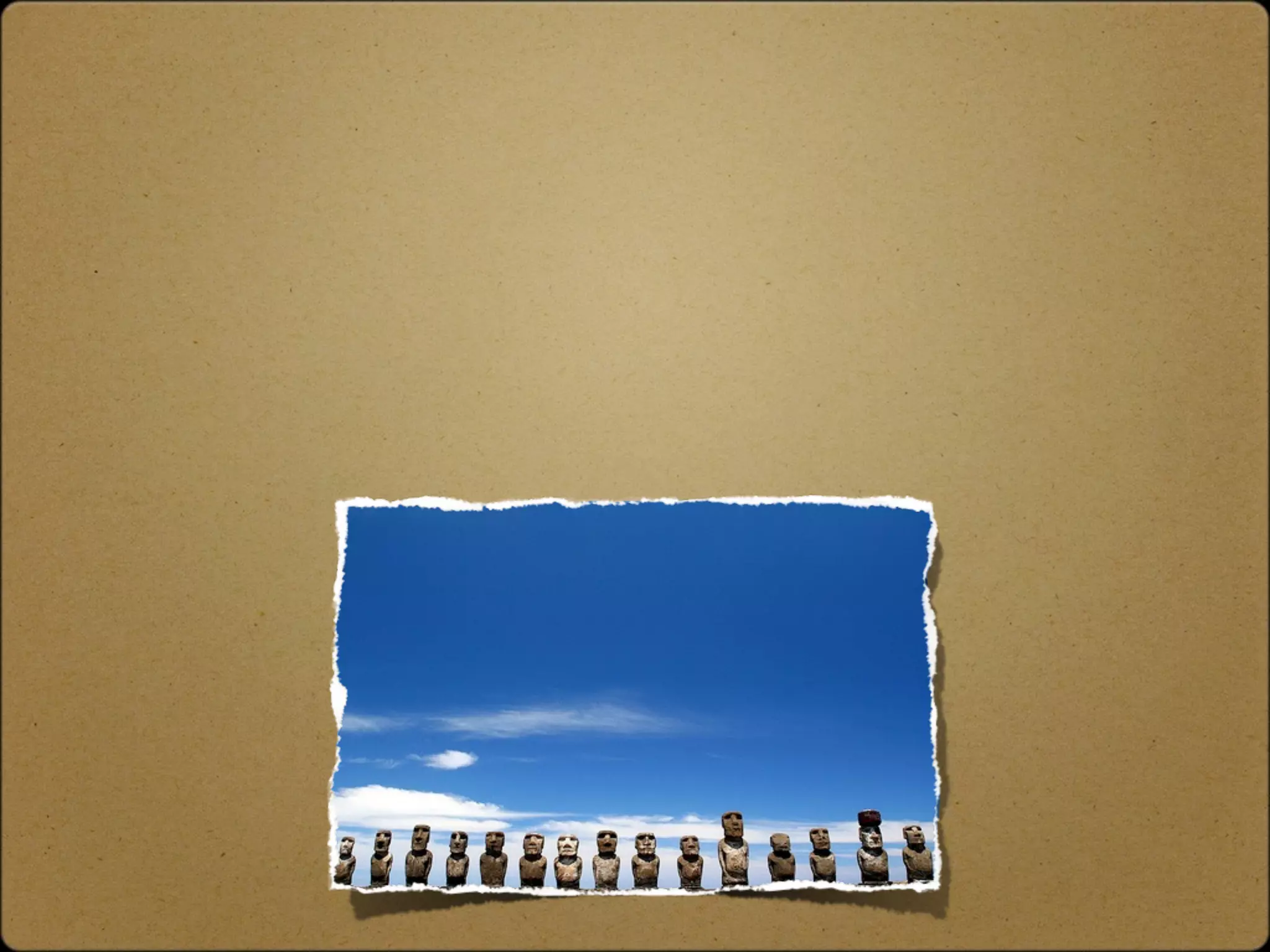
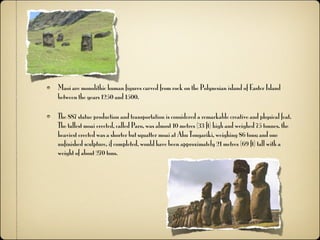
Maoi are monolithic human figures carved from rock on the Polynesian island of Easter Island
between the years 1250 and 1500.

The 887 statue production and transportation is considered a remarkable creative and physical feat.
The tallest moai erected, called Paro, was almost 10 metres (33 ft) high and weighed 75 tonnes. the
heaviest erected was a shorter but squatter moai at Ahu Tongariki, weighing 86 tons; and one
unfinished sculpture, if completed, would have been approximately 21 metres (69 ft) tall with a
weight of about 270 tons.
Description


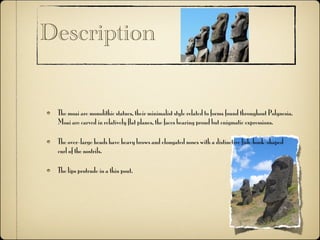
 The moai are monolithic statues, their minimalist style related to forms found throughout Polynesia.
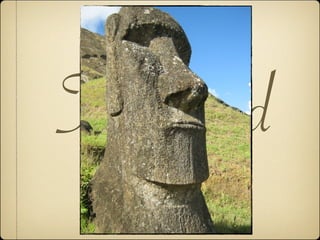
 Moai are carved in relatively flat planes, the faces bearing proud but enigmatic expressions.

 The over-large heads have heavy brows and elongated noses with a distinctive fish-hook-shaped
 curl of the nostrils.

 The lips protrude in a thin pout.
Description

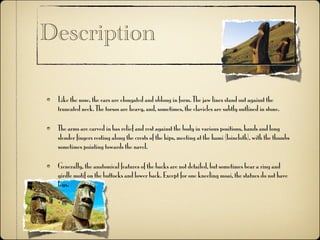
 Like the nose, the ears are elongated and oblong in form. The jaw lines stand out against the
 truncated neck. The torsos are heavy, and, sometimes, the clavicles are subtly outlined in stone.

 The arms are carved in bas relief and rest against the body in various positions, hands and long
 slender fingers resting along the crests of the hips, meeting at the hami (loincloth), with the thumbs
 sometimes pointing towards the navel.

 Generally, the anatomical features of the backs are not detailed, but sometimes bear a ring and
 girdle motif on the buttocks and lower back. Except for one kneeling moai, the statues do not have
 legs.
The End
The End

Moai

  • 2.
  • 3.
  • 5.
    Maoi are monolithichuman figures carved from rock on the Polynesian island of Easter Island between the years 1250 and 1500. The 887 statue production and transportation is considered a remarkable creative and physical feat. The tallest moai erected, called Paro, was almost 10 metres (33 ft) high and weighed 75 tonnes. the heaviest erected was a shorter but squatter moai at Ahu Tongariki, weighing 86 tons; and one unfinished sculpture, if completed, would have been approximately 21 metres (69 ft) tall with a weight of about 270 tons.
  • 6.
    Description The moaiare monolithic statues, their minimalist style related to forms found throughout Polynesia. Moai are carved in relatively flat planes, the faces bearing proud but enigmatic expressions. The over-large heads have heavy brows and elongated noses with a distinctive fish-hook-shaped curl of the nostrils. The lips protrude in a thin pout.
  • 7.
    Description Like thenose, the ears are elongated and oblong in form. The jaw lines stand out against the truncated neck. The torsos are heavy, and, sometimes, the clavicles are subtly outlined in stone. The arms are carved in bas relief and rest against the body in various positions, hands and long slender fingers resting along the crests of the hips, meeting at the hami (loincloth), with the thumbs sometimes pointing towards the navel. Generally, the anatomical features of the backs are not detailed, but sometimes bear a ring and girdle motif on the buttocks and lower back. Except for one kneeling moai, the statues do not have legs.
  • 9.
  • 10.

Editor's Notes