THE EASTER
ISLANDS
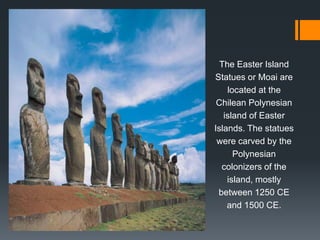
The Easter Island
Statues or Moai are
located at the
Chilean Polynesian
island of Easter
Islands. The statues
were carved by the
Polynesian
colonizers of the
island, mostly
between 1250 CE
and 1500 CE.
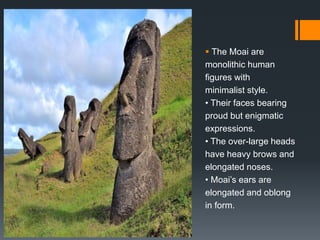
 The Moai are
monolithic human
figures with
minimalist style.
• Their faces bearing
proud but enigmatic
expressions.
• The over-large heads
have heavy brows and
elongated noses.
• Moai’s ears are
elongated and oblong
in form.
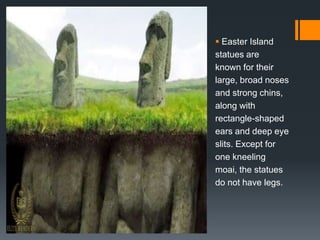
 Easter Island
statues are
known for their
large, broad noses
and strong chins,
along with
rectangle-shaped
ears and deep eye
slits. Except for
one kneeling
moai, the statues
do not have legs.
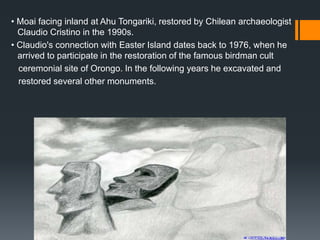
• Moai facing inland at Ahu Tongariki, restored by Chilean archaeologist
Claudio Cristino in the 1990s.
• Claudio's connection with Easter Island dates back to 1976, when he
arrived to participate in the restoration of the famous birdman cult
ceremonial site of Orongo. In the following years he excavated and
restored several other monuments.
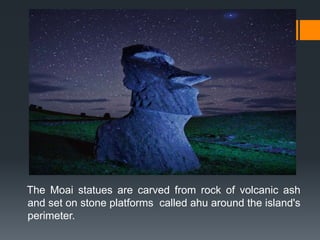
The Moai statues are carved from rock of volcanic ash
and set on stone platforms called ahu around the island's
perimeter.
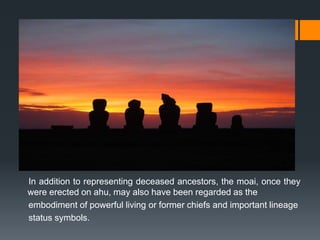
In addition to representing deceased ancestors, the moai, once they
were erected on ahu, may also have been regarded as the
embodiment of powerful living or former chiefs and important lineage
status symbols.
 PANAGIOTIS GOURDOMIHALIS
 MICHAIL VENETHS
 LEO METOYSI
 CHRIS PROFITIS

The easter island

  • 1.
  • 2.
    The Easter Island Statuesor Moai are located at the Chilean Polynesian island of Easter Islands. The statues were carved by the Polynesian colonizers of the island, mostly between 1250 CE and 1500 CE.
  • 3.
     The Moaiare monolithic human figures with minimalist style. • Their faces bearing proud but enigmatic expressions. • The over-large heads have heavy brows and elongated noses. • Moai’s ears are elongated and oblong in form.
  • 4.
     Easter Island statuesare known for their large, broad noses and strong chins, along with rectangle-shaped ears and deep eye slits. Except for one kneeling moai, the statues do not have legs.
  • 5.
    • Moai facinginland at Ahu Tongariki, restored by Chilean archaeologist Claudio Cristino in the 1990s. • Claudio's connection with Easter Island dates back to 1976, when he arrived to participate in the restoration of the famous birdman cult ceremonial site of Orongo. In the following years he excavated and restored several other monuments.
  • 6.
    The Moai statuesare carved from rock of volcanic ash and set on stone platforms called ahu around the island's perimeter.
  • 7.
    In addition torepresenting deceased ancestors, the moai, once they were erected on ahu, may also have been regarded as the embodiment of powerful living or former chiefs and important lineage status symbols.
  • 8.
     PANAGIOTIS GOURDOMIHALIS MICHAIL VENETHS  LEO METOYSI  CHRIS PROFITIS