PROFFESSIONAL 
SALESMANSHIP 
MK TG. 3
SALESMANSHIP: IT’S NATURE AND 
REWARDS 
• Personal Selling 
― It is the employment of men and women who determine 
the needs of potential buyers and attempt to persuade 
these prospects to satisfy their needs through the purchase 
of products and services. 
― It is the direct face to face interaction between a buyer 
and a seller with the objective of making a sale and 
satisfying the needs of the buyer. 
― It is an oral presentation through conversation with the 
buyers with the aim of making a sale.
SALESMANSHIP 
• It is an art of convincing and persuading people to 
buy the product. 
• It is the ability or skill in selling
FORMS OF SELLING 
• Personal Selling – it can be called as direct selling, 
hard selling or pressure selling. 
• Non-Personal Selling 
– This is selling through the aid of some 
form of media like advertising, sampling, 
window display and other forms of promotion. 
– it is also called as soft selling. 
 TYPES: 
 Advertising 
 Sales Promotion 
 Telemarketing 
 Online Selling 
 Direct Mail
T HE SELLING PROCESS 
(P’S OF SELLING) 
1. Preparation 
2. Promotion 
3. Pre-approach 
4. Presentation (AIDA) 
a) Awareness 
b) Interest 
c) Desire 
d) Action 
5. Purchase 
6. Post-Sales Activities
PROFESSIONAL SALES REQUIREMENTS 
• It fully satisfies the needs and wants of a customer. 
• The salesman earned profit from the sale. 
• The producer gained profit from the sale. 
• There is continued patronage from the customer.
SALESMAN IN DIFFERENT NAMES 
• Salesman/ Saleswoman 
• Sales Executives 
• Sales Associate 
• Sales Representative 
• Sales Clerk 
• Sales Engineer 
• Sales Representative 
• Sales Staff 
• Medical Representative 
• Account Executive
ADVANTAGES OF SELLING AS A 
CAREER 
• Relatively high income 
• Travelling 
• Satisfaction of rendering service 
• Chance for advancement 
• Managing one self 
• More chances to meet and interact with people 
• Meet challenges 
• More fun 
• No need for academic laurels
DISADVANTAGES OF SELLING 
AS A CAREER 
• Long hours work 
• Compensation is not on a regular basis 
• Lots of frustration 
• Limited reach 
• Expensive
DIFFERENT COMPENSATION PLANS 
(for sales people) 
• Straight Salary Plan – It is considered as the simplest 
compensation plan. The salesmen receive a 
fixed amount at regular intervals usually every 
15th or end of the month 
• Straight Commission Plan – the theory of the plan is 
that the performance of the salesmen will have 
to be measured according to their productivity. 
• Combination Salary And Commission Plan – The 
salesmen receives a base salary, but he gets 
also a percentage on commission
FRINGE BENEFITS OF A SALESMAN 
• Bonuses 
• Allowances (transportation, food, communication) 
• Trip Packages (Local or Overseas) 
• Vehicle 
• Gifts 
• Membership clubs (Gym, Golf Club, etc.) 
• Other benefits
SALESMANSHIP NOT By a Salesman 
• Politicians 
• Priest or Ministers 
• Professionals 
• Job Applicants seeking employment 
• Lover offering his love and affection to his/her 
sweetheart 
• Organizations for a cause (Charitable Institutions)
SALESMAN’S RESPONSIBILITIES, DUTIES 
AND QUALIFICATION 
• Salesman’s Job 
• To get orders 
• To interpret the people’s need and selling them goods and 
services which they are willing to buy 
• To permit the establishment of a permanent business 
relationship 
• To serve prospects by giving advice on selling, merchandising, 
advertising and management problems
DIFFERENT TYPES OF JOB FOR 
SALESMAN 
• Salesman as a communicator 
• Salesman as a problem solver 
• Salesman as an educator 
• Salesman as a human relations expert
SALESMAN’S AIM 
• To sell himself 
• To sell the company 
• To sell the product
DUTIES AND RESPONSIBILITIES OF A 
SALESMAN 
• Selling 
• Direct Selling 
• Advising and Counseling 
• Handling Complaints 
• Attending Sales Meetings 
• Non-selling 
• Reporting 
• Collecting 
• Assisting the credit department 
• Organizing 
• Travelling 
• Studying
QUALIFICATIONS OF SUCCESSFUL 
SALES CAREER 
• Education 
• Personal Characteristics 
• Personality factors 
• Work habits and experiences 
• Physical health
MENTAL CHARACTERISTICS 
OF SALES PEOPLE 
• Honesty 
• Responsibility 
• Courage 
• Loyalty 
• Resourcefulness 
• Confidence 
• Imagination 
• Showmanship 
• Ambition 
• Adaptability 
• Industry 
• Observation 
• Enthusiasm 
• Courtesy 
• Dominance 
• Tact
HUMAN RELATIONS 
• It is usually involves the proper communication and 
exchange of ideas among individuals.
FAMOUS 5 P’s of SUCCESSFUL SELLING 
• Product 
• Personality 
• Perseverance 
• Prospect 
• Picturesque Presentation
TEN COMMANDMENTS IN SELLING 
1. Speak to people 
2. Smile at people 
3. Call people by name 
4. Be friendly and helpful 
5. Be cordial 
6. Be genuinely interested in people 
7. Be generous with praise 
8. Be considerate of the feelings of others 
9. Be thoughtful of the opinions of others 
10.Be alert to give service
MANNERS THAT A SALESMAN OUGHT 
TO OBSERVE 
• Look pleasant and neat 
• Wear simple clothes 
• Good voice and diction 
• Have a firm handshake 
• Avoid tapping the desk with the finger or a pencil 
• Buttoning or unbuttoning one’s coat, and annoying physical movements 
such as crossing and uncrossing one’s legs or nervous tapping on the 
floor with one’s foot 
• Avoid the repetitions of such phrases as “see what I mean” and “you 
know” or starting every sentence with “Now” or “And” 
• Remember the names and surnames of individuals you deal with 
• Do not argue with the customers 
• Avoid stepping on sentences 
• Keep your promises 
• Smile 
• Keep physically fit
THE NEW SALESPERSON 
• A techie 
• Computer Literate 
• A master of the Internet and of online selling 
• An intelligence agent – S/He can get all the information 
required in a sales transaction, including the needs and 
wants of his target market and the activities of the 
competition and other major players in the industry 
• Customer-oriented 
• Master Strategist – He can draw up and execute a well-balanced 
sales plan designed to help him achieve 
maximum market growth, market share and profit
CHARACTERISTICS AND BEHAVIOR 
PATTERNS OF CUSTOMERS 
(PART 1) 
• TYPES OF BUYERS: 
1. The Cold Critical Buyer – The salesperson should keep his poise or 
self-confidence, and give a very businesslike sales talk full of facts. 
2. The Self-important Buyer Or Egoist – The salesperson should flatter this 
type 
3. The Easy Going And Goo-natured Buyer – The salesperson should 
establish friendly relations 
4. The Nervous and Irritable Buyer – The salesperson should be calm 
and polite 
5. The Forgetful Buyer – The salesman must go slowly and repeat often. 
6. The Opinionated Buyer – The salesperson should keep on the subject 
and direct the buyer’s mind to his product 
7. The Impolite Buyer – The salesman should keep his temper, no 
matter how impolite the buyer becomes. 
8. Cultivated And Rough Buyer – The Salesman must dress better, 
better manner and use better language.
EIGHTEEN DIFFERENT 
CLASSIFICATIONS OF BUYER 
1. The Competitive prospects – one who presumes that 
he can have more products for less money and enjoy 
comparing one product from the other. 
2. The Technical prospect – one who possesses a 
scientific type of method. 
3. The Friendly prospect – talkative type of buyer who tries 
to monopolize the conversation of topics related to his 
family, friends and social circles. 
4. The Argumentative prospects – he is very fond of 
arguments, of using his reasoning power. 
5. The Hot-headed prospects – he is the temperamental 
type who easily got angry with the slightest 
provocation.
6. The Silent prospect – One who talks little, making it 
hard for the salesperson to know and serve him. 
7. The Hesitant prospect – The prospect cannot 
decided whether to buy or not the product. 
8. The Big-time prospect – One who suggests that he 
can exert pressures to the buying decisions of top 
management ranks. 
9. The Shopping prospects – One who is very fond of 
shopping around. 
10.The no money in the budget prospect – He likes 
the product very much but he does not have the 
money.
11.The Thrifty prospect – He is one who is price 
conscious. 
12.The Self-important prospect – The one with so 
called “high hat” attitude. 
13.The Curious prospect – The prospect is very 
inquisitive. 
14.The Timid prospect – He is considered to be a 
problem prospect. 
15.The Undecided prospect – He thinks too slowly 
and needs to be pushed by a third party to 
convince him to buy the product.
16. The Wavering prospects – One who cannot make 
up his mind to do one thing or the other. 
17.The Slow-thinking prospect – Never to be hurried 
or pushed. 
18.The Open-minded prospect – He is the finest type 
of prospect. Easy to get along with and fairly 
consider every facts presented to him.
CHARACTERISTICS OF AN EXTROVERT 
BUYER 
• He laughs frequently and readily 
• He usually likes to talk 
• He may be a rather fluent talker 
• He is cordial and pleasant in manner 
• He enjoys being called by his first name 
• He will make an attempt to be liked personality 
• He tries not to hurt anyone’s feelings 
• He probably will not want to argue 
• He may like to talk about social activities 
• He may be interested in a minimum of details 
• He may often act upon matters impulsively
CHARACTERISTICS OF AN INTROVERT 
BUYER 
• He is reserved 
• He seldom laughs 
• He questions the salesperson’s motives 
• He wants reasons, facts, and details 
• He speaks infrequently of social activities 
• He does not want to be rushed into action 
• He is sensitive 
• He puts relatively little weight on the salesperson’s personality 
• He does more listening than talking 
• He likes to make up his mind at his own pace 
• He defends his conviction rather strongly 
• He rarely offers his opinion when in a group 
• He terminates the interview abruptly
CHARACTERISTICS AND BEHAVIOR 
PATTERNS OF CONSUMERS 
(PART 2) 
• Internal Behavior Factors: 
• Perception – it is the process by which an individual thinks, 
believes, acts and interprets information though the various 
senses. 
• Motives – it is the force that activates behavior 
• Learning – it may be described as the variations in the behavior 
of the individual based upon past experiences in similar 
situations. 
– it refers to the result of direct and indirect experiences 
on the future behavior 
• Attitudes – defined as the predisposition to behave in a 
consistent way toward a person or class. 
– it is the sum or total of an individual’s feelings, 
inclinations, prejudices, preconceived notion and convictions 
which tend to create a disposition 
• Personality – it the sum or total of a person’s characteristics.
SOCIAL INFLUENCES ON BUYING 
BEHAVIOR 
• Role and Family influences 
• Role – set of actions or functions performed by an individual in a 
particular position supposed to be performed. 
• Reference Group influences – it is an identification mark of 
an individual as to what group he or she belongs. 
• Social Classes – a group to which they aspire and normally 
have common patterns of behavior. 
• Culture – it embraces the ideas, values, attitudes, artifacts and 
symbols governing the behavior of a member of the group. 
– it is also includes concepts, values and behavior that are 
learned and are passed on from one generation to the next
CONSUMER MOTIVATION 
• Selling requires motivation. We can say that people 
have reasons for their action. Therefore, people do 
not just buy things without reasons. A good 
salesman tries to discover what really motivates his 
prospects and then base his presentations around 
it.
• Need – is the state of the felt deprivation. It is a lack 
of something which is necessary. 
• Wants – these are individual desires that are not too 
important to life itself, although they are also 
desired for creating a more satisfying and 
abundant life. 
• Motivation – it is the amount of effort the salesman 
desires to extend on each of the activities or tasks 
associated with his job.
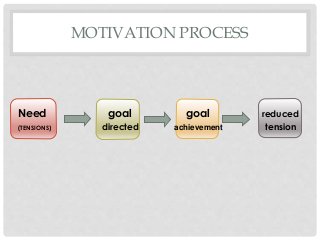
MOTIVATION PROCESS 
Need goal goal reduced 
(TENSIONS) directed achievement tension
WHY MANAGERS NEED TO MOTIVATE 
SALESPEOPLE? 
• Keep the salesman’s morale high in the face of 
adversities. 
• Motivate the salesman to exploit his potentials to 
the fullest.
INTERNAL FORCES 
• Rational Motives – these are motives that involve 
conscious reasoning about a course of action. 
Reason or intelligence is involved in the 
purchase decision. 
• TYPES: 
• Economy 
• Desire for quality 
• Convenience
• Emotional Buying Motives – these are irrational 
motives which prompt the buyers to buy a 
certain product. 
• TYPES: 
• Ease and convenience 
• Profit and thrift 
• Safety and protection 
• Play and relaxation 
• Pride and prestige 
• Love and affection 
• Sex and romance 
• Adventure and excitement 
• Other random and emotional buying motives
REASONS WHY PEOPLE BUY INDUSTRIAL 
AND COMMERCIAL PRODUCTS 
• Profit 
• Economy 
• Uniformity of output (uniform sizes, quality or color) 
• Flexibility 
• Saleable 
• Protection 
• Utility
MOTIVES WHY PEOPLE BUY FROM A 
CERTAIN STORE 
• Convenience of location 
• Price 
• Service of merchandise 
• Sales personnel 
• Reciprocity (you scratch my back and I’ll scratch 
your back) 
• Quality
THEORIES OF MOTIVATION 
• Maslow’s Hierarchy of needs theory – this was 
advocated by Abraham H. Maslow, clinical 
psychologist. It has two premises: First, human behavior 
are motivated by their own desire to satisfy certain 
needs. Second, the needs of individuals are universal. As 
the lower needs are satisfied, behavior is motivated to 
satisfy the next level of need. 
• Achievement Motivation Theory – It was advocated by 
Henry A. Murray and David C. McClelland. This is also 
known as Need Achievement theory which states that 
the major portion of an individual’s will perform can be 
explained by the intensity of his or her need for 
achievement.
• Motivation-hygiene Theory – This theory was 
researched by Frederic Herzberg and his associates. 
It is also known as the two factors theory and dual 
factor theory. The factors involved in producing job 
satisfaction and motivation are quite different from 
the factors involved in producing job dissatisfaction. 
• Expectancy/ Valence Theory – Expounded by 
Victor H. Vroom. It is more concentrated in 
understanding the processes or dynamic 
relationships among the variables as they affect the 
individual behavior
• Reinforcement Theory – B.F. Skinner was the one 
who advocated this theory and also known as 
operant conditioning. This theory presupposes that 
human behavior can be subjected to change, can 
be molded or conditioned, by controlling the 
reward structures of various forms of behavior better 
known as the “positive reinforcement.”
DIRECT SELLING COMPANIES VS. 
MLM COMPANIES 
• Direct Selling Companies – face-to-face selling to the 
companies through independent distributors or sales 
people. It is legitimate marketing medium that is 
used to sell practically anything. 
• Multilevel Marketing (MLM) – It is also called as Network 
Marketing. One builds an organization by using a 
network through which to channel the products. 
– it is an approach of distributing products 
sold directly to the final users through a network of 
independent distributors or dealers through which it 
channels the products, sharing with relatives, 
neighbors or business associates.
• Pyramiding – it is an illegal money scam often 
confused with legitimate network marketing 
plans, where people are convinced to pay 
money for a chance to profit from the 
payments of others who might join later.
TERMINOLOGIES RELATED TO 
MULTILEVEL MARKETING 
• Sponsor – the person who introduces another into 
the business of a multilevel marketing company. 
• Upline – It includes the sponsor of a distributor, the 
sponsor and all the way up. 
• Downline – includes all the recruits (or distributors) 
directly sponsored by a distributor, his recruits and 
all the way down. 
• Incentive – A reward system given to executive 
distributors to entice them to sell and push the 
products
• Binary plan – It is a network or multilevel marketing 
compensation plan, which allows distributors to 
have only two direct or first-level distributors. 
Any additional distributors sponsored have a 
‘spillover’ effect, meaning; they are placed at 
levels below the sponsoring distributors’ first 
level. 
• Proselytizing – It is an act of recruiting co-distributors 
to join other companies to the detriment of the 
upline and network marketing company. In 
short, it’s about a distributor or distributors 
raiding a company’s sales force another 
company for personal gain.
ADVANTAGES OF JOINING A DIRECT 
SELLING COMPANY 
• Real potential for personal and financial rewards 
• Easy access to training and support 
• Low startup cost 
• Independence and flexibility 
• A person that joined a direct selling company is 
considered as an employee of the company 
• Anyone can join regardless of educational 
attainment 
• Develop interpersonal and selling skills 
• There are no penalties in leaving the industry
DISADVANTAGE OF JOINING A DIRECT 
SELLING COMPANY 
• Cost per contact 
• Time 
• Customer intrusion 
• Professionalism and credibility 
• Continuity of the message 
• Potential for scams
ADVANTAGES OF JOINING A 
MULTILEVEL MARKETING (MLM) 
• Manpower labor cost is nil and insignificant, because the 
distributors recruited are not employees of the network 
company 
• The distributors are free from the usual business risk because 
capital is very minimal 
• Network marketing relies heavily on the word-of-mouth 
communication 
• The distributors are not required to work full time 
• Network marketing provides unlimited income to distributors 
who are energetic and leader in motivating its network of 
members to sell and share their experiences to others 
• Transaction are not purely done at cash basis 
• Fast turnover of products 
• Triggers high loyalty from users
DISADVANTAGES OF JOINING A 
MULTILEVEL MARKETING (MLM) 
• Getting attached to a disreputable MLM company 
• Creating a network or downlines may be more 
expensive than the distributor realized 
• There may be a lot of money spent on outside meals, 
fuels, accommodation, etc. 
• Actual success in sales is hard to come by. 
• They will depend on their downlines for their sale and 
NOT on his/her personal sales 
• The products may be overpriced discourage people to 
buy them 
• Your family and friends may not understand what you 
are trying to do
TRUTH ABOUT LEGITIMATE MARKETING 
COMPANIES 
(DSAP) 
• Low entry barriers 
• Fair market value/regular retail requirement 
• No inventory loading – committing to a substantial 
investment that may cause financial distress to the 
distributor subsequently 
• Low exit barrier
SUCCESS FACTORS IN MLM OR 
NETWORK COMPANIES 
• Recruiting (or sharing) as many distributors as possible to 
have more consumers, sales and profit. 
• Distributors to teach their downlines 
• Attitude and leadership of the sponsor 
• Products sold must be affordable, of good quality, and 
satisfy a want 
• Viability of the marketing (or business) plan 
• Integrity of the network company 
• Training and business opportunity meetings with 
distributors on a periodic basis, providing guidance and 
directions, motivations, and product knowledge and 
testimonials from distributors.
HOW TO DIFFERENTIATE A 
LEGITIMATE DIRECT SELLING 
COMPANY FROM PYRAMIDING? 
The 8-Point Test 
1. Is there a product? 
2. Are commissions paid on sales of products and not on 
registration/entry fees? 
3. Is the intent to sell a product not a position 
4. Is there no direct correlation between the number of 
recruits and compensation? 
5. If recruitment were to be stopped today, will the 
participants still make money? 
6. Is there a reasonable product return policy? 
7. Do products have fair market value? 
8. Is there a compelling reason to buy?
FOUR (4) BASIC EXPECTATIONS OF 
EACH DISTRIBUTOR 
• Use the products personally 
• Share the products with FRAN (friends, relatives, 
associates, neighbors) 
• Sponsor people into the network 
• Build and maintain an organization of leaders
SEVEN (7) STAGES OF A RECRUIT IN AN 
MLM COMPANY 
1. Visitors – This individual signs up as a distributor but 
has not done anything yet other than attend a 
business opportunity meeting. 
2. Participants – This type of distributor shows up at 
the office or during meetings and trainings. They 
have the desire to be active but have not made a 
purchase for personal use or resale. 
3. User – This type of distributor has signed up and 
consumes the product for personal use. 
4. Recruiter – This type of distributor has invited visitors 
and participants and signed up some as users or 
downlines.
5. Motivator – He/ she goes for the hype. 
6. Trainer – He/she is interested in helping his recruits 
to attain knowledge and skills in the shortest 
possible time using the best-proven method that 
he knows. 
7. Leader – He has not only developed himself to be 
great motivator and trainer but he is also 
conscious to be a role model for others to 
emulate.
WHY DO PEOPLE STAYS IN THE MLM 
BUSINESS 
• Good products 
• Good leadership 
• Good company 
• The company’s purpose/ vision 
• Competitive Earnings 
• Personal and financial success
CREDIT POLICIES AND PRACTICES 
• CREDIT – it is the borrowing capacity of an 
individual or company. 
– Contractual agreement in which a 
borrower receives something of value now and 
agrees to repay the lender at some later date. 
– it is the extension and acceptance of a 
promise to pay in the future.
C’s of CREDIT 
• C’s of credit – it is a method used by lenders to 
determine the credit worthiness of potential 
borrowers. 
THE FIVE C’s of CREDIT 
 Character – integrity of the borrower. It has something to do with 
the individual’s sense of responsibility in meeting his financial 
obligation. 
 Capacity – sufficient cash flow to service the obligation. It is 
person’s ability to earn money in meeting his obligation. 
 Capital – borrower’s net worth or wealth. 
 Collateral – assets to secure debt. 
 Conditions – environment the borrower is and the overall 
economy.
WHY CONSUMER USE CREDIT? 
• Convenience 
• Immediate use of high-price items 
• Possible savings 
• Preservation of savings 
• Income tax purposes
WHY RETAILERS OFFER CREDIT? 
• It creates customer loyalty 
• It may be less price conscious 
• Credit customers buy more freely 
• It may attract preferred trade 
• It builds goodwill 
• It helps smooth out business peaks
FOUR GENERAL GROUPS OF CREDIT 
POLICIES 
• Liberal granting and collections – this is to extent credit 
to all consumers regardless of its credit standing 
• Liberal granting and strict collection – it is extended to all 
classes of risk and believes he feels he is a better 
collector than his competition. 
• Strict granting and liberal collection – it would not extent 
credit to consumers with poor or fair credit standing. But, 
they are lenient in regards to collection because they 
have already carefully selected their consumers. 
• Strict granting and strict collection – it stresses prompt 
payment of bills to minimize collection expenses.
COLLECTION TIPS 
• Speaks slowly and always tell them what you want them 
to do. Don’t leave an open-ended message. 
• Always be courteous and professional. 
• If the debtor is not around, talk to another member of 
the family. Tell them your name and purpose of visit 
regarding an important matter that needs follow up. 
• Create sense of urgency by leaving a deadline to them. 
• Get the other contact details of the debtor in order for 
you to reach her out. 
• Ask for the best time to visit them .
COMMON DEBT COLLECTION ERRORS 
• Not checking customer’s credit history before extending 
credit. 
• Not getting a credit application, agreement or contract in 
writing and signed. 
• Unintentionally “harassing” a debtor. 
• Overlooking small balances. 
• Not asking for money that is owed because they hate doing 
such. 
• Not knowing when is the right to turn a debt over to the 
company 
• Not having a credit policy in place and enforcing it. 
• Extending credit to anyone who talks in the door or calls on 
the phone because they “sound that they will pay.” 
• Not pulling credit reports and checking references. 
• Not enough training in regards with to credit management.
HOW TO CORRECT CREDIT 
COLLECTION ERRORS 
• Enforce your credit policy 
• Make sure your debtor is “worth” something before 
pushing them – if they don’t have any assets there is 
nothing to attach or garnish if they would not pay. 
• Ask payment when it is due. 
• Conduct a client history research
FINAL TIPS FOR IMPROVING YOUR 
COLLECTION PROCEDURES 
• It is important that your customers know the credit policy and/or 
terms of payment before they became customers. 
• Always ask for payment when it is justly due. 
• Never extend credit to a new customer without having them 
studied, analyzed and double checked. 
• Once you extend credit, it is important to maintain accurate 
records on an account payment history. 
• Adhere to the collection policies no matter what. 
• Be consistent in regards to account or payment terms. 
• When receiving payment on account be sure to follow up right 
away with a letter, text or phone call thanking them for the 
payment received. 
• On large account – visit, call or send a reminder just a few days 
after terms if they become delinquent. 
• Ensure to reach out customers with outstanding due. 
• If customers disputes about the quality of merchandise or service, 
price or delivery, you should attempt to resolve this right away.

Professional Salesmanship

  • 1.
  • 2.
    SALESMANSHIP: IT’S NATUREAND REWARDS • Personal Selling ― It is the employment of men and women who determine the needs of potential buyers and attempt to persuade these prospects to satisfy their needs through the purchase of products and services. ― It is the direct face to face interaction between a buyer and a seller with the objective of making a sale and satisfying the needs of the buyer. ― It is an oral presentation through conversation with the buyers with the aim of making a sale.
  • 3.
    SALESMANSHIP • Itis an art of convincing and persuading people to buy the product. • It is the ability or skill in selling
  • 4.
    FORMS OF SELLING • Personal Selling – it can be called as direct selling, hard selling or pressure selling. • Non-Personal Selling – This is selling through the aid of some form of media like advertising, sampling, window display and other forms of promotion. – it is also called as soft selling.  TYPES:  Advertising  Sales Promotion  Telemarketing  Online Selling  Direct Mail
  • 5.
    T HE SELLINGPROCESS (P’S OF SELLING) 1. Preparation 2. Promotion 3. Pre-approach 4. Presentation (AIDA) a) Awareness b) Interest c) Desire d) Action 5. Purchase 6. Post-Sales Activities
  • 6.
    PROFESSIONAL SALES REQUIREMENTS • It fully satisfies the needs and wants of a customer. • The salesman earned profit from the sale. • The producer gained profit from the sale. • There is continued patronage from the customer.
  • 7.
    SALESMAN IN DIFFERENTNAMES • Salesman/ Saleswoman • Sales Executives • Sales Associate • Sales Representative • Sales Clerk • Sales Engineer • Sales Representative • Sales Staff • Medical Representative • Account Executive
  • 8.
    ADVANTAGES OF SELLINGAS A CAREER • Relatively high income • Travelling • Satisfaction of rendering service • Chance for advancement • Managing one self • More chances to meet and interact with people • Meet challenges • More fun • No need for academic laurels
  • 9.
    DISADVANTAGES OF SELLING AS A CAREER • Long hours work • Compensation is not on a regular basis • Lots of frustration • Limited reach • Expensive
  • 10.
    DIFFERENT COMPENSATION PLANS (for sales people) • Straight Salary Plan – It is considered as the simplest compensation plan. The salesmen receive a fixed amount at regular intervals usually every 15th or end of the month • Straight Commission Plan – the theory of the plan is that the performance of the salesmen will have to be measured according to their productivity. • Combination Salary And Commission Plan – The salesmen receives a base salary, but he gets also a percentage on commission
  • 11.
    FRINGE BENEFITS OFA SALESMAN • Bonuses • Allowances (transportation, food, communication) • Trip Packages (Local or Overseas) • Vehicle • Gifts • Membership clubs (Gym, Golf Club, etc.) • Other benefits
  • 12.
    SALESMANSHIP NOT Bya Salesman • Politicians • Priest or Ministers • Professionals • Job Applicants seeking employment • Lover offering his love and affection to his/her sweetheart • Organizations for a cause (Charitable Institutions)
  • 13.
    SALESMAN’S RESPONSIBILITIES, DUTIES AND QUALIFICATION • Salesman’s Job • To get orders • To interpret the people’s need and selling them goods and services which they are willing to buy • To permit the establishment of a permanent business relationship • To serve prospects by giving advice on selling, merchandising, advertising and management problems
  • 14.
    DIFFERENT TYPES OFJOB FOR SALESMAN • Salesman as a communicator • Salesman as a problem solver • Salesman as an educator • Salesman as a human relations expert
  • 15.
    SALESMAN’S AIM •To sell himself • To sell the company • To sell the product
  • 16.
    DUTIES AND RESPONSIBILITIESOF A SALESMAN • Selling • Direct Selling • Advising and Counseling • Handling Complaints • Attending Sales Meetings • Non-selling • Reporting • Collecting • Assisting the credit department • Organizing • Travelling • Studying
  • 17.
    QUALIFICATIONS OF SUCCESSFUL SALES CAREER • Education • Personal Characteristics • Personality factors • Work habits and experiences • Physical health
  • 18.
    MENTAL CHARACTERISTICS OFSALES PEOPLE • Honesty • Responsibility • Courage • Loyalty • Resourcefulness • Confidence • Imagination • Showmanship • Ambition • Adaptability • Industry • Observation • Enthusiasm • Courtesy • Dominance • Tact
  • 19.
    HUMAN RELATIONS •It is usually involves the proper communication and exchange of ideas among individuals.
  • 20.
    FAMOUS 5 P’sof SUCCESSFUL SELLING • Product • Personality • Perseverance • Prospect • Picturesque Presentation
  • 21.
    TEN COMMANDMENTS INSELLING 1. Speak to people 2. Smile at people 3. Call people by name 4. Be friendly and helpful 5. Be cordial 6. Be genuinely interested in people 7. Be generous with praise 8. Be considerate of the feelings of others 9. Be thoughtful of the opinions of others 10.Be alert to give service
  • 22.
    MANNERS THAT ASALESMAN OUGHT TO OBSERVE • Look pleasant and neat • Wear simple clothes • Good voice and diction • Have a firm handshake • Avoid tapping the desk with the finger or a pencil • Buttoning or unbuttoning one’s coat, and annoying physical movements such as crossing and uncrossing one’s legs or nervous tapping on the floor with one’s foot • Avoid the repetitions of such phrases as “see what I mean” and “you know” or starting every sentence with “Now” or “And” • Remember the names and surnames of individuals you deal with • Do not argue with the customers • Avoid stepping on sentences • Keep your promises • Smile • Keep physically fit
  • 23.
    THE NEW SALESPERSON • A techie • Computer Literate • A master of the Internet and of online selling • An intelligence agent – S/He can get all the information required in a sales transaction, including the needs and wants of his target market and the activities of the competition and other major players in the industry • Customer-oriented • Master Strategist – He can draw up and execute a well-balanced sales plan designed to help him achieve maximum market growth, market share and profit
  • 24.
    CHARACTERISTICS AND BEHAVIOR PATTERNS OF CUSTOMERS (PART 1) • TYPES OF BUYERS: 1. The Cold Critical Buyer – The salesperson should keep his poise or self-confidence, and give a very businesslike sales talk full of facts. 2. The Self-important Buyer Or Egoist – The salesperson should flatter this type 3. The Easy Going And Goo-natured Buyer – The salesperson should establish friendly relations 4. The Nervous and Irritable Buyer – The salesperson should be calm and polite 5. The Forgetful Buyer – The salesman must go slowly and repeat often. 6. The Opinionated Buyer – The salesperson should keep on the subject and direct the buyer’s mind to his product 7. The Impolite Buyer – The salesman should keep his temper, no matter how impolite the buyer becomes. 8. Cultivated And Rough Buyer – The Salesman must dress better, better manner and use better language.
  • 25.
    EIGHTEEN DIFFERENT CLASSIFICATIONSOF BUYER 1. The Competitive prospects – one who presumes that he can have more products for less money and enjoy comparing one product from the other. 2. The Technical prospect – one who possesses a scientific type of method. 3. The Friendly prospect – talkative type of buyer who tries to monopolize the conversation of topics related to his family, friends and social circles. 4. The Argumentative prospects – he is very fond of arguments, of using his reasoning power. 5. The Hot-headed prospects – he is the temperamental type who easily got angry with the slightest provocation.
  • 26.
    6. The Silentprospect – One who talks little, making it hard for the salesperson to know and serve him. 7. The Hesitant prospect – The prospect cannot decided whether to buy or not the product. 8. The Big-time prospect – One who suggests that he can exert pressures to the buying decisions of top management ranks. 9. The Shopping prospects – One who is very fond of shopping around. 10.The no money in the budget prospect – He likes the product very much but he does not have the money.
  • 27.
    11.The Thrifty prospect– He is one who is price conscious. 12.The Self-important prospect – The one with so called “high hat” attitude. 13.The Curious prospect – The prospect is very inquisitive. 14.The Timid prospect – He is considered to be a problem prospect. 15.The Undecided prospect – He thinks too slowly and needs to be pushed by a third party to convince him to buy the product.
  • 28.
    16. The Waveringprospects – One who cannot make up his mind to do one thing or the other. 17.The Slow-thinking prospect – Never to be hurried or pushed. 18.The Open-minded prospect – He is the finest type of prospect. Easy to get along with and fairly consider every facts presented to him.
  • 29.
    CHARACTERISTICS OF ANEXTROVERT BUYER • He laughs frequently and readily • He usually likes to talk • He may be a rather fluent talker • He is cordial and pleasant in manner • He enjoys being called by his first name • He will make an attempt to be liked personality • He tries not to hurt anyone’s feelings • He probably will not want to argue • He may like to talk about social activities • He may be interested in a minimum of details • He may often act upon matters impulsively
  • 30.
    CHARACTERISTICS OF ANINTROVERT BUYER • He is reserved • He seldom laughs • He questions the salesperson’s motives • He wants reasons, facts, and details • He speaks infrequently of social activities • He does not want to be rushed into action • He is sensitive • He puts relatively little weight on the salesperson’s personality • He does more listening than talking • He likes to make up his mind at his own pace • He defends his conviction rather strongly • He rarely offers his opinion when in a group • He terminates the interview abruptly
  • 31.
    CHARACTERISTICS AND BEHAVIOR PATTERNS OF CONSUMERS (PART 2) • Internal Behavior Factors: • Perception – it is the process by which an individual thinks, believes, acts and interprets information though the various senses. • Motives – it is the force that activates behavior • Learning – it may be described as the variations in the behavior of the individual based upon past experiences in similar situations. – it refers to the result of direct and indirect experiences on the future behavior • Attitudes – defined as the predisposition to behave in a consistent way toward a person or class. – it is the sum or total of an individual’s feelings, inclinations, prejudices, preconceived notion and convictions which tend to create a disposition • Personality – it the sum or total of a person’s characteristics.
  • 32.
    SOCIAL INFLUENCES ONBUYING BEHAVIOR • Role and Family influences • Role – set of actions or functions performed by an individual in a particular position supposed to be performed. • Reference Group influences – it is an identification mark of an individual as to what group he or she belongs. • Social Classes – a group to which they aspire and normally have common patterns of behavior. • Culture – it embraces the ideas, values, attitudes, artifacts and symbols governing the behavior of a member of the group. – it is also includes concepts, values and behavior that are learned and are passed on from one generation to the next
  • 33.
    CONSUMER MOTIVATION •Selling requires motivation. We can say that people have reasons for their action. Therefore, people do not just buy things without reasons. A good salesman tries to discover what really motivates his prospects and then base his presentations around it.
  • 34.
    • Need –is the state of the felt deprivation. It is a lack of something which is necessary. • Wants – these are individual desires that are not too important to life itself, although they are also desired for creating a more satisfying and abundant life. • Motivation – it is the amount of effort the salesman desires to extend on each of the activities or tasks associated with his job.
  • 35.
    MOTIVATION PROCESS Needgoal goal reduced (TENSIONS) directed achievement tension
  • 36.
    WHY MANAGERS NEEDTO MOTIVATE SALESPEOPLE? • Keep the salesman’s morale high in the face of adversities. • Motivate the salesman to exploit his potentials to the fullest.
  • 37.
    INTERNAL FORCES •Rational Motives – these are motives that involve conscious reasoning about a course of action. Reason or intelligence is involved in the purchase decision. • TYPES: • Economy • Desire for quality • Convenience
  • 38.
    • Emotional BuyingMotives – these are irrational motives which prompt the buyers to buy a certain product. • TYPES: • Ease and convenience • Profit and thrift • Safety and protection • Play and relaxation • Pride and prestige • Love and affection • Sex and romance • Adventure and excitement • Other random and emotional buying motives
  • 39.
    REASONS WHY PEOPLEBUY INDUSTRIAL AND COMMERCIAL PRODUCTS • Profit • Economy • Uniformity of output (uniform sizes, quality or color) • Flexibility • Saleable • Protection • Utility
  • 40.
    MOTIVES WHY PEOPLEBUY FROM A CERTAIN STORE • Convenience of location • Price • Service of merchandise • Sales personnel • Reciprocity (you scratch my back and I’ll scratch your back) • Quality
  • 41.
    THEORIES OF MOTIVATION • Maslow’s Hierarchy of needs theory – this was advocated by Abraham H. Maslow, clinical psychologist. It has two premises: First, human behavior are motivated by their own desire to satisfy certain needs. Second, the needs of individuals are universal. As the lower needs are satisfied, behavior is motivated to satisfy the next level of need. • Achievement Motivation Theory – It was advocated by Henry A. Murray and David C. McClelland. This is also known as Need Achievement theory which states that the major portion of an individual’s will perform can be explained by the intensity of his or her need for achievement.
  • 42.
    • Motivation-hygiene Theory– This theory was researched by Frederic Herzberg and his associates. It is also known as the two factors theory and dual factor theory. The factors involved in producing job satisfaction and motivation are quite different from the factors involved in producing job dissatisfaction. • Expectancy/ Valence Theory – Expounded by Victor H. Vroom. It is more concentrated in understanding the processes or dynamic relationships among the variables as they affect the individual behavior
  • 43.
    • Reinforcement Theory– B.F. Skinner was the one who advocated this theory and also known as operant conditioning. This theory presupposes that human behavior can be subjected to change, can be molded or conditioned, by controlling the reward structures of various forms of behavior better known as the “positive reinforcement.”
  • 44.
    DIRECT SELLING COMPANIESVS. MLM COMPANIES • Direct Selling Companies – face-to-face selling to the companies through independent distributors or sales people. It is legitimate marketing medium that is used to sell practically anything. • Multilevel Marketing (MLM) – It is also called as Network Marketing. One builds an organization by using a network through which to channel the products. – it is an approach of distributing products sold directly to the final users through a network of independent distributors or dealers through which it channels the products, sharing with relatives, neighbors or business associates.
  • 45.
    • Pyramiding –it is an illegal money scam often confused with legitimate network marketing plans, where people are convinced to pay money for a chance to profit from the payments of others who might join later.
  • 46.
    TERMINOLOGIES RELATED TO MULTILEVEL MARKETING • Sponsor – the person who introduces another into the business of a multilevel marketing company. • Upline – It includes the sponsor of a distributor, the sponsor and all the way up. • Downline – includes all the recruits (or distributors) directly sponsored by a distributor, his recruits and all the way down. • Incentive – A reward system given to executive distributors to entice them to sell and push the products
  • 47.
    • Binary plan– It is a network or multilevel marketing compensation plan, which allows distributors to have only two direct or first-level distributors. Any additional distributors sponsored have a ‘spillover’ effect, meaning; they are placed at levels below the sponsoring distributors’ first level. • Proselytizing – It is an act of recruiting co-distributors to join other companies to the detriment of the upline and network marketing company. In short, it’s about a distributor or distributors raiding a company’s sales force another company for personal gain.
  • 48.
    ADVANTAGES OF JOININGA DIRECT SELLING COMPANY • Real potential for personal and financial rewards • Easy access to training and support • Low startup cost • Independence and flexibility • A person that joined a direct selling company is considered as an employee of the company • Anyone can join regardless of educational attainment • Develop interpersonal and selling skills • There are no penalties in leaving the industry
  • 49.
    DISADVANTAGE OF JOININGA DIRECT SELLING COMPANY • Cost per contact • Time • Customer intrusion • Professionalism and credibility • Continuity of the message • Potential for scams
  • 50.
    ADVANTAGES OF JOININGA MULTILEVEL MARKETING (MLM) • Manpower labor cost is nil and insignificant, because the distributors recruited are not employees of the network company • The distributors are free from the usual business risk because capital is very minimal • Network marketing relies heavily on the word-of-mouth communication • The distributors are not required to work full time • Network marketing provides unlimited income to distributors who are energetic and leader in motivating its network of members to sell and share their experiences to others • Transaction are not purely done at cash basis • Fast turnover of products • Triggers high loyalty from users
  • 51.
    DISADVANTAGES OF JOININGA MULTILEVEL MARKETING (MLM) • Getting attached to a disreputable MLM company • Creating a network or downlines may be more expensive than the distributor realized • There may be a lot of money spent on outside meals, fuels, accommodation, etc. • Actual success in sales is hard to come by. • They will depend on their downlines for their sale and NOT on his/her personal sales • The products may be overpriced discourage people to buy them • Your family and friends may not understand what you are trying to do
  • 52.
    TRUTH ABOUT LEGITIMATEMARKETING COMPANIES (DSAP) • Low entry barriers • Fair market value/regular retail requirement • No inventory loading – committing to a substantial investment that may cause financial distress to the distributor subsequently • Low exit barrier
  • 53.
    SUCCESS FACTORS INMLM OR NETWORK COMPANIES • Recruiting (or sharing) as many distributors as possible to have more consumers, sales and profit. • Distributors to teach their downlines • Attitude and leadership of the sponsor • Products sold must be affordable, of good quality, and satisfy a want • Viability of the marketing (or business) plan • Integrity of the network company • Training and business opportunity meetings with distributors on a periodic basis, providing guidance and directions, motivations, and product knowledge and testimonials from distributors.
  • 54.
    HOW TO DIFFERENTIATEA LEGITIMATE DIRECT SELLING COMPANY FROM PYRAMIDING? The 8-Point Test 1. Is there a product? 2. Are commissions paid on sales of products and not on registration/entry fees? 3. Is the intent to sell a product not a position 4. Is there no direct correlation between the number of recruits and compensation? 5. If recruitment were to be stopped today, will the participants still make money? 6. Is there a reasonable product return policy? 7. Do products have fair market value? 8. Is there a compelling reason to buy?
  • 55.
    FOUR (4) BASICEXPECTATIONS OF EACH DISTRIBUTOR • Use the products personally • Share the products with FRAN (friends, relatives, associates, neighbors) • Sponsor people into the network • Build and maintain an organization of leaders
  • 56.
    SEVEN (7) STAGESOF A RECRUIT IN AN MLM COMPANY 1. Visitors – This individual signs up as a distributor but has not done anything yet other than attend a business opportunity meeting. 2. Participants – This type of distributor shows up at the office or during meetings and trainings. They have the desire to be active but have not made a purchase for personal use or resale. 3. User – This type of distributor has signed up and consumes the product for personal use. 4. Recruiter – This type of distributor has invited visitors and participants and signed up some as users or downlines.
  • 57.
    5. Motivator –He/ she goes for the hype. 6. Trainer – He/she is interested in helping his recruits to attain knowledge and skills in the shortest possible time using the best-proven method that he knows. 7. Leader – He has not only developed himself to be great motivator and trainer but he is also conscious to be a role model for others to emulate.
  • 58.
    WHY DO PEOPLESTAYS IN THE MLM BUSINESS • Good products • Good leadership • Good company • The company’s purpose/ vision • Competitive Earnings • Personal and financial success
  • 59.
    CREDIT POLICIES ANDPRACTICES • CREDIT – it is the borrowing capacity of an individual or company. – Contractual agreement in which a borrower receives something of value now and agrees to repay the lender at some later date. – it is the extension and acceptance of a promise to pay in the future.
  • 60.
    C’s of CREDIT • C’s of credit – it is a method used by lenders to determine the credit worthiness of potential borrowers. THE FIVE C’s of CREDIT  Character – integrity of the borrower. It has something to do with the individual’s sense of responsibility in meeting his financial obligation.  Capacity – sufficient cash flow to service the obligation. It is person’s ability to earn money in meeting his obligation.  Capital – borrower’s net worth or wealth.  Collateral – assets to secure debt.  Conditions – environment the borrower is and the overall economy.
  • 61.
    WHY CONSUMER USECREDIT? • Convenience • Immediate use of high-price items • Possible savings • Preservation of savings • Income tax purposes
  • 62.
    WHY RETAILERS OFFERCREDIT? • It creates customer loyalty • It may be less price conscious • Credit customers buy more freely • It may attract preferred trade • It builds goodwill • It helps smooth out business peaks
  • 63.
    FOUR GENERAL GROUPSOF CREDIT POLICIES • Liberal granting and collections – this is to extent credit to all consumers regardless of its credit standing • Liberal granting and strict collection – it is extended to all classes of risk and believes he feels he is a better collector than his competition. • Strict granting and liberal collection – it would not extent credit to consumers with poor or fair credit standing. But, they are lenient in regards to collection because they have already carefully selected their consumers. • Strict granting and strict collection – it stresses prompt payment of bills to minimize collection expenses.
  • 64.
    COLLECTION TIPS •Speaks slowly and always tell them what you want them to do. Don’t leave an open-ended message. • Always be courteous and professional. • If the debtor is not around, talk to another member of the family. Tell them your name and purpose of visit regarding an important matter that needs follow up. • Create sense of urgency by leaving a deadline to them. • Get the other contact details of the debtor in order for you to reach her out. • Ask for the best time to visit them .
  • 65.
    COMMON DEBT COLLECTIONERRORS • Not checking customer’s credit history before extending credit. • Not getting a credit application, agreement or contract in writing and signed. • Unintentionally “harassing” a debtor. • Overlooking small balances. • Not asking for money that is owed because they hate doing such. • Not knowing when is the right to turn a debt over to the company • Not having a credit policy in place and enforcing it. • Extending credit to anyone who talks in the door or calls on the phone because they “sound that they will pay.” • Not pulling credit reports and checking references. • Not enough training in regards with to credit management.
  • 66.
    HOW TO CORRECTCREDIT COLLECTION ERRORS • Enforce your credit policy • Make sure your debtor is “worth” something before pushing them – if they don’t have any assets there is nothing to attach or garnish if they would not pay. • Ask payment when it is due. • Conduct a client history research
  • 67.
    FINAL TIPS FORIMPROVING YOUR COLLECTION PROCEDURES • It is important that your customers know the credit policy and/or terms of payment before they became customers. • Always ask for payment when it is justly due. • Never extend credit to a new customer without having them studied, analyzed and double checked. • Once you extend credit, it is important to maintain accurate records on an account payment history. • Adhere to the collection policies no matter what. • Be consistent in regards to account or payment terms. • When receiving payment on account be sure to follow up right away with a letter, text or phone call thanking them for the payment received. • On large account – visit, call or send a reminder just a few days after terms if they become delinquent. • Ensure to reach out customers with outstanding due. • If customers disputes about the quality of merchandise or service, price or delivery, you should attempt to resolve this right away.