Pumps
Prepared by:
Definition:
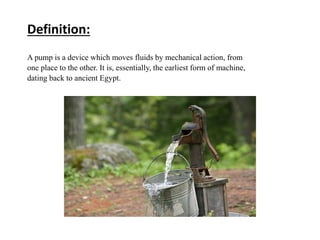
A pump is a device which moves fluids by mechanical action, from
one place to the other. It is, essentially, the earliest form of machine,
dating back to ancient Egypt.
Classification of pumps:
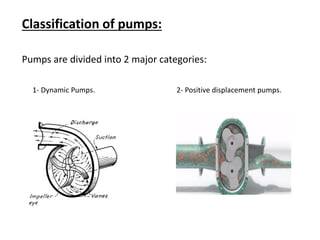
Pumps are divided into 2 major categories:
1- Dynamic Pumps. 2- Positive displacement pumps.
1- Dynamic Pumps:
A- Centrifugal pumps:
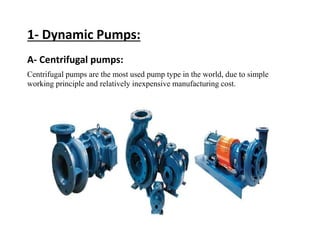
Centrifugal pumps are the most used pump type in the world, due to simple
working principle and relatively inexpensive manufacturing cost.
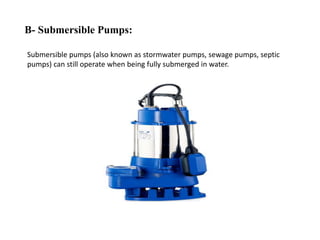
B- Submersible Pumps:
Submersible pumps (also known as stormwater pumps, sewage pumps, septic
pumps) can still operate when being fully submerged in water.
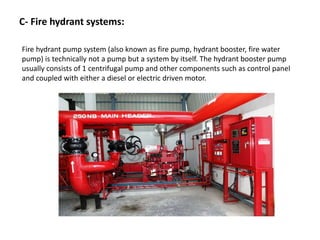
C- Fire hydrant systems:
Fire hydrant pump system (also known as fire pump, hydrant booster, fire water
pump) is technically not a pump but a system by itself. The hydrant booster pump
usually consists of 1 centrifugal pump and other components such as control panel
and coupled with either a diesel or electric driven motor.
2- Positive displacement pumps.
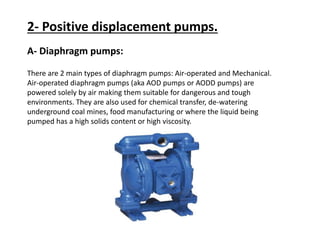
A- Diaphragm pumps:
There are 2 main types of diaphragm pumps: Air-operated and Mechanical.
Air-operated diaphragm pumps (aka AOD pumps or AODD pumps) are
powered solely by air making them suitable for dangerous and tough
environments. They are also used for chemical transfer, de-watering
underground coal mines, food manufacturing or where the liquid being
pumped has a high solids content or high viscosity.
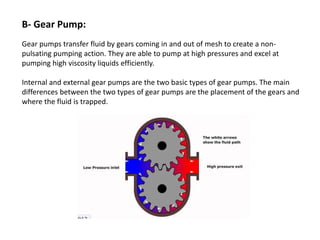
B- Gear Pump:
Gear pumps transfer fluid by gears coming in and out of mesh to create a non-
pulsating pumping action. They are able to pump at high pressures and excel at
pumping high viscosity liquids efficiently.
Internal and external gear pumps are the two basic types of gear pumps. The main
differences between the two types of gear pumps are the placement of the gears and
where the fluid is trapped.
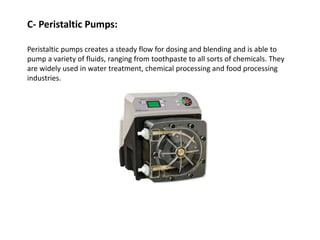
C- Peristaltic Pumps:
Peristaltic pumps creates a steady flow for dosing and blending and is able to
pump a variety of fluids, ranging from toothpaste to all sorts of chemicals. They
are widely used in water treatment, chemical processing and food processing
industries.
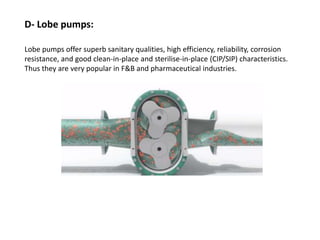
D- Lobe pumps:
Lobe pumps offer superb sanitary qualities, high efficiency, reliability, corrosion
resistance, and good clean-in-place and sterilise-in-place (CIP/SIP) characteristics.
Thus they are very popular in F&B and pharmaceutical industries.
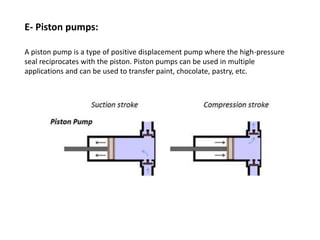
E- Piston pumps:
A piston pump is a type of positive displacement pump where the high-pressure
seal reciprocates with the piston. Piston pumps can be used in multiple
applications and can be used to transfer paint, chocolate, pastry, etc.
Construction And Working Of Centrifugal
Pumps:
Centrifugal pumps are the most widely used of all the turbo machine (or
rotodynamic) pumps. This type of pumps uses the centrifugal force
created by an impeller which spins at high speed inside the pump casing.
Centrifugal pump is classified as the following:-
1. Stationary components
2. Rotating components
1. Stationary components:
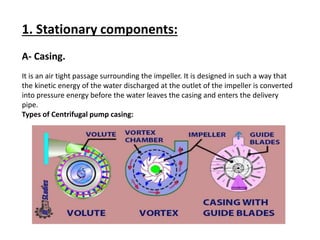
A- Casing.
It is an air tight passage surrounding the impeller. It is designed in such a way that
the kinetic energy of the water discharged at the outlet of the impeller is converted
into pressure energy before the water leaves the casing and enters the delivery
pipe.
Types of Centrifugal pump casing:
B- Suction pipe.
The pipe whose one ends is connected to the inlet of the pump and other
end dip into water in a sump.
C- Delivery pipe.
The pipe whose one end is connected to the outlet of the pump and other
end is involved in delivering the water at a required height.
2. Rotating components:
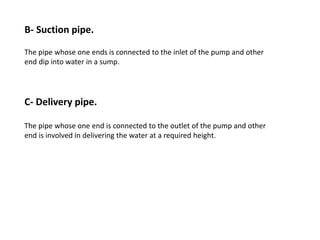
The main rotating part that provides the centrifugal acceleration to the
fluid is the impeller.
Classification of impeller:
a) Based on direction of flow:
1-Axial flow: The fluid maintains significant axial-flow direction components from
the inlet to outlet of the rotor.
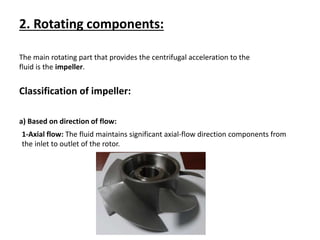
2- Radial-flow: The flow across the blades involves a substantial radial-flow
component at the rotor inlet, outlet and both.
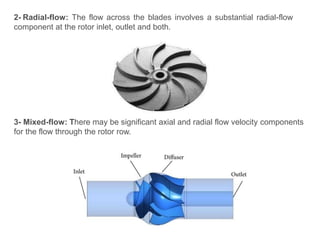
3- Mixed-flow: There may be significant axial and radial flow velocity components
for the flow through the rotor row.
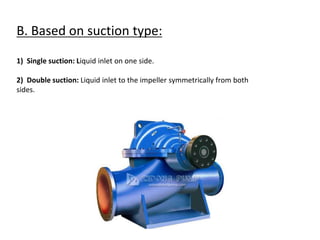
B. Based on suction type:
1) Single suction: Liquid inlet on one side.
2) Double suction: Liquid inlet to the impeller symmetrically from both
sides.
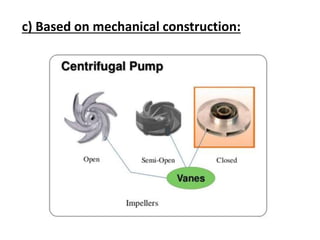
c) Based on mechanical construction:
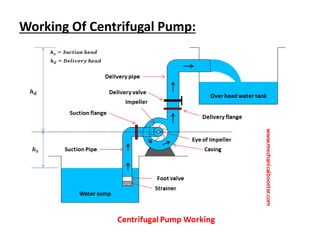
Working Of Centrifugal Pump:

Mixed flow Pumps design power point.pptx

  • 1.
  • 2.
    Definition: A pump isa device which moves fluids by mechanical action, from one place to the other. It is, essentially, the earliest form of machine, dating back to ancient Egypt.
  • 3.
    Classification of pumps: Pumpsare divided into 2 major categories: 1- Dynamic Pumps. 2- Positive displacement pumps.
  • 4.
    1- Dynamic Pumps: A-Centrifugal pumps: Centrifugal pumps are the most used pump type in the world, due to simple working principle and relatively inexpensive manufacturing cost.
  • 5.
    B- Submersible Pumps: Submersiblepumps (also known as stormwater pumps, sewage pumps, septic pumps) can still operate when being fully submerged in water.
  • 6.
    C- Fire hydrantsystems: Fire hydrant pump system (also known as fire pump, hydrant booster, fire water pump) is technically not a pump but a system by itself. The hydrant booster pump usually consists of 1 centrifugal pump and other components such as control panel and coupled with either a diesel or electric driven motor.
  • 7.
    2- Positive displacementpumps. A- Diaphragm pumps: There are 2 main types of diaphragm pumps: Air-operated and Mechanical. Air-operated diaphragm pumps (aka AOD pumps or AODD pumps) are powered solely by air making them suitable for dangerous and tough environments. They are also used for chemical transfer, de-watering underground coal mines, food manufacturing or where the liquid being pumped has a high solids content or high viscosity.
  • 8.
    B- Gear Pump: Gearpumps transfer fluid by gears coming in and out of mesh to create a non- pulsating pumping action. They are able to pump at high pressures and excel at pumping high viscosity liquids efficiently. Internal and external gear pumps are the two basic types of gear pumps. The main differences between the two types of gear pumps are the placement of the gears and where the fluid is trapped.
  • 9.
    C- Peristaltic Pumps: Peristalticpumps creates a steady flow for dosing and blending and is able to pump a variety of fluids, ranging from toothpaste to all sorts of chemicals. They are widely used in water treatment, chemical processing and food processing industries.
  • 10.
    D- Lobe pumps: Lobepumps offer superb sanitary qualities, high efficiency, reliability, corrosion resistance, and good clean-in-place and sterilise-in-place (CIP/SIP) characteristics. Thus they are very popular in F&B and pharmaceutical industries.
  • 11.
    E- Piston pumps: Apiston pump is a type of positive displacement pump where the high-pressure seal reciprocates with the piston. Piston pumps can be used in multiple applications and can be used to transfer paint, chocolate, pastry, etc.
  • 12.
    Construction And WorkingOf Centrifugal Pumps: Centrifugal pumps are the most widely used of all the turbo machine (or rotodynamic) pumps. This type of pumps uses the centrifugal force created by an impeller which spins at high speed inside the pump casing. Centrifugal pump is classified as the following:- 1. Stationary components 2. Rotating components
  • 13.
    1. Stationary components: A-Casing. It is an air tight passage surrounding the impeller. It is designed in such a way that the kinetic energy of the water discharged at the outlet of the impeller is converted into pressure energy before the water leaves the casing and enters the delivery pipe. Types of Centrifugal pump casing:
  • 14.
    B- Suction pipe. Thepipe whose one ends is connected to the inlet of the pump and other end dip into water in a sump. C- Delivery pipe. The pipe whose one end is connected to the outlet of the pump and other end is involved in delivering the water at a required height.
  • 15.
    2. Rotating components: Themain rotating part that provides the centrifugal acceleration to the fluid is the impeller. Classification of impeller: a) Based on direction of flow: 1-Axial flow: The fluid maintains significant axial-flow direction components from the inlet to outlet of the rotor.
  • 16.
    2- Radial-flow: Theflow across the blades involves a substantial radial-flow component at the rotor inlet, outlet and both. 3- Mixed-flow: There may be significant axial and radial flow velocity components for the flow through the rotor row.
  • 17.
    B. Based onsuction type: 1) Single suction: Liquid inlet on one side. 2) Double suction: Liquid inlet to the impeller symmetrically from both sides.
  • 18.
    c) Based onmechanical construction:
  • 19.