Misc En Scene
Literally means ……"placing on stage”is an expression used to describe the design aspects of a theatre or film production, which essentially means "visual theme" or "telling a story" —both in visually artful ways through storyboarding, cinematography and stage design, and in poetically artful ways through direction.
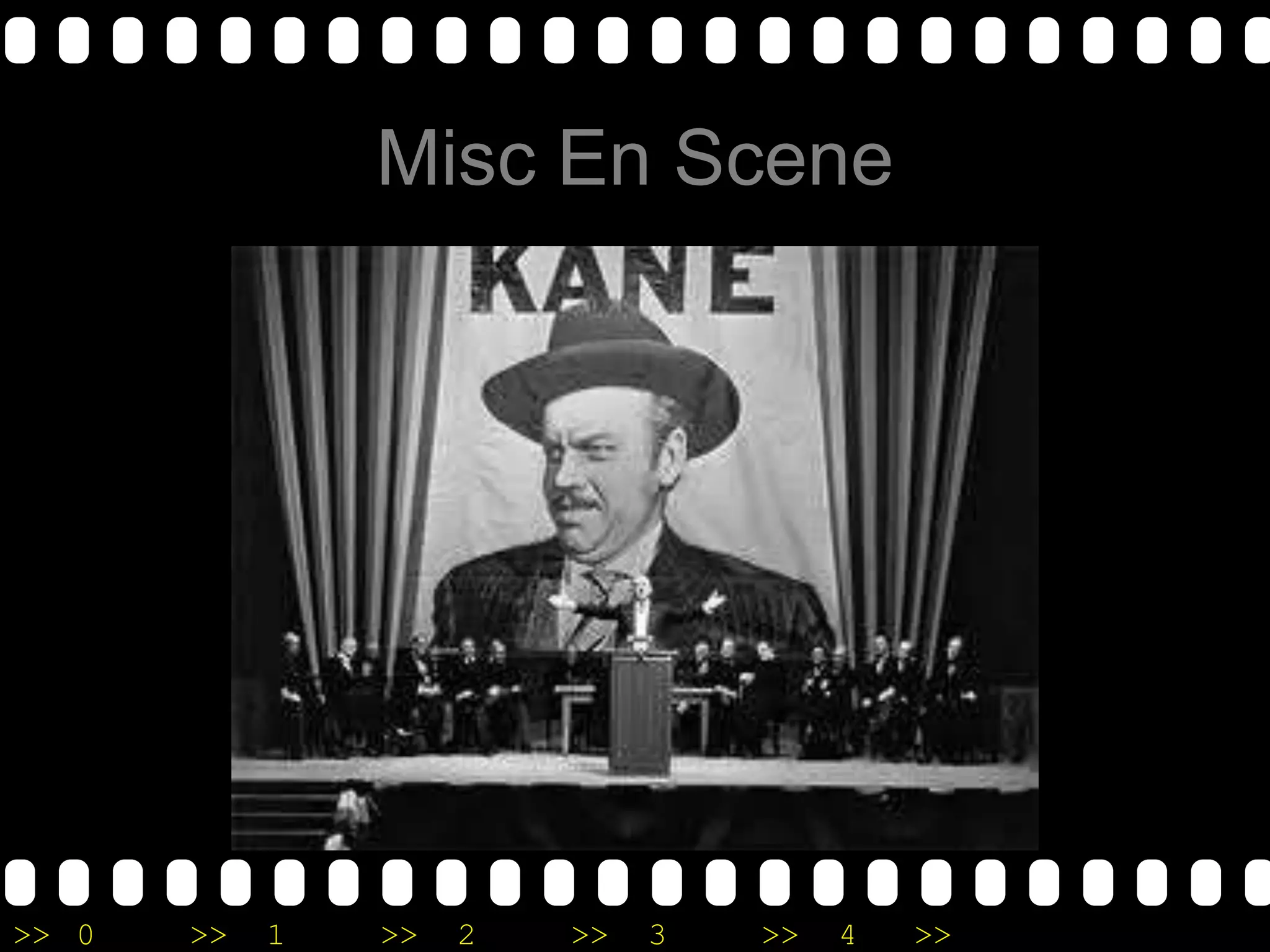
Misc en SceneWhen applied to the cinema, mise-en-scène refers to everything that appears before thecameraand its arrangement—composition, sets, props, actors, costumes, and lighting
Misc en sceneMise-en-scène also includes the positioning and movement of actors on the set, which is called blocking.
Misc en sceneRecently, the term has come to represent a style of conveying the information of a scene primarily through a single shot—often accompanied by camera movement. It is to be contrasted with montage-style filmmaking—multiple angles pieced together through editing.
Misc en sceneOverall, mise-en-scène is used when the director wishes to give an impression of the characters or situation without vocally articulating it through the framework of spoken dialogue, and typically does not represent a realistic setting.
Misc en sceneOnly rarely is mise-en-scène critique used in other art forms, but it has been used effectively to analysephotography.
Key AspectsDecor An important element of "putting in the scene" is décor, the objects contained in and the setting of a scene. Décor can be used to amplify character emotion or the dominant mood of a film.
Key AspectsLighting The intensity, direction, and quality of lighting have a profound effect on the way an image is perceived. Light affects the way colors are rendered, both in terms of hue and depth, and can focus attention on particular elements of the composition.
Key AspectsSpace The representation of space affects the reading of a film. Depth, proximity, size and proportions of the places and objects in a film can be manipulated through camera placement and lenses, lighting, decor, effectively determining mood or relationships between elements in the story world.
Key AspectsCostume Costume simply refers to the clothes that characters wear. Using certain colors or designs, costumes in narrative cinema is used to signify characters or to make clear distinctions between characters.
Key AspectsActing There is enormous historical and cultural variation in performance styles in the cinema. Early melodramatic styles, clearly indebted to the 19th century theater, gave way in Western cinema to a relatively naturalistic style.

Miscenscene

  • 1.
  • 2.
    Literally means ……"placingon stage”is an expression used to describe the design aspects of a theatre or film production, which essentially means "visual theme" or "telling a story" —both in visually artful ways through storyboarding, cinematography and stage design, and in poetically artful ways through direction.
  • 3.
    Misc en SceneWhenapplied to the cinema, mise-en-scène refers to everything that appears before thecameraand its arrangement—composition, sets, props, actors, costumes, and lighting
  • 4.
    Misc en sceneMise-en-scènealso includes the positioning and movement of actors on the set, which is called blocking.
  • 5.
    Misc en sceneRecently,the term has come to represent a style of conveying the information of a scene primarily through a single shot—often accompanied by camera movement. It is to be contrasted with montage-style filmmaking—multiple angles pieced together through editing.
  • 6.
    Misc en sceneOverall,mise-en-scène is used when the director wishes to give an impression of the characters or situation without vocally articulating it through the framework of spoken dialogue, and typically does not represent a realistic setting.
  • 7.
    Misc en sceneOnlyrarely is mise-en-scène critique used in other art forms, but it has been used effectively to analysephotography.
  • 8.
    Key AspectsDecor An importantelement of "putting in the scene" is décor, the objects contained in and the setting of a scene. Décor can be used to amplify character emotion or the dominant mood of a film.
  • 9.
    Key AspectsLighting The intensity,direction, and quality of lighting have a profound effect on the way an image is perceived. Light affects the way colors are rendered, both in terms of hue and depth, and can focus attention on particular elements of the composition.
  • 10.
    Key AspectsSpace The representationof space affects the reading of a film. Depth, proximity, size and proportions of the places and objects in a film can be manipulated through camera placement and lenses, lighting, decor, effectively determining mood or relationships between elements in the story world.
  • 11.
    Key AspectsCostume Costume simplyrefers to the clothes that characters wear. Using certain colors or designs, costumes in narrative cinema is used to signify characters or to make clear distinctions between characters.
  • 12.
    Key AspectsActing There isenormous historical and cultural variation in performance styles in the cinema. Early melodramatic styles, clearly indebted to the 19th century theater, gave way in Western cinema to a relatively naturalistic style.