Download to read offline



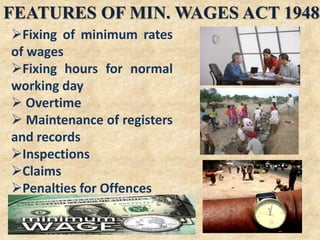
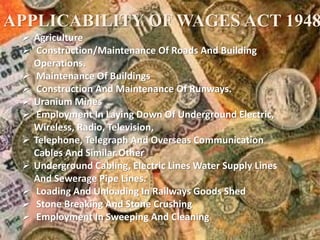


The Minimum Wages Act of 1948 was enacted based on Article 43 of the Indian Constitution, which mandates a living wage for all workers. The Act aims to prevent exploitation of workers, especially in industries where labor is unorganized. It allows appropriate governments to prescribe minimum wage rates for certain employments. Key features include fixing minimum wage rates and normal working hours, provisions for overtime work, and penalties for non-compliance. The Act applies to industries like construction, railways, stone breaking, cleaning services and more. It has been amended over time, with the national minimum wage floor raised to Rs. 115 per day in 2011. Minimum wages vary across states, from Rs. 169-297 per day depending on skill level.

![Salient features on all labour codes ppt [compatibility mode]](https://cdn.slidesharecdn.com/ss_thumbnails/salientfeaturesonalllabourcodes-pptcompatibilitymode-200108112830-thumbnail.jpg?width=640&height=640&fit=bounds)


