MINIMUM WAGES ACT -1948
By:
Rahul
Lovleen
Pratibha
DEFINITION
The Minimum Wages Act, 1948 Is Based On
Article 43 Of The Constitution Of India
Which States That, "The State Shall
Endeavor To Secure By Suitable Legislation
Or Economic Organization Or In Any Other
Way To All Workers, Agricultural, Industrial
Or Otherwise, Work, A Living Wage
(Emphasis Added) Conditions Of Work
Ensuring A Decent Standard Of Life And
Full Enjoyment Of Leisure And Social And
Cultural Opportunities"
OR
The International Labour Organization Defines
Minimum Wage As "The Minimum Sum Payable To
A Worker For Work Performed Or Services
Rendered, Within A Given Period, Whether
Calculated On The Basis Of Time Or Output, Which
May Not Be Reduced Either By Individual Or
Collective Agreement, Which Is Guaranteed By Law
And Which May Be Fixed In Such A Way As To Cover
The Minimum Needs Of The Worker And His Or Her
Family, In The Light Of National Economic And
Social Conditions”.
HISTORICAL BACKGROUND
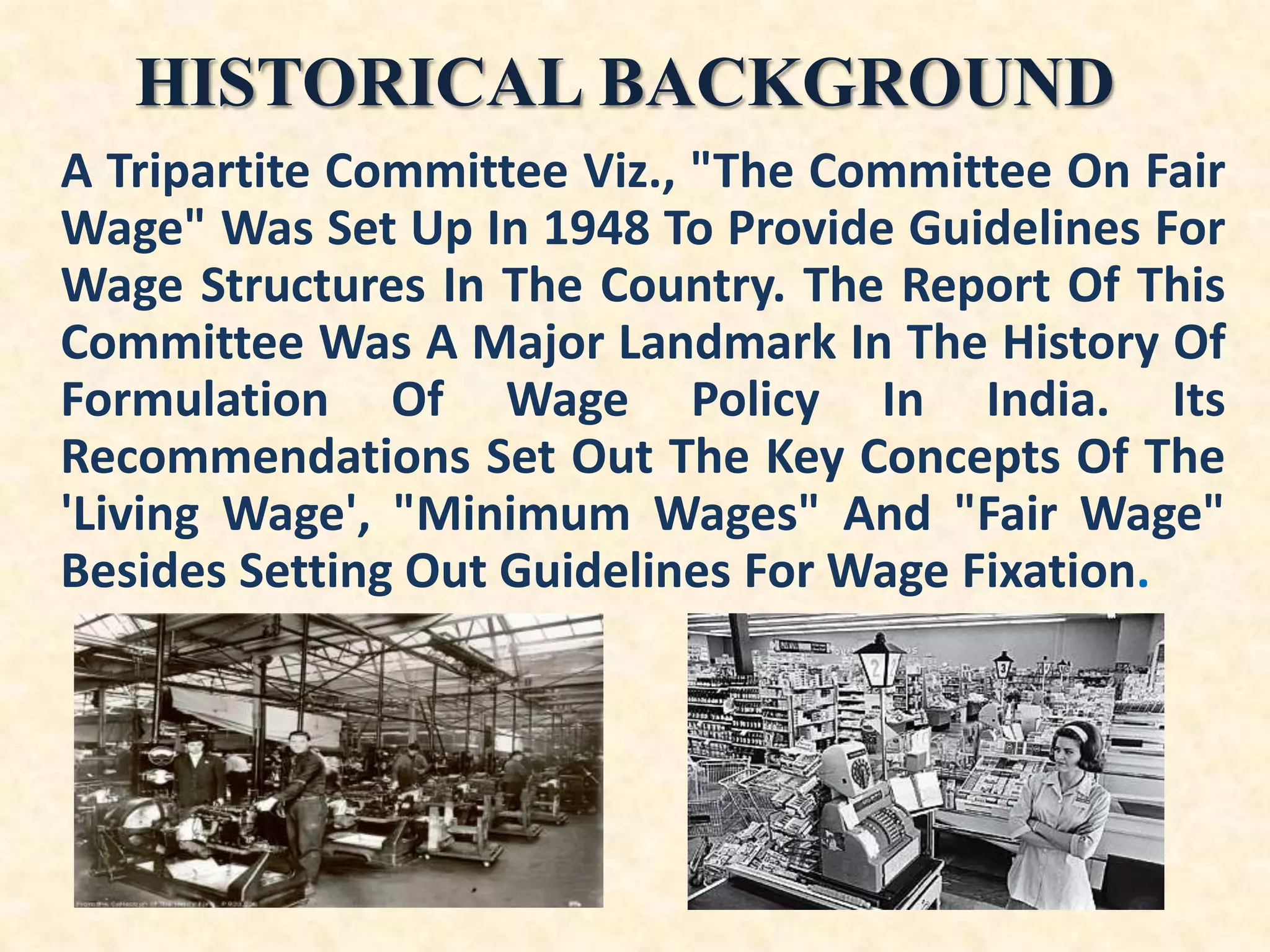
A Tripartite Committee Viz., "The Committee On Fair
Wage" Was Set Up In 1948 To Provide Guidelines For
Wage Structures In The Country. The Report Of This
Committee Was A Major Landmark In The History Of
Formulation Of Wage Policy In India. Its
Recommendations Set Out The Key Concepts Of The
'Living Wage', "Minimum Wages" And "Fair Wage"
Besides Setting Out Guidelines For Wage Fixation.
OBJECTIVES AND SCOPE
The Main Objective Of This Act, Is Fixing A
Minimum Rate Of Wages In Number Of Industries
Where The Labours Are Not Organized And
Sweated Labours Are Most Dominant. The Act
Aims At Preventing The Exploitation Of Workers Or
Labours In Some Industries, For Which, The
Appropriate Government Is Empowered To Take
Steps To Prescribe Minimum Rates Of Wages In
Certain Employment. The Act Extends To The
Whole Of India.
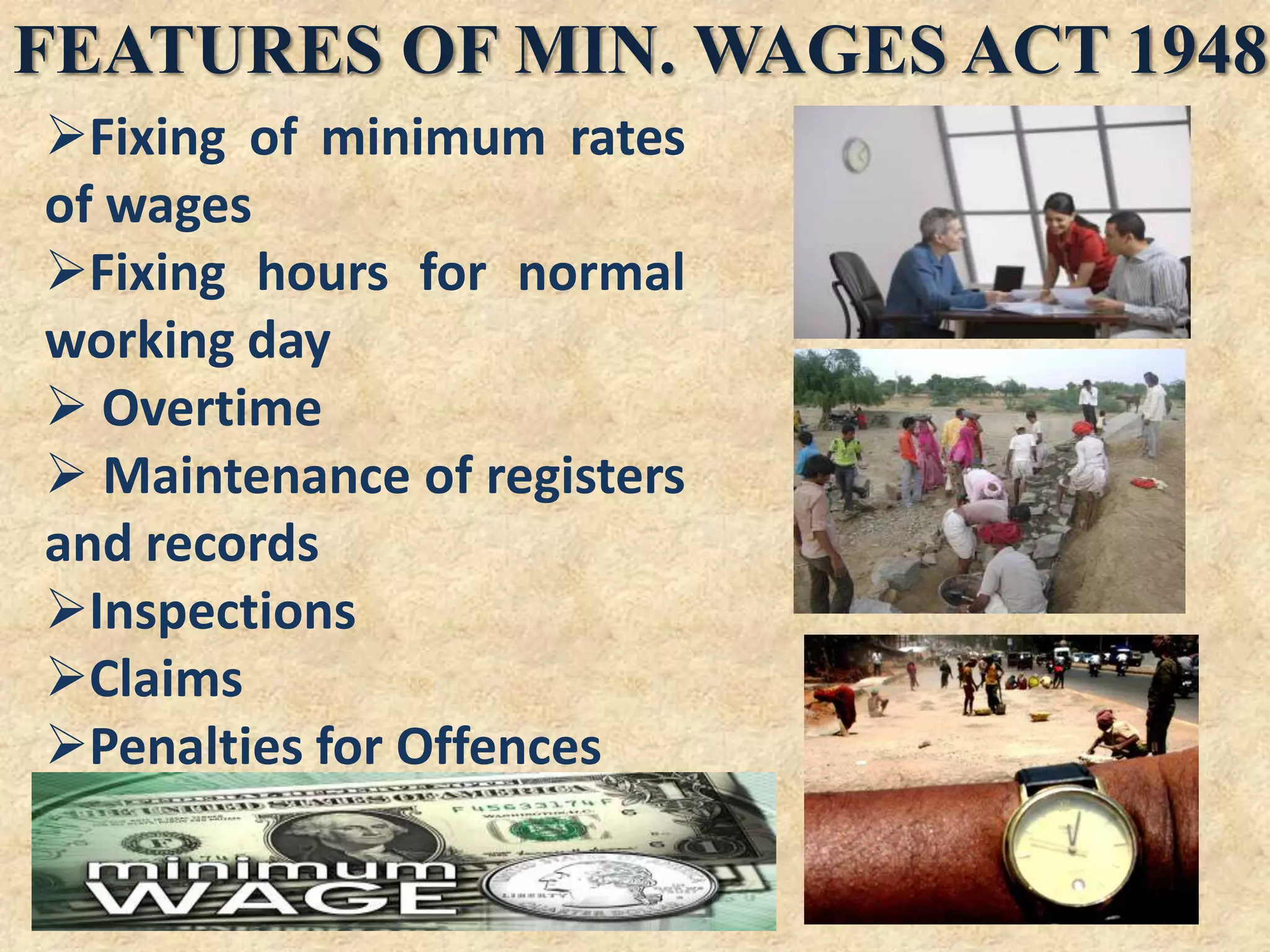
FEATURES OF MIN. WAGES ACT 1948
Fixing of minimum rates
of wages
Fixing hours for normal
working day
 Overtime
 Maintenance of registers
and records
Inspections
Claims
Penalties for Offences
APPLICABILITY OF WAGES ACT 1948
 Agriculture
 Construction/Maintenance Of Roads And Building
Operations.
 Maintenance Of Buildings
 Construction And Maintenance Of Runways.
 Uranium Mines
 Employment In Laying Down Of Underground Electric,
Wireless, Radio, Television,
 Telephone, Telegraph And Overseas Communication
Cables And Similar Other
 Underground Cabling, Electric Lines Water Supply Lines
And Sewerage Pipe Lines.
 Loading And Unloading In Railways Goods Shed
 Stone Breaking And Stone Crushing
 Employment In Sweeping And Cleaning
CURRENT MINIMUM WAGES IN
INDIA 2013
With Effect From November 2009, The National
Floor Level Of Minimum Wage Has Been Increased
To Rs 100 Per Day From Rs 80 Per Day (Which Was
In Effect Since 2007). Recently With Effect From
April 1, 2011 The National Floor Level Of Minimum
Wage Has Been Raised To Rs 115 Per Day.
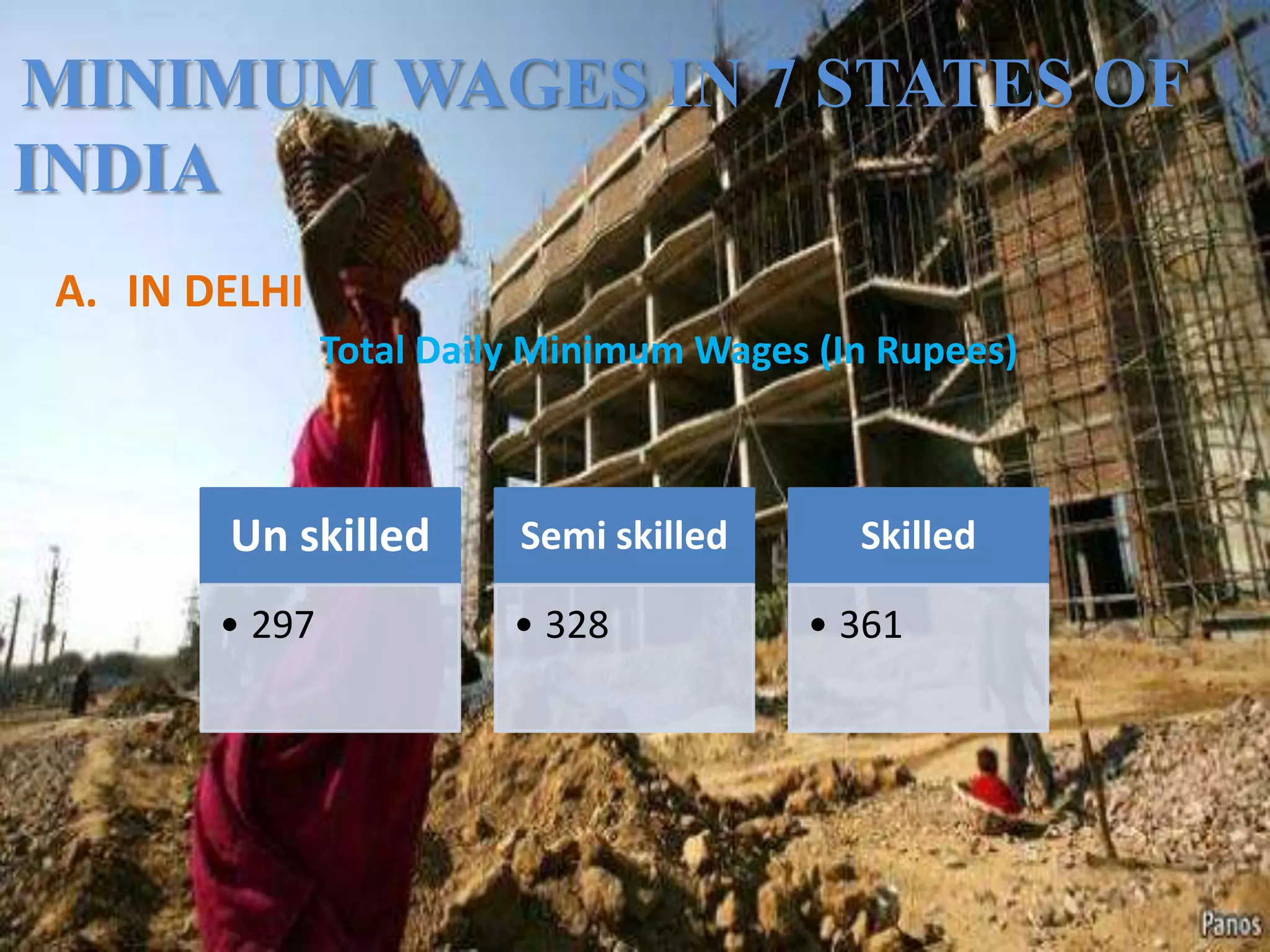
MINIMUM WAGES IN 7 STATES OF
INDIA
A. IN DELHI
Total Daily Minimum Wages (In Rupees)

Un skilled

Semi skilled

• 297

• 328

Skilled
• 361
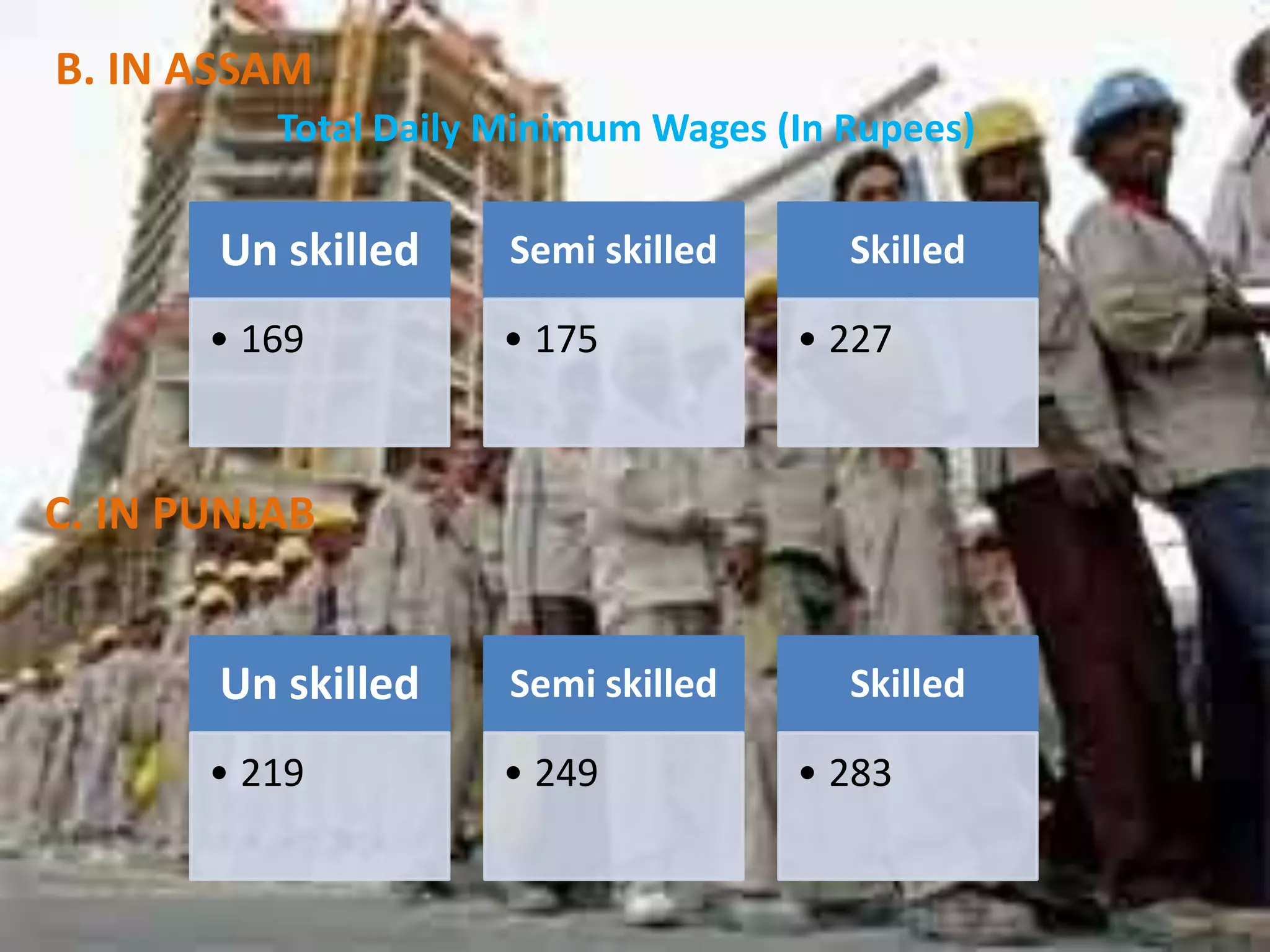
B. IN ASSAM
Total Daily Minimum Wages (In Rupees)

Un skilled

Semi skilled

• 169

• 175

Skilled
• 227

C. IN PUNJAB
Un skilled

Semi skilled

• 219

• 249

Skilled
• 283
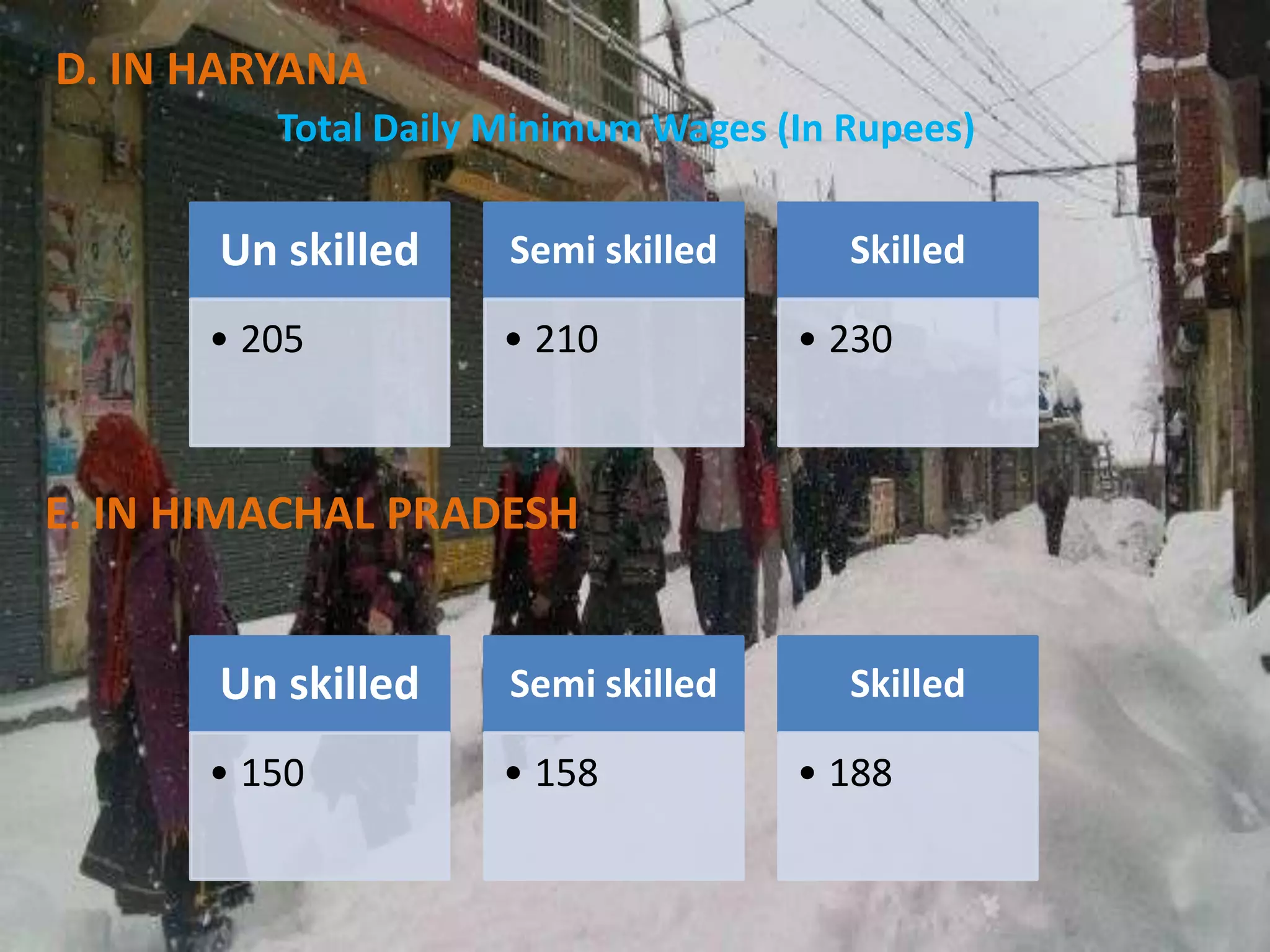
D. IN HARYANA
Total Daily Minimum Wages (In Rupees)

Un skilled

Semi skilled

• 205

• 210

Skilled
• 230

E. IN HIMACHAL PRADESH
Un skilled

Semi skilled

• 150

• 158

Skilled
• 188
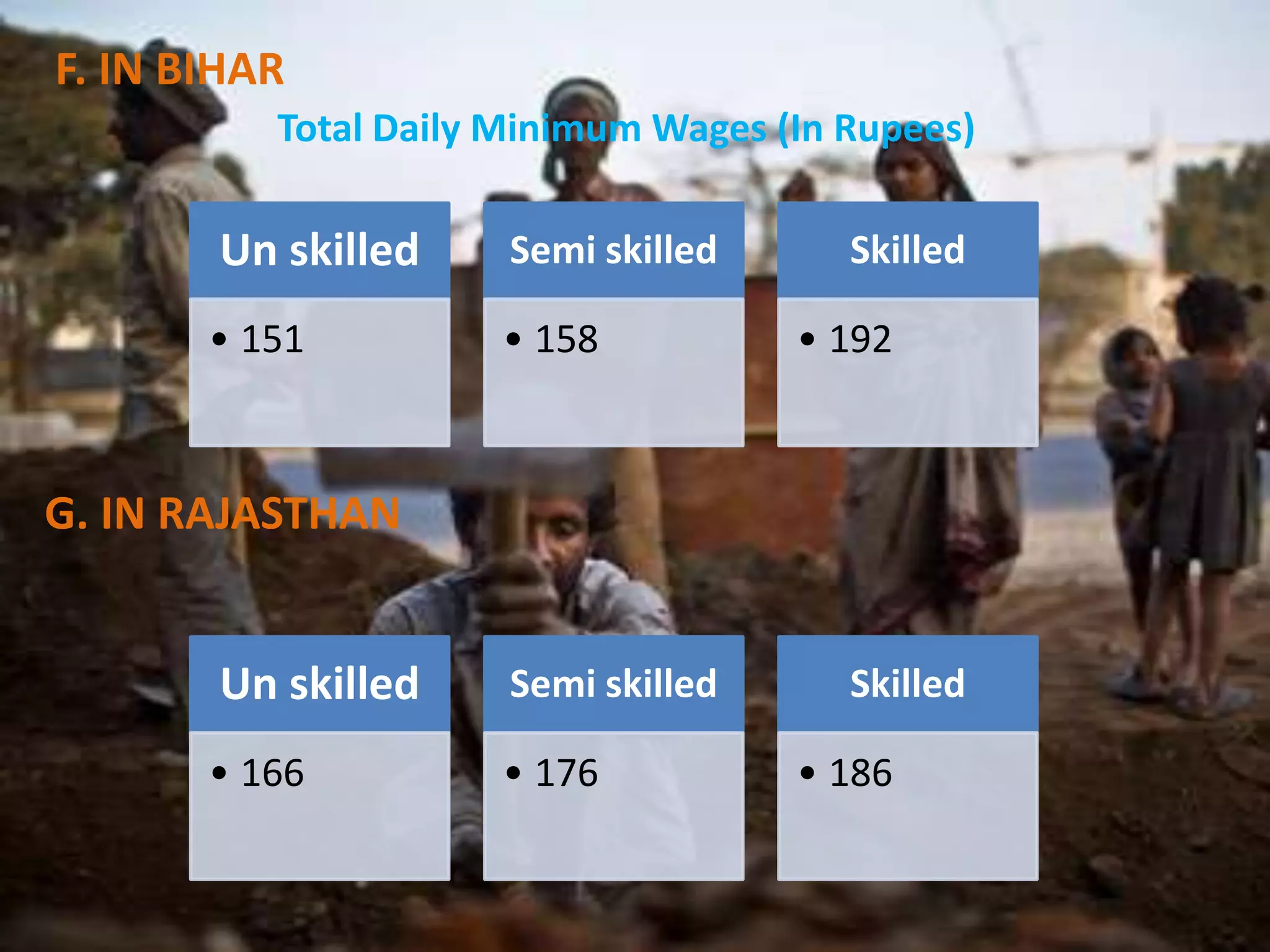
F. IN BIHAR
Total Daily Minimum Wages (In Rupees)

Un skilled

Semi skilled

• 151

• 158

Skilled
• 192

G. IN RAJASTHAN
Un skilled

Semi skilled

• 166

• 176

Skilled
• 186
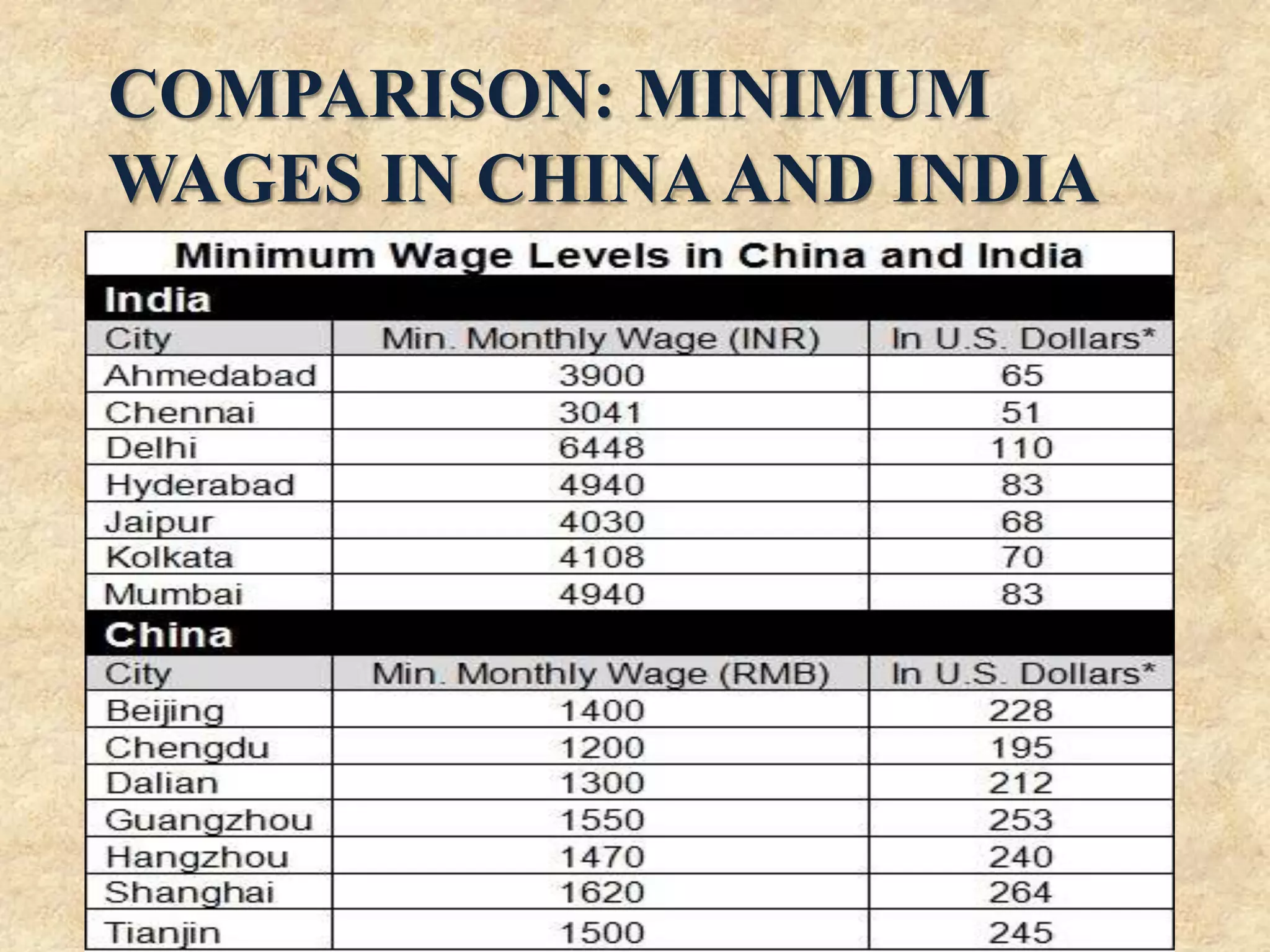
COMPARISON: MINIMUM
WAGES IN CHINA AND INDIA
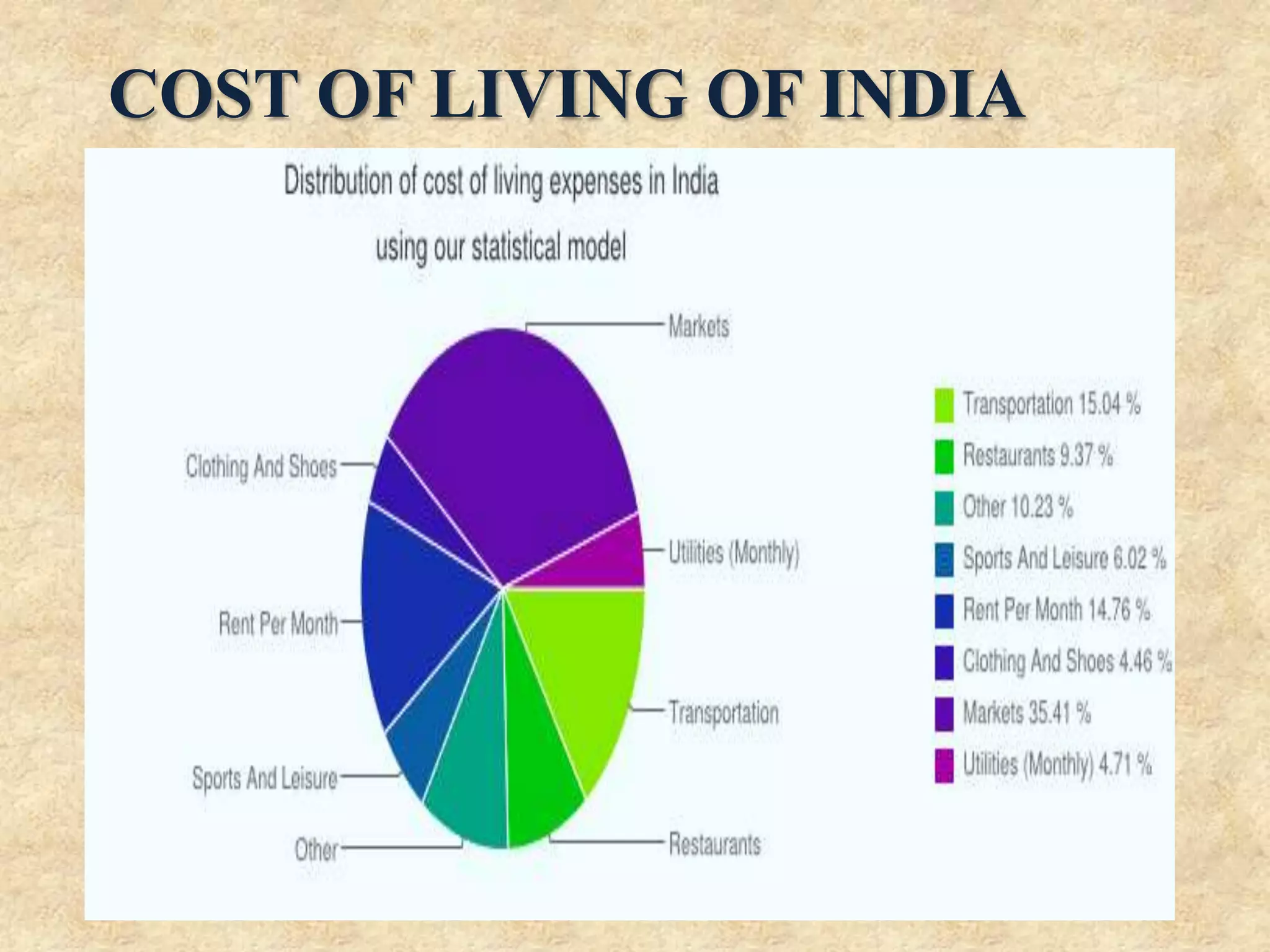
COST OF LIVING OF INDIA
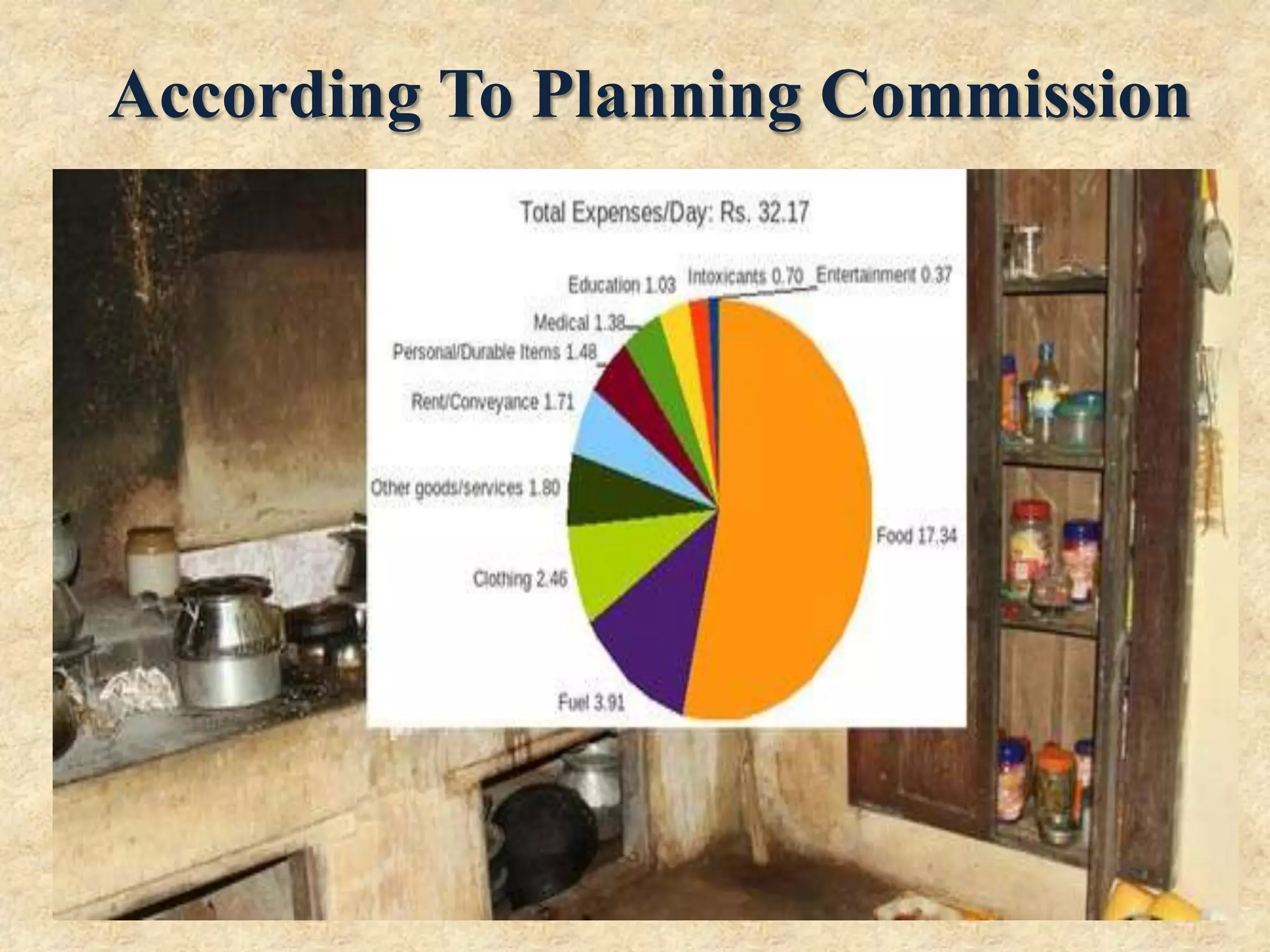
According To Planning Commission
REFERENCES
http://labour.nic.in/content/
http://www.numbeo.com/cost-of-living/country_result.jsp?country=India
http://www.paycheck.in/main/salary/minimumwages
http://www.retireinasia.com/cost-of-living-in-india/

http://manmaik.blogspot.in/2011/01/important-features-of-minimum-wagesact.html
http://www.kkhsou.in/main/EVidya2/management/minimum_wages.html

http://www.asiabriefing.com/news/2013/07/comparison-minimum-wages-in-chinaand-india/
•

• ANY ? FROM YOUR SIDE IS WELCOMED ?

•

Minimum wages act 1948

  • 1.
    MINIMUM WAGES ACT-1948 By: Rahul Lovleen Pratibha
  • 2.
    DEFINITION The Minimum WagesAct, 1948 Is Based On Article 43 Of The Constitution Of India Which States That, "The State Shall Endeavor To Secure By Suitable Legislation Or Economic Organization Or In Any Other Way To All Workers, Agricultural, Industrial Or Otherwise, Work, A Living Wage (Emphasis Added) Conditions Of Work Ensuring A Decent Standard Of Life And Full Enjoyment Of Leisure And Social And Cultural Opportunities"
  • 3.
    OR The International LabourOrganization Defines Minimum Wage As "The Minimum Sum Payable To A Worker For Work Performed Or Services Rendered, Within A Given Period, Whether Calculated On The Basis Of Time Or Output, Which May Not Be Reduced Either By Individual Or Collective Agreement, Which Is Guaranteed By Law And Which May Be Fixed In Such A Way As To Cover The Minimum Needs Of The Worker And His Or Her Family, In The Light Of National Economic And Social Conditions”.
  • 4.
    HISTORICAL BACKGROUND A TripartiteCommittee Viz., "The Committee On Fair Wage" Was Set Up In 1948 To Provide Guidelines For Wage Structures In The Country. The Report Of This Committee Was A Major Landmark In The History Of Formulation Of Wage Policy In India. Its Recommendations Set Out The Key Concepts Of The 'Living Wage', "Minimum Wages" And "Fair Wage" Besides Setting Out Guidelines For Wage Fixation.
  • 5.
    OBJECTIVES AND SCOPE TheMain Objective Of This Act, Is Fixing A Minimum Rate Of Wages In Number Of Industries Where The Labours Are Not Organized And Sweated Labours Are Most Dominant. The Act Aims At Preventing The Exploitation Of Workers Or Labours In Some Industries, For Which, The Appropriate Government Is Empowered To Take Steps To Prescribe Minimum Rates Of Wages In Certain Employment. The Act Extends To The Whole Of India.
  • 6.
    FEATURES OF MIN.WAGES ACT 1948 Fixing of minimum rates of wages Fixing hours for normal working day  Overtime  Maintenance of registers and records Inspections Claims Penalties for Offences
  • 7.
    APPLICABILITY OF WAGESACT 1948  Agriculture  Construction/Maintenance Of Roads And Building Operations.  Maintenance Of Buildings  Construction And Maintenance Of Runways.  Uranium Mines  Employment In Laying Down Of Underground Electric, Wireless, Radio, Television,  Telephone, Telegraph And Overseas Communication Cables And Similar Other  Underground Cabling, Electric Lines Water Supply Lines And Sewerage Pipe Lines.  Loading And Unloading In Railways Goods Shed  Stone Breaking And Stone Crushing  Employment In Sweeping And Cleaning
  • 8.
    CURRENT MINIMUM WAGESIN INDIA 2013 With Effect From November 2009, The National Floor Level Of Minimum Wage Has Been Increased To Rs 100 Per Day From Rs 80 Per Day (Which Was In Effect Since 2007). Recently With Effect From April 1, 2011 The National Floor Level Of Minimum Wage Has Been Raised To Rs 115 Per Day.
  • 9.
    MINIMUM WAGES IN7 STATES OF INDIA A. IN DELHI Total Daily Minimum Wages (In Rupees) Un skilled Semi skilled • 297 • 328 Skilled • 361
  • 10.
    B. IN ASSAM TotalDaily Minimum Wages (In Rupees) Un skilled Semi skilled • 169 • 175 Skilled • 227 C. IN PUNJAB Un skilled Semi skilled • 219 • 249 Skilled • 283
  • 11.
    D. IN HARYANA TotalDaily Minimum Wages (In Rupees) Un skilled Semi skilled • 205 • 210 Skilled • 230 E. IN HIMACHAL PRADESH Un skilled Semi skilled • 150 • 158 Skilled • 188
  • 12.
    F. IN BIHAR TotalDaily Minimum Wages (In Rupees) Un skilled Semi skilled • 151 • 158 Skilled • 192 G. IN RAJASTHAN Un skilled Semi skilled • 166 • 176 Skilled • 186
  • 13.
  • 14.
  • 15.
  • 16.
  • 17.
    • • ANY ?FROM YOUR SIDE IS WELCOMED ? •