Mindfulness
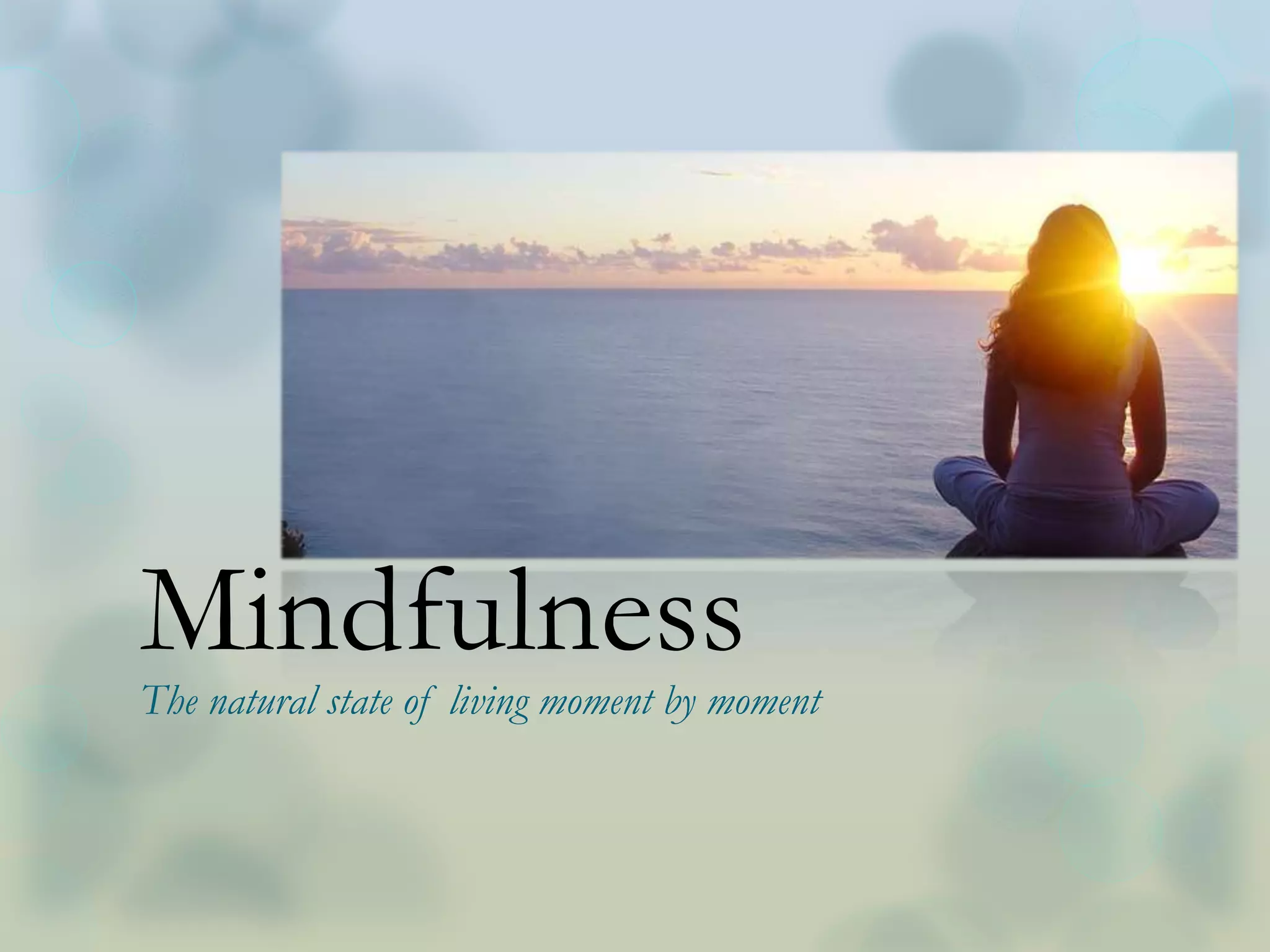
The natural state of living moment by moment
What is Mindfulness?
 Mindfulness is about how we are in relationship to everything- our
thoughts, bodies, emotions, & past
 We can learn to live in a way that recognizes and makes use of what is
already beautiful and already whole inside of us, and drawing upon it to
live our lives
 Mindfulness practice is merely paying attention to what is when you
breathe, placing no expectations on the experience
The Benefits of Mindfulness
 Physiological
 Improve immune functioning
 Reduce Blood Pressure
 Behavioral
 Have a greater sense of choice and control
 Help in changing behaviors
 Cognitive
 Sustain focus and attention
 Increase creativity
 Enhance memory
 Achieve emotion regulation
 Emotional
 Foster resilience
 Reduce anxiety, stress and depression
A Survivorship Tool
 Mindfulness can positively effect the immune system and help with healing
 Studies increasingly show how cancer and the immune system are intertwined,
and thus mindfulness can be an important survivorship tool
 Mindfulness-Based Cancer Research finds that meditation can impact the
body’s inflammation response and lessen symptoms associated with
cancer
How Can One Practice Mindfulness?
 It is not about doing, but more about being and allowing yourself to be who
you already are
 Becoming mindful means to become aware of each moment, thought, or
feeling without judgement- nothing is good or bad, it just is
 You must be willing to live more in the present without wishing it were
different
 React not respond
 Reactions are unconscious and automatic; responses are made consciously and
with thought
Attitudes of Mindfulness
• Non-Judgement
• Becoming aware of our own judgements can
allow for more control over responses to
situations
• Labelling your surroundings as good, bad, or
neutral can be a habit that causes you to react
without thinking and involuntarily
• Patience
• Accepting the way things are in the present
• Beginner’s Mind
• The willingness to see things as if it were for
the first time, without viewing the world
through a lens shaped by past experience
• Trust
• Develop trust in you and you feelings
• Non-striving
• Do not focus on an outcome or what you
wish to achieve when undertaking
mindfulness; simply do the practice without
any expectations
• Focusing on an end goal interferes with you
being present
• Acceptance
• Seeing and acknowledging things as they way
they are, without approval or satisfaction
• Letting Be (rather than letting go)
• Avoid getting stuck on the past or future and
accept things as the way they are
The Best Medicine is Free
 One of the best ways to become mindful is to become aware of and focus on your
breath
 Controlled breathing keeps the mind & body functioning at its highest capacity,
while lowering blood pressure and promoting feelings of relaxation
 Diaphragmatic breathing (“belly breathing”): this method naturally influences
the involuntary nervous system to positively effect circulation, digestion, and heart
problems
 4-7-8 Exercise (or “Relaxing Breath”):
1) Sit with your back straight and place the tip of your tongue against your upper front
teeth
2) Exhale completely through your mouth, making a whoosh sound
3) Close your mouth and inhale for a count of 4
4) Hold your breath for a count of 7
5) Exhale completely through your mouth for a count of 8
**This is one breath, repeat the cycle three more times, totaling four breaths
Breathing Techniques
 Breath Counting:
1) Sit with the spine straight and the head slightly forward. Close your eyes
and take a few deep breaths
2) Count “one” to yourself as you exhale
3) With the next breath count “two”; continuing until “five”
 Never count higher than five, if you do you will know your attention has
wandered
o Phrases for Focus:
o “I breathe in healing oxygen; I exhale toxins”
o “I am aware of my life energy in breath”
(inhale); “I am aware of relaxing fully”
(exhale)
Formal Meditation
 Sit comfortably with your back straight, you can close your eyes or focus
softly in front of you
 Breathe into your lower abdomen, following your breath as you breathe
naturally
 Upon exhaling, think about where your mind and attention is, observe
what you begin to think about, then come back to your belly and your
breath
 Begin practicing in small increments of time, and gradually increase
the length of your meditation
 The willingness to follow your breath and mind each moment is key
to mindful practice
STOP- One Minute Breathing Space
 Create space to reconnect with your natural resilience and wisdom. Turn into what
is happening right now without any expectations of the outcome
S- Stop and Take Stock
• Ask yourself “What is my experience right now?” to acknowledge and register what you are
feeling
T- “Take” a Breath
• Gently direct your attention to breathing, following each inhale with an exhale
O- Open and Observe
• Sense your body as a whole- your posture and facial expressions
• Further outward your awareness to the surroundings- sights, smells, sound, etc.
P- Proceed/ new Possibilities
• Allow your attention to move into the world around you, sensing how things are right now

Mindfulness

  • 1.
    Mindfulness The natural stateof living moment by moment
  • 2.
    What is Mindfulness? Mindfulness is about how we are in relationship to everything- our thoughts, bodies, emotions, & past  We can learn to live in a way that recognizes and makes use of what is already beautiful and already whole inside of us, and drawing upon it to live our lives  Mindfulness practice is merely paying attention to what is when you breathe, placing no expectations on the experience
  • 3.
    The Benefits ofMindfulness  Physiological  Improve immune functioning  Reduce Blood Pressure  Behavioral  Have a greater sense of choice and control  Help in changing behaviors  Cognitive  Sustain focus and attention  Increase creativity  Enhance memory  Achieve emotion regulation  Emotional  Foster resilience  Reduce anxiety, stress and depression
  • 4.
    A Survivorship Tool Mindfulness can positively effect the immune system and help with healing  Studies increasingly show how cancer and the immune system are intertwined, and thus mindfulness can be an important survivorship tool  Mindfulness-Based Cancer Research finds that meditation can impact the body’s inflammation response and lessen symptoms associated with cancer
  • 5.
    How Can OnePractice Mindfulness?  It is not about doing, but more about being and allowing yourself to be who you already are  Becoming mindful means to become aware of each moment, thought, or feeling without judgement- nothing is good or bad, it just is  You must be willing to live more in the present without wishing it were different  React not respond  Reactions are unconscious and automatic; responses are made consciously and with thought
  • 6.
    Attitudes of Mindfulness •Non-Judgement • Becoming aware of our own judgements can allow for more control over responses to situations • Labelling your surroundings as good, bad, or neutral can be a habit that causes you to react without thinking and involuntarily • Patience • Accepting the way things are in the present • Beginner’s Mind • The willingness to see things as if it were for the first time, without viewing the world through a lens shaped by past experience • Trust • Develop trust in you and you feelings • Non-striving • Do not focus on an outcome or what you wish to achieve when undertaking mindfulness; simply do the practice without any expectations • Focusing on an end goal interferes with you being present • Acceptance • Seeing and acknowledging things as they way they are, without approval or satisfaction • Letting Be (rather than letting go) • Avoid getting stuck on the past or future and accept things as the way they are
  • 7.
    The Best Medicineis Free  One of the best ways to become mindful is to become aware of and focus on your breath  Controlled breathing keeps the mind & body functioning at its highest capacity, while lowering blood pressure and promoting feelings of relaxation  Diaphragmatic breathing (“belly breathing”): this method naturally influences the involuntary nervous system to positively effect circulation, digestion, and heart problems  4-7-8 Exercise (or “Relaxing Breath”): 1) Sit with your back straight and place the tip of your tongue against your upper front teeth 2) Exhale completely through your mouth, making a whoosh sound 3) Close your mouth and inhale for a count of 4 4) Hold your breath for a count of 7 5) Exhale completely through your mouth for a count of 8 **This is one breath, repeat the cycle three more times, totaling four breaths
  • 8.
    Breathing Techniques  BreathCounting: 1) Sit with the spine straight and the head slightly forward. Close your eyes and take a few deep breaths 2) Count “one” to yourself as you exhale 3) With the next breath count “two”; continuing until “five”  Never count higher than five, if you do you will know your attention has wandered o Phrases for Focus: o “I breathe in healing oxygen; I exhale toxins” o “I am aware of my life energy in breath” (inhale); “I am aware of relaxing fully” (exhale)
  • 9.
    Formal Meditation  Sitcomfortably with your back straight, you can close your eyes or focus softly in front of you  Breathe into your lower abdomen, following your breath as you breathe naturally  Upon exhaling, think about where your mind and attention is, observe what you begin to think about, then come back to your belly and your breath  Begin practicing in small increments of time, and gradually increase the length of your meditation  The willingness to follow your breath and mind each moment is key to mindful practice
  • 10.
    STOP- One MinuteBreathing Space  Create space to reconnect with your natural resilience and wisdom. Turn into what is happening right now without any expectations of the outcome S- Stop and Take Stock • Ask yourself “What is my experience right now?” to acknowledge and register what you are feeling T- “Take” a Breath • Gently direct your attention to breathing, following each inhale with an exhale O- Open and Observe • Sense your body as a whole- your posture and facial expressions • Further outward your awareness to the surroundings- sights, smells, sound, etc. P- Proceed/ new Possibilities • Allow your attention to move into the world around you, sensing how things are right now