Micro-frontends – is it a
new normal?
• Maksym Bielkin
• Delivery Manager & JavaScript Team Lead
• 10+ years in IT
• Father of 3 sons
Introduction
• Web applications architecture overview
• Micro-frontend approach
• How to start
• Communication and sharing
• Monorepo vs Multirepo
• Our way
Agenda
“Software architecture is those decisions which are both
important and hard to change”
Martin Fowler
Software Architecture
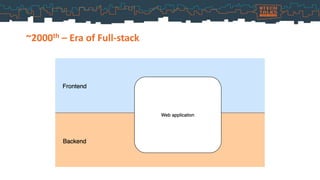
~2000th – Era of Full-stack
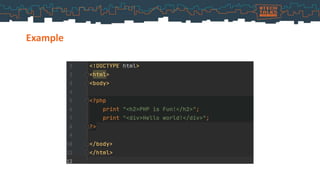
Example
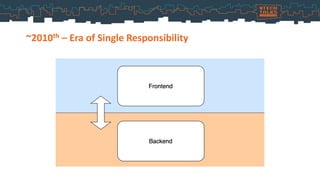
~2010th – Era of Single Responsibility
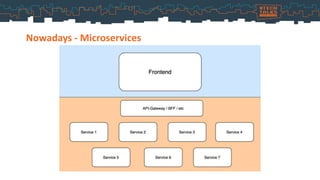
Nowadays - Microservices
Microservices - also known as the microservice architecture - is an
architectural style that structures an application as a collection of
services that are:
What are Microservices?
https://microservices.io/
• Highly maintainable and testable
• Loosely coupled
• Independently deployable
• Organized around business capabilities
• Owned by a small team
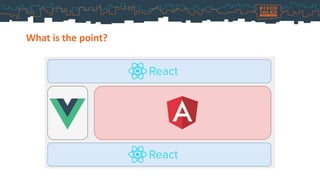
What are Micro-frontends then?
• Techniques, strategies and recipes for building a modern
web-app with multiple teams using different JavaScript
frameworks
• An architectural style where independently deliverable
frontend applications are composed into a greater whole
• Collection of features for a web-app which have being owned
by different teams with different stacks of technologies.
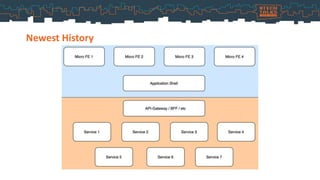
Newest History
What is the point?
Who already uses micro-frontends?
• Google
• Microsoft
• Facebook
• IKEA
• Upwork
• Spotify
• Starbucks
• Leroy Merlin
• ….
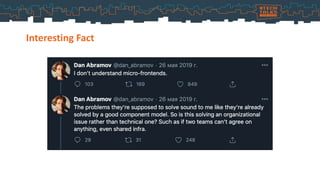
Interesting Fact
Advantages
• Being technology agnostic
• Loosely coupled applications
• Independently deployable
• Owned by a small team
• Faster and more reliable release cycles
Disadvantages?
• Development mind change
• Compexity
• No standard yet – the bunch of options
• Not so popular yet
• Extra-complication of the code for integration
• Being technology agnostic – possible overhead
When to use Micro-frontends?
• Complex business logic in the current monolith frontend
• Distributed teams
• When need to restructure your legacy systems
• 5+ small apps to be shown on the same page
Micro-frontends General Concepts
• Application shell
• Micro-frontend application
• Event-bus
Event-Bus
• postMessages
• Custom events
• RxJS
How to Add Micro-frontend to the App?
• Build-time integration
• Iframes
• Webpack Module Federation
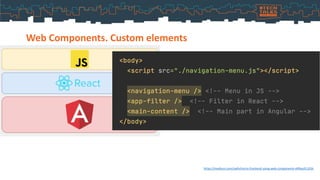
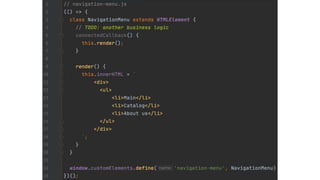
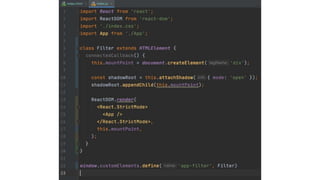
• Web Components
• …
Build-time Integration
• Each micro-frontend is a package
• Package is integrated to the Application Shell
• Application is built and deployed
Iframes
• The fastest way
• Absolute isolation
• Sharing data between applications are more challangeable
• Sharing cookies and styles have some restrictions
• Performance could suffer
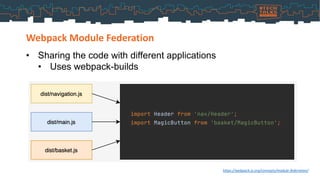
Webpack Module Federation
• Sharing the code with different applications
• Uses webpack-builds
https://webpack.js.org/concepts/module-federation/
Web Components. Custom elements
https://medium.com/swlh/micro-frontend-using-web-components-e9faacfc101b
How to split your Monolith?
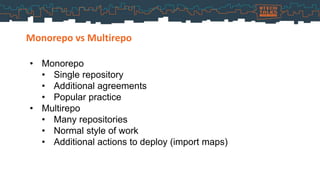
Monorepo vs Multirepo
• Monorepo
• Single repository
• Additional agreements
• Popular practice
• Multirepo
• Many repositories
• Normal style of work
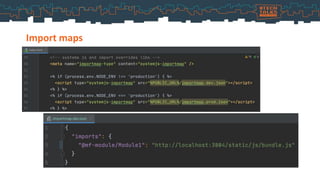
• Additional actions to deploy (import maps)
Import maps
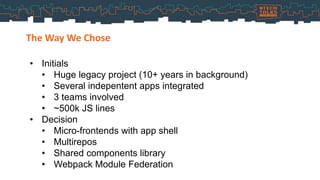
The Way We Chose
• Initials
• Huge legacy project (10+ years in background)
• Several indepentent apps integrated
• 3 teams involved
• ~500k JS lines
• Decision
• Micro-frontends with app shell
• Multirepos
• Shared components library
• Webpack Module Federation
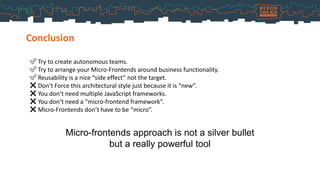
Conclusion
✅ Try to create autonomous teams.
✅ Try to arrange your Micro-Frontends around business functionality.
✅ Reusability is a nice “side effect” not the target.
❌ Don’t Force this architectural style just because it is “new”.
❌ You don’t need multiple JavaScript frameworks.
❌ You don’t need a “micro-frontend framework”.
❌ Micro-Frontends don’t have to be “micro”.
Micro-frontends approach is not a silver bullet
but a really powerful tool
Thank You!

Micro-frontends – is it a new normal?

  • 1.
    Micro-frontends – isit a new normal?
  • 2.
    • Maksym Bielkin •Delivery Manager & JavaScript Team Lead • 10+ years in IT • Father of 3 sons Introduction
  • 3.
    • Web applicationsarchitecture overview • Micro-frontend approach • How to start • Communication and sharing • Monorepo vs Multirepo • Our way Agenda
  • 4.
    “Software architecture isthose decisions which are both important and hard to change” Martin Fowler Software Architecture
  • 5.
    ~2000th – Eraof Full-stack
  • 6.
  • 7.
    ~2010th – Eraof Single Responsibility
  • 9.
  • 10.
    Microservices - alsoknown as the microservice architecture - is an architectural style that structures an application as a collection of services that are: What are Microservices? https://microservices.io/ • Highly maintainable and testable • Loosely coupled • Independently deployable • Organized around business capabilities • Owned by a small team
  • 11.
    What are Micro-frontendsthen? • Techniques, strategies and recipes for building a modern web-app with multiple teams using different JavaScript frameworks • An architectural style where independently deliverable frontend applications are composed into a greater whole • Collection of features for a web-app which have being owned by different teams with different stacks of technologies.
  • 12.
  • 13.
  • 14.
    Who already usesmicro-frontends? • Google • Microsoft • Facebook • IKEA • Upwork • Spotify • Starbucks • Leroy Merlin • ….
  • 15.
  • 16.
    Advantages • Being technologyagnostic • Loosely coupled applications • Independently deployable • Owned by a small team • Faster and more reliable release cycles
  • 17.
    Disadvantages? • Development mindchange • Compexity • No standard yet – the bunch of options • Not so popular yet • Extra-complication of the code for integration • Being technology agnostic – possible overhead
  • 18.
    When to useMicro-frontends? • Complex business logic in the current monolith frontend • Distributed teams • When need to restructure your legacy systems • 5+ small apps to be shown on the same page
  • 19.
    Micro-frontends General Concepts •Application shell • Micro-frontend application • Event-bus
  • 20.
  • 21.
    How to AddMicro-frontend to the App? • Build-time integration • Iframes • Webpack Module Federation • Web Components • …
  • 22.
    Build-time Integration • Eachmicro-frontend is a package • Package is integrated to the Application Shell • Application is built and deployed
  • 23.
    Iframes • The fastestway • Absolute isolation • Sharing data between applications are more challangeable • Sharing cookies and styles have some restrictions • Performance could suffer
  • 24.
    Webpack Module Federation •Sharing the code with different applications • Uses webpack-builds https://webpack.js.org/concepts/module-federation/
  • 25.
    Web Components. Customelements https://medium.com/swlh/micro-frontend-using-web-components-e9faacfc101b
  • 28.
    How to splityour Monolith?
  • 29.
    Monorepo vs Multirepo •Monorepo • Single repository • Additional agreements • Popular practice • Multirepo • Many repositories • Normal style of work • Additional actions to deploy (import maps)
  • 30.
  • 31.
    The Way WeChose • Initials • Huge legacy project (10+ years in background) • Several indepentent apps integrated • 3 teams involved • ~500k JS lines • Decision • Micro-frontends with app shell • Multirepos • Shared components library • Webpack Module Federation
  • 32.
    Conclusion ✅ Try tocreate autonomous teams. ✅ Try to arrange your Micro-Frontends around business functionality. ✅ Reusability is a nice “side effect” not the target. ❌ Don’t Force this architectural style just because it is “new”. ❌ You don’t need multiple JavaScript frameworks. ❌ You don’t need a “micro-frontend framework”. ❌ Micro-Frontends don’t have to be “micro”. Micro-frontends approach is not a silver bullet but a really powerful tool
  • 33.