This document discusses micro frontends, an approach to building frontends that splits the application into separate modules that can be developed independently. It covers the motivation for micro frontends, examples of how to implement them using techniques like server-side composition, iframes, and Single-SPA, challenges like maintaining consistency across teams, and how CyberArk has implemented a proprietary solution.
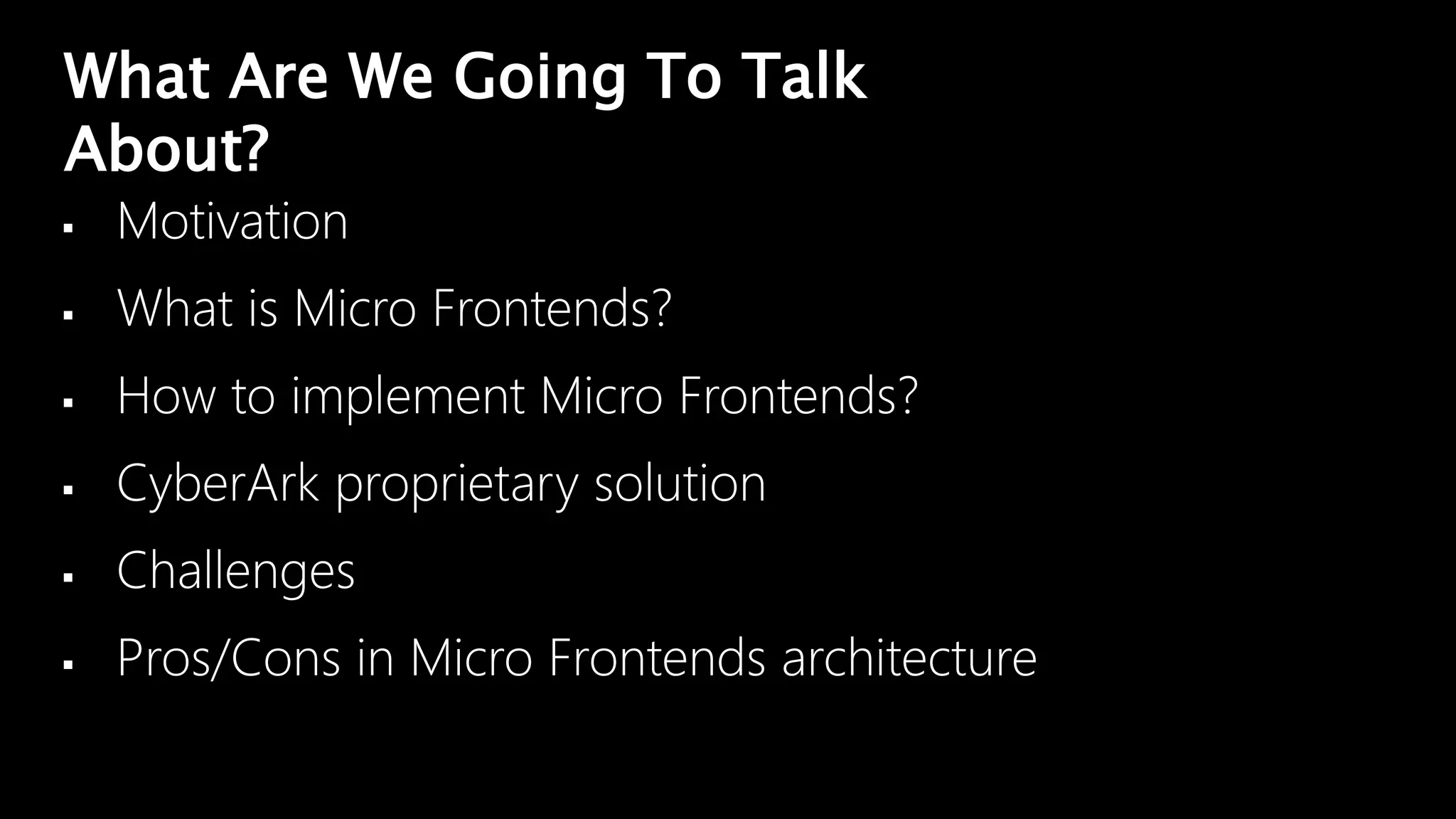
What Are WeGoing To Talk
About?
Motivation
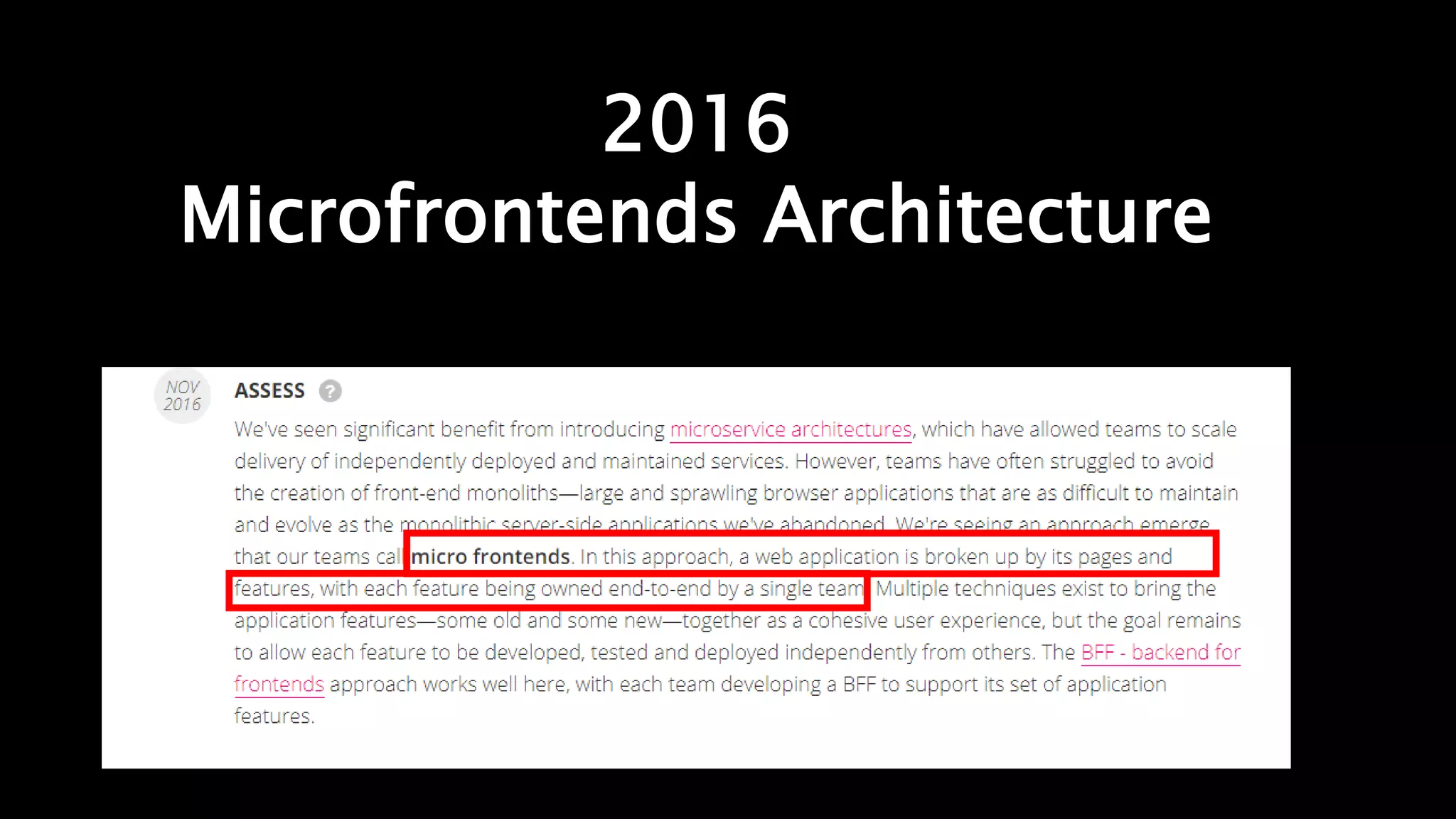
What is Micro Frontends?
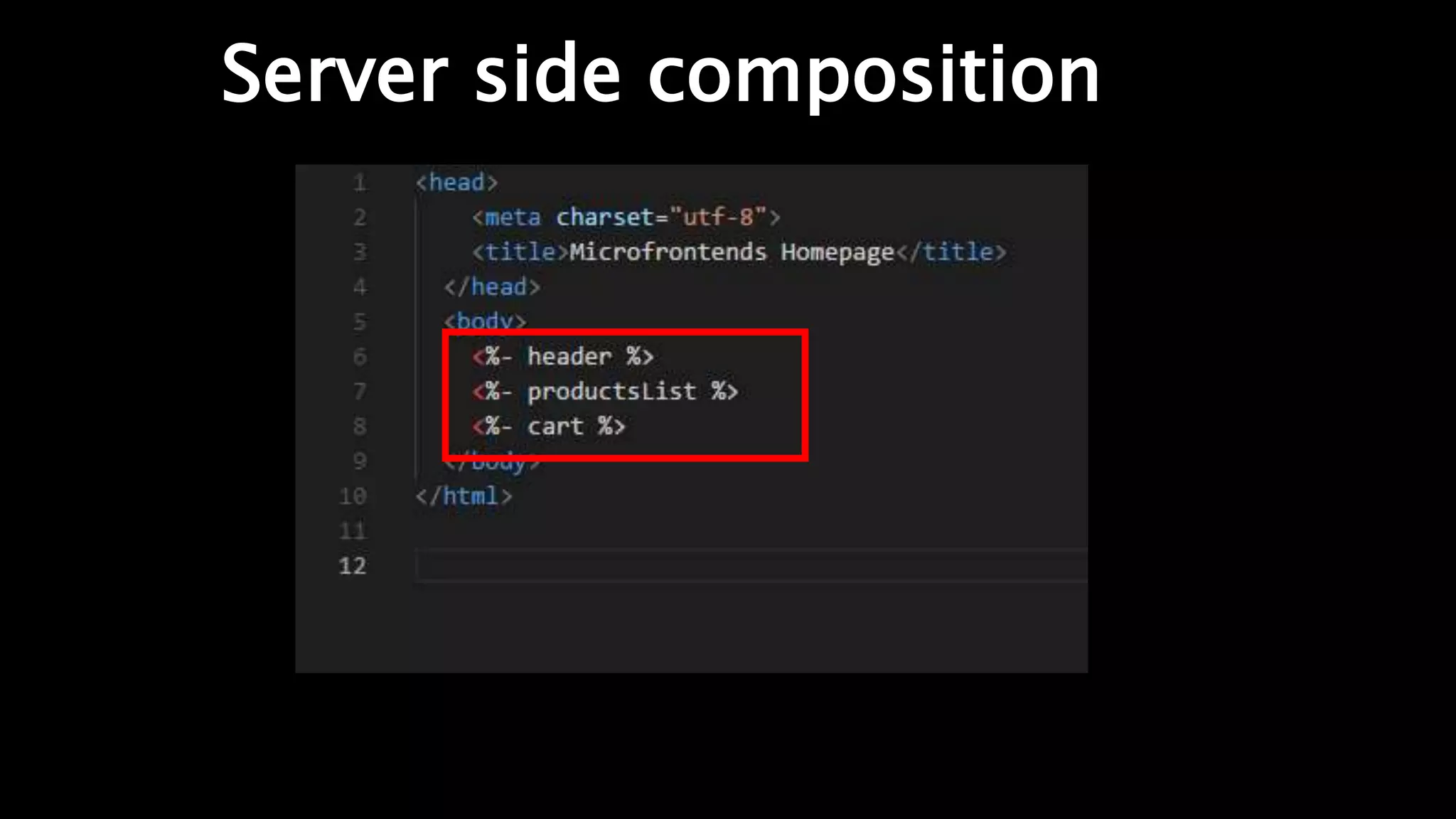
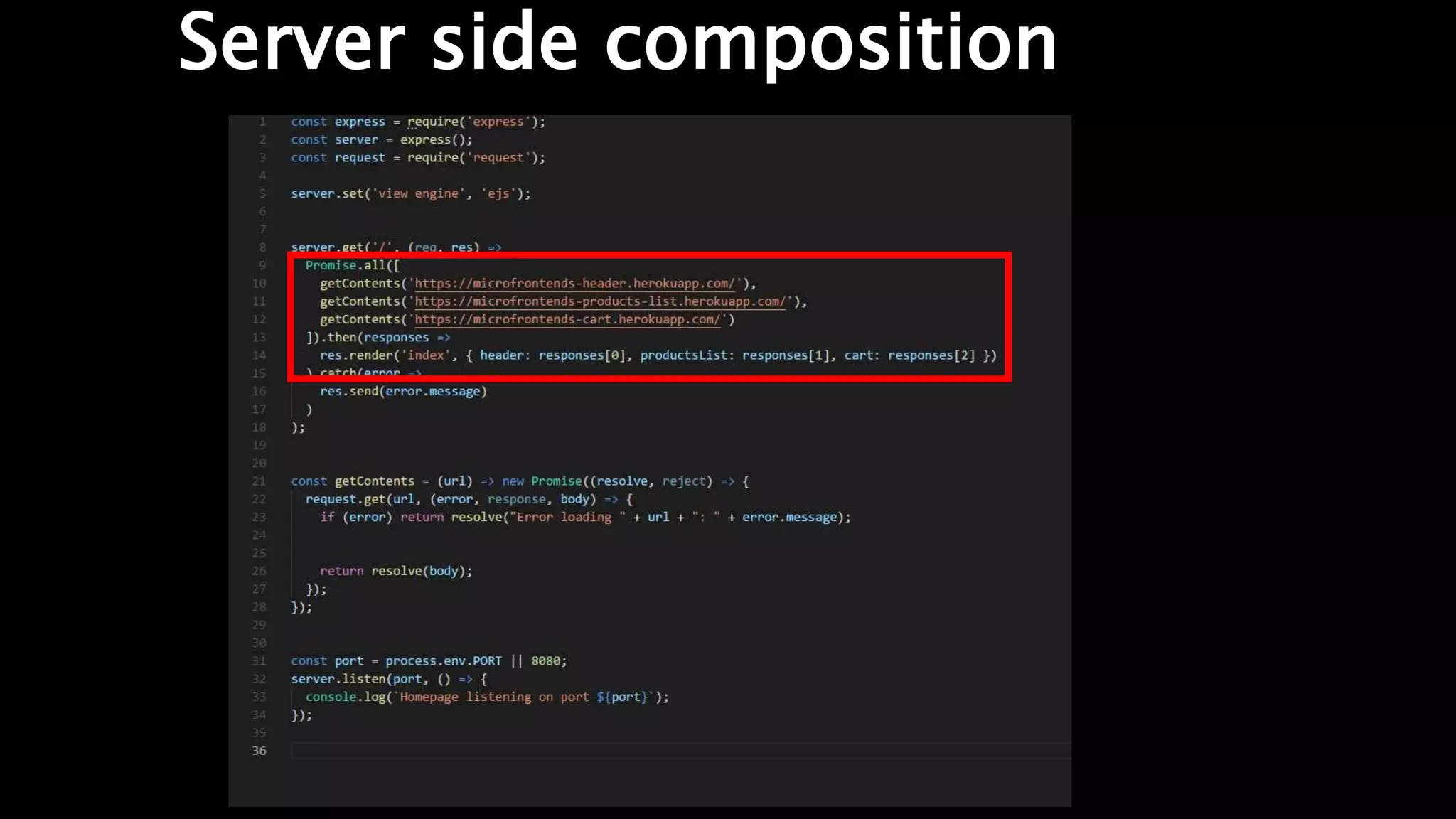
How to implement Micro Frontends?
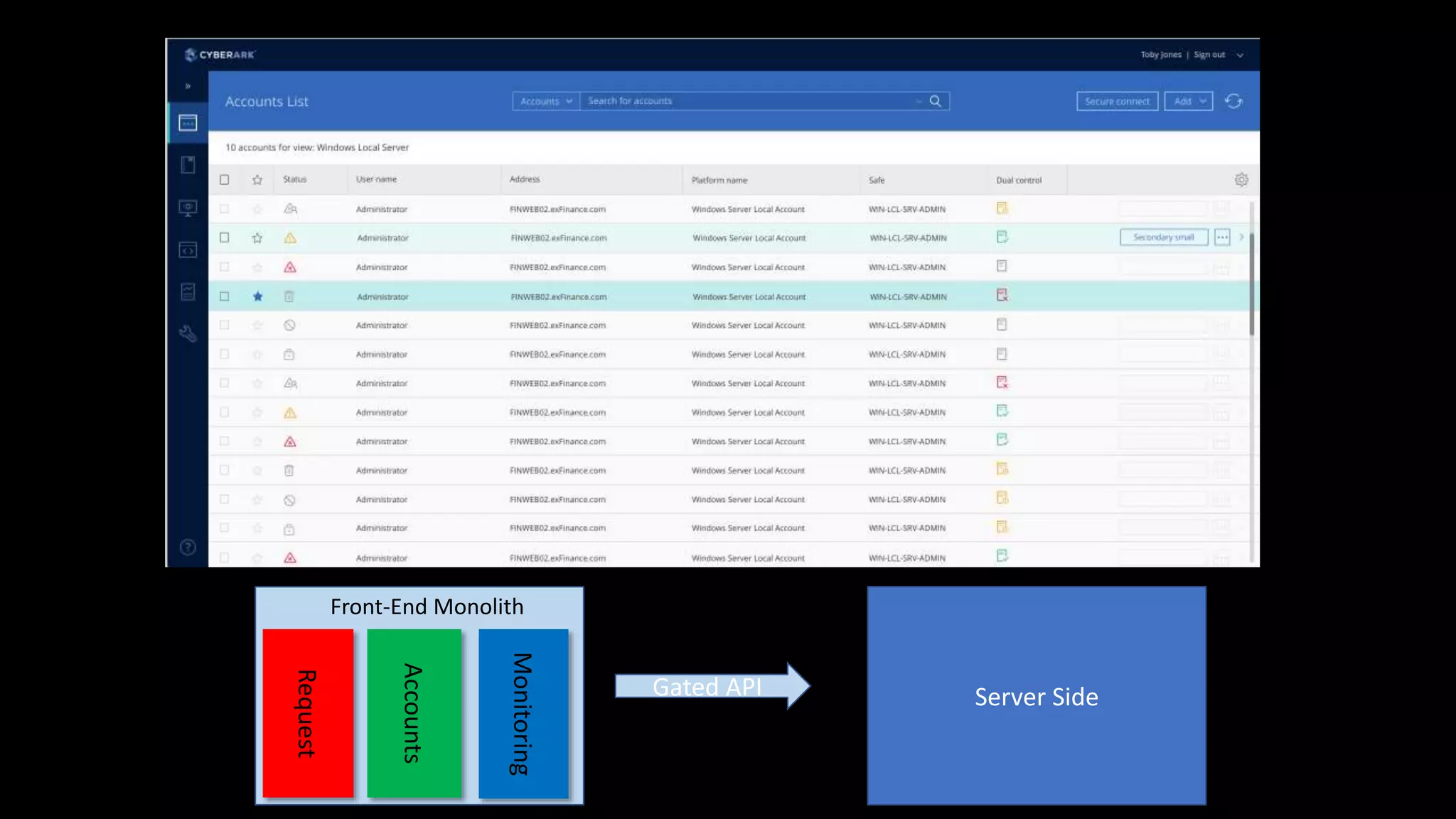
CyberArk proprietary solution
Challenges
Pros/Cons in Micro Frontends architecture
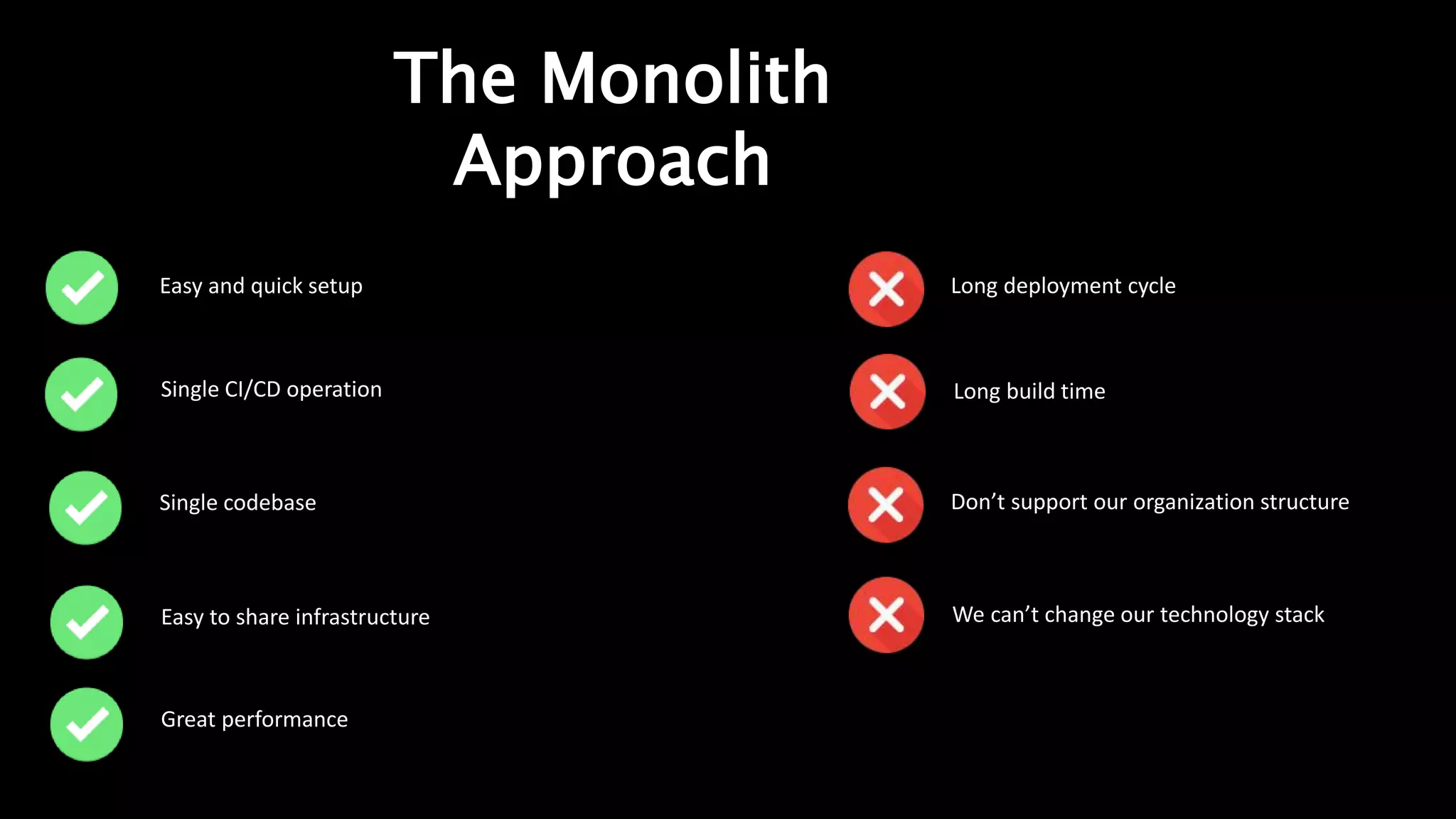
The Monolith
Approach
Long deploymentcycle
Single CI/CD operation
Single codebase
Easy and quick setup
Long build time
Don’t support our organization structure
Easy to share infrastructure
Great performance
We can’t change our technology stack
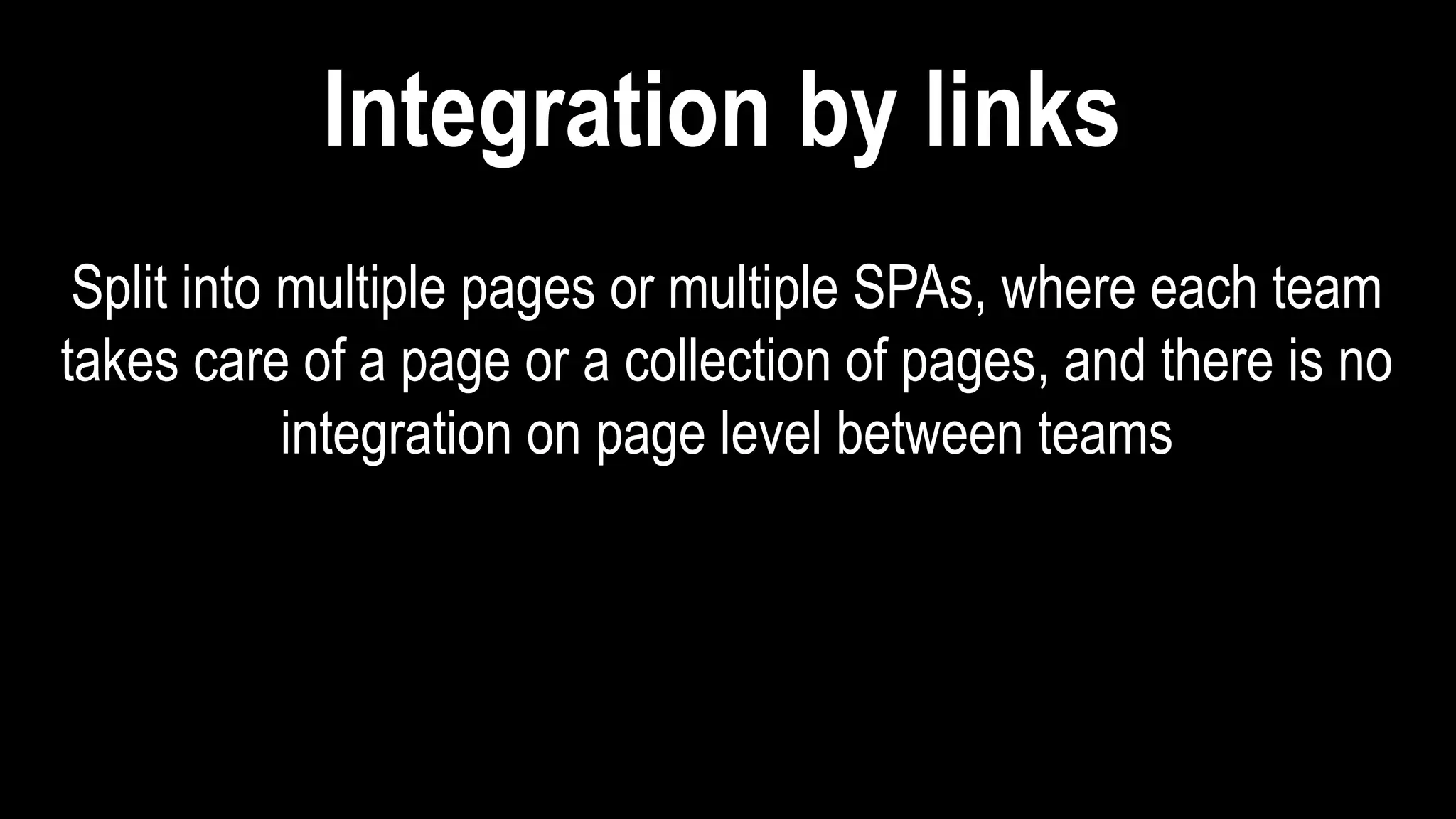
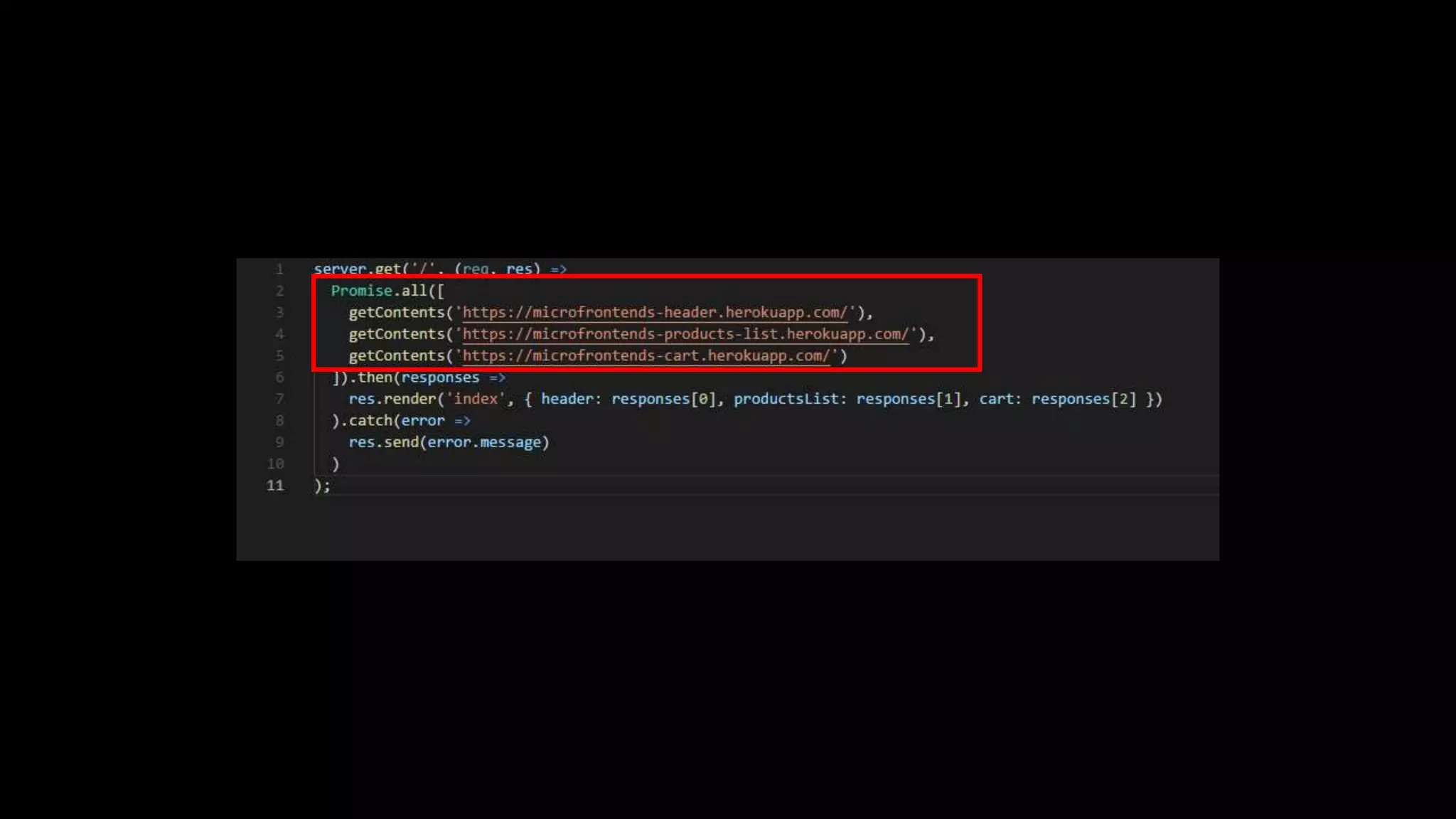
Split into multiplepages or multiple SPAs, where each team
takes care of a page or a collection of pages, and there is no
integration on page level between teams
Integration by links
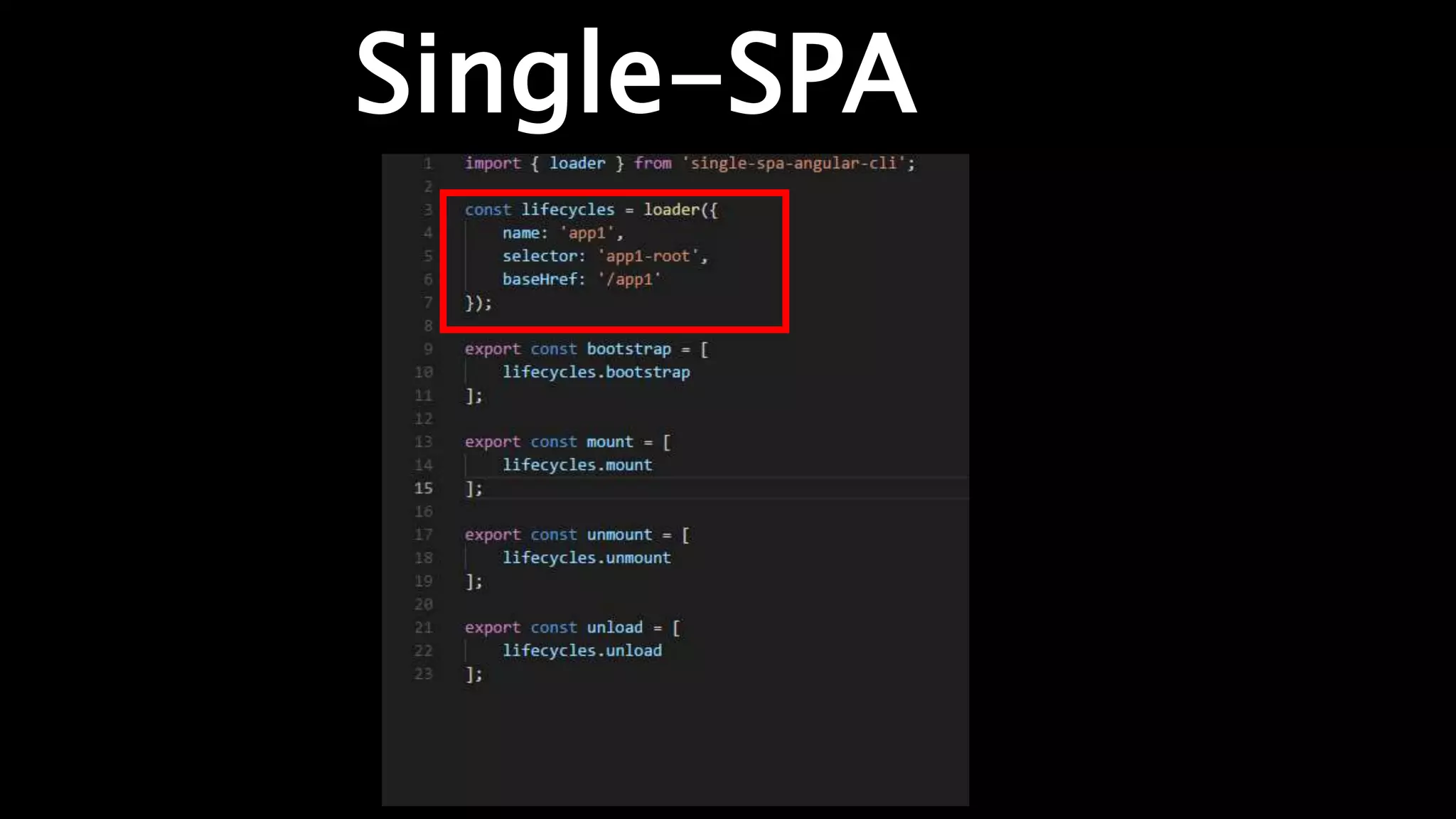
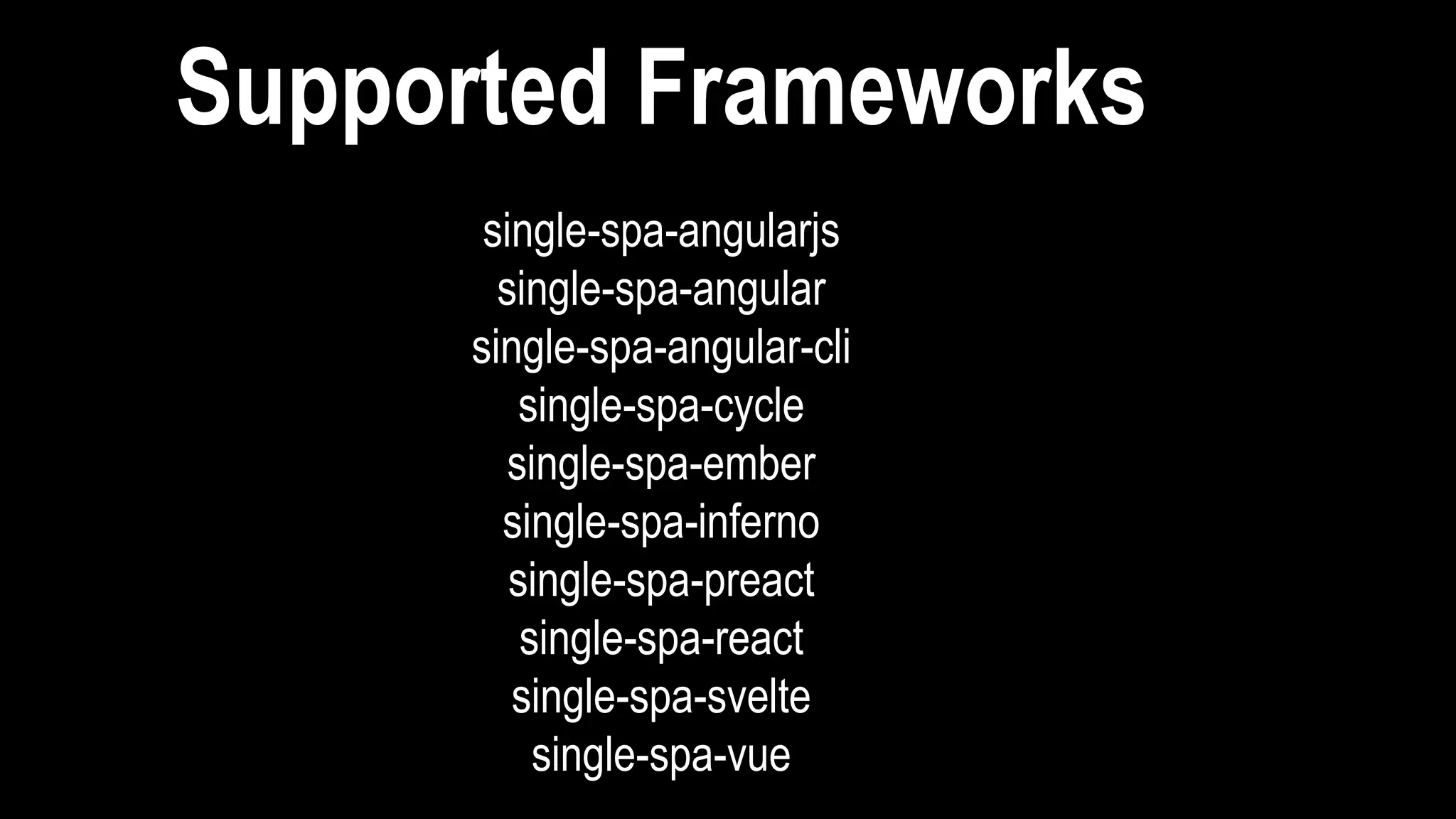
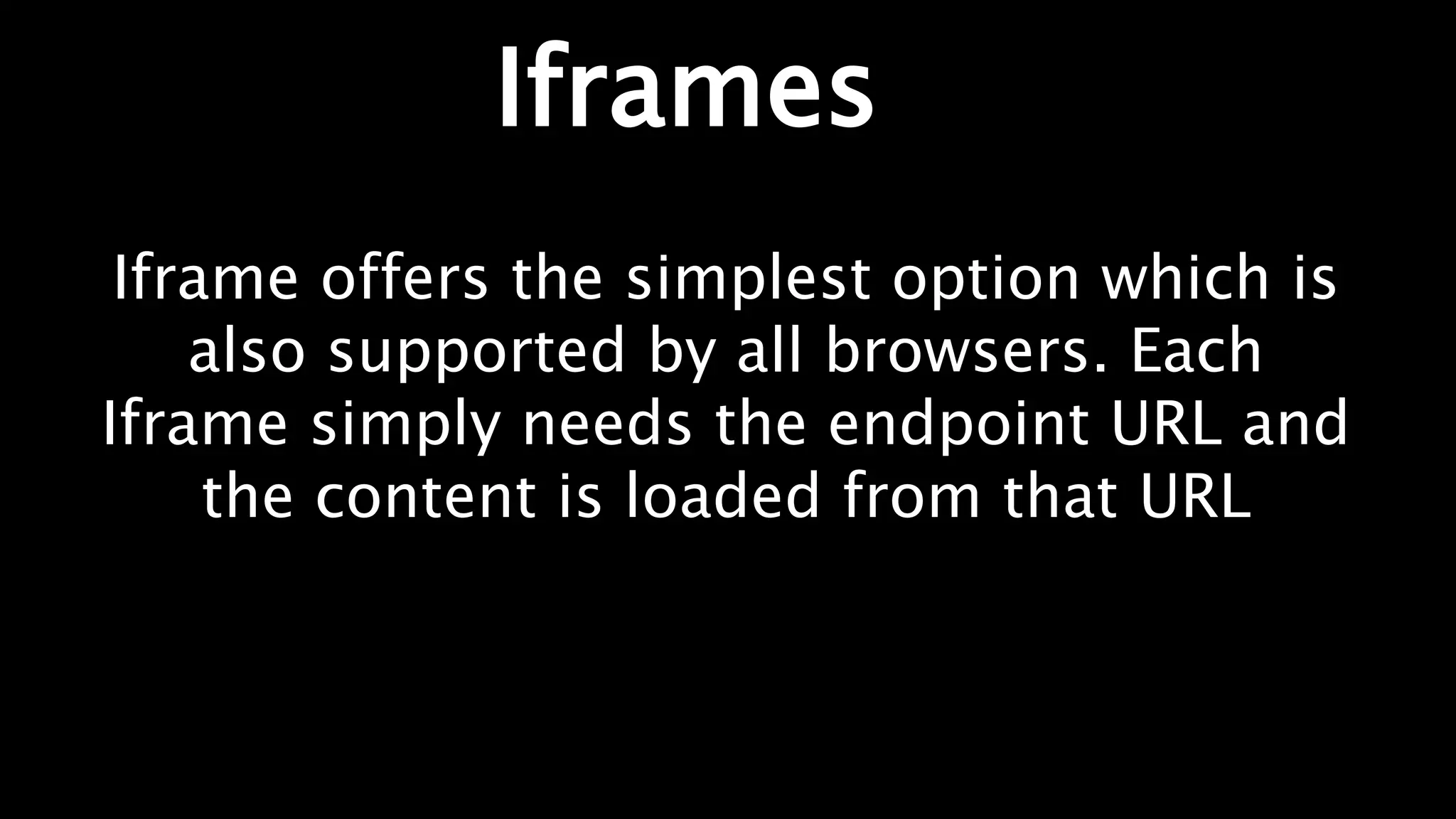
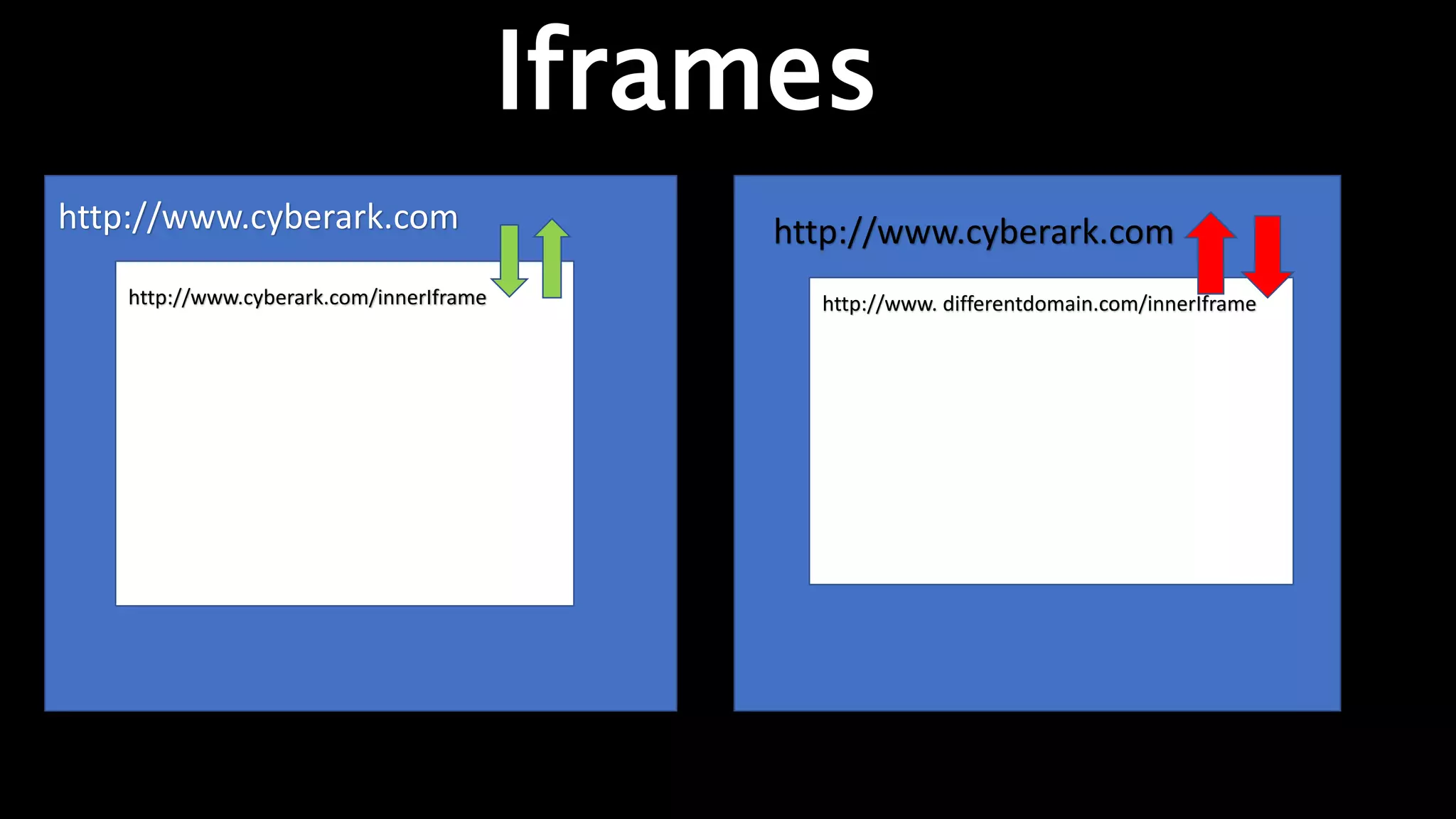
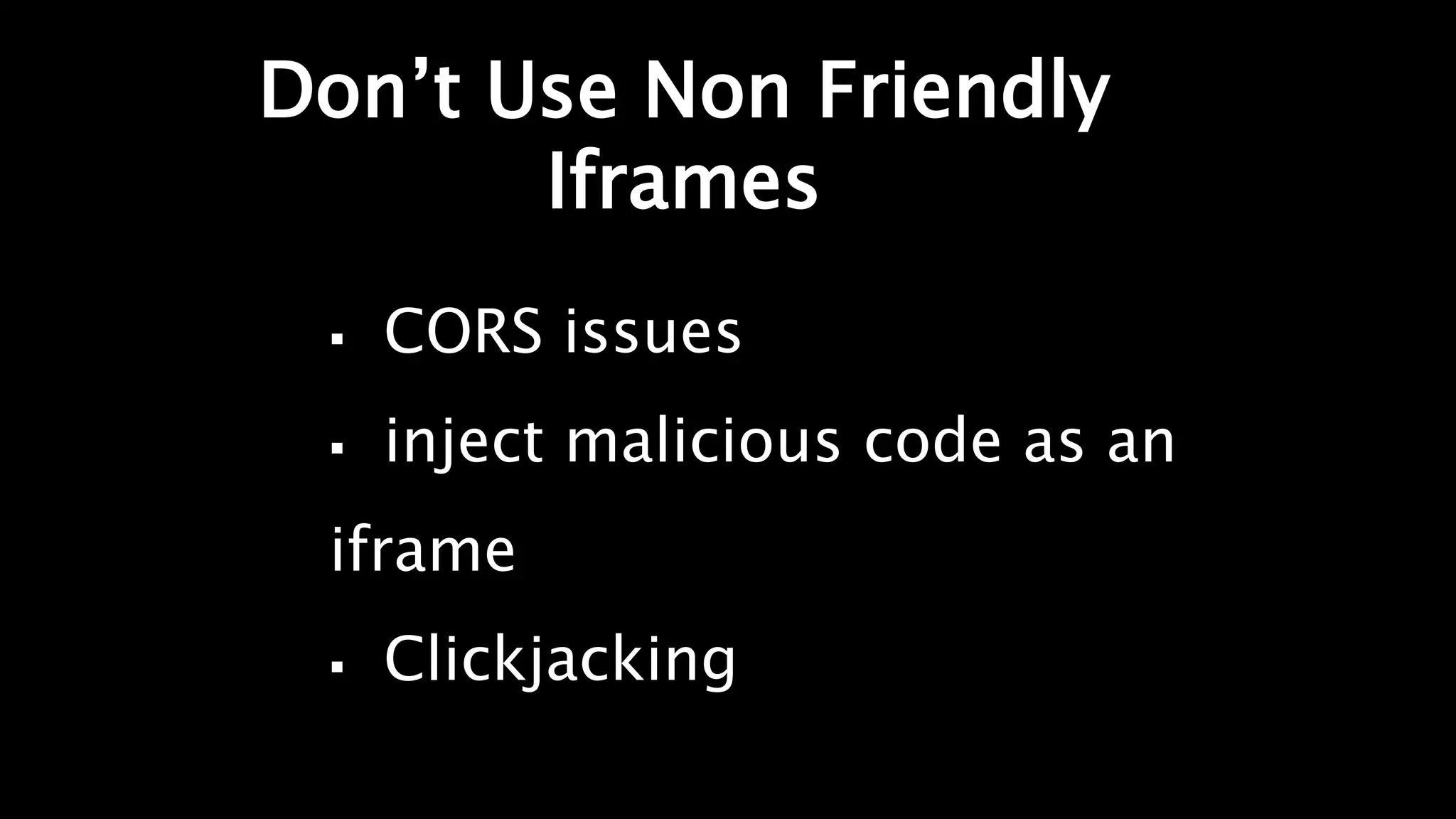
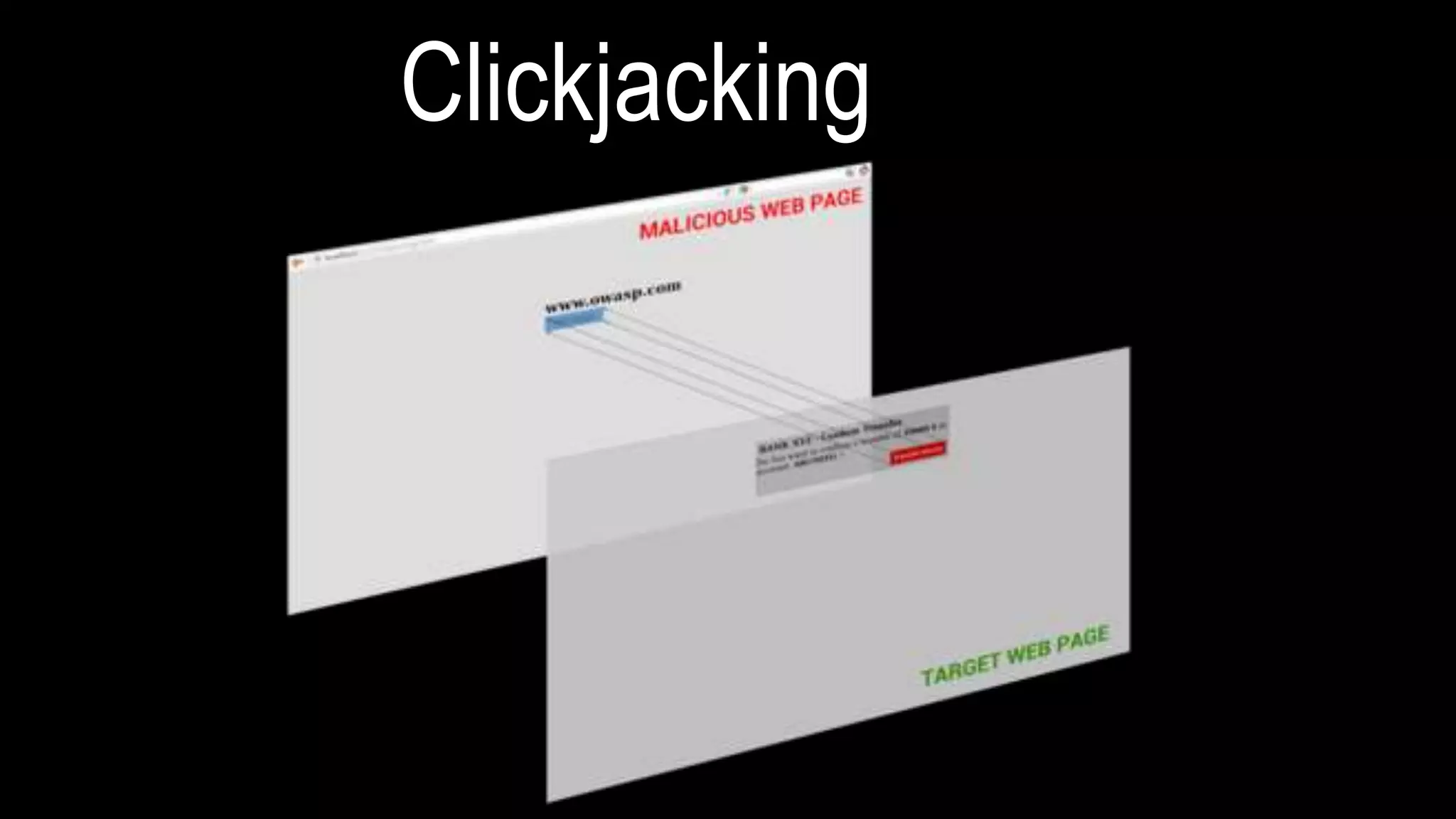
Iframes
Iframe offers thesimplest option which is
also supported by all browsers. Each
Iframe simply needs the endpoint URL and
the content is loaded from that URL
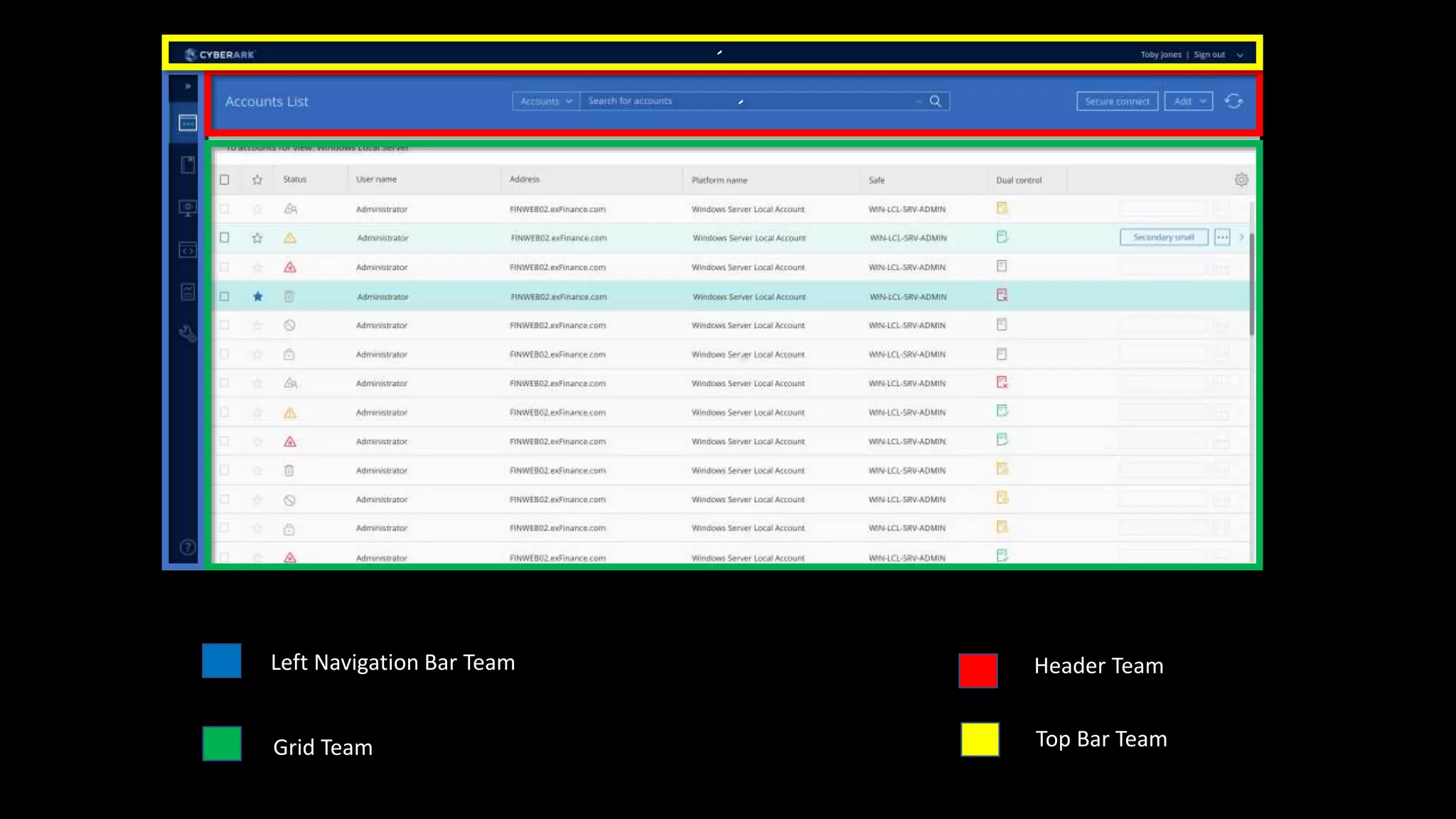
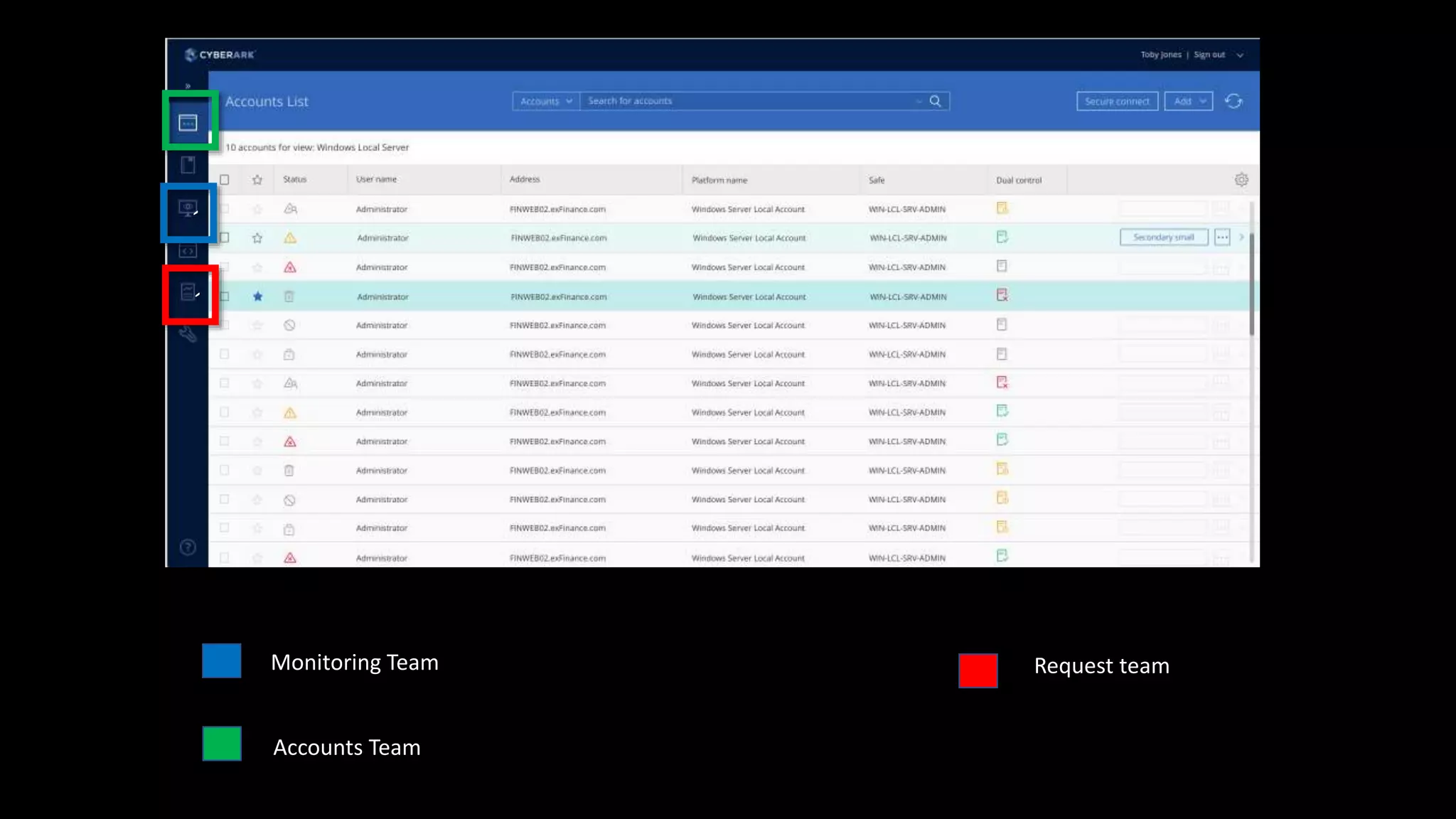
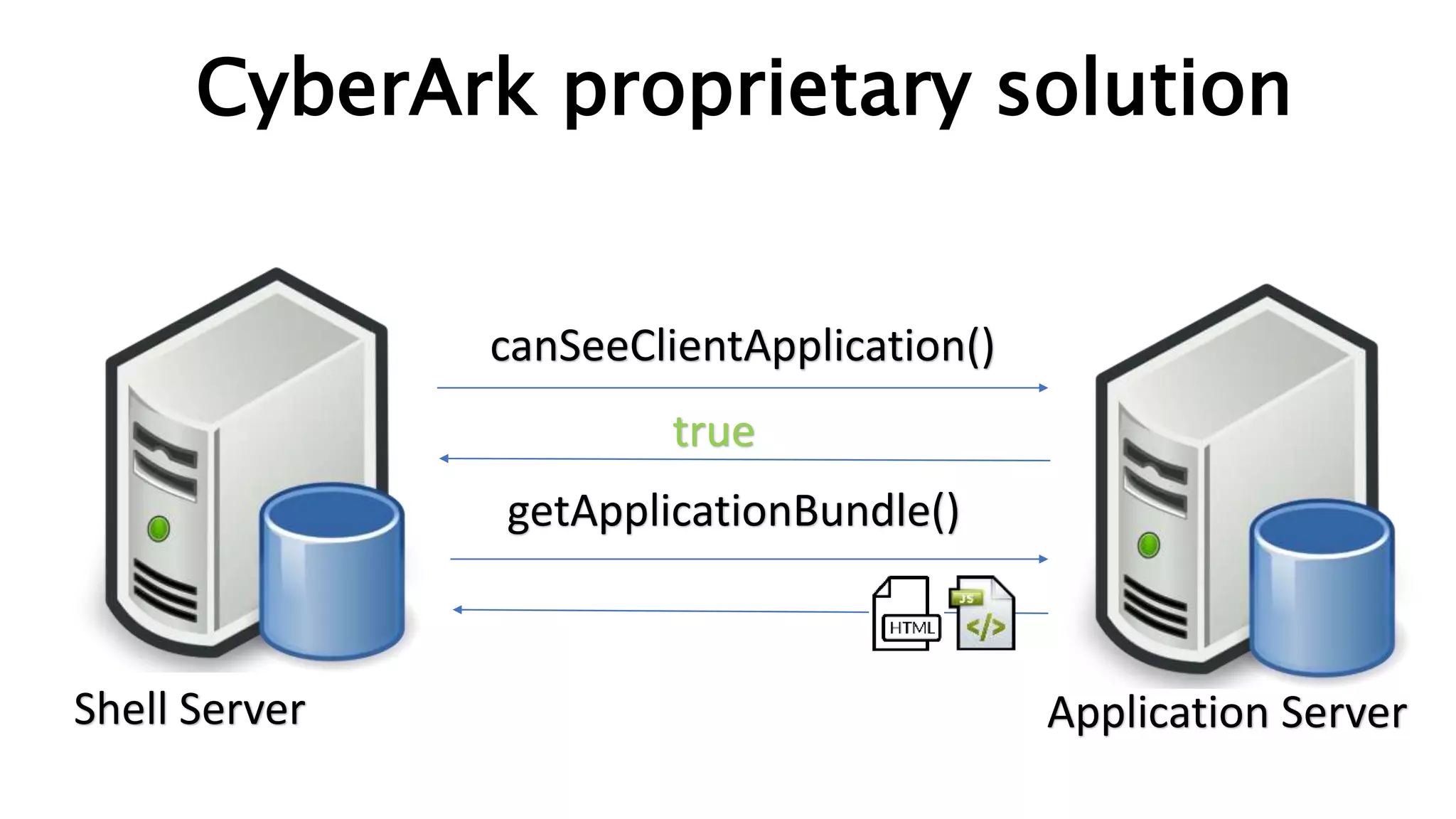
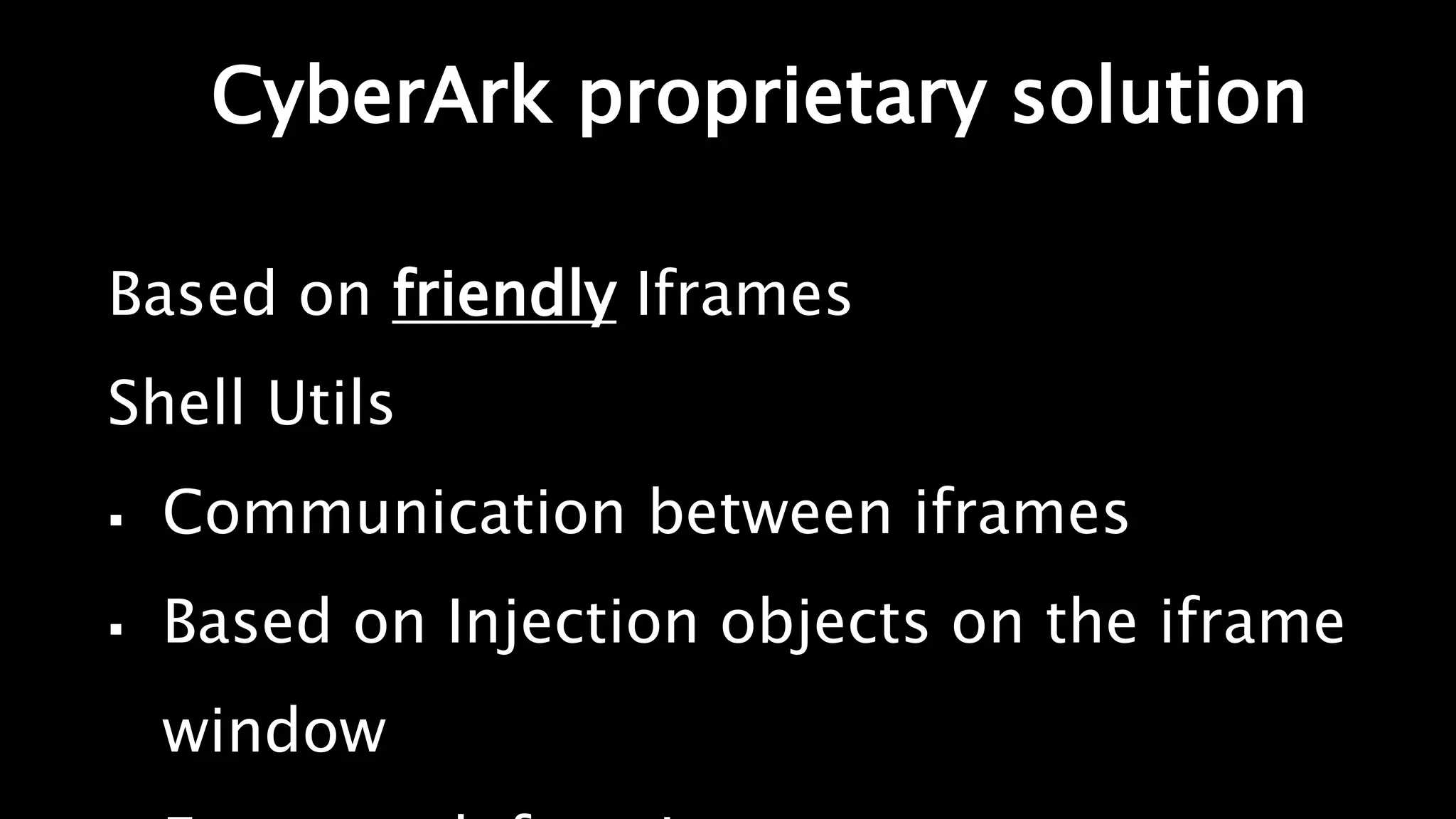
CyberArk proprietary solution
Based on friendly Iframes
Shell Utils
Communication between iframes
Based on Injection objects on the iframe
window
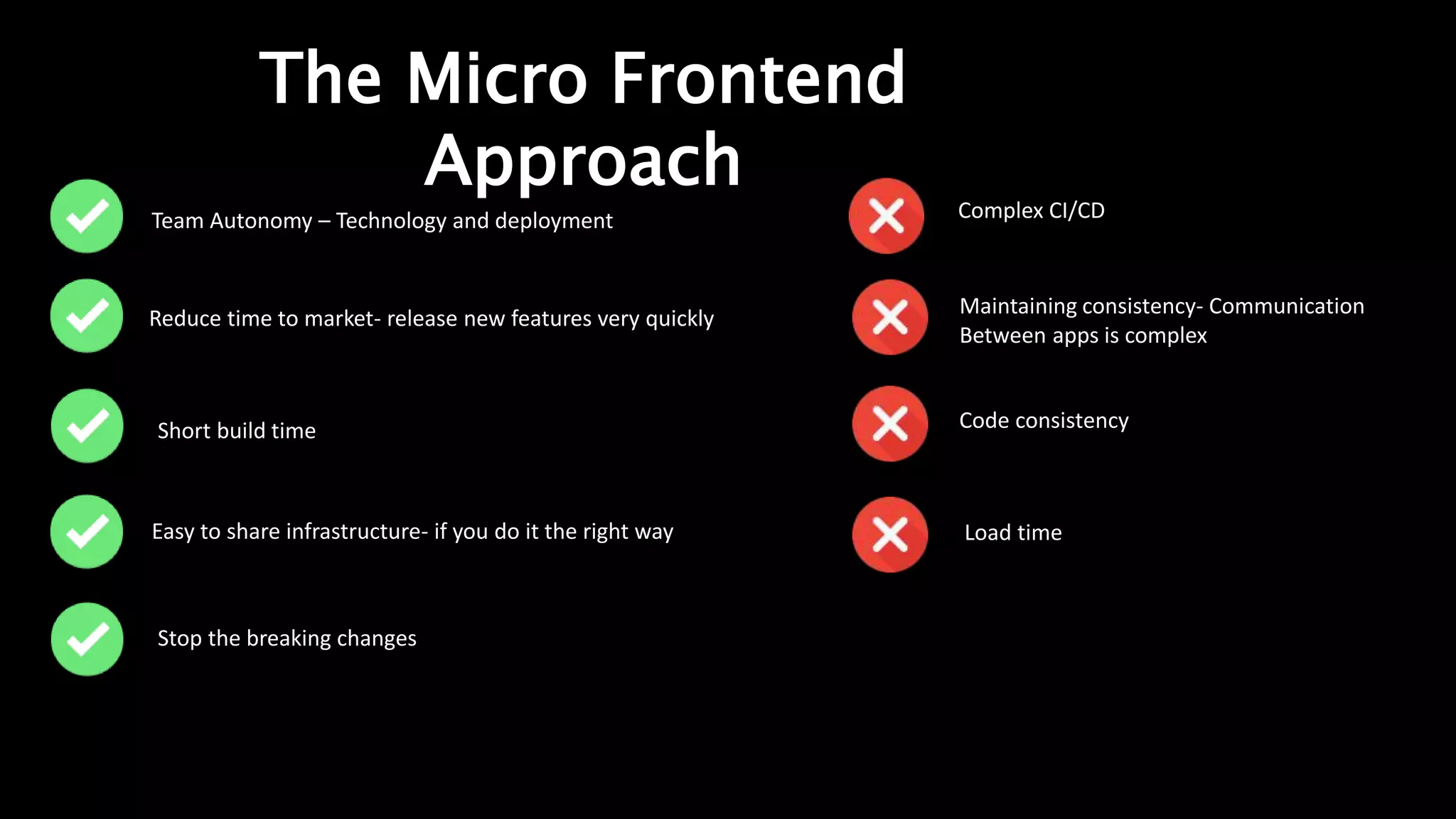
The Micro Frontend
Approach
Reducetime to market- release new features very quickly
Short build time
Complex CI/CD
Easy to share infrastructure- if you do it the right way
Team Autonomy – Technology and deployment
Maintaining consistency- Communication
Between apps is complex
Code consistency
Stop the breaking changes
Load time
The MicroFrontend
Approach
Short deploymentcycles
Short build time
Easy and quick setup
Complex CI/CD
Easy to share infrastructure- if you do it the right way
Great performance- Can scale only what I need
Team Autonomy – Technology and deployment
Maintaining consistency- Communication
Between apps is complex
Code consistency
Thank you!








![export const methodsList = [
log,
alert,
freeze,
unfreeze,
updateShellUrl,
showFeedbackFloatingMessage,
showFeedbackMessage,
resetFeedBackMessage,
removeFloatingFeedBackMessage
];
Shell Utils](https://image.slidesharecdn.com/presentationmeetup-toupload-180809122745/75/Introduction-To-Micro-Frontends-42-2048.jpg)





![[DevDay2019] Micro Frontends Architecture - By Thang Pham, Senior Software En...](https://cdn.slidesharecdn.com/ss_thumbnails/microfrontendsarchitectureedit-190410074045-thumbnail.jpg?width=640&height=640&fit=bounds)


![Vibe Coding vs. Spec-Driven Development [Free Meetup]](https://cdn.slidesharecdn.com/ss_thumbnails/vibecodingvsspecdrivendevelopment-251209105622-43f455e7-thumbnail.jpg?width=640&height=640&fit=bounds)


