The Basic Analysis of
Demand and Supply
• A market is where buyers and sellers meet.
• Take note that when there is demand for a good
or service, there is a market.
Market
Two types of Market:
1. Wet Market
2. Dry Market
Methods of Demand Analysis
1. Demand Schedule
2. Demand Curve
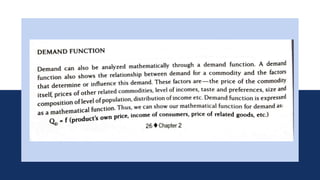
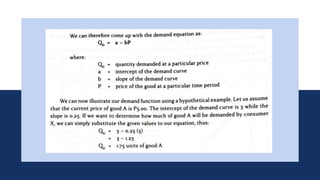
3. Demand Function
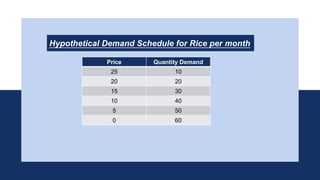
Hypothetical Demand Schedule for Rice per month
Price Quantity Demand
25 10
20 20
15 30
10 40
5 50
0 60
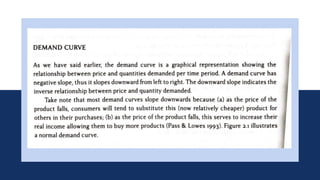
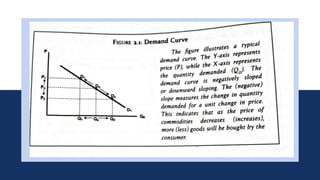
Demand Curve
Demand Graph
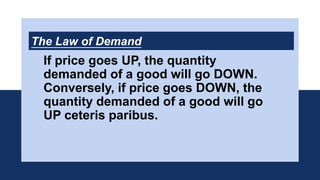
The Law of Demand
If price goes UP, the quantity
demanded of a good will go DOWN.
Conversely, if price goes DOWN, the
quantity demanded of a good will go
UP ceteris paribus.
Ceteris Paribus
“all other things being equal”
Quiz Time
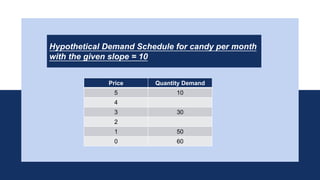
Hypothetical Demand Schedule for candy per month
with the given slope = 10
Price Quantity Demand
5 10
4
3 30
2
1 50
0 60
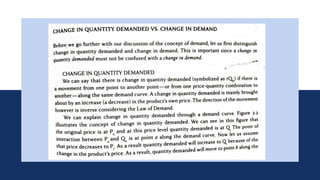
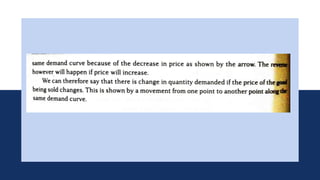
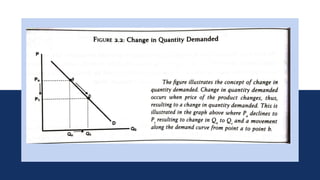
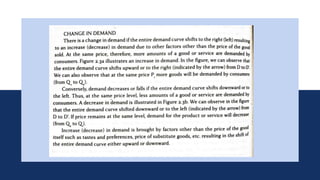
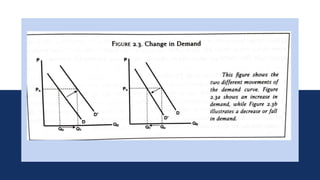
Change in Quantity Demanded
Vs.
Change in Demand
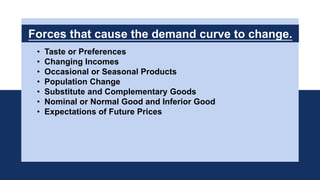
Forces that cause the demand curve to change.
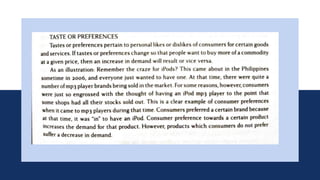
• Taste or Preferences
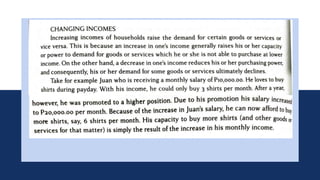
• Changing Incomes
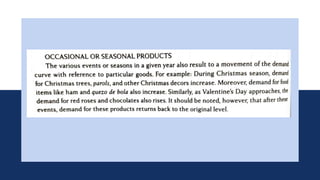
• Occasional or Seasonal Products
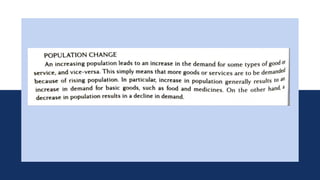
• Population Change
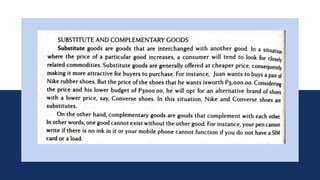
• Substitute and Complementary Goods
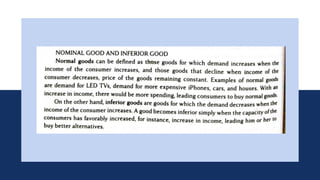
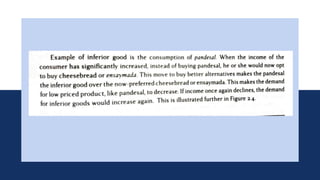
• Nominal or Normal Good and Inferior Good
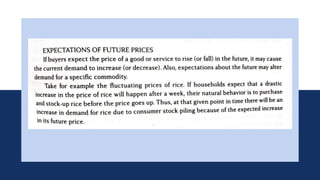
• Expectations of Future Prices
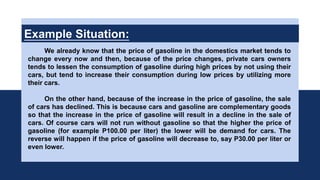
Example Situation:
We already know that the price of gasoline in the domestics market tends to
change every now and then, because of the price changes, private cars owners
tends to lessen the consumption of gasoline during high prices by not using their
cars, but tend to increase their consumption during low prices by utilizing more
their cars.
On the other hand, because of the increase in the price of gasoline, the sale
of cars has declined. This is because cars and gasoline are complementary goods
so that the increase in the price of gasoline will result in a decline in the sale of
cars. Of course cars will not run without gasoline so that the higher the price of
gasoline (for example P100.00 per liter) the lower will be demand for cars. The
reverse will happen if the price of gasoline will decrease to, say P30.00 per liter or
even lower.
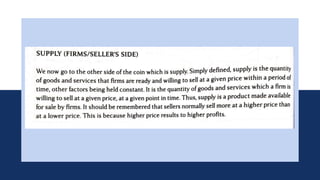
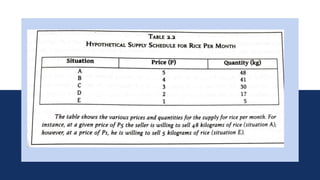
Methods of Supply Analysis
1. Supply Schedule
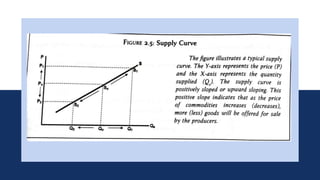
2. Supply Curve
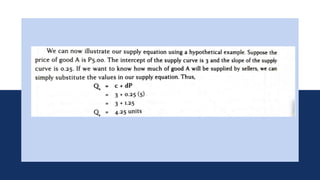
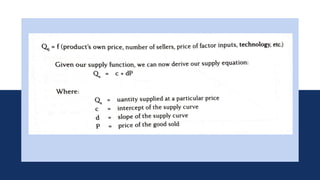
3. Supply Function
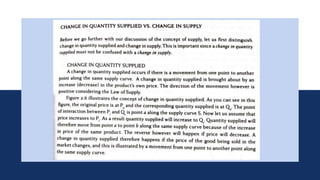
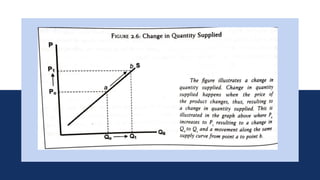
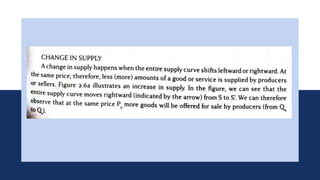
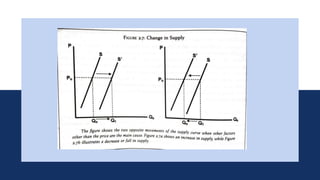
Change in Quantity Supplied
Vs.
Change in Supply
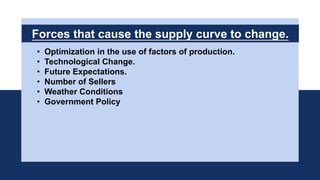
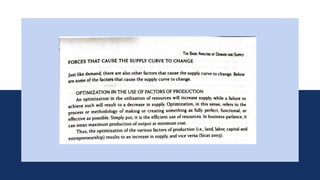
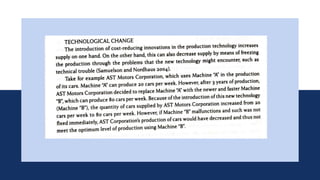
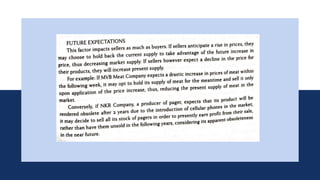
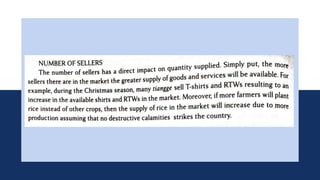
Forces that cause the supply curve to change.
• Optimization in the use of factors of production.
• Technological Change.
• Future Expectations.
• Number of Sellers
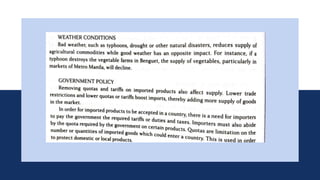
• Weather Conditions
• Government Policy
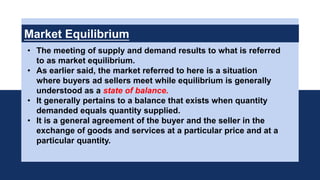
Market Equilibrium
Market Equilibrium
• The meeting of supply and demand results to what is referred
to as market equilibrium.
• As earlier said, the market referred to here is a situation
where buyers ad sellers meet while equilibrium is generally
understood as a state of balance.
• It generally pertains to a balance that exists when quantity
demanded equals quantity supplied.
• It is a general agreement of the buyer and the seller in the
exchange of goods and services at a particular price and at a
particular quantity.
Equilibrium
• The meeting of supply and demand results to what is referred
to as market equilibrium.
• As earlier said, the market referred to here is a situation
where buyers ad sellers meet while equilibrium is generally
understood as a state of balance.

Microeconomics Chapter 2 Midterm Topics.

  • 1.
    The Basic Analysisof Demand and Supply
  • 2.
    • A marketis where buyers and sellers meet. • Take note that when there is demand for a good or service, there is a market. Market
  • 3.
    Two types ofMarket: 1. Wet Market 2. Dry Market
  • 5.
    Methods of DemandAnalysis 1. Demand Schedule 2. Demand Curve 3. Demand Function
  • 7.
    Hypothetical Demand Schedulefor Rice per month Price Quantity Demand 25 10 20 20 15 30 10 40 5 50 0 60
  • 8.
  • 9.
  • 10.
    The Law ofDemand If price goes UP, the quantity demanded of a good will go DOWN. Conversely, if price goes DOWN, the quantity demanded of a good will go UP ceteris paribus.
  • 11.
    Ceteris Paribus “all otherthings being equal”
  • 14.
  • 15.
    Hypothetical Demand Schedulefor candy per month with the given slope = 10 Price Quantity Demand 5 10 4 3 30 2 1 50 0 60
  • 16.
    Change in QuantityDemanded Vs. Change in Demand
  • 22.
    Forces that causethe demand curve to change. • Taste or Preferences • Changing Incomes • Occasional or Seasonal Products • Population Change • Substitute and Complementary Goods • Nominal or Normal Good and Inferior Good • Expectations of Future Prices
  • 31.
    Example Situation: We alreadyknow that the price of gasoline in the domestics market tends to change every now and then, because of the price changes, private cars owners tends to lessen the consumption of gasoline during high prices by not using their cars, but tend to increase their consumption during low prices by utilizing more their cars. On the other hand, because of the increase in the price of gasoline, the sale of cars has declined. This is because cars and gasoline are complementary goods so that the increase in the price of gasoline will result in a decline in the sale of cars. Of course cars will not run without gasoline so that the higher the price of gasoline (for example P100.00 per liter) the lower will be demand for cars. The reverse will happen if the price of gasoline will decrease to, say P30.00 per liter or even lower.
  • 33.
    Methods of SupplyAnalysis 1. Supply Schedule 2. Supply Curve 3. Supply Function
  • 38.
    Change in QuantitySupplied Vs. Change in Supply
  • 43.
    Forces that causethe supply curve to change. • Optimization in the use of factors of production. • Technological Change. • Future Expectations. • Number of Sellers • Weather Conditions • Government Policy
  • 49.
  • 50.
    Market Equilibrium • Themeeting of supply and demand results to what is referred to as market equilibrium. • As earlier said, the market referred to here is a situation where buyers ad sellers meet while equilibrium is generally understood as a state of balance. • It generally pertains to a balance that exists when quantity demanded equals quantity supplied. • It is a general agreement of the buyer and the seller in the exchange of goods and services at a particular price and at a particular quantity.

  • 51.
    Equilibrium • The meetingof supply and demand results to what is referred to as market equilibrium. • As earlier said, the market referred to here is a situation where buyers ad sellers meet while equilibrium is generally understood as a state of balance.