© Ramesh JainSlide 1
Micro-Reports and
Situation Recognition
Ramesh Jain
Computer Science@UCI
(with Vivek Singh, Mingyan Gao, Siripen Pongpaichet, and
Mengfann Tan)
and
Krumbs Inc
(Asquith Baily, Neil Jain, Pinaki Sinha)
jain@ics.uci.edu
© Ramesh JainSlide 2
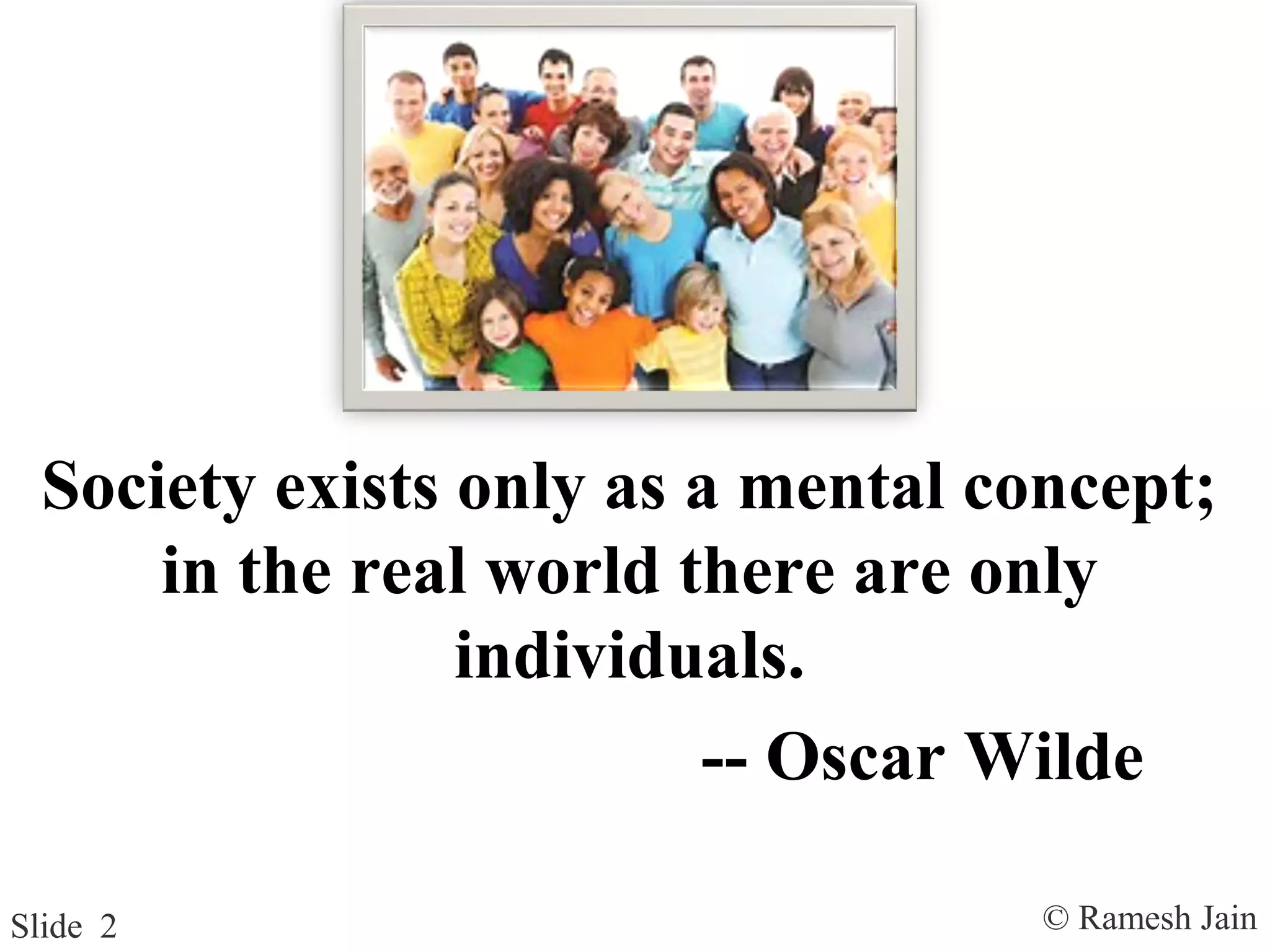
Society exists only as a mental concept;
in the real world there are only
individuals.
-- Oscar Wilde
© Ramesh JainSlide 3
Humans are Smart Sensors.
3
Humans are Smart Actuators
Humans are the goal as well as the
source of Technology.
© Ramesh JainSlide 4
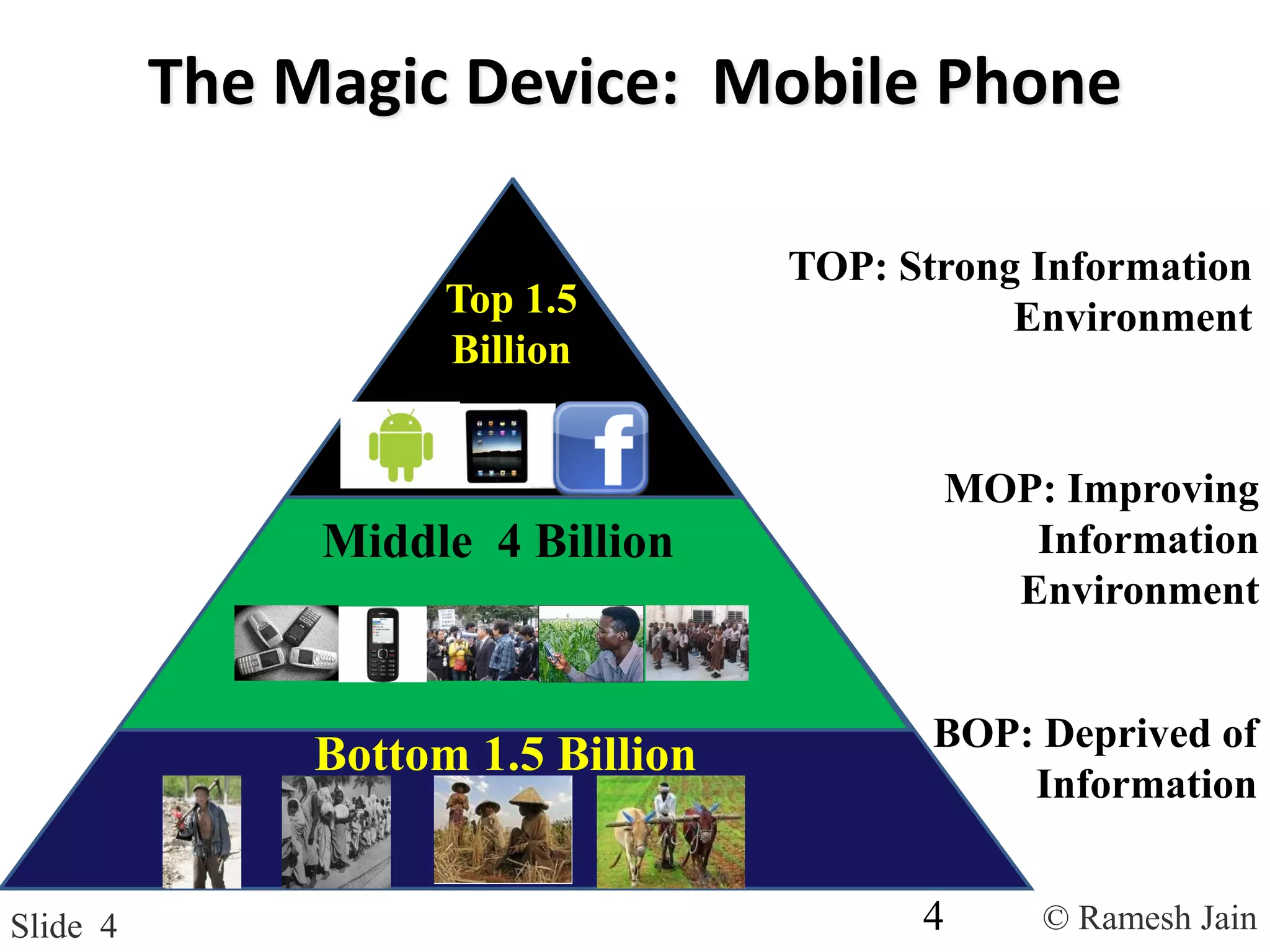
The Magic Device: Mobile Phone
Middle 4 Billion
Top 1.5
Billion
Bottom 1.5 Billion
MOP: Improving
Information
Environment
TOP: Strong Information
Environment
BOP: Deprived of
Information
4
© Ramesh JainSlide 5
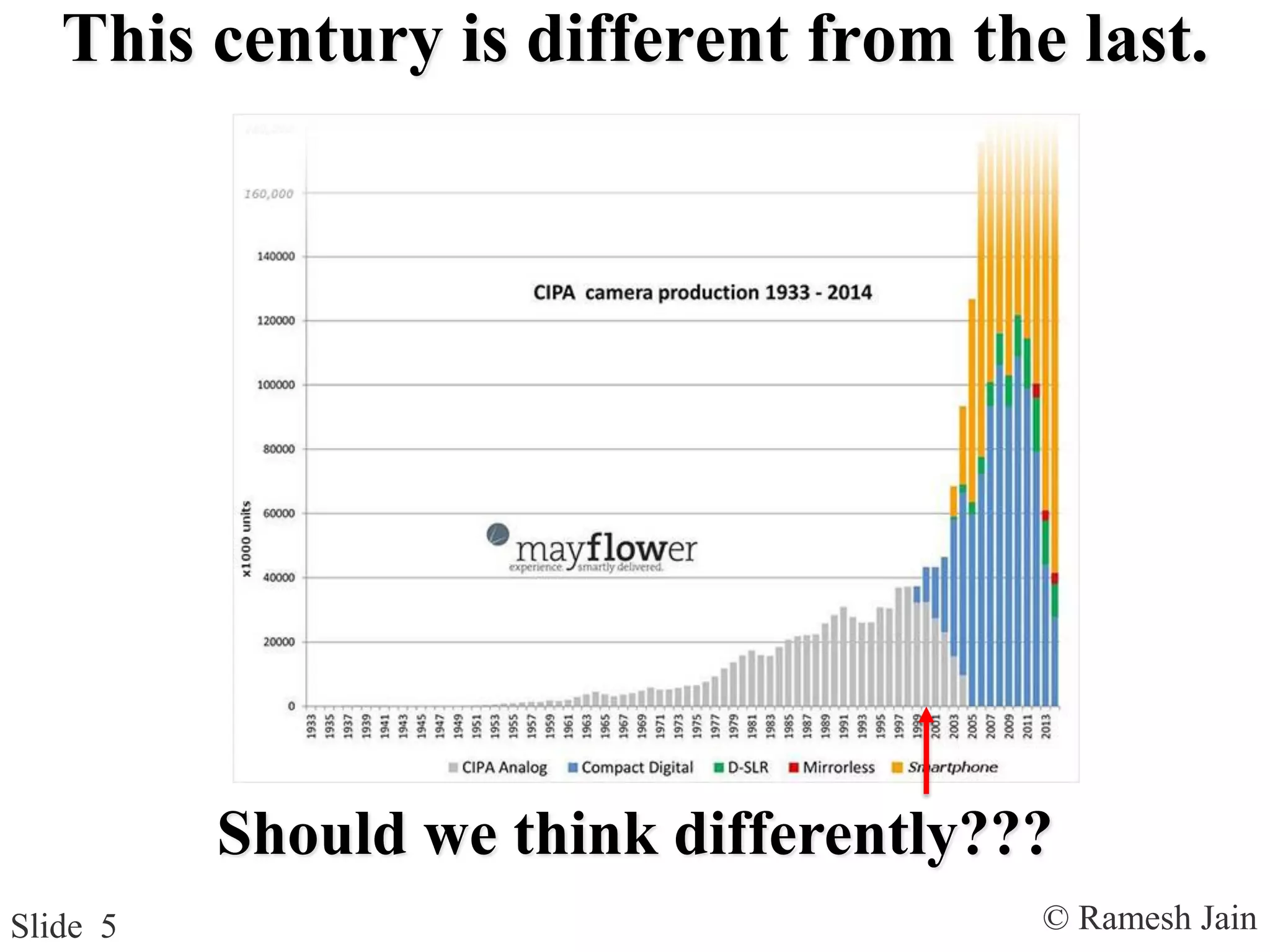
This century is different from the last.
Should we think differently???
© Ramesh JainSlide 6
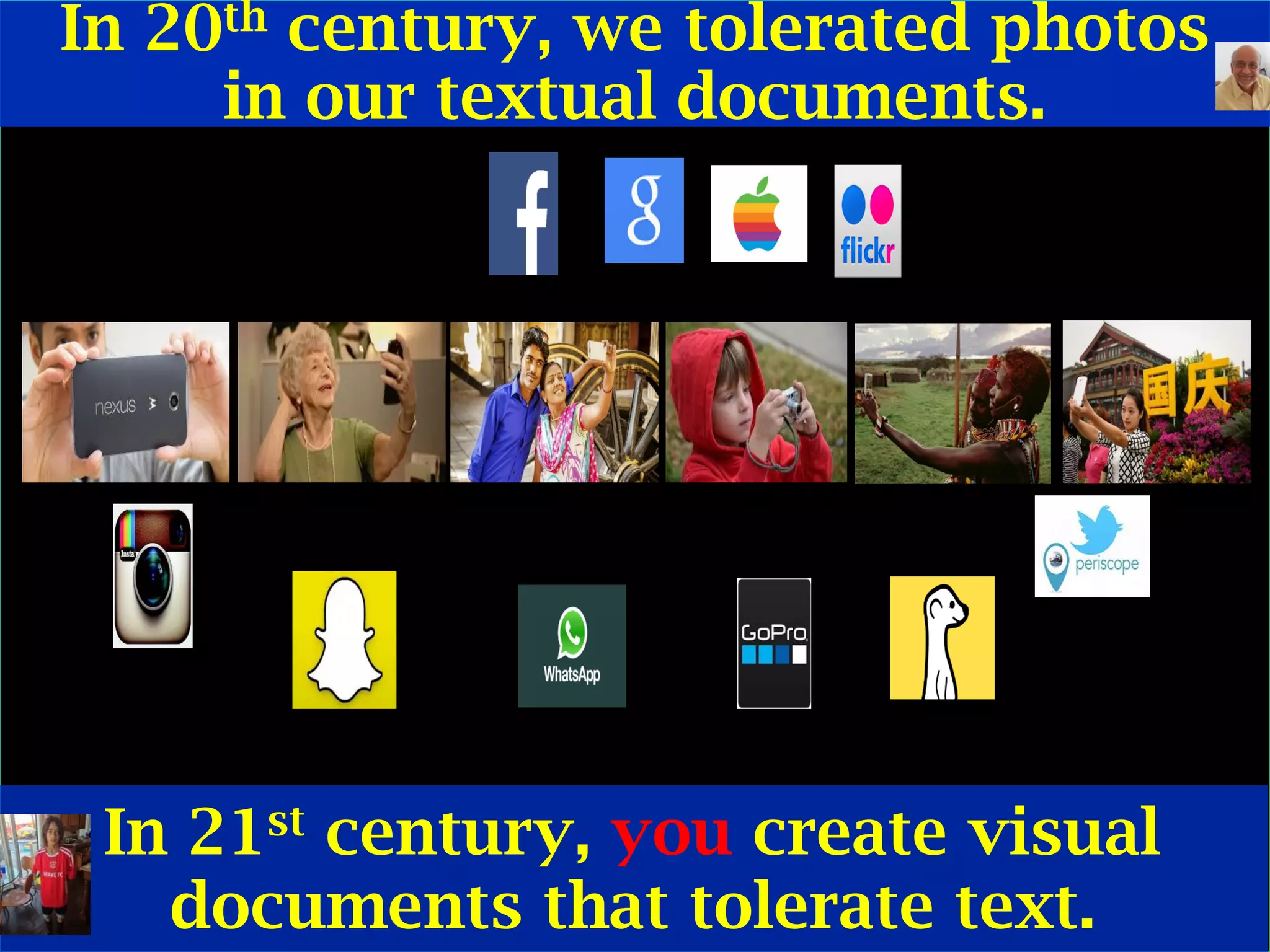
In 20th century, we tolerated photos
in our textual documents.
In 21st century, you create visual
documents that tolerate text.
© Ramesh JainSlide 7
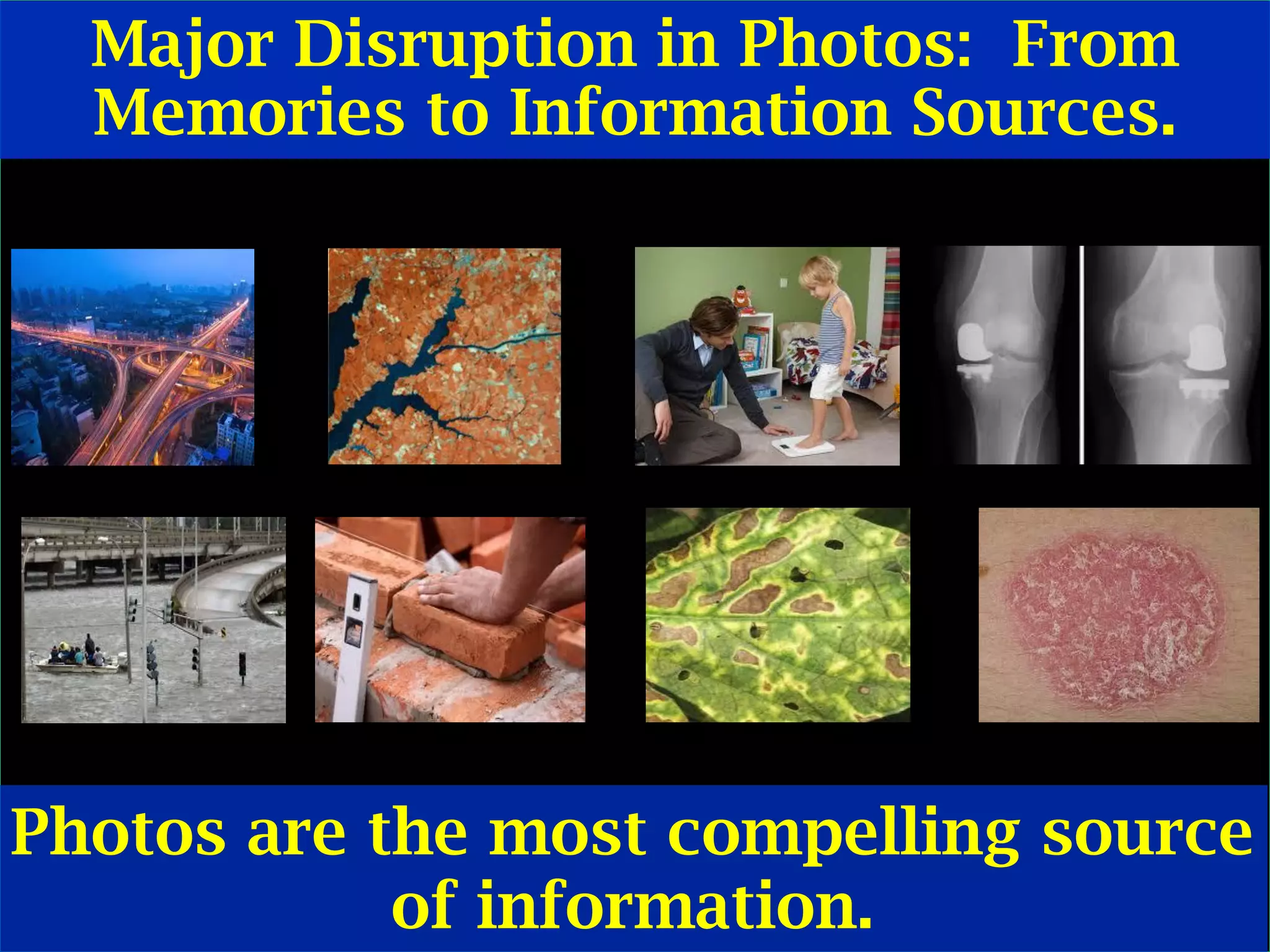
Major Disruption in Photos: From
Memories to Information Sources.
Photos are the most compelling source
of information.
© Ramesh JainSlide 8
Most Fundamental Problem:
Connecting People’s Needs to
Resources Effectively, Efficiently,
and Promptly in given Situations.
8
© Ramesh JainSlide 9
Major transformation in human
history are a chronicle of building
Social Machines for
How People’s need are
connected to Resources.
9
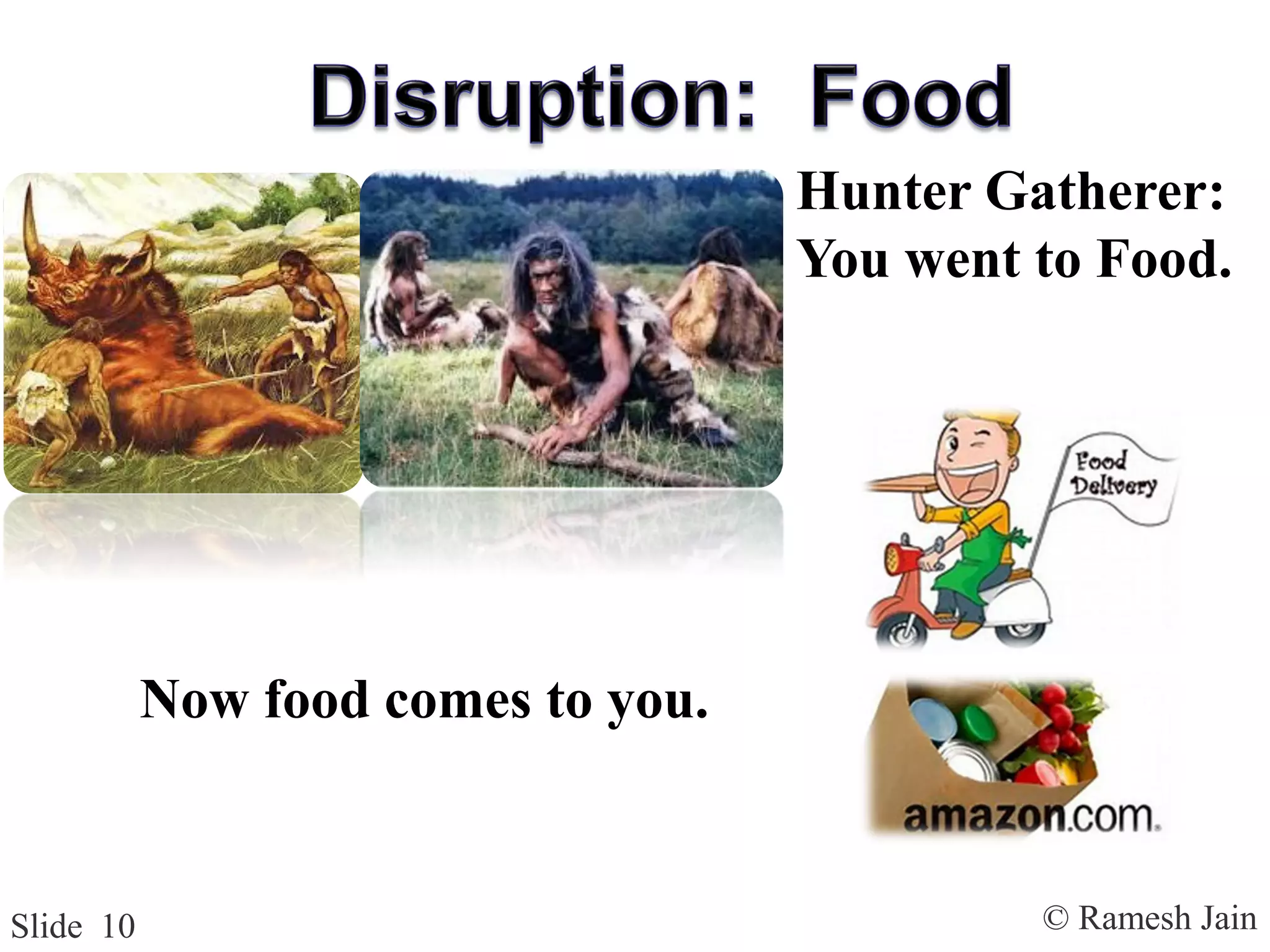
© Ramesh JainSlide 10
Hunter Gatherer:
You went to Food.
Now food comes to you.
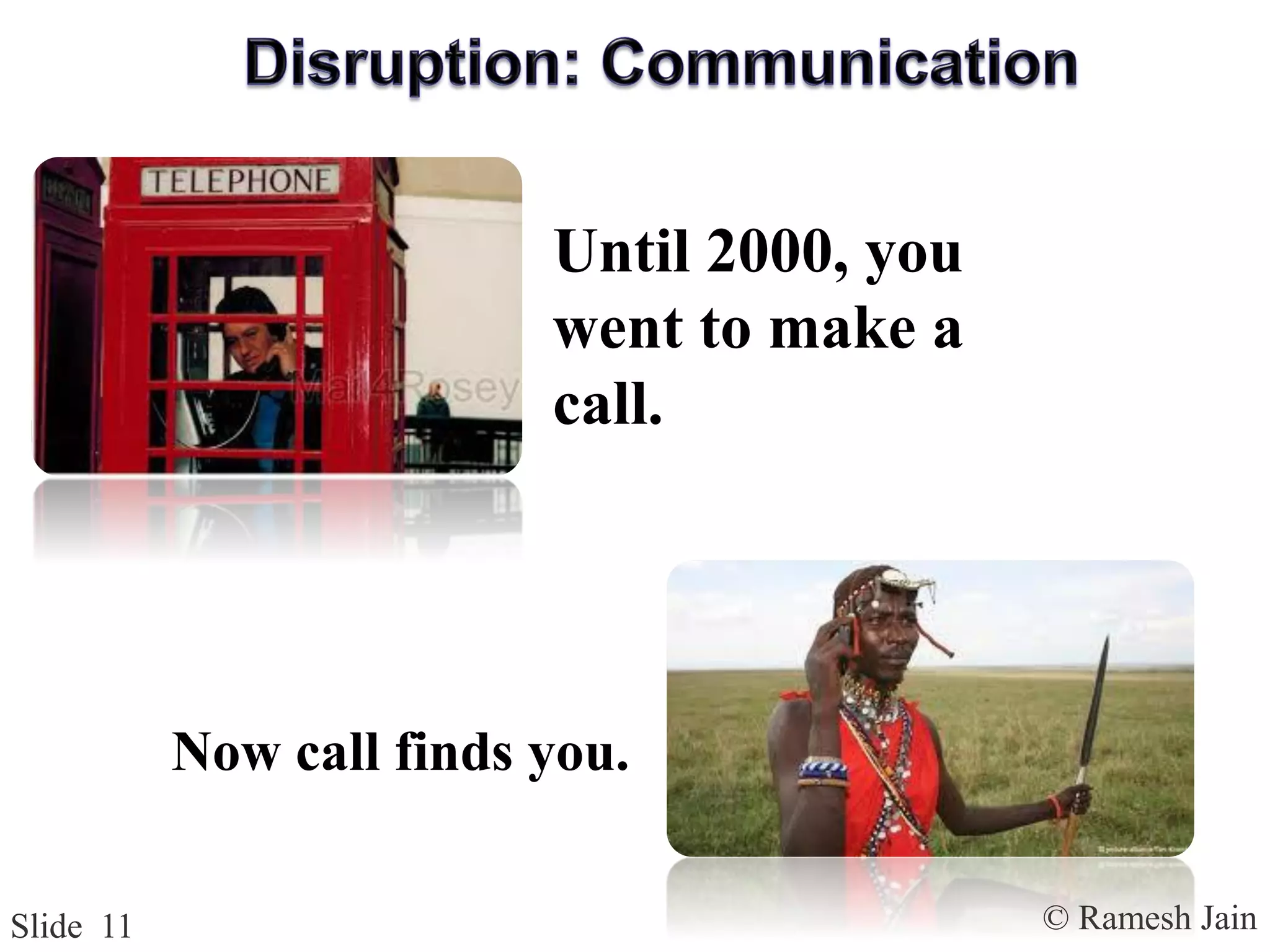
© Ramesh JainSlide 11
Until 2000, you
went to make a
call.
Now call finds you.
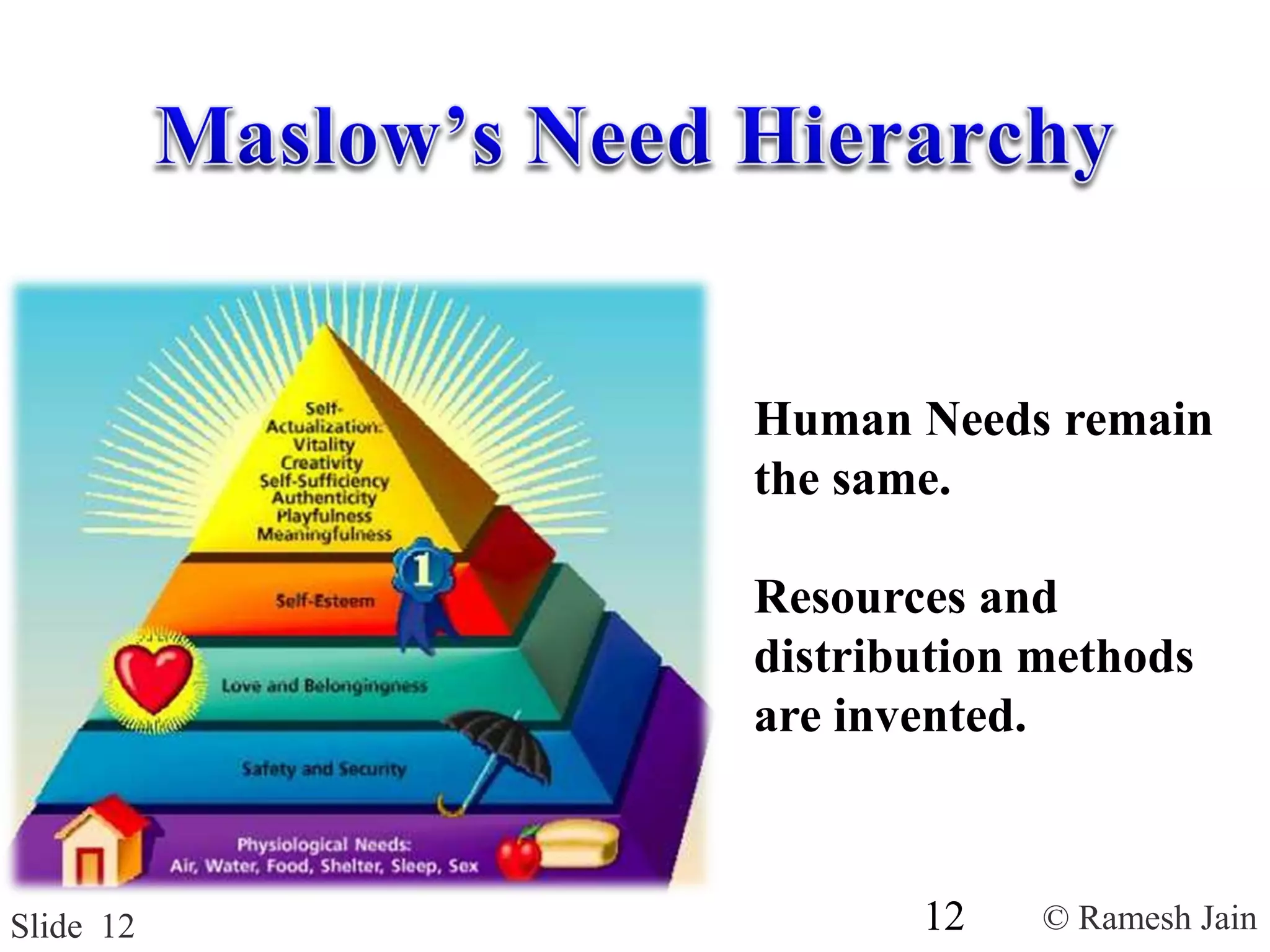
© Ramesh JainSlide 12 12
Human Needs remain
the same.
Resources and
distribution methods
are invented.
© Ramesh JainSlide 13
Designing Social Machines:
• Needs
• Resources
• Connecting Needs to Resources
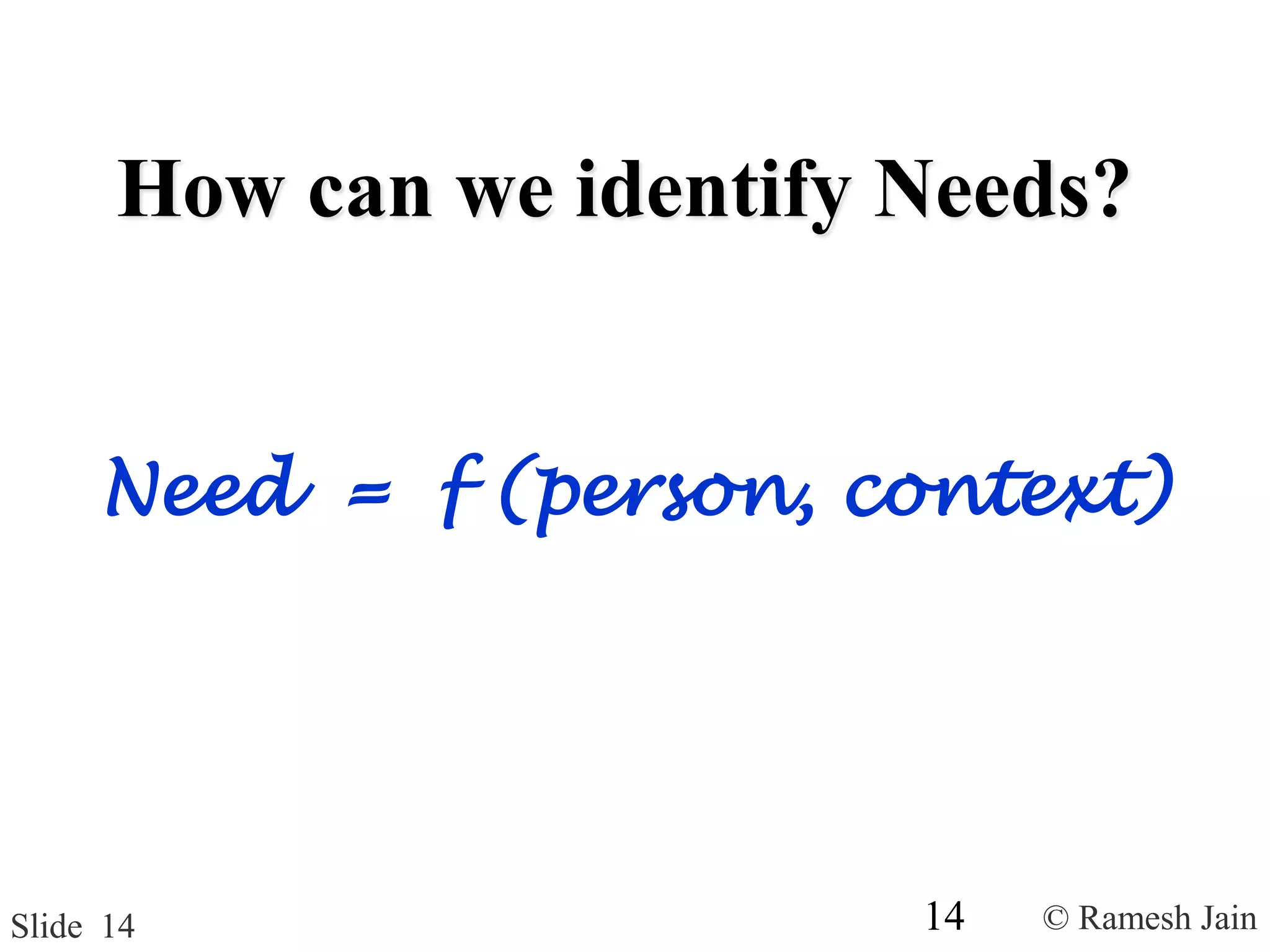
© Ramesh JainSlide 14
How can we identify Needs?
Need = f (person, context)
14
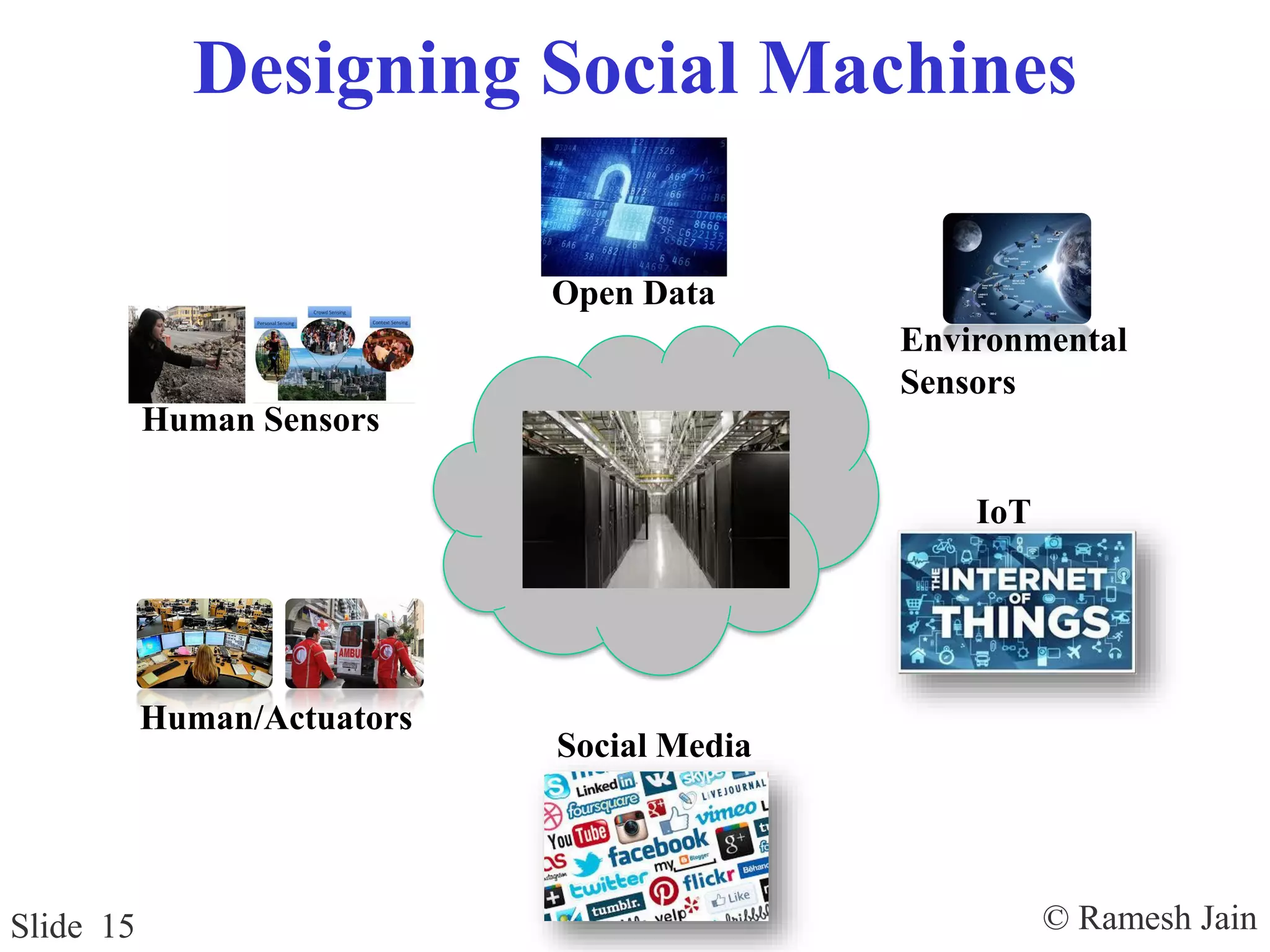
© Ramesh JainSlide 15
Designing Social Machines
IoT
Social Media
Human Sensors
Environmental
Sensors
Human/Actuators
Open Data
© Ramesh JainSlide 16
We Live in Dynamic World.
16
© Ramesh JainSlide 17
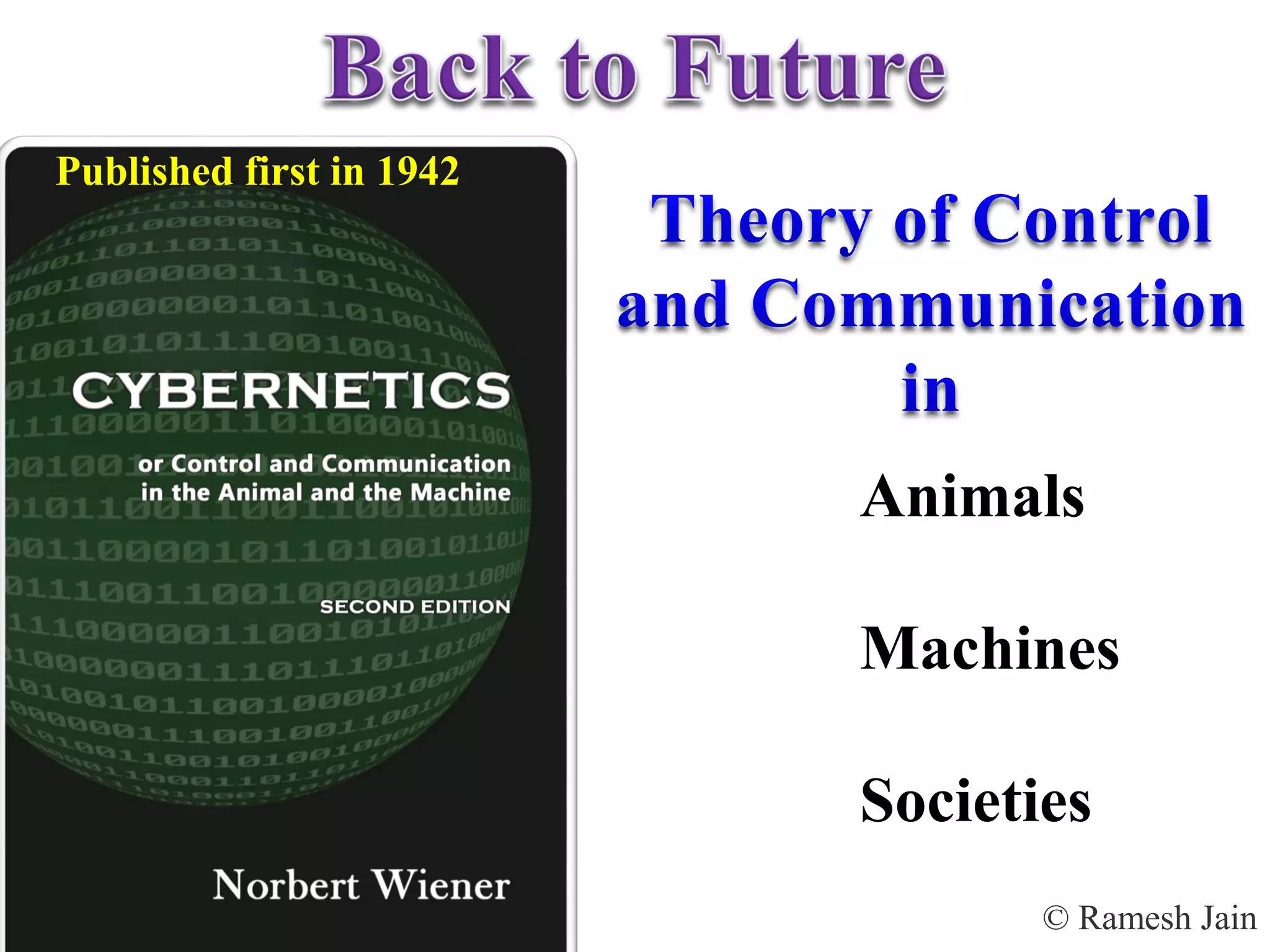
What is Cyber Space?
Who invented it?
Animals
Machines
Societies
Published first in 1942
© Ramesh JainSlide 18
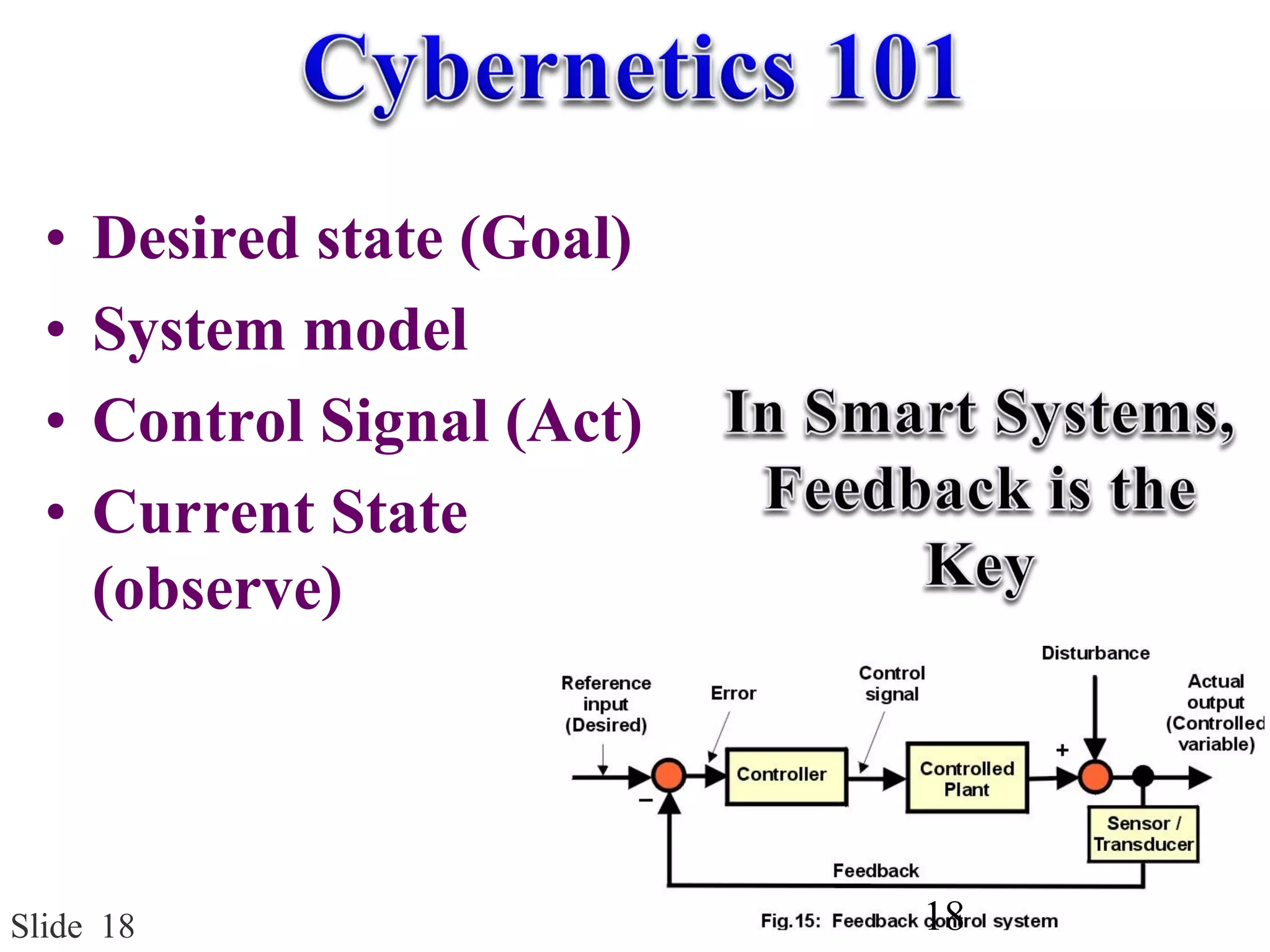
• Desired state (Goal)
• System model
• Control Signal (Act)
• Current State
(observe)
18
© Ramesh JainSlide 19
Social Life Networks: Important
Factors
• The world we live in.
– Knowing current situation.
– Knowing where resources are.
• Where needs are.
– Knowing each individual’s situation.
– Knowing what they may need.
• Matching/recommendation Engine
• Action
© Ramesh JainSlide 20
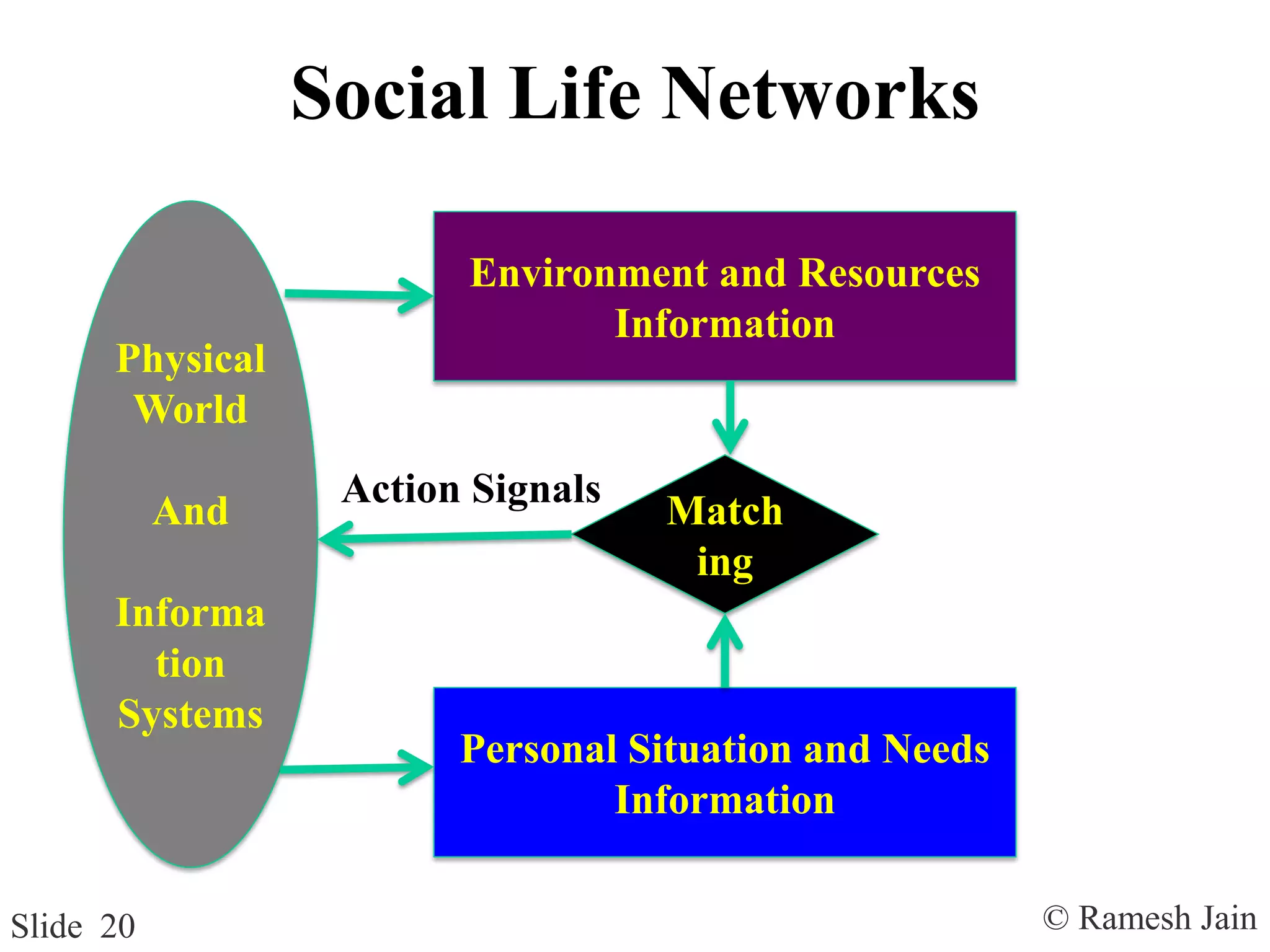
Social Life Networks
Physical
World
And
Informa
tion
Systems
Environment and Resources
Information
Personal Situation and Needs
Information
Match
ing
Action Signals
© Ramesh JainSlide 21
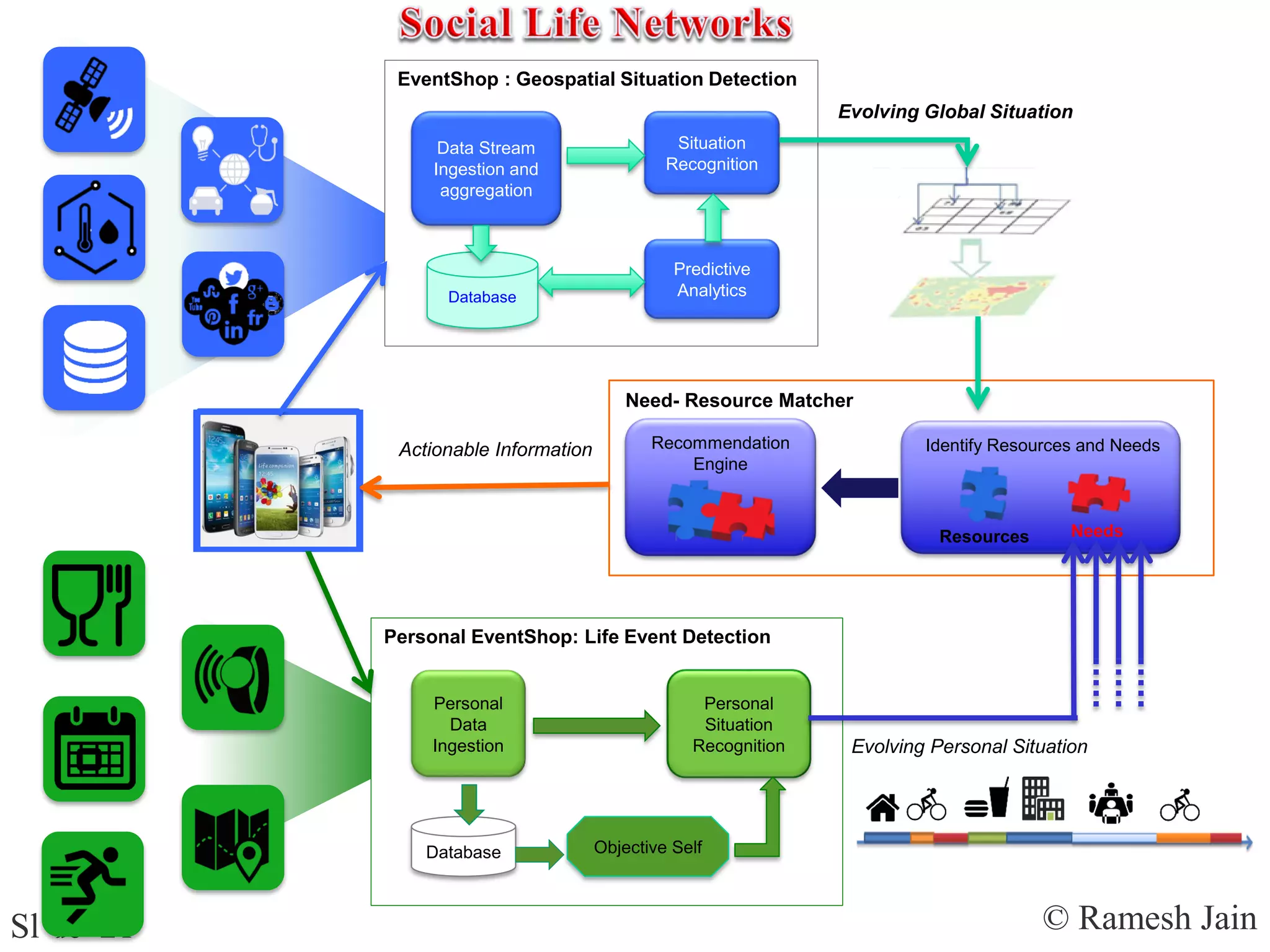
EventShop : Geospatial Situation Detection
Situation
Recognition
Data Stream
Ingestion and
aggregation
Database
Predictive
Analytics
Personal EventShop: Life Event Detection
Personal
Situation
Recognition
Database
Personal
Data
Ingestion
Objective Self
Recommendation
Engine
Need- Resource Matcher
Identify Resources and Needs
Resources Needs
Evolving Global Situation
Evolving Personal Situation
Actionable Information
© Ramesh JainSlide 22
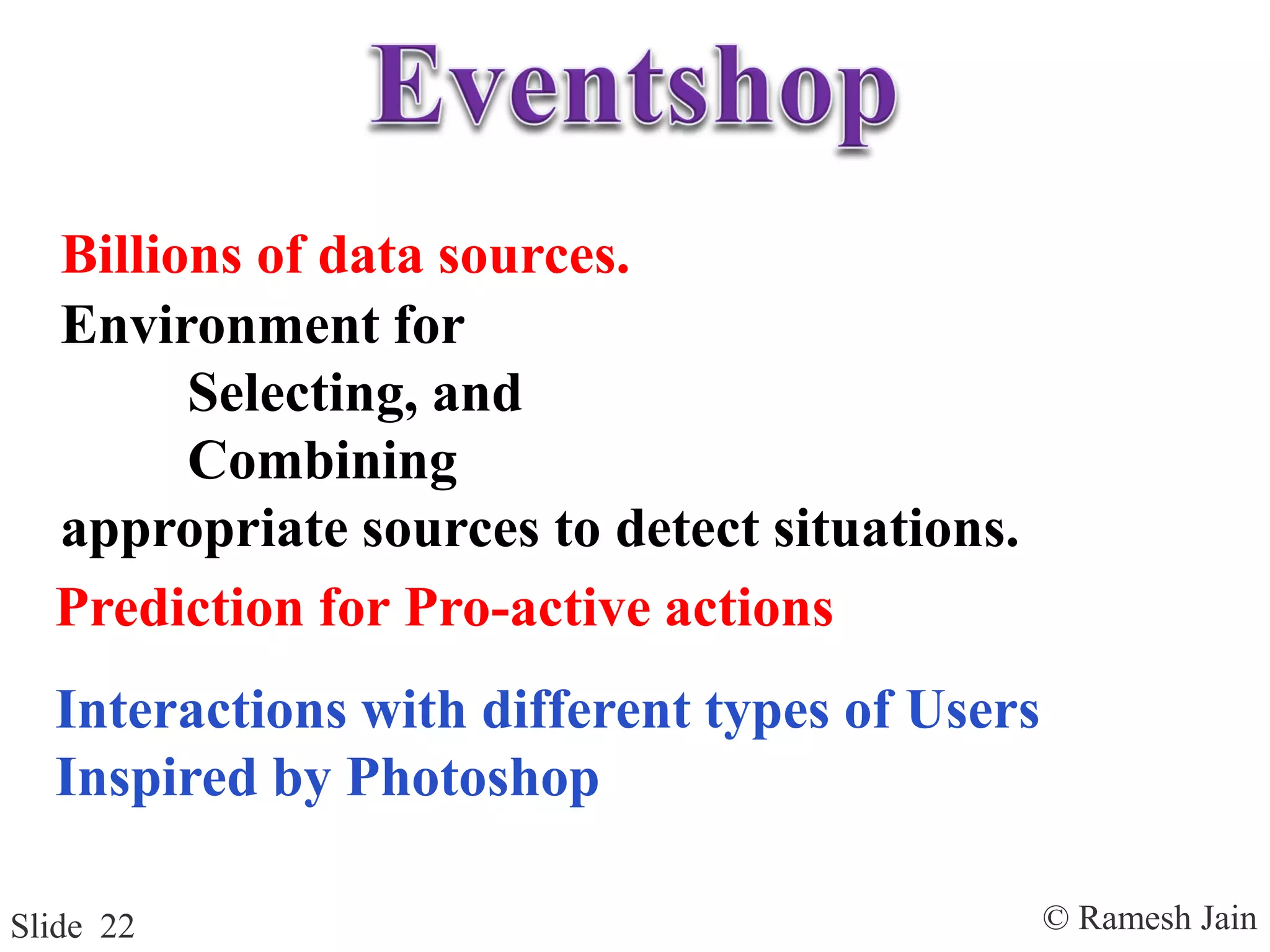
Billions of data sources.
Environment for
Selecting, and
Combining
appropriate sources to detect situations.
Prediction for Pro-active actions
Interactions with different types of Users
Inspired by Photoshop
© Ramesh JainSlide 23
© Ramesh JainSlide 24
© Ramesh JainSlide 25
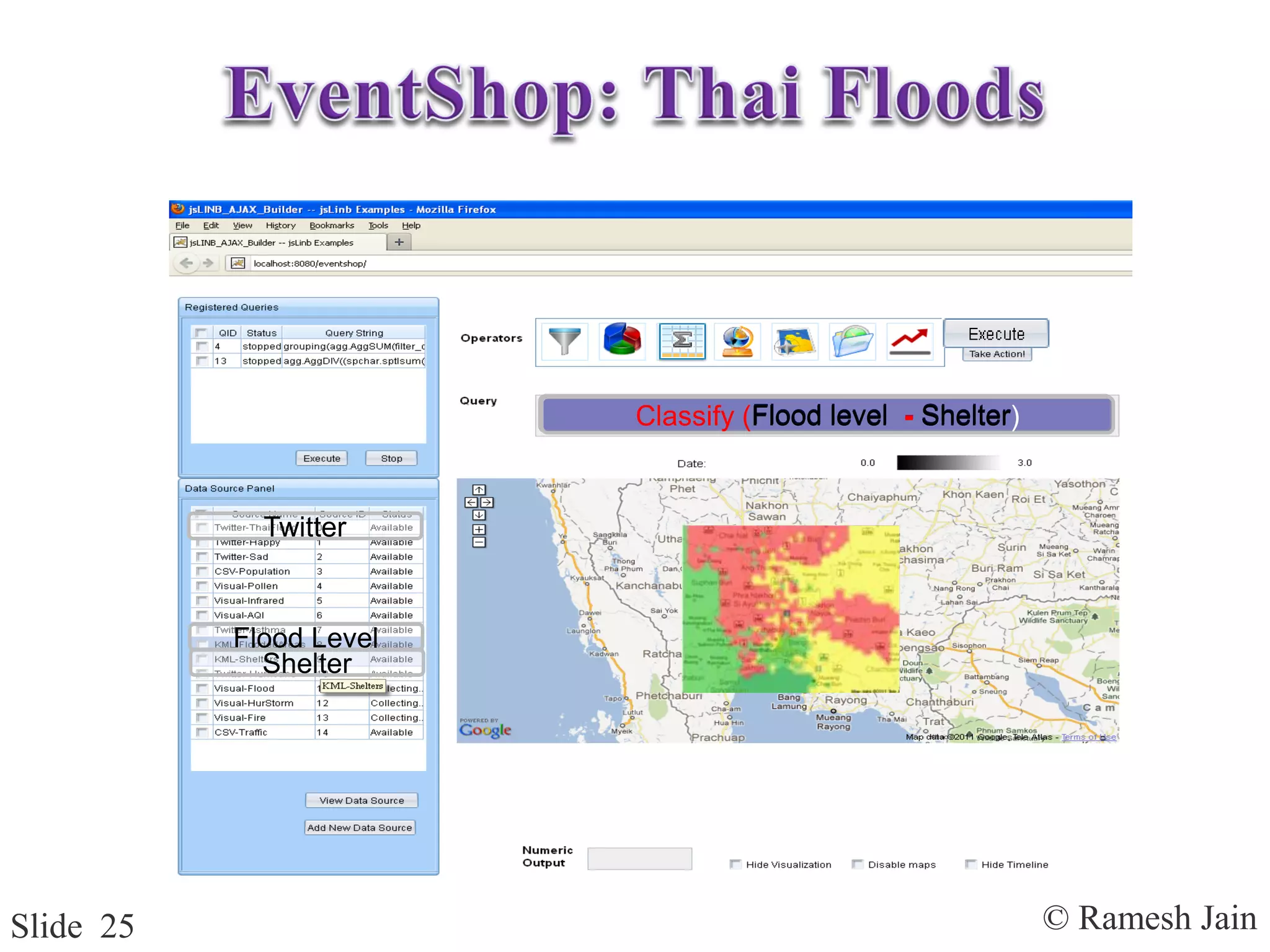
Flood level - Shelter
Flood Level
Shelter
Twitter
Classify (Flood level - Shelter)
© Ramesh JainSlide 26
© Ramesh JainSlide 27
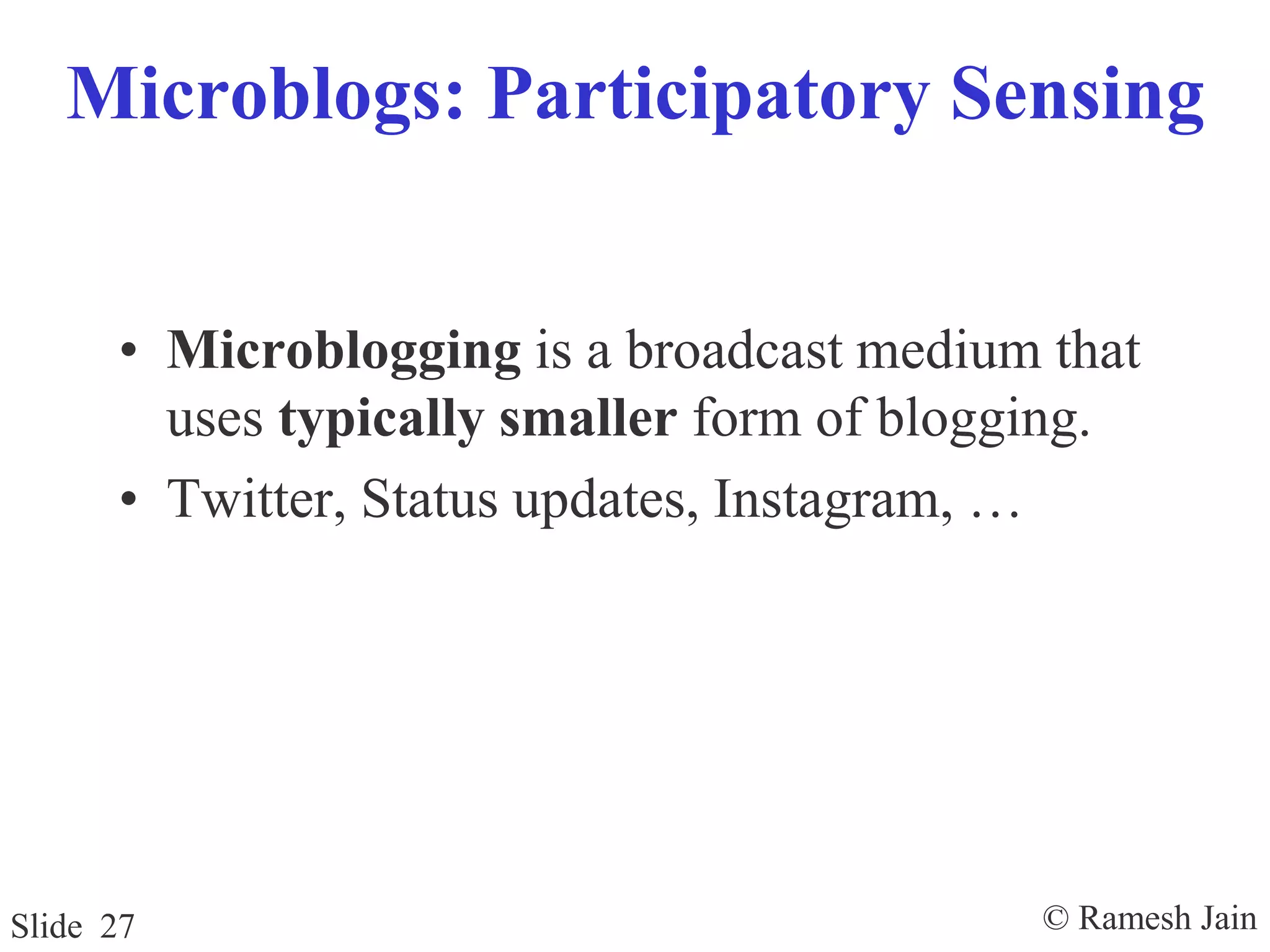
Microblogs: Participatory Sensing
• Microblogging is a broadcast medium that
uses typically smaller form of blogging.
• Twitter, Status updates, Instagram, …
© Ramesh JainSlide 28
Micro-Blog Mining Process
• Extracting Data From Data Providers
• Parsing, Integrating, and Storing the
data
• Extract Information of interest
• Earthquake Analysis; Flu; Trends
© Ramesh JainSlide 29
Problem with Micro-Blogs
• Noisy
• Subjective
• Poor context
• Great concept but has limitations.
• New technology to overcome these
limitations.
© Ramesh JainSlide 30
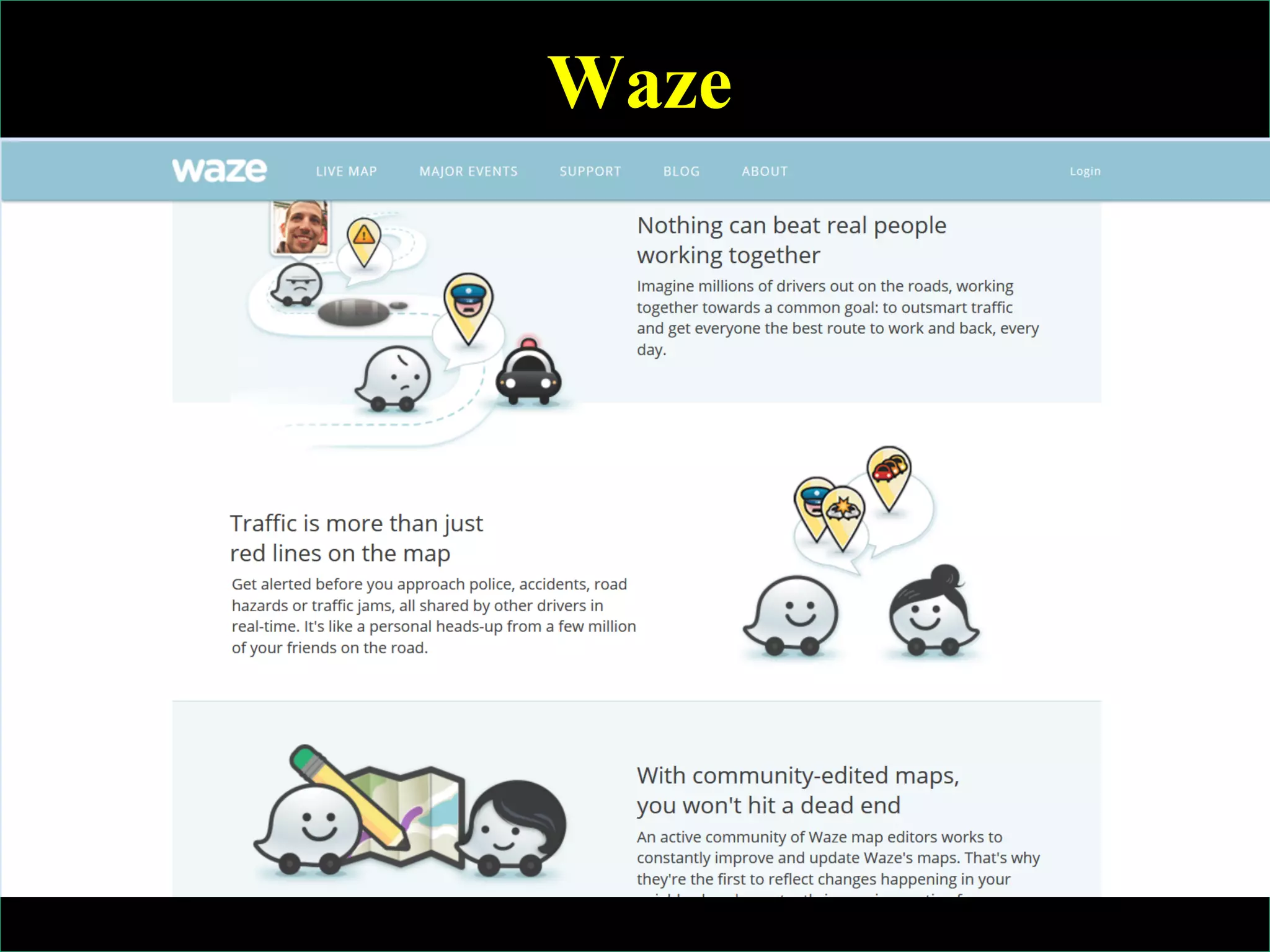
Waze
© Ramesh JainSlide 31
First Principle in Journalism
• Truthfulness, accuracy, objectivity,
impartiality, fairness and public accountability
• Journalists cannot always guarantee ‘truth’,
but getting the facts right is the cardinal
principle of journalism. We should always
strive for accuracy, give all the relevant facts
we have and ensure that they have been
checked. When we cannot corroborate
information we should say so.
• Seek Truth and Report it as Fully as Possible
© Ramesh JainSlide 32
Most Reports or Information are report
from an Event.
• ‘Kodak Moment’
• Each event has interesting and important
moments.
• How do we capture a moment?
© Ramesh JainSlide 33
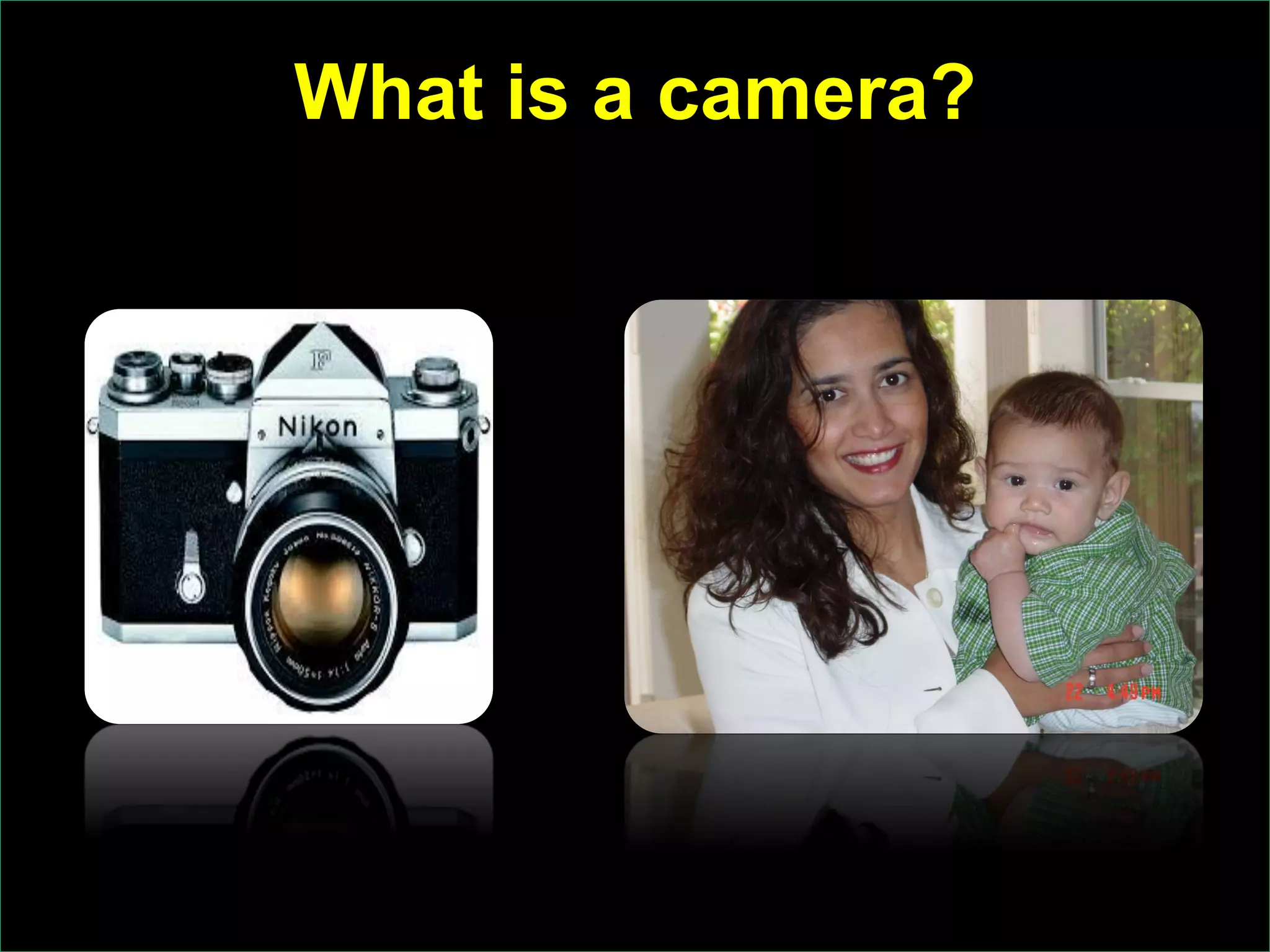
What is a camera?
© Ramesh JainSlide 34
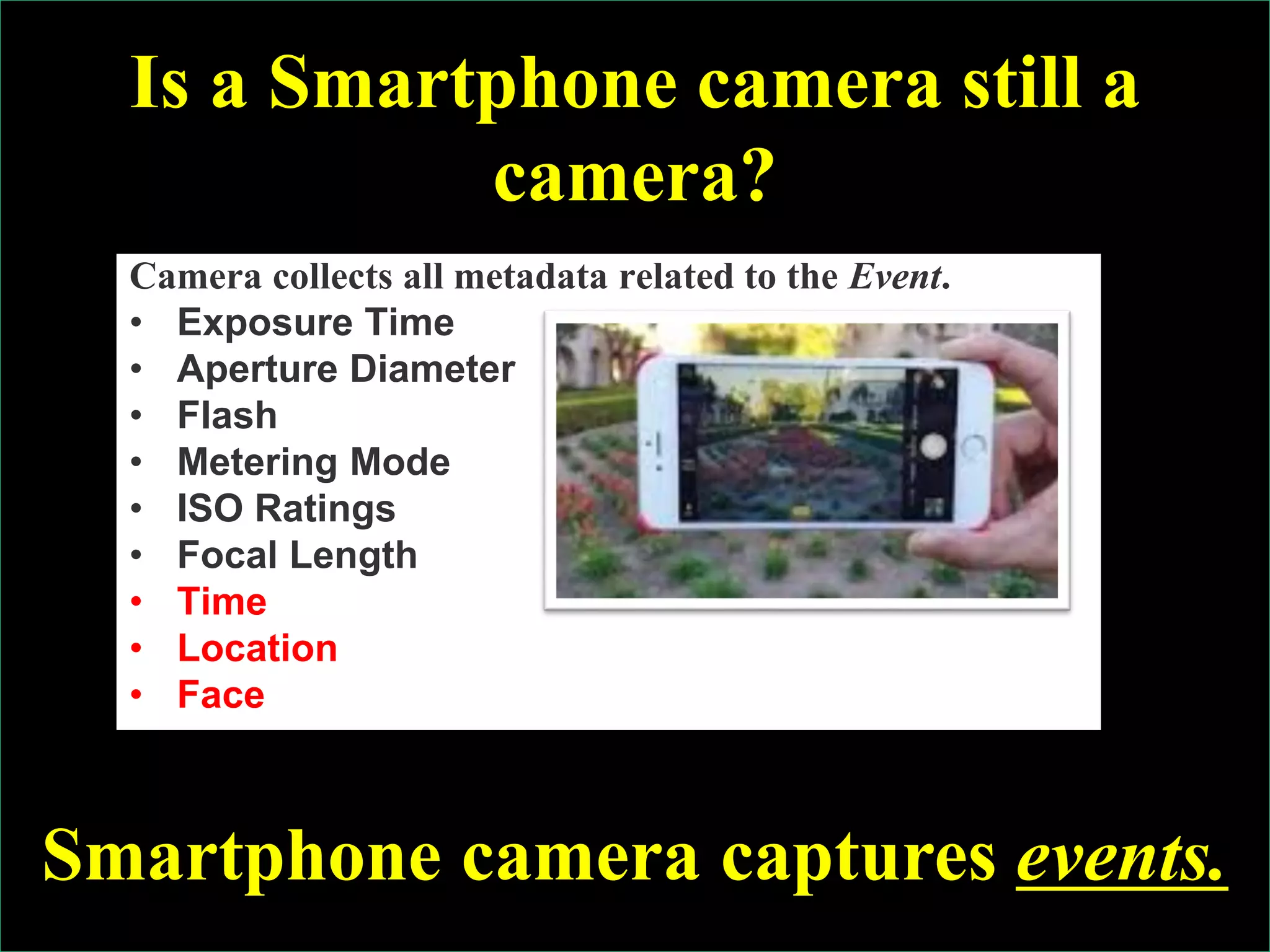
Is a Smartphone camera still a
camera?
Camera collects all metadata related to the Event.
• Exposure Time
• Aperture Diameter
• Flash
• Metering Mode
• ISO Ratings
• Focal Length
• Time
• Location
• Face
Smartphone camera captures events.
© Ramesh JainSlide 35
Micro-Reports: Requirements
• Objective (Subjective comments put
explicitly)
• Spontaneous
• Compelling
• Universal
© Ramesh JainSlide 36
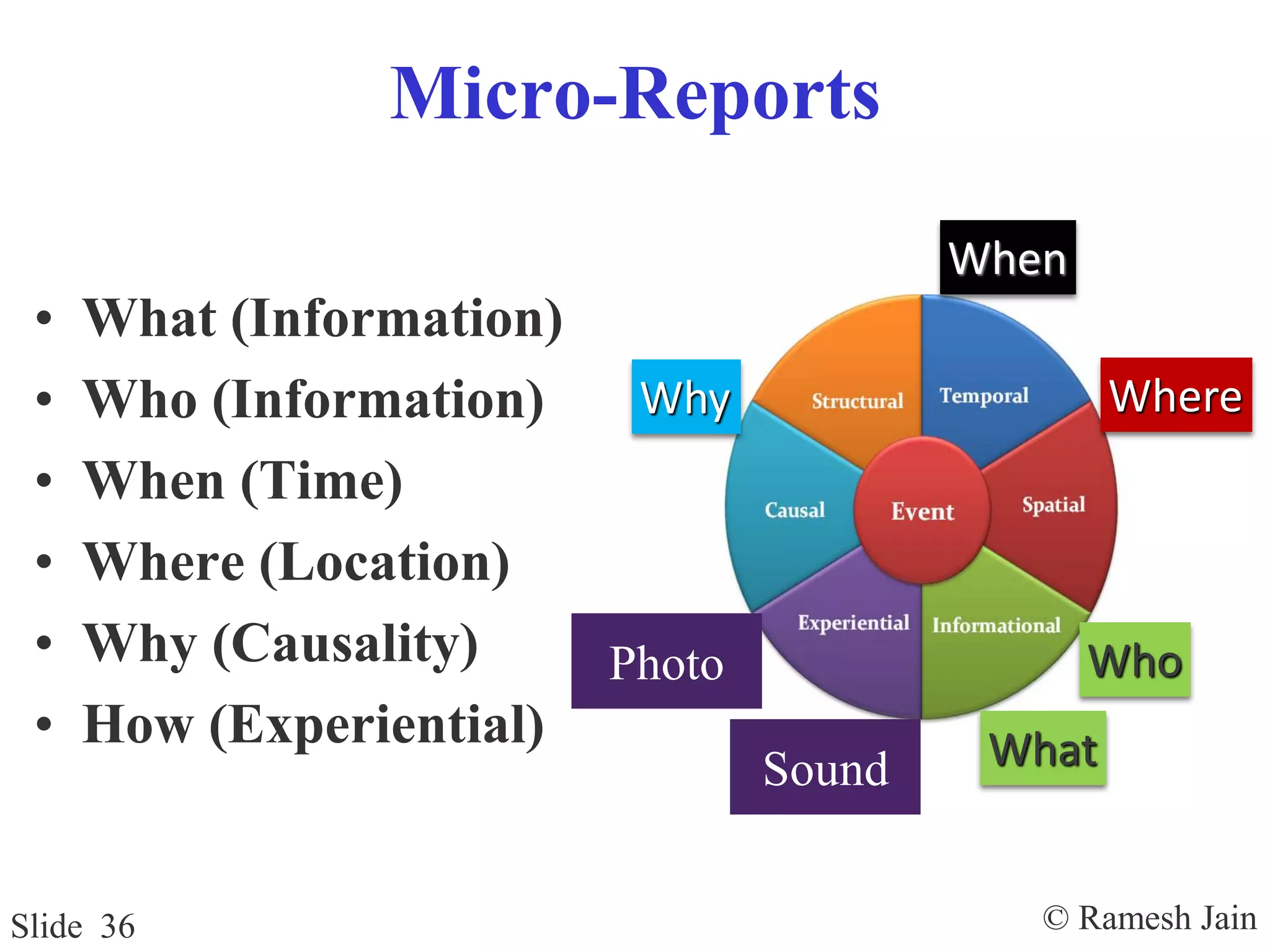
Micro-Reports
• What (Information)
• Who (Information)
• When (Time)
• Where (Location)
• Why (Causality)
• How (Experiential)
Photo
What
Where
When
Who
Why
Sound
© Ramesh JainSlide 37
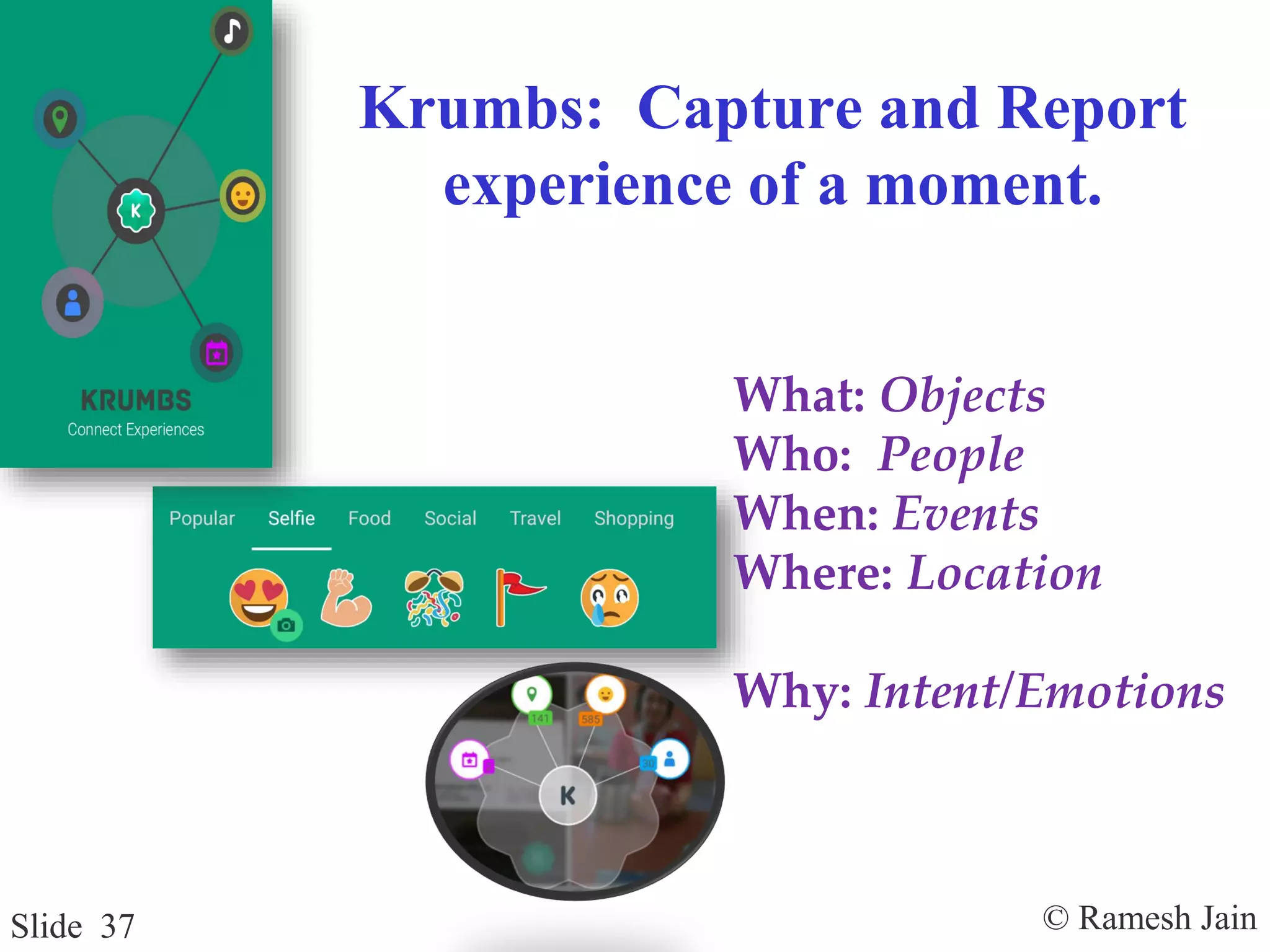
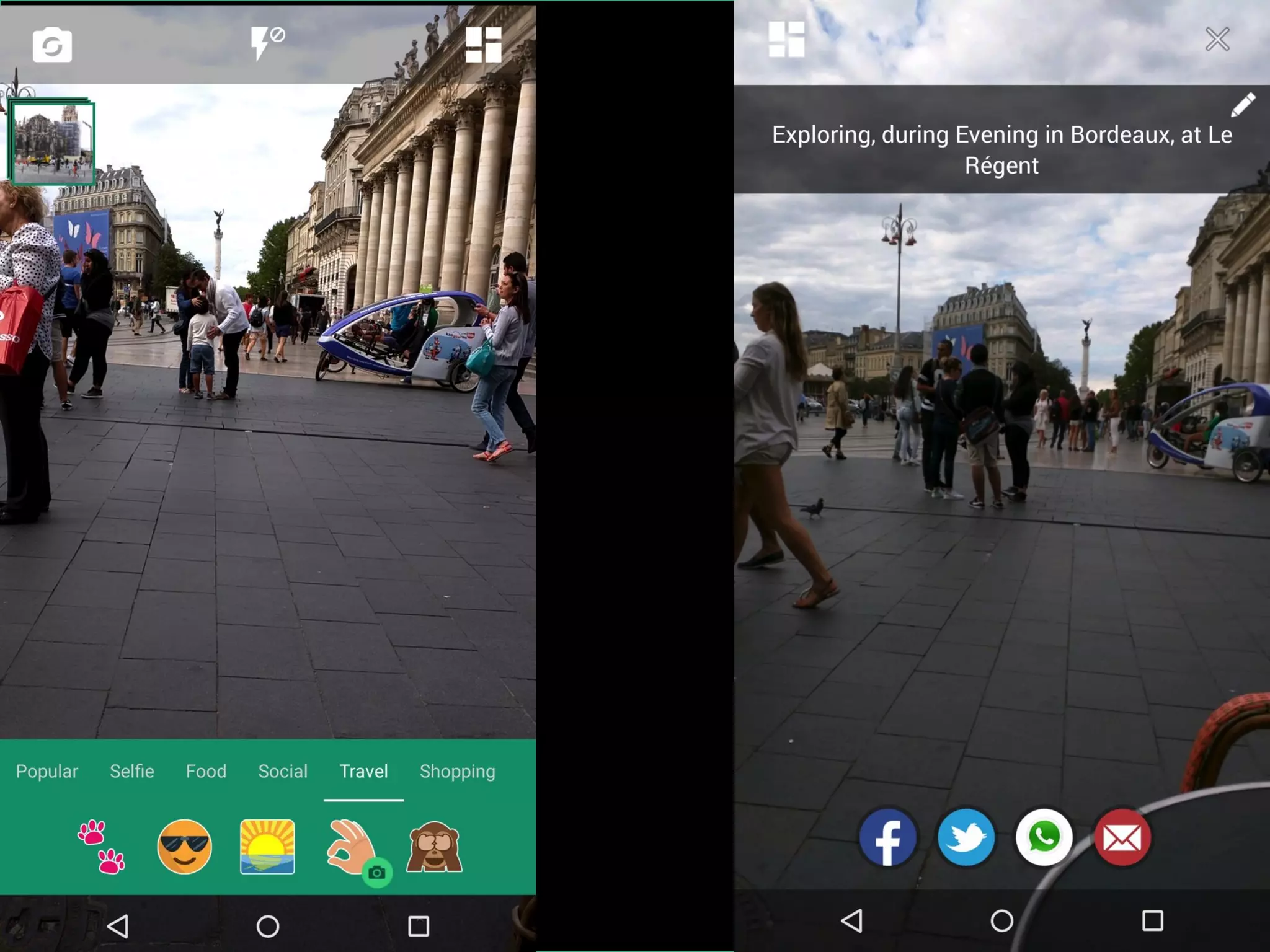
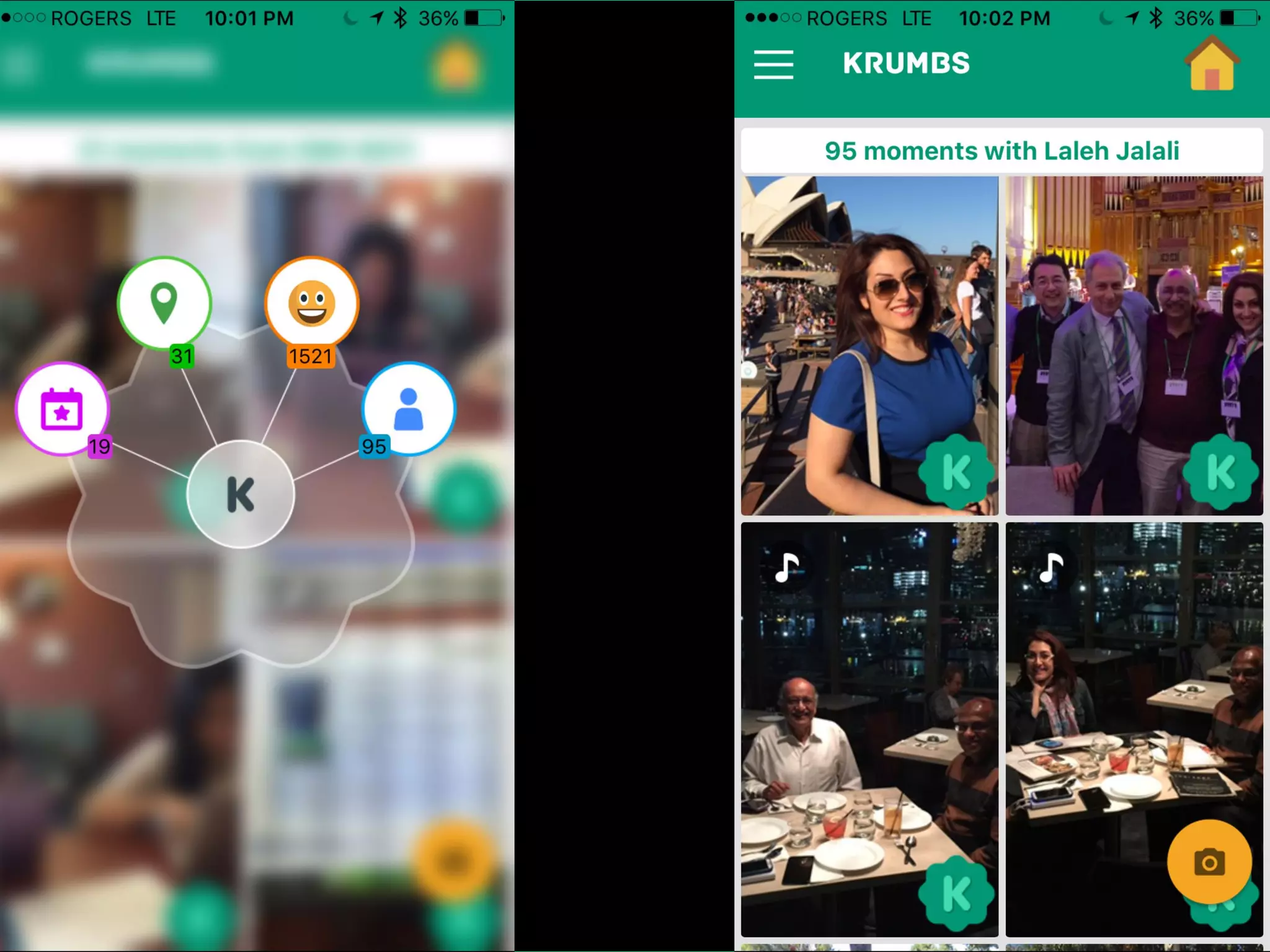
Krumbs: Capture and Report
experience of a moment.
What: Objects
Who: People
When: Events
Where: Location
Why: Intent/Emotions
© Ramesh JainSlide 38
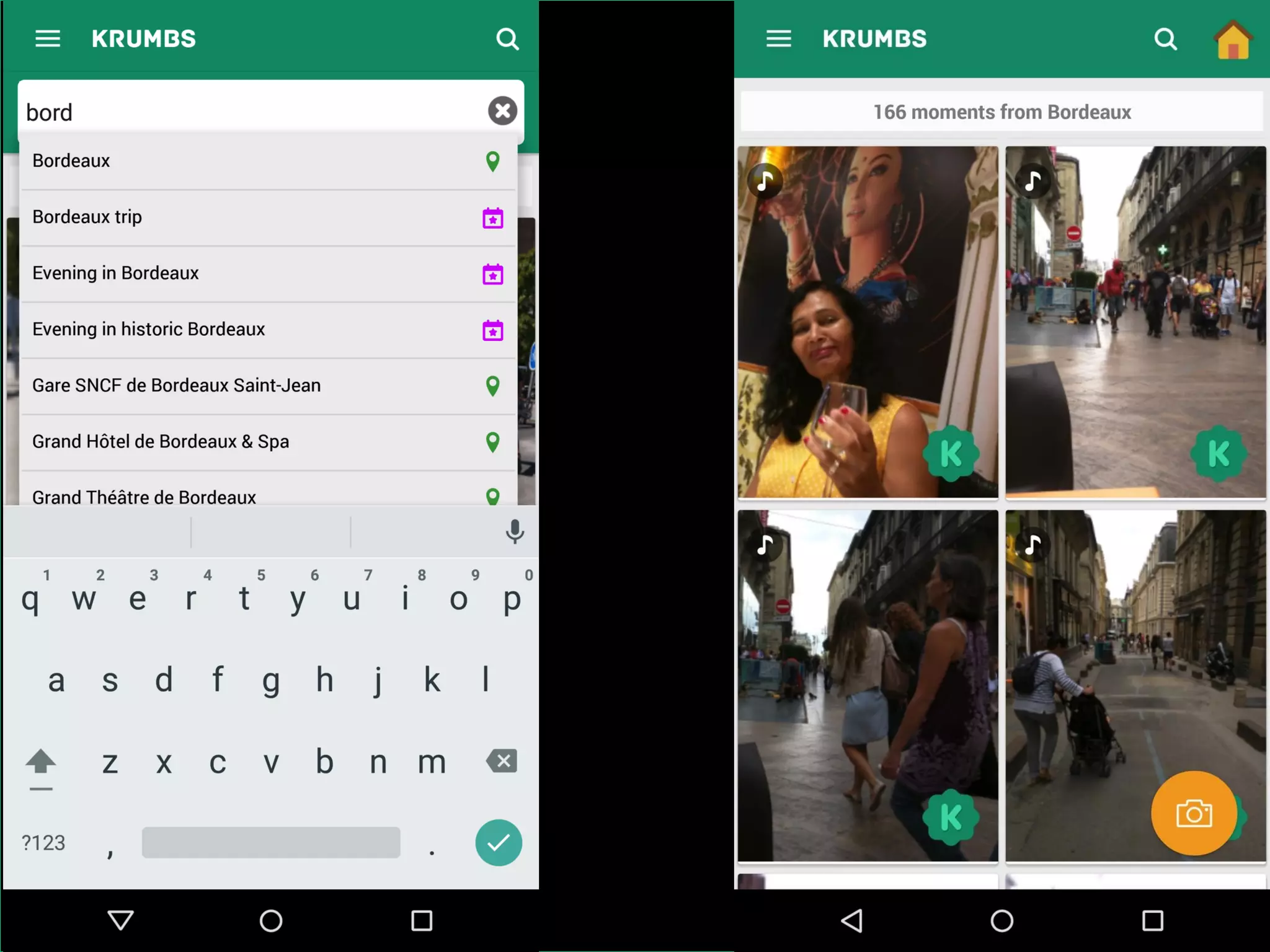
© Ramesh JainSlide 39
© Ramesh JainSlide 40
© Ramesh JainSlide 41
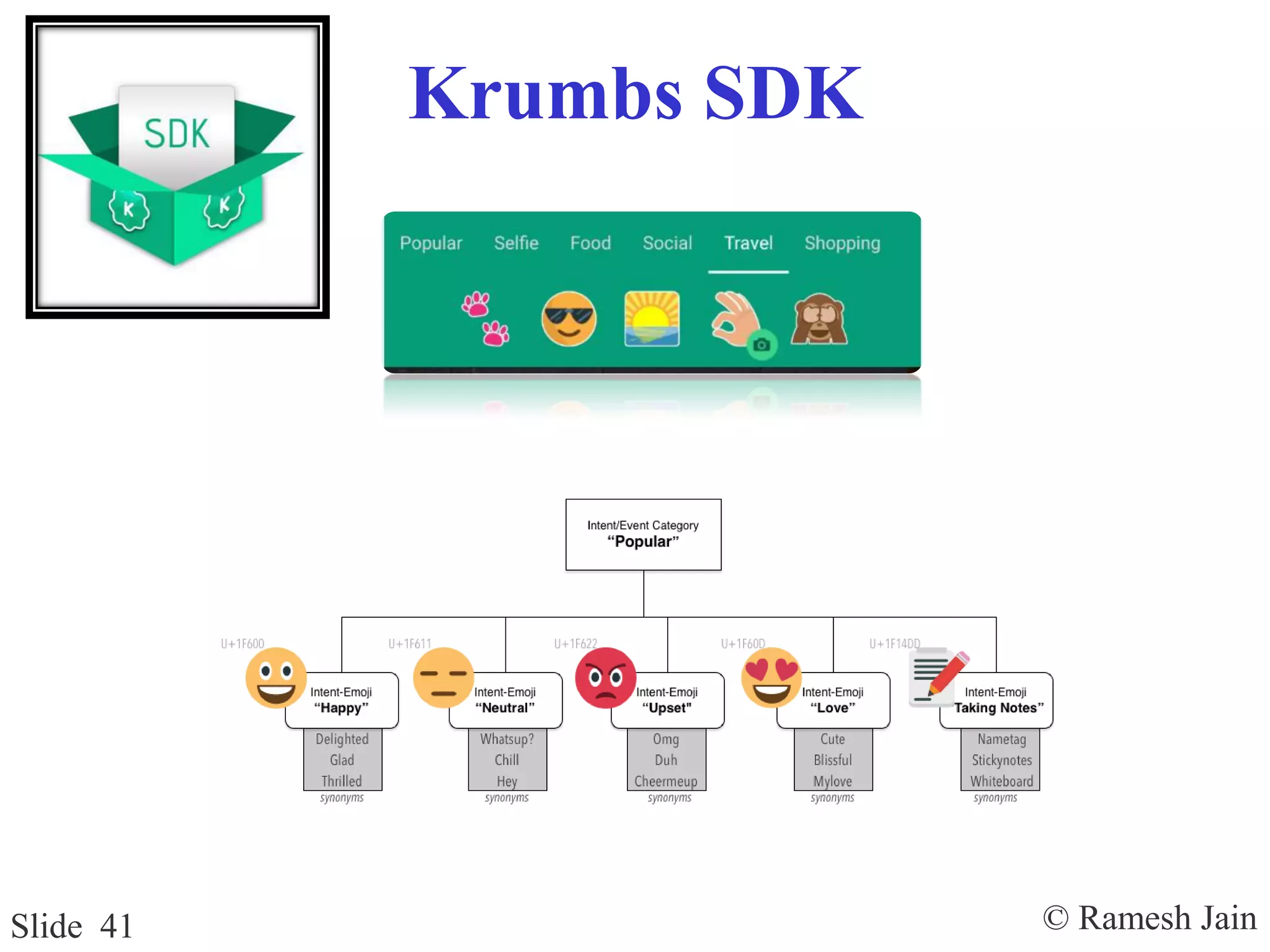
Krumbs SDK
© Ramesh JainSlide 42
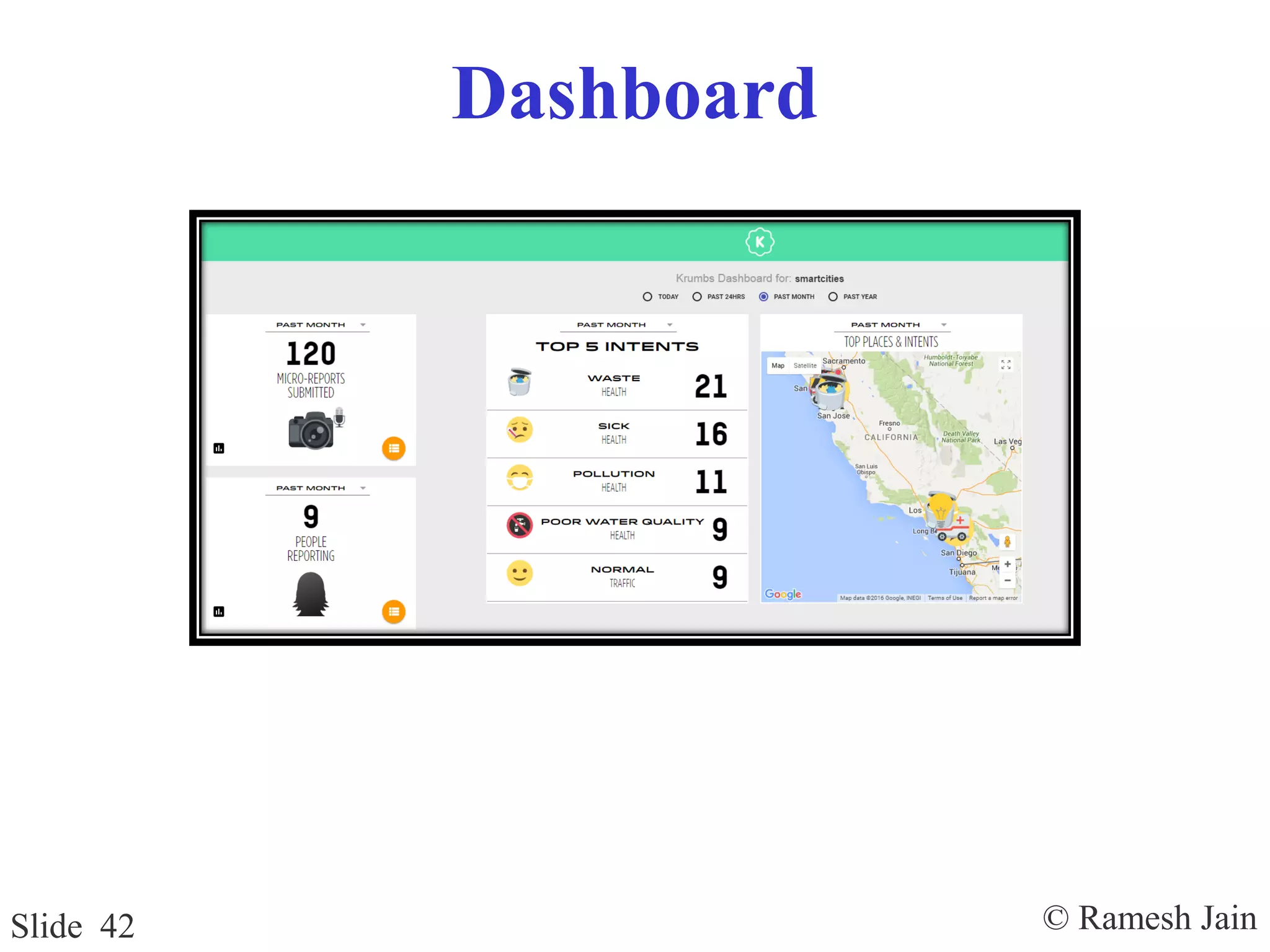
Dashboard
© Ramesh JainSlide 43
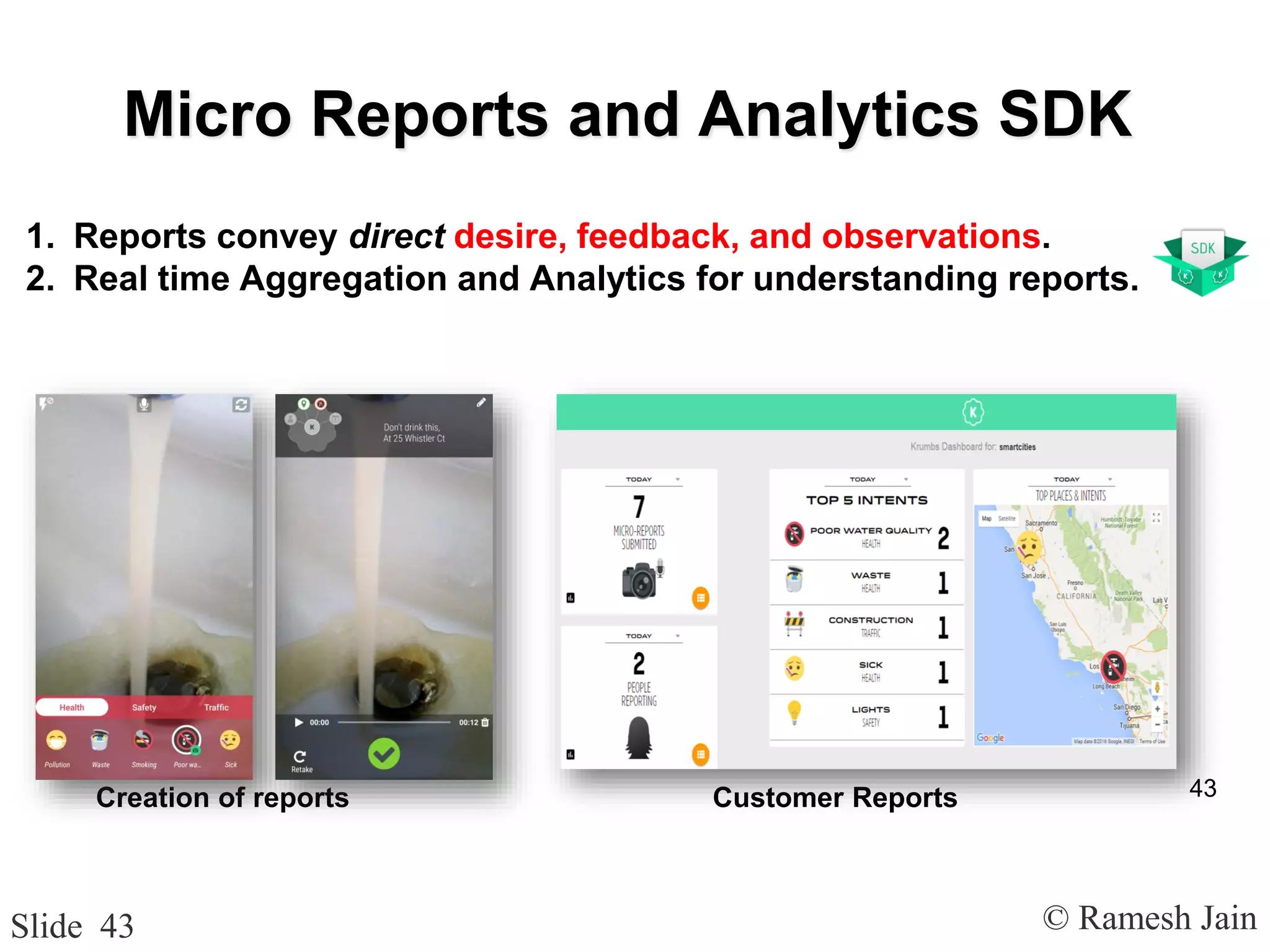
Micro Reports and Analytics SDK
1. Reports convey direct desire, feedback, and observations.
2. Real time Aggregation and Analytics for understanding reports.
Creation of reports Customer Reports 43
© Ramesh JainSlide 44
EVENT
Spatial
Temporal
Informa-
tional
Experien-
tial
Structural
Causal
{"micro_reports":[{
"where":{
"geo_location":{
"latitude":32.90233332316081,
"longitude":-
117.2441166718801},
"when":{
"start_time":"Jun 14, 2009
11:25:19 AM",
"end_time":"Jun 14, 2009 11:25:19
AM",
"time_zone":"America/Los_Angeles"}
,
"what":[{
"concept_name":"people",
"confidence":0.9836078882217407,
"visual_concept_provider":"CLARIFA
I"},
… {
"concept_name":"food",
"confidence":0.8526291847229004,
"visual_concept_provider":"CLARIFA
I"}],
"tag":”#niceday #summer",
"source":{"default_src":"https://….jpg"}},
"sub_event":[],
"why":[]},
…]}
MediaJSON for each micro-report
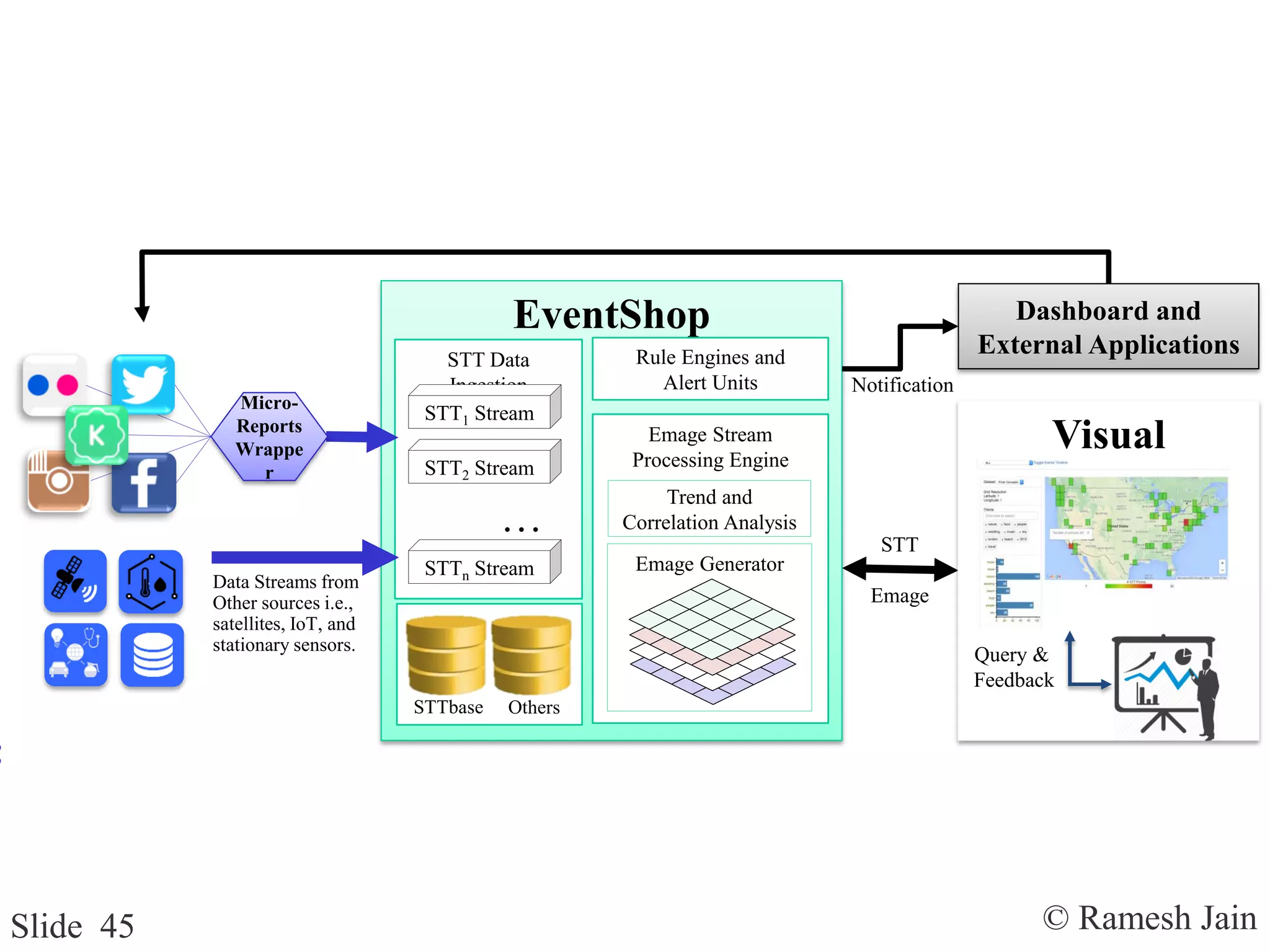
© Ramesh JainSlide 45
STT
Emage
EventShop
Emage Stream
Processing Engine
STTbase Others
Visual
Analytics
Query &
Feedback
STT Data
Ingestion
Trend and
Correlation Analysis
Micro-
Reports
Wrappe
r
Data Streams from
Other sources i.e.,
satellites, IoT, and
stationary sensors.
STT1 Stream
STT2 Stream
STTn Stream
…
Rule Engines and
Alert Units
Emage Generator
Dashboard and
External Applications
Notification
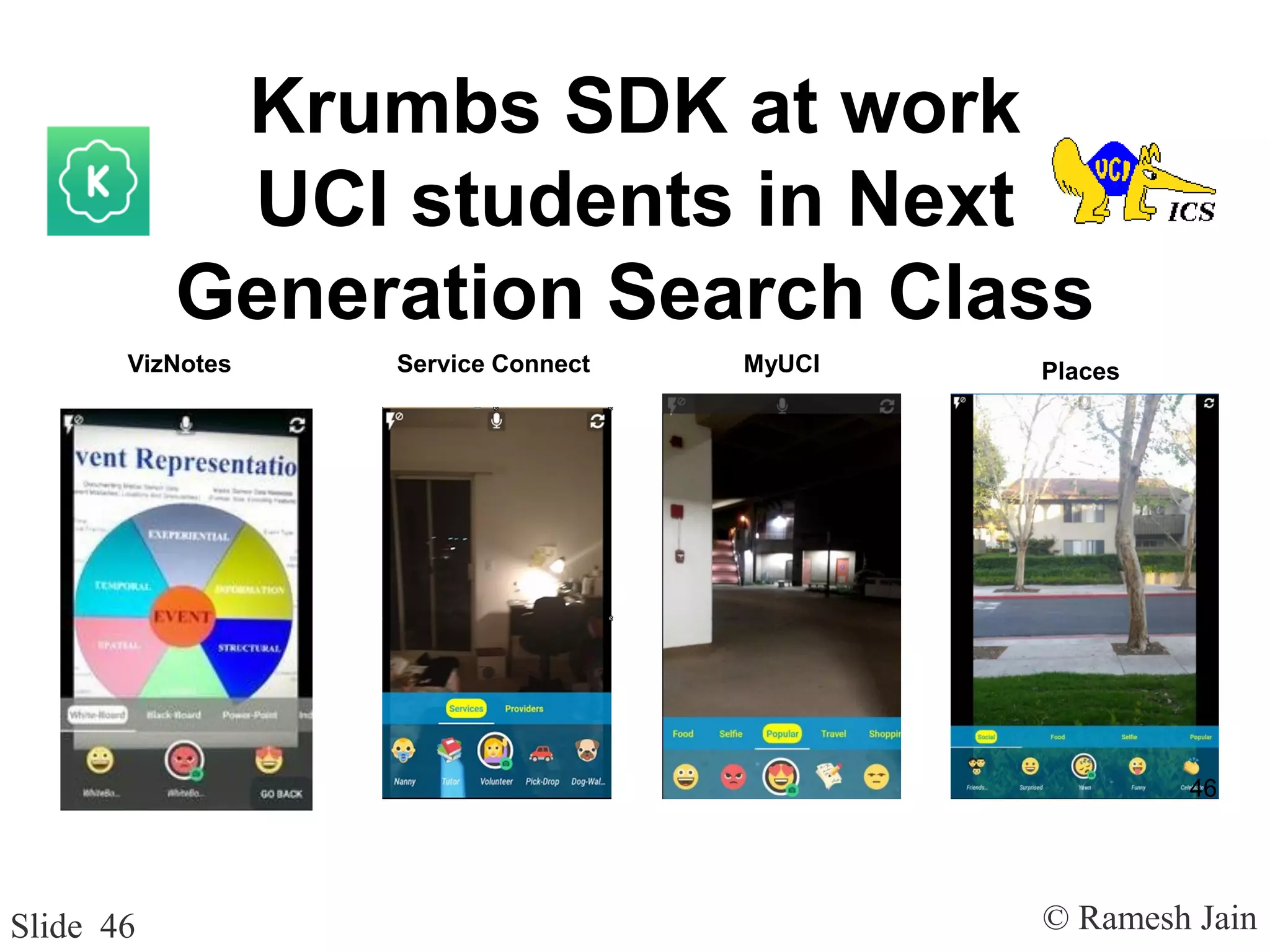
© Ramesh JainSlide 46
Krumbs SDK at work
UCI students in Next
Generation Search Class
Service Connect MyUCIVizNotes Places
46
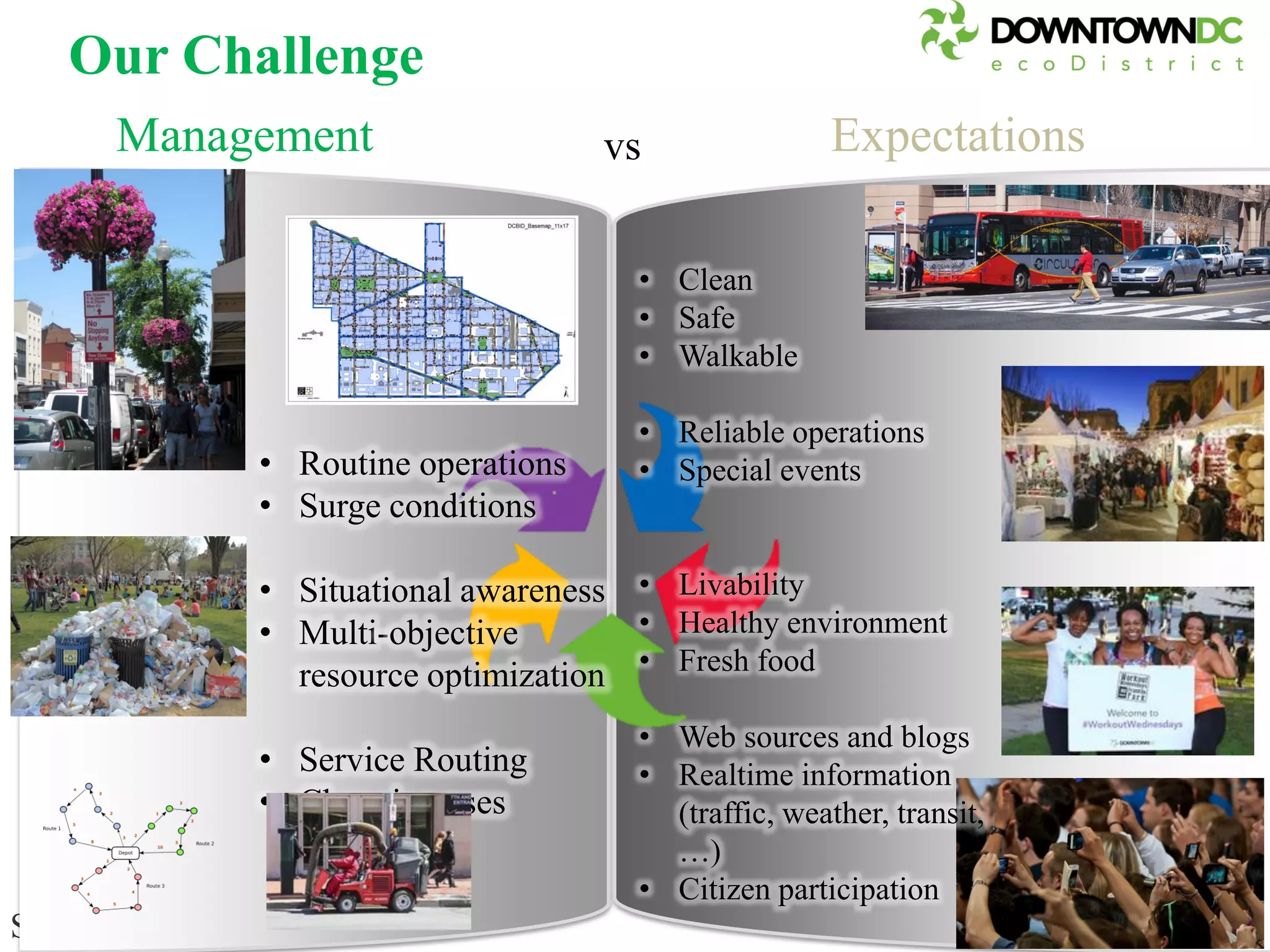
© Ramesh JainSlide 47
• Routine operations
• Surge conditions
• Situational awareness
• Multi-objective
resource optimization
• Service Routing
• Changing uses
Management Expectations
• Clean
• Safe
• Walkable
• Reliable operations
• Special events
• Livability
• Healthy environment
• Fresh food
• Web sources and blogs
• Realtime information
(traffic, weather, transit,
…)
• Citizen participation
vs
Our Challenge
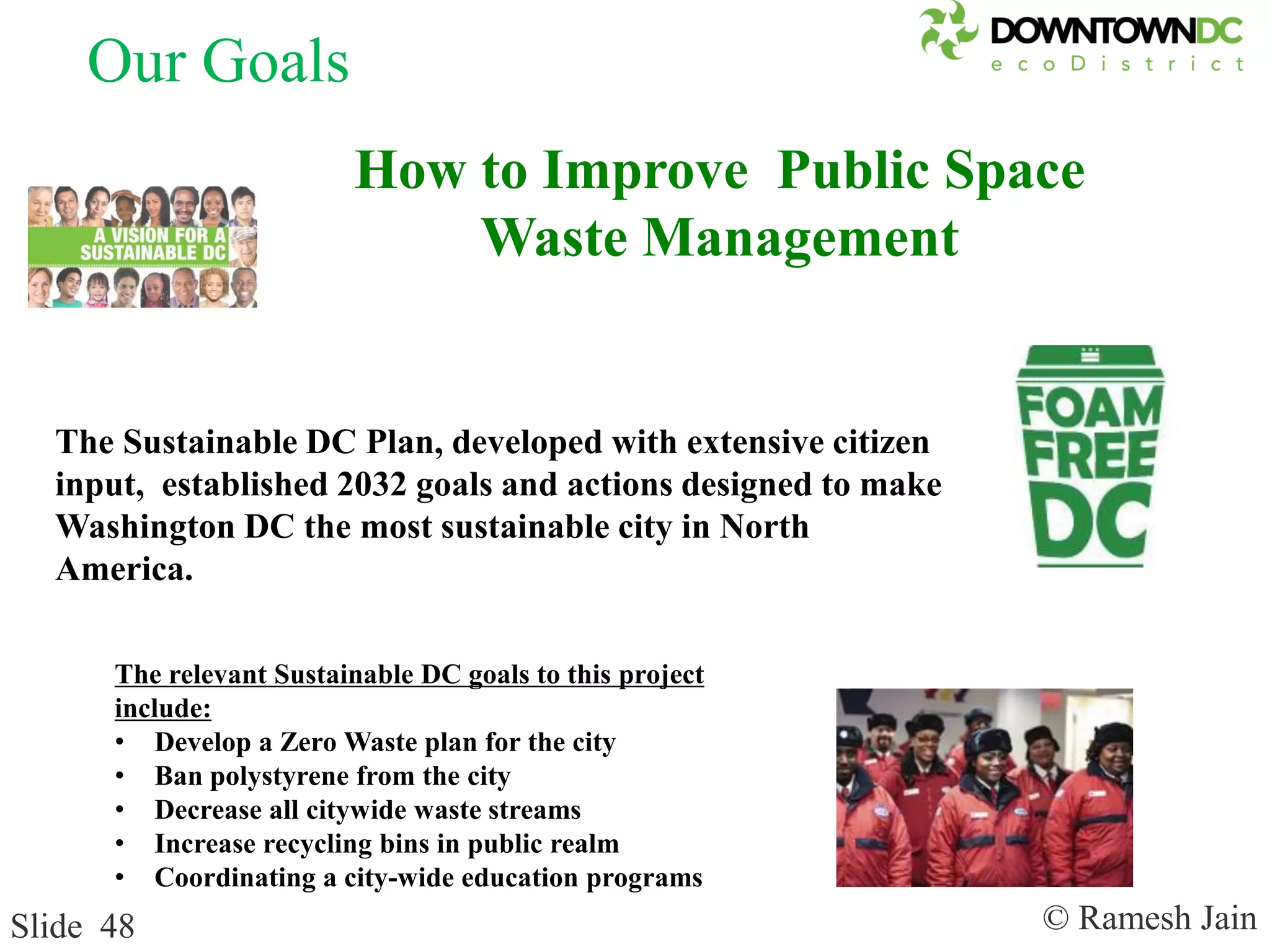
© Ramesh JainSlide 48
The relevant Sustainable DC goals to this project
include:
• Develop a Zero Waste plan for the city
• Ban polystyrene from the city
• Decrease all citywide waste streams
• Increase recycling bins in public realm
• Coordinating a city-wide education programs
The Sustainable DC Plan, developed with extensive citizen
input, established 2032 goals and actions designed to make
Washington DC the most sustainable city in North
America.
How to Improve Public Space
Waste Management
Our Goals
© Ramesh JainSlide 49
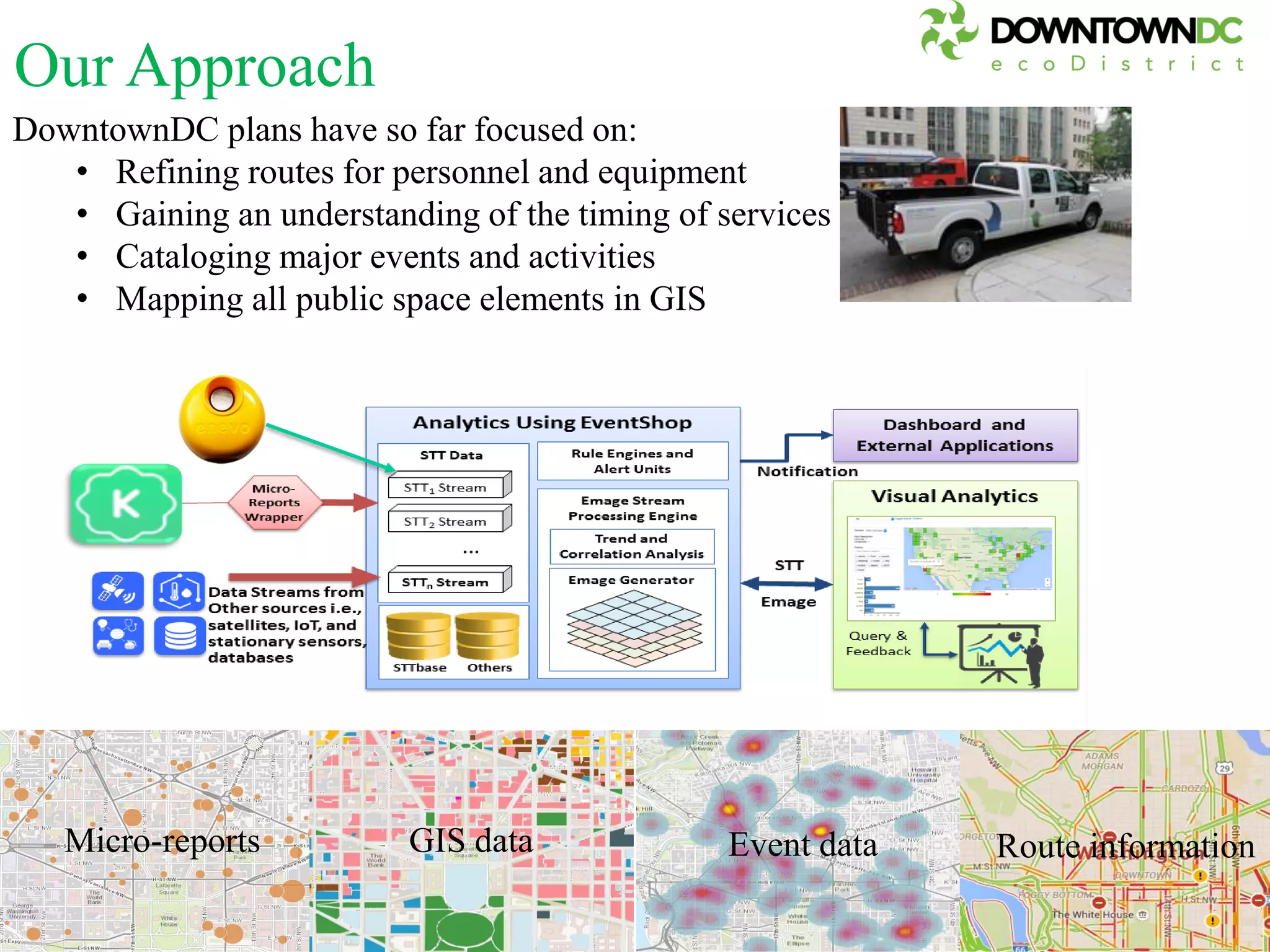
DowntownDC plans have so far focused on:
• Refining routes for personnel and equipment
• Gaining an understanding of the timing of services
• Cataloging major events and activities
• Mapping all public space elements in GIS
Micro-reports Event dataGIS data Route information
Our Approach
© Ramesh JainSlide 50
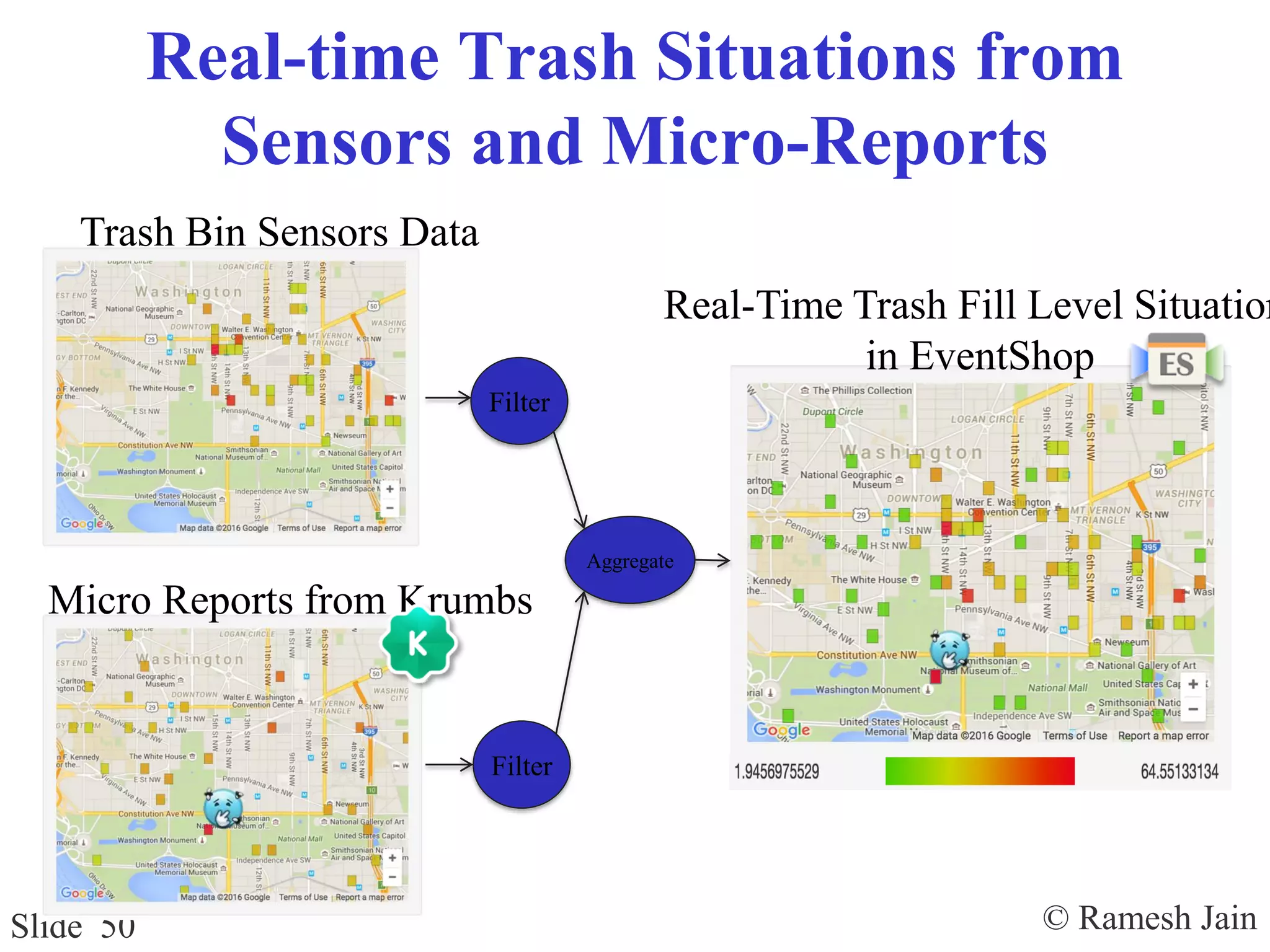
Real-time Trash Situations from
Sensors and Micro-Reports
Trash Bin Sensors Data
Micro Reports from Krumbs
Filter
Aggregate
Filter
Real-Time Trash Fill Level Situation
in EventShop
© Ramesh JainSlide 51
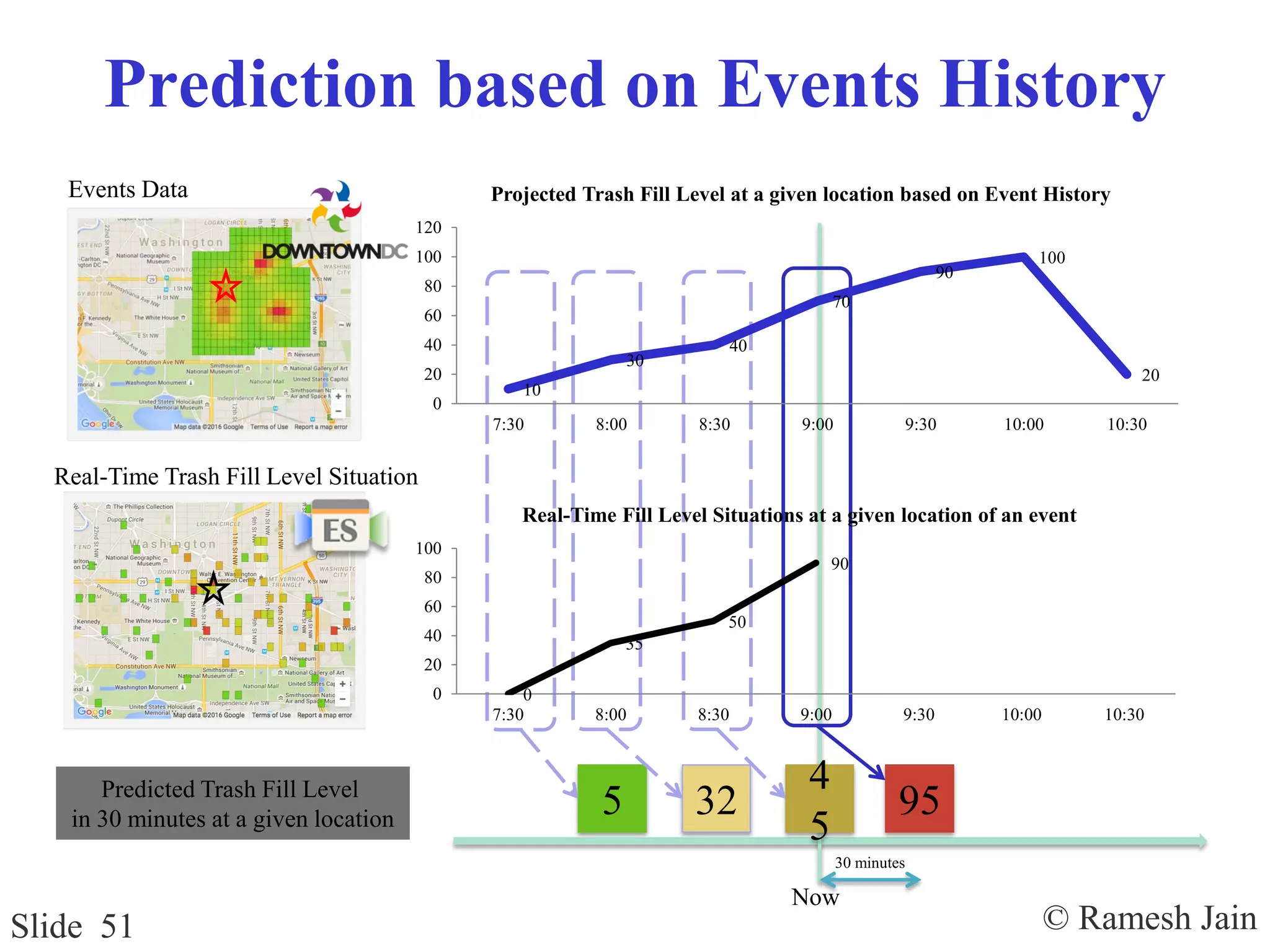
Prediction based on Events History
Events Data
Real-Time Trash Fill Level Situation
5 32
Now
Predicted Trash Fill Level
in 30 minutes at a given location
4
5
95
30 minutes
10
30
40
70
90
100
20
0
20
40
60
80
100
120
7:30 8:00 8:30 9:00 9:30 10:00 10:30
Projected Trash Fill Level at a given location based on Event History
0
35
50
90
0
20
40
60
80
100
7:30 8:00 8:30 9:00 9:30 10:00 10:30
Real-Time Fill Level Situations at a given location of an event
© Ramesh JainSlide 52
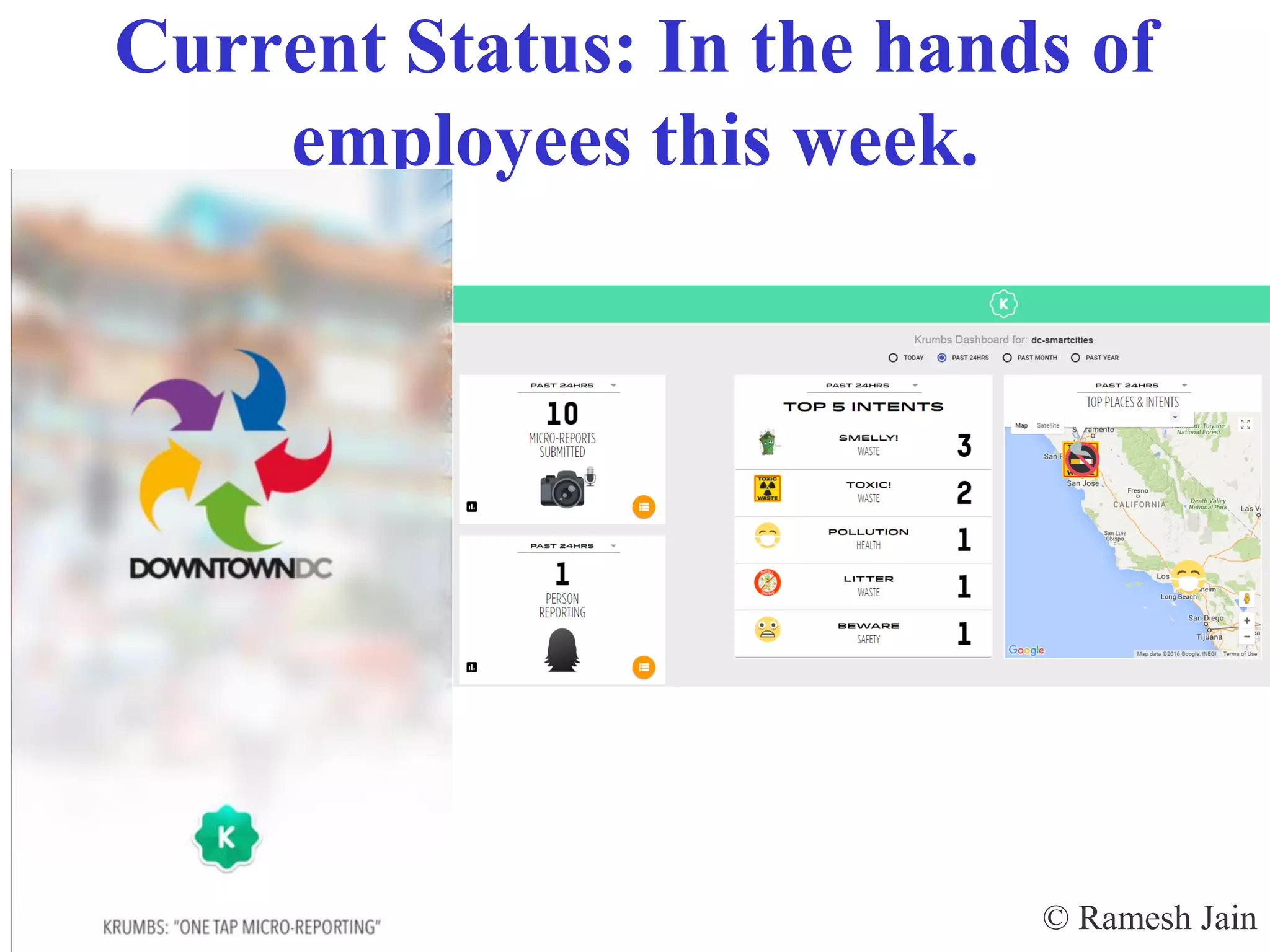
Current Status: In the hands of
employees this week.
© Ramesh JainSlide 53
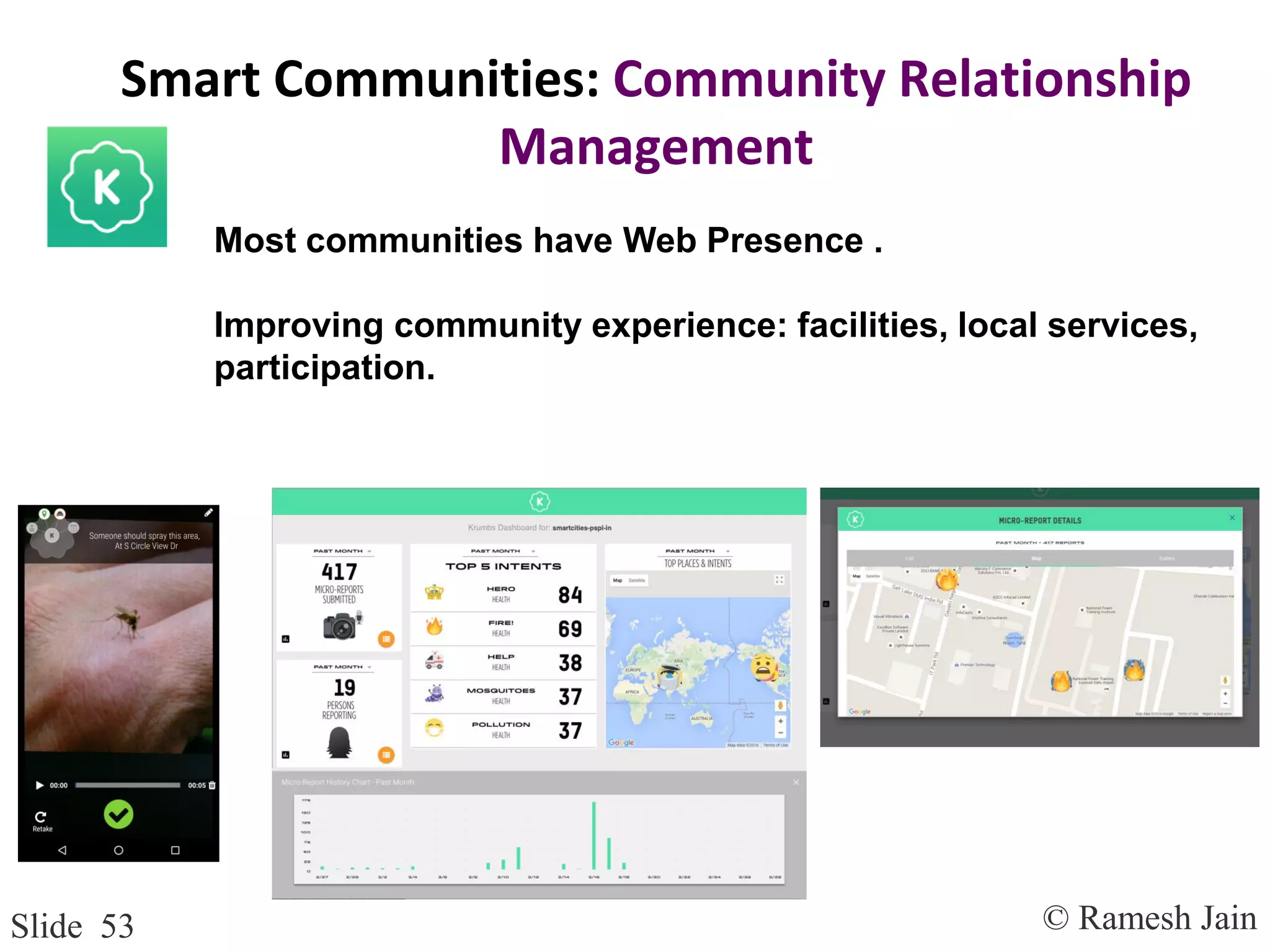
Smart Communities: Community Relationship
Management
Most communities have Web Presence .
Improving community experience: facilities, local services,
participation.
© Ramesh JainSlide 54
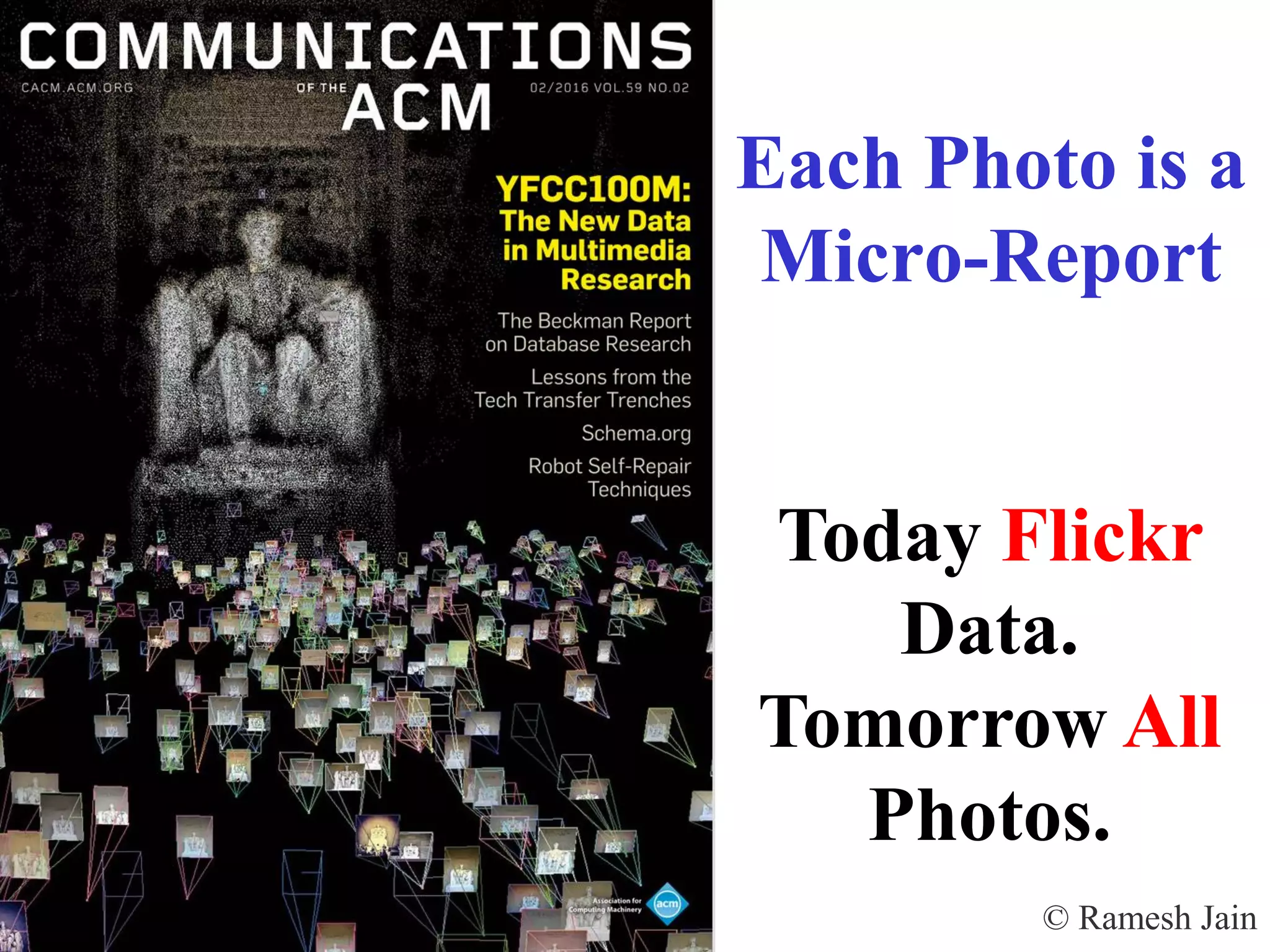
Each Photo is a
Micro-Report
Today Flickr
Data.
Tomorrow All
Photos.
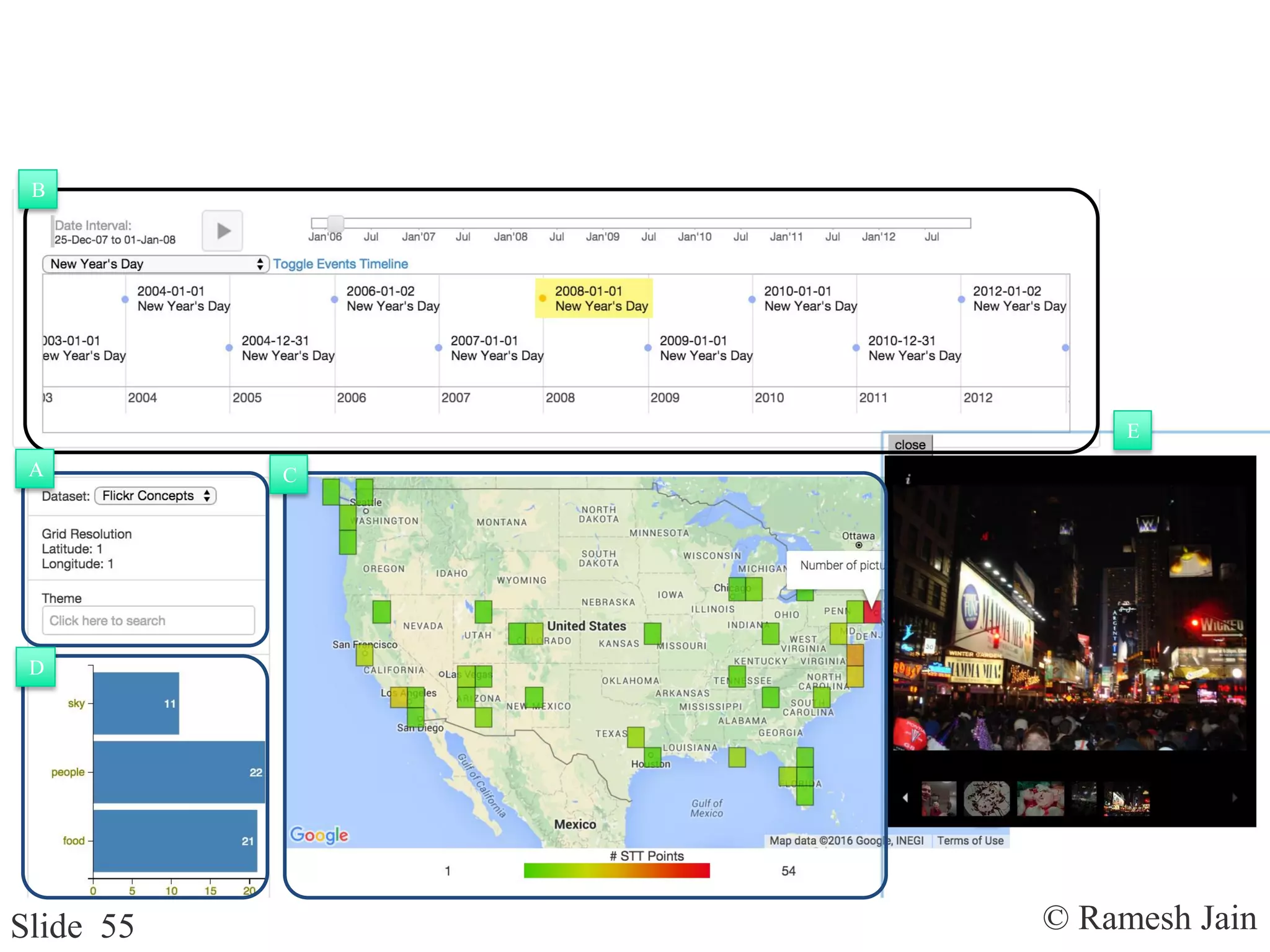
© Ramesh JainSlide 55
B
A
D
C
E
© Ramesh JainSlide 56
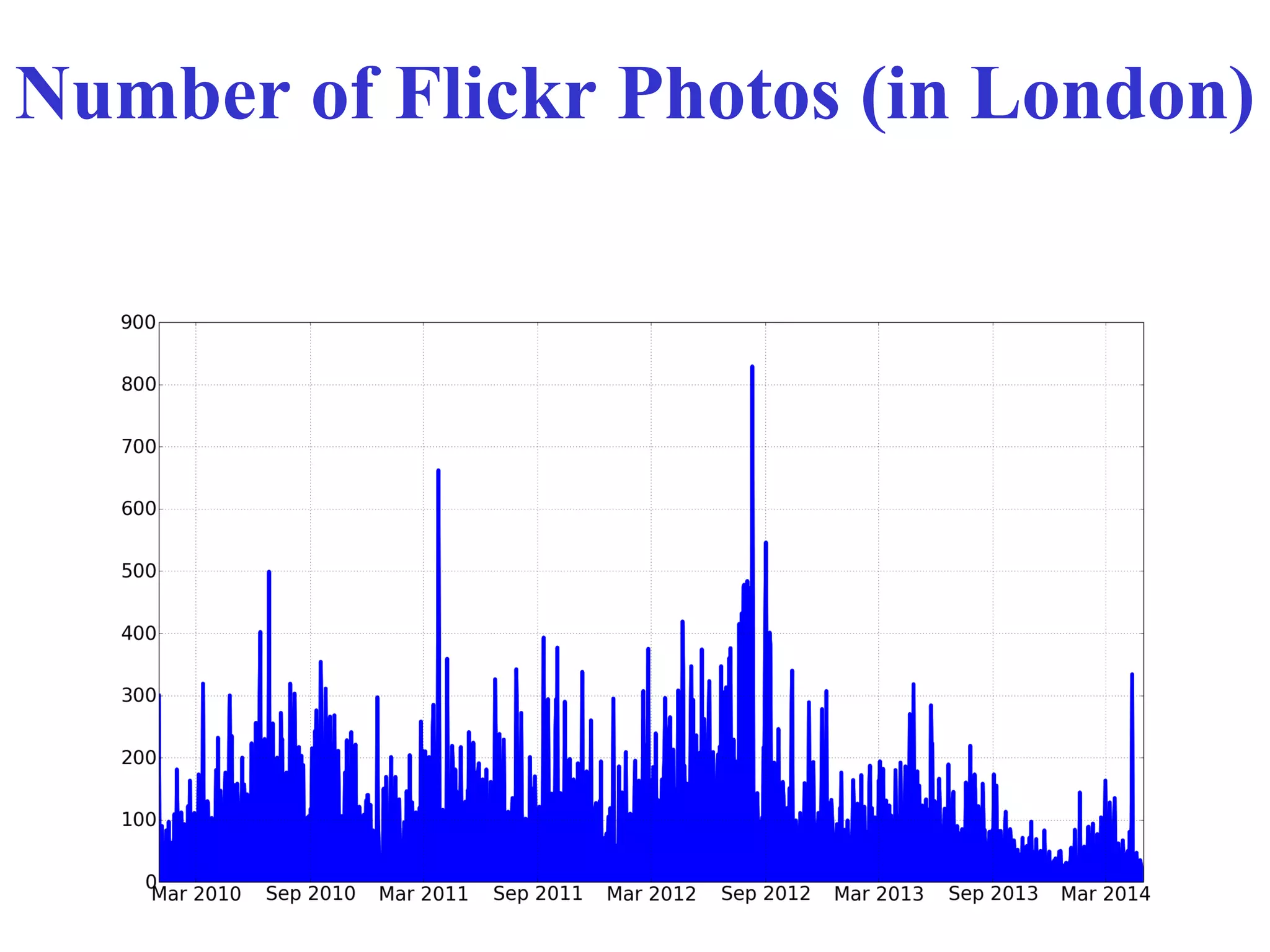
Number of Flickr Photos (in London)
© Ramesh JainSlide 57
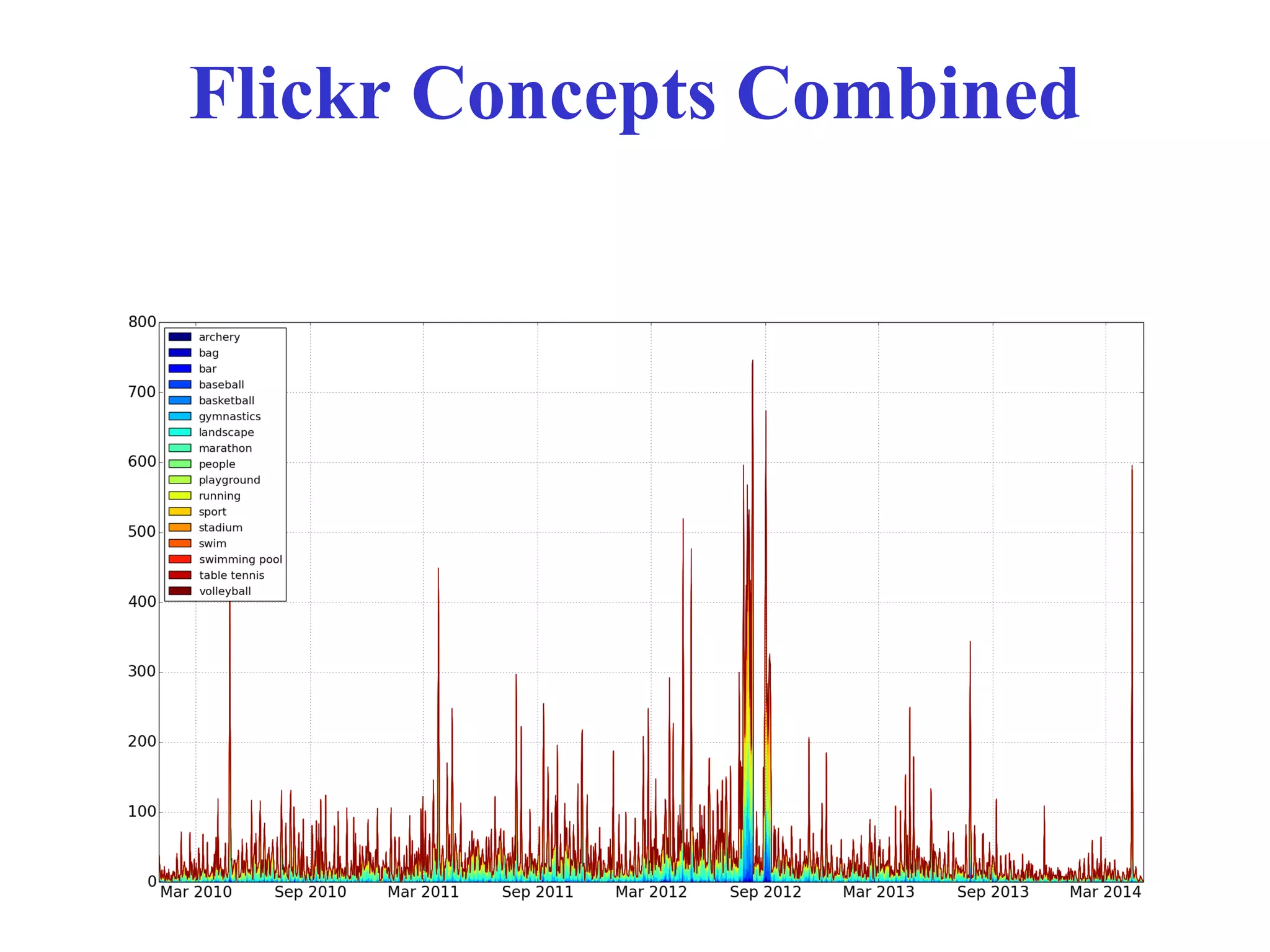
Flickr Concepts Combined
© Ramesh JainSlide 58
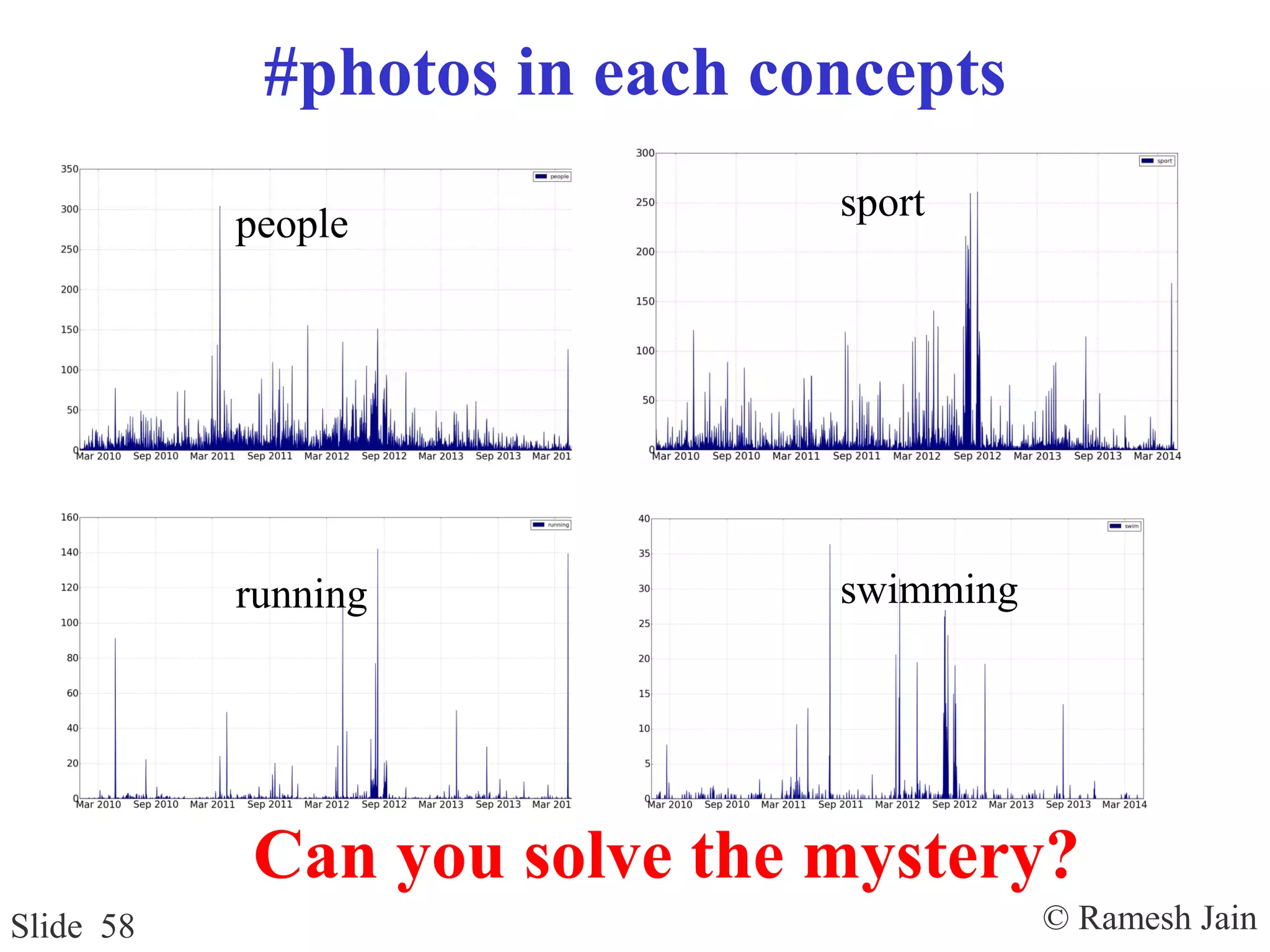
#photos in each concepts
people
sport
running swimming
Can you solve the mystery?
© Ramesh JainSlide 59
Current Status
Krumbs SDK Ready: Being used by multiple
groups.
EventShop is open source.
Photos as a report is an exciting topic for research.
Looking for collaborators to join the
adventure in building Social Machines.
© Ramesh JainSlide 60
Dream!
5.5 Billion People Reporting and
Contributing to Solve Societal Problems.
Even in Remotest parts of a Developing
Country!
© Ramesh JainSlide 61
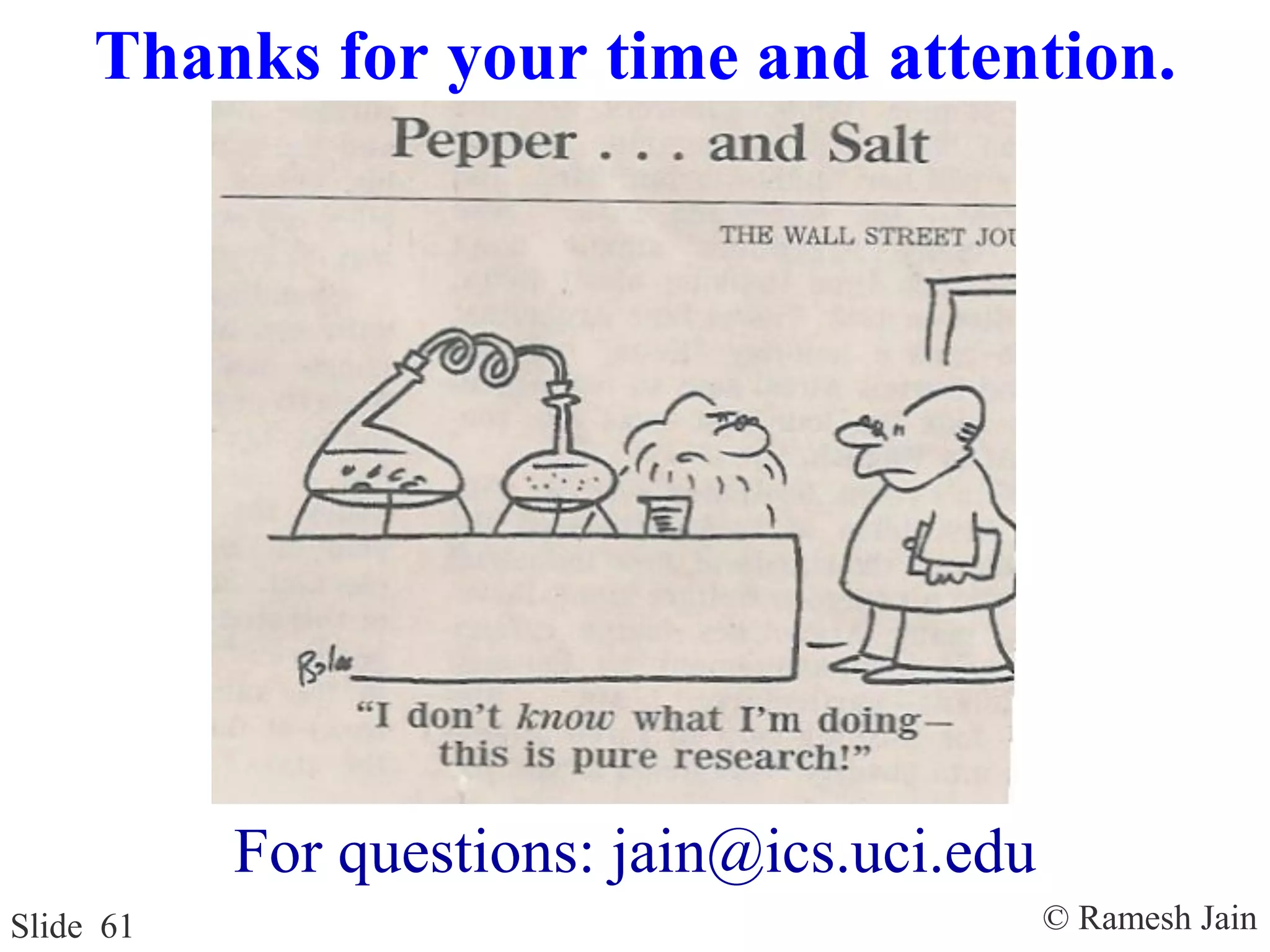
Thanks for your time and attention.
For questions: jain@ics.uci.edu

Micro reports and Situation Recognition at social machines workshop

  • 1.
    © Ramesh JainSlide1 Micro-Reports and Situation Recognition Ramesh Jain Computer Science@UCI (with Vivek Singh, Mingyan Gao, Siripen Pongpaichet, and Mengfann Tan) and Krumbs Inc (Asquith Baily, Neil Jain, Pinaki Sinha) jain@ics.uci.edu
  • 2.
    © Ramesh JainSlide2 Society exists only as a mental concept; in the real world there are only individuals. -- Oscar Wilde
  • 3.
    © Ramesh JainSlide3 Humans are Smart Sensors. 3 Humans are Smart Actuators Humans are the goal as well as the source of Technology.
  • 4.
    © Ramesh JainSlide4 The Magic Device: Mobile Phone Middle 4 Billion Top 1.5 Billion Bottom 1.5 Billion MOP: Improving Information Environment TOP: Strong Information Environment BOP: Deprived of Information 4
  • 5.
    © Ramesh JainSlide5 This century is different from the last. Should we think differently???
  • 6.
    © Ramesh JainSlide6 In 20th century, we tolerated photos in our textual documents. In 21st century, you create visual documents that tolerate text.
  • 7.
    © Ramesh JainSlide7 Major Disruption in Photos: From Memories to Information Sources. Photos are the most compelling source of information.
  • 8.
    © Ramesh JainSlide8 Most Fundamental Problem: Connecting People’s Needs to Resources Effectively, Efficiently, and Promptly in given Situations. 8
  • 9.
    © Ramesh JainSlide9 Major transformation in human history are a chronicle of building Social Machines for How People’s need are connected to Resources. 9
  • 10.
    © Ramesh JainSlide10 Hunter Gatherer: You went to Food. Now food comes to you.
  • 11.
    © Ramesh JainSlide11 Until 2000, you went to make a call. Now call finds you.
  • 12.
    © Ramesh JainSlide12 12 Human Needs remain the same. Resources and distribution methods are invented.
  • 13.
    © Ramesh JainSlide13 Designing Social Machines: • Needs • Resources • Connecting Needs to Resources
  • 14.
    © Ramesh JainSlide14 How can we identify Needs? Need = f (person, context) 14
  • 15.
    © Ramesh JainSlide15 Designing Social Machines IoT Social Media Human Sensors Environmental Sensors Human/Actuators Open Data
  • 16.
    © Ramesh JainSlide16 We Live in Dynamic World. 16
  • 17.
    © Ramesh JainSlide17 What is Cyber Space? Who invented it? Animals Machines Societies Published first in 1942
  • 18.
    © Ramesh JainSlide18 • Desired state (Goal) • System model • Control Signal (Act) • Current State (observe) 18
  • 19.
    © Ramesh JainSlide19 Social Life Networks: Important Factors • The world we live in. – Knowing current situation. – Knowing where resources are. • Where needs are. – Knowing each individual’s situation. – Knowing what they may need. • Matching/recommendation Engine • Action
  • 20.
    © Ramesh JainSlide20 Social Life Networks Physical World And Informa tion Systems Environment and Resources Information Personal Situation and Needs Information Match ing Action Signals
  • 21.
    © Ramesh JainSlide21 EventShop : Geospatial Situation Detection Situation Recognition Data Stream Ingestion and aggregation Database Predictive Analytics Personal EventShop: Life Event Detection Personal Situation Recognition Database Personal Data Ingestion Objective Self Recommendation Engine Need- Resource Matcher Identify Resources and Needs Resources Needs Evolving Global Situation Evolving Personal Situation Actionable Information
  • 22.
    © Ramesh JainSlide22 Billions of data sources. Environment for Selecting, and Combining appropriate sources to detect situations. Prediction for Pro-active actions Interactions with different types of Users Inspired by Photoshop
  • 23.
  • 24.
  • 25.
    © Ramesh JainSlide25 Flood level - Shelter Flood Level Shelter Twitter Classify (Flood level - Shelter)
  • 26.
  • 27.
    © Ramesh JainSlide27 Microblogs: Participatory Sensing • Microblogging is a broadcast medium that uses typically smaller form of blogging. • Twitter, Status updates, Instagram, …
  • 28.
    © Ramesh JainSlide28 Micro-Blog Mining Process • Extracting Data From Data Providers • Parsing, Integrating, and Storing the data • Extract Information of interest • Earthquake Analysis; Flu; Trends
  • 29.
    © Ramesh JainSlide29 Problem with Micro-Blogs • Noisy • Subjective • Poor context • Great concept but has limitations. • New technology to overcome these limitations.
  • 30.
  • 31.
    © Ramesh JainSlide31 First Principle in Journalism • Truthfulness, accuracy, objectivity, impartiality, fairness and public accountability • Journalists cannot always guarantee ‘truth’, but getting the facts right is the cardinal principle of journalism. We should always strive for accuracy, give all the relevant facts we have and ensure that they have been checked. When we cannot corroborate information we should say so. • Seek Truth and Report it as Fully as Possible
  • 32.
    © Ramesh JainSlide32 Most Reports or Information are report from an Event. • ‘Kodak Moment’ • Each event has interesting and important moments. • How do we capture a moment?
  • 33.
    © Ramesh JainSlide33 What is a camera?
  • 34.
    © Ramesh JainSlide34 Is a Smartphone camera still a camera? Camera collects all metadata related to the Event. • Exposure Time • Aperture Diameter • Flash • Metering Mode • ISO Ratings • Focal Length • Time • Location • Face Smartphone camera captures events.
  • 35.
    © Ramesh JainSlide35 Micro-Reports: Requirements • Objective (Subjective comments put explicitly) • Spontaneous • Compelling • Universal
  • 36.
    © Ramesh JainSlide36 Micro-Reports • What (Information) • Who (Information) • When (Time) • Where (Location) • Why (Causality) • How (Experiential) Photo What Where When Who Why Sound
  • 37.
    © Ramesh JainSlide37 Krumbs: Capture and Report experience of a moment. What: Objects Who: People When: Events Where: Location Why: Intent/Emotions
  • 38.
  • 39.
  • 40.
  • 41.
    © Ramesh JainSlide41 Krumbs SDK
  • 42.
    © Ramesh JainSlide42 Dashboard
  • 43.
    © Ramesh JainSlide43 Micro Reports and Analytics SDK 1. Reports convey direct desire, feedback, and observations. 2. Real time Aggregation and Analytics for understanding reports. Creation of reports Customer Reports 43
  • 44.
    © Ramesh JainSlide44 EVENT Spatial Temporal Informa- tional Experien- tial Structural Causal {"micro_reports":[{ "where":{ "geo_location":{ "latitude":32.90233332316081, "longitude":- 117.2441166718801}, "when":{ "start_time":"Jun 14, 2009 11:25:19 AM", "end_time":"Jun 14, 2009 11:25:19 AM", "time_zone":"America/Los_Angeles"} , "what":[{ "concept_name":"people", "confidence":0.9836078882217407, "visual_concept_provider":"CLARIFA I"}, … { "concept_name":"food", "confidence":0.8526291847229004, "visual_concept_provider":"CLARIFA I"}], "tag":”#niceday #summer", "source":{"default_src":"https://….jpg"}}, "sub_event":[], "why":[]}, …]} MediaJSON for each micro-report
  • 45.
    © Ramesh JainSlide45 STT Emage EventShop Emage Stream Processing Engine STTbase Others Visual Analytics Query & Feedback STT Data Ingestion Trend and Correlation Analysis Micro- Reports Wrappe r Data Streams from Other sources i.e., satellites, IoT, and stationary sensors. STT1 Stream STT2 Stream STTn Stream … Rule Engines and Alert Units Emage Generator Dashboard and External Applications Notification
  • 46.
    © Ramesh JainSlide46 Krumbs SDK at work UCI students in Next Generation Search Class Service Connect MyUCIVizNotes Places 46
  • 47.
    © Ramesh JainSlide47 • Routine operations • Surge conditions • Situational awareness • Multi-objective resource optimization • Service Routing • Changing uses Management Expectations • Clean • Safe • Walkable • Reliable operations • Special events • Livability • Healthy environment • Fresh food • Web sources and blogs • Realtime information (traffic, weather, transit, …) • Citizen participation vs Our Challenge
  • 48.
    © Ramesh JainSlide48 The relevant Sustainable DC goals to this project include: • Develop a Zero Waste plan for the city • Ban polystyrene from the city • Decrease all citywide waste streams • Increase recycling bins in public realm • Coordinating a city-wide education programs The Sustainable DC Plan, developed with extensive citizen input, established 2032 goals and actions designed to make Washington DC the most sustainable city in North America. How to Improve Public Space Waste Management Our Goals
  • 49.
    © Ramesh JainSlide49 DowntownDC plans have so far focused on: • Refining routes for personnel and equipment • Gaining an understanding of the timing of services • Cataloging major events and activities • Mapping all public space elements in GIS Micro-reports Event dataGIS data Route information Our Approach
  • 50.
    © Ramesh JainSlide50 Real-time Trash Situations from Sensors and Micro-Reports Trash Bin Sensors Data Micro Reports from Krumbs Filter Aggregate Filter Real-Time Trash Fill Level Situation in EventShop
  • 51.
    © Ramesh JainSlide51 Prediction based on Events History Events Data Real-Time Trash Fill Level Situation 5 32 Now Predicted Trash Fill Level in 30 minutes at a given location 4 5 95 30 minutes 10 30 40 70 90 100 20 0 20 40 60 80 100 120 7:30 8:00 8:30 9:00 9:30 10:00 10:30 Projected Trash Fill Level at a given location based on Event History 0 35 50 90 0 20 40 60 80 100 7:30 8:00 8:30 9:00 9:30 10:00 10:30 Real-Time Fill Level Situations at a given location of an event
  • 52.
    © Ramesh JainSlide52 Current Status: In the hands of employees this week.
  • 53.
    © Ramesh JainSlide53 Smart Communities: Community Relationship Management Most communities have Web Presence . Improving community experience: facilities, local services, participation.
  • 54.
    © Ramesh JainSlide54 Each Photo is a Micro-Report Today Flickr Data. Tomorrow All Photos.
  • 55.
    © Ramesh JainSlide55 B A D C E
  • 56.
    © Ramesh JainSlide56 Number of Flickr Photos (in London)
  • 57.
    © Ramesh JainSlide57 Flickr Concepts Combined
  • 58.
    © Ramesh JainSlide58 #photos in each concepts people sport running swimming Can you solve the mystery?
  • 59.
    © Ramesh JainSlide59 Current Status Krumbs SDK Ready: Being used by multiple groups. EventShop is open source. Photos as a report is an exciting topic for research. Looking for collaborators to join the adventure in building Social Machines.
  • 60.
    © Ramesh JainSlide60 Dream! 5.5 Billion People Reporting and Contributing to Solve Societal Problems. Even in Remotest parts of a Developing Country!
  • 61.
    © Ramesh JainSlide61 Thanks for your time and attention. For questions: jain@ics.uci.edu