Developing long-term relationships with young
people
Wellcome Collection’s Young Creators
Clare Carlin, Youth Programmes Manager, Wellcome
Collection
Lucie Fitton, Head of Engagement, The Audience Agency
What is the value of engaging young people long-
term?
Depth versus reach? Quality and quantity?
What are your experiences?
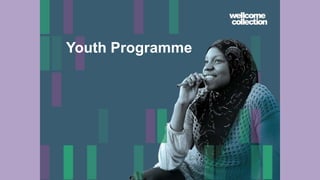
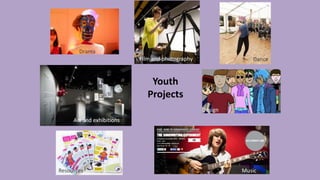
Youth Programme
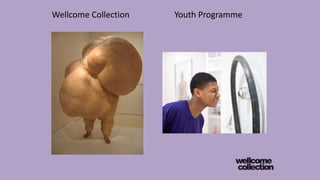
Wellcome Collection Youth Programme
Youth
Projects
Art and exhibitions
Music
Dance
Design
Drama
Resources
Film and photography
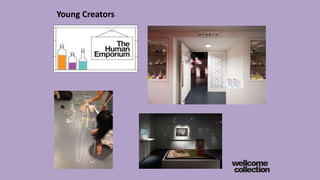
Young Creators
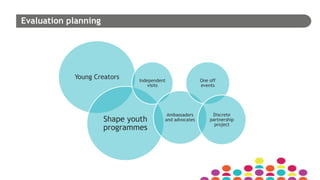
Evaluation planning
Young Creators
Shape youth
programmes
Independent
visits
Ambassadors
and advocates
One off
events
Discrete
partnership
project
Project aims
• To create a model which feeds
into a longer term youth advocacy
programme
• To increase visibility of youth co-
production work
• 50% of young people to be
recruited from lower income
schools.
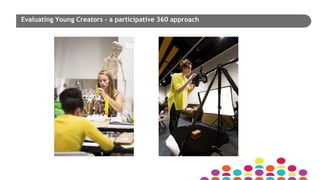
Evaluating Young Creators – a participative 360 approach
Model for feeding a longer-term youth advocacy programme?
Key success factors
• Slow start – social
• Intense and light touch
• Commitment through application
process
• Support from the wider public
programmes team and Wellcome
staff – creative outputs as catalyst
• Ownership - not being school
related or curriculum driven
• Involvement in every stage
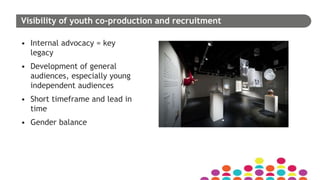
Visibility of youth co-production and recruitment
• Internal advocacy = key
legacy
• Development of general
audiences, especially young
independent audiences
• Short timeframe and lead in
time
• Gender balance
Recommendations
• Young people with a range of interests
• Gender balance
• Longer lead in time
• Supported application for less engaged
• Continue long timeframe and mix of intense
and light engagement
• Independent use facilities
• Launch events
• Integration into main public spaces
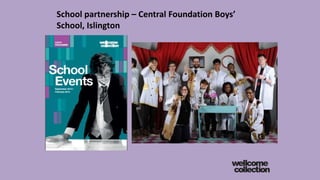
School partnership – Central Foundation Boys’
School, Islington
https://www.youtube.com/watch?v=w6XvC1b
Weuc&feature=player_embedded
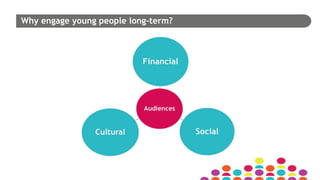
Why engage young people long-term?
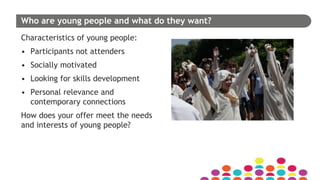
Who are young people and what do they want?
Characteristics of young people:
• Participants not attenders
• Socially motivated
• Looking for skills development
• Personal relevance and
contemporary connections
How does your offer meet the needs
and interests of young people?
Royal Opera House Bridge action research
• Terminology: not relevant
• Interests: music, arts, writing
cross arts
influenced by technology and
contemporary culture
• Motivations: enjoyment, social opportunities,
career experience
• Barriers: perceived lack of opportunities,
poor awareness, poor marketing
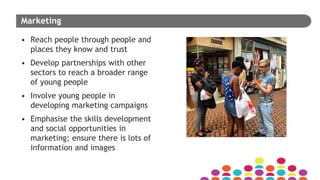
Marketing
• Reach people through people and
places they know and trust
• Develop partnerships with other
sectors to reach a broader range
of young people
• Involve young people in
developing marketing campaigns
• Emphasise the skills development
and social opportunities in
marketing; ensure there is lots of
information and images
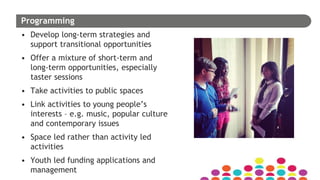
Programming
• Develop long-term strategies and
support transitional opportunities
• Offer a mixture of short-term and
long-term opportunities, especially
taster sessions
• Take activities to public spaces
• Link activities to young people’s
interests – e.g. music, popular culture
and contemporary issues
• Space led rather than activity led
activities
• Youth led funding applications and
management
Detailed report
http://www.roh.org.uk/learning/royal-opera-house-
bridge/report-and-documents
lucie.fitton@theaudienceagency.org
c.carlin@wellcome.ac.uk

Developing long-term relationships with young people - Wellcome Collection’s Young Creators

  • 1.
    Developing long-term relationshipswith young people Wellcome Collection’s Young Creators Clare Carlin, Youth Programmes Manager, Wellcome Collection Lucie Fitton, Head of Engagement, The Audience Agency
  • 2.
    What is thevalue of engaging young people long- term? Depth versus reach? Quality and quantity? What are your experiences?
  • 3.
  • 4.
  • 5.
  • 6.
  • 7.
    Evaluation planning Young Creators Shapeyouth programmes Independent visits Ambassadors and advocates One off events Discrete partnership project
  • 8.
    Project aims • Tocreate a model which feeds into a longer term youth advocacy programme • To increase visibility of youth co- production work • 50% of young people to be recruited from lower income schools.
  • 9.
    Evaluating Young Creators– a participative 360 approach
  • 10.
    Model for feedinga longer-term youth advocacy programme? Key success factors • Slow start – social • Intense and light touch • Commitment through application process • Support from the wider public programmes team and Wellcome staff – creative outputs as catalyst • Ownership - not being school related or curriculum driven • Involvement in every stage
  • 11.
    Visibility of youthco-production and recruitment • Internal advocacy = key legacy • Development of general audiences, especially young independent audiences • Short timeframe and lead in time • Gender balance
  • 12.
    Recommendations • Young peoplewith a range of interests • Gender balance • Longer lead in time • Supported application for less engaged • Continue long timeframe and mix of intense and light engagement • Independent use facilities • Launch events • Integration into main public spaces
  • 13.
    School partnership –Central Foundation Boys’ School, Islington
  • 14.
  • 15.
    Why engage youngpeople long-term?
  • 16.
    Who are youngpeople and what do they want? Characteristics of young people: • Participants not attenders • Socially motivated • Looking for skills development • Personal relevance and contemporary connections How does your offer meet the needs and interests of young people?
  • 17.
    Royal Opera HouseBridge action research • Terminology: not relevant • Interests: music, arts, writing cross arts influenced by technology and contemporary culture • Motivations: enjoyment, social opportunities, career experience • Barriers: perceived lack of opportunities, poor awareness, poor marketing
  • 18.
    Marketing • Reach peoplethrough people and places they know and trust • Develop partnerships with other sectors to reach a broader range of young people • Involve young people in developing marketing campaigns • Emphasise the skills development and social opportunities in marketing; ensure there is lots of information and images
  • 19.
    Programming • Develop long-termstrategies and support transitional opportunities • Offer a mixture of short-term and long-term opportunities, especially taster sessions • Take activities to public spaces • Link activities to young people’s interests – e.g. music, popular culture and contemporary issues • Space led rather than activity led activities • Youth led funding applications and management
  • 20.
  • 21.