Audience Development A partnership approachUSUS KonferansenKristiansand 11 May 2011
Contents	Audience Development prioritiesSegmentation for audience developmentCase studiesArts NationThe Big PictureSuccessful partnershipsMain challenges Q&A
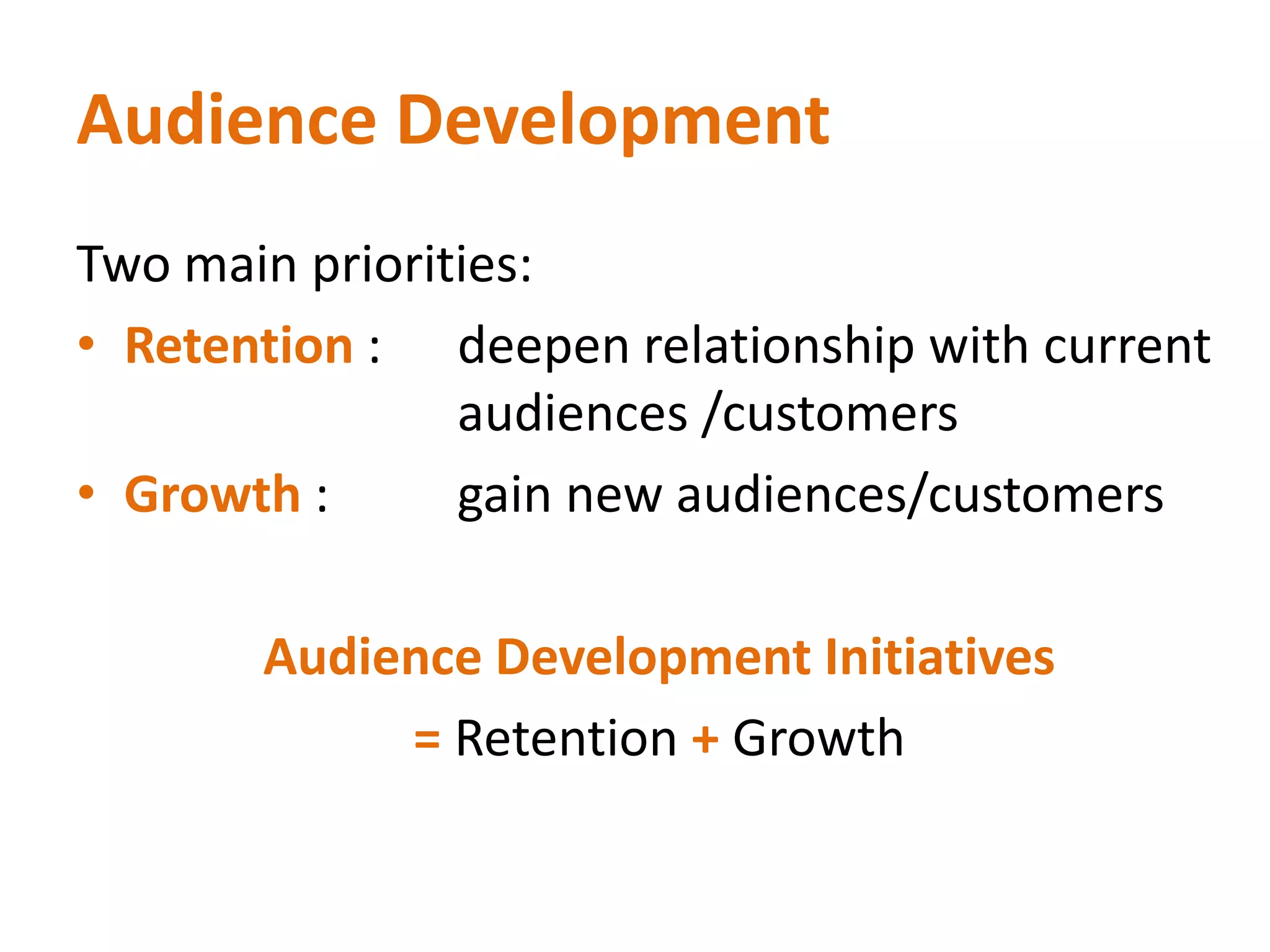
Audience DevelopmentTwo main priorities:Retention : 	deepen relationship with current 			audiences /customers Growth : 	gain new audiences/customersAudience Development Initiatives = Retention + Growth
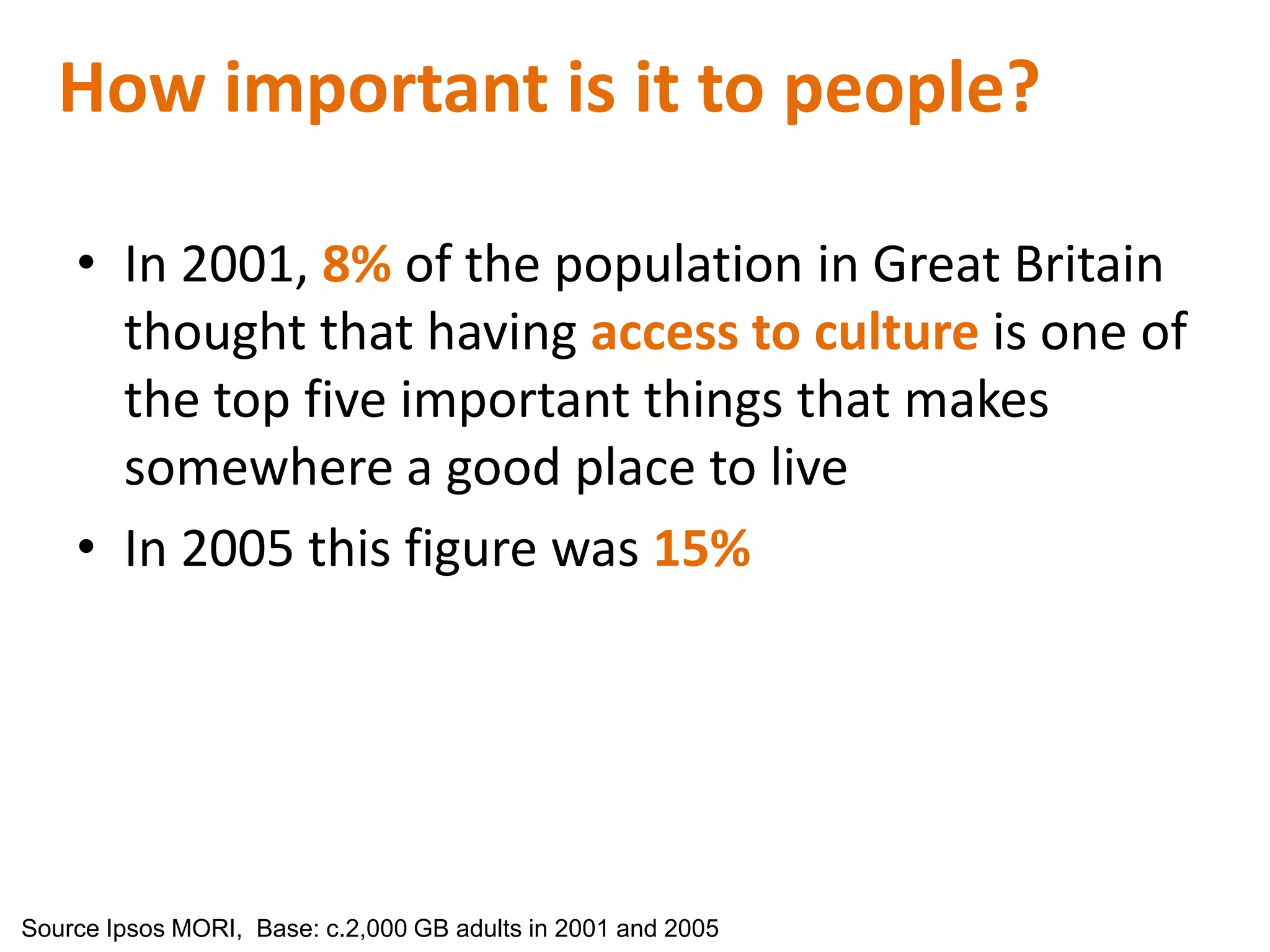
How important is it to people?In 2001, 8% of the population in Great Britain thought that having access to culture is one of the top five important things that makes somewhere a good place to liveIn 2005 this figure was 15%Source Ipsos MORI,  Base: c.2,000 GB adults in 2001 and 2005
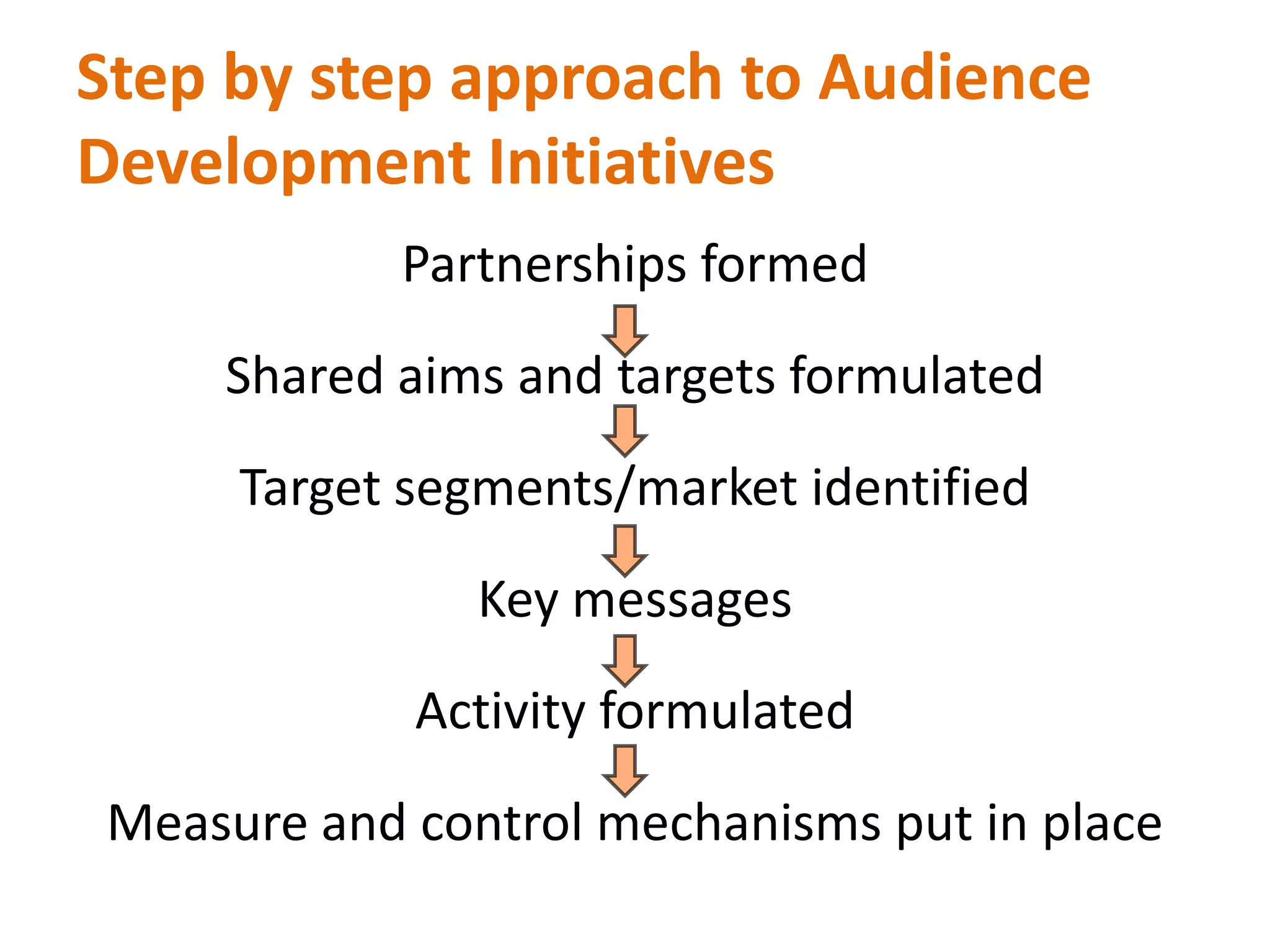
Step by step approach to Audience Development Initiatives Partnerships formedShared aims and targets formulatedTarget segments/market identifiedKey messagesActivity formulatedMeasure and control mechanisms put in place
Step by step approach to Audience Development Initiatives Partnerships formedShared aims and targets formulated------Target segments/market identifiedKey messagesActivity formulatedMeasure and control mechanisms put in place
Market segmentation 	An established market research technique that breaks down a given market/group of people into distinct consumer ‘types’Identifies shared wants and needs
Enables more precise targetting and tailored marketing communications
Geo – demographic models like Mosaic GB and ACORN also adopted by arts organisations    “Arts Audiences Insight was commissioned to see if we could identify distinct arts consumer typesin England today.”Arts Audience Insight
	“We hope that this would enable us to analyse how the current arts provision in England meets the needsof different groups; where there might be untappeddemand for greater engagement with the arts; and how different kindsof arts experiences can be designed and communicated in different waysto appeal to different groups.”- Caroline Bunting, Head of Research Arts Council EnglandArts Audience Insight
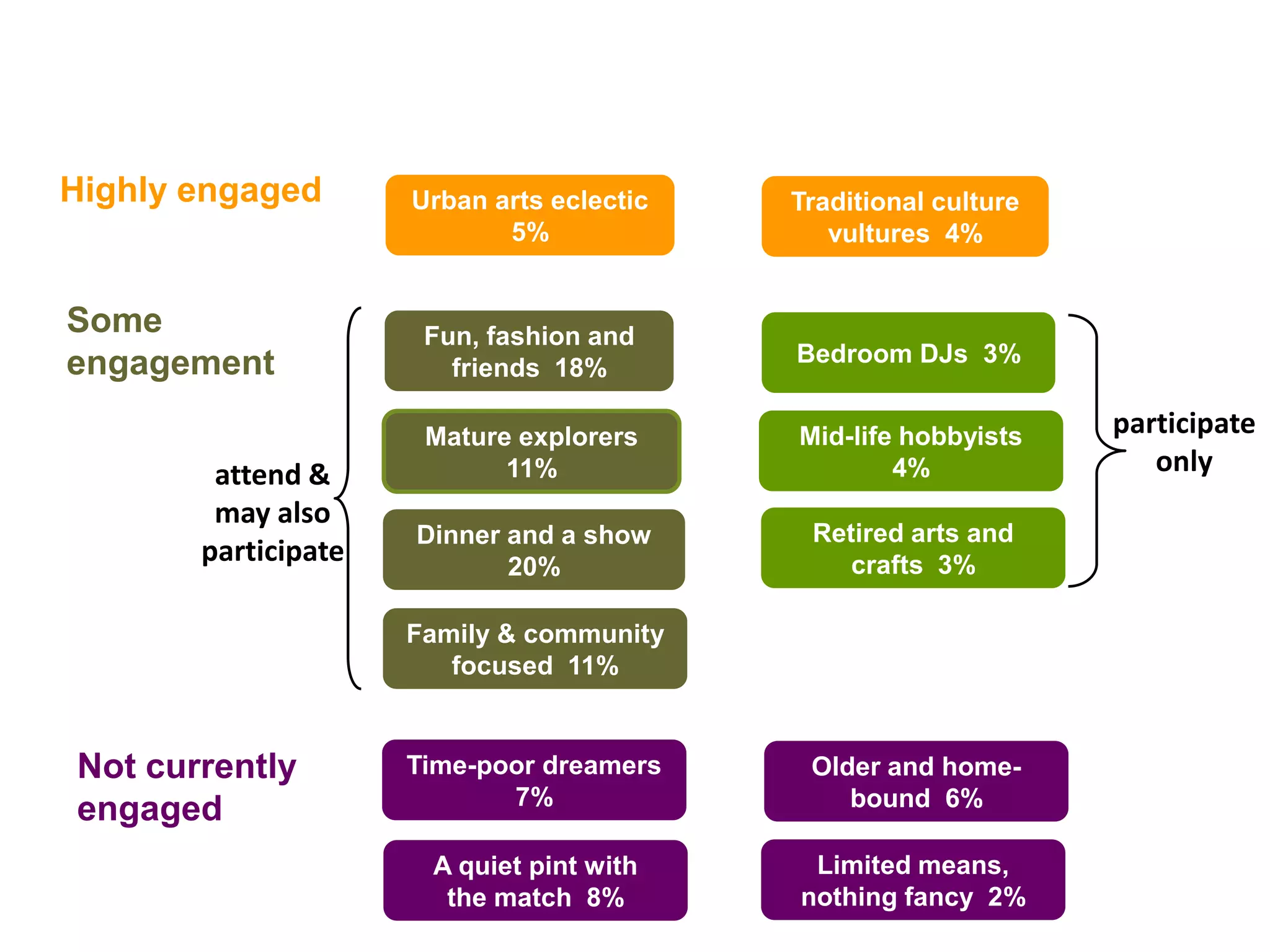
Highly engagedSome engagementNot currently engagedUrban arts eclectic  5%Traditional culture vultures  4%Fun, fashion and friends  18%Bedroom DJs  3%participate onlyMid-life hobbyists  4%Mature explorers  11%attend & may also participateRetired arts and crafts  3%Dinner and a show  20%Family & community focused  11%Time-poor dreamers  7%Older and home-bound  6%Limited means, nothing fancy  2%A quiet pint with the match  8%
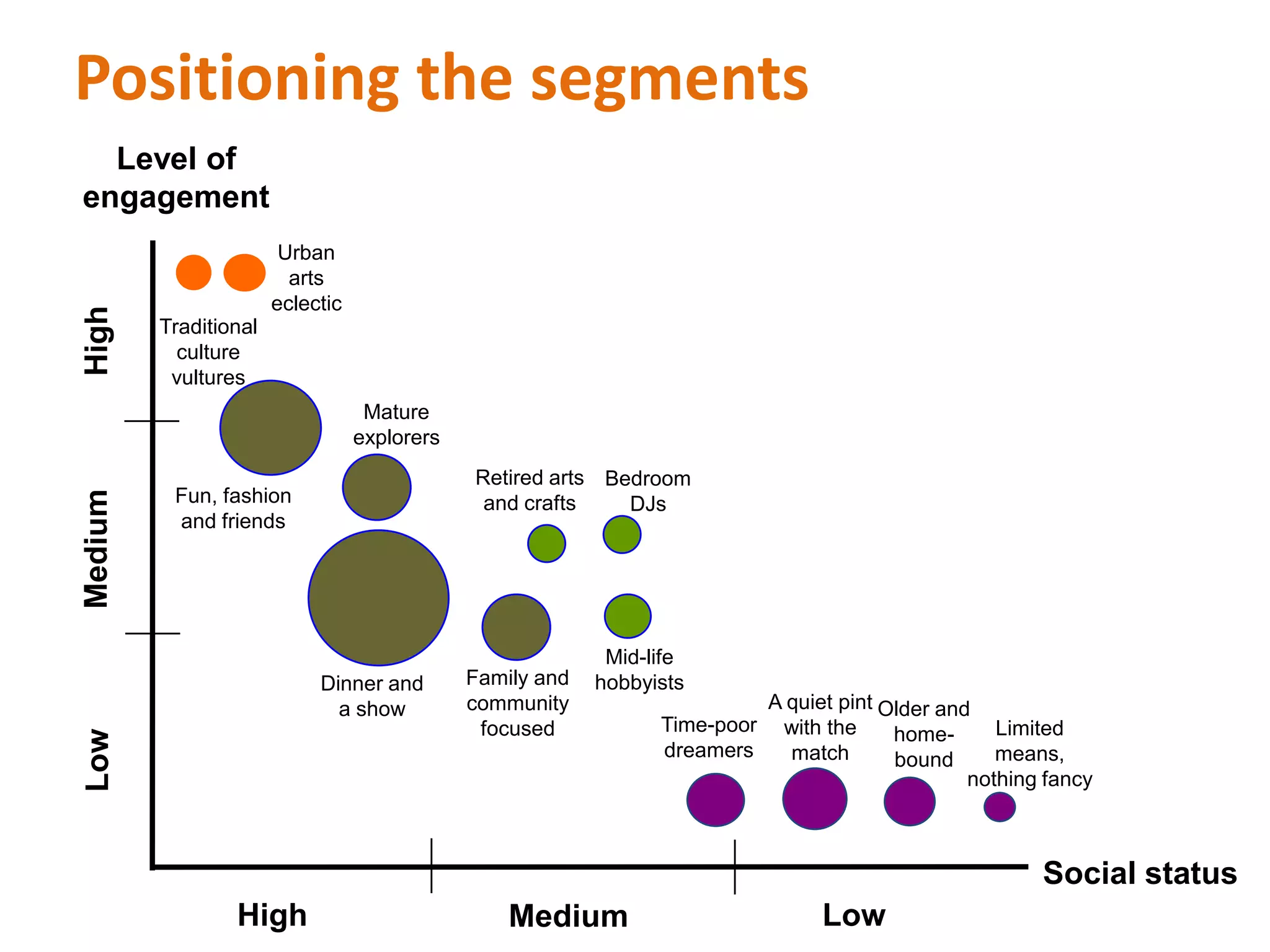
Positioning the segmentsLevel of engagementUrban arts eclecticTraditional culture vulturesHighMature explorersRetired arts and craftsBedroom DJsFun, fashion and friendsMediumMid-life hobbyistsFamily and community focusedDinner and a showA quiet pint with the matchOlder and home-boundTime-poor dreamersLimited means, nothing fancyLowSocial statusHighLowMedium
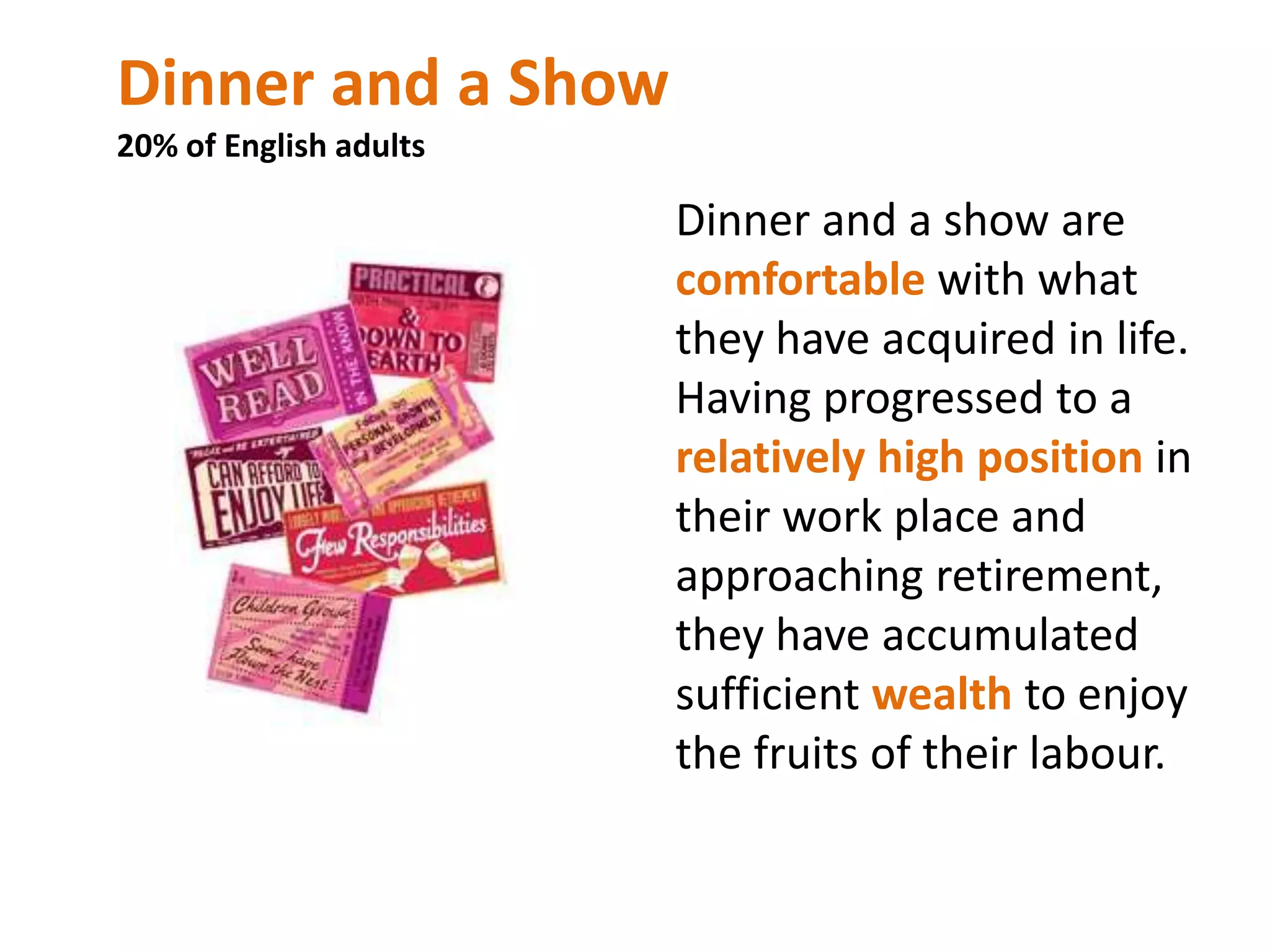
Dinner and a Show 20% of English adultsDinner and a show are comfortable with what they have acquired in life. Having progressed to a relatively high position in their work place and approaching retirement, they have accumulated sufficient wealth to enjoy the fruits of their labour.
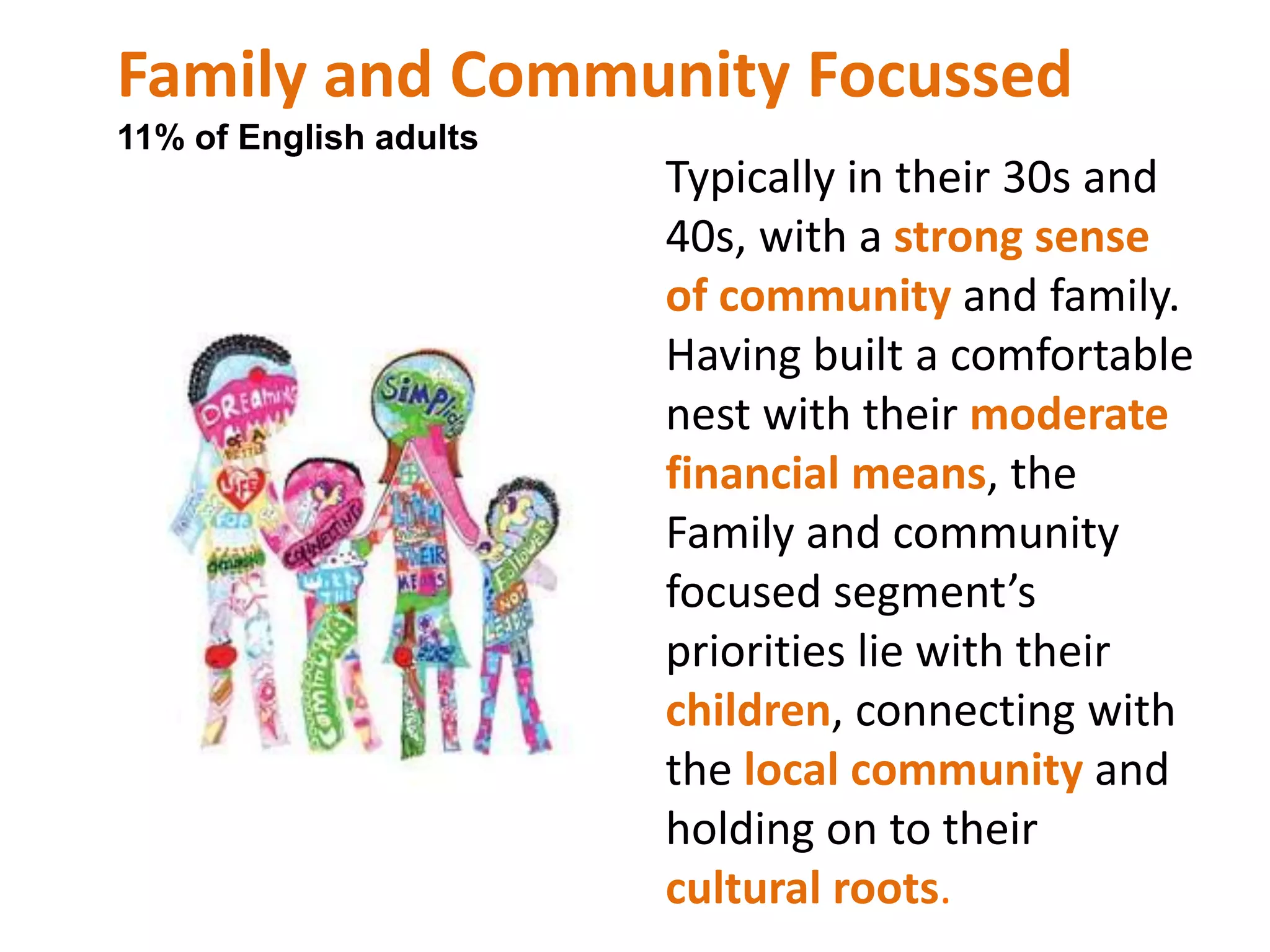
Family and Community Focussed 11% of English adultsTypically in their 30s and 40s, with a strong sense of community and family. Having built a comfortable nest with their moderatefinancial means, the Family and community focused segment’s priorities lie with their children, connecting with the local community and holding on to their cultural roots.
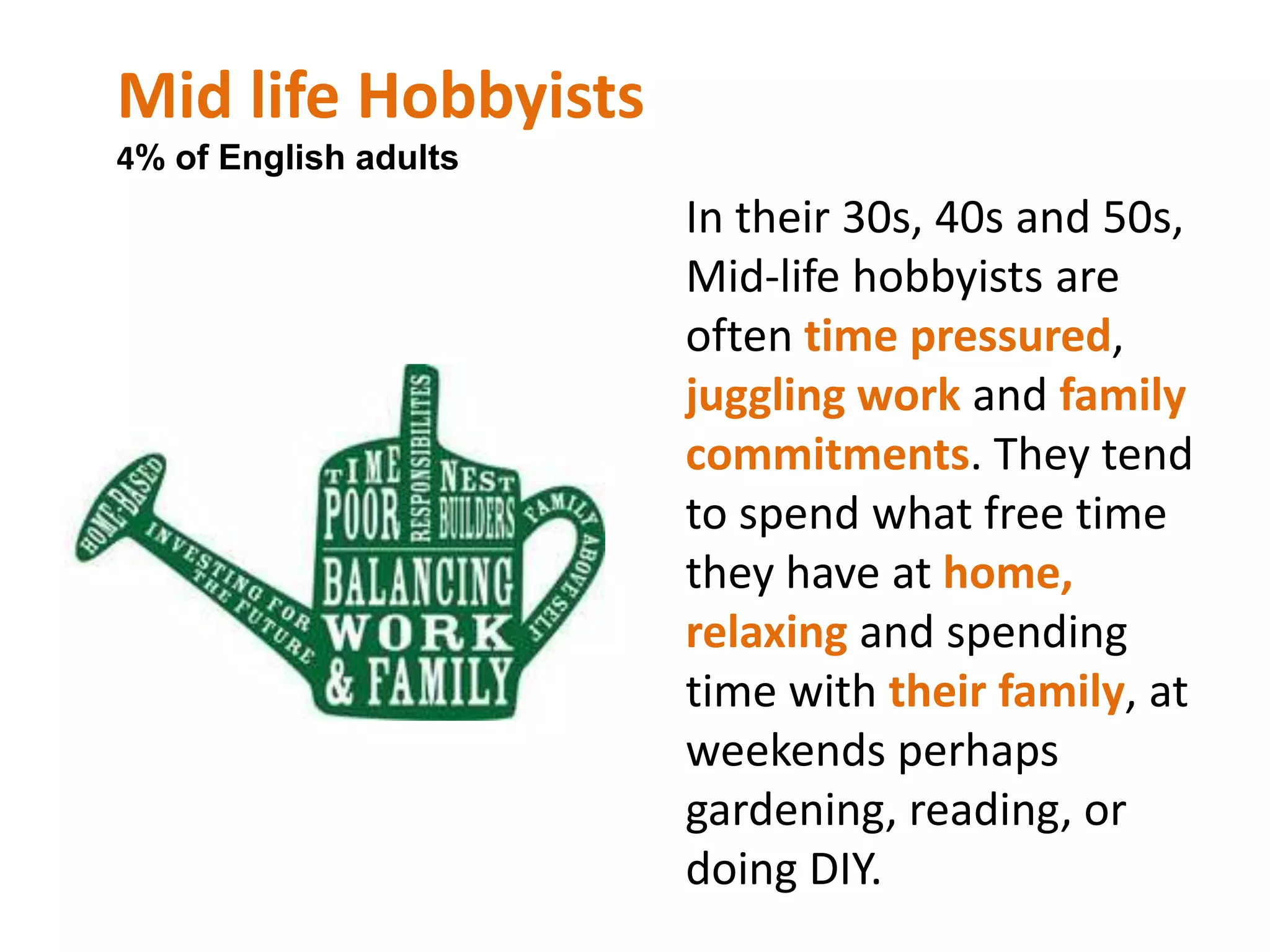
Mid life Hobbyists4% of English adultsIn their 30s, 40s and 50s, Mid-life hobbyists are often time pressured, juggling work and family commitments. They tend to spend what free time they have at home, relaxing and spending time with their family,at weekends perhaps gardening, reading, or doing DIY.
Arts Nation West MidlandsPartners:	Large scale arts providers, shopping centres, local authoritiesAims:	Testing new engagement approaches for the three segments	Prompt attenders to make more visits in a 12 month periodSegments: 	Dinner and a Show, Family and Community Focussed and Midlife Hobbyists	      www.artsnationwestmidlands.co.uk
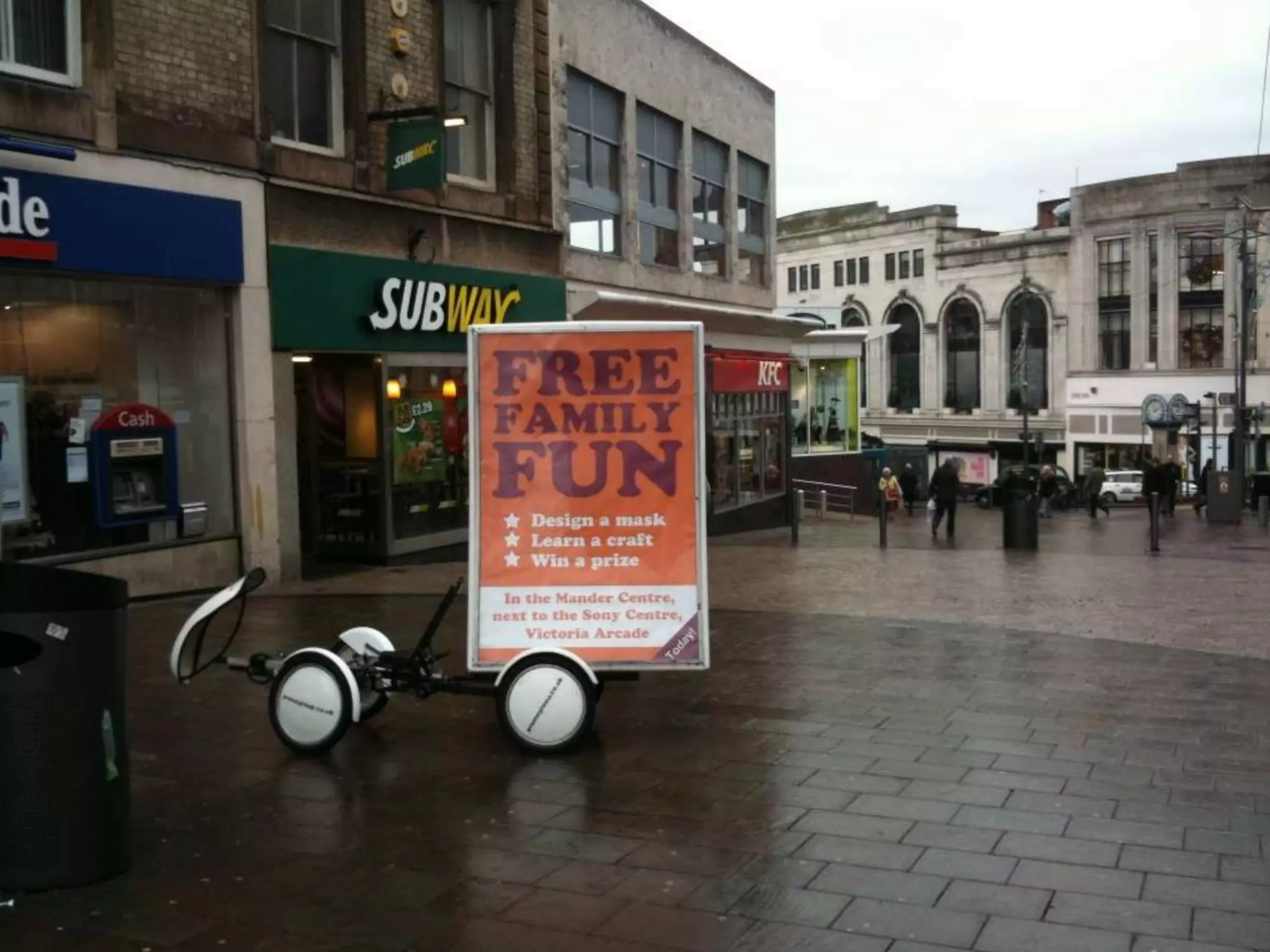
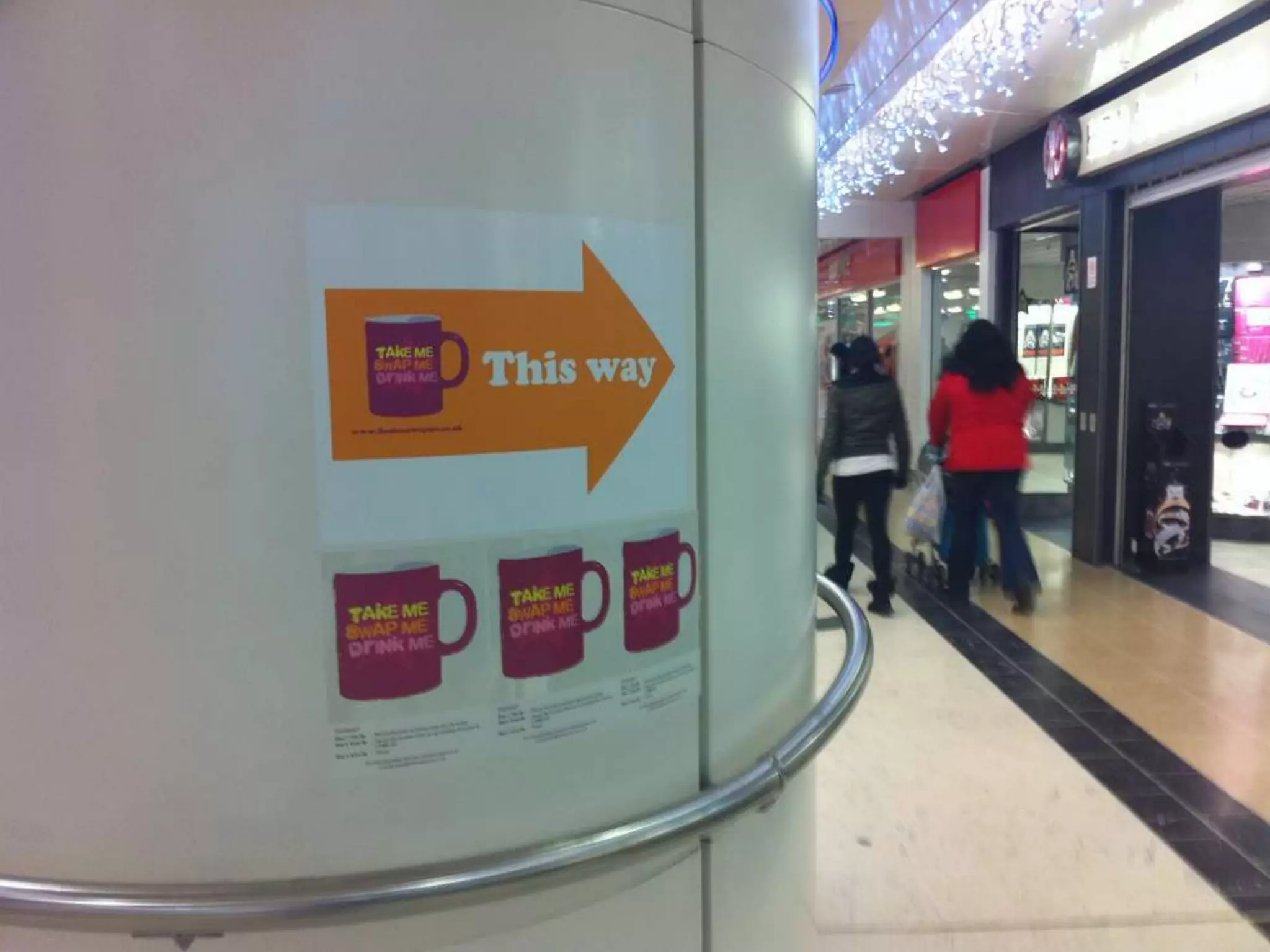
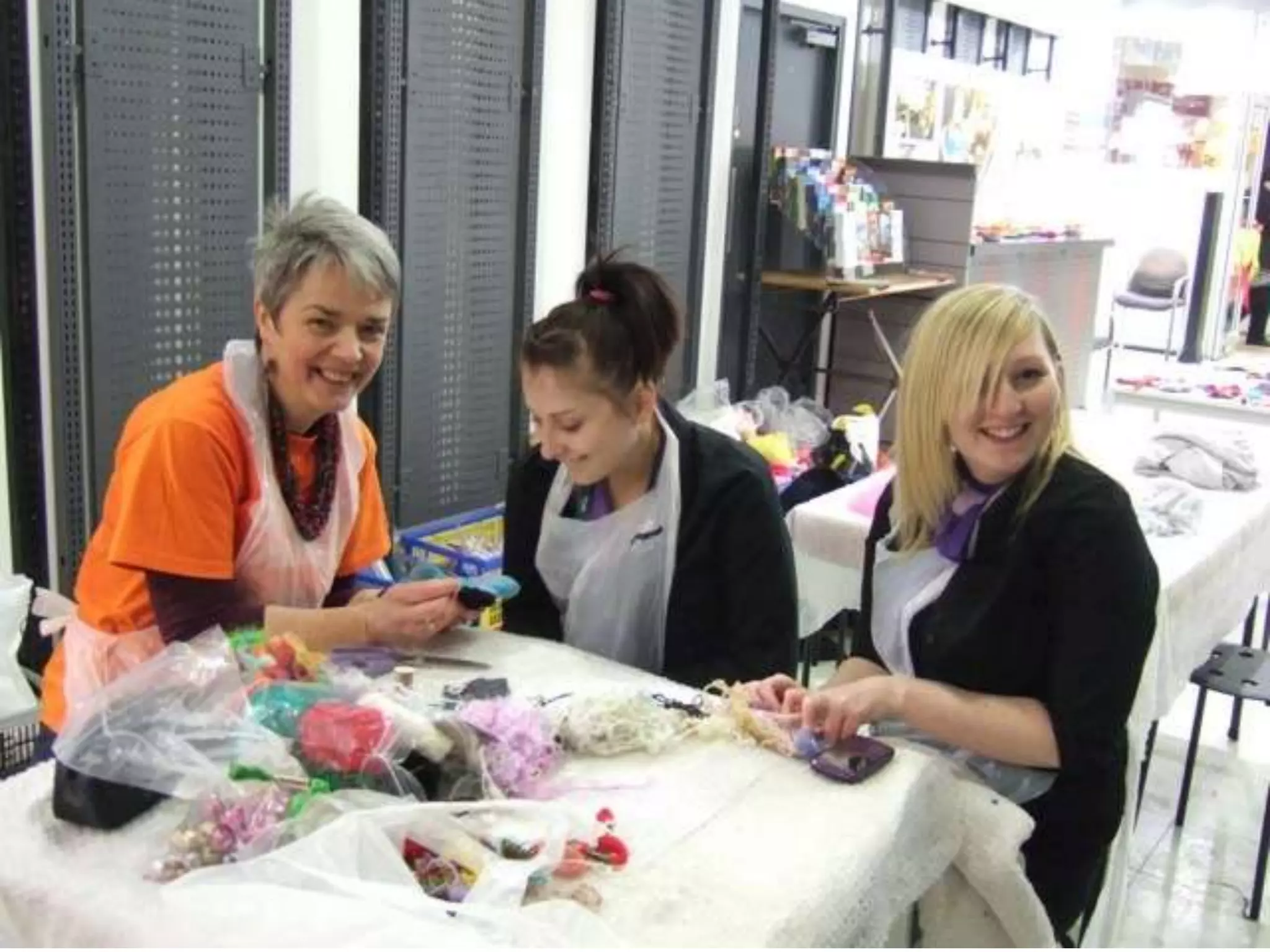
Arts Nation West Midlands: ActivitiesActivities: Programmed activity included a new festival, theatre productions, exhibitions about local people and areasMarketing tools included treasure trails, competitions,  art café in shopping centre, projections on empty shop units
Arts Nation West Midlands: FeaturesLocalised in natureLocal knowledge of partners used through out the programmeCapacity development of organisations involvedNew commissions for target groupsEmphasis of quality rather than quantityKey messages delivered through programmingand marketingSignposting of cultural activities 	in the region
The Big PicturePartners:	Arts providers, local businesses, regional travel company, regional press, shopping centresAims:	Engage low socio economic groups in art activities	Numerical target setSegments: 	C1 to E social grade, i.e. junior managerial to unemployed inthebigpicture.wordpress.com
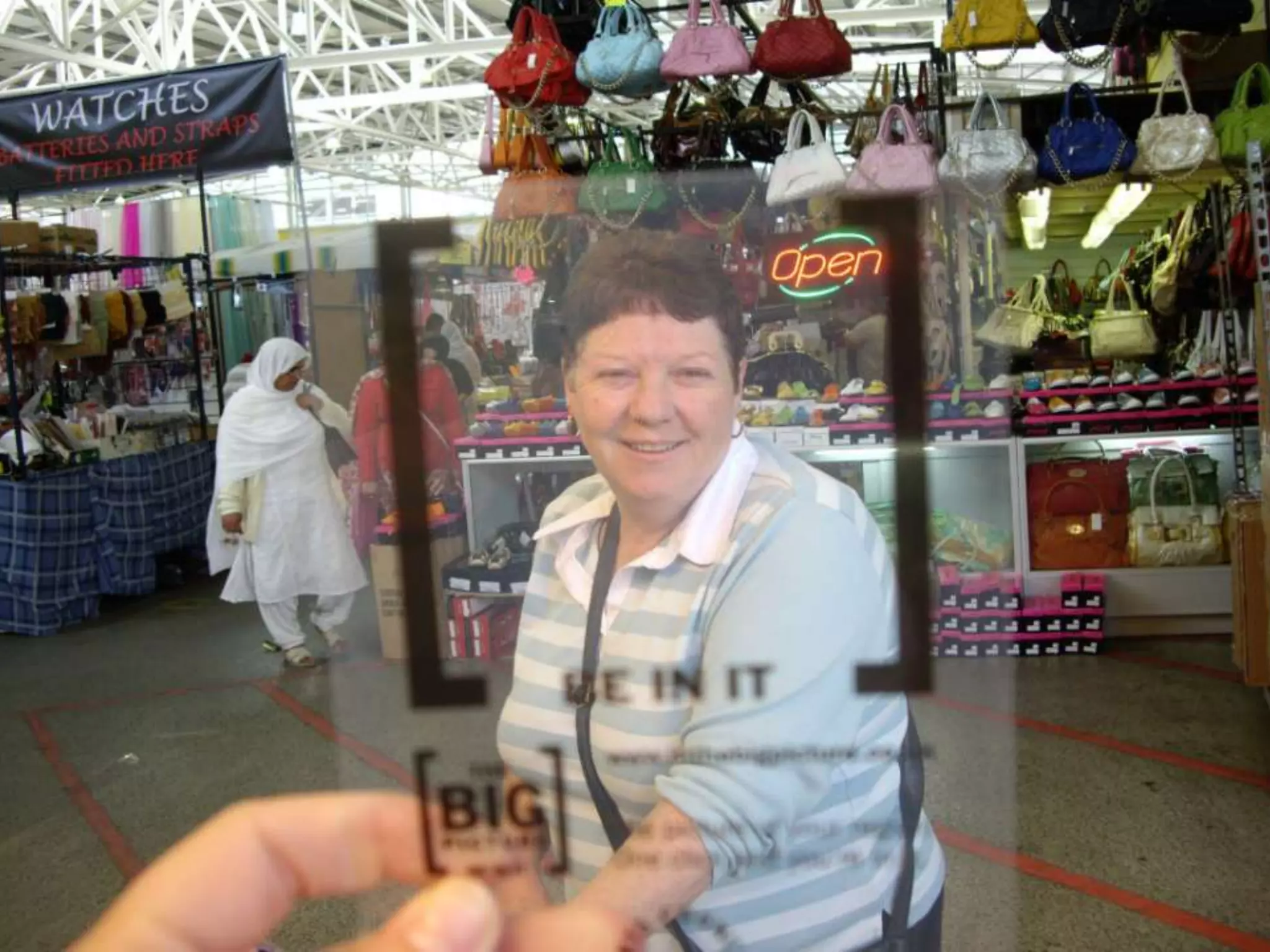
The Big PictureActivities:Workshops at shopping centres, museums and heritage buildingsRoadshows in town centresPhotography exhibitions at galleriesRegional competition with collection points in shops and museumsGuinness Book of World Record for largest photo mosaic
The Big Picture: FeaturesRegion wide approachVery accessible artformchosen - photographyKey messages around local pride, common goal, sharing, showing off creativityTieredapproach to delivery of activityTime bound activity with count down to world record attemptEmphasis on quantityLarge scale media involvement
Partnerships can be formed of.. Cultural providers:  Building and non building based, heritage organisationsCommunity groups and artists Businesses: local and nationalTourism authorities and associated suppliers Local authorities:	Arts and culture, regeneration, community careNational strategic bodies
Partnerships that work Shared priorities and common goalsClear lines of communicationLeadership Understanding of benefits and shortcomingsof the activity or projectConflict resolution mechanismsRespect for differences among partnersAdequate resources
Key challengesFinding a common language among partnersGood understanding of rolesand responsibilityKeeping momentumof activitiesSustained involvement of the key decision makersMeasuring success and impactsFailed targeting of activities and messages

A partnership approach v/ V. Roy

  • 1.
    Audience Development Apartnership approachUSUS KonferansenKristiansand 11 May 2011
  • 2.
    Contents Audience Development prioritiesSegmentationfor audience developmentCase studiesArts NationThe Big PictureSuccessful partnershipsMain challenges Q&A
  • 3.
    Audience DevelopmentTwo mainpriorities:Retention : deepen relationship with current audiences /customers Growth : gain new audiences/customersAudience Development Initiatives = Retention + Growth
  • 4.
    How important isit to people?In 2001, 8% of the population in Great Britain thought that having access to culture is one of the top five important things that makes somewhere a good place to liveIn 2005 this figure was 15%Source Ipsos MORI, Base: c.2,000 GB adults in 2001 and 2005
  • 5.
    Step by stepapproach to Audience Development Initiatives Partnerships formedShared aims and targets formulatedTarget segments/market identifiedKey messagesActivity formulatedMeasure and control mechanisms put in place
  • 6.
    Step by stepapproach to Audience Development Initiatives Partnerships formedShared aims and targets formulated------Target segments/market identifiedKey messagesActivity formulatedMeasure and control mechanisms put in place
  • 7.
    Market segmentation Anestablished market research technique that breaks down a given market/group of people into distinct consumer ‘types’Identifies shared wants and needs
  • 8.
    Enables more precisetargetting and tailored marketing communications
  • 9.
    Geo – demographicmodels like Mosaic GB and ACORN also adopted by arts organisations “Arts Audiences Insight was commissioned to see if we could identify distinct arts consumer typesin England today.”Arts Audience Insight
  • 10.
    “We hope thatthis would enable us to analyse how the current arts provision in England meets the needsof different groups; where there might be untappeddemand for greater engagement with the arts; and how different kindsof arts experiences can be designed and communicated in different waysto appeal to different groups.”- Caroline Bunting, Head of Research Arts Council EnglandArts Audience Insight
  • 11.
    Highly engagedSome engagementNotcurrently engagedUrban arts eclectic 5%Traditional culture vultures 4%Fun, fashion and friends 18%Bedroom DJs 3%participate onlyMid-life hobbyists 4%Mature explorers 11%attend & may also participateRetired arts and crafts 3%Dinner and a show 20%Family & community focused 11%Time-poor dreamers 7%Older and home-bound 6%Limited means, nothing fancy 2%A quiet pint with the match 8%
  • 12.
    Positioning the segmentsLevelof engagementUrban arts eclecticTraditional culture vulturesHighMature explorersRetired arts and craftsBedroom DJsFun, fashion and friendsMediumMid-life hobbyistsFamily and community focusedDinner and a showA quiet pint with the matchOlder and home-boundTime-poor dreamersLimited means, nothing fancyLowSocial statusHighLowMedium
  • 13.
    Dinner and aShow 20% of English adultsDinner and a show are comfortable with what they have acquired in life. Having progressed to a relatively high position in their work place and approaching retirement, they have accumulated sufficient wealth to enjoy the fruits of their labour.
  • 14.
    Family and CommunityFocussed 11% of English adultsTypically in their 30s and 40s, with a strong sense of community and family. Having built a comfortable nest with their moderatefinancial means, the Family and community focused segment’s priorities lie with their children, connecting with the local community and holding on to their cultural roots.
  • 15.
    Mid life Hobbyists4%of English adultsIn their 30s, 40s and 50s, Mid-life hobbyists are often time pressured, juggling work and family commitments. They tend to spend what free time they have at home, relaxing and spending time with their family,at weekends perhaps gardening, reading, or doing DIY.
  • 16.
    Arts Nation WestMidlandsPartners: Large scale arts providers, shopping centres, local authoritiesAims: Testing new engagement approaches for the three segments Prompt attenders to make more visits in a 12 month periodSegments: Dinner and a Show, Family and Community Focussed and Midlife Hobbyists www.artsnationwestmidlands.co.uk
  • 17.
    Arts Nation WestMidlands: ActivitiesActivities: Programmed activity included a new festival, theatre productions, exhibitions about local people and areasMarketing tools included treasure trails, competitions, art café in shopping centre, projections on empty shop units
  • 21.
    Arts Nation WestMidlands: FeaturesLocalised in natureLocal knowledge of partners used through out the programmeCapacity development of organisations involvedNew commissions for target groupsEmphasis of quality rather than quantityKey messages delivered through programmingand marketingSignposting of cultural activities in the region
  • 22.
    The Big PicturePartners: Artsproviders, local businesses, regional travel company, regional press, shopping centresAims: Engage low socio economic groups in art activities Numerical target setSegments: C1 to E social grade, i.e. junior managerial to unemployed inthebigpicture.wordpress.com
  • 23.
    The Big PictureActivities:Workshopsat shopping centres, museums and heritage buildingsRoadshows in town centresPhotography exhibitions at galleriesRegional competition with collection points in shops and museumsGuinness Book of World Record for largest photo mosaic
  • 28.
    The Big Picture:FeaturesRegion wide approachVery accessible artformchosen - photographyKey messages around local pride, common goal, sharing, showing off creativityTieredapproach to delivery of activityTime bound activity with count down to world record attemptEmphasis on quantityLarge scale media involvement
  • 29.
    Partnerships can beformed of.. Cultural providers: Building and non building based, heritage organisationsCommunity groups and artists Businesses: local and nationalTourism authorities and associated suppliers Local authorities: Arts and culture, regeneration, community careNational strategic bodies
  • 30.
    Partnerships that workShared priorities and common goalsClear lines of communicationLeadership Understanding of benefits and shortcomingsof the activity or projectConflict resolution mechanismsRespect for differences among partnersAdequate resources
  • 31.
    Key challengesFinding acommon language among partnersGood understanding of rolesand responsibilityKeeping momentumof activitiesSustained involvement of the key decision makersMeasuring success and impactsFailed targeting of activities and messages
  • 32.
    Vishalakshi Royearthen lampv.roy@earthenlamp.comAllimages and project content copyright Audiences Central