Theme : Investigating Materials
 Unit9:
 Acid and Alkali
Experiment
   Aim : To identify acidic, alkaline and
          neutral substances using litmus
          paper
Method
Method
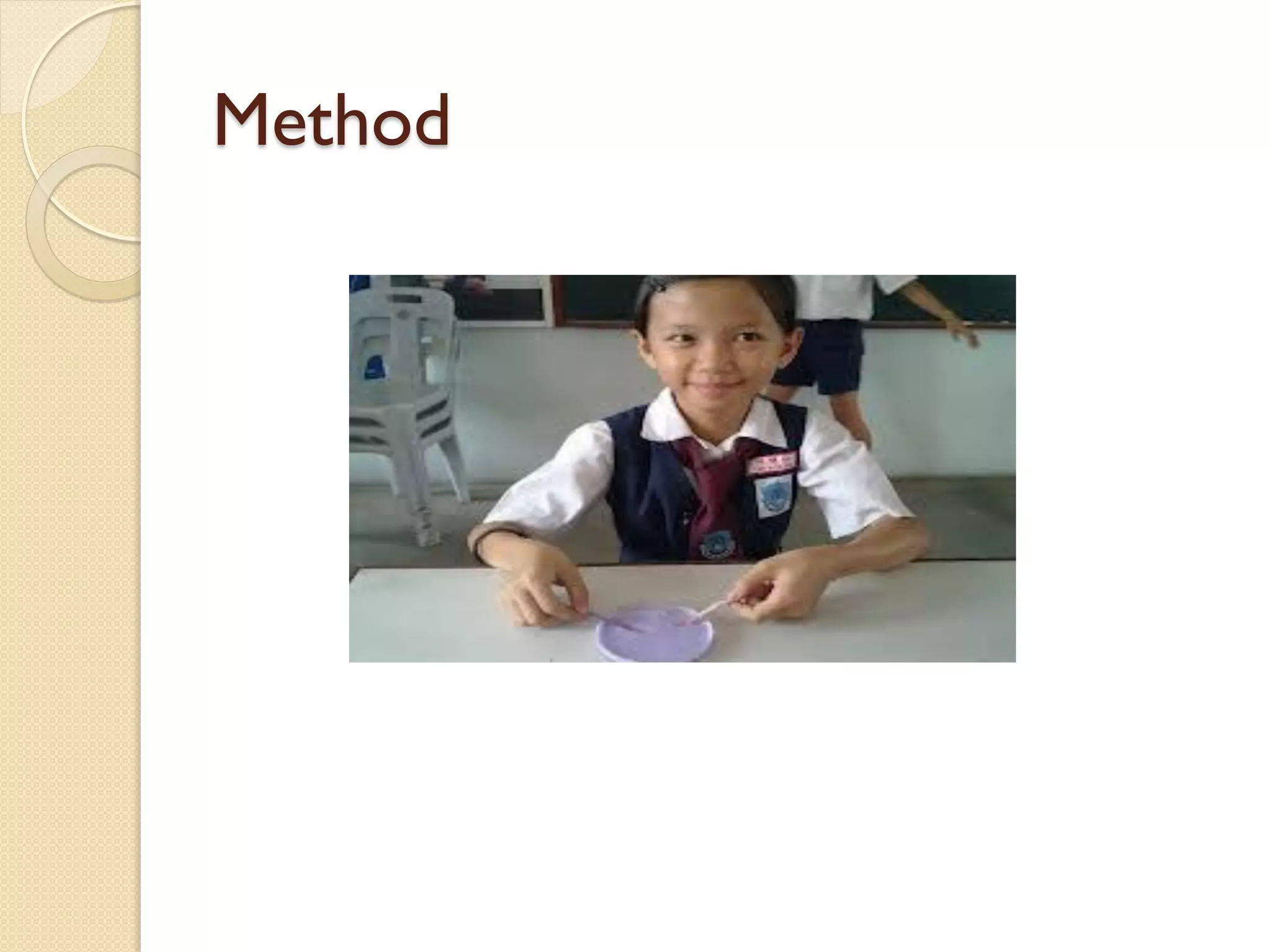
   1. Work in groups. The apparatus shown in
    the diagram above is set up.

   2. Some oil is put into the a petri dish.
Method
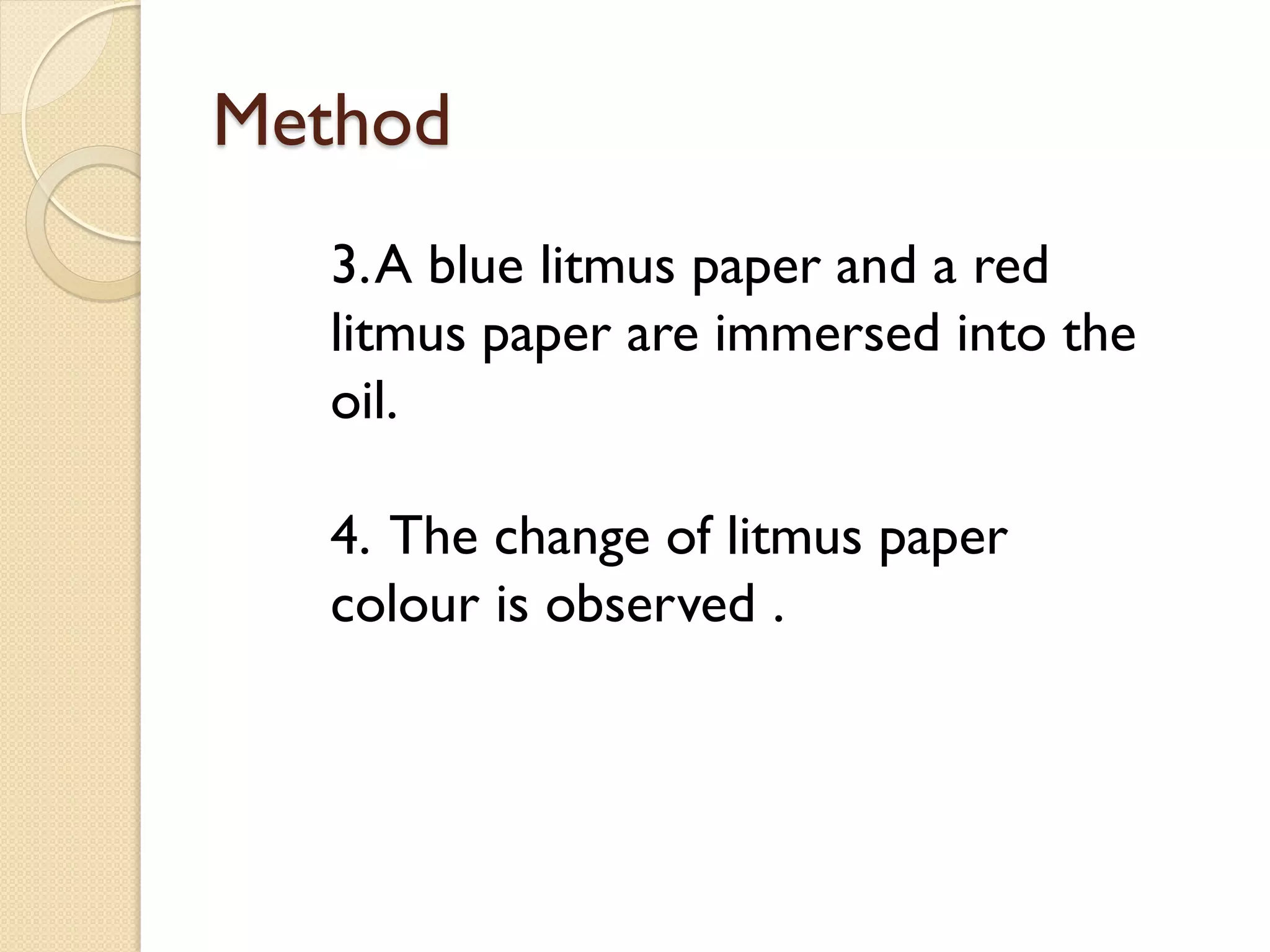
  3. A blue litmus paper and a red
  litmus paper are immersed into the
  oil.

  4. The change of litmus paper
  colour is observed .
Method
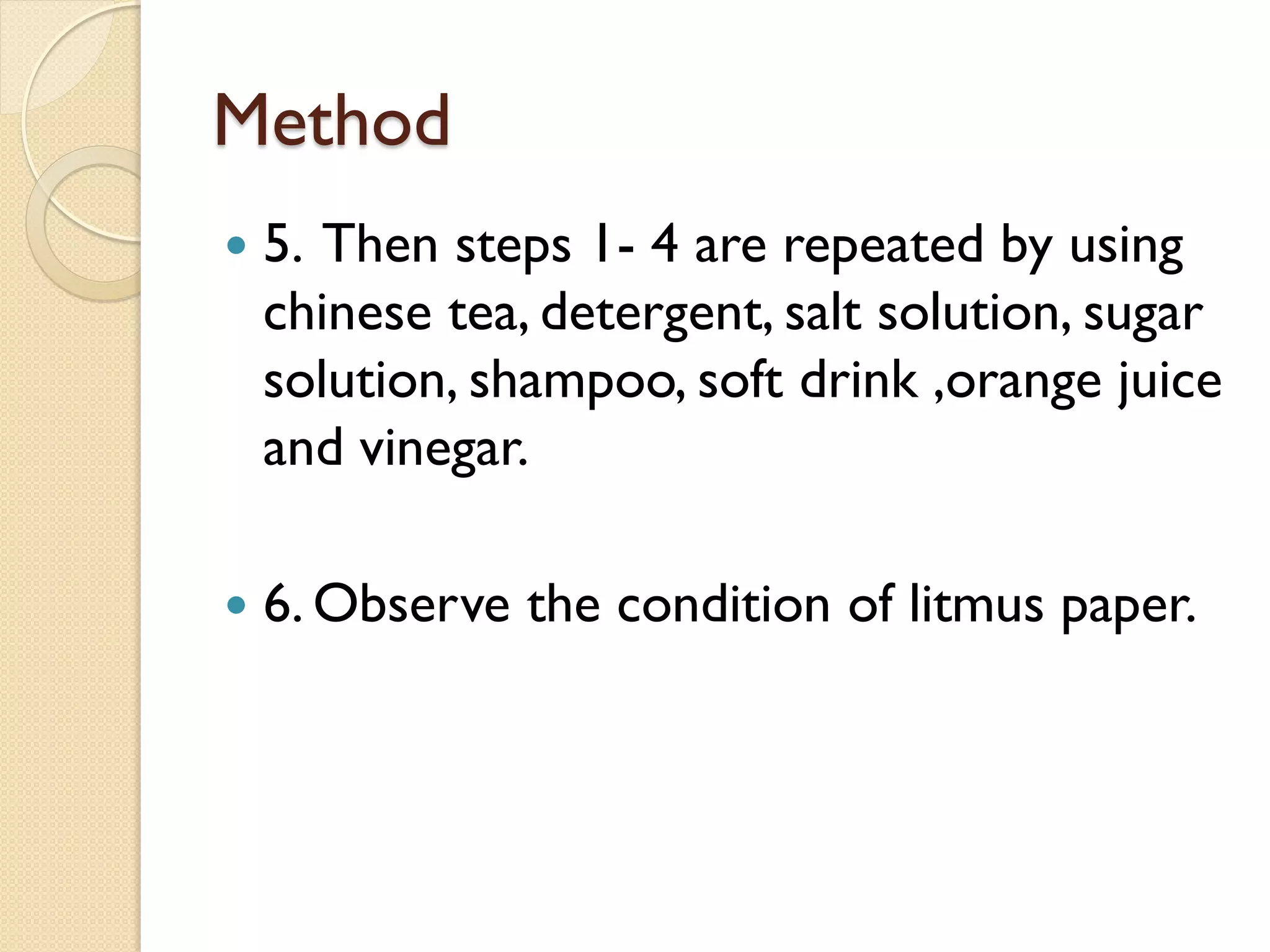
   5. Then steps 1- 4 are repeated by using
    chinese tea, detergent, salt solution, sugar
    solution, shampoo, soft drink ,orange juice
    and vinegar.

   6. Observe the condition of litmus paper.
Observation & Classification
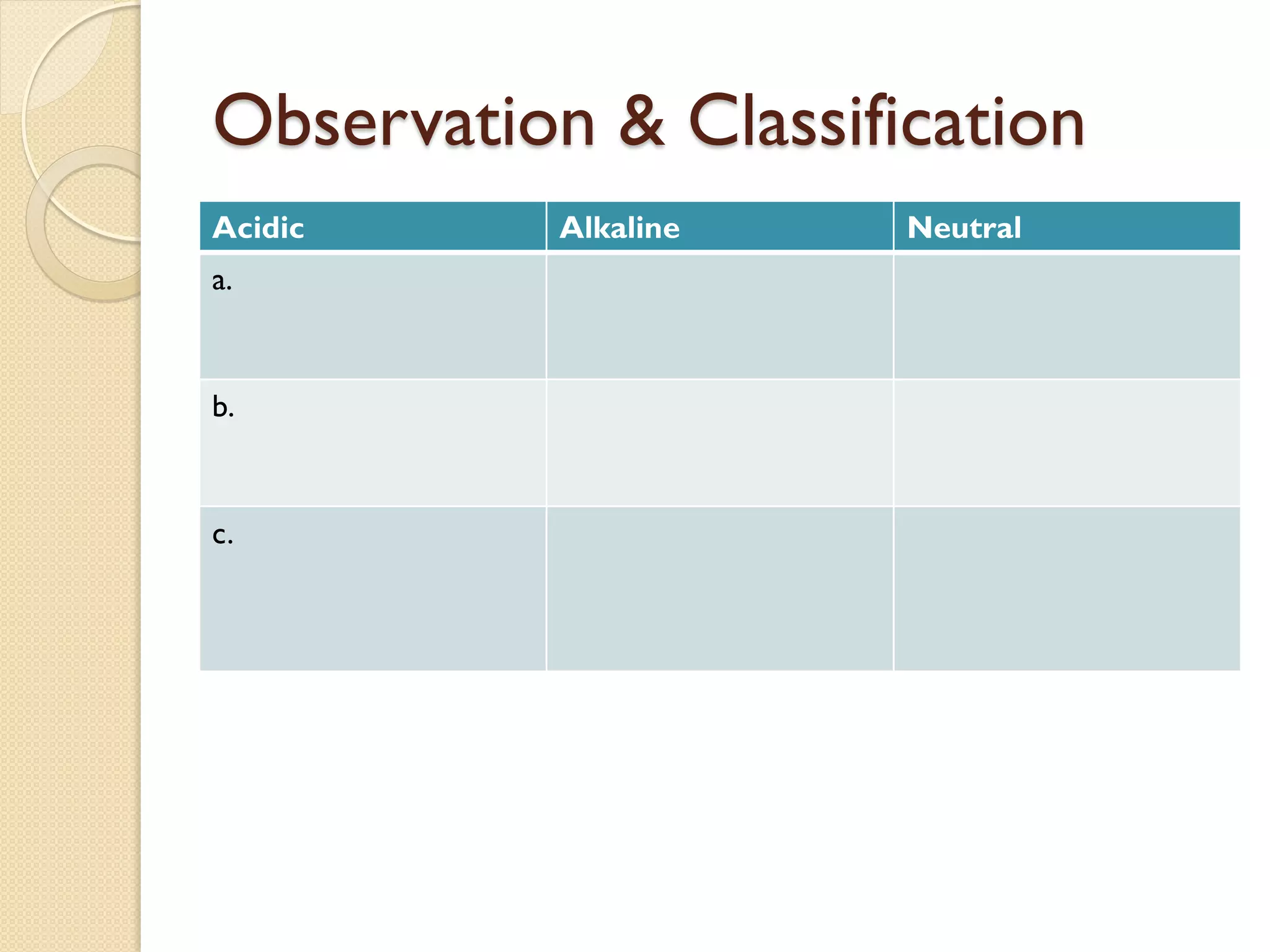
Acidic     Alkaline   Neutral
a.


b.


c.
Observation & Classification
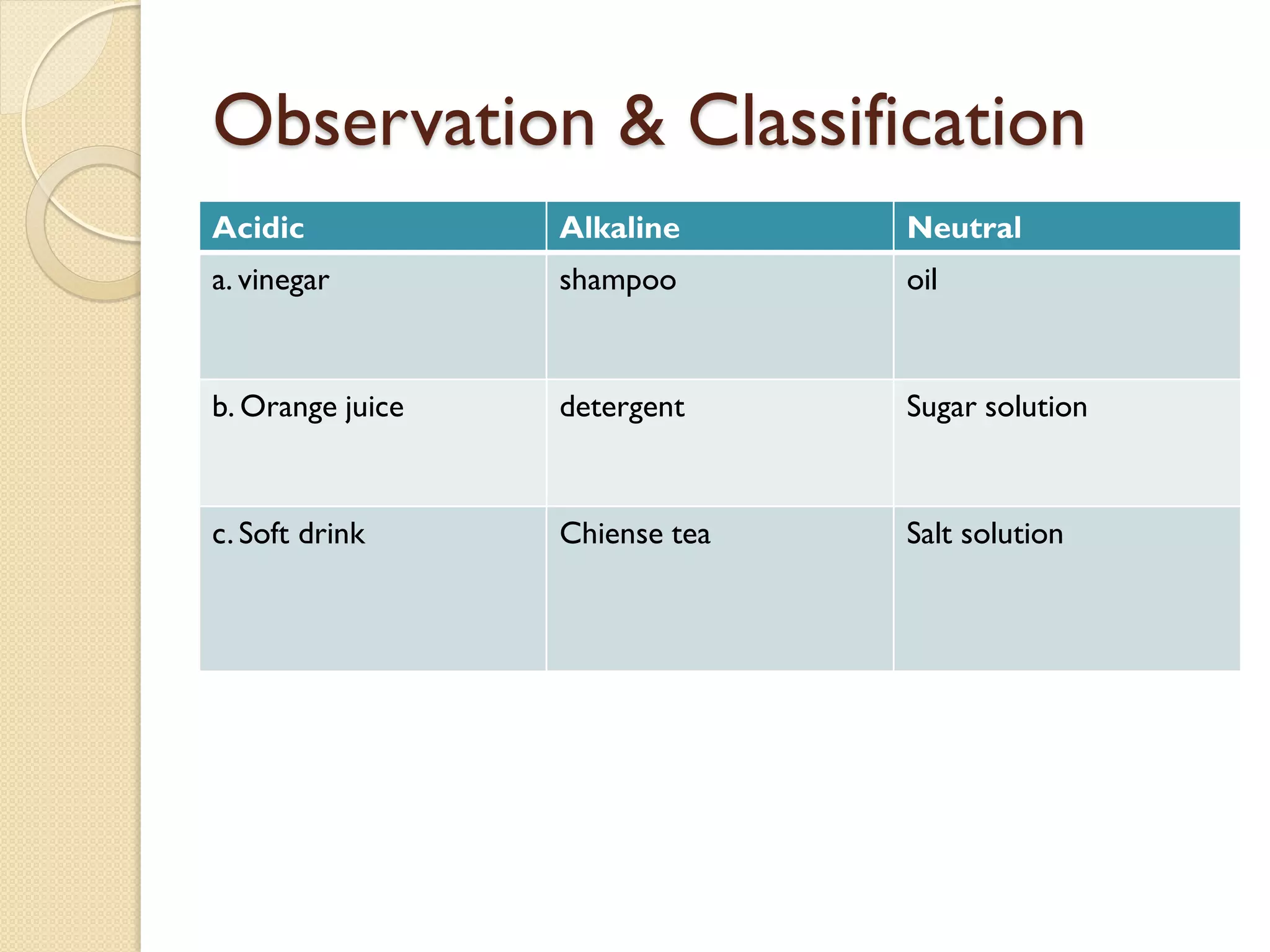
Acidic            Alkaline      Neutral
a. vinegar        shampoo       oil


b. Orange juice   detergent     Sugar solution


c. Soft drink     Chiense tea   Salt solution
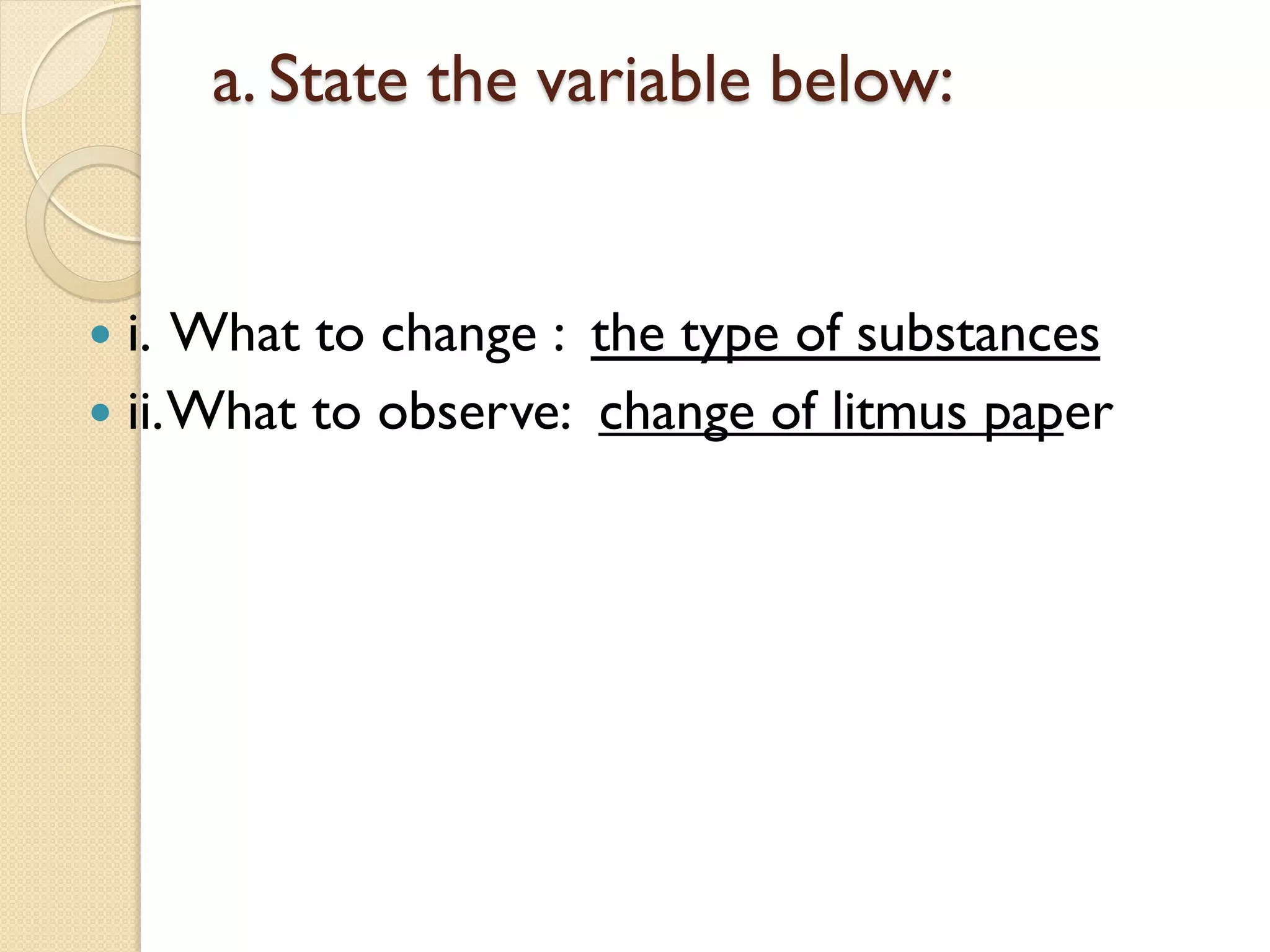
a. State the variable below:


 i. What to change : the type of substances
 ii. What to observe: change of litmus paper
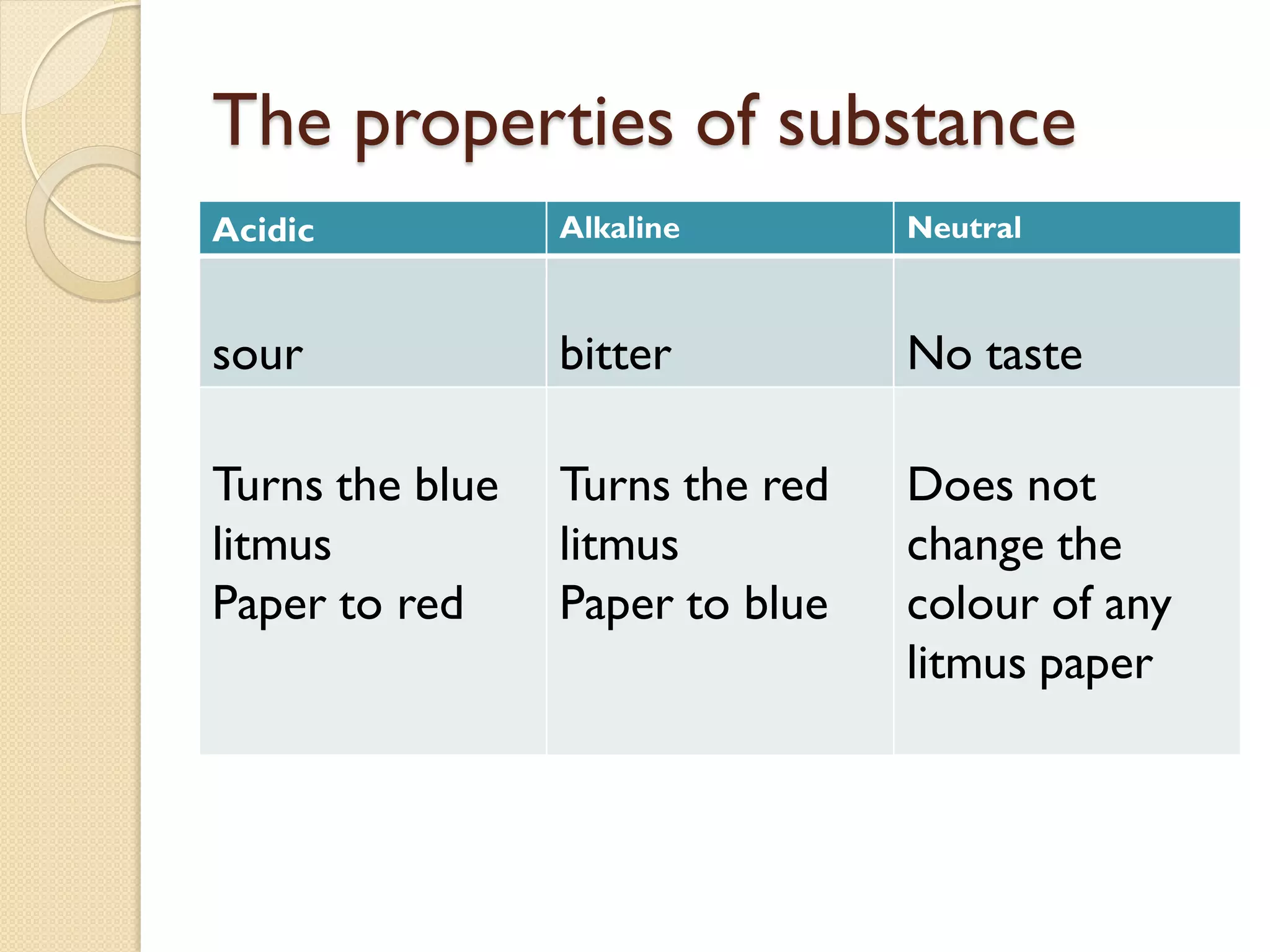
The properties of substance
Acidic           Alkaline        Neutral


sour             bitter          No taste

Turns the blue   Turns the red   Does not
litmus           litmus          change the
Paper to red     Paper to blue   colour of any
                                 litmus paper
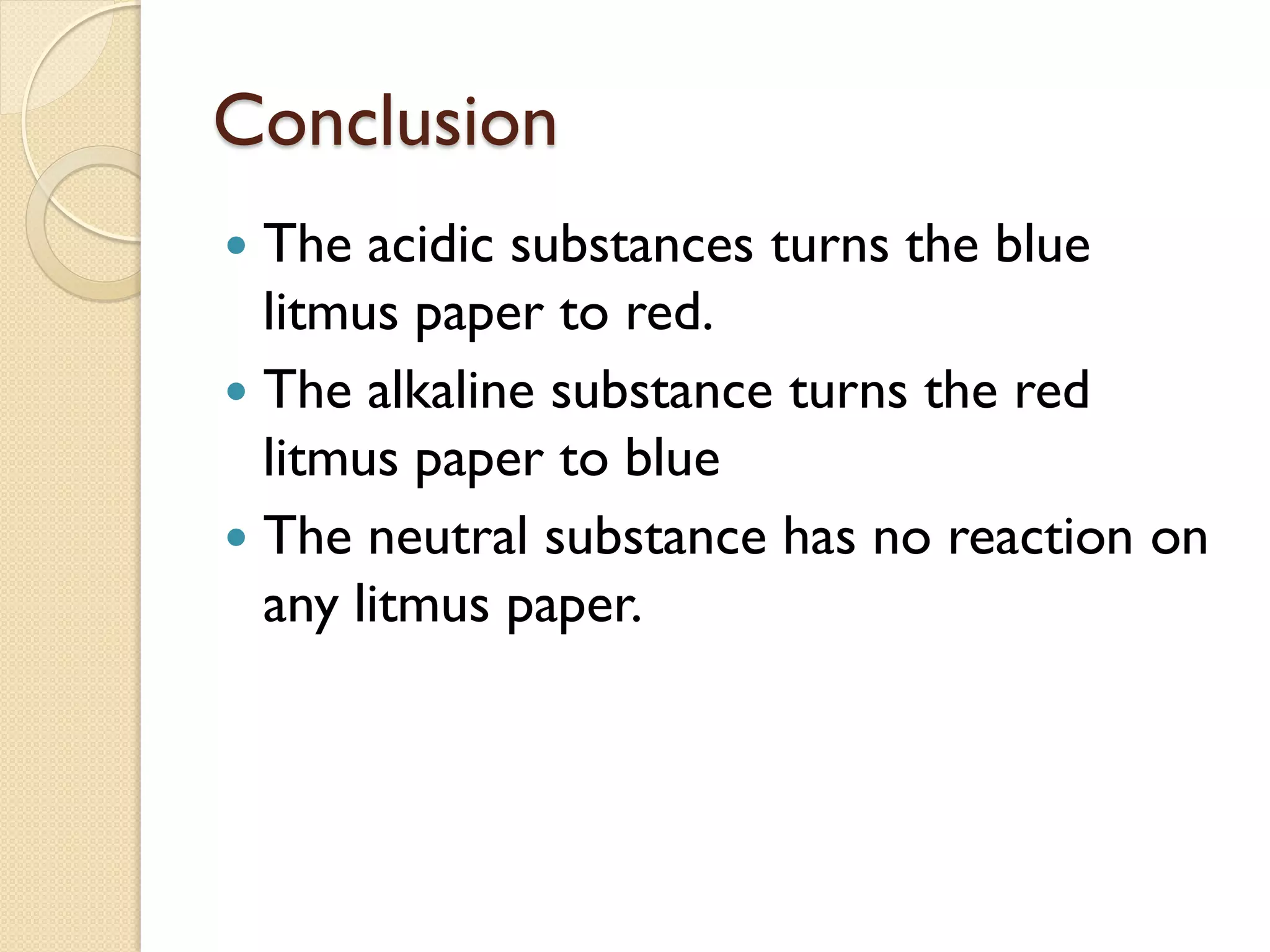
Conclusion
 The acidic substances turns the blue
  litmus paper to red.
 The alkaline substance turns the red
  litmus paper to blue
 The neutral substance has no reaction on
  any litmus paper.
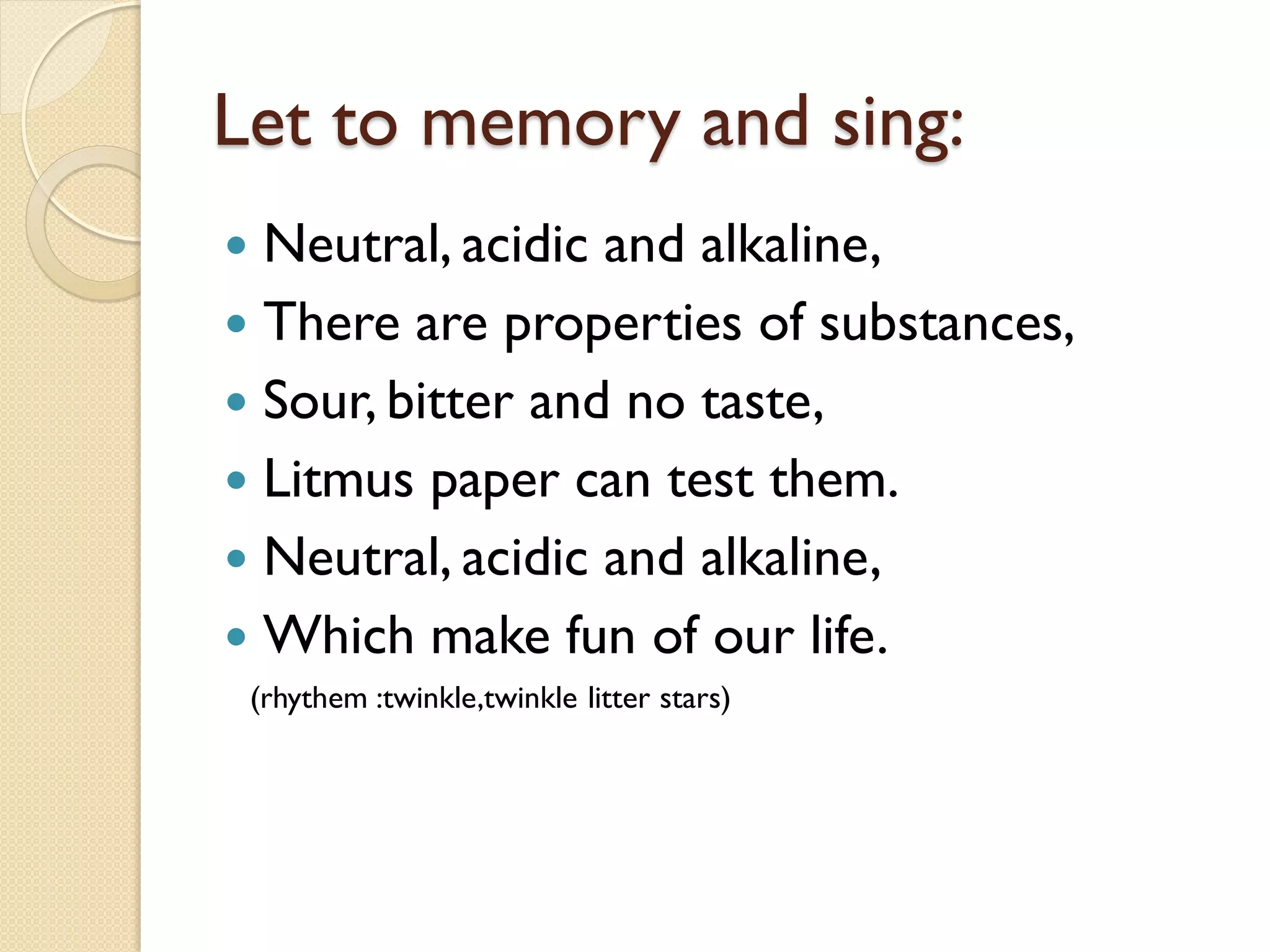
Let to memory and sing:
 Neutral, acidic and alkaline,
 There are properties of substances,
 Sour, bitter and no taste,
 Litmus paper can test them.
 Neutral, acidic and alkaline,
 Which make fun of our life.
    (rhythem :twinkle,twinkle litter stars)

Method of experiment (acid & alkaine)

  • 1.
    Theme : InvestigatingMaterials  Unit9:  Acid and Alkali
  • 2.
    Experiment  Aim : To identify acidic, alkaline and neutral substances using litmus paper
  • 3.
  • 4.
    Method  1. Work in groups. The apparatus shown in the diagram above is set up.  2. Some oil is put into the a petri dish.
  • 5.
    Method 3.A blue litmus paper and a red litmus paper are immersed into the oil. 4. The change of litmus paper colour is observed .
  • 6.
    Method  5. Then steps 1- 4 are repeated by using chinese tea, detergent, salt solution, sugar solution, shampoo, soft drink ,orange juice and vinegar.  6. Observe the condition of litmus paper.
  • 7.
    Observation & Classification Acidic Alkaline Neutral a. b. c.
  • 8.
    Observation & Classification Acidic Alkaline Neutral a. vinegar shampoo oil b. Orange juice detergent Sugar solution c. Soft drink Chiense tea Salt solution
  • 9.
    a. State thevariable below:  i. What to change : the type of substances  ii. What to observe: change of litmus paper
  • 10.
    The properties ofsubstance Acidic Alkaline Neutral sour bitter No taste Turns the blue Turns the red Does not litmus litmus change the Paper to red Paper to blue colour of any litmus paper
  • 11.
    Conclusion  The acidicsubstances turns the blue litmus paper to red.  The alkaline substance turns the red litmus paper to blue  The neutral substance has no reaction on any litmus paper.
  • 12.
    Let to memoryand sing:  Neutral, acidic and alkaline,  There are properties of substances,  Sour, bitter and no taste,  Litmus paper can test them.  Neutral, acidic and alkaline,  Which make fun of our life. (rhythem :twinkle,twinkle litter stars)