MESH TO MICRON CONVERSION CHART
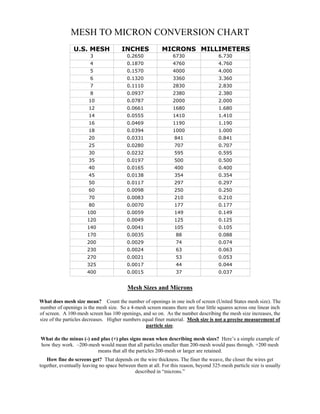
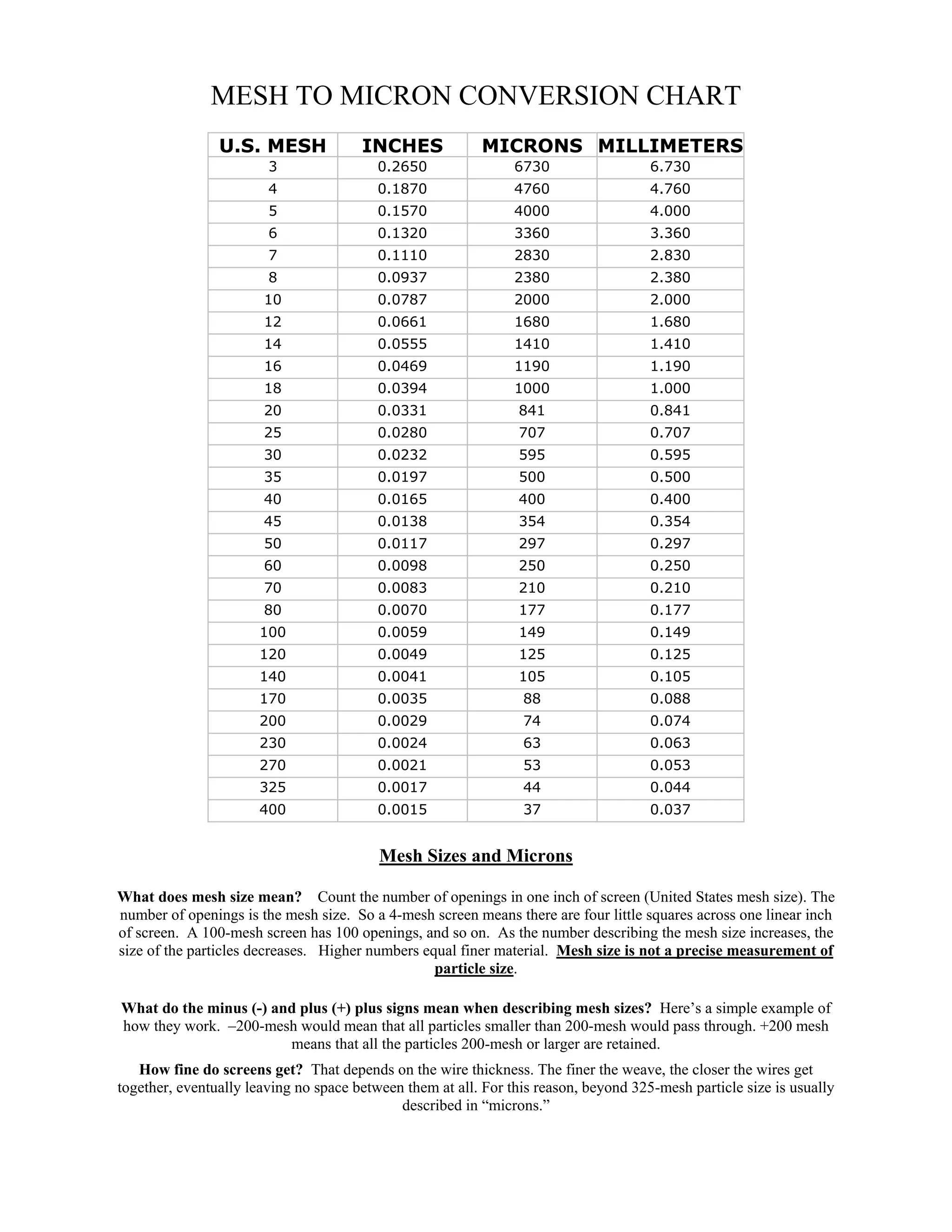
U.S. MESH INCHES MICRONS MILLIMETERS
3 0.2650 6730 6.730
4 0.1870 4760 4.760
5 0.1570 4000 4.000
6 0.1320 3360 3.360
7 0.1110 2830 2.830
8 0.0937 2380 2.380
10 0.0787 2000 2.000
12 0.0661 1680 1.680
14 0.0555 1410 1.410
16 0.0469 1190 1.190
18 0.0394 1000 1.000
20 0.0331 841 0.841
25 0.0280 707 0.707
30 0.0232 595 0.595
35 0.0197 500 0.500
40 0.0165 400 0.400
45 0.0138 354 0.354
50 0.0117 297 0.297
60 0.0098 250 0.250
70 0.0083 210 0.210
80 0.0070 177 0.177
100 0.0059 149 0.149
120 0.0049 125 0.125
140 0.0041 105 0.105
170 0.0035 88 0.088
200 0.0029 74 0.074
230 0.0024 63 0.063
270 0.0021 53 0.053
325 0.0017 44 0.044
400 0.0015 37 0.037
Mesh Sizes and Microns
What does mesh size mean? Count the number of openings in one inch of screen (United States mesh size). The
number of openings is the mesh size. So a 4-mesh screen means there are four little squares across one linear inch
of screen. A 100-mesh screen has 100 openings, and so on. As the number describing the mesh size increases, the
size of the particles decreases. Higher numbers equal finer material. Mesh size is not a precise measurement of
particle size.
What do the minus (-) and plus (+) plus signs mean when describing mesh sizes? Here’s a simple example of
how they work. –200-mesh would mean that all particles smaller than 200-mesh would pass through. +200 mesh
means that all the particles 200-mesh or larger are retained.
How fine do screens get? That depends on the wire thickness. The finer the weave, the closer the wires get
together, eventually leaving no space between them at all. For this reason, beyond 325-mesh particle size is usually
described in “microns.”
What is a micron? A micron is another measurement of particle size. A micron is one-millionth of a meter or one
twenty-five thousandth of an inch.
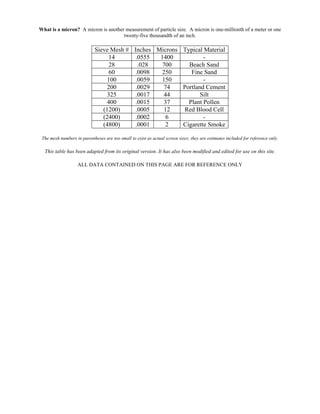
Sieve Mesh # Inches Microns Typical Material
14 .0555 1400 -
28 .028 700 Beach Sand
60 .0098 250 Fine Sand
100 .0059 150 -
200 .0029 74 Portland Cement
325 .0017 44 Silt
400 .0015 37 Plant Pollen
(1200) .0005 12 Red Blood Cell
(2400) .0002 6 -
(4800) .0001 2 Cigarette Smoke
The mesh numbers in parentheses are too small to exist as actual screen sizes; they are estimates included for reference only.
This table has been adapted from its original version. It has also been modified and edited for use on this site.
ALL DATA CONTAINED ON THIS PAGE ARE FOR REFERENCE ONLY

Mesh to micron conversion chart

  • 1.
    MESH TO MICRONCONVERSION CHART U.S. MESH INCHES MICRONS MILLIMETERS 3 0.2650 6730 6.730 4 0.1870 4760 4.760 5 0.1570 4000 4.000 6 0.1320 3360 3.360 7 0.1110 2830 2.830 8 0.0937 2380 2.380 10 0.0787 2000 2.000 12 0.0661 1680 1.680 14 0.0555 1410 1.410 16 0.0469 1190 1.190 18 0.0394 1000 1.000 20 0.0331 841 0.841 25 0.0280 707 0.707 30 0.0232 595 0.595 35 0.0197 500 0.500 40 0.0165 400 0.400 45 0.0138 354 0.354 50 0.0117 297 0.297 60 0.0098 250 0.250 70 0.0083 210 0.210 80 0.0070 177 0.177 100 0.0059 149 0.149 120 0.0049 125 0.125 140 0.0041 105 0.105 170 0.0035 88 0.088 200 0.0029 74 0.074 230 0.0024 63 0.063 270 0.0021 53 0.053 325 0.0017 44 0.044 400 0.0015 37 0.037 Mesh Sizes and Microns What does mesh size mean? Count the number of openings in one inch of screen (United States mesh size). The number of openings is the mesh size. So a 4-mesh screen means there are four little squares across one linear inch of screen. A 100-mesh screen has 100 openings, and so on. As the number describing the mesh size increases, the size of the particles decreases. Higher numbers equal finer material. Mesh size is not a precise measurement of particle size. What do the minus (-) and plus (+) plus signs mean when describing mesh sizes? Here’s a simple example of how they work. –200-mesh would mean that all particles smaller than 200-mesh would pass through. +200 mesh means that all the particles 200-mesh or larger are retained. How fine do screens get? That depends on the wire thickness. The finer the weave, the closer the wires get together, eventually leaving no space between them at all. For this reason, beyond 325-mesh particle size is usually described in “microns.”
  • 2.
    What is amicron? A micron is another measurement of particle size. A micron is one-millionth of a meter or one twenty-five thousandth of an inch. Sieve Mesh # Inches Microns Typical Material 14 .0555 1400 - 28 .028 700 Beach Sand 60 .0098 250 Fine Sand 100 .0059 150 - 200 .0029 74 Portland Cement 325 .0017 44 Silt 400 .0015 37 Plant Pollen (1200) .0005 12 Red Blood Cell (2400) .0002 6 - (4800) .0001 2 Cigarette Smoke The mesh numbers in parentheses are too small to exist as actual screen sizes; they are estimates included for reference only. This table has been adapted from its original version. It has also been modified and edited for use on this site. ALL DATA CONTAINED ON THIS PAGE ARE FOR REFERENCE ONLY