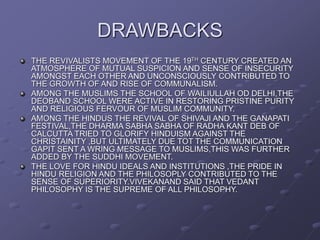
The socio-religious movements of the 19th and 20th centuries in India worked to abolish the caste system, end practices like sati and human sacrifice, and uplift weaker sections of society. They challenged established religious texts and advocated for rational, secular reforms like allowing widow remarriage. However, some saw these movements as promoting religious revivalism and communalism between Hindus and Muslims by glorifying their own faiths, which the British were able to exploit by sowing further divisions. While aiming to remove social evils, the movements sometimes lacked effective communication with the masses and failed to unite people against colonial rule.